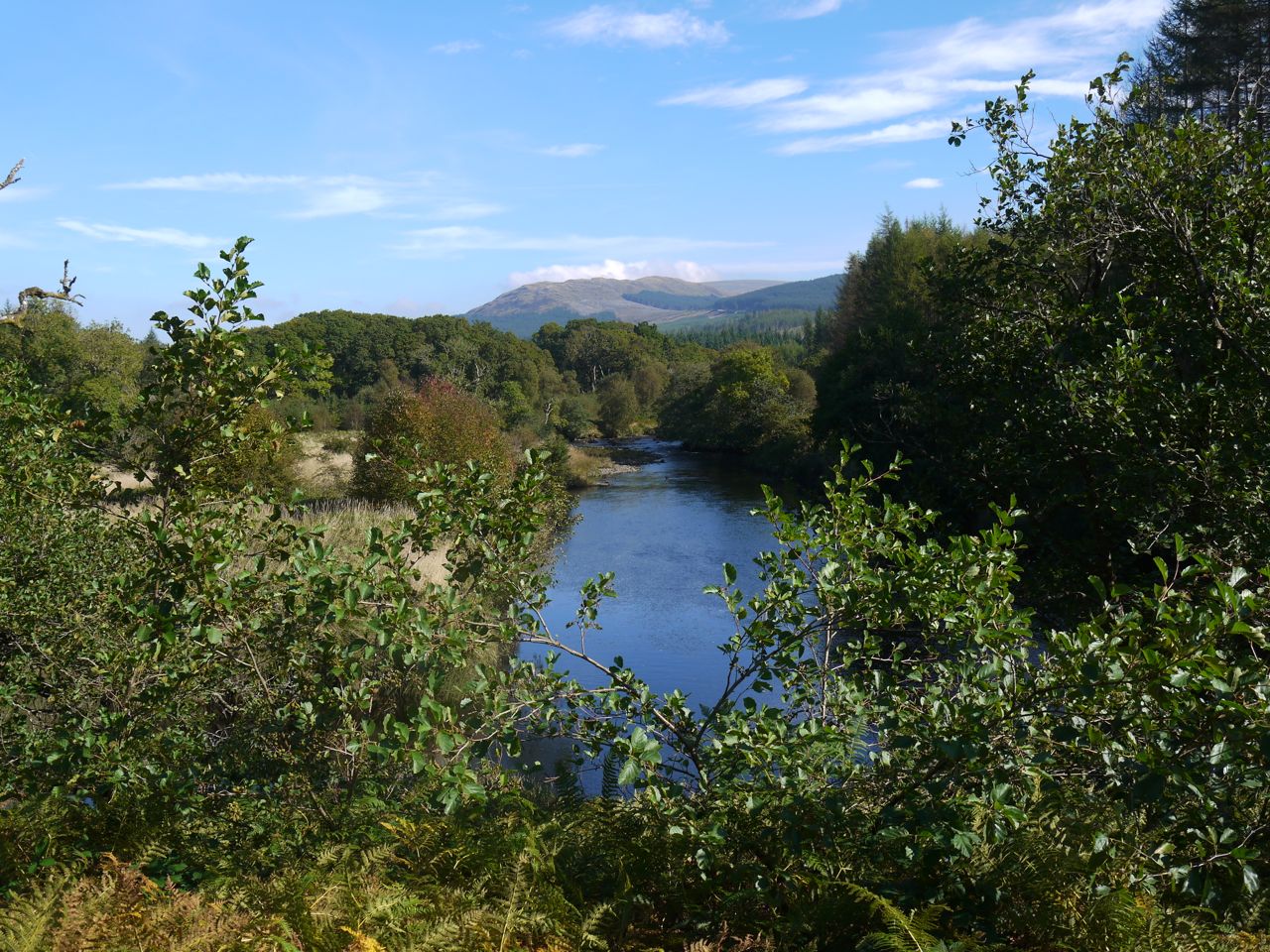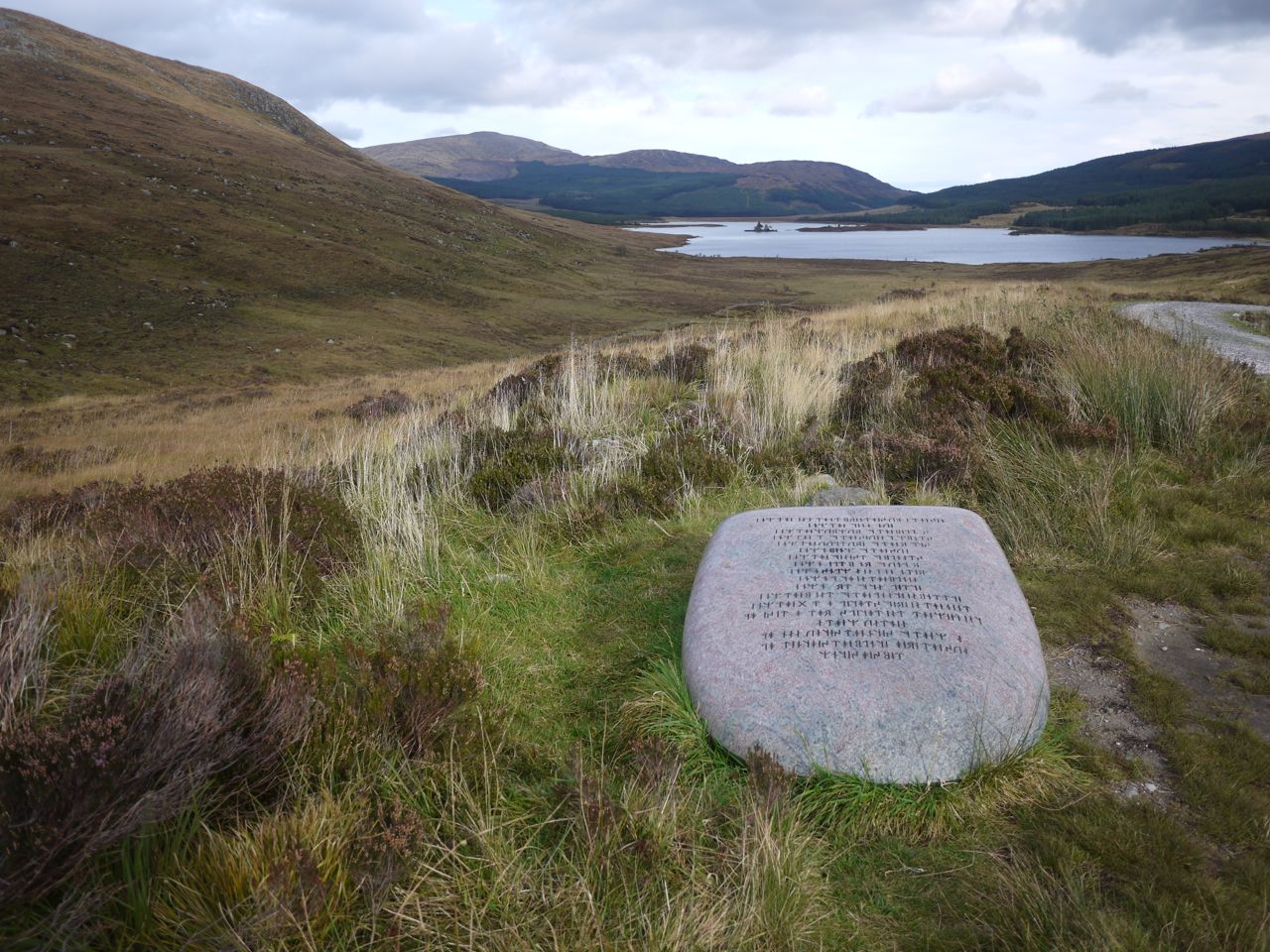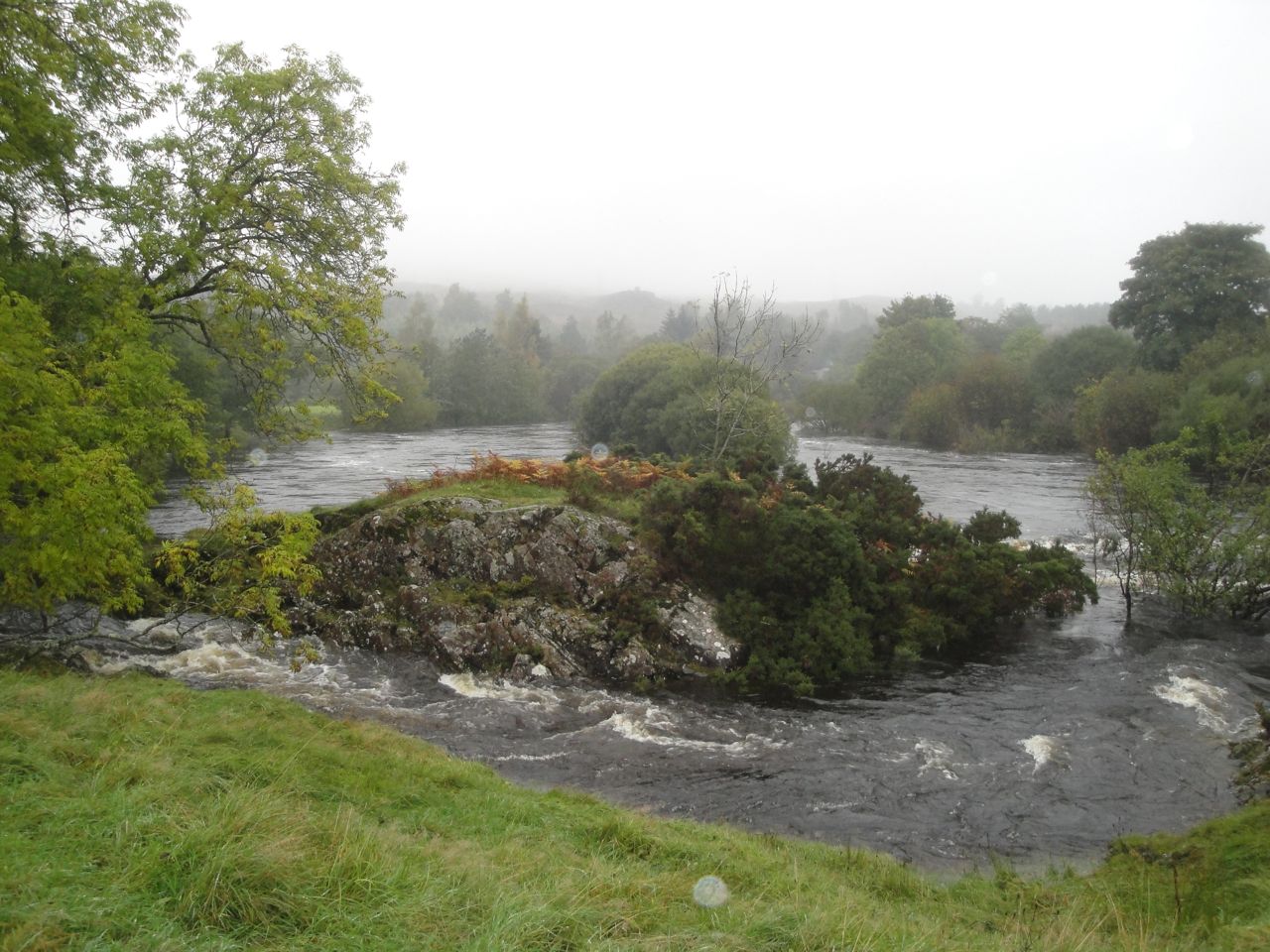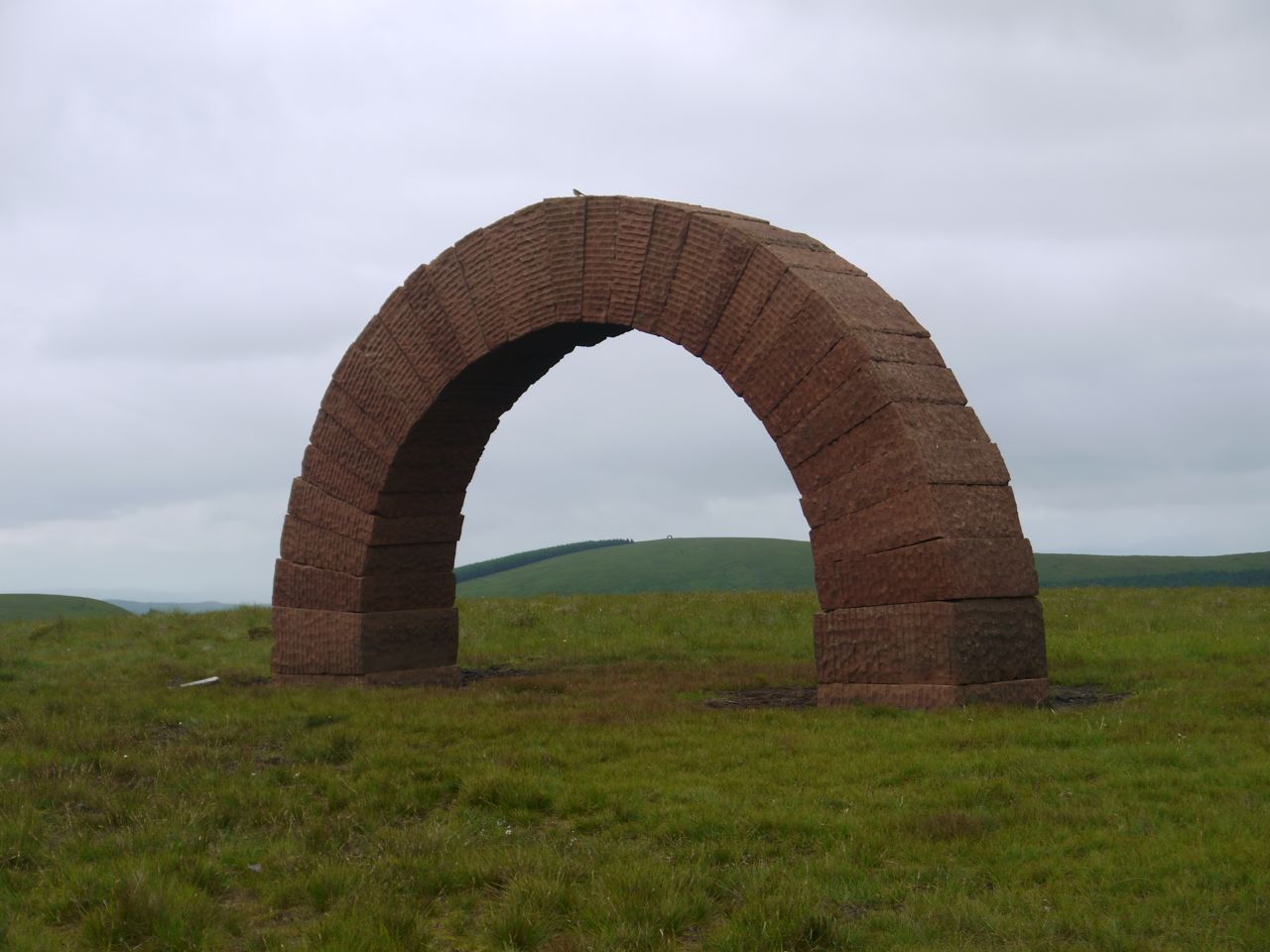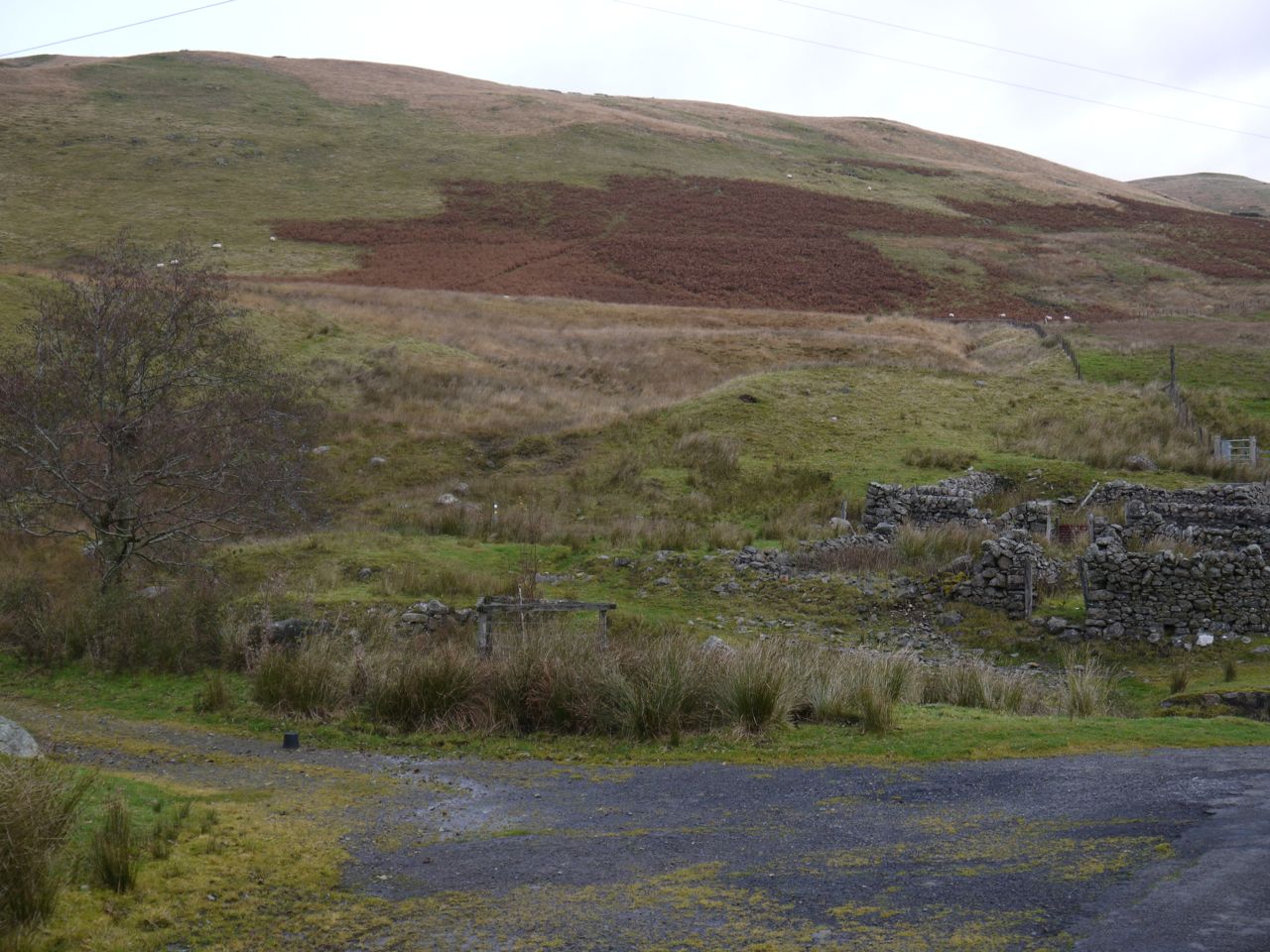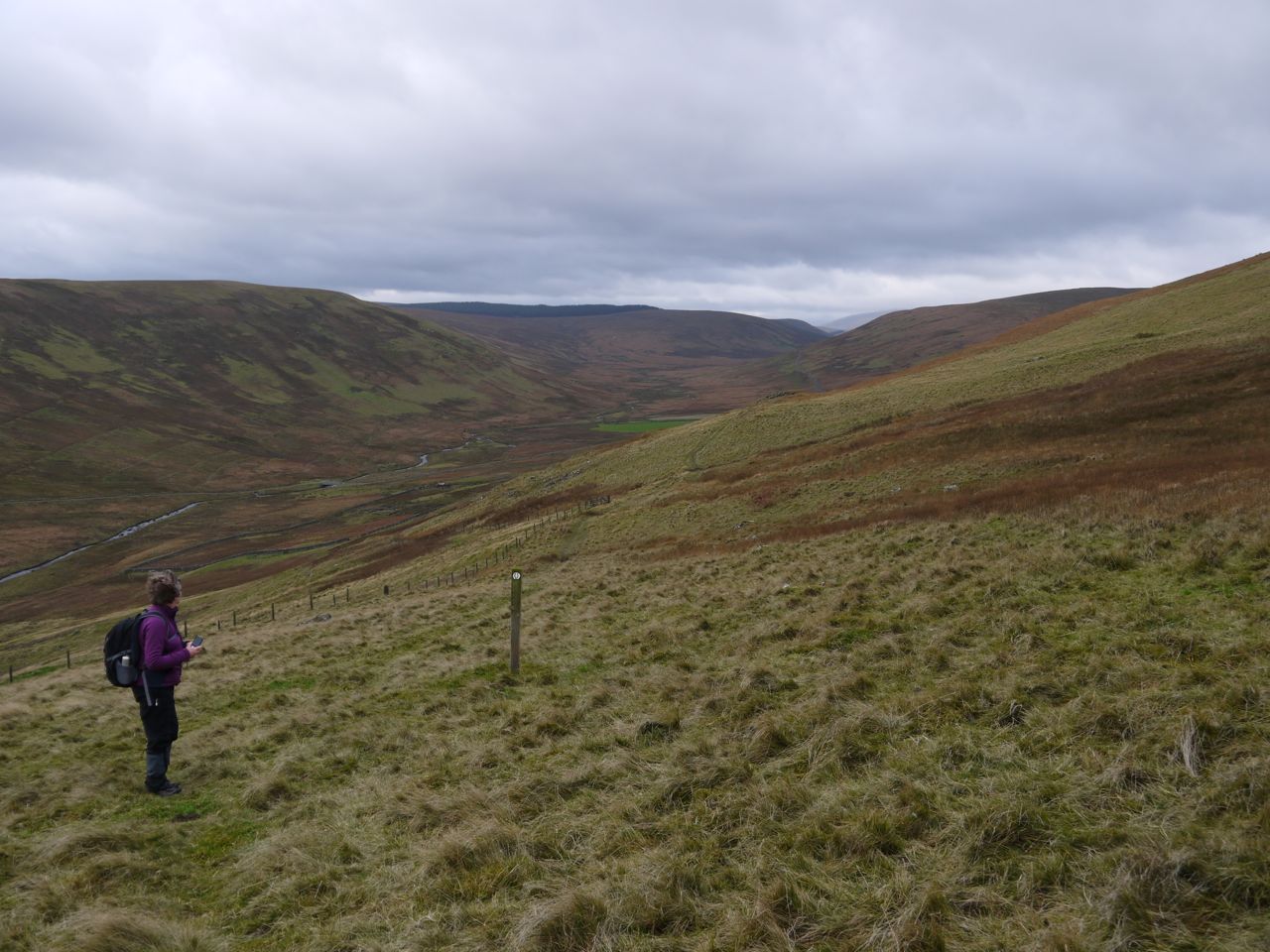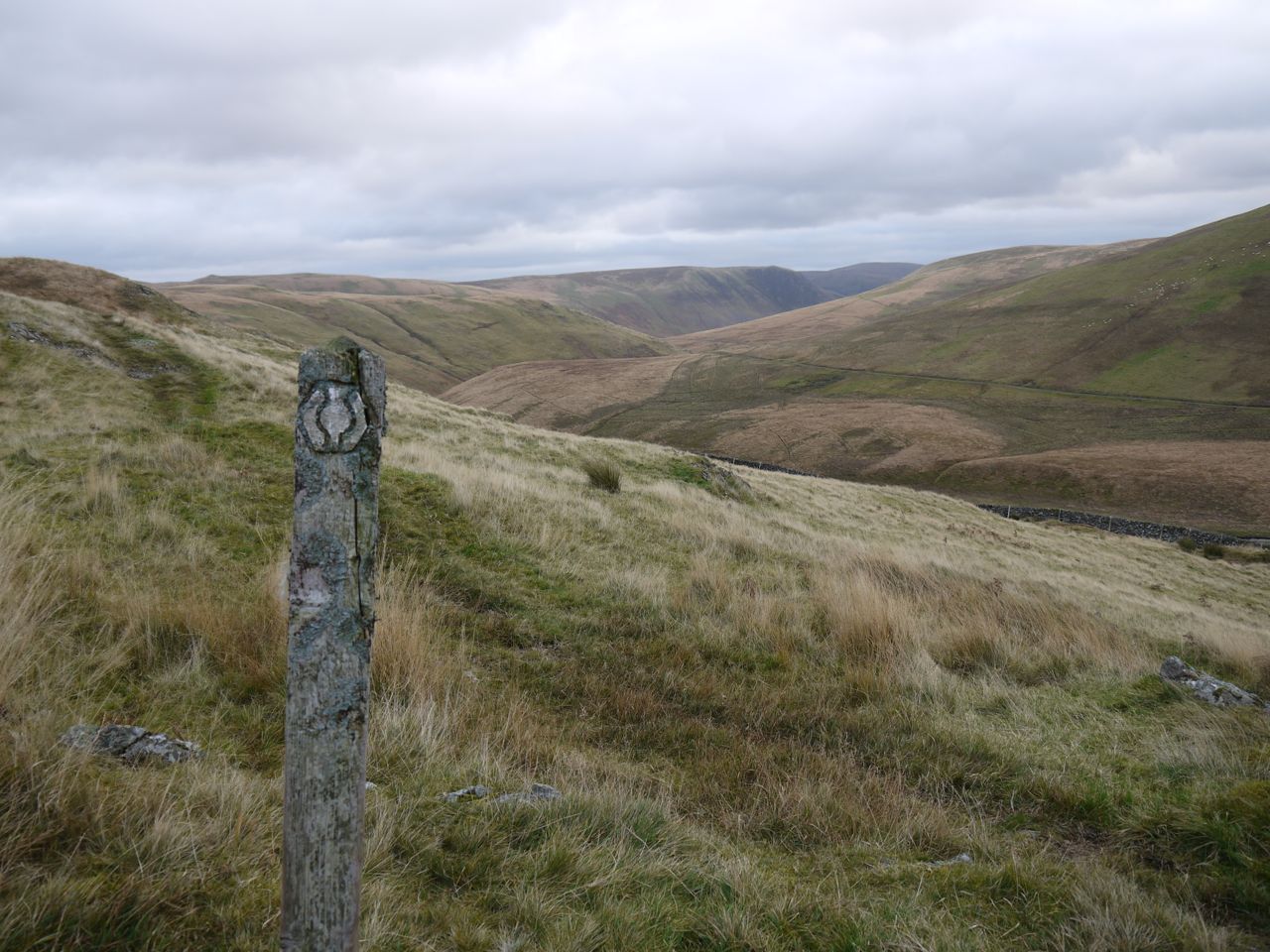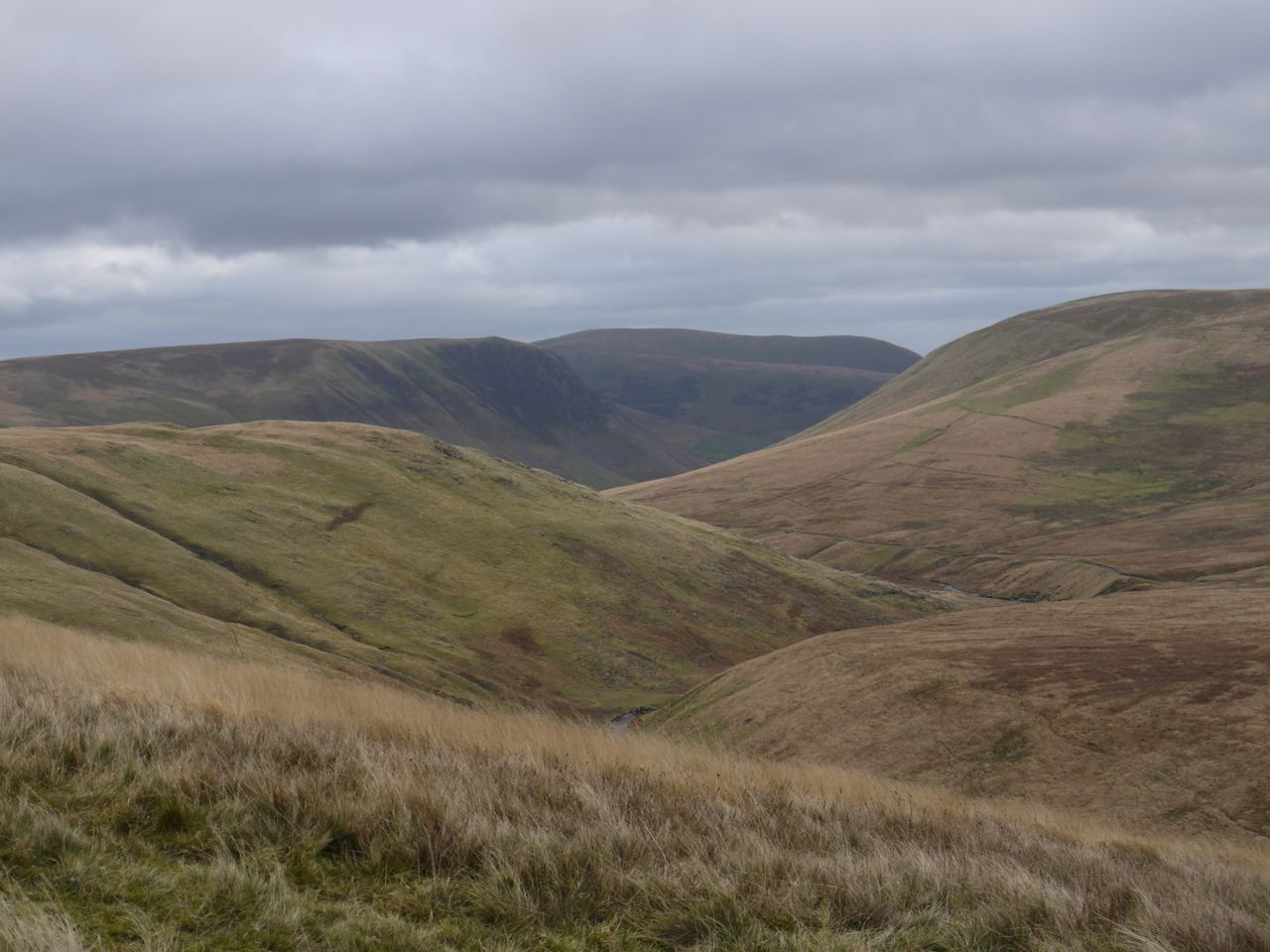
SUW10: The roller-coaster section

11.1 miles   676m ascent   5h 17m; max elevation 725m Lowther Hill
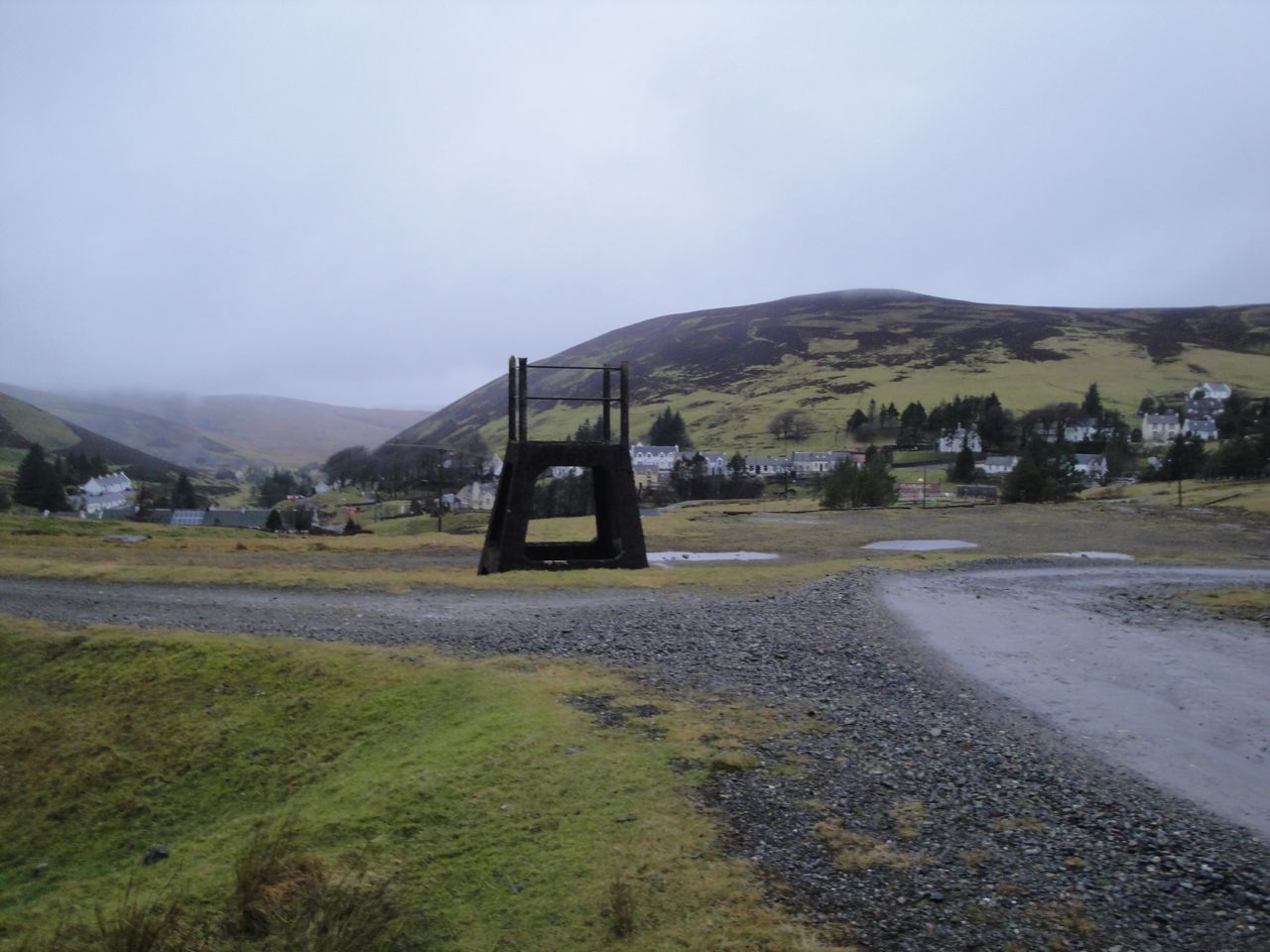
WanlockheadRoute: SUW Wanlockhead to Daer Reservoir (From the highest village in Scotland, along the Lowther roller-coaster, to the headwaters of the River Clyde.)

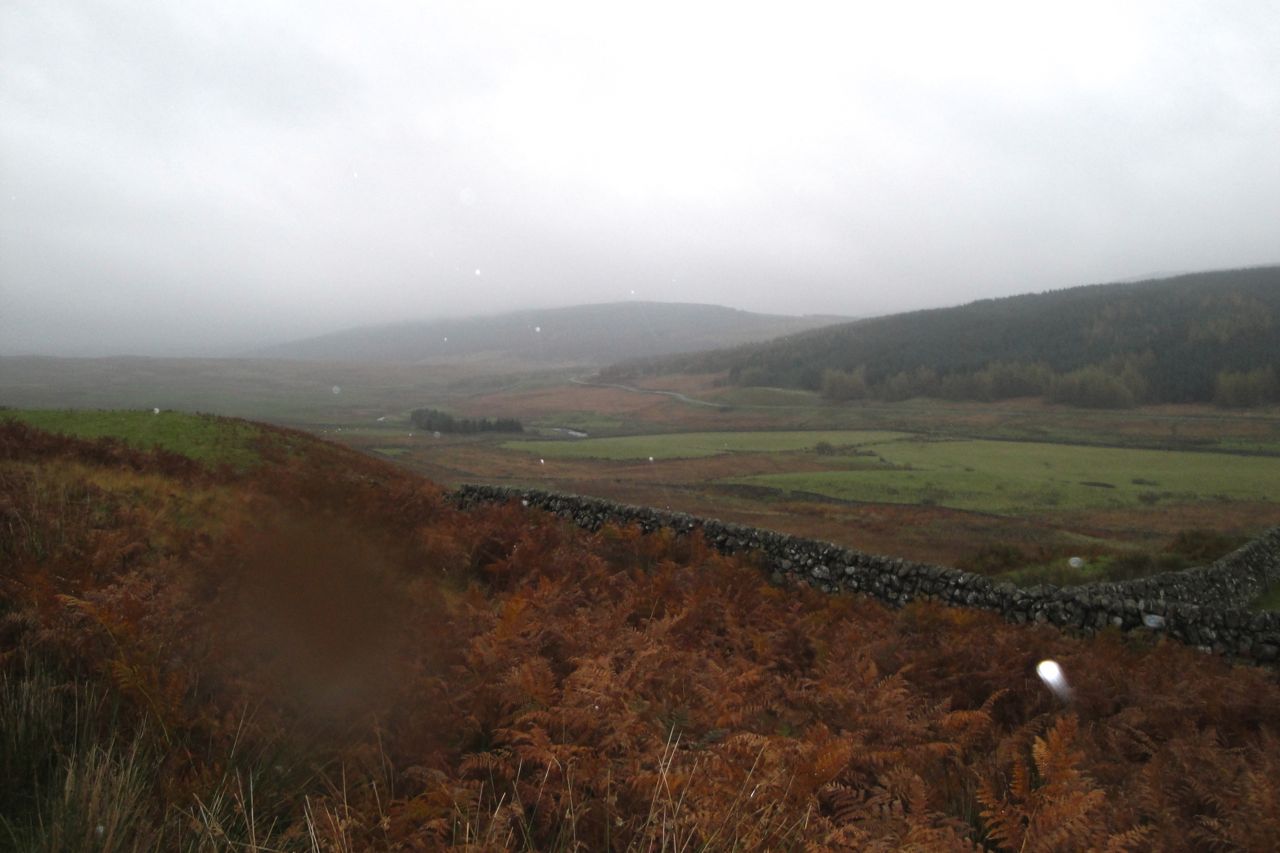
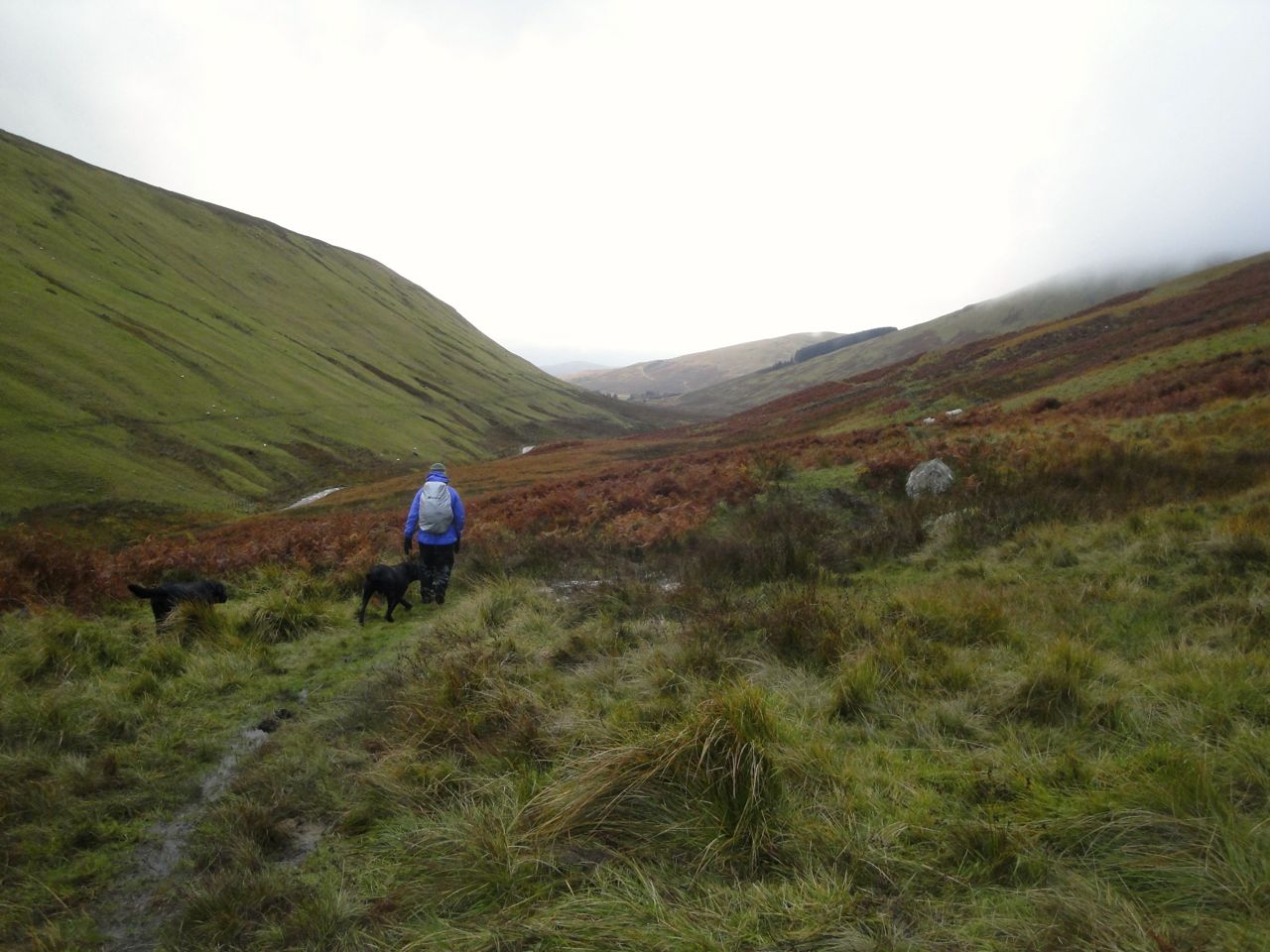
Another rainy day on the SUW, mainly drizzle but some heavy showers, so we wore rather than carried our waterproofs. We set off from the car park of the Lead Mining Museum at Wanlockhead, up a short steep section, past another playground and onto the slopes of Stake Hill. There were SUW posts aplenty and even a couple of seats, one a half log, the other a stile sans-fence.

Since I had walked up Lowther Hill this way before and recalled it was a straightforward route on obvious track or tarmac road I had stuffed the map into my rucksack, zipped it up and encased the lot with a waterproof cover. The seeds of my navigational downfall were sown.

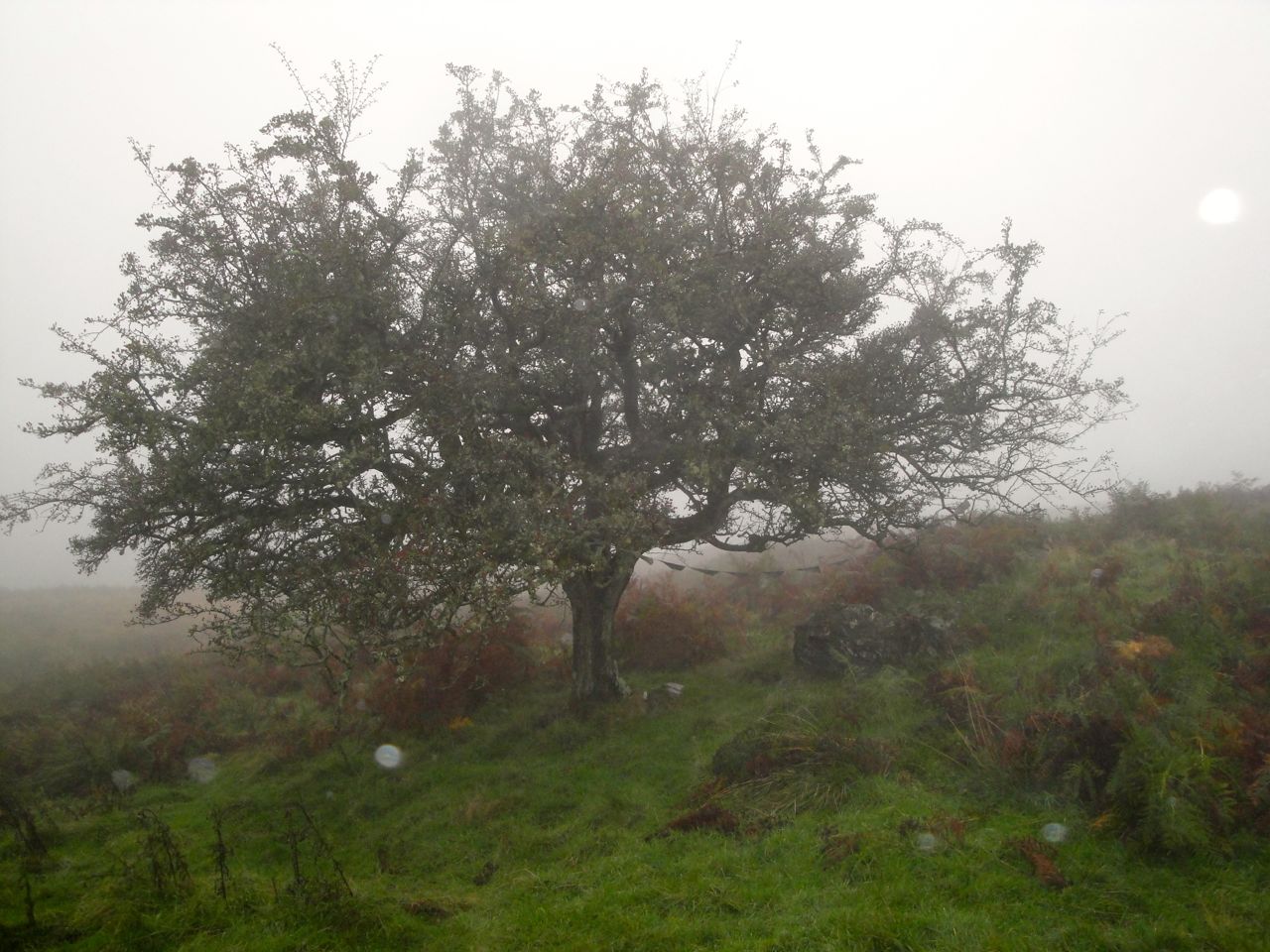
We huffed and puffed our way up the slope and into the low cloud and then we came upon a small bridge. I didn’t remember a footbridge on the way up last time and what’s more the bridge seemed to lead downhill. There were no SUW posts visible to guide us but common sense dictated that we needed to go uphill. So I turned away from the bridge, still on a track of sorts and continued uphill into thicker mist.

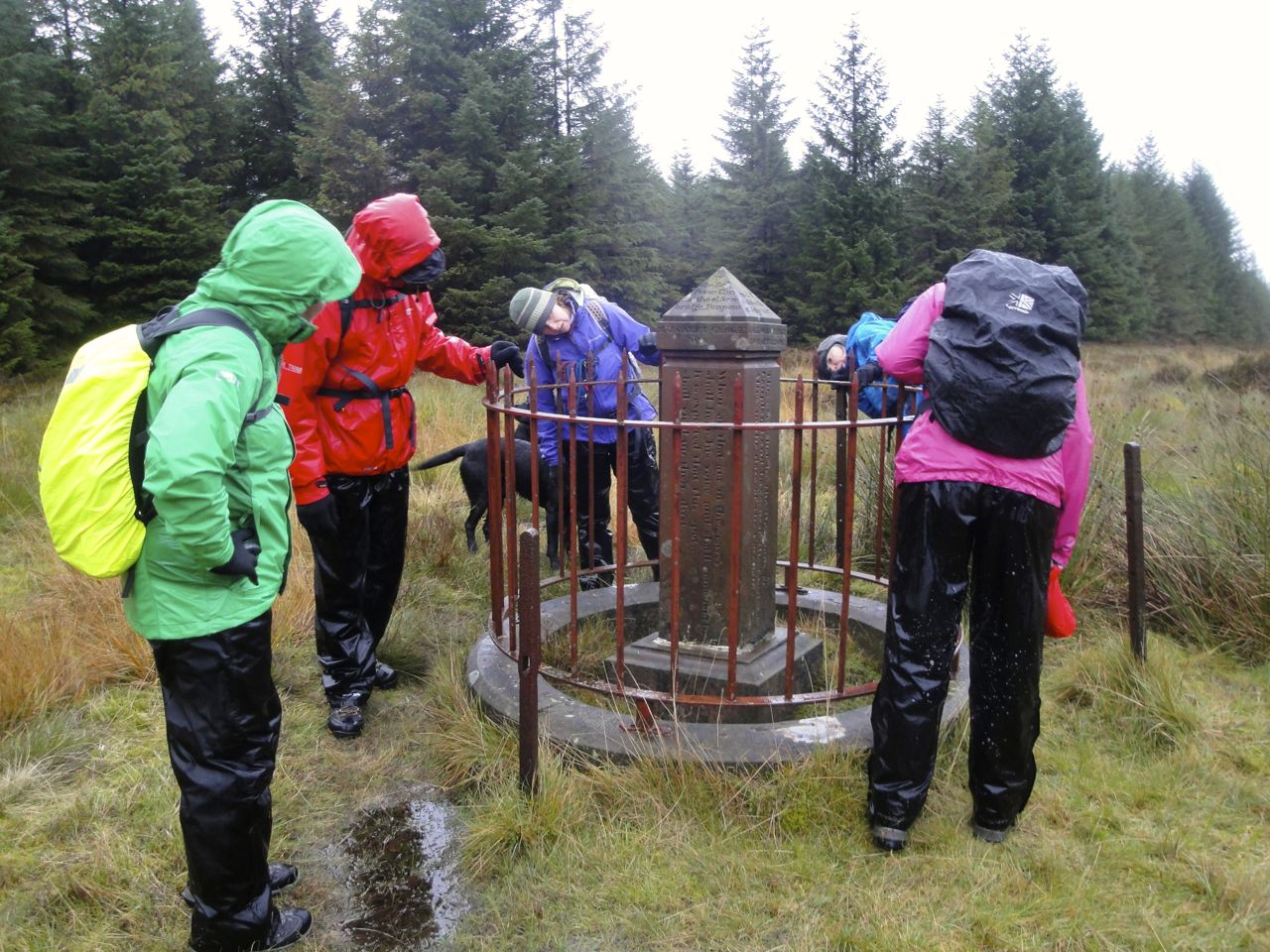
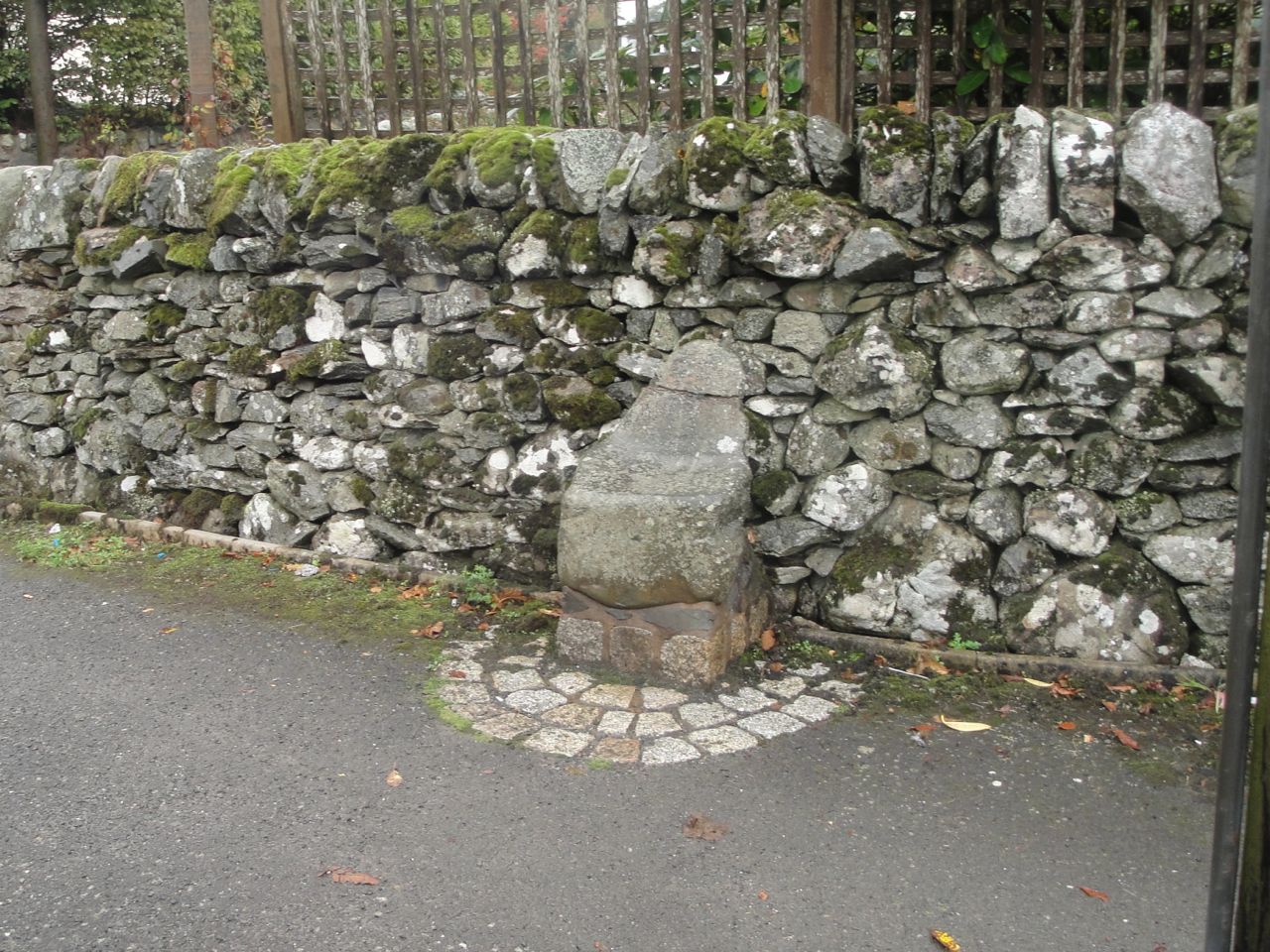
In the distance, we spied a post and made for it but it turned out to be a round post, not a square SUW marker. Other candidate posts turned out to be fence posts but I reasoned that as long as we were heading uphill we would soon meet the road up Lowther Hill. We passed a small stone, like a milestone, but then we began to head downhill. We could not be where I thought we were.

There was nothing to see in the mist to get our position so I dug out the map and compass and got our position from the GPS. I had led us too far up Stake Hill and the “milestone” had likely been the summit. We needed to head south to get back on track. This was a real eye opener, because south was virtually opposite where we thought it was. Despite thinking I had been walking in the same general direction we had turned a half circle.

Compass guiding our way this time, we set off southwards over the moorland, passing another post which wasn’t an SUW post and when we came out of the thicker mist we spied the road just below us, a track of sorts leading to it. What a relief to be back on track. So if you reach that wee footbridge, cross it. Presumably there will be a SUW post just beyond it.
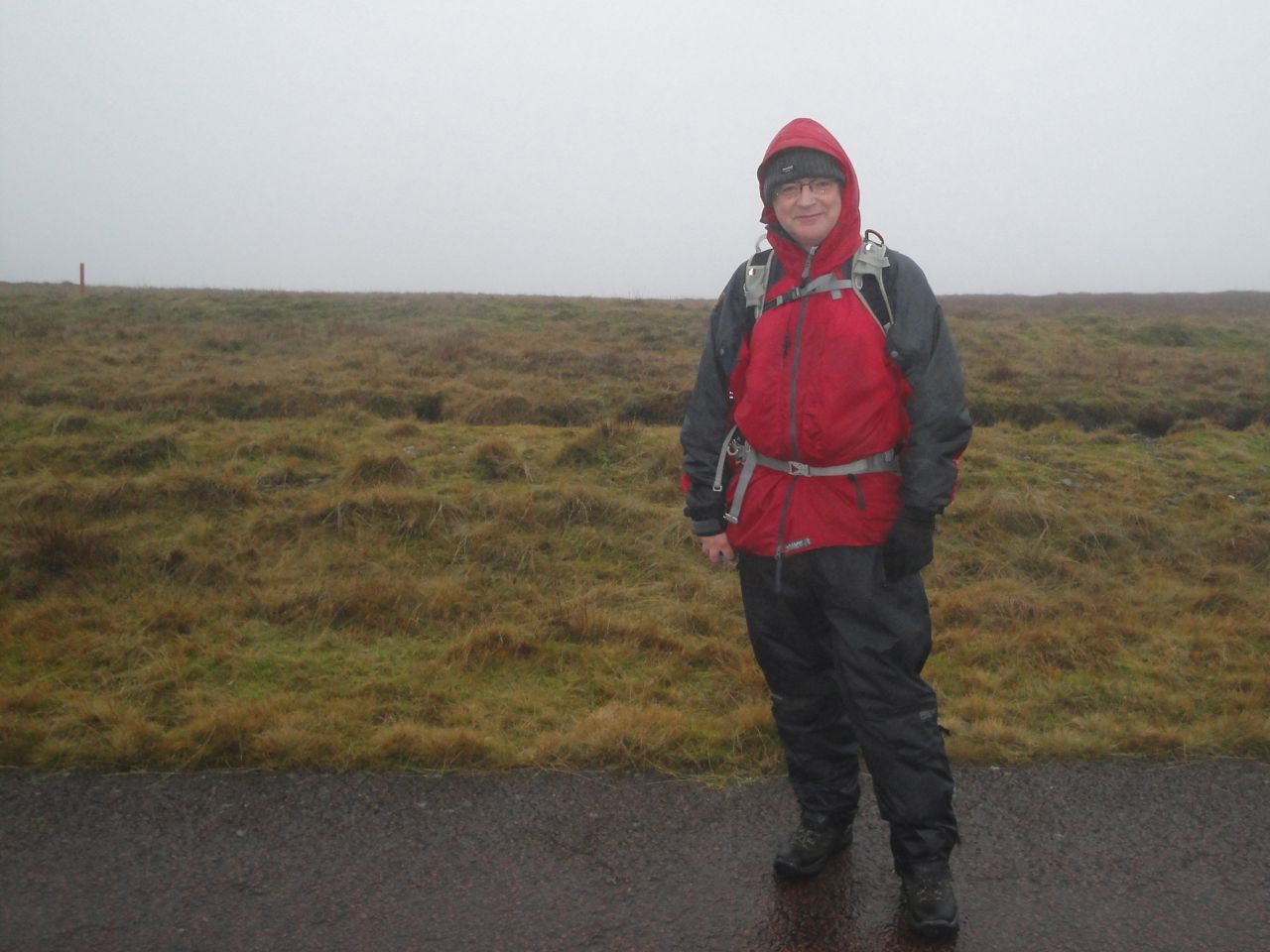
Mike after leaving D&G. The red post in the background is the county boundary.

Mike after leaving D&G. The red post in the background is the county boundary.

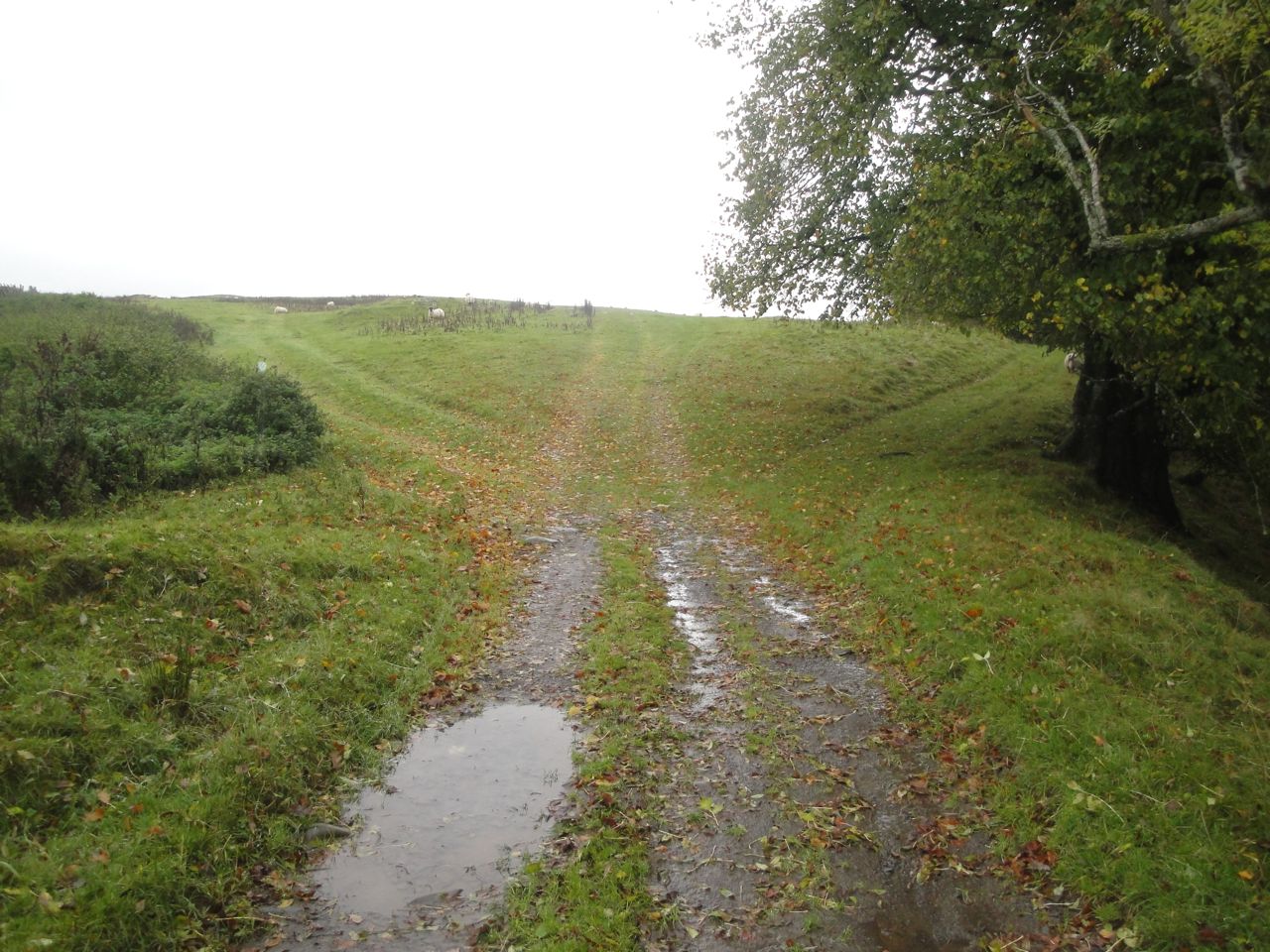
The road zig-zags up Lowther Hill but there are grassy tracks taking a more direct route and crossing the road several times. These follow the route of the county boundary marked by red posts beside the fence (the South Lanarkshire and Dumfries and Galloway boundary). After 110 miles of Dumfries and Galloway on the SUW, we crossed into Lanarkshire without any fanfare.  We did celebrate with a pat on the back though so one can say we don’t push the boat out when it comes to celebration.

At Lowther Hill (725m) we reached the highest point of the SUW and Audrey bagged her first Donald hill. I reasoned that if we were at the highest point it must therefore all be downhill from there, but the SUW’s roller coaster section from Lowther to Overfingland was to teach us otherwise.

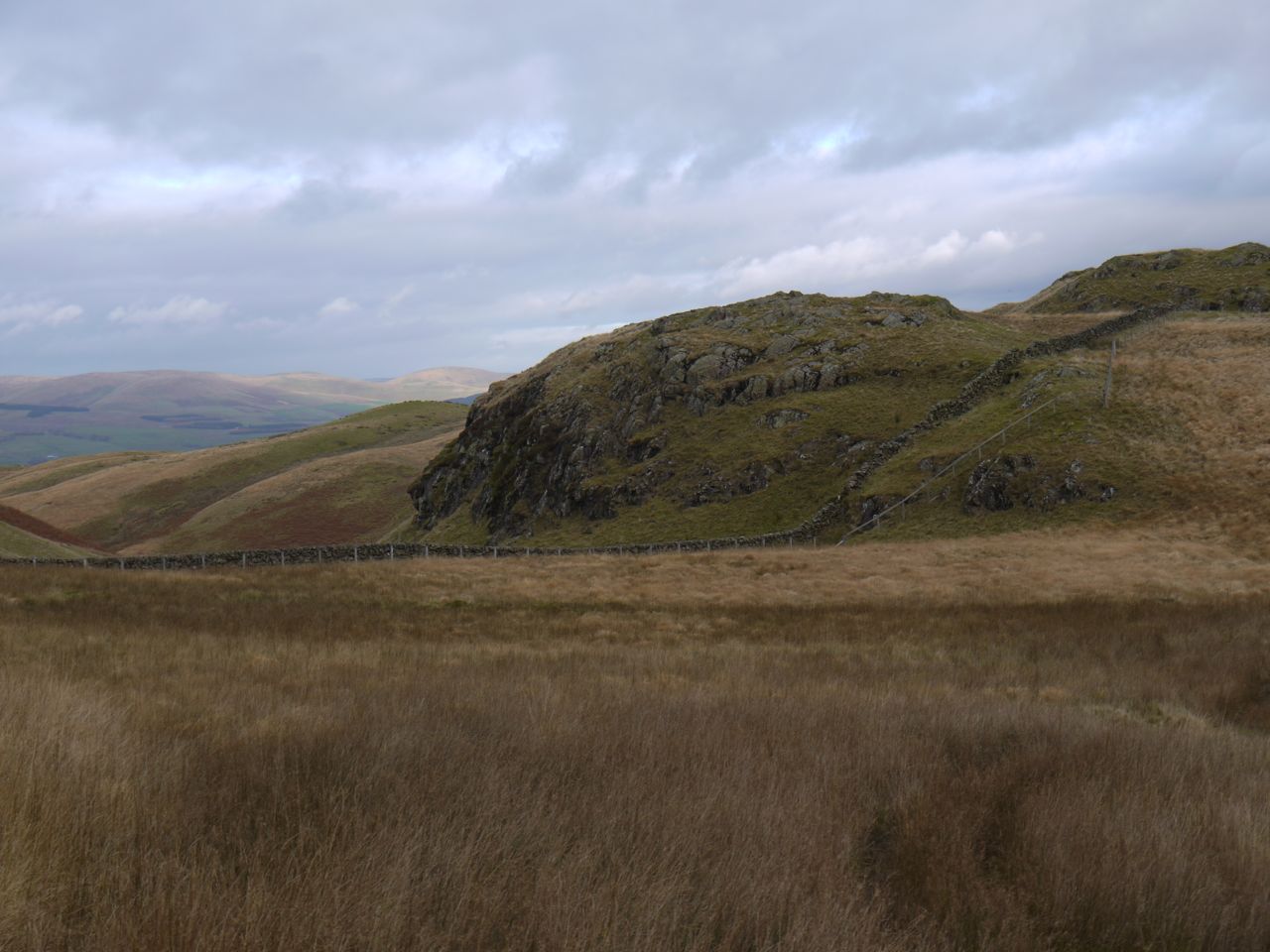
The visibility was so limited on Lowther Hill that we couldn’t even see the buildings from the gate. Closer we could just make out the radar equipment and it looked as though the golf-ball covering was missing. Since the visibility was so limited we followed the fence until we found an SUW marker. The OS map has the SUW following the fence along the Cold Moss-Comb Head ridge but the way-markers diverge from the fence by quite a distance on the way to Cold Moss. This was a welcome downhill stretch and we spotted several white-coated hares on the slopes, bounding up the hills much quicker than we could have managed.
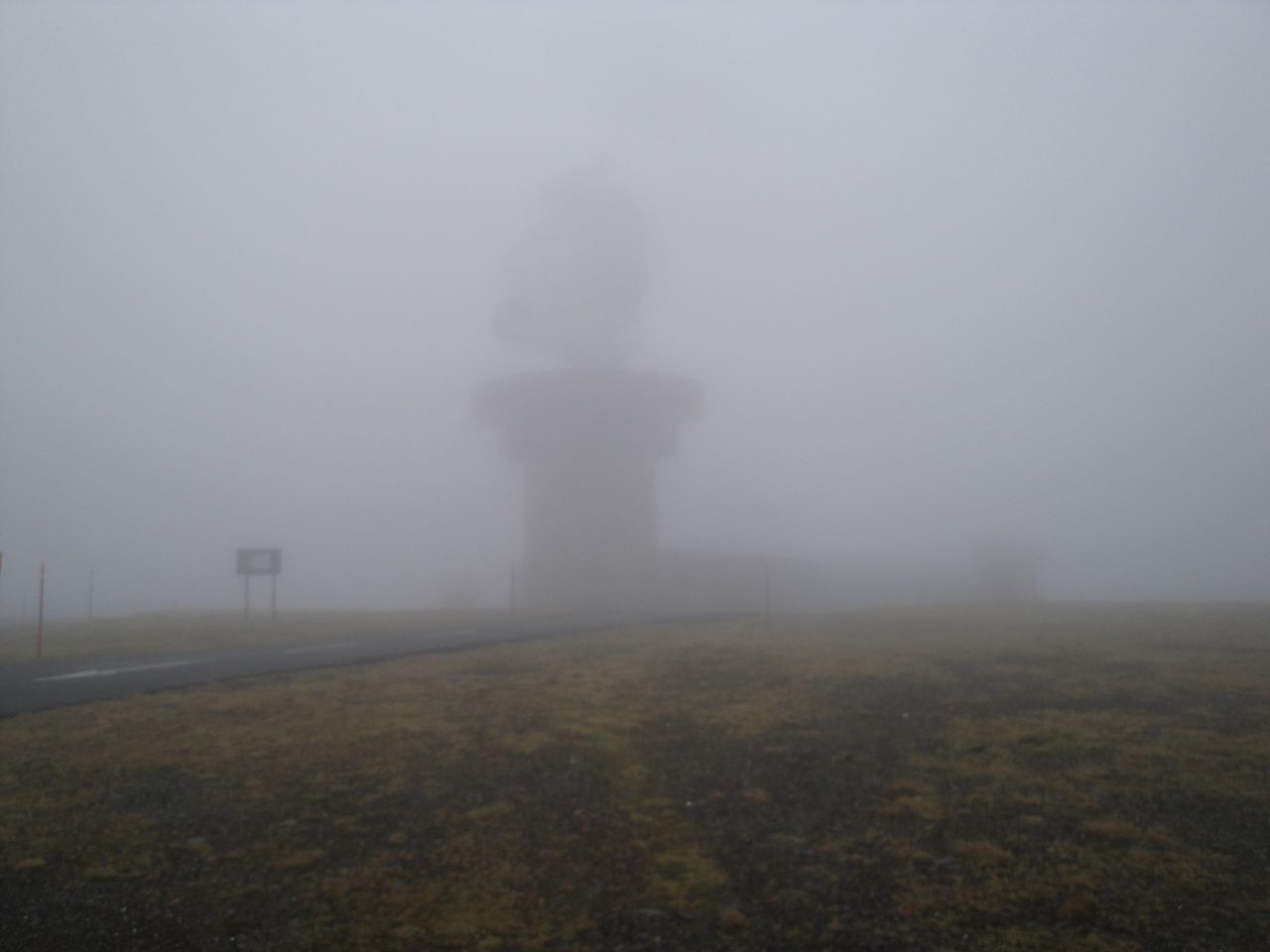
Lowther without its golfball

Lowther without its golfball (more visible on photo than naked eye)

Approaching the dip before Cold Moss the SUW was taking us quite a way east of the ridge but I wasn’t keen to lose so much height so I took us back towards the higher ground only to head back to the SUW when I found how steep the western side of the col was. So much for that short cut.

I had told Audrey that the dip between Cold Moss and Comb Head was negligible (keep morale up eh?). Comb Head didn’t even make the cut as a Donald top with its measly 13m of drop. Imagine my surprise, and Audrey’s, then when we were confronted by the huge steep slopes of Comb Head towering above us. That wasn’t how I remembered it. Audrey was rendered speechless. I’m sure we both looked as if we had been sucking lemons.

But there’s no point in crying when your face is already wet with rain and with the best will in the world I couldn’t think of anyone else to blame so with our shoulders slumped we set about climbing the mountain before us. One minute and 40 seconds later we were at the top, astounded. It’s amazing how mist can mess up perception. It really was a negligible dip.

By now the wind had picked up. Not strong enough to make walking difficult but pouring coffee would have been out of the question if we stopped for lunch. We tried sitting in a small hollow but that wasn’t much better so lunch was deferred.

The dip between Comb Head and Laght Hill was the roller coaster at its best. The descent was steep enough to challenge our knees and thighs while keeping us alert to avoid slipping on the wet grass or mud. And after that we had a steep climb up Laght Hill which we chose to attack as several very short climbs with pauses to gaze at the stones of the ruined wall beside us.

From Laght Hill, with its wee cairn we followed the SUW beside a wall, down through boggy ground to a ladder stile over the wall above Overfingland. This ladder has been designed for someone with a greater reach than mine and was a bit tricky with its slippery steps. The path down to the A702 was even boggier. In descending we escaped the low cloud. My eyes were drawn to the valley beneath us while eagle eyed Audrey spotted a mouse as we walked down.
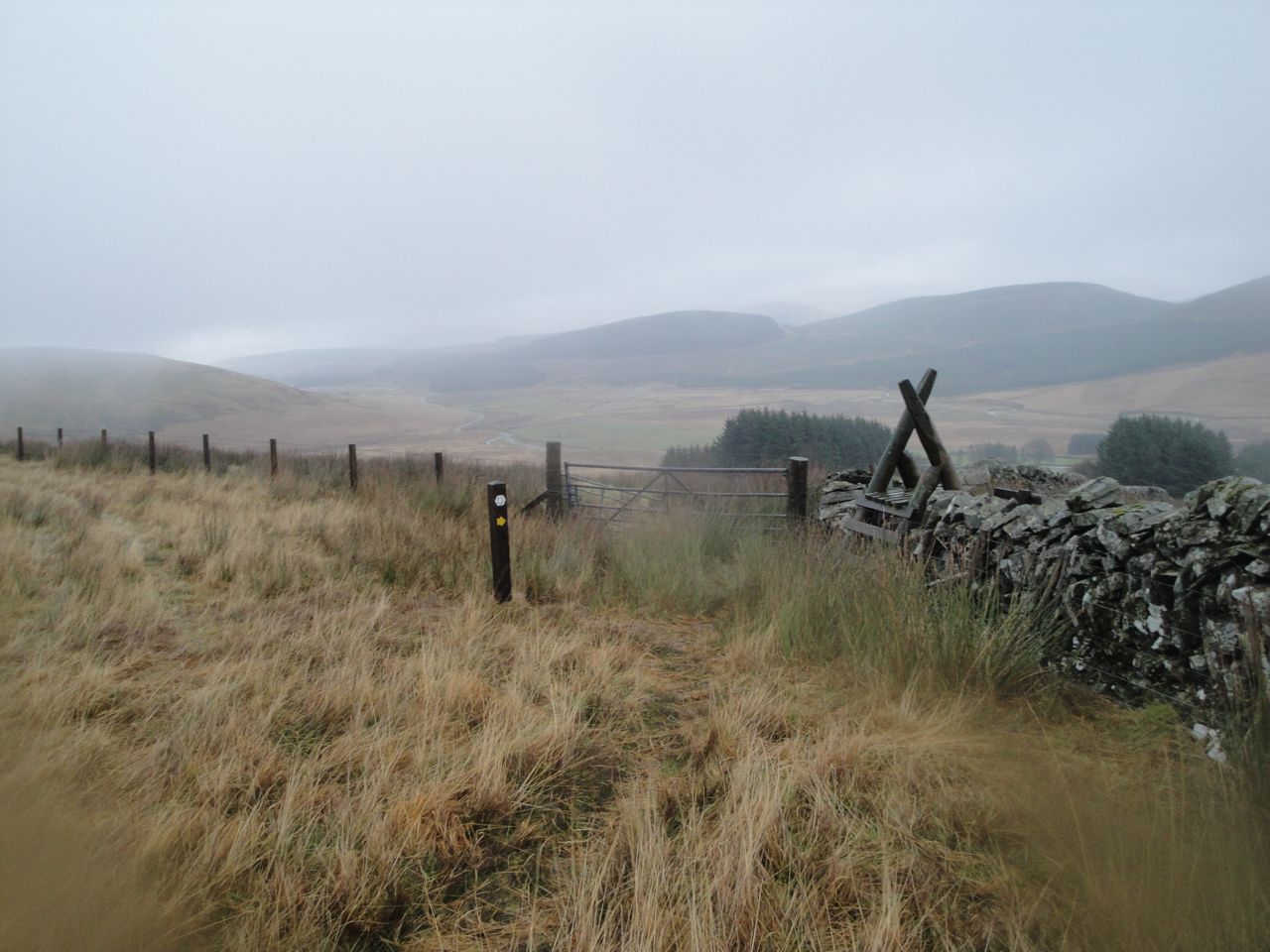
Above Overfingland

Above Overfingland

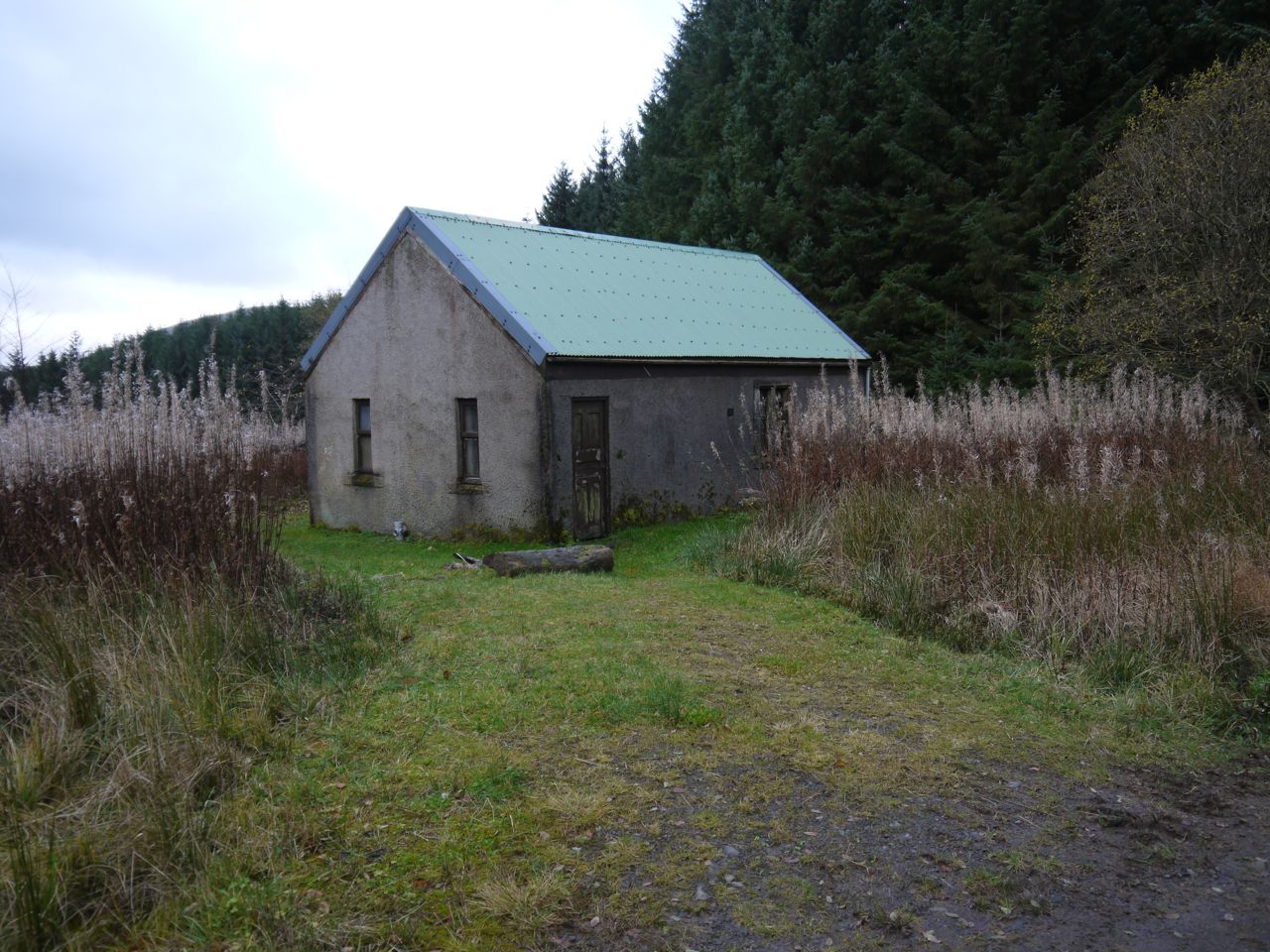
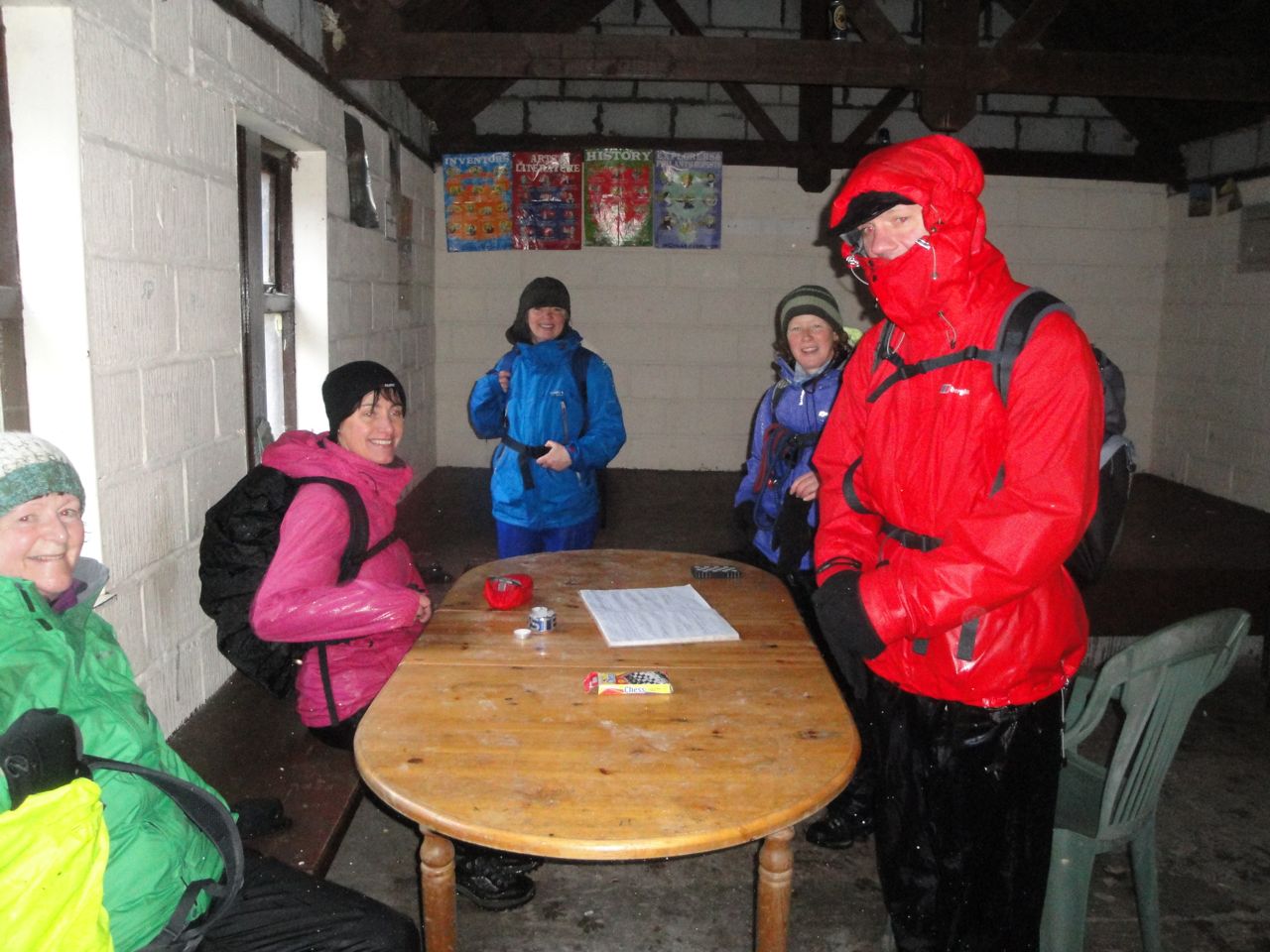
Once off the hills we looked for somewhere sheltered for lunch. The lee of a derelict hut looked our best bet, and the doors were wide open so we rested with a roof between us and the rain.

Between Lowther and Overfingland we had found an SUW post with an Ultreia plaque and though we searched carefully as we walked on, we had not found the hoard by the time we reached the next Ultreia post. The section we had walked while searching was not one we relished doing again so we accepted that we had missed this hoard. It was just about then that I spotted something unusual. I clambered over to it and there was the kist, coins and all.
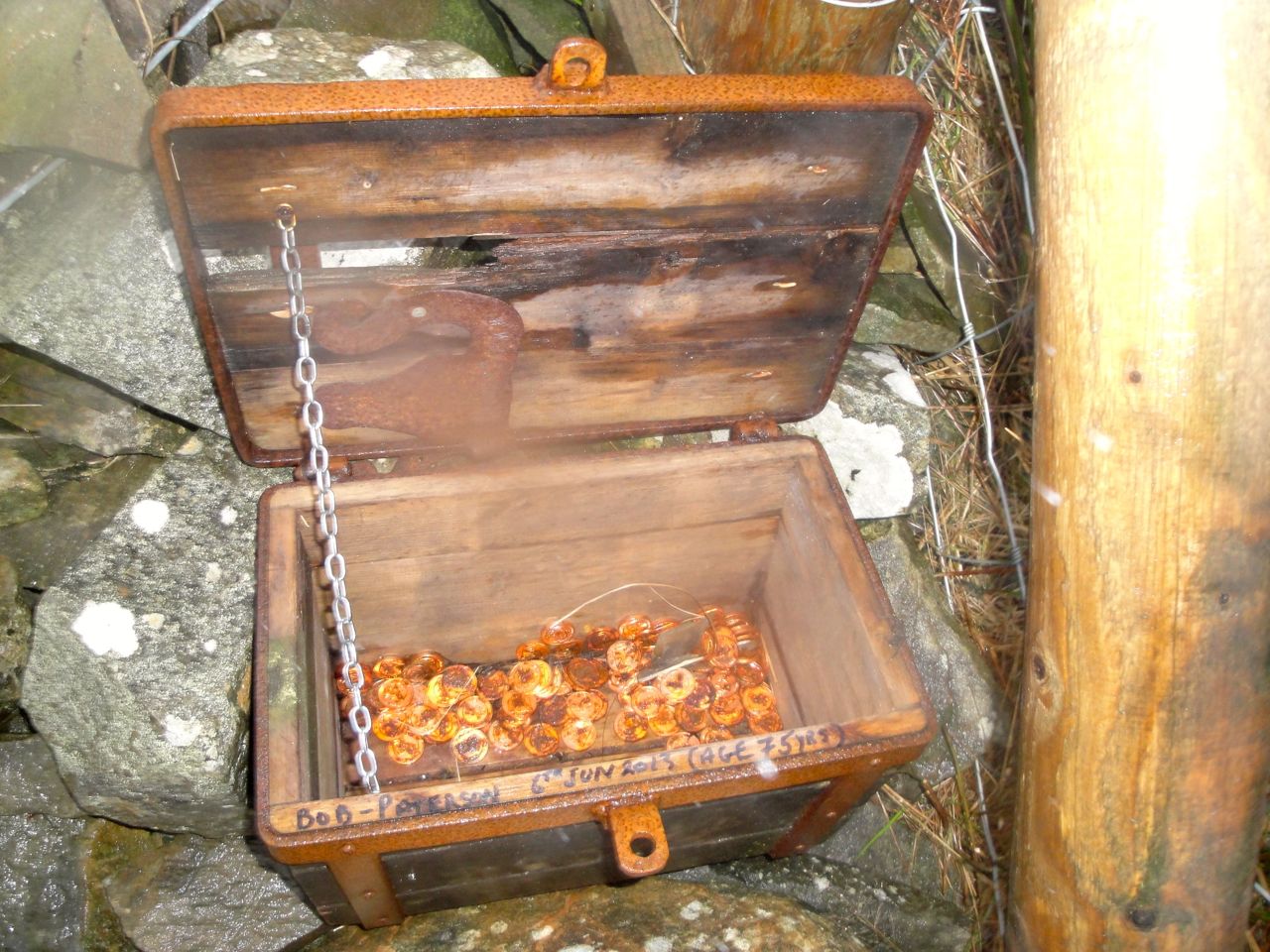
Treasure on the SUW

Treasure on the SUW

Walking along the A702, on the right side of the road (facing on-coming traffic) a car from behind us, passing in the opposite carriageway, blared its horn and swerved onto our side of the road in front of us. Why I do not know. We weren’t blocking the road and there were no other cars. I wondered if it was someone who knew us or perhaps mistook us for someone else?

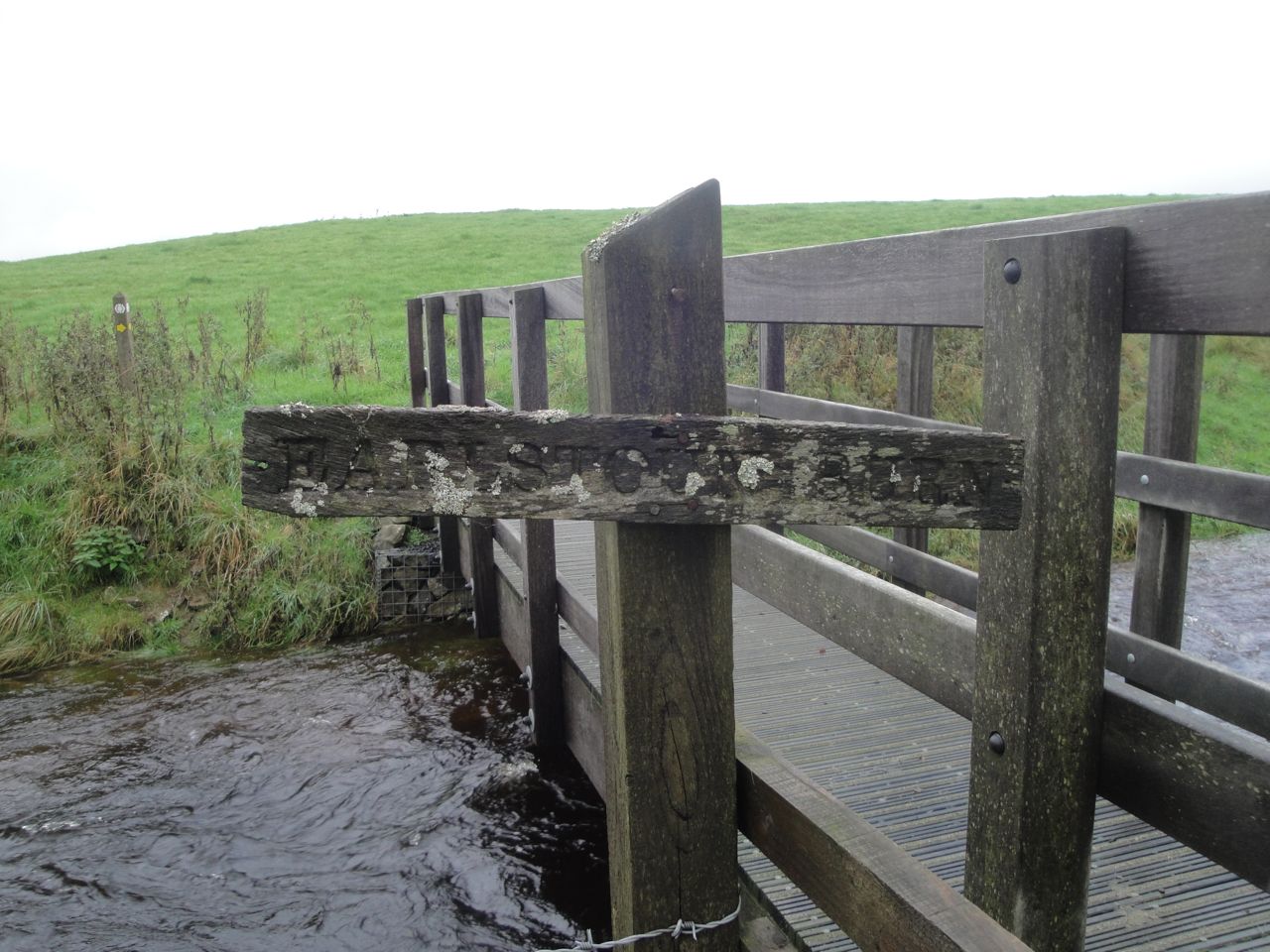
Happily we weren’t long on the road, leaving it to cross a boggy field to a footbridge over Potrail Water. A sign told us were in Watermeetings Forest. The waters that meet a couple of miles north of there being the Potrail and Daer Waters which combine to form the River Clyde.

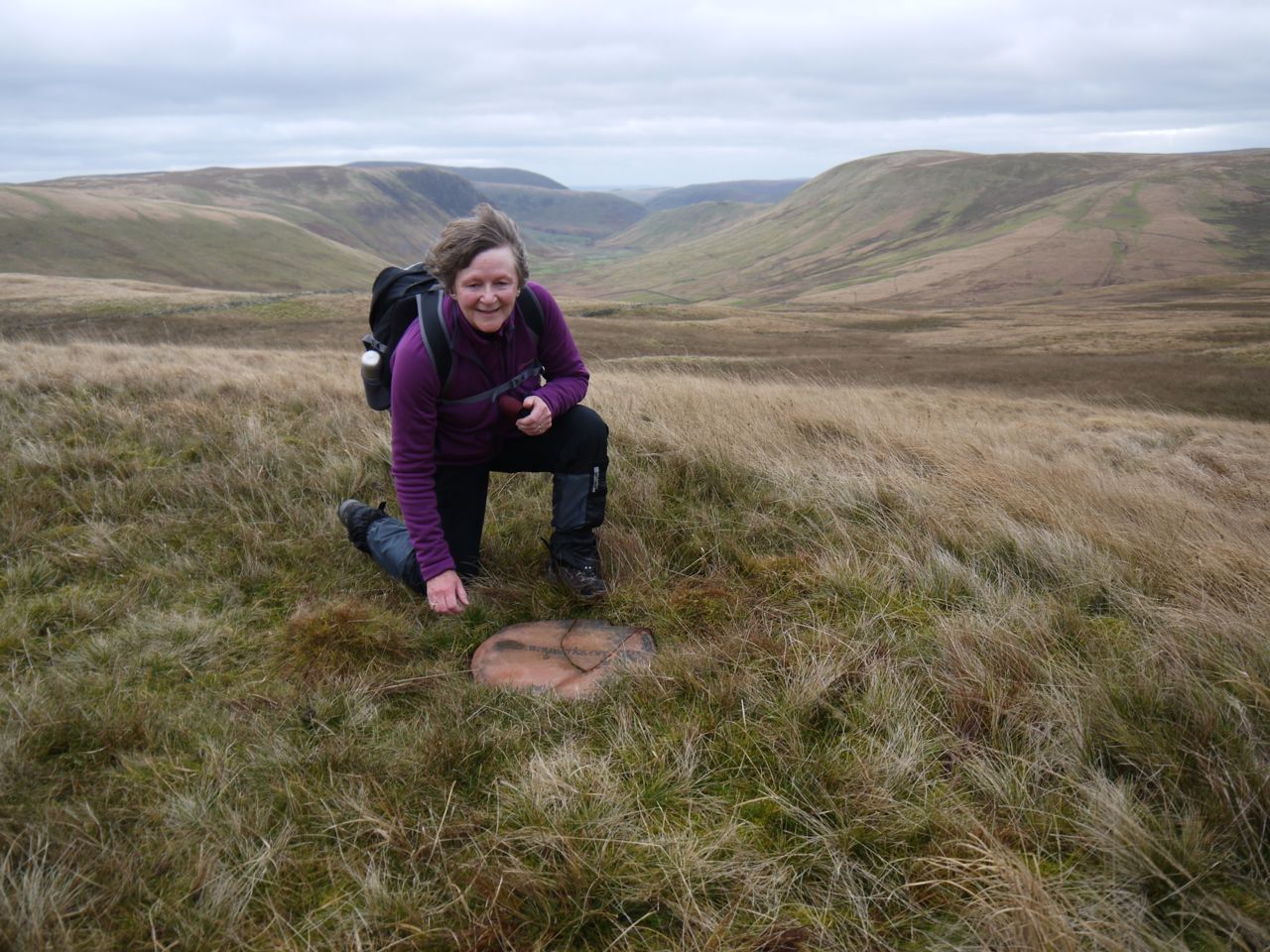
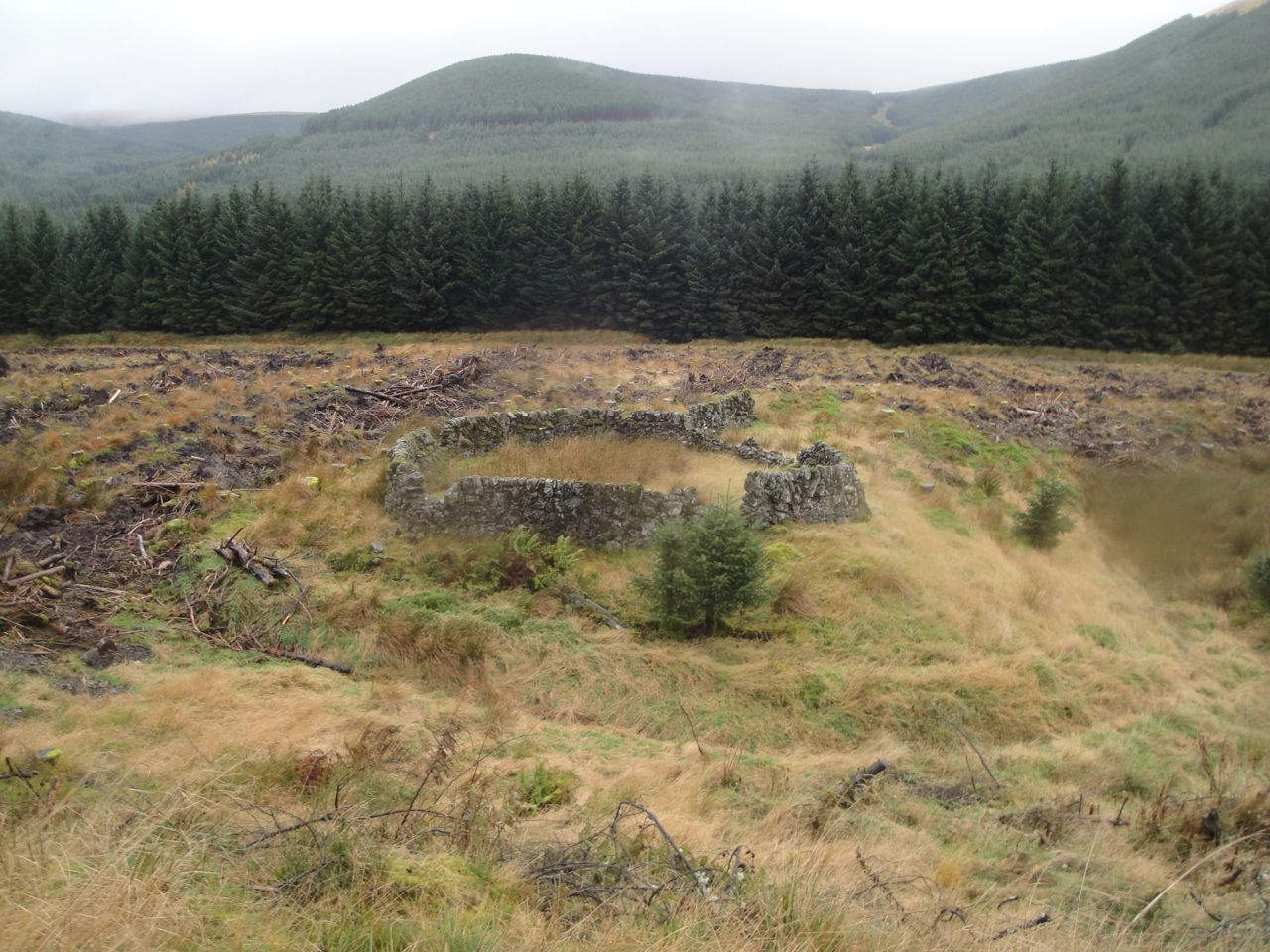
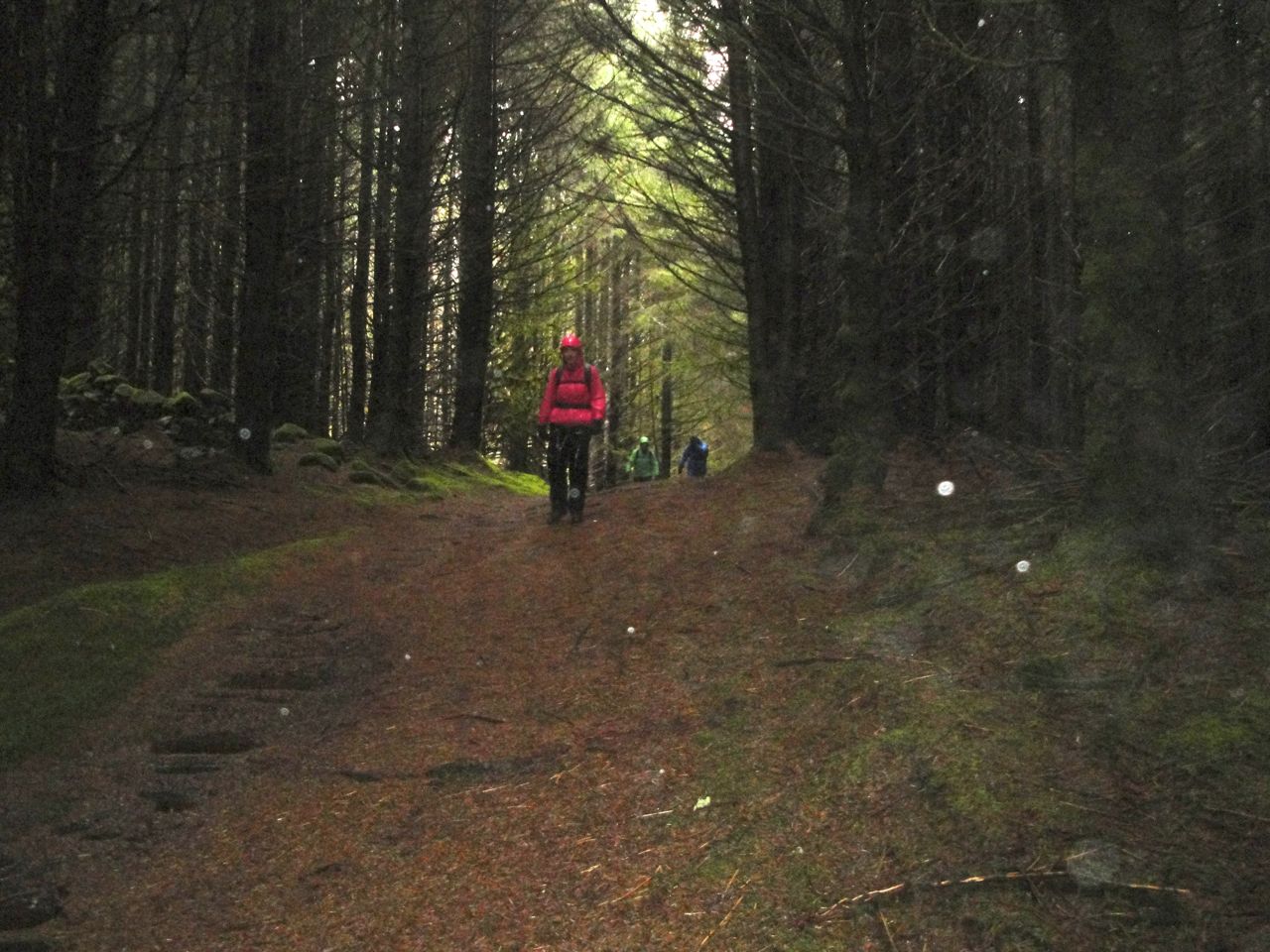
This would I think be a watery place to walk but the SUW is raised on an embankment which winds through new plantings of both conifers and broad-leaved trees, the latter empty of leaves but covered in lichen. The SUW soon joins a forestry track that climbs the col between a couple of wee hills, Coom Rig and Little Shag then crosses the lower slopes of Comb Law. Along here, opposite a sheepfold at the end of a stand of trees is a lonely SUW post. We had our photos taken near it since it is the SUW’s halfway point. It is certainly the SUW post closest to halfway. Since we were both driving, I hadn’t brought the champagne.
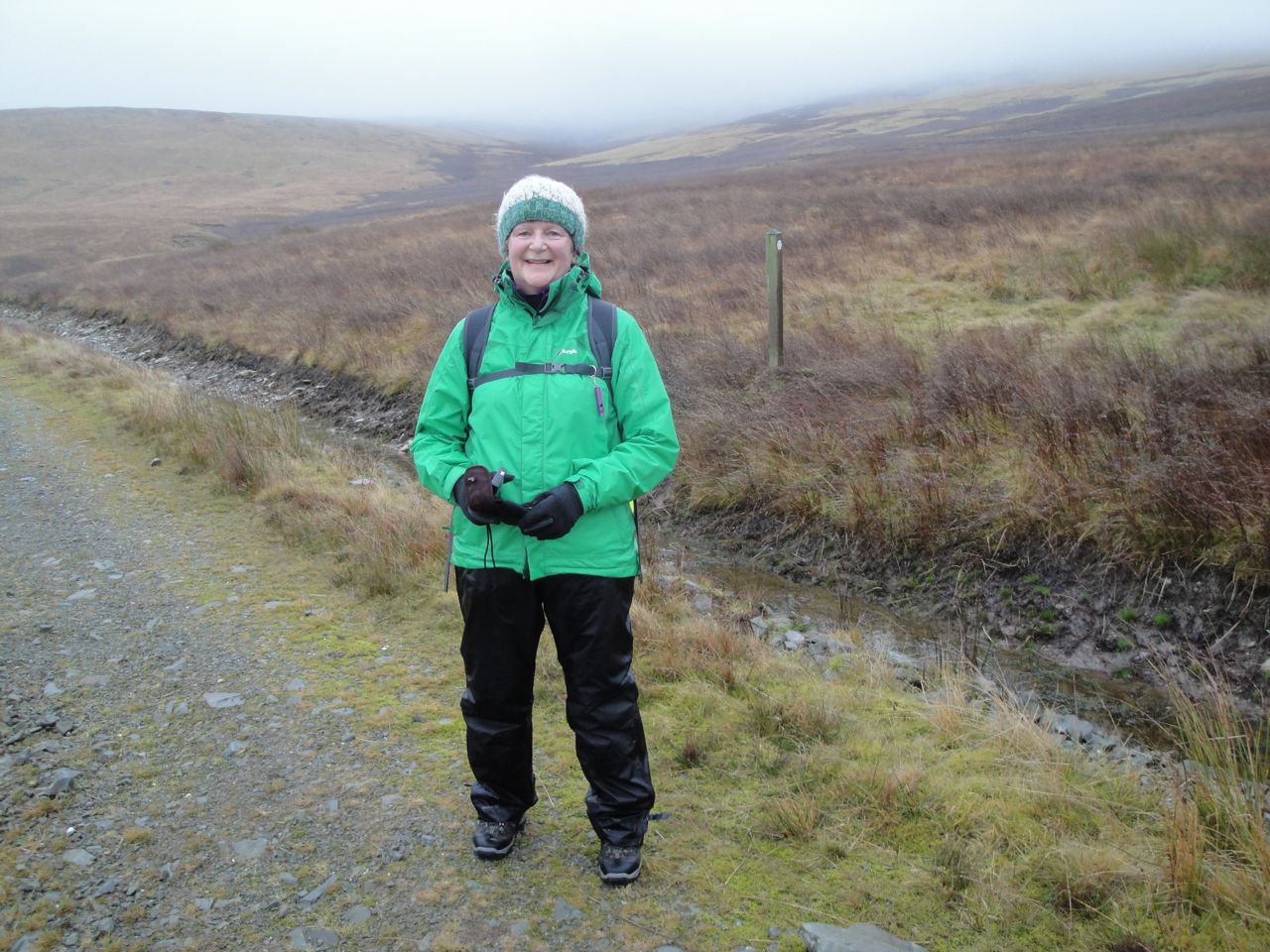
Audrey halfway along the SUW (117 miles walked)

Audrey halfway along the SUW (117 miles walked)

We plodded on along the forestry track and eventually had our first glimpse of Daer’s grass covered dam. The hares here were still in their brown fur and though there were warning signs for deer but we did not see any. We crossed the dam along its grass covered top, the cloud level shifting as we walked giving us some views of the Daer hills across the water and a tree line from Ae forest peeping up over the horizon, Dumfries and Galloway just a couple of miles away.
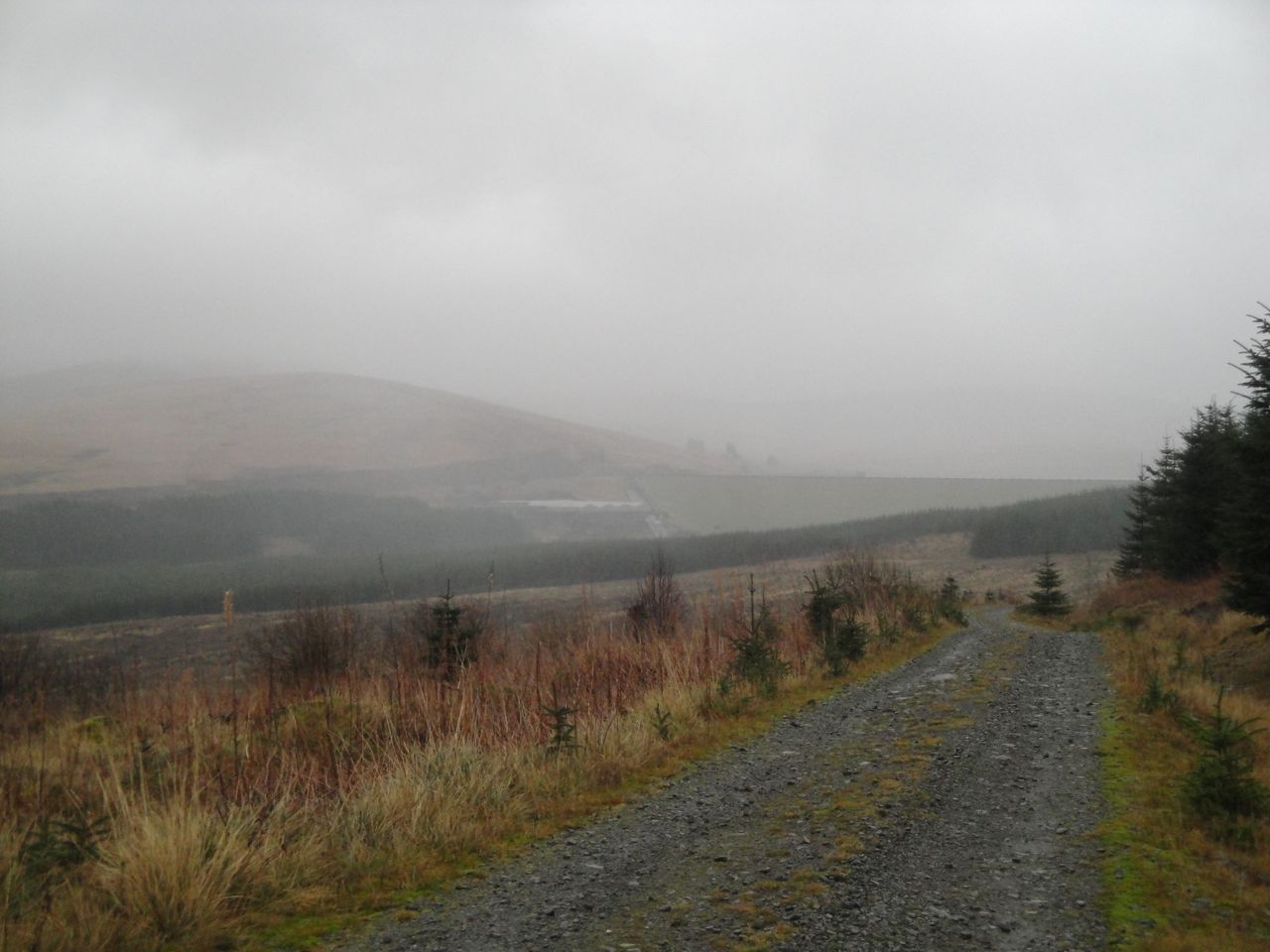
Daer Dam in the mist
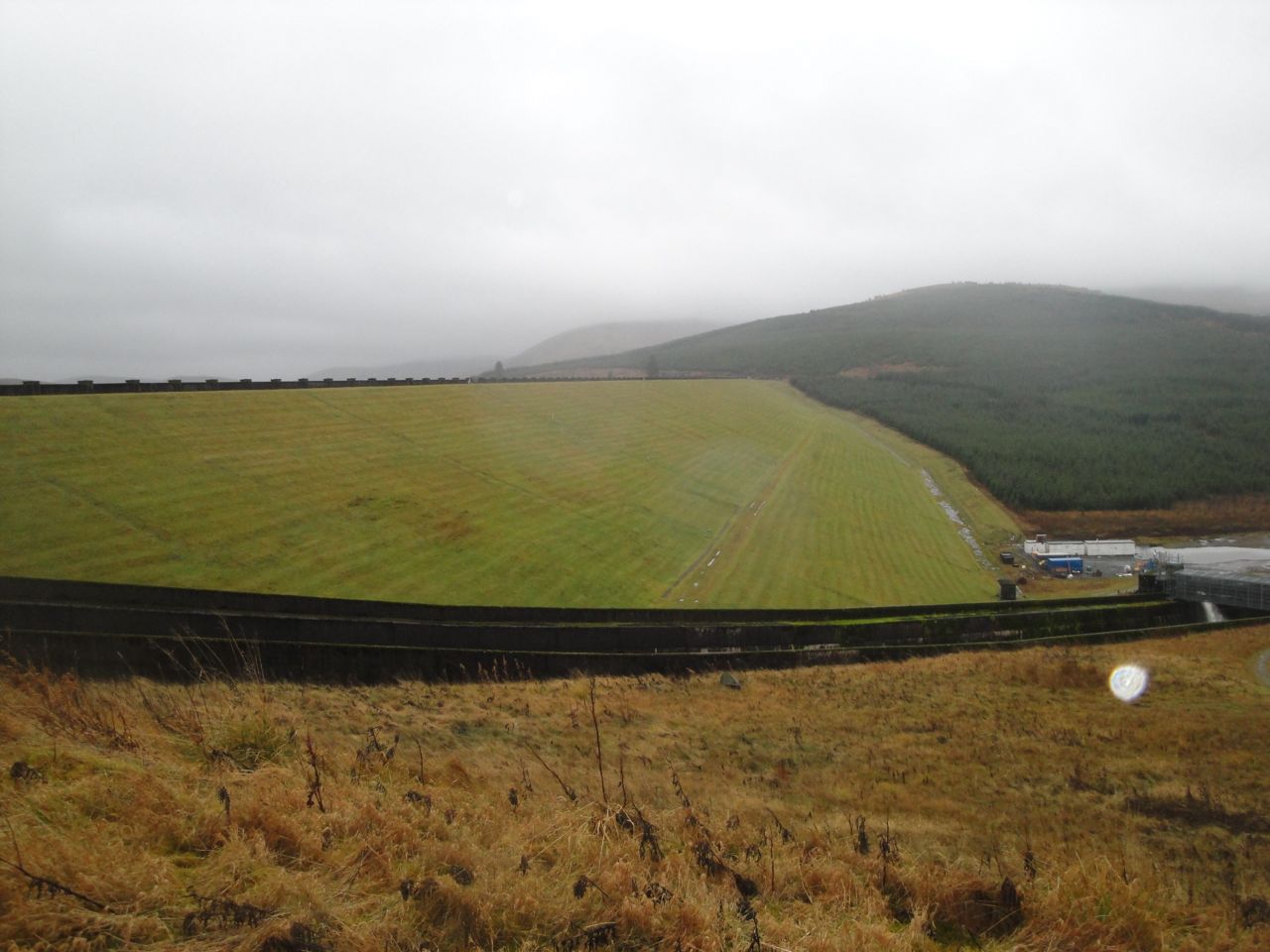
Daer Dam in the mist

Daer Dam

Daer Dam

We had left a car in a large clearing near the waterworks, close to a road sign for a playground (but with no evidence of a playground). I had looked at google earth and thought there might be a lay by up near the eastern end of the dam where I could park, but this is actually an overflow from the dam with nowhere to park. Having walked past this, and effectively crossed Daer water I felt that we had closed this section by crossing the headwaters of the River Clyde.

And as if the walk wasn’t enough, back at Wanlockhead for the car, who should be in the car park but Santa…well, Mrs Clause actually (no beard).


[sgpx gpx=”http://www.screel.co.uk/walks/wp-content/uploads/2013/12/RK_gpx-_2013-12-08_0922.gpx”]
 

Posted in Dumfries & Galloway, Lanarkshire | Tagged , | Comments Off on SUW10: The roller-coaster section

SUW9: Sanquhar to Wanlockhead

8.7 miles  3h 45m  ascent 596m; max elevation 483m, slopes of Highmill Knowe

Criffel from Coupland KnoweRoute: SUW Sanquhar to Wanlockhead, and detour to Black Loch

A cold dry day with occasional sunshine and the odd glimpse of blue sky. This was a straightforward section without any difficulty staying on course. We found a large car park in Sanquhar on Simpson Road with a sign telling us “Th s Pr je t is being p rt fin nced b  the E r pean Regi n l Devel pment F nd”. Presumably they were not fully financing vowels, and quite right too in my opinion.

Our route took us along Cow Wynd, under the railway and then up a gently sloping grass track to Matthew’s Folly, where there is a low brick wall with a plaque claiming it is a cairn and a couple of iron gates marked 2010 and 1910, commemorating the centenary of Sanquhar’s Riding of the Marches beginning again. I’m intrigued by the name “Matthew’s Folly” but haven’t been able to find the origin of the name.

There are several benches on the way up so the weary might rest, and the one at the top is dedicated to Samuel Kerr 1860-1916, Bootmaker. There were excellent views back to Sanquhar.

Goron

Goron

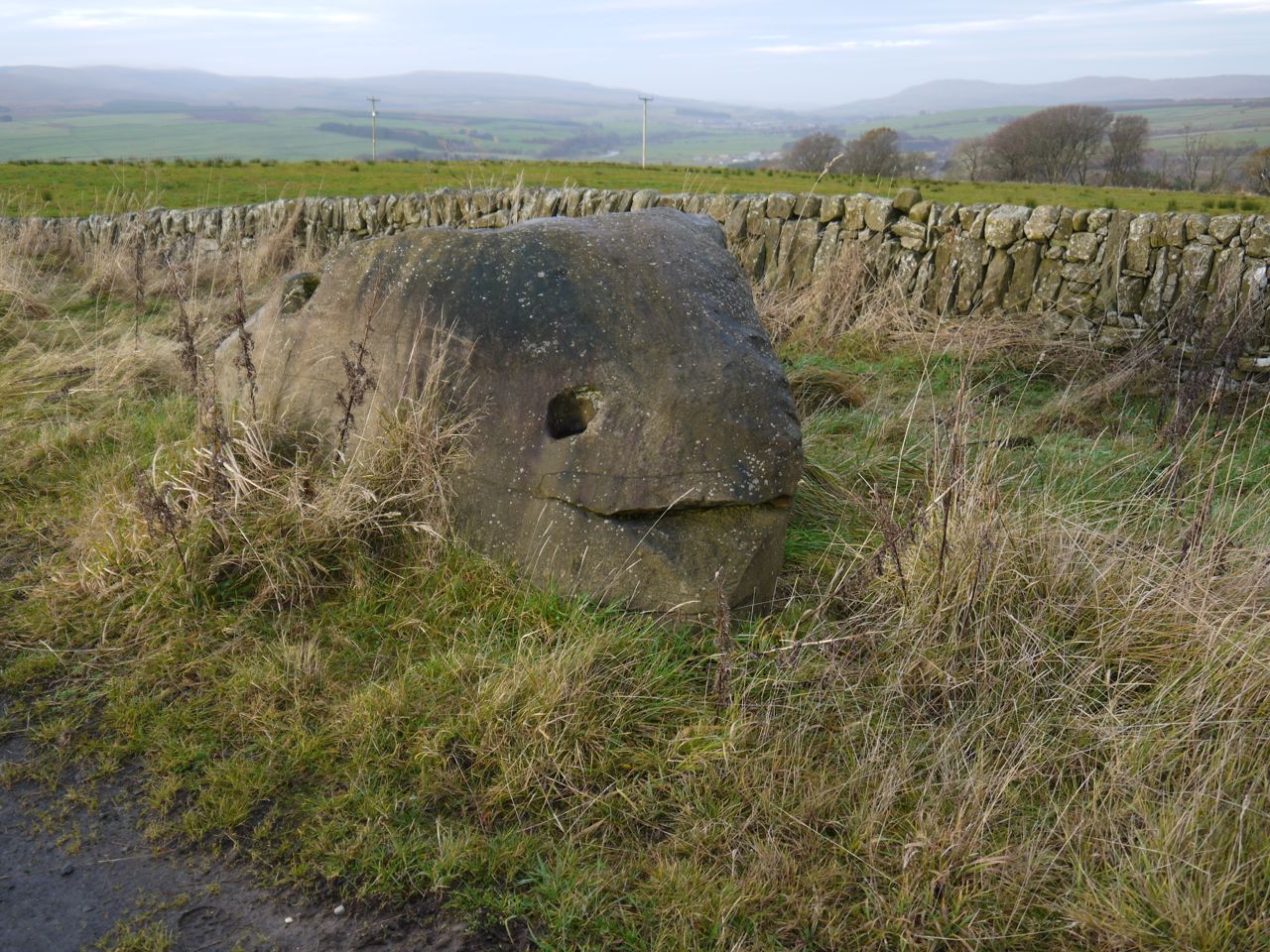
Beyond Matthew’s Folly we briefly joined a road and passed a large rock which Audrey thought looked like a whale. I feel it was more like a Goron. After the Goron rock we were back onto moorland and had our first sight of Lowther Hill.

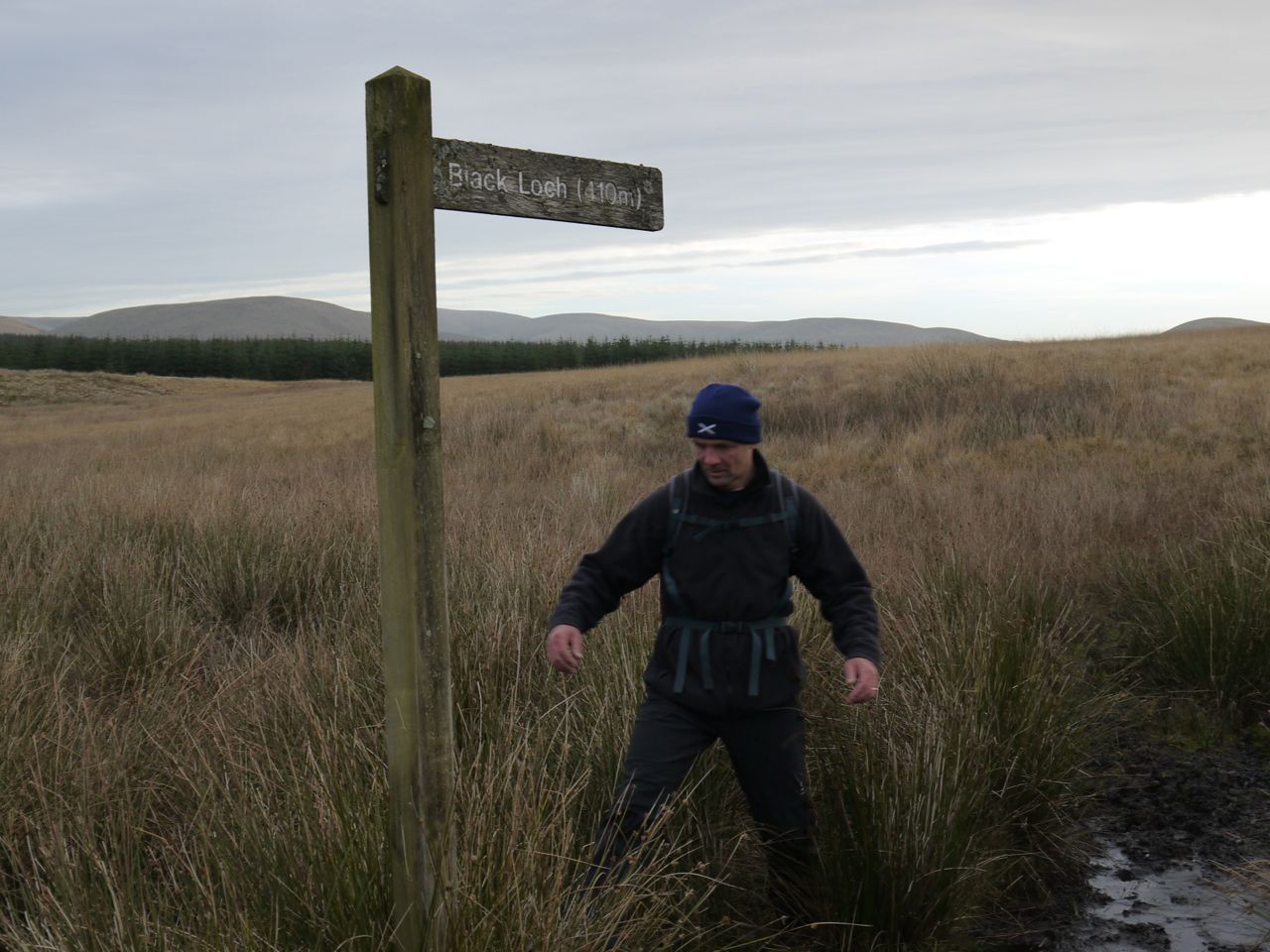
We then came upon a signpost for “Black Loch 410m”. Tempted myself, I asked my companions if they wished to visit it. To say their response was noncommittal would be putting a positive spin on it but I was able to interpret their response to my own ends and we set off in search of the Loch. The initial section was boggy but then it dried out and there was even a bridge over the burn. I might have mistaken the Black Loch for a small flooded section of moor had there not been a sign.

Black Loch

Black Loch and Crannog

The visit to the Black Loch turned out to be a once in a lifetime occasion. I can’t see any of us wishing to go there again. My attempts to improve the experience by pointing out that the wee island was in fact an iron age crannog fell on deaf ears. Audrey said the place was underwhelming. David did not need to voice his views. Body language said it all.

David demonstrates quagmiring

David demonstrates quagmiring

A mountain biker passed us just after we got back on the SUW, the only other soul we met on the hills. We left Sanquhar Moor at a kissing gate with a latch (I had thought kissing gates didn’t need latches) and a sign warning us to “Beware of Bull”. From the position of the sign I presume the bull was where we had just come from but luckily we didn’t see it.

After passing through some trees we descended into a boggy area around the Loch Burn. The worst bogginess is crossed by a series of slippery warped boardwalks that need either some chicken wire or extra care. The Loch burn doesn’t actually connect to the loch.

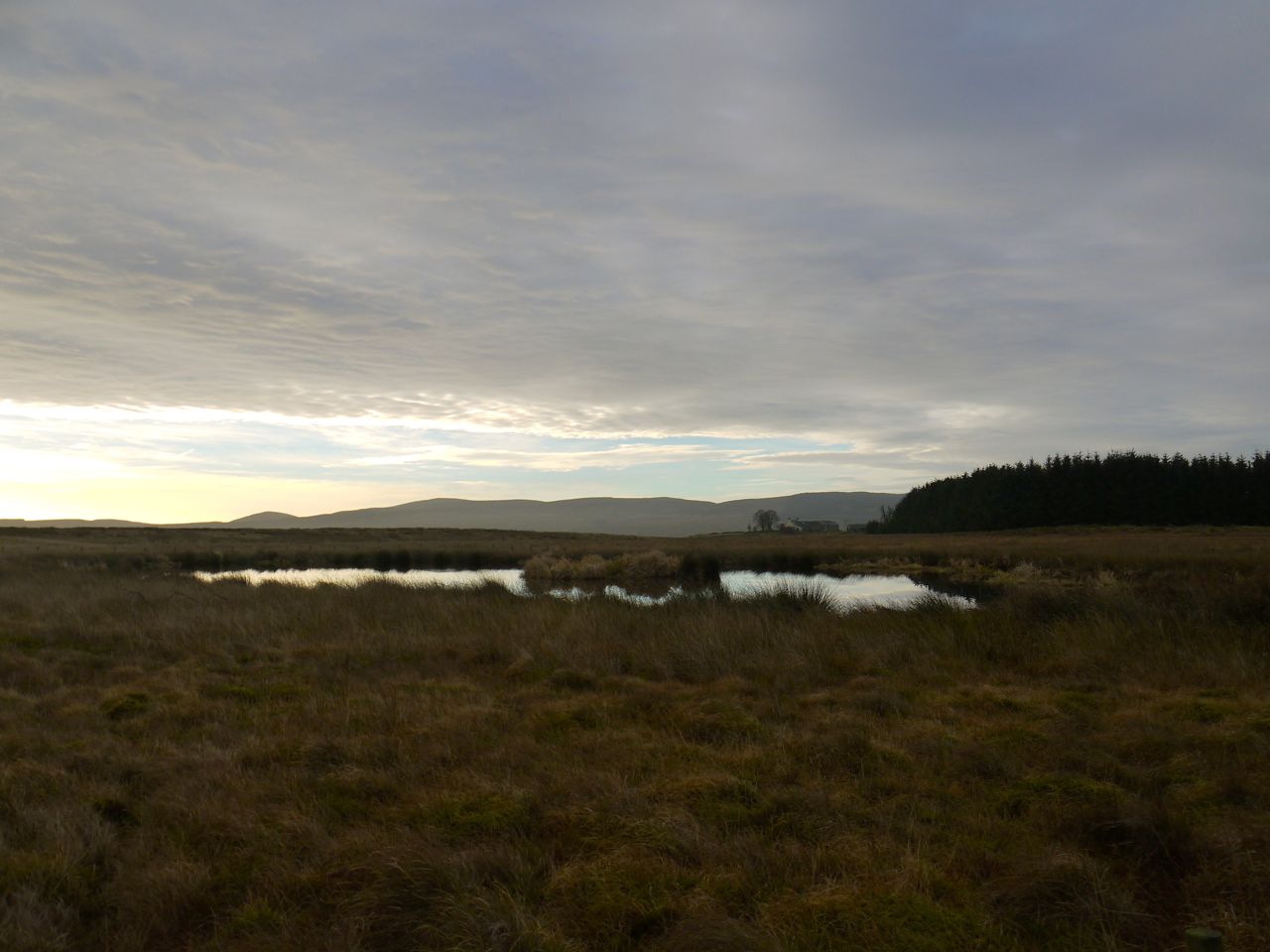
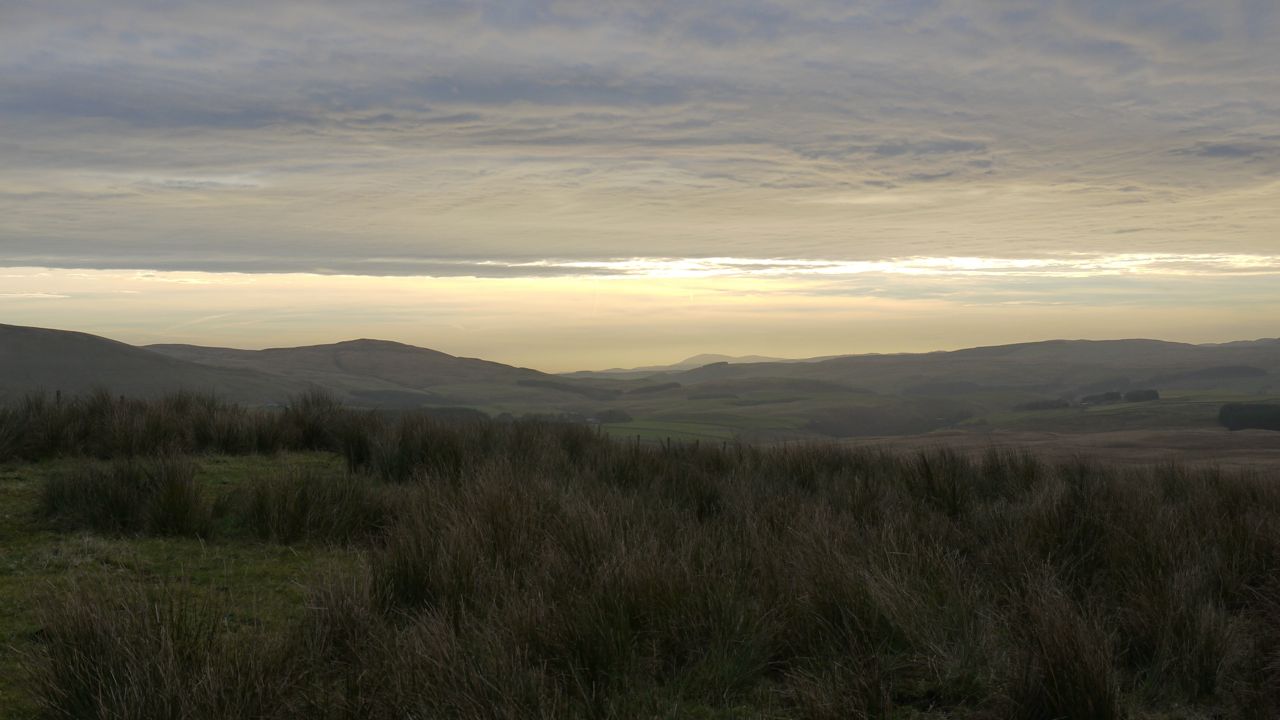
After Loch Burn there was a short section of farm track before we were back on to moorland and a climb up the col to the SW of Conrig Hill. The higher ground here gave us a more extensive view stretching from Criffel in the south to Corsencon in the north. The large cairn on Cairnkinna was visible to the naked eye. The views gave me an excuse to stop now and again during the climb (the picture at the start of the blog).

Once onto the col we were treated to the double-edged sword of a pleasant descent but with the climb up the other side of the valley clearly visible. We used the ruins at Cogshead as seats for a coffee break.

Cog Cleuch

Cog Cleuch

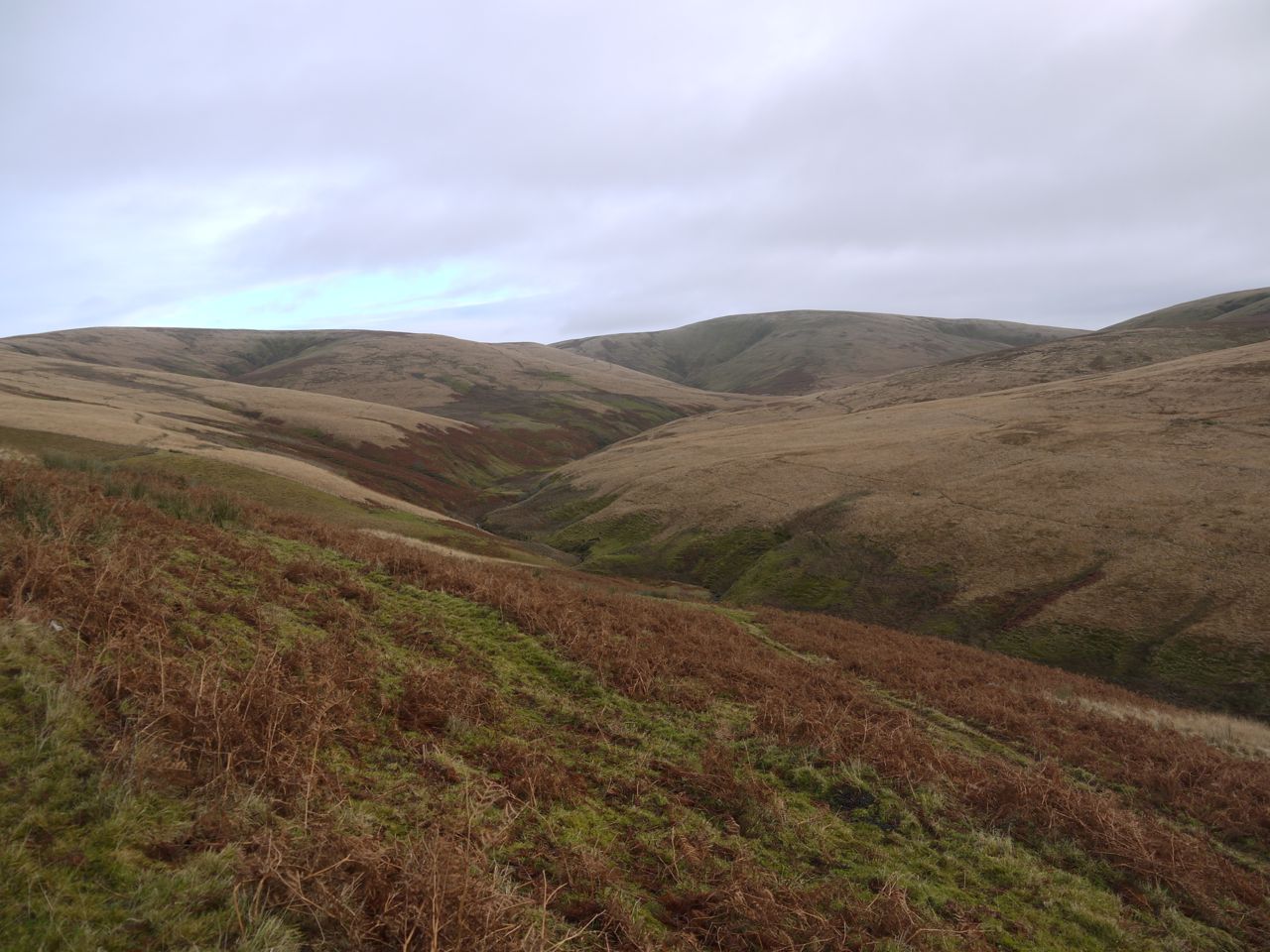
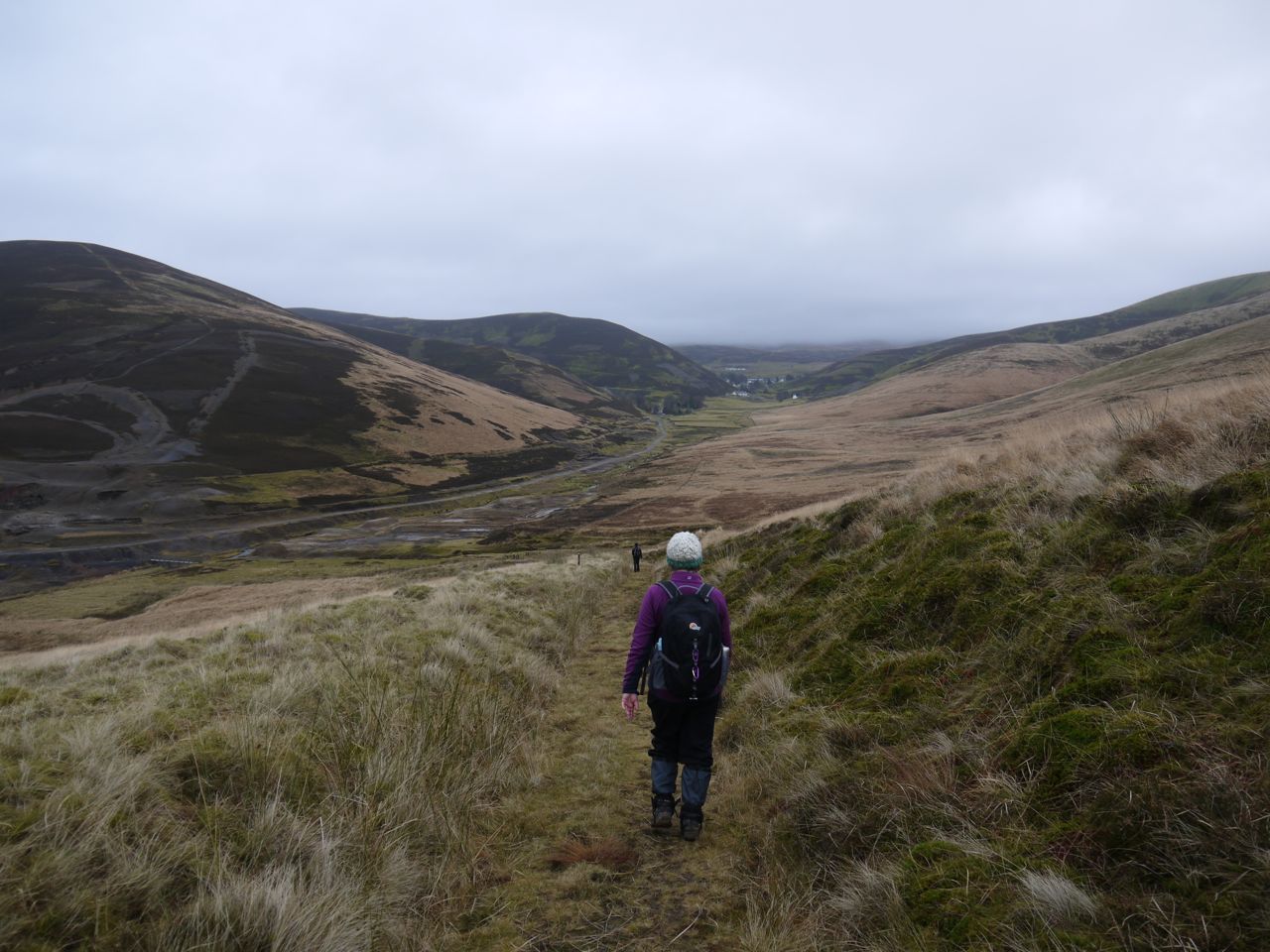
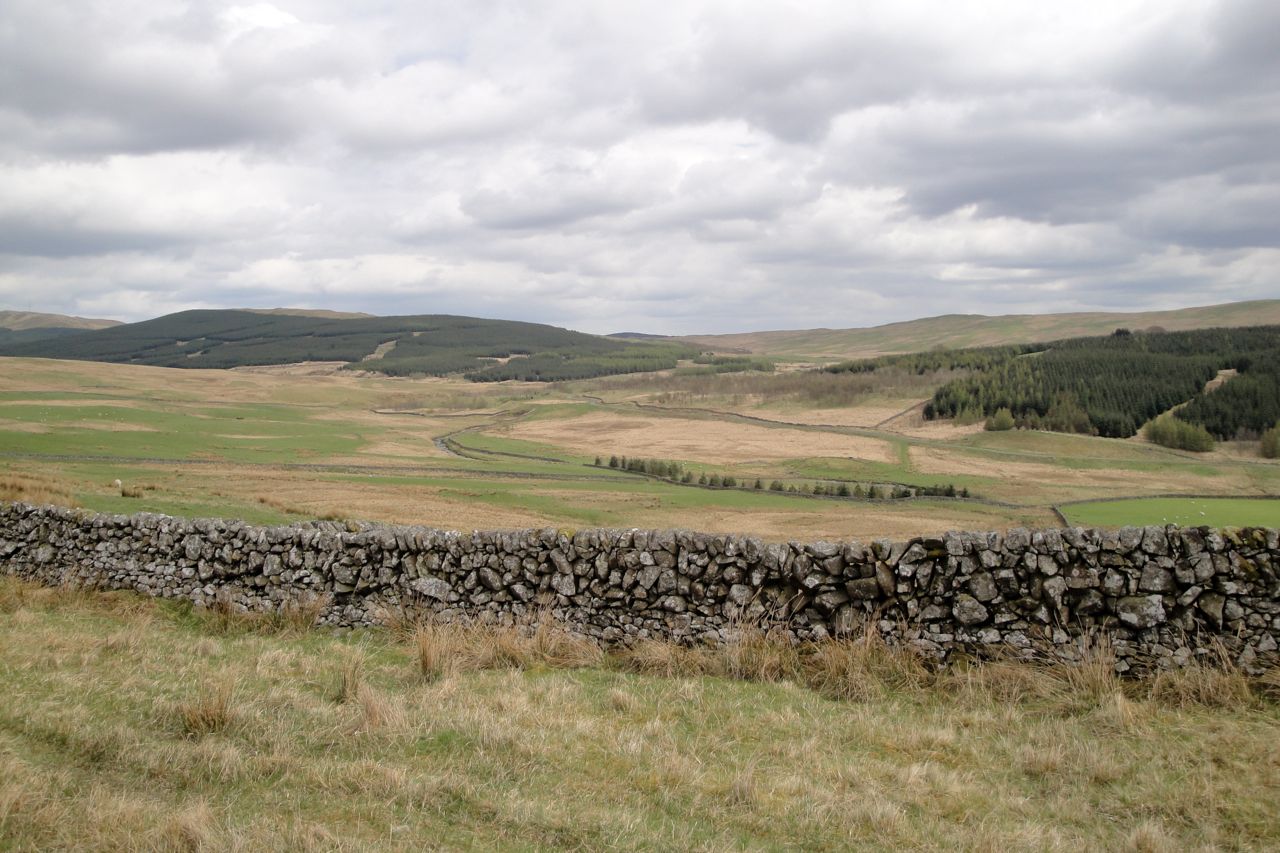
From Cogshead the SUW climbs slowly across the slopes of Highmill Knowe then down Glengaber Hill. The path is easy enough to follow and was only muddy where it crossed small watercourses. Once over the lip of the hill we had a view up Wanlock valley. I say up, and it did look to be up, but we were actually looking down the valley 9unless Wanlock water flows uphill. This must be a “magic hill” optical illusion.

Coming off Glangaber Hill

Coming off Glangaber Hill

Passing into the Wanlock valley we walked from natural wilderness to nature bearing industrial scars, especially Sowen Dod. We had a quick look at the ruins of mine workings and smelting works and then headed off along the road towards Wanlockhead passing the old cemetery.

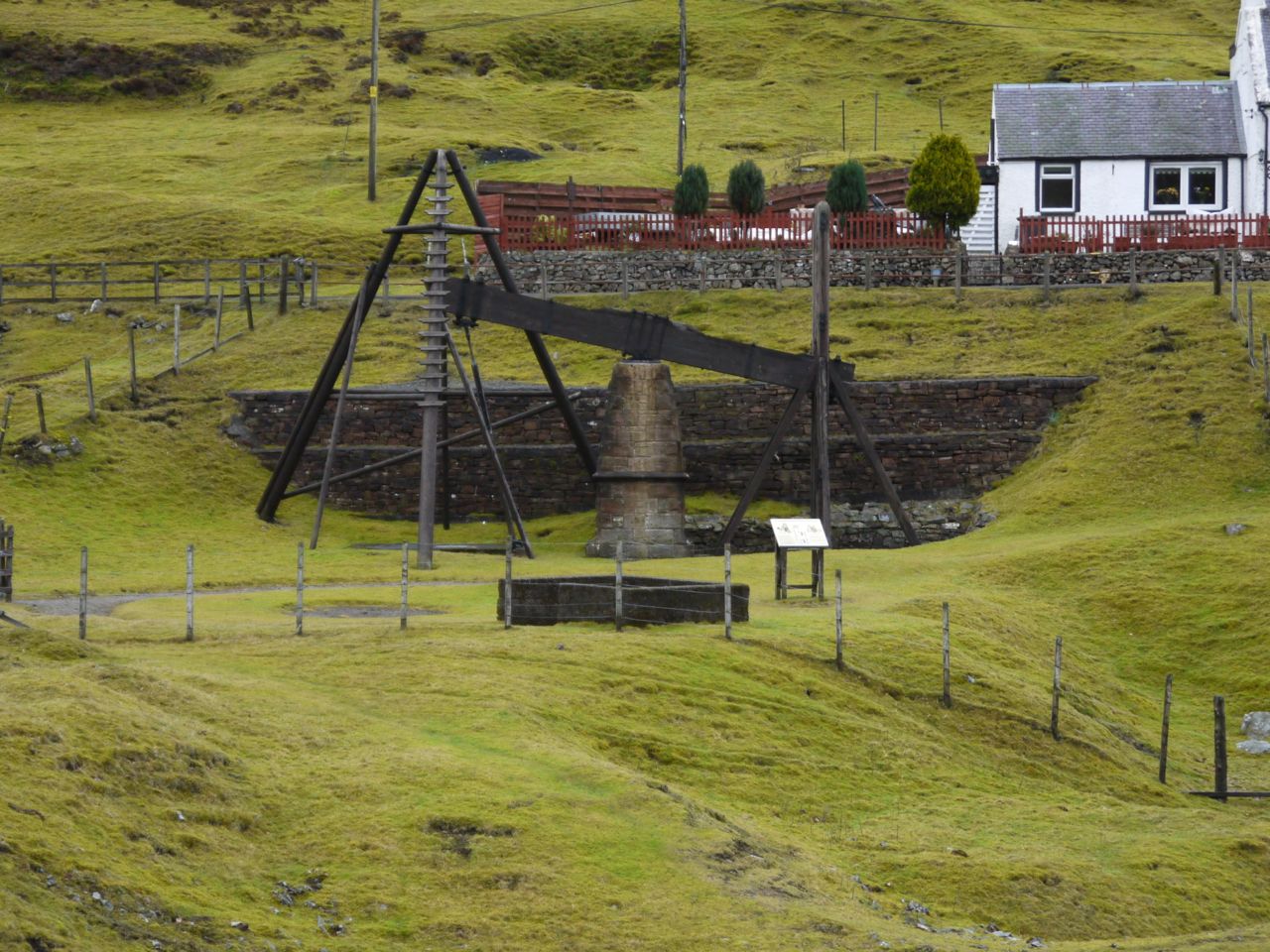
Beam Engine

Beam Engine

The SUW leaves the road a little before the town and follows a path on the far side of Wanlock Water past the Beam Engine and Lochnell Mine. Being November, the Hidden Treasures Lead Mining Museum was closed for winter so we had our lunch in the Fraser Memorial Institute Gardens.


With: Audrey and David

Alternate SUW route between Cogshead and Wanlock Water.

[sgpx gpx=”http://www.screel.co.uk/walks/wp-content/uploads/2013/11/RK_gpx-_2013-11-30_0942.gpx”]
Posted in Dumfries & Galloway | Tagged , | Comments Off on SUW9: Sanquhar to Wanlockhead

Southern Upland Way: The Western Marches

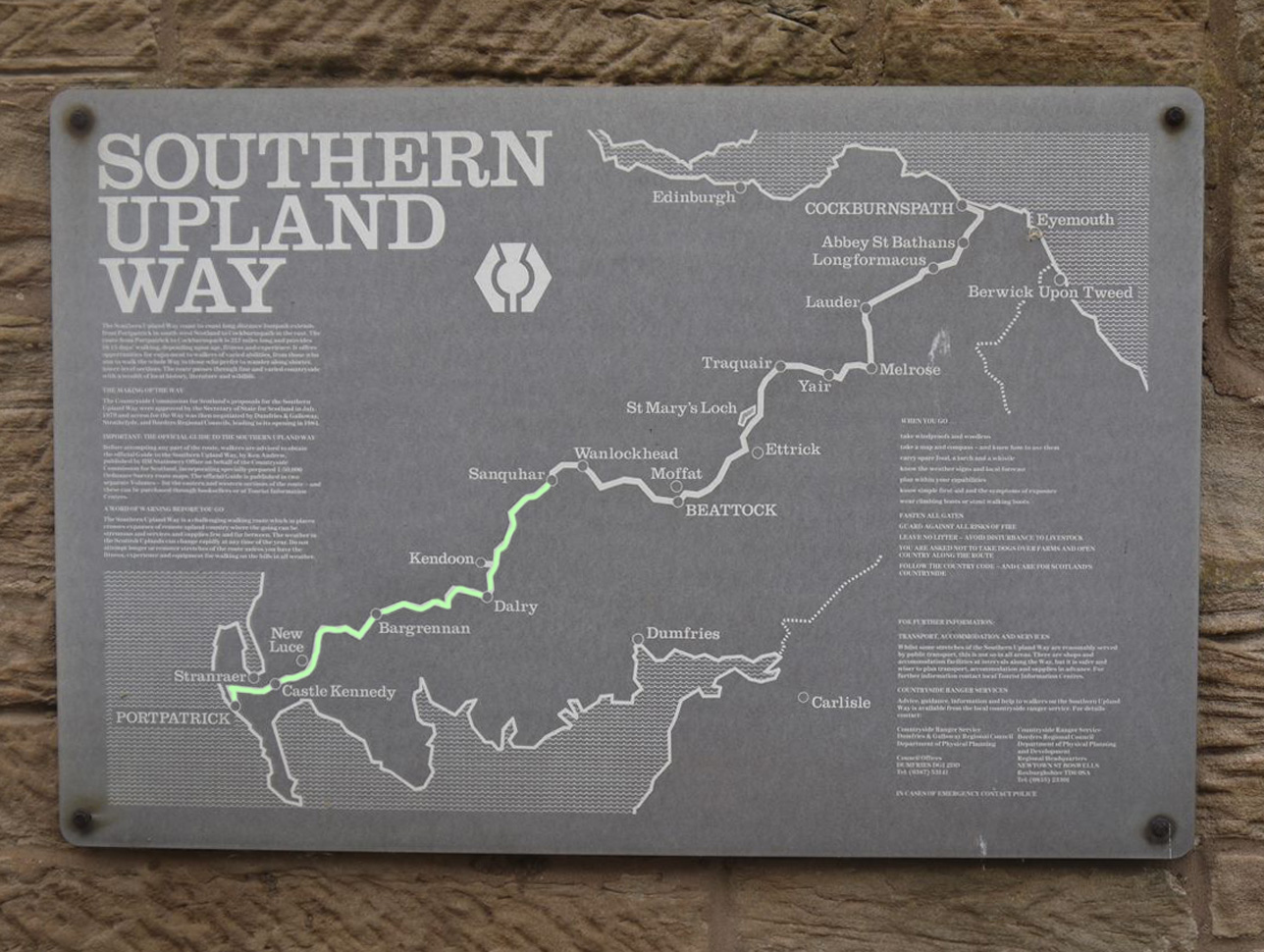
WSUWThe western section of the SUW, from the North Channel at Portpatrick to the River Nith at Blackaddie Bridge is 91.5 of the SUW’s 212 miles, though our journey clocked up 99 miles with 3669m ascent.

The SUW took us from the cliffs of the North Channel, over farmland, then rugged Galloway moorland, across the waters of the Luce, Bladnoch, Cree, Dee and Ken, through the battlegrounds of Trool, skirted the Awful Hand and the Rhinns of Kells and across the Scaur valley to the Nith. We experienced sunshine, mist, drizzle and very heavy rain, and walked sometimes in tee-shirts and others in full wet weather gear. Our mettle was tested by an unexpected felled forest at Knowe and on another day the heavy rain had flooded an entire field in our path north of Dalry. We found 3 kists and missed 2. (Update found another in May 2015: found 4 kists, missed one.)

See also the Middle and Eastern Marches.

We split the walk into the following sections:

  1. Portpatrick to Castle Kennedy
  2. Castle Kennedy to Dranigower Bridge
  3. Dranigower Bridge to Tannylaggie Bridge
  4. Tannylaggie Bridge to Caldons
  5. Caldons to Drumbuie
  6. Drumbuie to Stroanpatrick
  7. Stroanpatrick to Lorg
  8. Polskeoch to Sanquhar


Portpatrick to Castle Kennedy     14.7 miles  6h 15m   432m ascent

A coastal walk to Killantringan Lighthouse then minor roads or tracks most of the remainder, passing through farmland, moors, woodland and the Castle Kennedy Estate.

Lunch spot: a grassy knoll overlooking Knockquassen reservoir. Fine in good weather.

Look out for: the wreck of Craigantlet in the sea near the lighthouse, the standing stone at Knock and Maize, Ailsa Craig, the ruins of Castle Kennedy.

Knock and Maize standing stone


**********************************

Castle Kennedy to Dranigower Bridge    9.9 miles   4h 45m  292m ascent

Some roads but mostly moorland and woodland walking with some boggy sections.

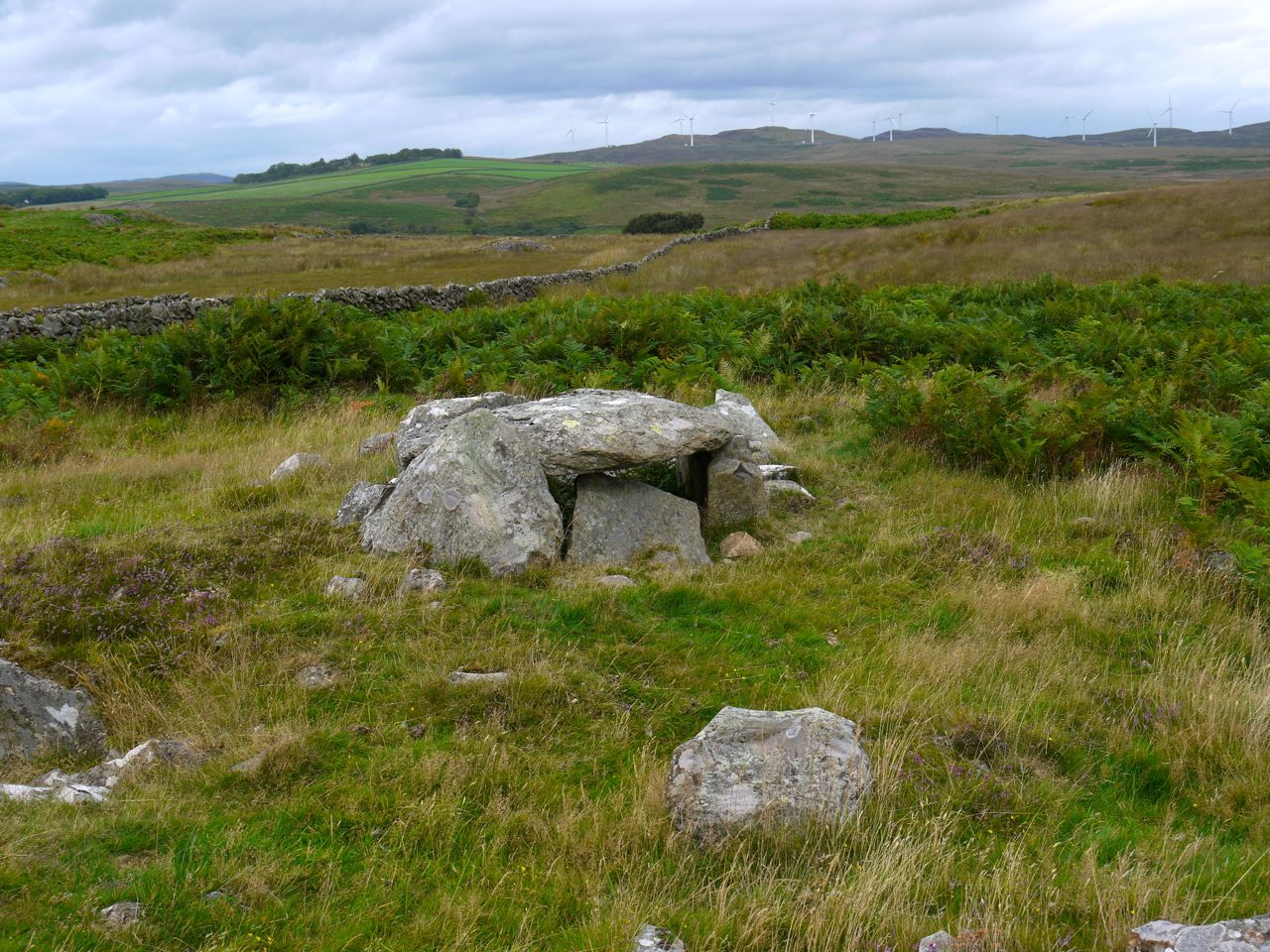
Look out for: Loup of Barnshangan Waterfall, Caves of Kilhern (both need a minor detours from the SUW), Kist, Castle Kennedy ruins (again).

Caves of Kilhern

******************************

Dranigower Bridge to Tannylaggie Bridge   11.8 miles  5h 47m  365m ascent

Mostly moorland and forest walks with some boggy sections. Good views from Craig Airie Fell, Wigtonshire’s highest hill. Care is needed to avoid missing where the SUW leaves the farm tracks after Balmurrie.

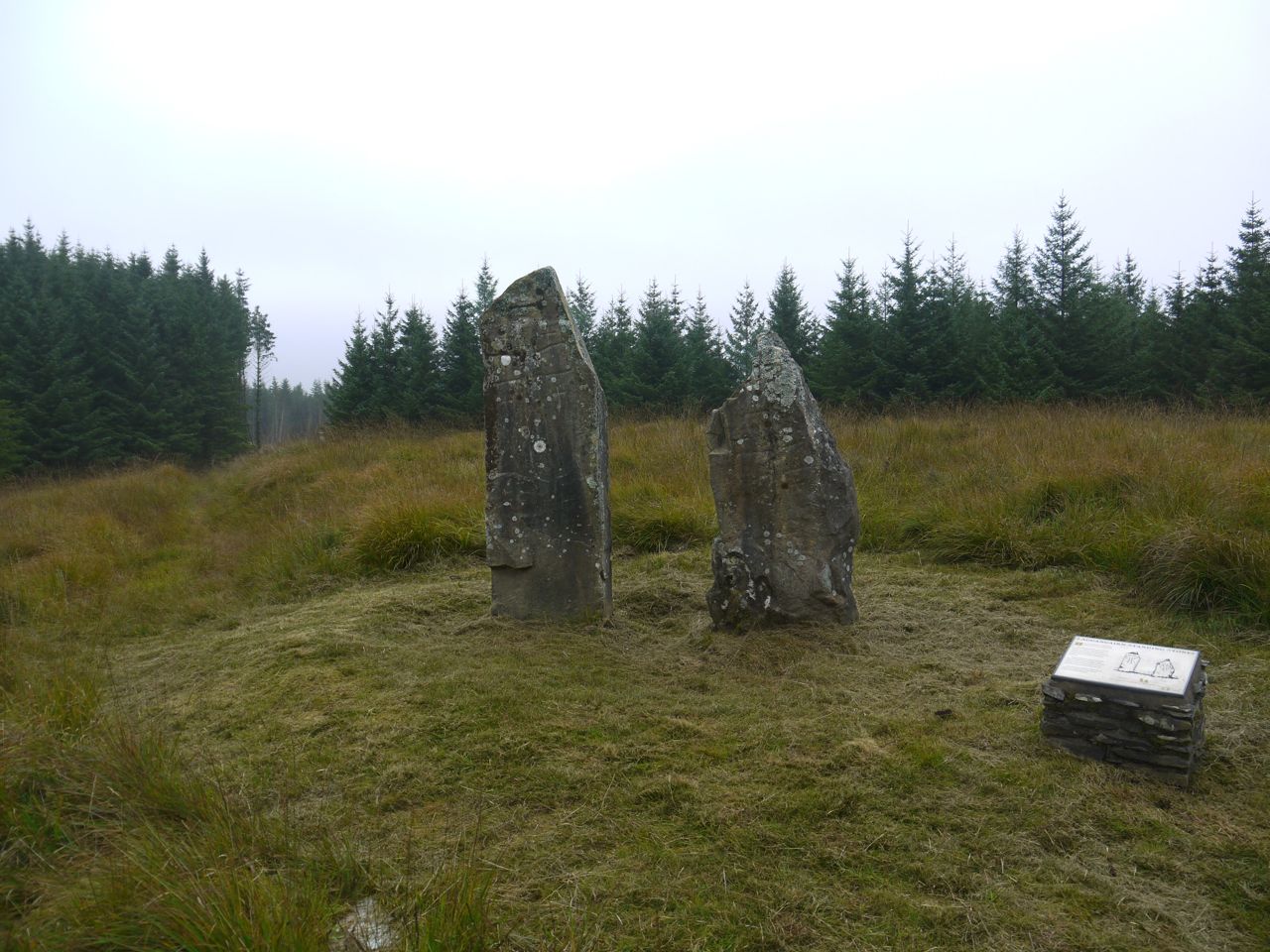
Look out for: Cairn na Gath (neolithic burial cairn), the Purgatory Burn, Laggangarn Standing Stones, Beehive Bothy and Liberland (the old leper colony) across Loch Derry. The Wells of the Rees are 100m off the SUW and Linn’s Tomb about 600m.

Laggangarn stones


***********************

Tannylaggie Bridge to Caldons     12.5 miles  5h 50m  263m ascent

Initially quiet country roads through forestry land, some unpleasant walking in felled forest after Knowe, moorland to Bargrennan then woodland tracks to Caldons. Good views from Ochiltree Hill. Don’t make the mistake of entering the woodland near Garchew.

Look out for: old red phone box, milestone at Knowe, lunky holes, deil’s dyke, hollyoaks, covenanter’s memorial.

Water of Minnoch

*******************************


Caldons to Drumbuie    15.23 miles  6h 5m  794m ascent

Woodland tracks by Loch Trool then forestry tracks to Clatteringshaws before entering woodland again. The final section is across the upland moors of Shield Rig where some care is needed in bad visibility.

Look out for: the site of the Battle of Glentrool, Giant’s Axe Head, mermaid cycleway sign, White Laggan Bothy, Kist.

Giant's Axe Head

*********************************


Drumbuie to Stroanpatrick   14 miles  6h 37m  509m ascent

Mostly moorland walking, which can be quite boggy, with some sections on quiet roads. Good views from Waterside Hill, apparently. Care is needed where the SUW leaves the road near Garroch and over the moorland section north of Ardoch.

Look out for: Boat Weil, St John’s Seat, Roadsign to Lochinvar, Stroanfreggan Cairn

Water of Ken

*************************


Stroanpatrick to Lorg    12.2 miles  6h 5m   648m ascent

Upland moorland which is boggy in places and forestry tracks. Care is needed to stick to the route above Stroanpatrick. Good views from the hilltops.

Look out for: Striding Arches, Allan’s Cairn, Chalk Memorial Bothy

Striding Arch, Benbrack

**************************

Polskeoch to Sanquhar    10.7 miles  4h 47m  368m ascent (9.1 miles of this in the Western March)

A very quiet country road initially then most of the walk is upland moorland with quite boggy sections on the descent to the Nith. Good views of the Scaur Valley and the Lowthers

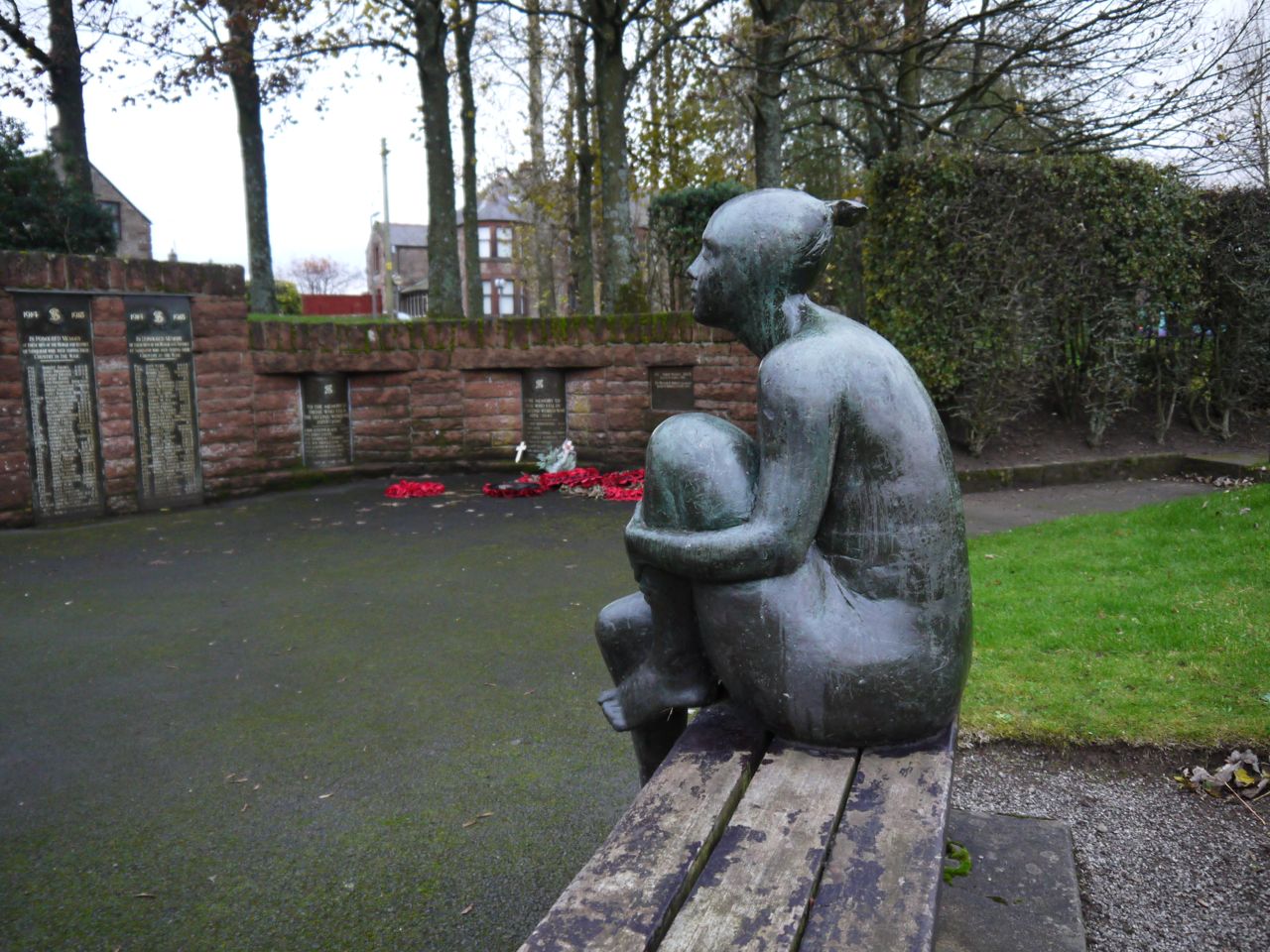
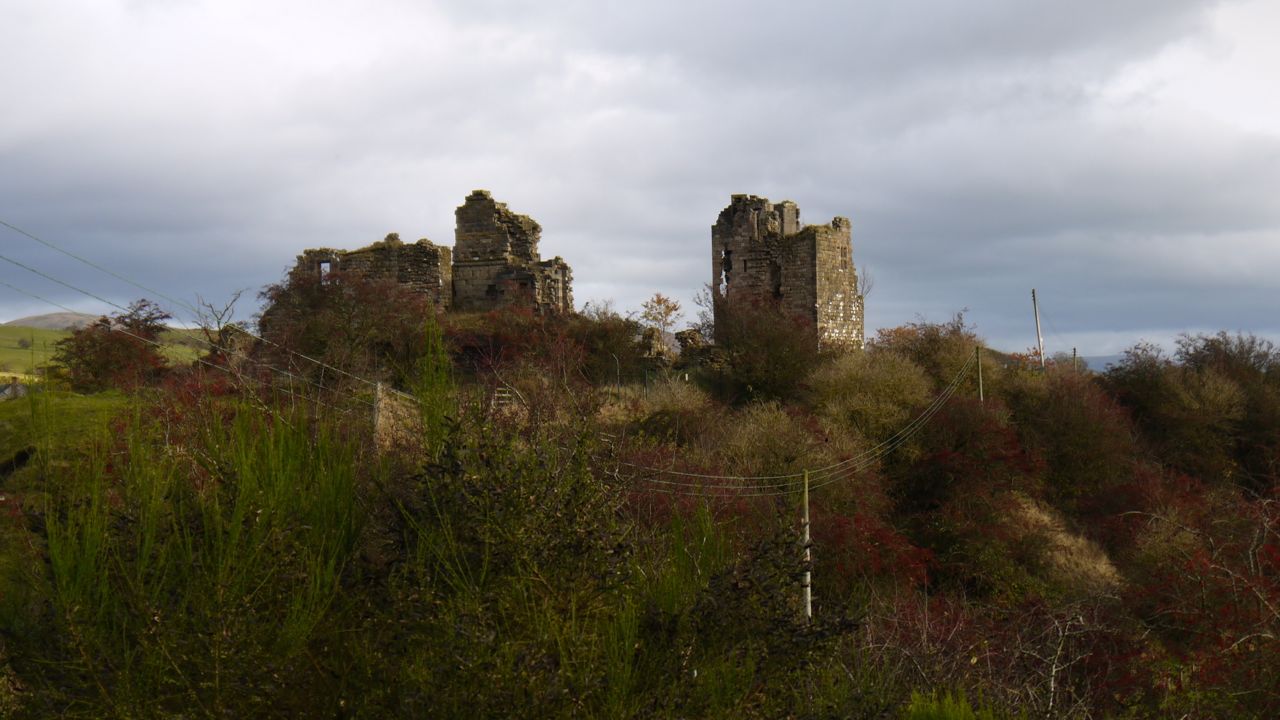
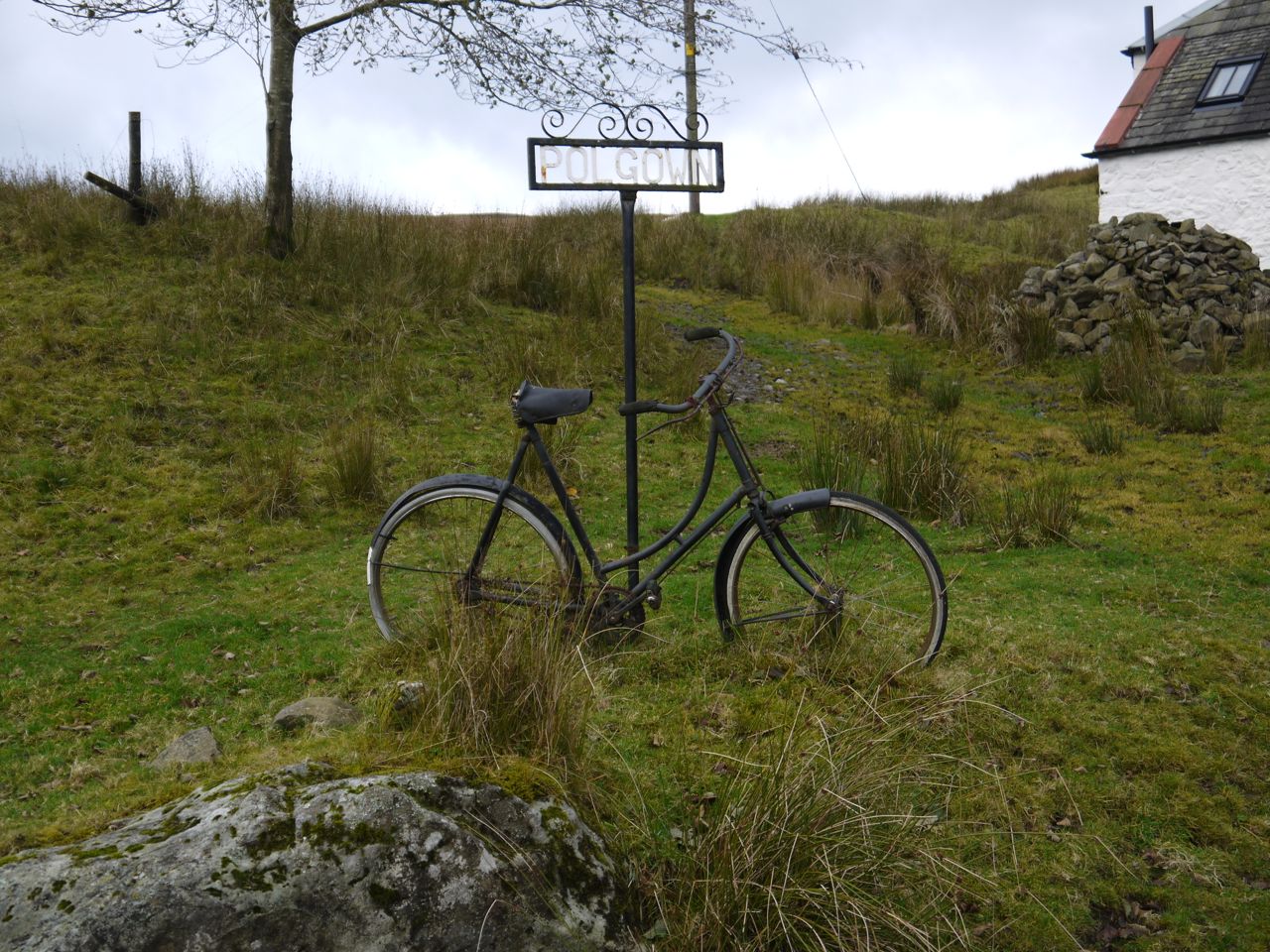
Look out for: Isle of Wight signs, bicycle at Polgown, kist, Glenwhargen Craig, Sanquhar castle, Mantua rock, Deer Dyke, oldest Post Office, Covenanter’s memorial, Ram’s head and, a little way off the SUW, Sanquhar War Memorial.

Sanquhar War Memorial


Next: The Middle Marches

Posted in Dumfries & Galloway | Tagged | Comments Off on Southern Upland Way: The Western Marches

SUW8: Polskeoch to Sanquhar

10.7 miles  4h 47m  ascent 368m; max elevation 451m, slopes of Cloud Hill

Sanquhar Castle Route: SUW Polskeoch to Sanquhar

At the end of SUW7 we had left the SUW just after the Chalk Memorial Bothy taking the “Lorg Trail” through the mud of the woods and across the mud of the hillside to Lorg. On the eve of SUW8, Audrey sent me a message recommending that we drove to Polskeoch rather than walk back in along the muddy Lorg Trail. Unfortunately I had concerns with the road to Polskeoch (23 miles). I had driven up it after climbing Cairnkinna a few years before and had turned back at a gate. I couldn’t remember exactly where the gate had been and didn’t know if it had been locked but it would be a long drive up the Scaur Valley to have to backtrack.

There were two other possibilities: the road up the Euchan Glen (10 miles) did not go all the way on road maps but I could see that it was continuous on Google Earth; or the forestry roads down from Kirkconnel (14 miles). The road to Lorg itself would be an 84 mile round trip.

Sanquhar War Memorial

Sanquhar War Memorial

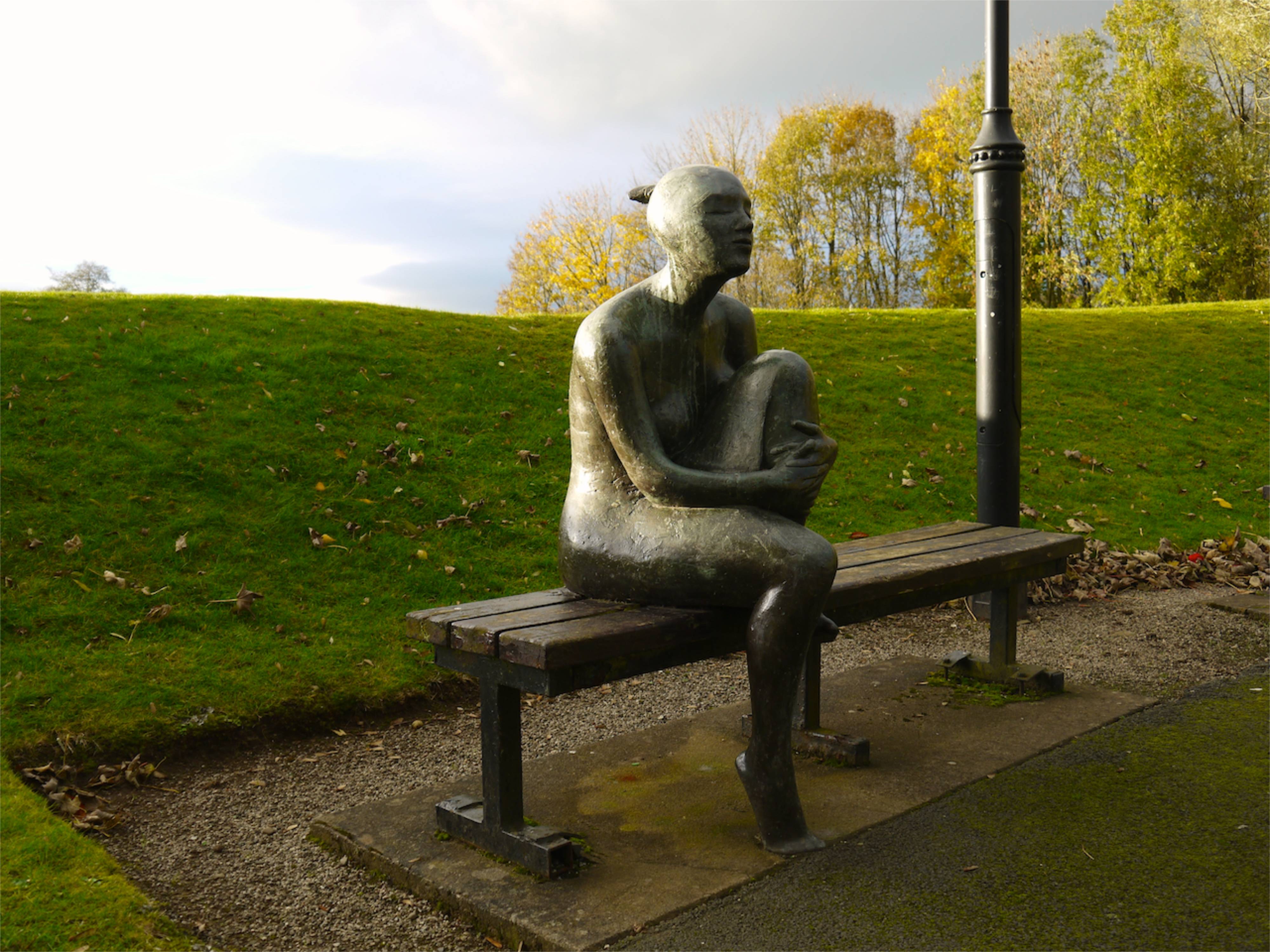
We started at the car park near Sanquhar’s War Memorial and before setting out we visited the memorial. A bronze female figure sits facing the listings of those who killed in WW1, WW2, the Korean War and the Indonesian Conflict. The figure’s head is lifted as if gazing into the distance and her eyes closed adding another dimension to the memorial and bringing additional poignancy to the place.

Hoping for the best we drove up the road alongside Euchan Water, a pretty drive up a reasonably maintained single track road, albeit with very few passing places. At Glenglass our hopes were dashed. The road, or a more dilapidated version of it, continued on but our way was barred by a padlocked gate. At least there was plenty of room at the road end to turn around.

So it was back to Sanquhar and then we headed off to Kirkconnel and the road up to Libry Moor. This looked very promising: the gates were open and the road both wide and of good quality. Presumably this road once served the nearby mines. The Fates though were watching (or listening) to us, for as soon as we commented on the excellent quality of the road, it deteriorated into a mud covered, pot-holed forestry track so uneven that it almost shook the teeth out of my mouth. Don’t wait for your lithotripsy, just drive along this track.

Driving along the mud covered road had a similar feel to driving on ice so it was slow going. Luckily we didn’t come up against any locked gates or blocked roads and were able to drive all the way down to the Polvaddoch Burn at the head of the Polskeoch/Scaur valley. It was just 100m back down the track to where we left the SUW at the Lorg Trail when walking the previous section. We then popped back to the bothy so I could get a photo, since last week’s pics didn’t come out. It was a bit soon in the walk to actually have a rest in the bothy (5 minutes after setting out) so we pressed on.

Chalk Memorial Bothy

Chalk Memorial Bothy

After fording the burn we walked along the remnants of a road squelching our way around the short sections where it was flooded. Then at Polskeoch the road improved significantly. I had expected the buildings here to be ruins but they are very much in use and in excellent condition. Polskeoch means “water of the hawthorns” so I was pleased to see a stand of lichen hung hawthorn by the road, a remnant of times past perhaps.

Perhaps 0.5 km past Polskeoch we came to a small parking area and a sign saying “Rough Road Ahead. Southern Upland Way. Parking and Turning Area” so I presume the road up the Scaur Valley is open to cars. As we walked along, the road gradually climbed up the hillside but much to our annoyance it then dipped back down to the valley floor at Polgown.

Polgown's bicycle

Polgown’s bicycle

Polgown has an old bicycle by its sign, and just to confuse the unwary another sign points to the “Footpath to Tennyson Down and the Needles”. A very long distance footpath indeed, those places being on the Isle of Wight.

A wee bridge crosses the Craw Burn and an SUW marker post indicates where the Way leaves the road for the hillside. We were guided by the post which indicated we should turn right after leaving the road. Here we were faced with a problem. Looking where the sign pointed we saw marsh grass and boggy ground leading to a barbed wire fence, whereas carrying on beyond the marker post was a definite path heading up the hillside. The OS map has the SUW on the up side of the fence so we decided the marker post must have been misplaced. A little way further on though we spotted another SUW post below us, on the other side of the fence. Looking back down the fence line we could not see any way across the fence so clambered over the barbed wire and got back on track.

SUW leaves the road at Polgown

SUW leaves the road at Polgown

I had thought I would be writing this advising others to ignore that marker post at Polgown and leave the road 10m further on at the far side of the fence. However, much to my consternation, looking at the photograph I took of what I considered the “confusing post”, the gate in the fence is clearly visible. Arrrgh! You can see the track up through the bracken which is not the SUW. Once at the marker post and also when looking back down from above, the gate is hidden from view.

Upper Scaur Valley

Upper Scaur Valley

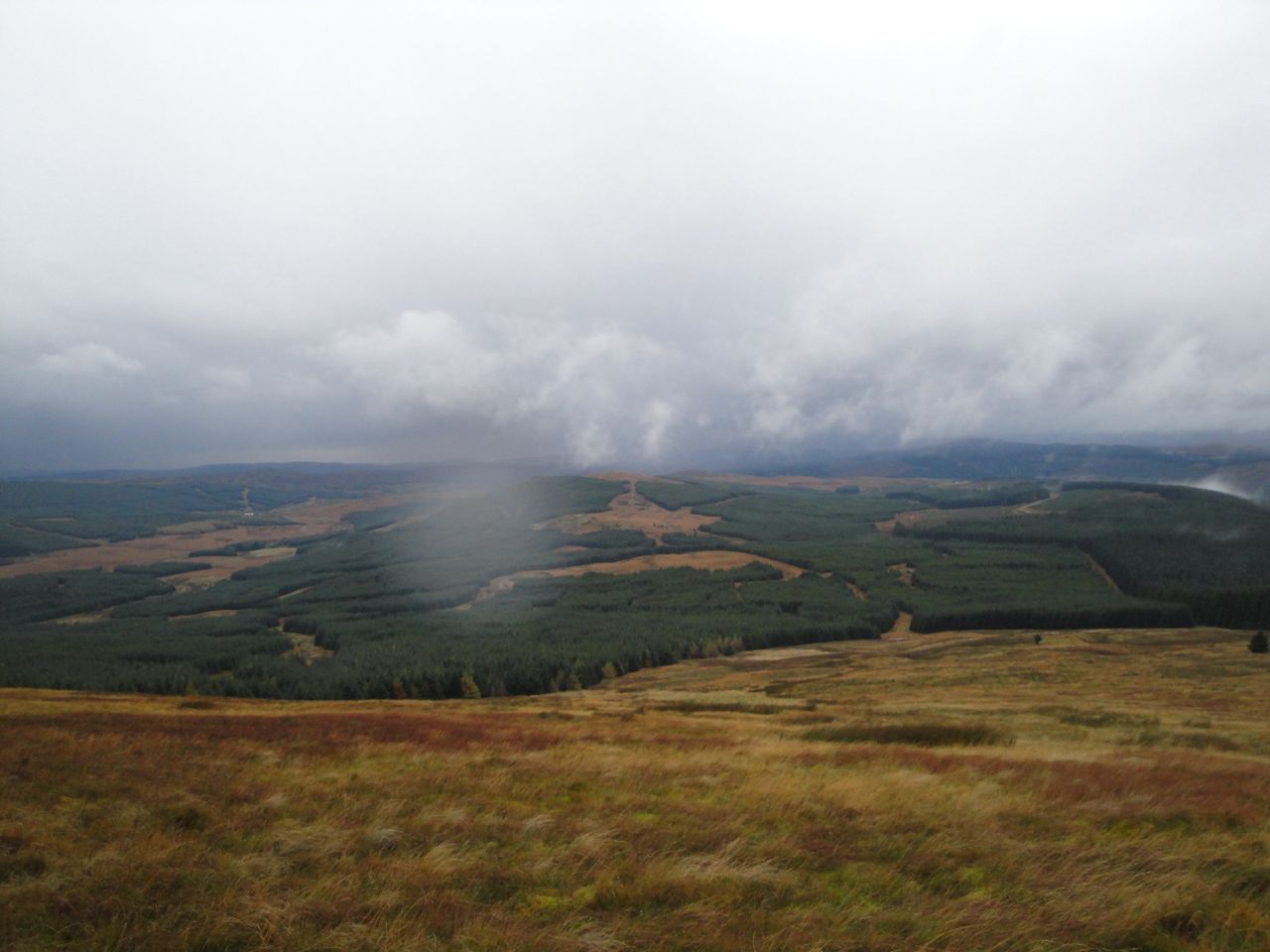
The SUW climbs slowly up the grassy hillside with a track discernible most of the way and the marker posts well spaced. As we climbed the views improved. The dark mass of Glenwhargen Craig and the massive cairn of Cairnkinna came into view and looking back we could see the Polskeoch Glen with the hills of Glenkens beyond.

Scaur Valley from Cadgers Knowe

Scaur Valley from Cadgers Knowe


Glenwhargen Craig and Cairnkinna

Glenwhargen Craig and Cairnkinna

I was looking out for an Ultreia SUW sign, even checking the marker posts in case the Ultreia marks had been removed (by weather or vandals). Once we found the Ultreia post we started to search around. The ground downhill was boggy and covered with knee deep marsh grass and having plodded through that I headed up hill for more fruitless searching.

Slightly disappointed, we eventually abandoned our search and carried on. The next post was also marked Ultreia, so we thought the waymerker hoard must be somewhere between the two posts and decided to search back from the second post. We climbed to the rocks above and walked back along the high ground towards the previous post, searching the ground carefully. Once again we found nothing, but as I headed back down to the track I caught a glimpse of sandstone on a small rise. Underneath the flat stone we found the hoard and took a coin each.

Audrey gloats at the hoard

Audrey gloats at the hoard

What a great feeling it is to find the hidden treasure! Buoyed up with our success we continued up the hill, eventually crossing the drystone dyke below Glenmaddie Craig. There is a gate in the dyke and an obvious track beyond but there was also a ladder over the wall a little further up, after a short walk between the wall and a fence. We decided the ladder was likely to be there for a reason and went that way.

Glenmaddie Craig

Glenmaddie Craig

Looking back down we could see that the original track led into a quagmire, so presumably this has now been bypassed. We stopped for lunch at some seat sized rocks with a view down into the Euchan Valley, then headed over the last rise on the slopes of Whing Head.

At Cramley Knowe we finished the uphill section and knew it was “all downhill” from there. We swapped our views of the Scaur Valley for Nithsdale bathed in the golden light of evening, with Kirkconnel, Sanquhar and the Lowther Hills before us. The SUW down Whing had several fallen marker posts but the route was relatively straightforward, and downhill.  The main problem was negotiating boggy and flooded ground.

A little before reaching the Whing burn we came across an usual fence construction, a little taller than normal fences with two additional strands of barbed wire and vertical slats of wood across the barbed wire. There were newly planted saplings on the far side and an information board explained that this was an attempt to regenerate natural riparian woodland. It mentioned that grazing would hinder tree growth and it was hoped the new woodland would encourage Black Grouse. Presumably the fence was to keep out sheep and the wood slats to stop the grouse getting entangled in the barbed wire. Who knows?

The Whing Burn has a small waterfall just before the footbridge where we would cross, and on a warmer day it might have been nice to cool our feet in the water. This being November, no cooling was required so we crossed the footbridge and walked through farmland to reach a small road.

We saw some unusual long legged rams in one field and when I got home I thought I’d use t’internet to find out what they were. I haven’t succeeded but I have learnt that there are a lot more breeds of sheep in Britain than I had thought.

Crossing the Nith at Blackaddie Bridge we completed what I regard as the first third of the SUW, the Western Marches from the North Channel to the Nith,  and started the next, the Central Marches, from the Nith to the Tweed. (The North Channel to the Nith is actually 43% of the way in mileage terms.)

An SUW information shelter by Blackaddie Bridge tells you what to look out for as you pass through the town.

Deer Dyke and Sanquhar Castle

Deer Dyke with Sanquhar Castle in the distance

We walked along the Nith to the Deer Dyke, a drystone wall somewhat taller than usual that would once have enclosed a deer park. Before the dyke is a large piece of sandstone inscribed “Mantua France” which I presume relates to James Crichton, the Admirable Crichton, born nearby at Eliok and killed in Mantua. Just past the dyke we found ourselves in a Fenton scenario with a man chasing his dog who was chasing sheep. “Grab that dog” he shouted and, in case I was gormless, he added “by his collar”. The dog stopped close by me so it was easy enough to hold on to it until the owner came over. When I asked him what kind of dog it was, he replied “a bastard”. Next time I’ll know to ask for the breed.

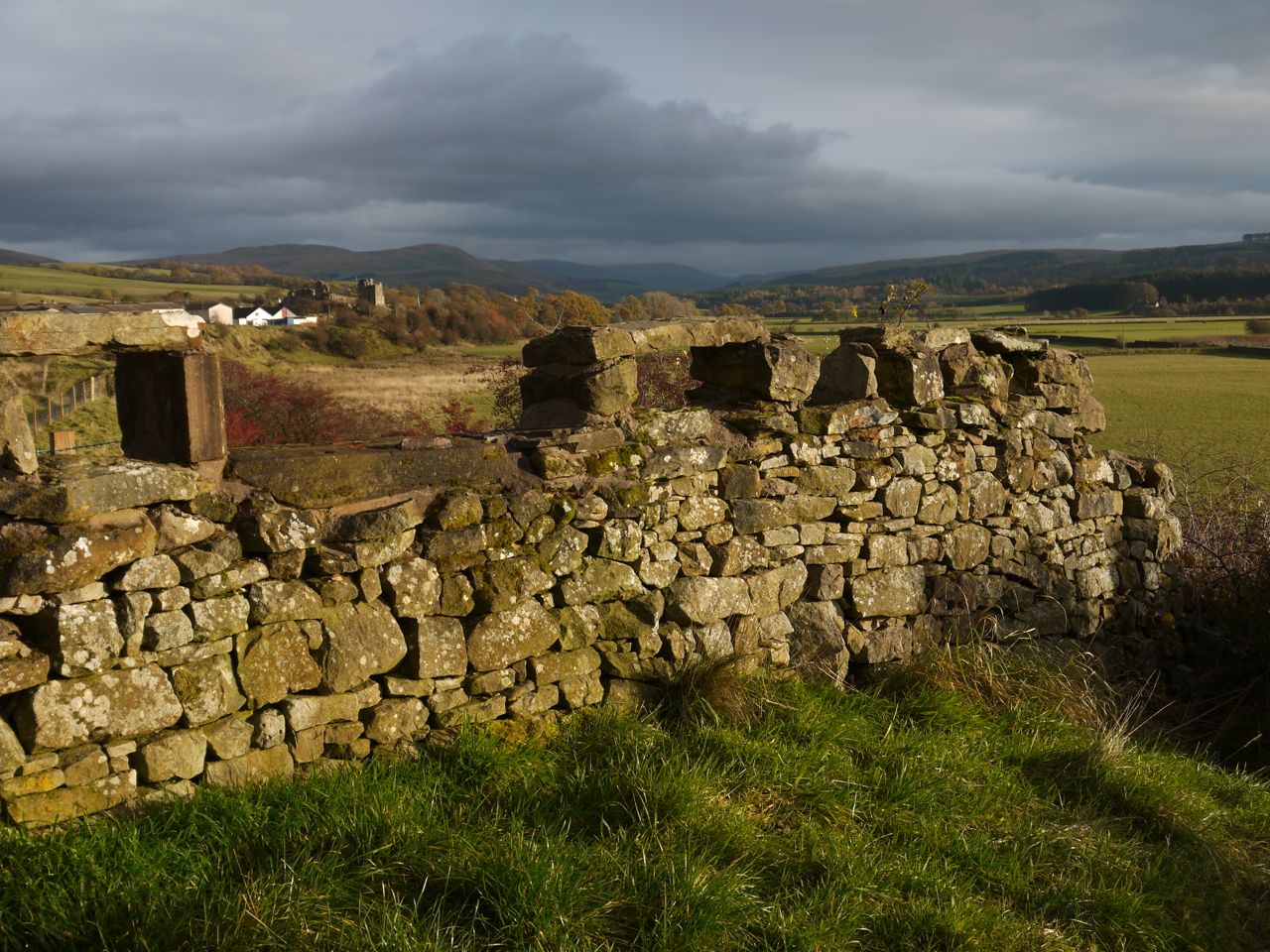
The next stop was Sanquhar Castle which looked beautiful in the golden light with autumn trees beneath it (picture at the start of the blog). The SUW climbs up to the castle though the ruins themselves are fenced off.

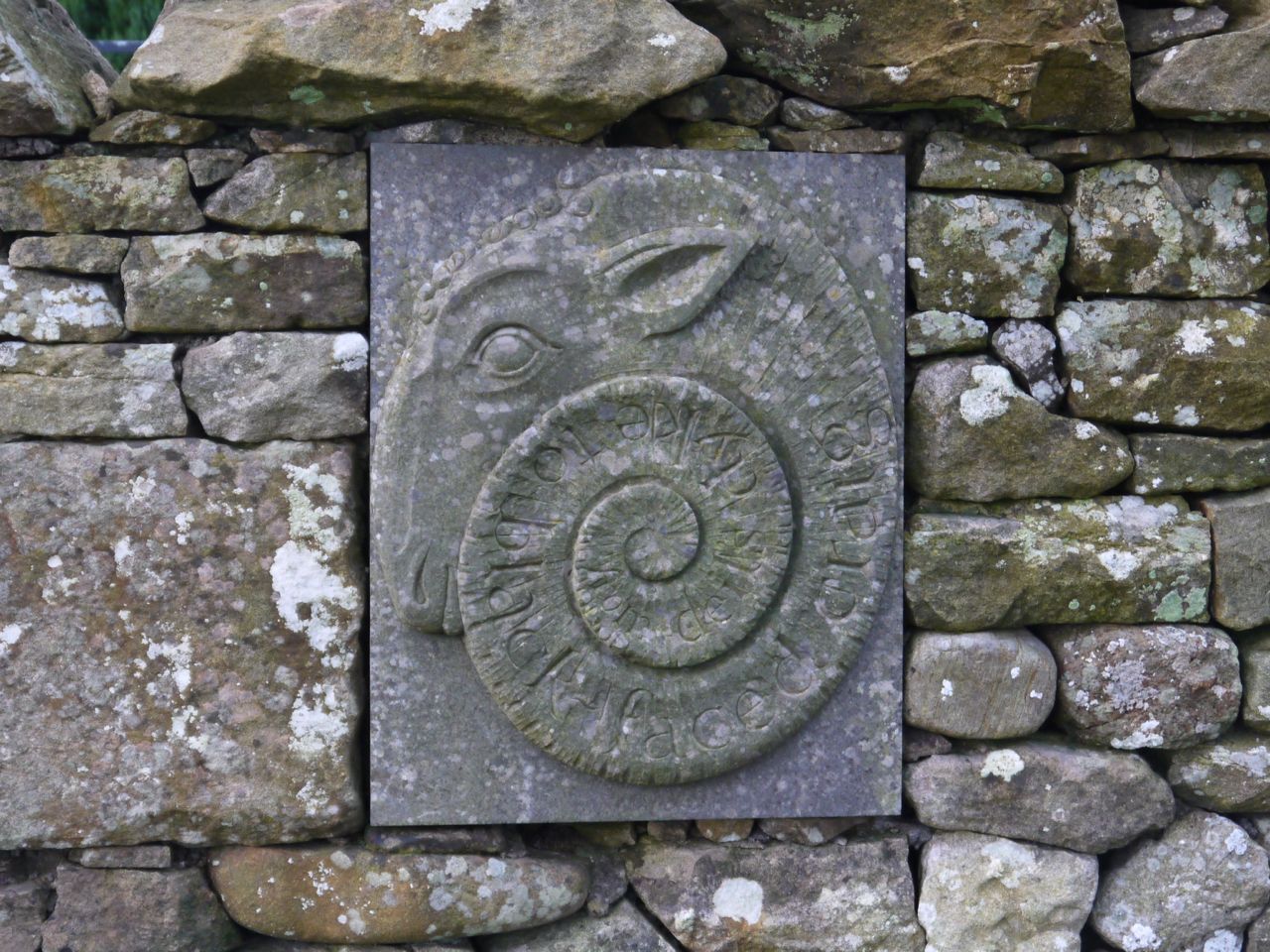
Ram's Head carving

Ram’s Head carving

On the way from the castle to the A76 there is a short section of wall inscribed with a Ram’s head, the inscription reading “from deils dyke to black faced craig”. A signpost nearby points to an “Easy Route” which would have bypassed the castle.

Walking along the A76 we clocked up our hundredth SUW mile. Had I realised at the time I would have stopped to celebrate but the moment passed unnoticed.

Other sights in Sanquhar were the oldest working Post Office in the country; the Covenanter’s Memorial marking where the Sanquhar Declaration was affixed in 1660; the Tollbooth and the Jubilee Memorial (pictures in the gallery below).

Sanquhar War Memorial-3

With: Audrey


[sgpx gpx=”http://www.screel.co.uk/walks/wp-content/uploads/2013/11/RK_gpx-_2013-11-16_1004.gpx”]
 

Posted in Dumfries & Galloway | Tagged | Comments Off on SUW8: Polskeoch to Sanquhar

Marthrown Hill: almost

5.1 miles  2h 34m  ascent 336m

Queensberry from Mabie

Route: Mabie Forest, around Marthrown Hill on MTB tracks then up and over in the trees

Feeling a little under the weather I decided to ditch the planned walk (which included an FFS section) and instead just mosey around Mabie with the dogs. I thought I might perhaps visit the top of Marthrown Hill. The OS map has a fire tower near the top, so I thought there must be a way for people to get to the tower relatively easily. That was my mistake. On reflection, nursing my bruises, I realise now that it actually means there must have once been an easy way.

Various paths run around Marthrown Hill so I got myself on the highest one I could find then set off clockwise looking for a likely way up the hill. Much of the path has young trees densely planted beside it, so on and on I walked.

There is a viewing point with a bench at about NX936738 with nice views over to Criffel and the Solway. This was actually the highest point on the track. Behind this I noticed a faint track up into the trees.  Within 10m however, the trees were too dense to pass, so I returned to the path and continued on around the hill.

Criffel from Mabie

The path from the bench is part of the official walking routes and carried me onto a forestry road with orange way marker posts. The lochans here were frozen over so I rushed past before Sweep noticed and jumped in. He had already fallen foul of frozen puddles in the ditches but that was just wet paws.

I stayed with this route for a little while but left the orange route to stay on a higher path.

Eventually I began to experience deja vu, and realised that I had done an entire round of the hill without finding a way up. Since there was no obvious route I would just need to find a way through the trees so I left the path and headed directly up at a section of forest that looked relatively passable. This was somewhere around NX939709.

This was steep but the trees were tall without low branches and the undergrowth was sparse. At first.

Eventually the trees became younger and more densely packed. Where there were gaps in the trees they were filled with felled or fallen tree trunks with dense bracken overlying hidden ditches.

The higher we went the closer the trees became and the terrain more difficult. Leo could not get over some of the obstructions and had to be lifted while Sweep forged on a ahead, his position shown by movement of the undergrowth or the noise of him flopping into a ditch.

Having struggled across some particularly difficult ground to a slight rise we had reached a point where I could see a likely candidate area for the summit, a stand of trees a little higher than where I stood, but the terrain separating it from me would have been impossible for a small, elderly, terrier. Time to bail out. The GPS tracker shows I was probably within 100m of, and just 13m below, the summit.

I thought the previous 100m had been too difficult for the wee dog to go back that way. There seemed to be an easier way almost directly north and the closest path was that way. Seemed is the operative word here. The grass always looks greener etc.

This proved to be a rather unpleasant descent. 400m of horizontal distance, downhill, took almost half an hour. I was plagued with mirages where I thought I glimpsed a break in the trees only to find that it didn’t exist. The trees with intertwined branches were too close to pass between at times and fallen trunks blocked other ways through.

I caught my foot in a root just above a 1m step and experienced acceleration at 9.8m/s/s followed by a rapid mud-induced deceleration. Wet, muddy, and covered in pine needles I lay there looking up at one dog while the other barked at me. I thanked my lucky stars that nothing was broken, bones or equipment.

Leo looked down at me, unable to see how he would get down (answer: by manhandling him). Sweep, always unhappy when I stop on a walk, continued barking at me until I had disentangled myself and was on the move again. The terrier had to be manhandled in several other sections as well as the step I had fallen over, but give the old dogs their due, they kept going.

When I could at last see the MTB track, my way to it was again blocked by young trees growing amongst fallen older trees so a further diversion through the forest was needed to find a way onto the path.

I sighed with relief on escaping the trees. If I’d had a flask of whisky, that would have been the time to take a slug. Instead I picked the pine needles from my hands, brushed the mud from my camera and took the shortest route back to the car park.

I will no doubt have to return to Marthrown Hill and climb those additional 13m and it will be all the more exciting having failed this time. So much for a stroll around Mabie.


[sgpx gpx=”http://www.screel.co.uk/walks/wp-content/uploads/2013/11/RK_gpx-_2013-11-10_0925.gpx”]
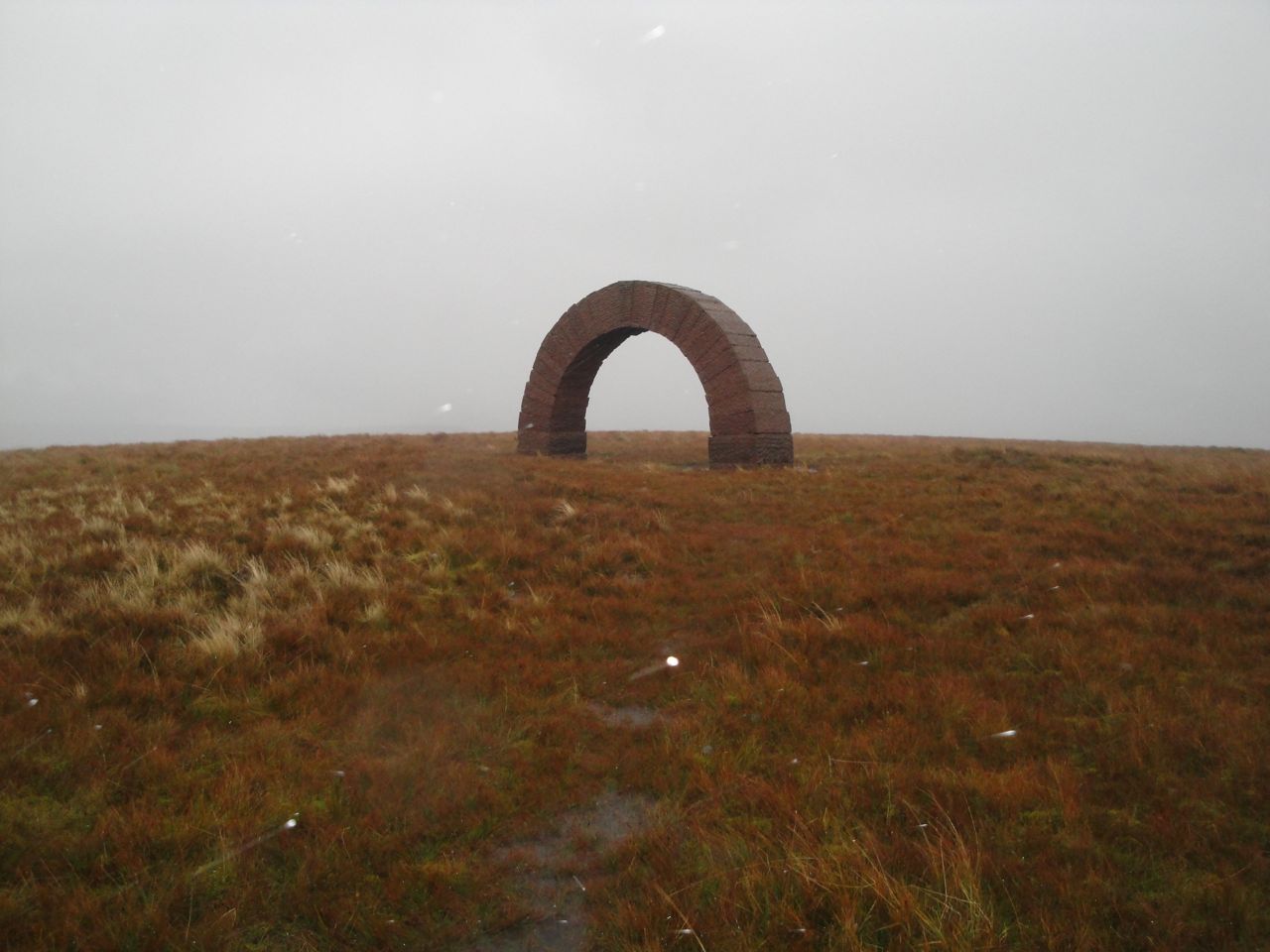


Posted in Dumfries & Galloway | Tagged , | Comments Off on Marthrown Hill: almost

SUW7: Stroanpatrick to Lorg

12.2 miles  6h 5m   ascent 648m; max elevation 580m Benbrack

How does it work?

How does it work?

Route: The SUW from Stroanpatrick to Polskeoch Bothy then the Lorg Trail to Lorg.

At the start of the walk, I actually wondered whether I should leave the waterproof trousers in my rucksack until needed. Since it was a little chilly I decided to go with the full wet kit, and within minutes it was confirmed as the right choice. We were to have a day of almost constant rain. I say “almost constant” because sometimes we had light drizzle and sometimes hail. Needless to say, it was wet underfoot.

David posed at the pick-up point for his photo and then, full of energy, we set off up the track by Stroanpatrick farm. Those who were not paying attention went to see how the gate opened while those paying attention left the track at the SUW post to start up the gentle slopes of Stroanfreggan Craig.

We then ran out of SUW posts (i.e. strayed from the SUW) and drifted a little too far up the slope so that we reached the tree line of Manquhill forest 300m off track. We had been tempted further off course by a fence post with a spot of lichen that looked like an SUW post until we got to it. Joanna and I went to the left to see if there was a way into the forest or any sign of the SUW and had to negotiate a couple of watercourses which would have been wide enough to turn me back, but Joanna, a few paces ahead of me, leapt with hardly a pause so I followed. I didn’t want to seem a wimp by crying off when I’ve got longer legs than her.

Stroanfreggan Burn

Stroanfreggan Glen

Stroanfreggan burn in better weather

Stroanfreggan Glen in better weather

Having decided that the SUW wasn’t to the left, we headed back to the rest of the group who were waiting on an island amidst the bog that bounded the forest. 300m the other way, through more tussocks and bog, and we found a gate in the wall and an SUW post.

So back on track, with posts to guide us, we headed up Manquhill Hill between forestry planted firs and lichen hung deciduous saplings. I don’t know what these saplings are but I hope they are hazel since Manquhill (Moin Chuill) means moor of the hazel. A hare, our first wild fauna of the day, bounded away from us.

The SUW doesn’t visit the top of Manquhill Hill, but the actual path we followed did, so I presume that enough walkers have gone that way to have left a well-trodden path. Our only views though were grey cloud.

From Manquhill Hill we had a resting downhill section to the twin ponds of the Craigencarse Burn where we found several deer. Most ran into the woods but one stayed behind to watch us a little longer before following the others. This happened during one of the periods of heavier rain so my camera was packed away.

The SUW over this section is raised slightly above the boggy ground but there was still plenty of bogginess and standing water to keep us in eyes-down mode. Walking along I could hear a strange humming from the trees to my right and wondered if it was the wind or perhaps an animal howling. Audrey thought it sounded like a saw, and as soon as she said that it sounded mechanical rather than natural to me as well. Perhaps the noise was carrying up from work going on in the valley.

The weather was showing no sign of changing as we were approaching the exposed slopes of Benbrack. On a better day I would have liked to have a quick breather before the climb then a leisurely lunch at the summit enjoying the views. That plan was going to be unfeasible with the strong winds and heavy rain, so we clambered into the trees for a relatively sheltered lunch. Not the most most comfortable lunch spot I’ve had, but at least there was a firm, if wet, place to sit.

The climb up Benbrack took the wind out of me and the space between walkers gradually became longer. Looking back, as I got my breath back, Manquhill Hill and Whether Hill’s turbines appeared as the cloud base lifted.

Manquhill Hill

Manquhill Hill

We followed SUW posts up Benbrack following a route that is a good 150m away from that shown on the OS map. When the Striding Arch on Benbrack appeared I was very pleasantly surprised. Benbrack is a typical hill that hides its top from those on its slopes, and I had thought there was still another 150 metres to climb. I had been comparing my position to the top of Manquhill Hill and had obviously got it wrong.

Unfortunately our arrival at Benbrack’s summit was greeted with hail driven into us by a strong wind. I had hoped for a group photo but the vanguard had already pressed on so it was a person free pic. The photo has white spots where the flash has illuminated falling hailstones. You can usually see the Colt Hill arch through this one.

Striding Arch, Benbrack

Striding Arch, Benbrack

As we began to descend Benbrack, picking our way around waterlogged ground, it became clear that I had camouflaged the truth in saying it was “downhill from Benbrack, on average”. Perhaps I mumbled the part about the gradient averaging downhill. Anyway, this was a white lie made with good intent and I felt no need to exhibit contrition. Admittedly, Cairn Hill does look a lot more of a climb in real-life than it does on the map.

The ground between Cairn Hill and Black Hill has been very muddy on my previous visits but it was more waterlogged/submerged this time,  and tended to clean rather than dirty our footwear.

Fingland Glen from Cairn Hill

Fingland Glen from the slopes of Cairn Hill

I was expecting to see trees near the top of Black Hill but the forestry have been a’felling, so there was now a fence rather than a tree line to guide us. Some unthinking person had padlocked the SUW gate shut, leaving us to manhandle dogs over a stile.

From Black Hill we followed the edge of what had once been forest, with views across to Ewe Hill and Lorg Hill. At High Countam the path turned into the forest and made its way along a narrow waterlogged path in a forest break. I see that the area to our right is named Good Bog on the OS map. A strange name.

After crossing a forestry track we continued in the forest break to a clearing where several breaks met. Allan’s Cairn stands here at the junction of three old counties: Dumfriesshire, Kirkcudbrightshire, and Ayrshire. This is a memorial to two Covenanter’s killed in the persecutions of the 17th century. There is apparently some question as to the story behind this, with a suggestion that the place itself was named Allan’s Cairn before the memorial was placed there.

Allan's Cairn

Allan’s Cairn

After Allan’s Cairn it was all downhill (well, mostly) eventually descending to a forestry track above the Fortypenny Burn. A bird of prey, a buzzard from its colouring, was patrolling here.

Sheep Pen, Polskeoch Rig in the background

Sheep Pen, Polskeoch Rig in the background

The forestry track takes a rather irritating dog-leg adding almost half a mile to the walk but I am sure the direct line across the felled forest would have taken longer. After the dog-leg we found ourselves at the Polskeoch Bothy. I thought I had taken a photo of the green roofed building but I must have not pressed the shutter release properly because it wasn’t on the memory card. So there is just the interior photo.

The bothy did though give us a brief respite from the rain, though it was quite dark inside.

In the bothy

In the bothy

After our rest at the bothy we crossed the Water of Ken (on a bridge) and left the SUW when we found the signpost for Lorg.

The first half of the Lorg Trail is amongst trees along very friable ground that either slips as you stand on it or accommodates your foot like thickened blancmange. This was not especially difficult terrain but did require care. I think we did well in that no one fell.

Lorg Trail

Lorg Trail

Lorg Trail

Lorg Trail

After the trees we made our way across the waterlogged and muddy lower slopes of Lorg Hill and soon could see our goal, the car.

The weather, poor visibility and waterlogged ground made this section more of a challenge than it might otherwise have been. Our early stray from the path added about half a mile (or a mile for Jo and I) to the distance. Damn those lichen encrusted posts that look like SUW signs.

I enjoyed it anyway.

With: David, Elaine, Audrey, Joanna, Gwyneth.


[sgpx gpx=”http://www.screel.co.uk/walks/wp-content/uploads/2013/11/RK_gpx-_2013-11-02_0942.gpx”]
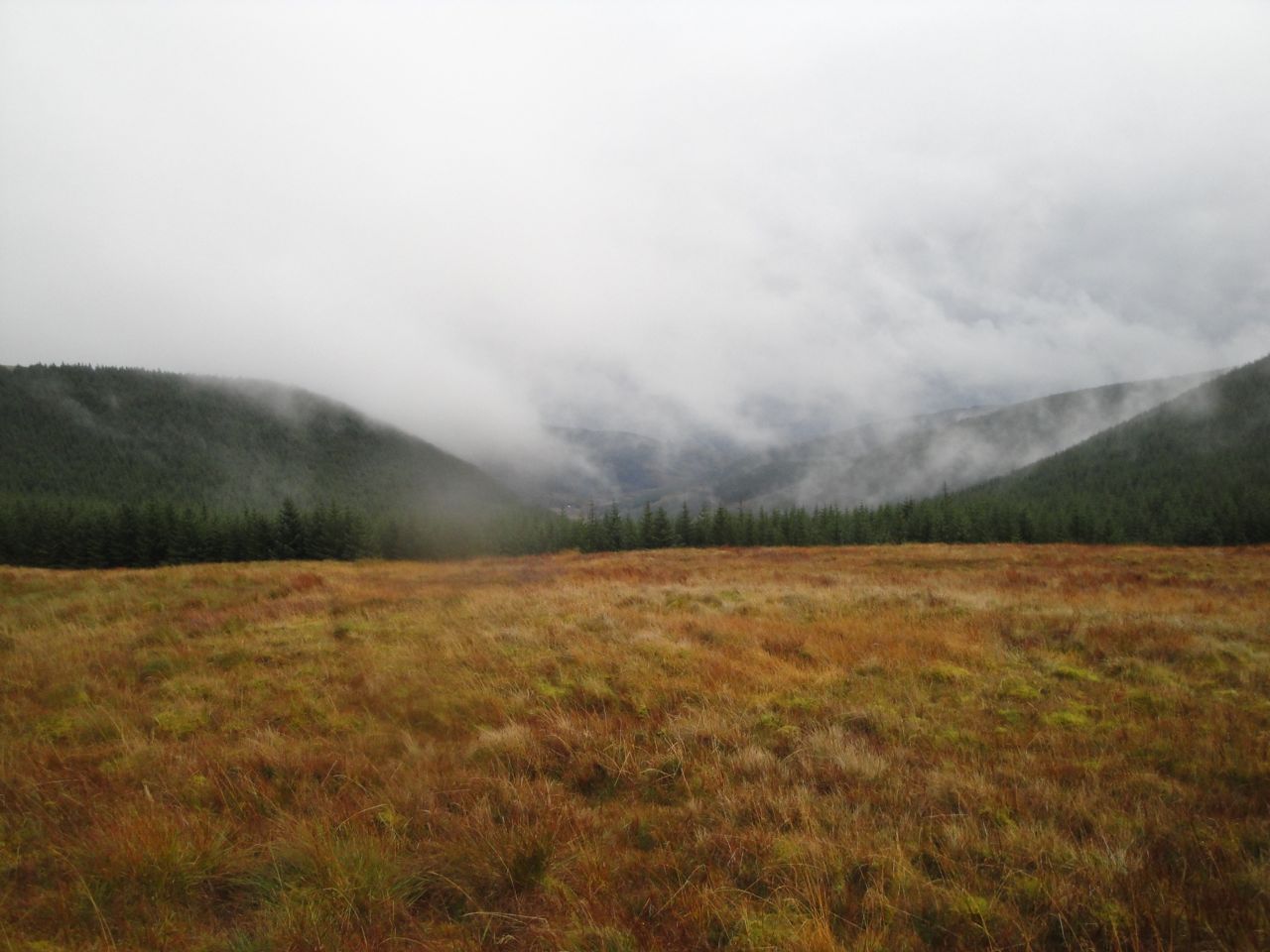


Posted in Dumfries & Galloway | Tagged | Comments Off on SUW7: Stroanpatrick to Lorg

Dundeugh “Island”

4.2 miles  1h 27m  ascent 111m

Dundeugh Forest is bounded by the Waters of Ken and Deugh, and became an island with the damming of these rivers to create Kendoon Loch.

A pot-holed road near Polmaddie leaves the A713 and crosses the Water of Deugh on a small bridge after which there is space to park a few cars. A padlocked gate prevents driving any further.

From the gate a forestry track turns left but I headed right along a less used track that soon narrowed to a single-file woodland track and meandered through the trees. Occasionally fallen trees blocked the way, but the forest is not particularly dense and the detours were easy.

The woodland track took me down to the southernmost part of the island but from where I was the rivers could be heard but not seen. A footbridge could be glimpsed through the trees. The path came close to the Water of Ken, but the river itself remained mostly hidden by the trees.

We then turned away from the river and climbed up to reach the vehicle track that was to be our route for the rest of the walk. The trees mostly obscured any views but the Cairnsmore hills could be seen across Kendoon Loch. We passed a short track down to the dam on the Water of Ken but it was extremely muddy and must have been submerged in last week’s floods, so I didn’t visit the dam.

Walking back, the path was close enough to see a little of the Water of Deugh.

Perhaps I’ll be back to tackle Dundeugh Hill another time.


Download file for GPS


Posted in Dumfries & Galloway | Tagged | Comments Off on Dundeugh “Island”

SUW6: Across the Water of Ken

14 miles  6h 37m  509m ascent; max elevation 296m Culmark Hill

Water of KenRoute: SUW from Hen Craig to Stroanpatrick (with a couple of detours)

I have not seen the phrase “Very wet underfoot” in a weather forecast before, but I’ll have to say that the MWIS were spot on with it. Driving to and from the walk I sometimes had to use the windscreen wipers on the fast setting. The rivers were full on the drive out, but by the time we were driving home many had flooded beyond their usual banks. We had some torrential showers on the walk, but most of the time it was drizzle. There were times though when we could take our hoods down when the drizzle abated, and at least there wasn’t much wind. Driving rain would have been worse than the dreich day we had, I think, so things could have been worse.

Our drive took us through Moniaive to leave a car by the black hut at Stroanpatrick then over Kendoon Loch by the wee bridge that is “not suitable for HGVs”. Later in the day the loch’s waters were much higher and had flooded its banks near the fish farm. Driving along the road to Hen Craig, our parking spot, I looked out for the sign where the SUW left the road but didn’t spot it.

We left a car at the parking spot near Hen Craig. Behind us was Drumbuie Hill (the yellow ridge, Drum Buidhe) which did have an autumnal yellow tinge. I hadn’t noticed this huge looming ridge when were last here in the mist so it was a bit of a surprise. It was raining so heavily that we had to put on our boots and waterproofs while in the car otherwise we would have been absolutely soaked through.

So, fully togged up we checked the time, 9.45 am, and set off down the gravel track that soon joined the single track road. The rain continued and we could hear the Garroch Burn roaring to our right, making it difficult to hear a car when it came up behind us. I knew that the SUW left the road near the bridge over Garroch Burn but the rain drops on my specs and on the waterproof map cover made it difficult to see exactly where.

I was sure, at first, as was Audrey, that we had seen a sign post indicating the route when we were here before. Unfortunately my memory began to play tricks with me. I began to doubt my recollection. The map, seen through the multiple refractions of raindrops, looked to me to show the path leaving the road at the bridge, rather than 200m beyond it, and there at the bridge was a track heading in what appeared to be the right direction.

We had a period of indecision in which we considered walking back up the road, further along the road, or along the track, which I’ll have to admit was beckoning me as if by an enchantment. We discussed the lack of a signpost, and I convinced myself that my memory of such a post was a figment of my imagination. At such times it is important to make a decision and then imbue that decision with confidence, and that I did. We set off along the track, me 100% confident with the decision.

This track was muddy in places, flooded in others. We had to duck through trees at times to find ways around muddy pools or across flowing water and eventually reached a rusting gate. The gate stood, as gates so often do, across standing water. It looked as if it had not been opened in a generation, and there was no path beyond it. I searched the distance for the non-existent SUW post then felt my confidence ebb as the enchantment wore off.

Cosulting the map again I could now see that the SUW left the road between the bridge and a track heading to Old Garroch. We retraced our steps through the woods to Garroch Bridge and continued along the road until we reached the SUW signpost. As soon as I saw it, I remembered it. It is about 250m past the bridge.

Garroch Burn in spate

Garroch Burn in spate

So we left the road and walked through the woods to the banks of the Garroch Burn which was roaring along. A footbridge took us back across the burn, through a metal kissing gate and into a quagmire. Here the trail went dark but we spotted a wooden walkway/footbridge and took that as a sign of the SUW.

The burn to our right was only a couple of handbreadths short of flooding our path and we had to pick our way carefully. There were more walkways though some were close to being submerged. A gap in the bracken was our only clue when the SUW left the side of the burn for Waterside Hill but after a hundred metres or so we noticed a marker post hidden in the bracken to confirm we were on the right track.

Garroch Hill from Waterside Hill

Garroch Hill from Waterside Hill

On Waterside Hill we found ourselves walking along a firm grassy path through the bracken. There are said to be great views from this hill but the weather denied us the opportunity. Having said that we enjoyed the view back to the nearby mist covered Garroch Glen while we got our breath back and munched some Jelly Babies. In better weather Waterside hill would be a good place to stop for a bite to eat. There are plenty of rock outcrops to sit on while enjoying the views and on the way down we passed an ideal spot, a lichen covered tree standing over some seat sized rocks. Someone else must have thought the same and had bedecked the tree with bunting, though the colours had long since faded.

Bunting hung tree, Waterside Hill

Bunting hung tree, Waterside Hill

We headed down towards Earltoun power station with the Water of Ken now coming into view. The SUW crosses the A762 to reach the river bank and follow it downstrean to the Boatweil footbridge. The river was obviously fuller than usual with trees sprouting from the water where they would usually stand on islands.

The Boat Weil bridge was built for the SUW by 33 Independent Field Squadron RE in Spring 1982. The Boat Weil, where bridge now stands, is the section of the Water of Ken previously crossed by a ferry. This ferry was used by pilgrims heading for Whithorn including King James IV who in 1491 paid 5s for being ferried across the water with his retinue. The ferry worked until 1800 when the Allengibbon bridge was built. A weil, by the way, is a whirlpool.

Water of Ken

Water of Ken

The Boat Weil is a suspension bridge and bounced up and down as we crossed. I suspect that Audrey was bouncing it on purpose behind me to give me motion sickness. Once back on firm ground we walked up by the church and an SUW information board standing beneath the old motte.

On a drier day we might have sat on the picnic benches outside the pub but the bus-stop provided better shelter. The design of the bus-stop, with a misericord rather than a seat, had ensured there were no horizontal surfaces to set a cup or bottle upon. We did have the ground of course.

I took a picture of McNaught’s fountain and the unusual church, which I have now found out is the town hall. Then, re-fuelled, we set off through St John’s Town of Dalry. I was keeping a keen eye out for St John’s Chair, a child’s size seat. Historical descriptions are of a large stone which this certainly is not. I suppose I should have sat on it but didn’t think to do so.

St John's Seat, Dalry

St John’s Seat, Dalry

The SUW leaves the main road at St John’s Chair and passes some houses before joining a farm track past the house at Creaganfois. A large black and white hut here would make an excellent summerhouse but seems to be a storehouse. After the hut the path took us past autumnal trees then across rough rocky farmland. A large pile of stones here looks very much like a cairn, but I’m sure an ancient cairn would have been robbed of rocks to build the nearby stone dykes so this is more likely to be a pile of stones cleared from the field.

We made our way towards the farm buildings at Ardoch, with little to mark the SUW itself, other than the gates in walls. At Ardoch we found some SUW markers and followed these alongside the tall trees of Ardoch Glen.

After Ardoch Glen the track split in three directions, without any clear sign which was the SUW. From the map it looked as though the SUW continued in much the same direction and this seemed to fit with the left fork, so we went that way. The track from the middle tine of the fork rejoined us quite soon. As we were to find, the right hand fork was probably the correct one.

Three ways

Three ways

Our path should have skirted around the lower slopes of Ardoch Hill but we found ourselves drifting higher albeit still on a well-trodden path. But the path then gave out leaving us looking down towards the Earlstoun Burn. Since the SUW runs in a 150m gap between the burn and the forest, we decided to head for the gap. The dykes here were all augmented with barbed wire fences so we detoured to gates where we could and in doing so found ourselves back on the SUW. We could see a marker post behind us but none on the way ahead so headed on towards the burn-forest gap.

To say this area was boggy would be to expect too much of the word boggy. We came upon an un-named burn that was far wider than a leap and already spreading beyond its usual boundaries. I looked into the clear waters trying to decide how deep it was if it had to be walked. Just as I was creating the words to say it “wasn’t that deep”, I realised that the “pebbles” I was seeing at the bottom were the upper leaves of a submerged bush.

We followed it upstream but were really just trying to find a way across a flooded field with a burn in it. Having found the least worse of the crossing points we went for it, tramping through flattened reeds lying on the water. Sadly worse was yet to come.

Having reached an island of dry ground beside an SUW marker post and got our energy back we looked around to see which way the SUW might go. A faint trace through the reeds led back into bog but we chose to stick with the high ground and were delighted to find an SUW gate into the next field and a waymarker post half-way across that field.

The OS map shows a small burn crossing this field and the track we were on led to this burn and out the other side. I presume one can normal step over this but we found a fast flowing stream more than 3m wide. We could not see the bottom but judging by the tops of trees that were poking out of the water I thought it too deep to wade across. Looking upstream there was no obvious crossing point and if anything the burn seemed to widen.

Burn blocking our way

Burn blocking our way

This was a potentially walk ending problem. We decided to follow the burn upstream for a while to look for a crossing and failing that we would need to walk 5.5 miles back to Dalry and get a taxi to one of the cars.

We could not follow this burn upstream along its banks since the field around it was flooded so we headed back through the gate and across the trace we had seen in the slightly less boggy grass and reeds. We made our way to the wall at the edge of the forest and climbed another wall into the corner of the field with the flooded burn.

Audrey’s crossing of one of these watercourses was not entirely successful, measuring success as dryness and uprightness. I will say no more except that she remained calm and carried on.

The wall between forest and boggy field was acting as a dam to water flowing from the forest and had water issuing wherever the wall had collapsed and between its stones where the wall was complete. Our only way forward was to climb sideways along the wall until we found a shallow section and get back to dry land.

The original Earlstoun Burn had been diverted from here, the original river having meandered through these low lying fields. You can see that the modern Earlstoun Burn is unnaturally straight here. I think the various un-named burns blocking our way are the original routes of the burn, but with the heavy rain these “drained” waterways were reverting to their natural state.

Footbridge at Earlstoun Burn

Footbridge at Earlstoun Burn

After the watery unpleasantness we crossed a footbridge over the new Earlstoun Burn and followed the SUW along the river bank. The river bank was not easy going being made up of randomly scattered rocks and mud.  I wonder if it might have flooded later in the day. The grass 5m away on the other side of a stone dyke looked much more inviting but eventually a marker pointed us away from the river and we climbed on to the moorland heading from one marker to the next. I would normally have said that the going was boggy in places, but compared with our recent experience this was firm and dry.

On featureless moorland it can be difficult to keep to the SUW and when there were no SUW posts we followed any tracks we could see, but these sometimes led off in several directions. Shorter marker posts could be hidden in bracken but we also passed at least four posts lying on the ground without any hole to re-plant them in.

Moorland at Corseglass

Moorland at Corseglass

Above Coreglass we could at least see the road to our right and knew that we should eventually converge with it. Despite this, following a trodden track led us astray, onto the 220m knowe marked on the OS as having a settlement. Once on top of it however we could see the road again, but also a marker post where we should have been.

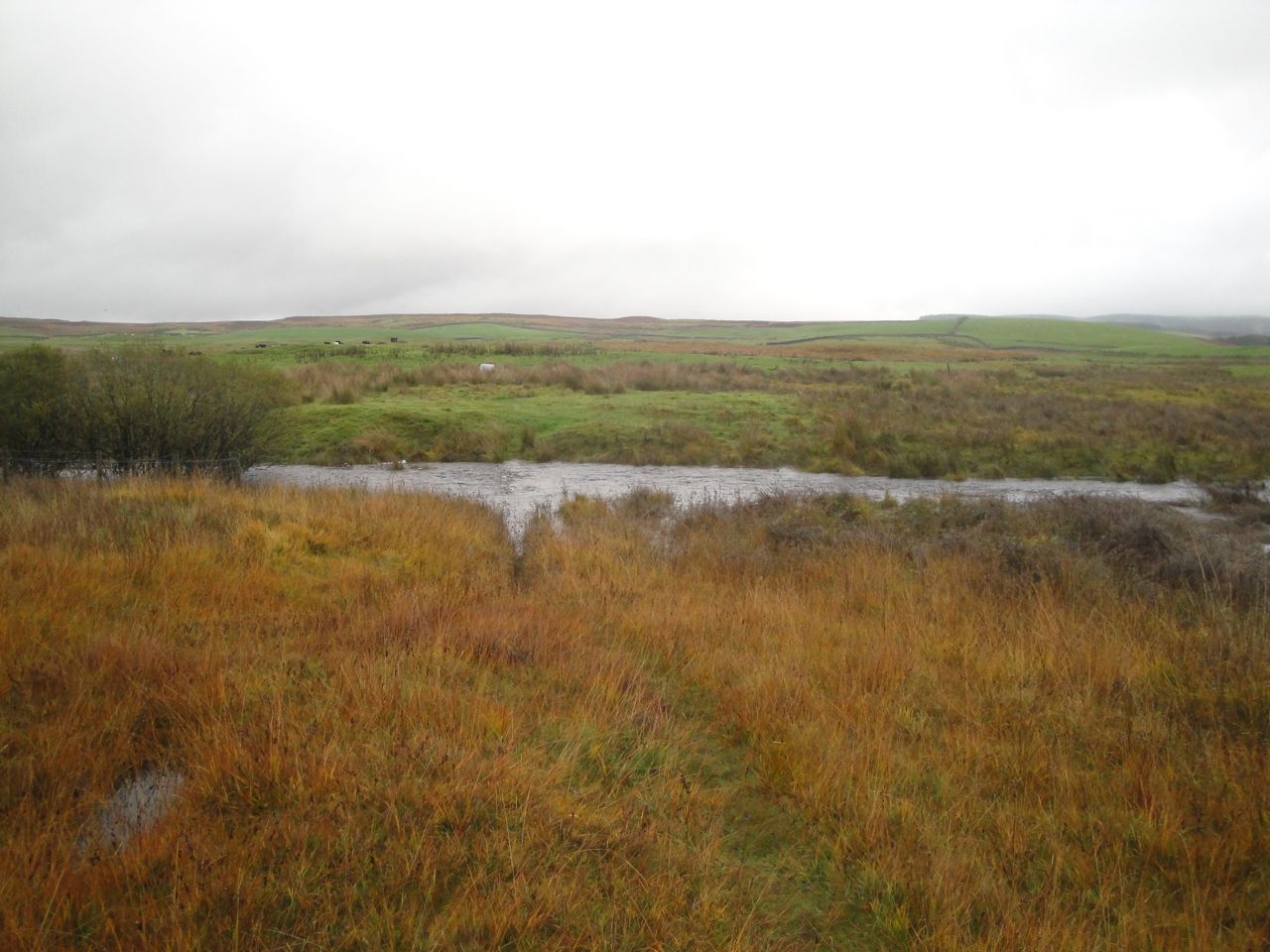
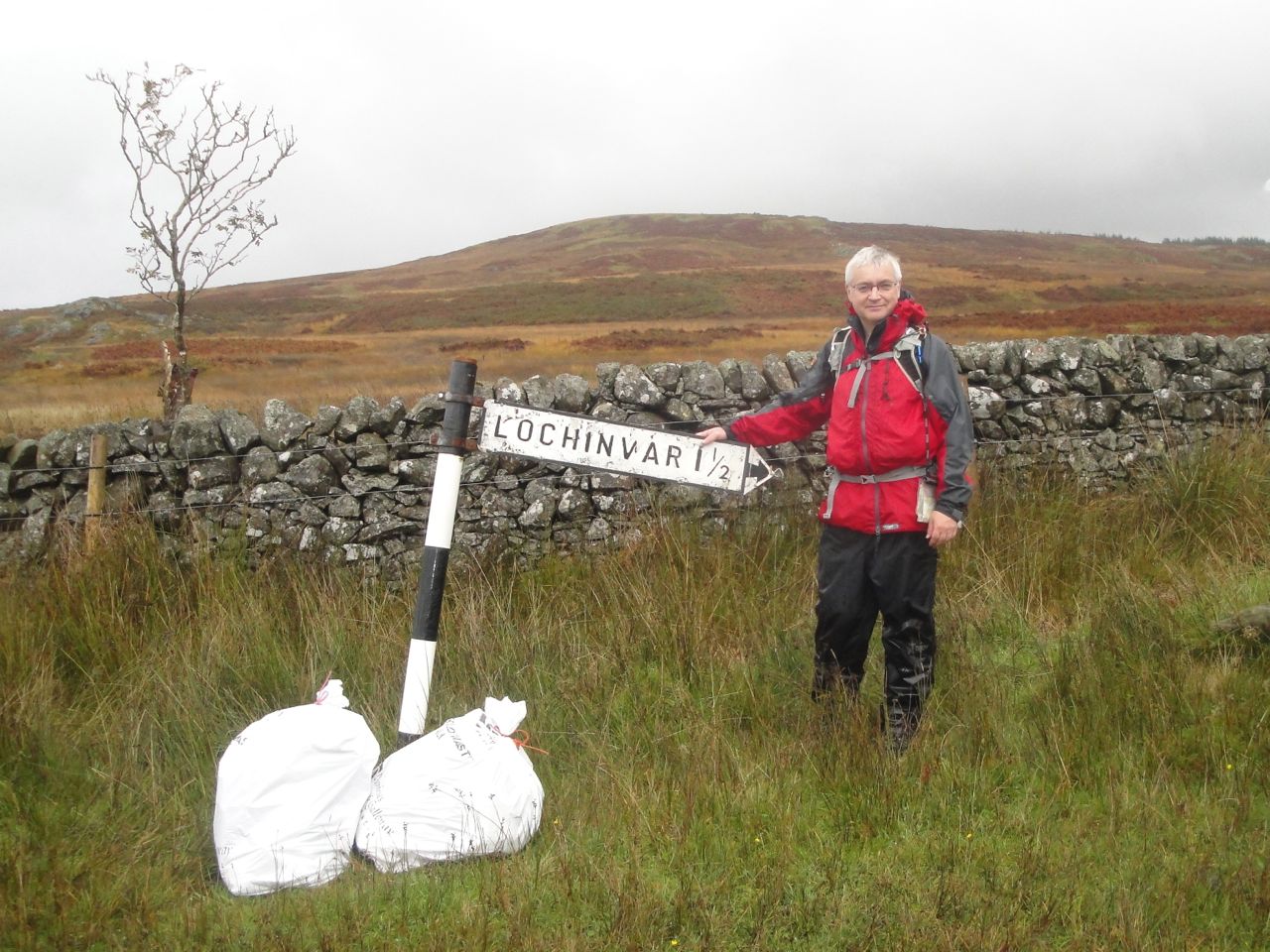
Once over the last brew we could see the road junction. There is a sign to Lochinvar and one warning us that the road is liable to flooding. It was indeed flooded to the west of us. The rain had stopped (almost) and having my feet back on firm ground I decided it was time for a rest break. Four miles or so to go but no more bogs.

Young Lochinvar is come out of the west

Young Lochinvar is come out of the west

The road north was a welcome break, no need to look for marker posts for a while, no boggy sections to avoid, no rocks to twist an ankle. We walked down crossing the Black Burn on a road bridge and then I started counting the paces for the 400m to where we would leave the road but stopped before 200m when I spotted the SUW sign in the distance.

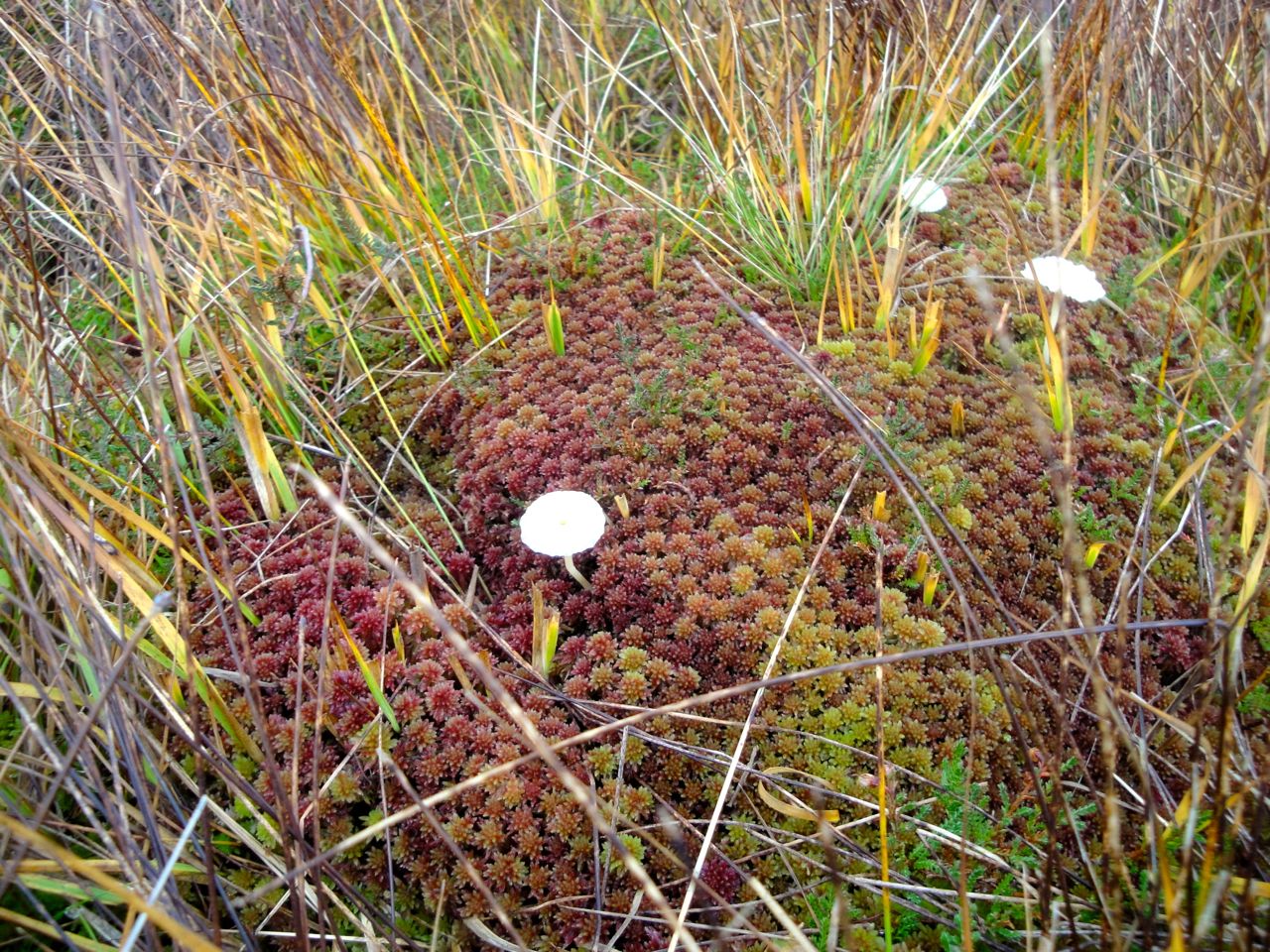
Mushrooms on moss

Mushrooms on moss

Several marker posts were lying on their sides on this stretch but there was enough of a track to keep us from straying. We climbed over Marskaig Hill and onto Culmark Hill. I had hoped we would be able to see the black hut or the car to boost our spirits and though we could see the farm at Stroanpatrick the car wasn’t visible until we were close to Stroanfreggan.

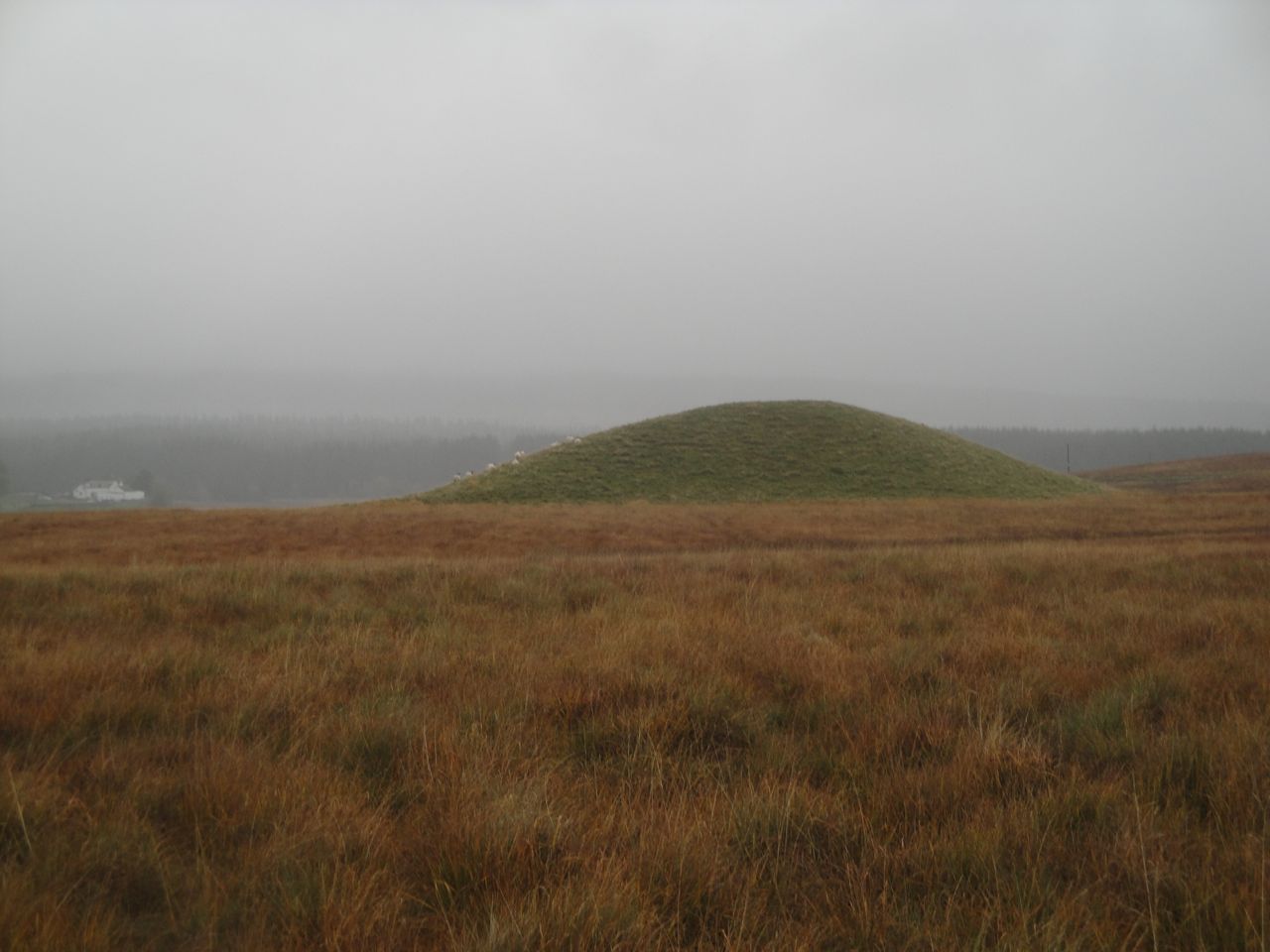
Mound at Stroanfreggan

Mound at Stroanfreggan

Once at Culmark Farm we joined a farm track that took us across the Stroanfreggan bridge and back to the car. The track between bridge and road has a large green mound to the west and the remains of an ancient cairn to the east. The cairn once contained bronze age items but has seen better days. I’ve read that the origins of the grass covered mound are uncertain. It is not clear if it is natural or man-made but I hope it hides another burial cairn.

The unrelenting rain and bogginess underfoot left us a little damp at the end of the walk and it was a relief to get some dry clothes on. Unfortunately the heavens opened with a vengeance while Audrey was transferring her stuff into her car so she didn’t stay dry for long.

With: Audrey


[sgpx gpx=”http://www.screel.co.uk/walks/wp-content/uploads/2013/10/RK_gpx-_2013-10-19_0932.gpx”]
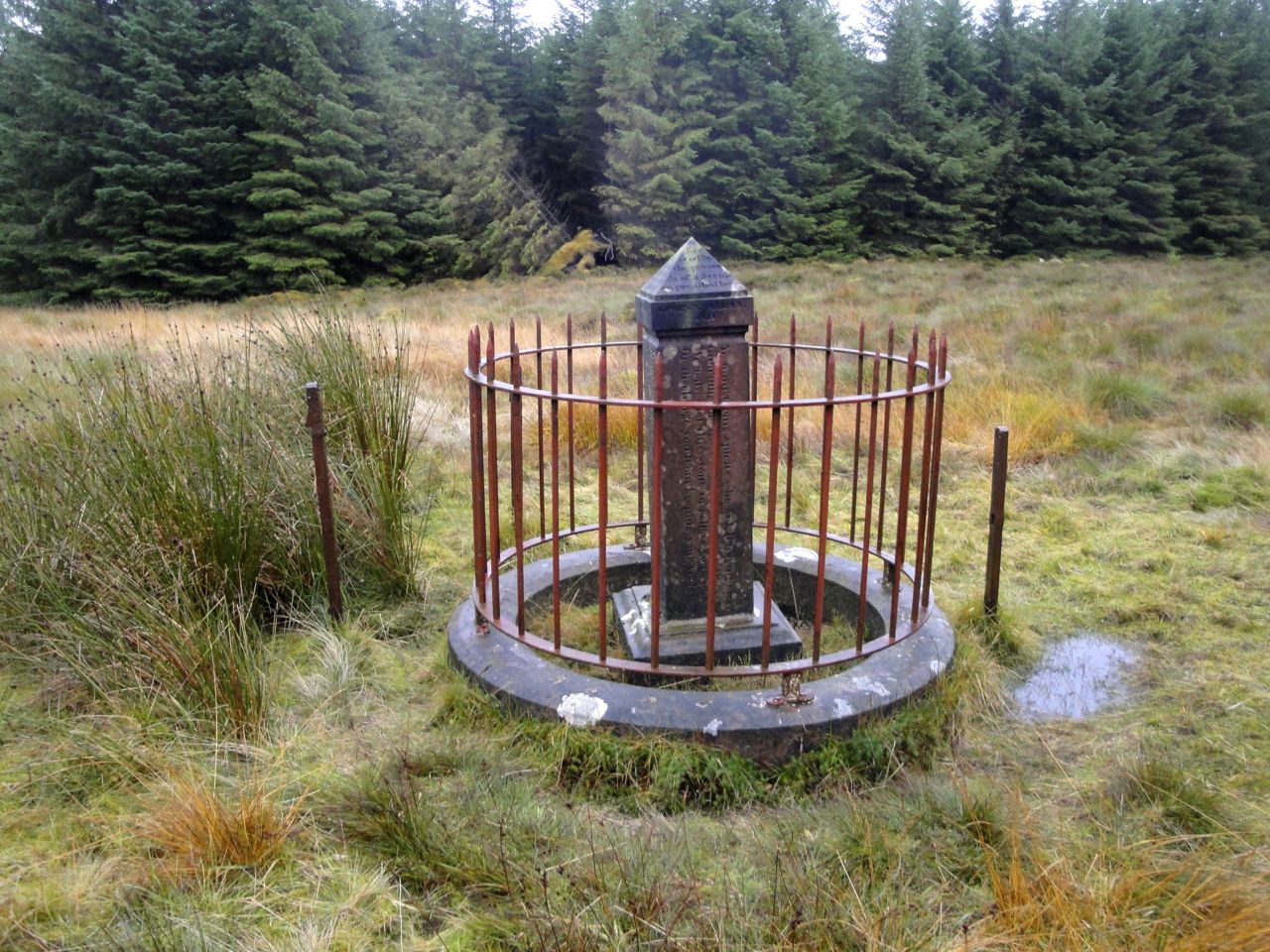


Posted in Dumfries & Galloway | Tagged | Comments Off on SUW6: Across the Water of Ken