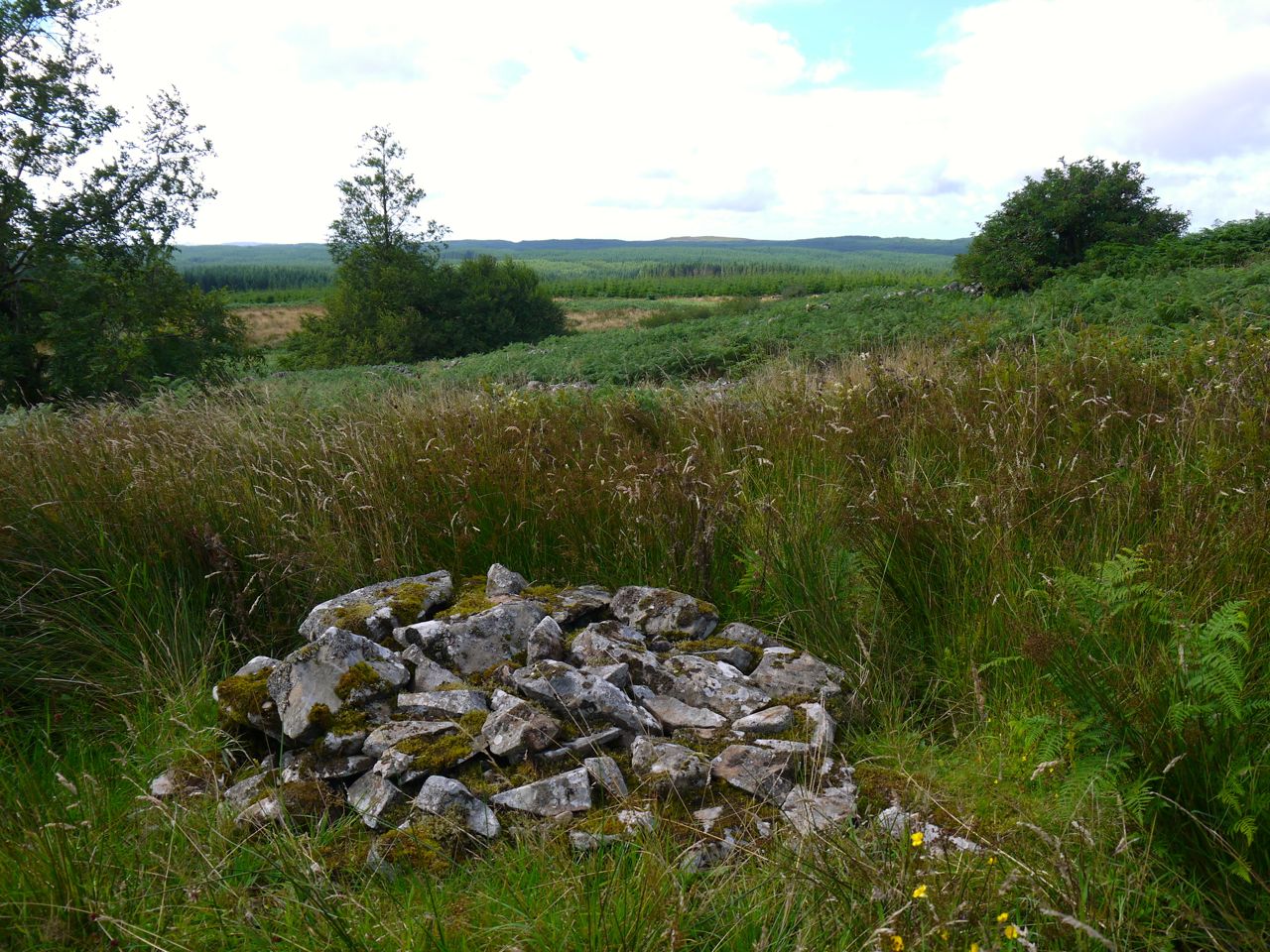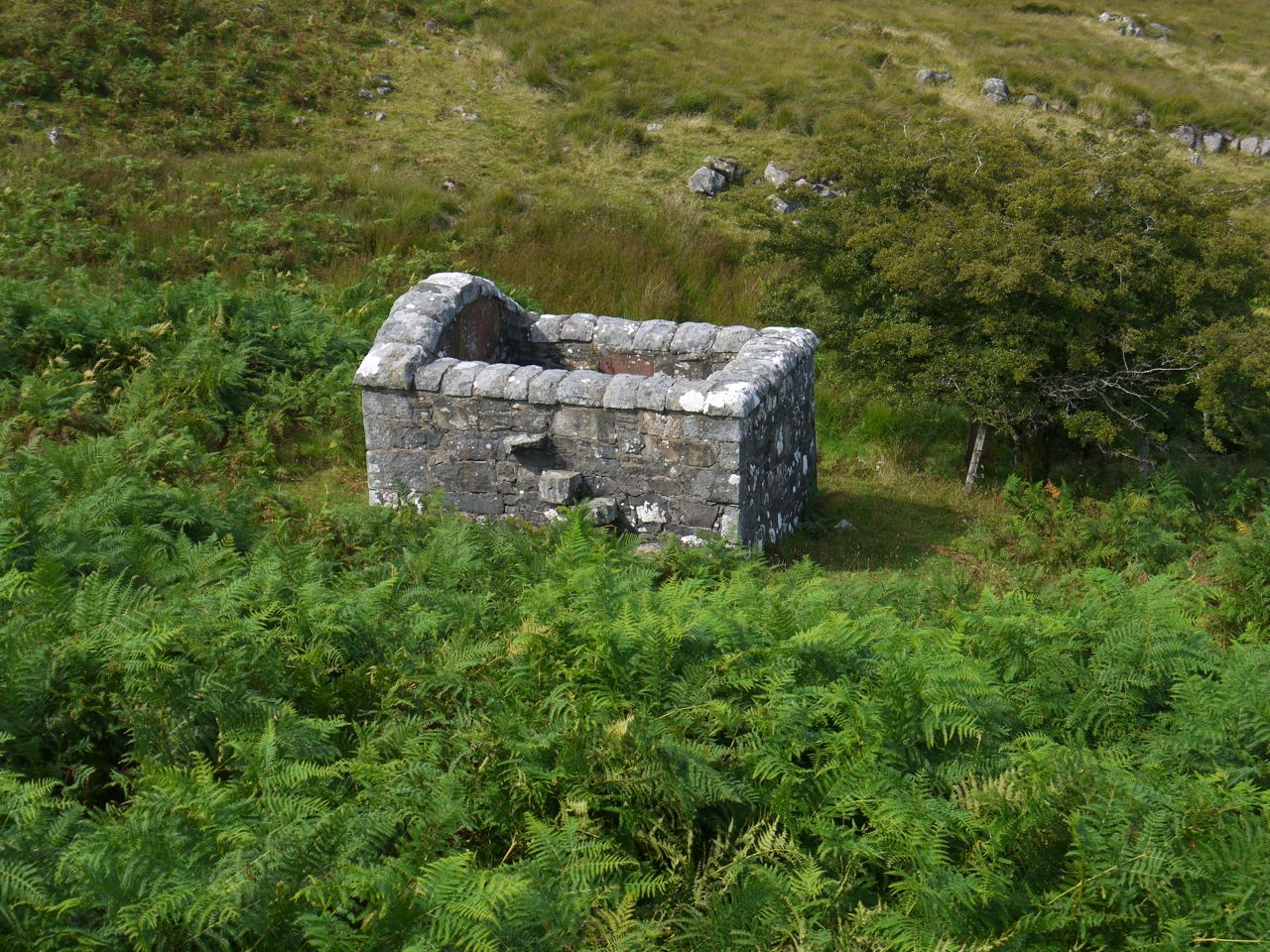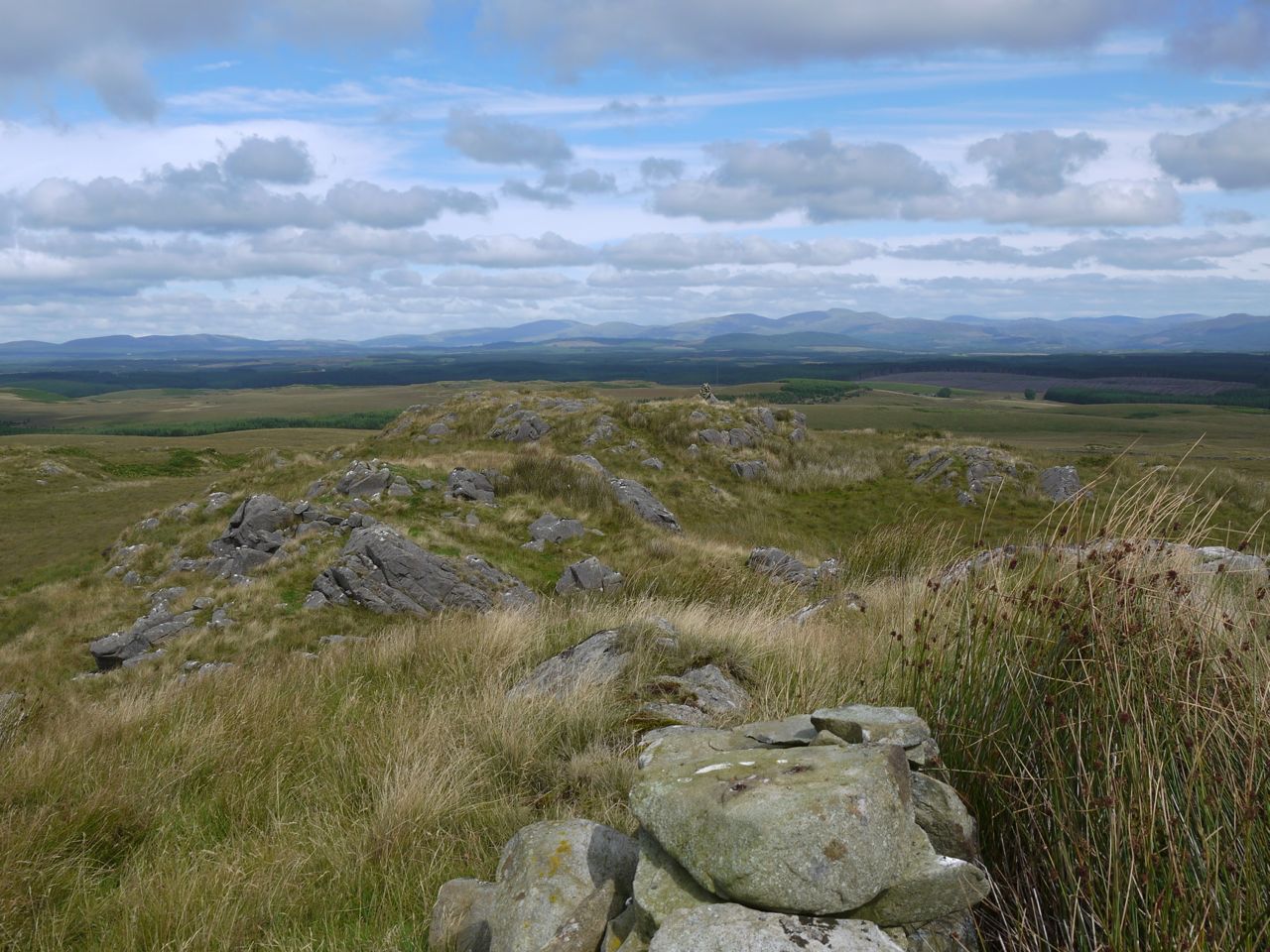
Craiglee and the Wee Hills

4.8 miles  3h 30m  ascent 366m

MullwharcharRoute: Wee Hill of Craigmullach-Craiglee-Mulluss

The Range of hills called the Awful Hand can be seen, by those of elastic imagination, as a hand reaching onto the land from the depths of the earth. When seen from the west, the summits look like knuckles and their western ridges fingers. The size of this fist would suggest it belonged to a giant standing 115 km tall. Upright its head would be in outer space, but perhaps these giants lay flat on the ground, nestling in valleys, grinding, eroding and moving rocks at what we would regard as a glacial pace?

When these ancient giants were shaping the mountains, valleys and lochs of Galloway, they set aside some of the smaller building materials and no doubt looked on proudly as a child giant, imitating her parents, began to build some small hills of her own. The craggy hard stones she used to make Craiglee, some left over hummocky moraine was piled up into the Wee Hill of Craigmulloch and the remaining parts, mainly craggy knolls, were swept into a small uneven pile, Mulluss.

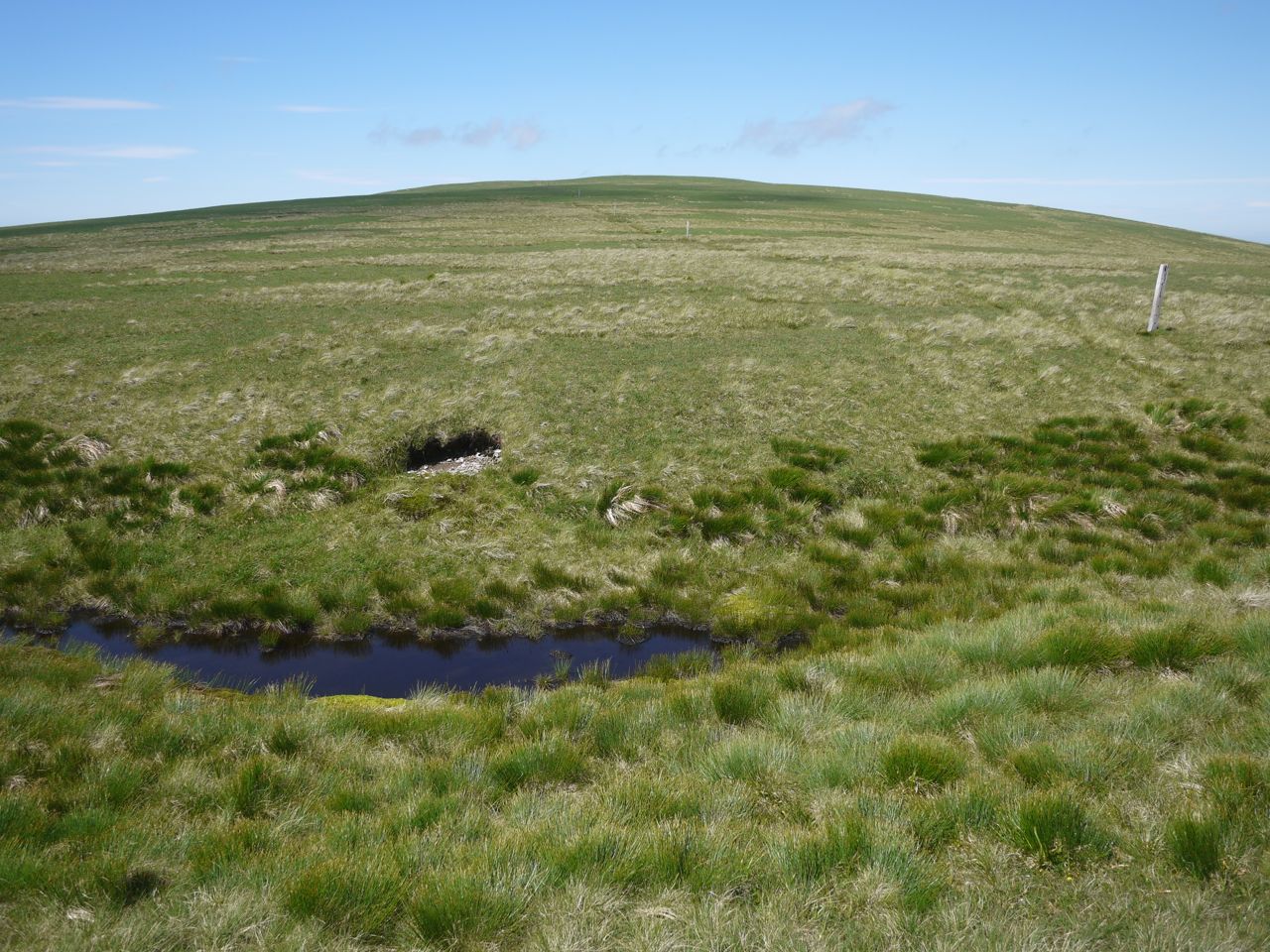
Watching her parents as they added the finishing touches to their hills, the child giant decorated her work as they did, adding a bog in the col between the main hills, not forgetting to include some streams to drain excess water, and a small lochan just below the summit to hold the blue of the sky. Finally as she left, and just before washing her hands in the clear waters of the new Loch Doon, she cast handfuls of granite erratics over her work, the pattern of the erratics spelling her name. This was the giant’s way of hallmarking their work and she had seen her parent’s doing just the same.

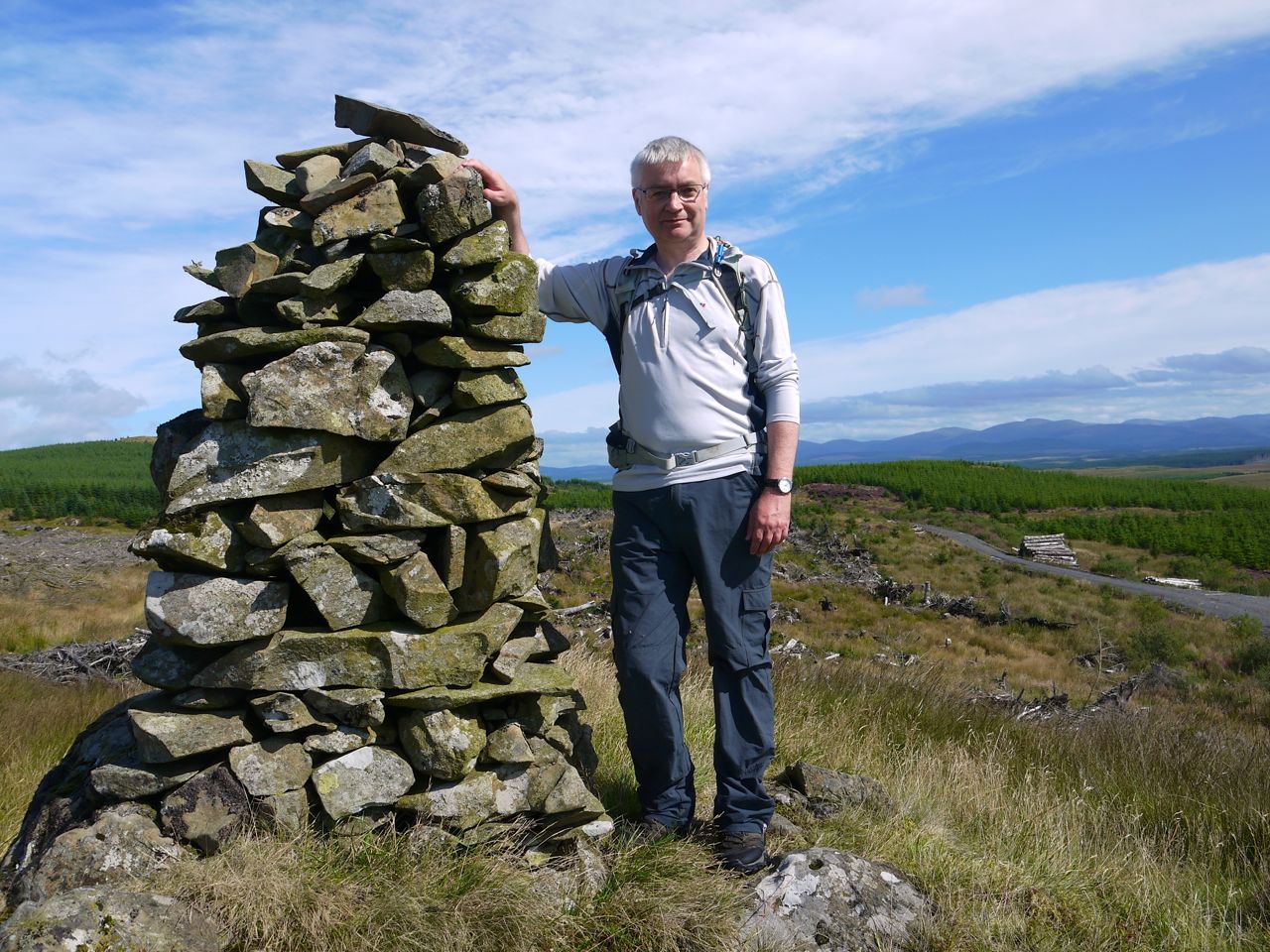
Though the giants left these hills long ago, that child left something more than her wee hills behind. She also left an urge to build. This enchantment grips some of those who visit her hills and conveys a pervading urge to build. Even the mosses, grasses and heather that have covered the land have built a layer of soil, though they have left the erratics, a few crags and the lochan uncovered for now so the builder’s name is not lost. When other wanderers reached these places they too were driven by this urge to build and they have left cairns, mountains in miniature not yet conquered by the soil makers, at the summits and promontories, even on lowly Mullus. On Craiglee, a pillar fashioned from aggregate and cement, has been erected at the highest point by the last century’s cartographers. The giant would have found it a bit of an eyesore, I should think, but there’s no accounting for taste. Arcane lettering can  still be seen on it, but the elements have taken their toll and it can no longer be read.

Well, surprisingly enough, that’s the story that came to mind as I looked at these hills.

It was a warm sunny day but with heavy rain forecast for later so I plumped for a relatively early start even though it was only a short walk. I was keen to do this walk in good visibility because I wanted to get the most out of the views and I struck lucky this time. The drive along Loch Doon was surprisingly pot-hole free and there were only a few sheep on the road. The surroundings were very easy on the eyes and the loch was low enough to reveal the old castle island. The car park near the castle has a boulder that is just the right height to sit on for putting on boots, and more comfortable than the boot of the car.

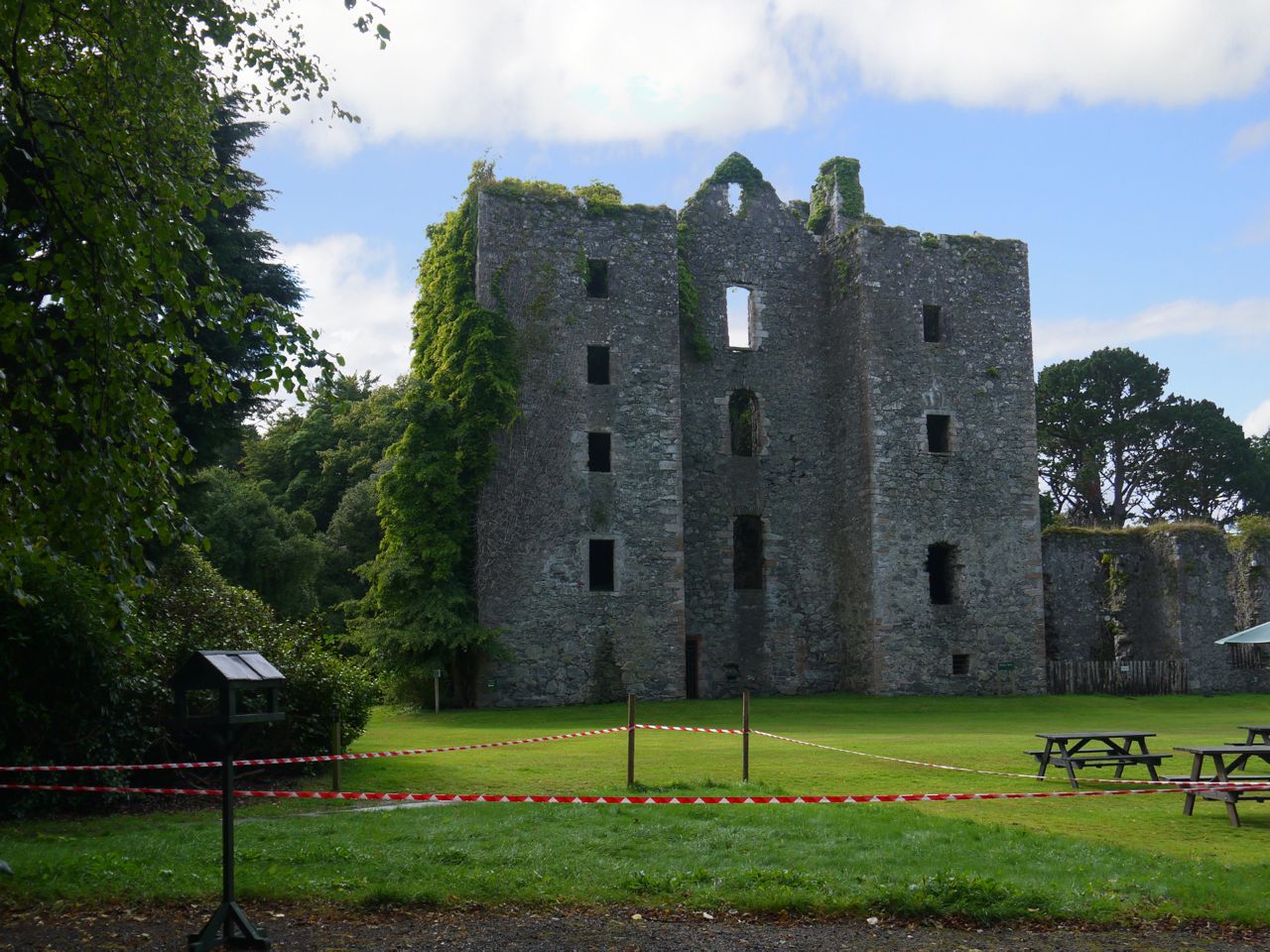
Loch Doon Castle

Loch Doon Castle

Though I’ve driven past Loch Doon Castle many times and even walked up to the outer wall, for some reason I always seem to go there at the end of walks when I’ve used up my enthusiasm so this time I started by exploring the castle. It’s quite strange to think that these ruins were rebuilt here only 80 years ago when the loch’s level was raised 27 feet by the hydroelectric system. Mind you I’m more impressed by the the initial construction. It must have been quite un undertaking to build a castle like that out on an island in the loch. Over on the far side of Loch Doon there are some unusual structures crossing the burns. I had first noticed these when making my way off Coran of Portmark in April last year. They look like rail bridges but I had not been able to work out why they were there. Now I know. They were part of a WW1 rail mounted gunnery target range for aircraft. That will be why there is a modern looking brick building near the older ruins of Portmark. The project was not a success, apparently.

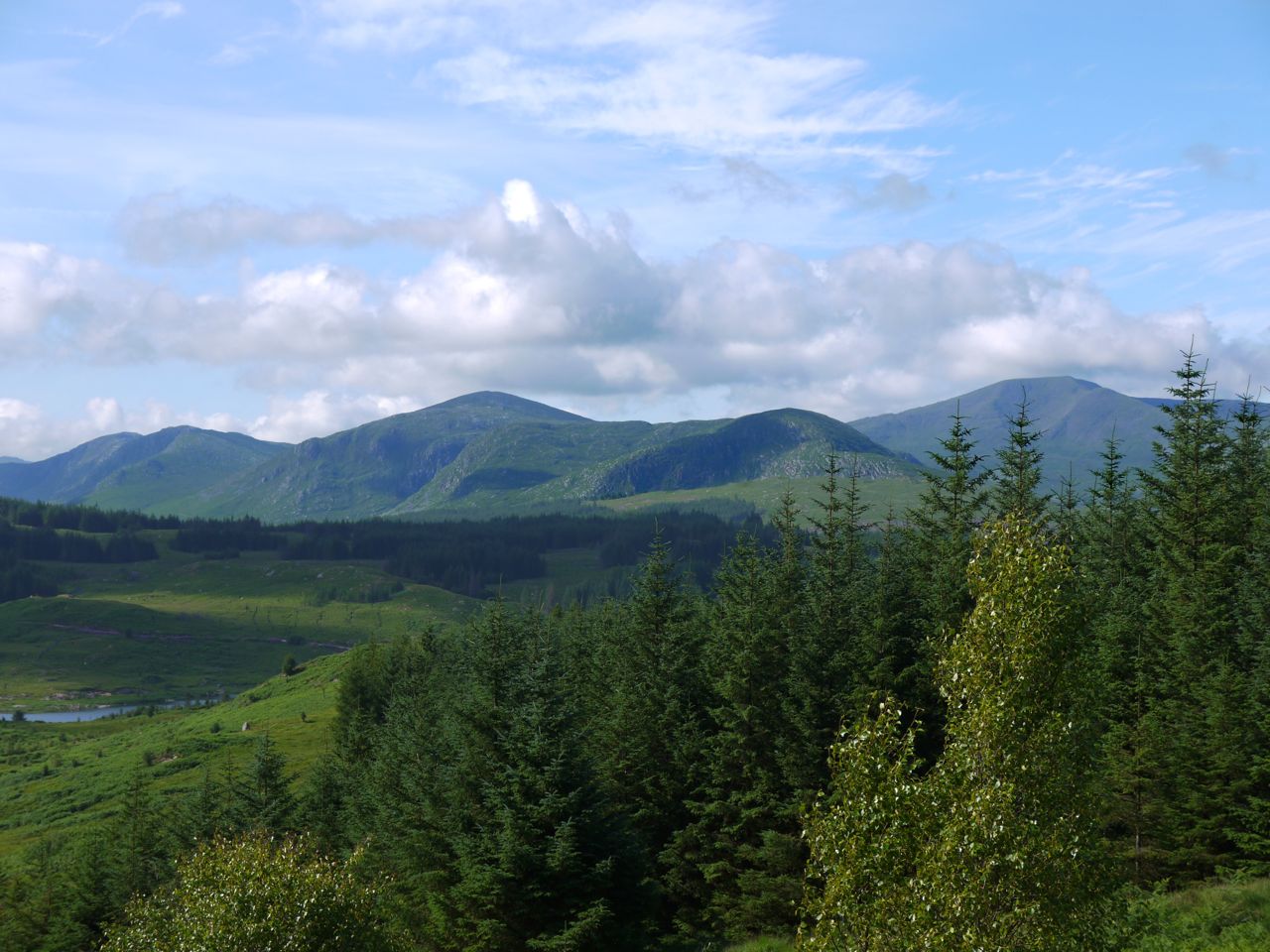
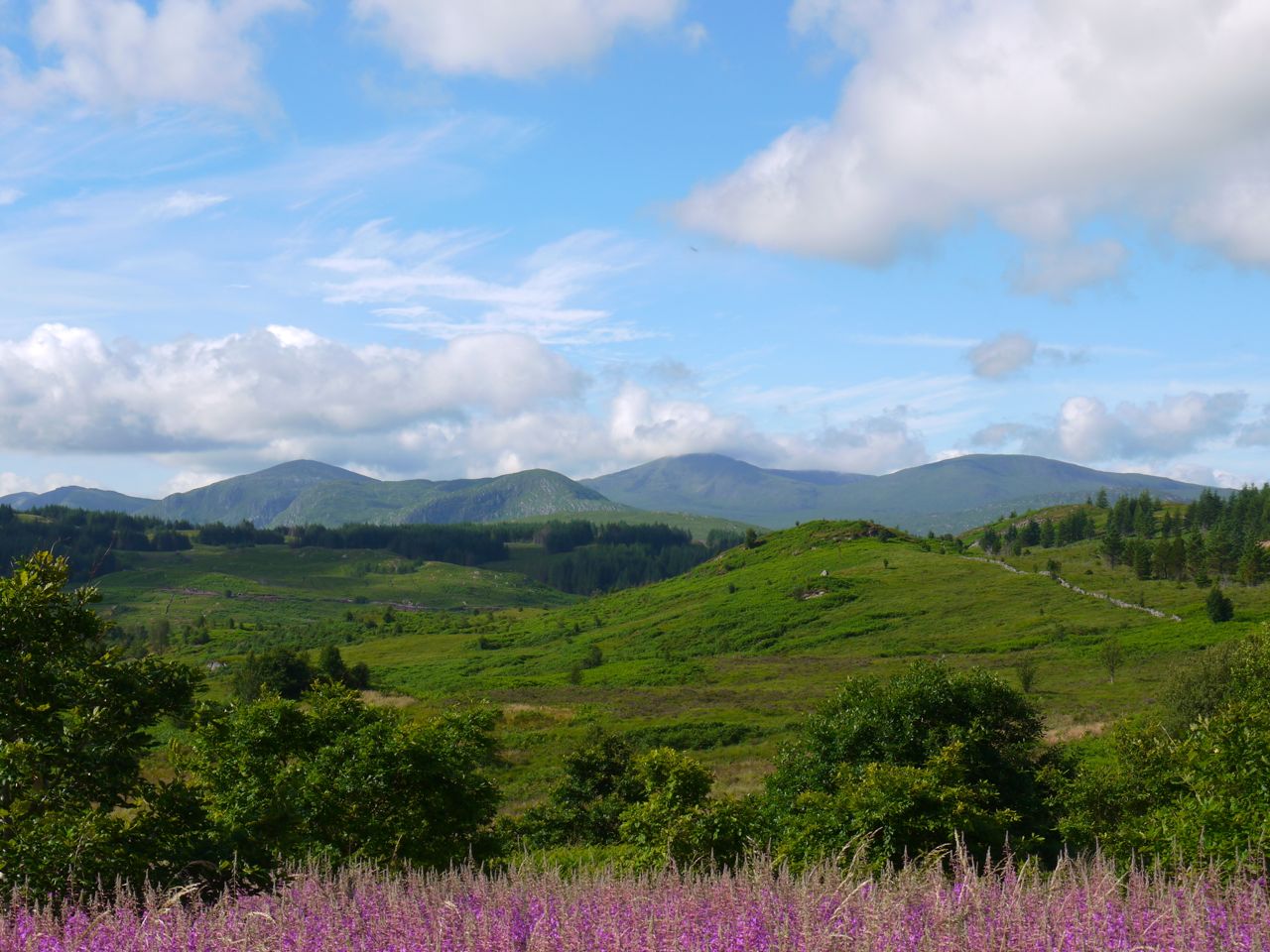
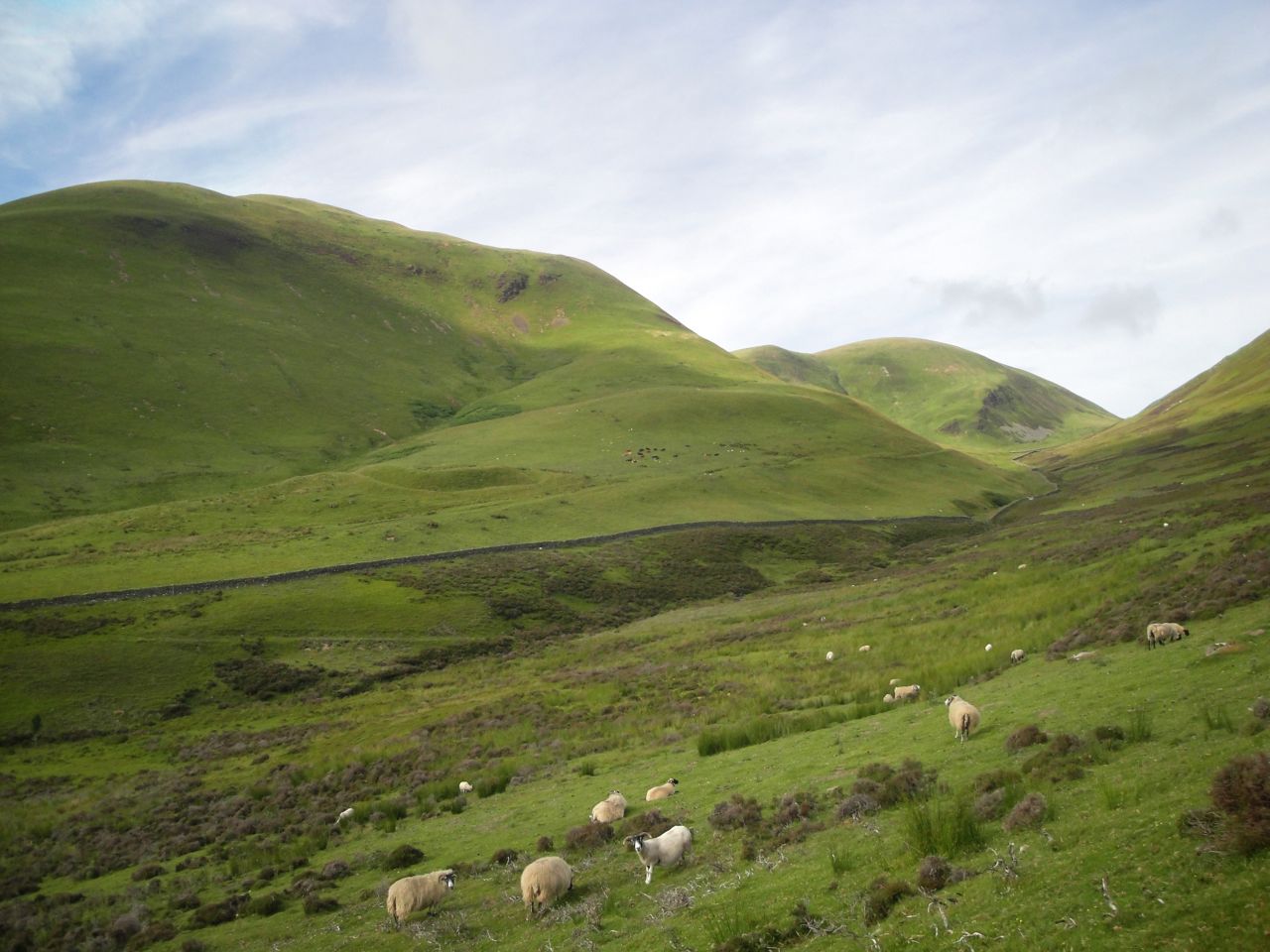
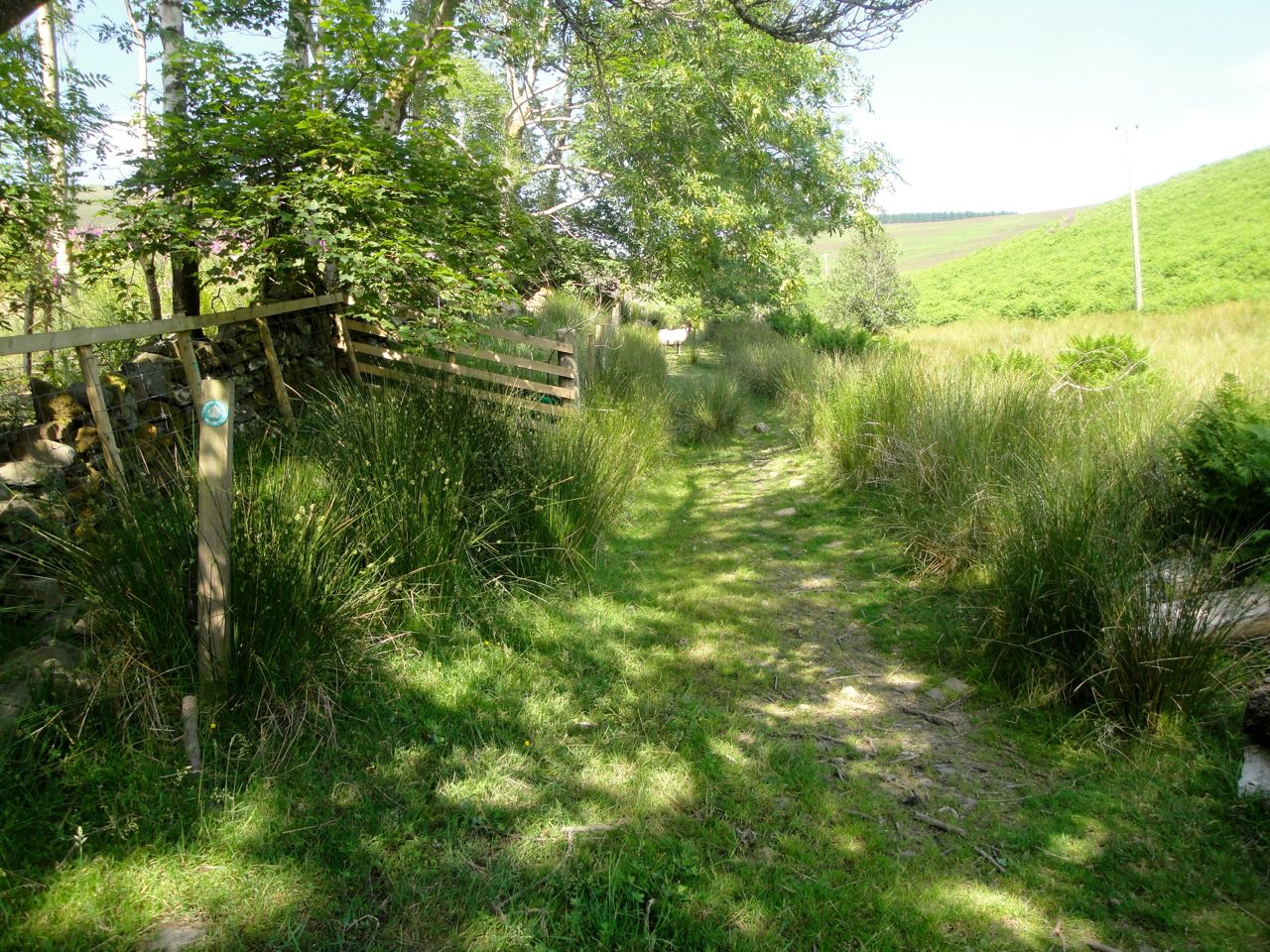
After absorbing the ambience of the castle ruins, in sunshine and under blue skies, I headed off the the start of the Craiglea trail, marked by a large post. The trail is about a hands breadth wide and starts on firm mown grass between ferns that were taller than me. Soon enough though the path climbed and within just a few minutes gave fantastic views of the Galloway Hills, right across from the Rhinns of Kells to the Awful Hand, Mullwharchar taking centre stage. The green of the intervening land was so rich that if I had seen it on a photograph I would have thought the photo had been enhanced in photoshop. Though the views were more extensive from the summits they didn’t beat the views from the lower slopes of Wee Hill of Craigmulloch (hereafter called the Wee Hill).

Galloway Hills from the Craiglea Trail

Galloway Hills from the Craiglea Trail

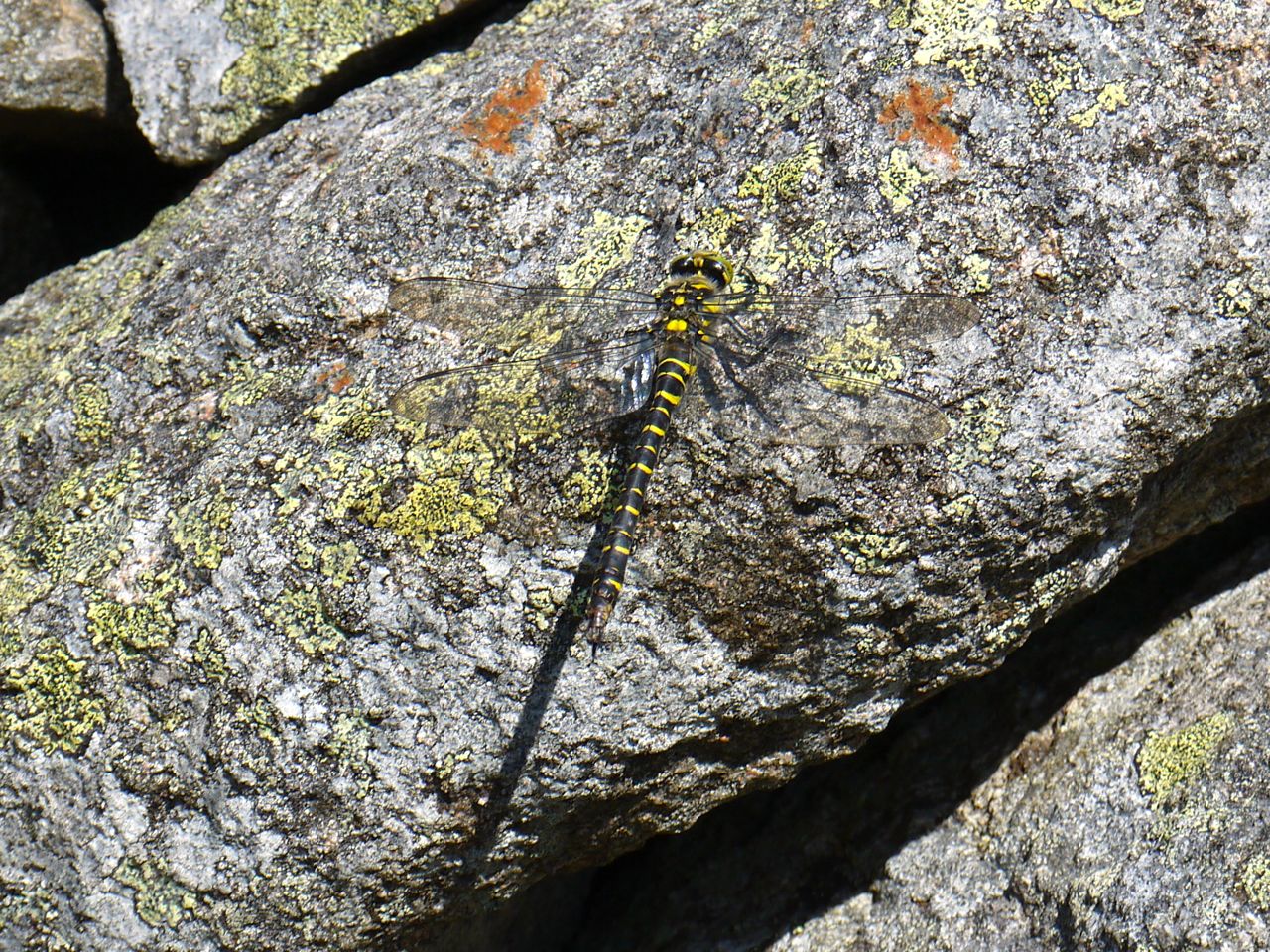
On the trail there were swarms of (well, quite a few) black and red butterflies, Scotch Argus, I think, and a magnificent golden-ringed dragonfly followed me for a few minutes then stopped on a rock for her photo. The Trail passes through the remains of a sheepfold, and here the dragonfly chose to let me go on alone. The path then became less well defined. I take it fewer people walk on beyond the sheepfold so the path has become more overgrown. A little way further on a faint path towards the Wee Hill leaves the trail. It is as though the trail reaches a T junction and I turned right. There were a couple of posts there that look as though they  once held a sign.

Golden Ringed Dragonfly

Golden Ringed Dragonfly

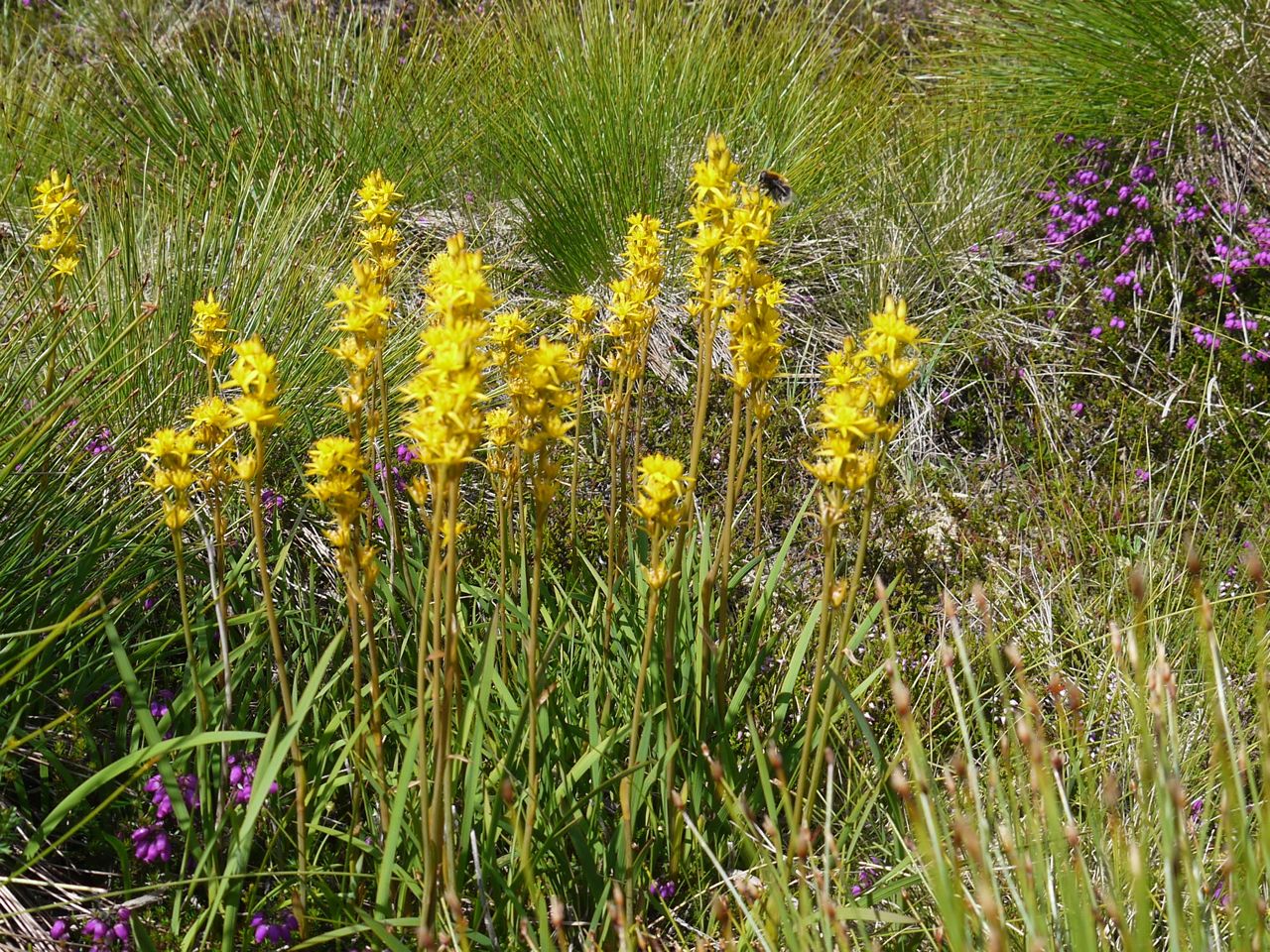
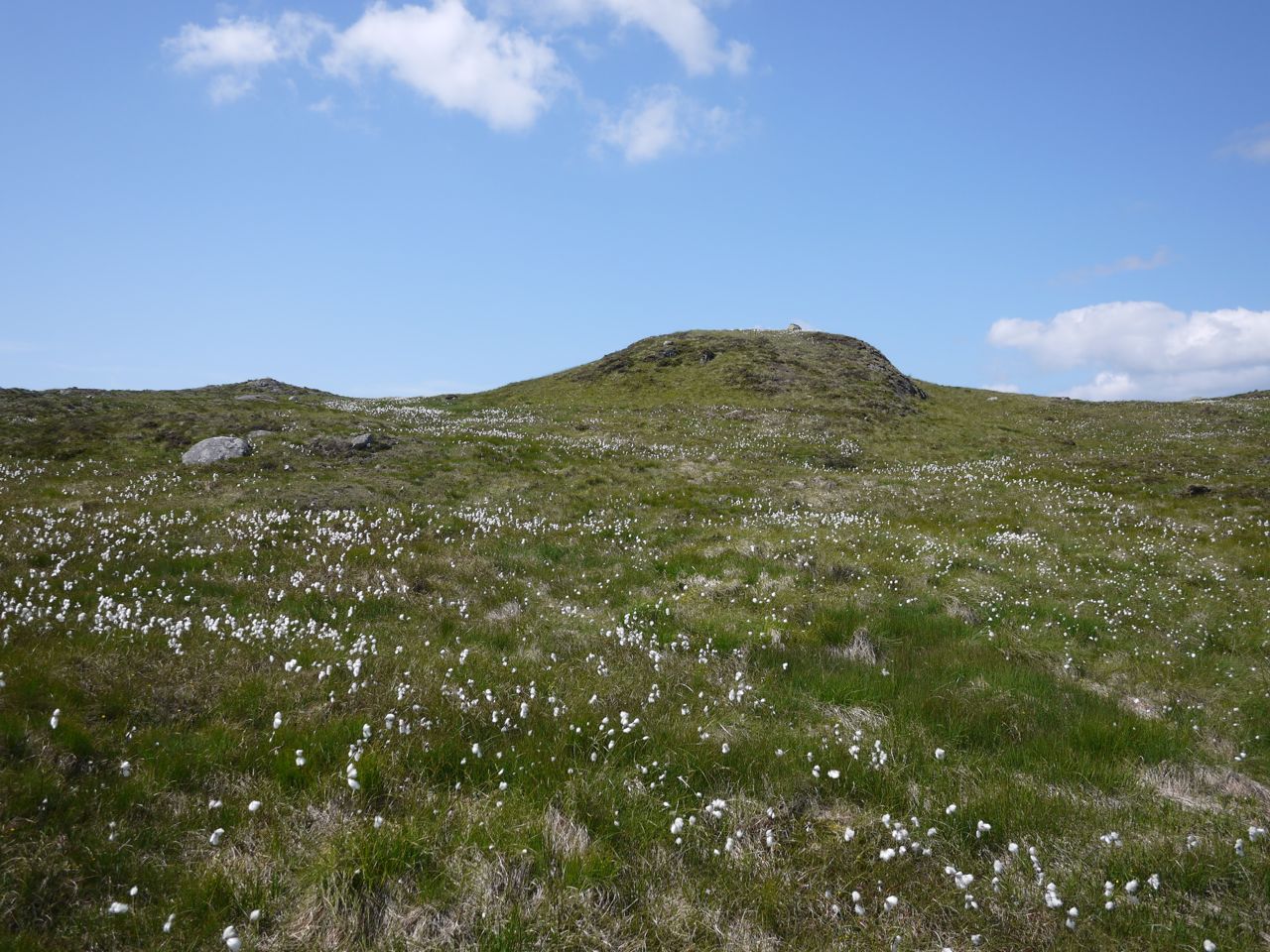
The track onto Wee Hill became fainter until I began to think that it only existed in my mind. Every now and then, though, especially on steeper sections the ground had been pressed into steps by walkers on mushier days. There are a couple of flattish shelves on the way up the hill and these sport the characteristic “I am wet” type vegetation, but I had chosen a dry day so it was like walking across a mattress. The flowers were putting on a spectacular show, the bright purple of the bell heather and pink of the ling contrasting with extensive bright yellow patches of bog asphodel. The cotton grass was past its best but a few white patches still remained.

View south from the Wee Hill of Craigmulloch

View south from the Wee Hill of Craigmulloch

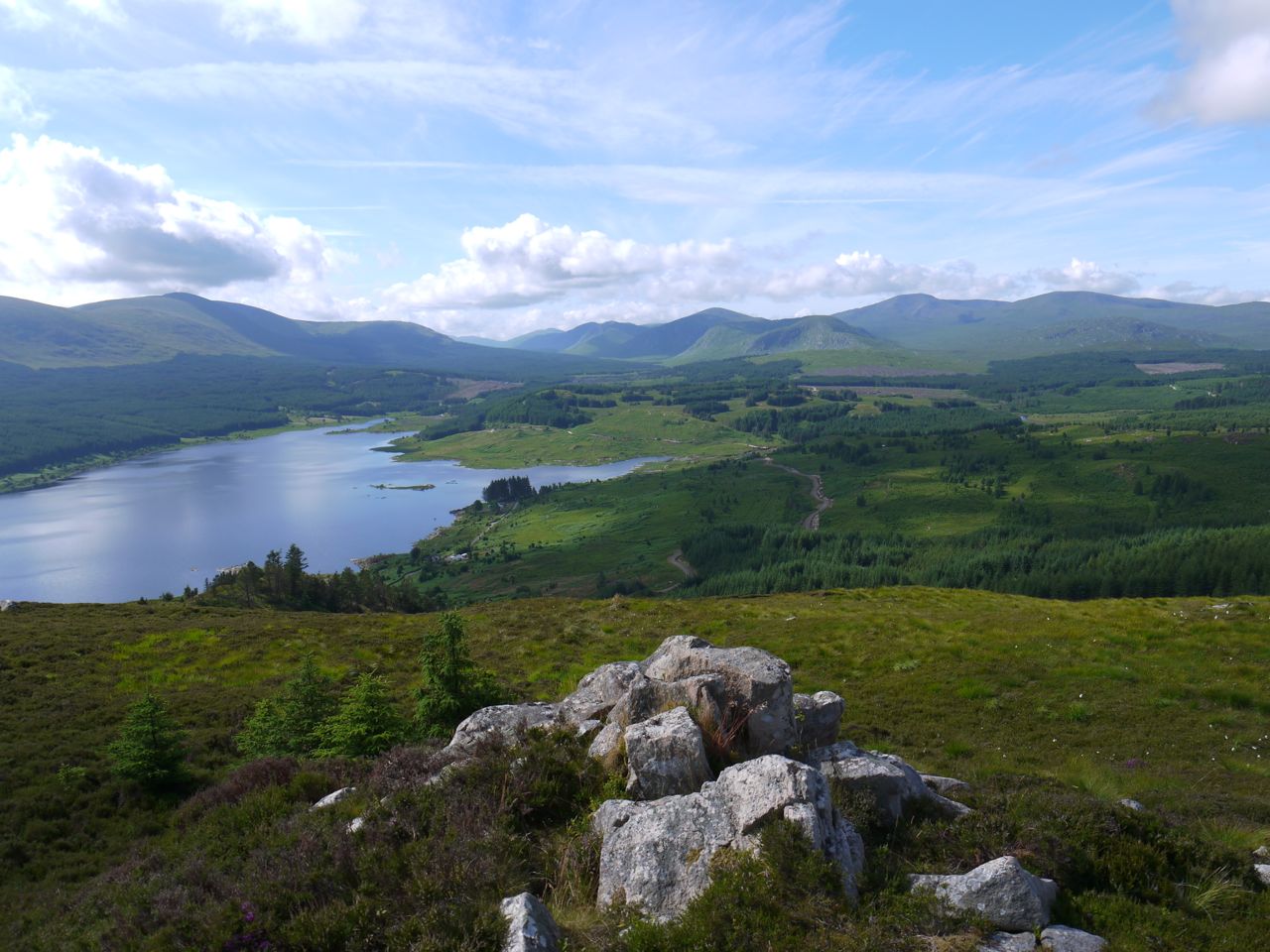
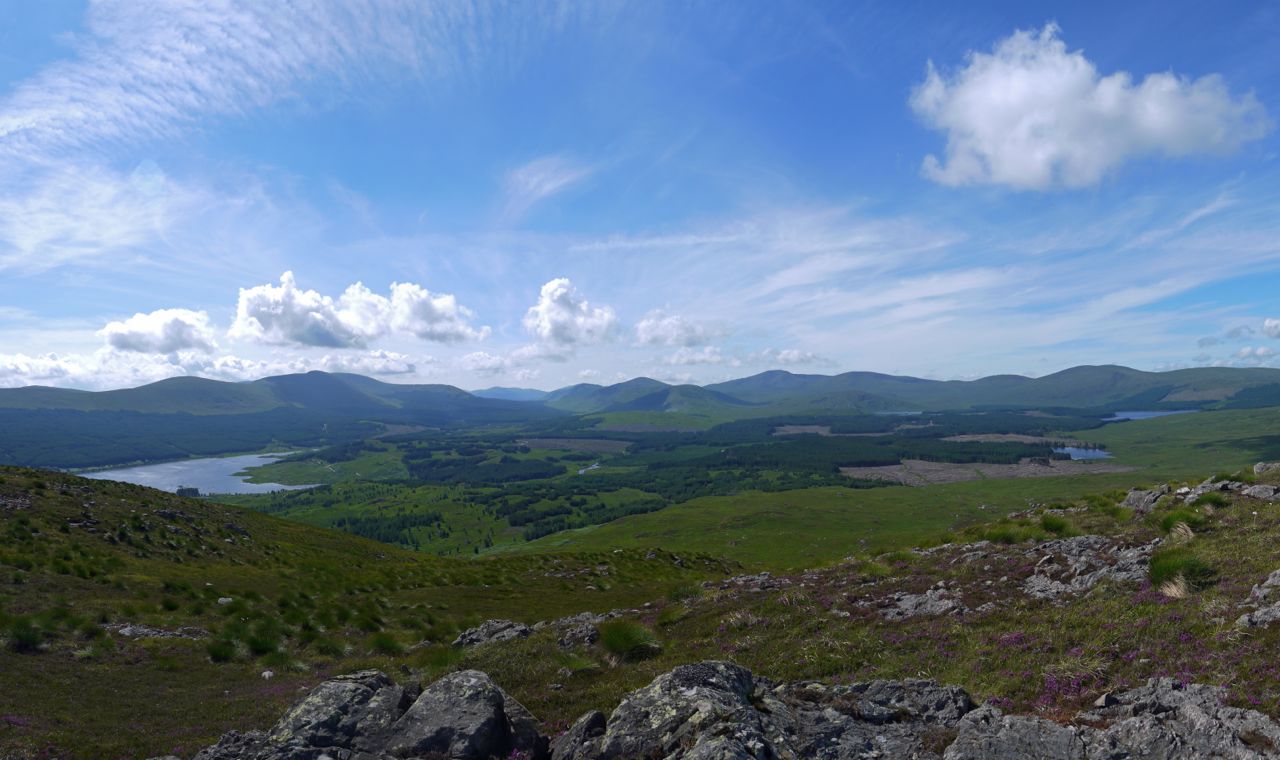
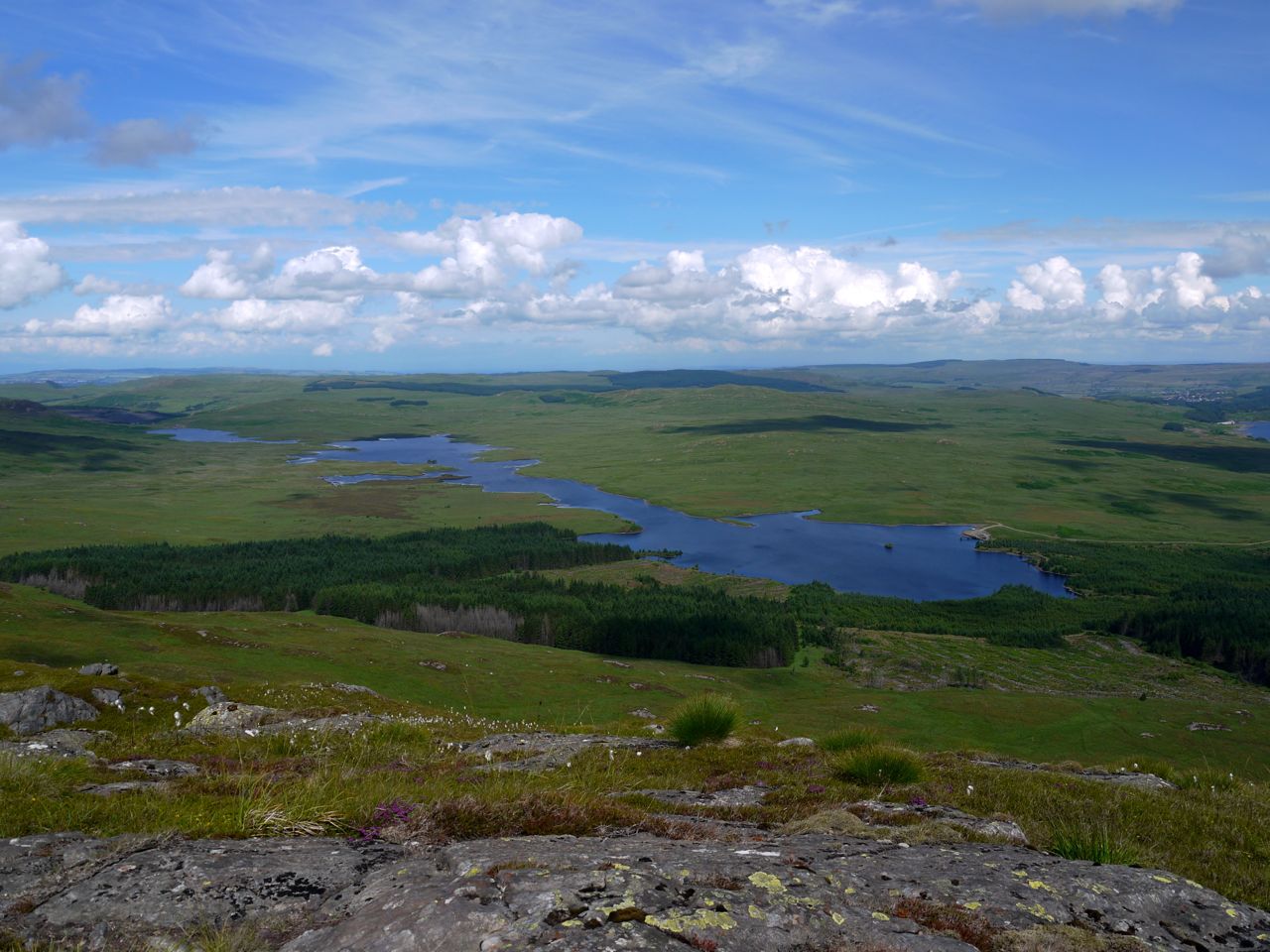
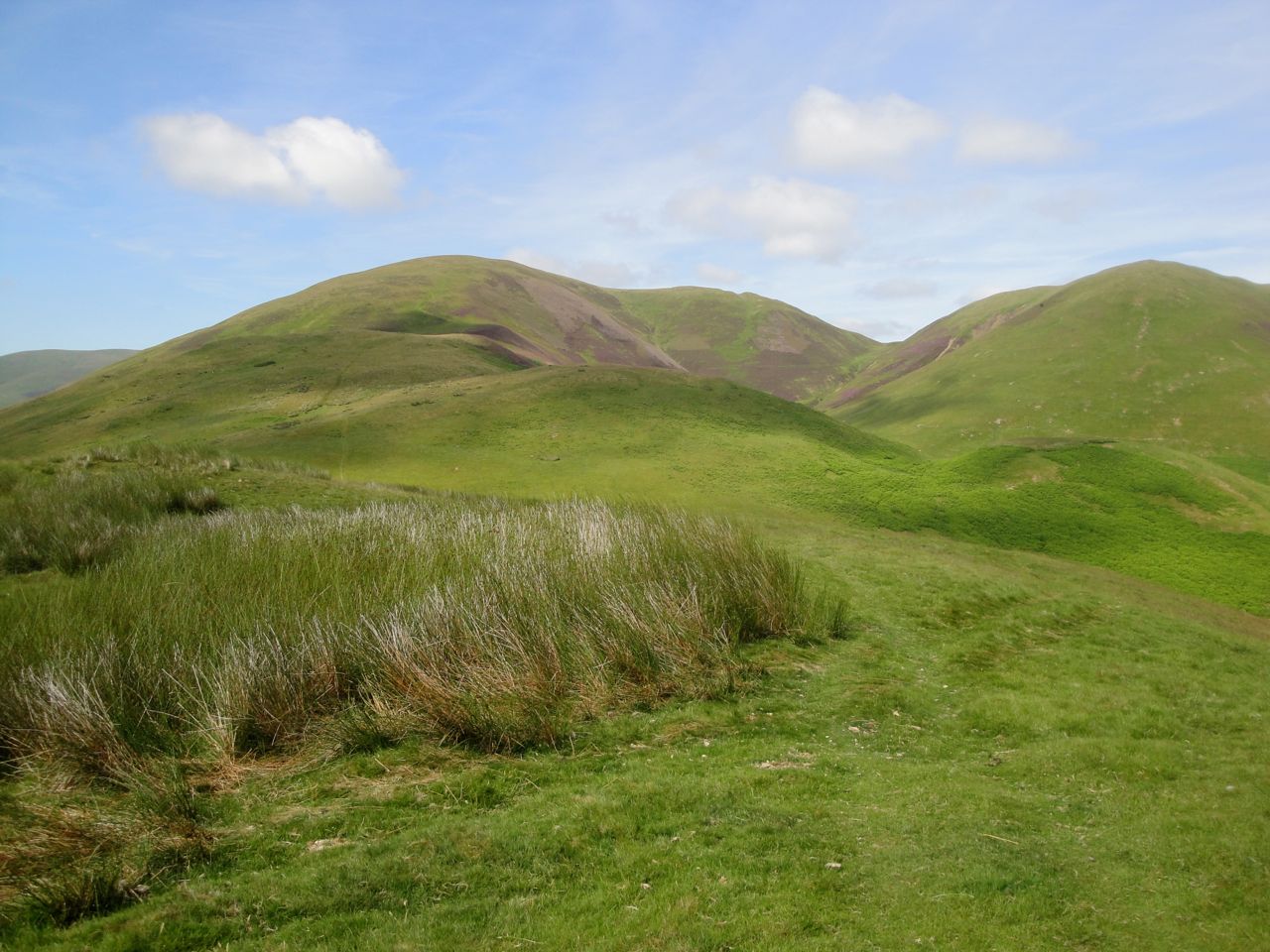
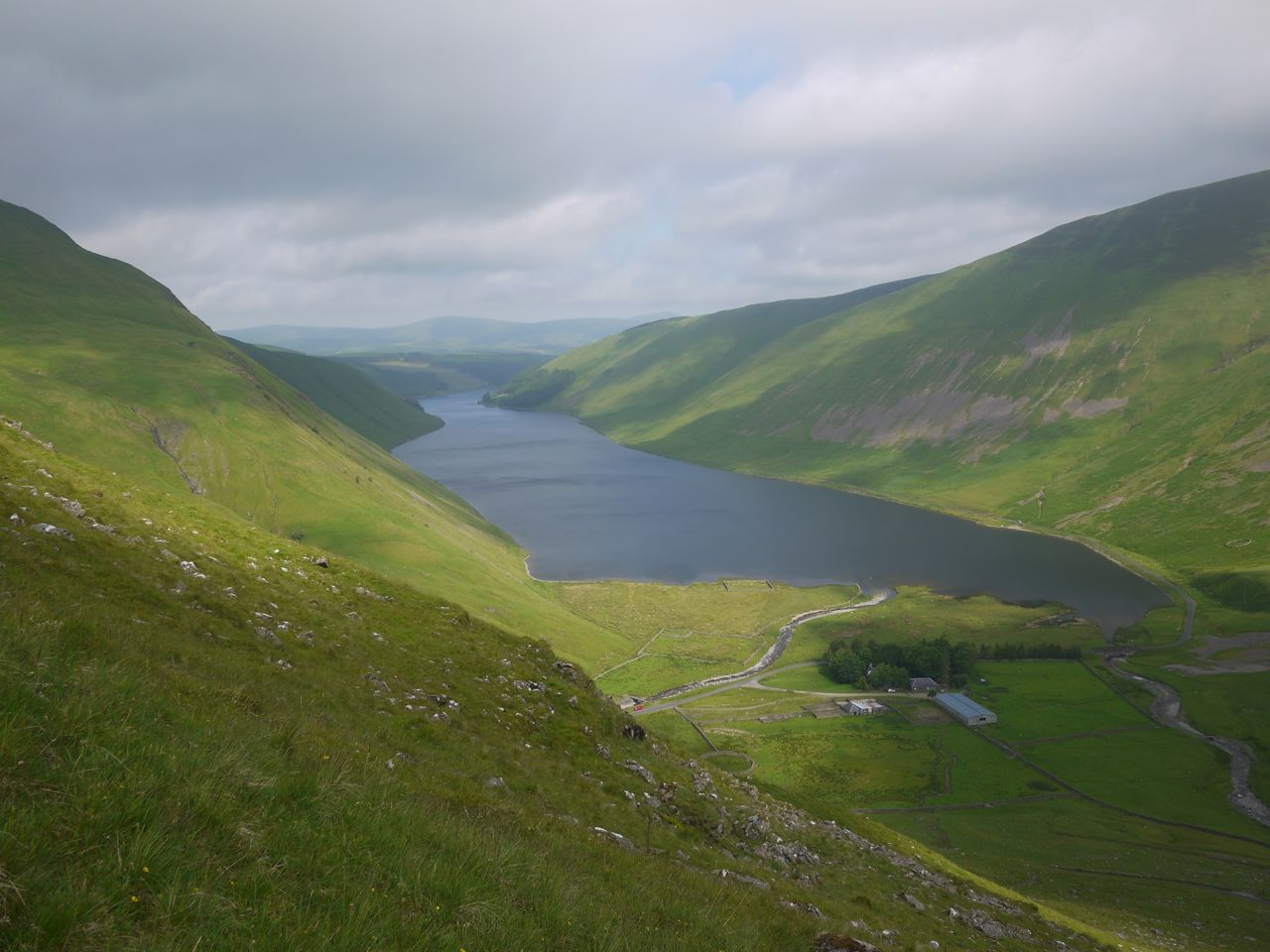
Reaching the top of Wee Hill allowed me to see the full 10km of Loch Doon, and see over the end of the Rhinns of Kells to the Carsphairn Hills. To the south the hills beyond Loch Dee 20km away were just visible. At this stage Craiglee looked to be a predominantly green conical hill, calling into question the interpretation of Craiglee as Crag Liath, Grey Hill. There was no obvious path across to Craiglee, so I headed initially toward a wall crossing the col, the Nick of Mahm. I’ll let you guess how a nick between two rounded hills gets a name like that. I picked my way down over the outcroppings of the Wee Hill. These sometimes hid a gentle descent, sometimes a bit of a drop, while beneath me was the Nick of the Mahm, flat like a river of grass. It soon became obvious that I didn’t need to head as far across as the wall.

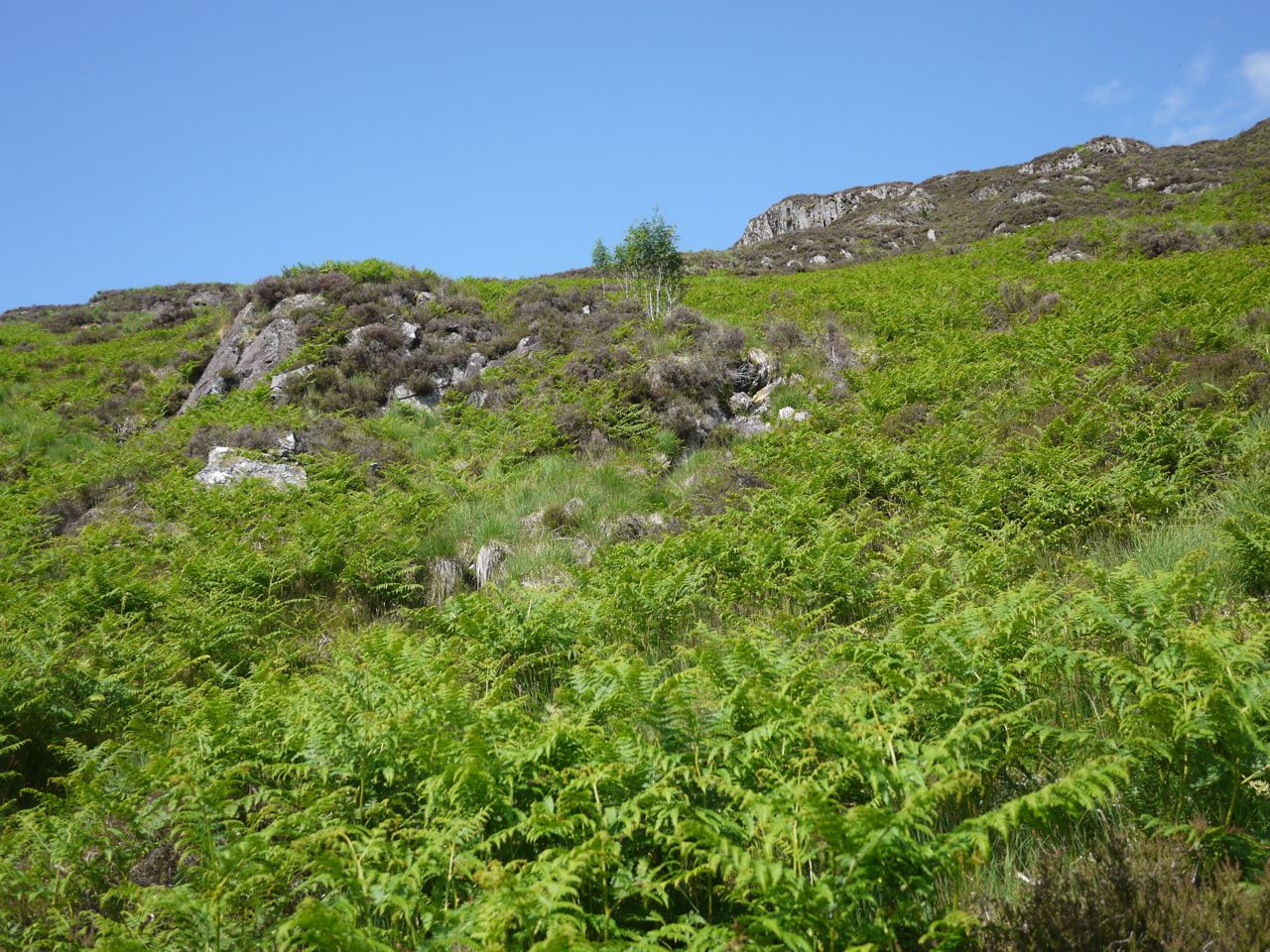
Western slopes of Craiglee, not grey

Western slopes of Craiglee, not grey

Once in the Nick I found that its even green surface was hiding the true tussocky nature of the grass but it was relatively dry. There was no path up Craiglee and I tended to chose a feature and head for it. If heading towards an erratic I would sometimes find a brief track suggesting that other walkers had being doing the same. I did get a little annoyed each time I climbed onto a small knoll that I might instead have climbed around, but eventually the craig I climbed was the the true top.

Nick of the Mahm

Nick of the Mahm

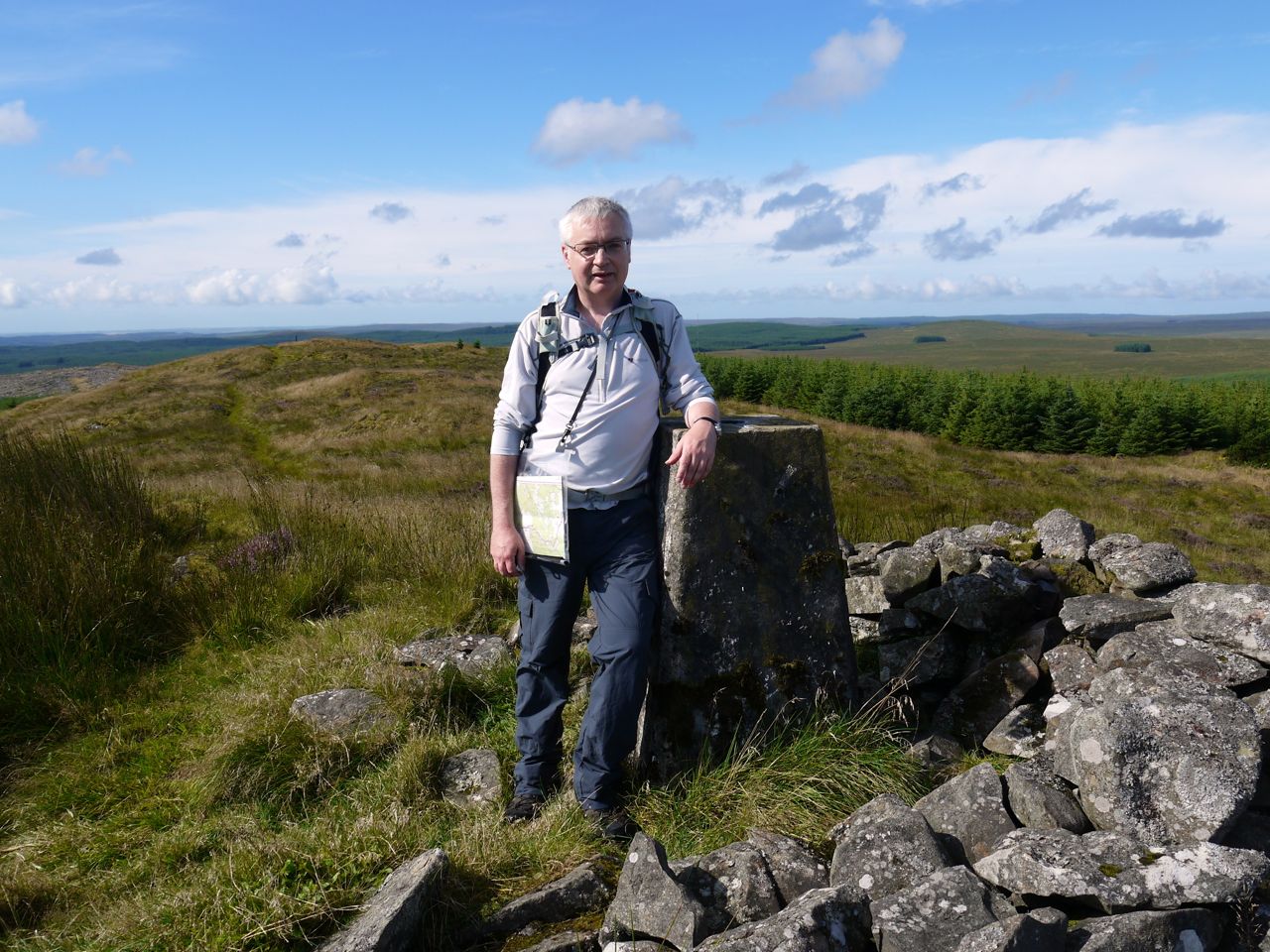
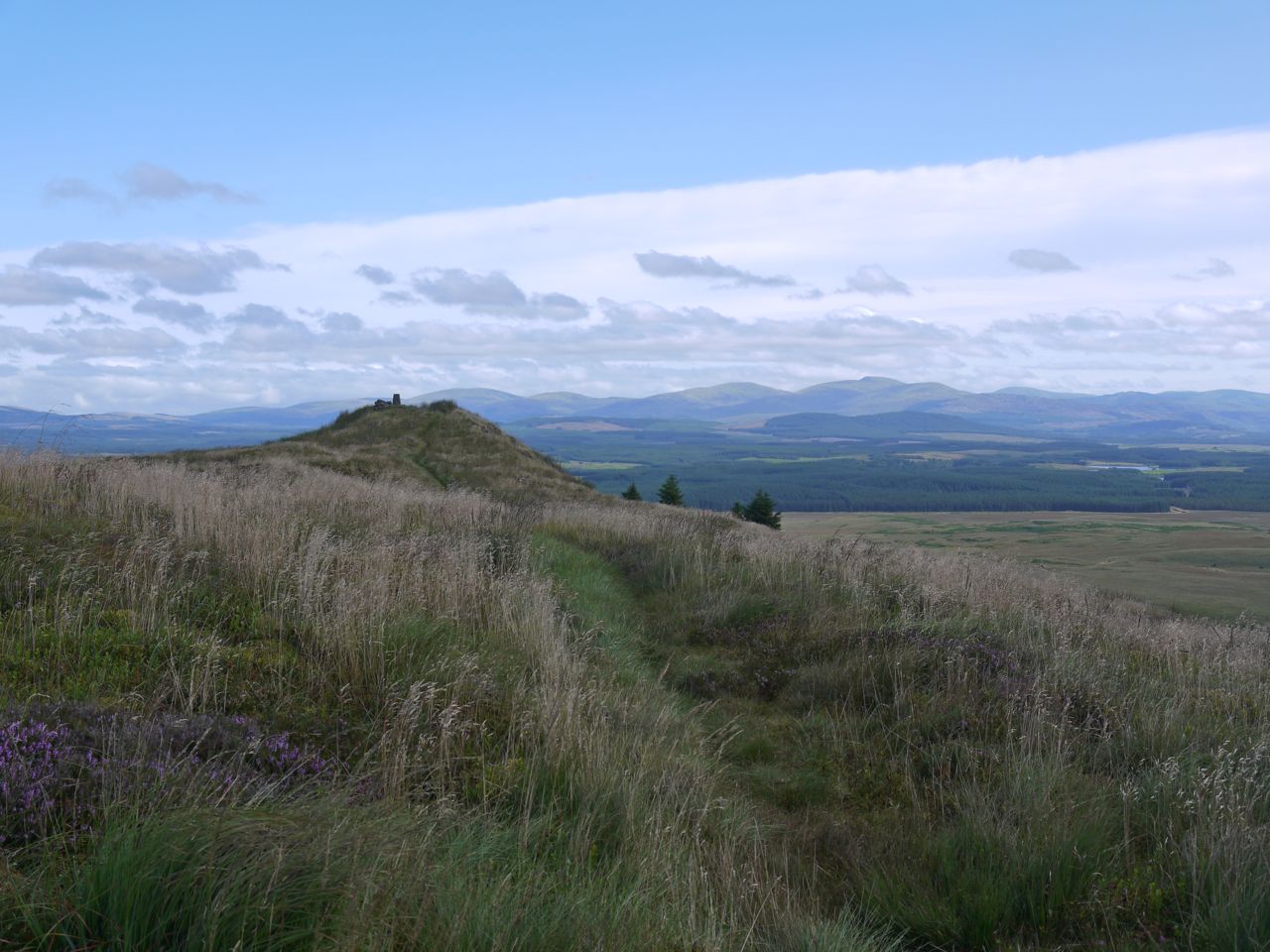
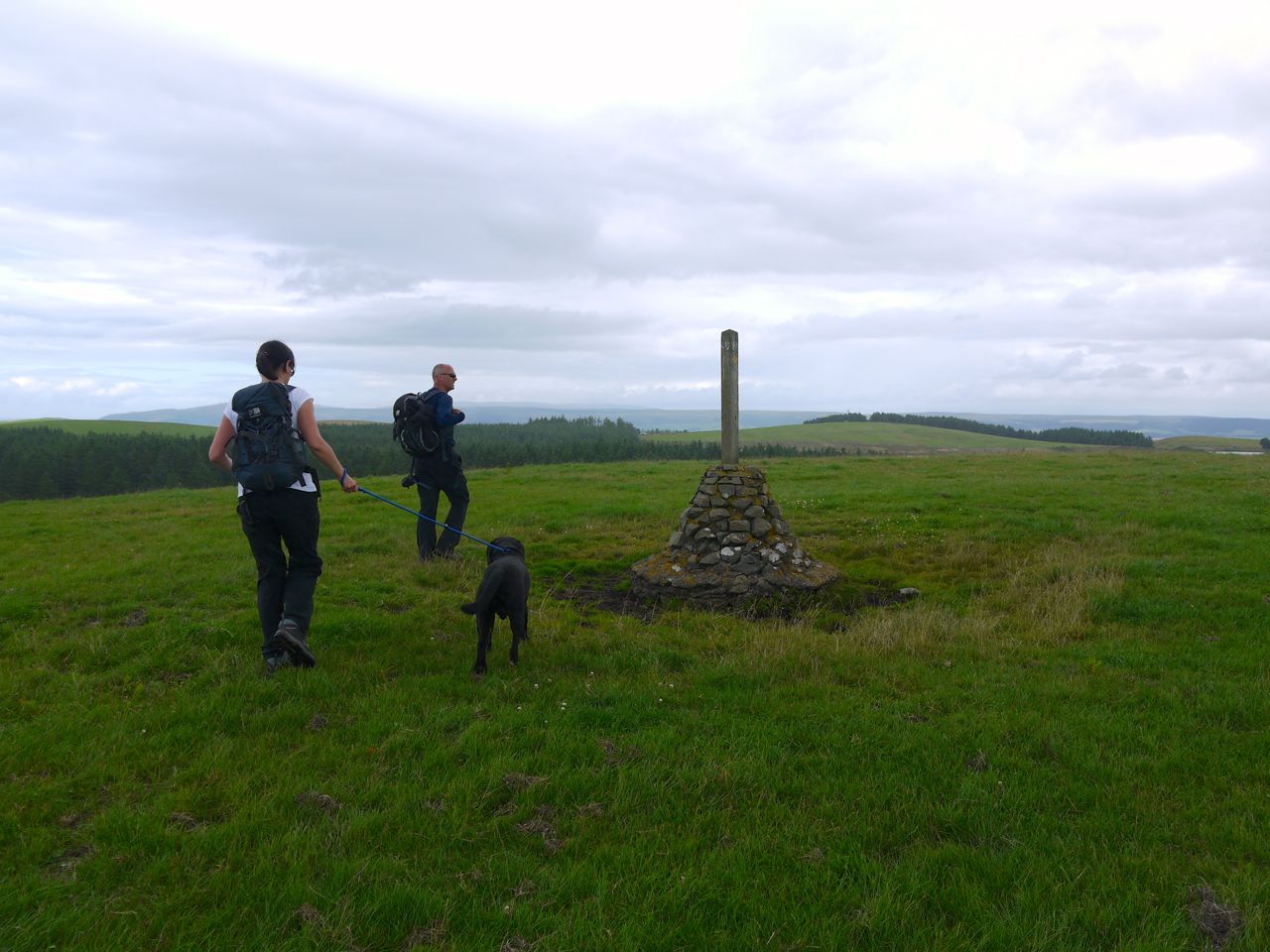
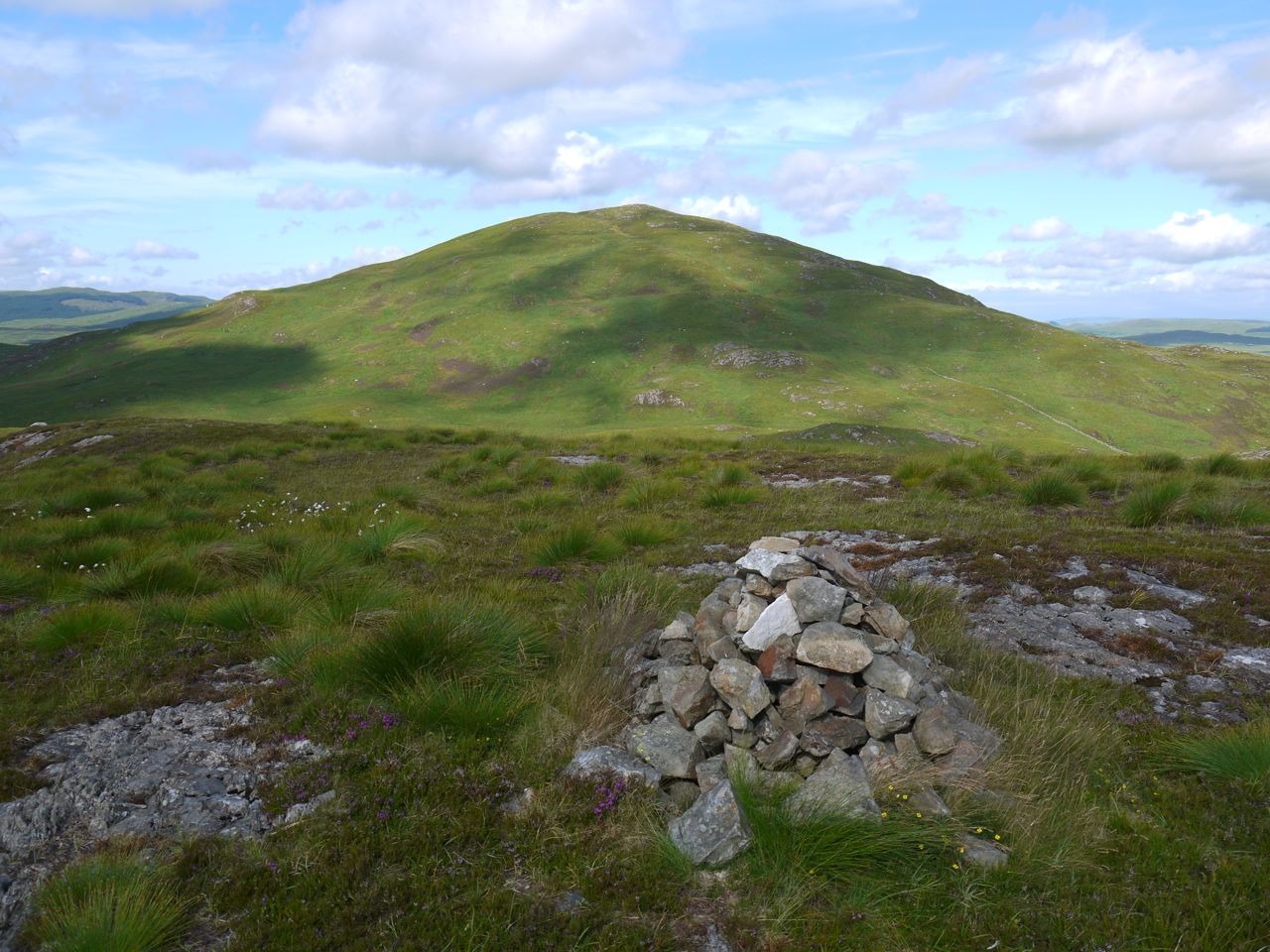
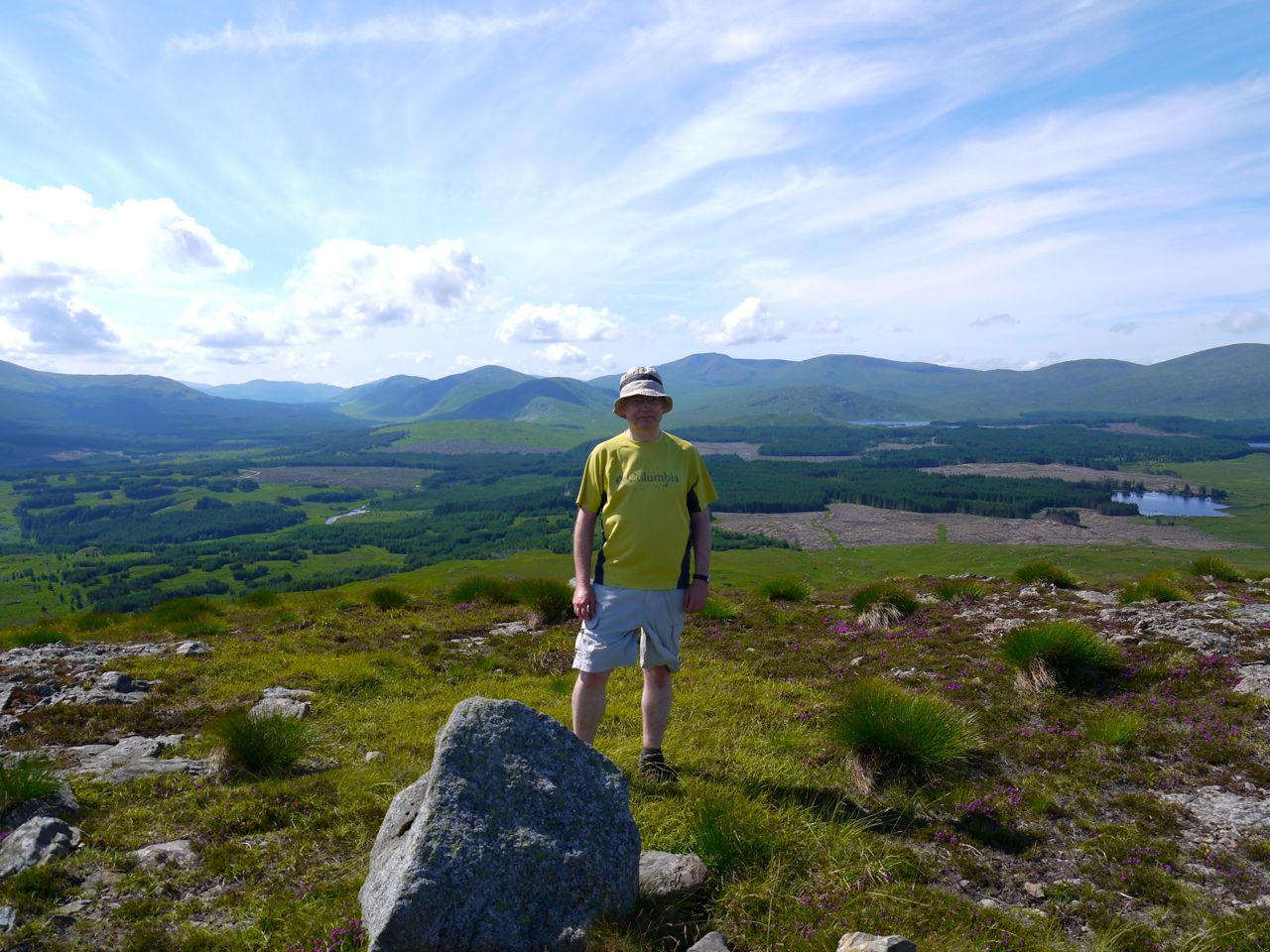
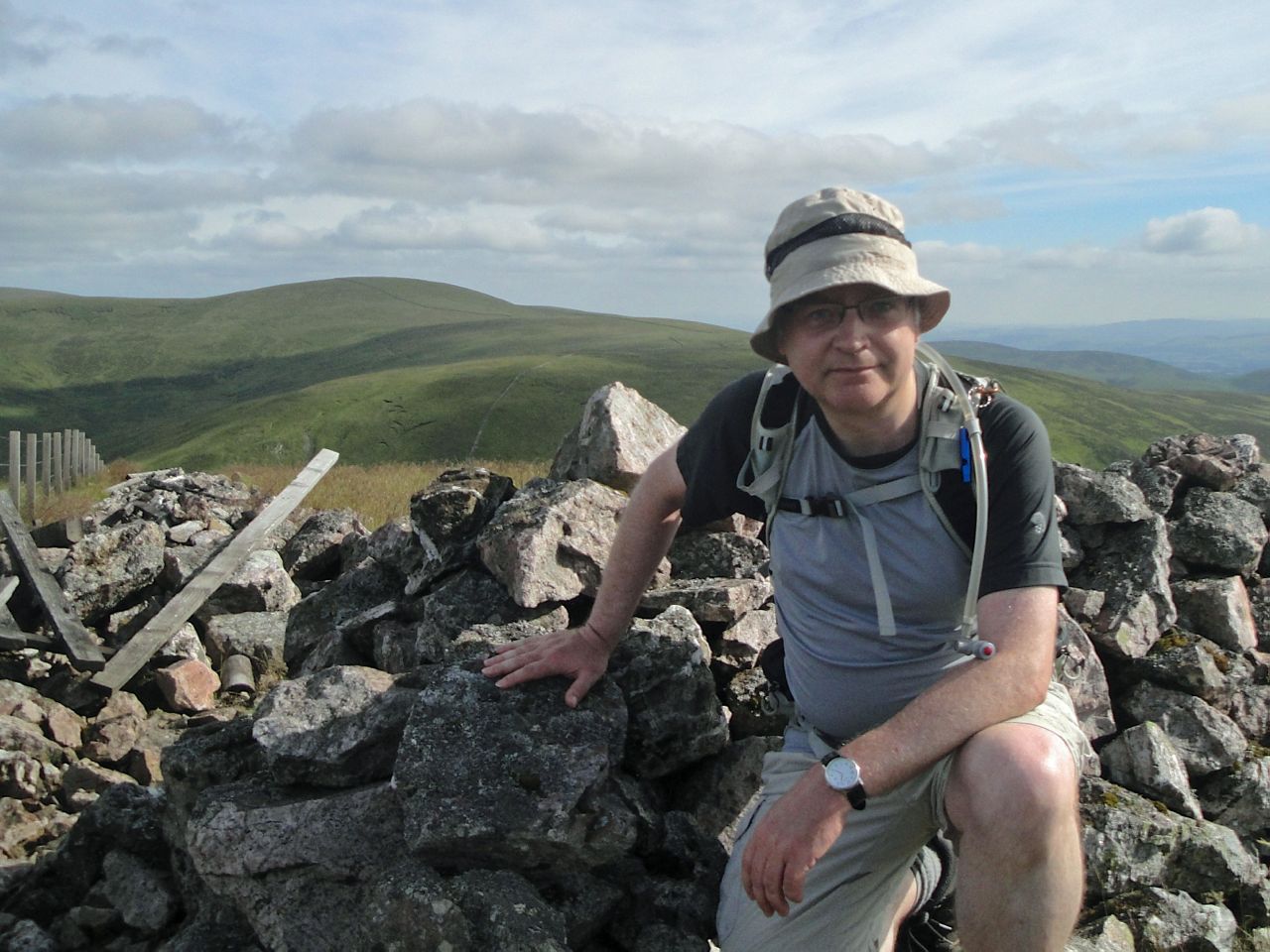
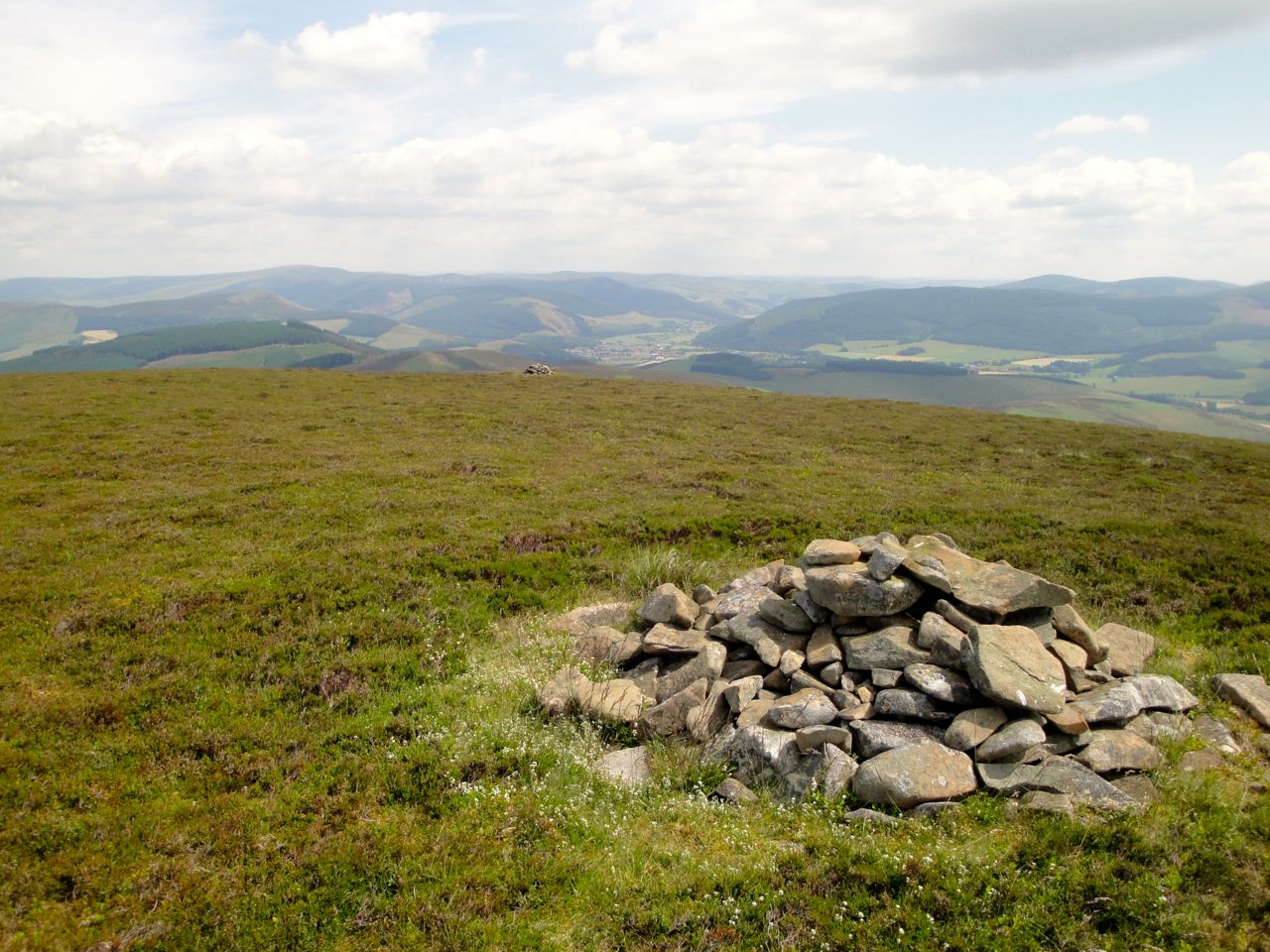
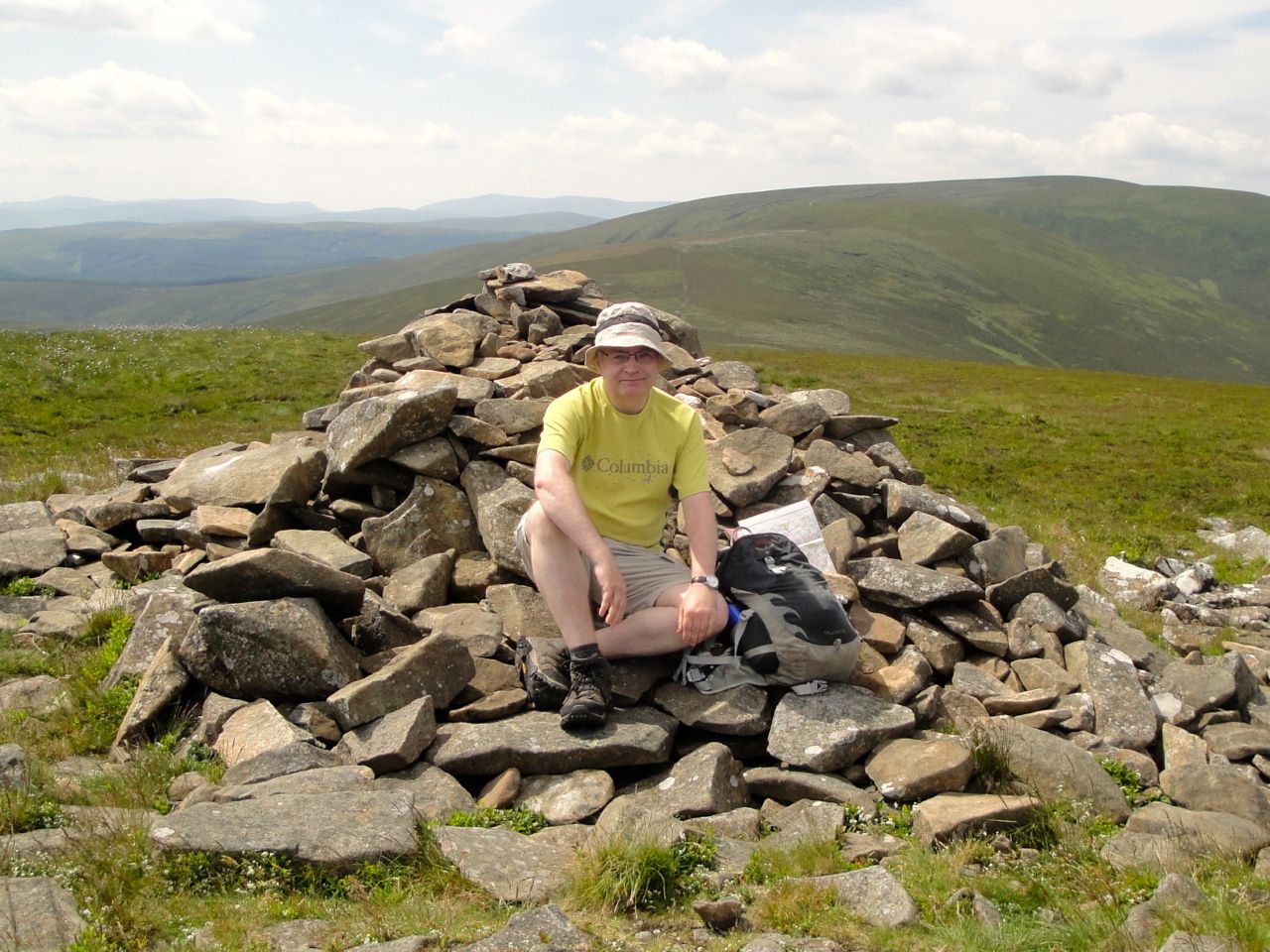
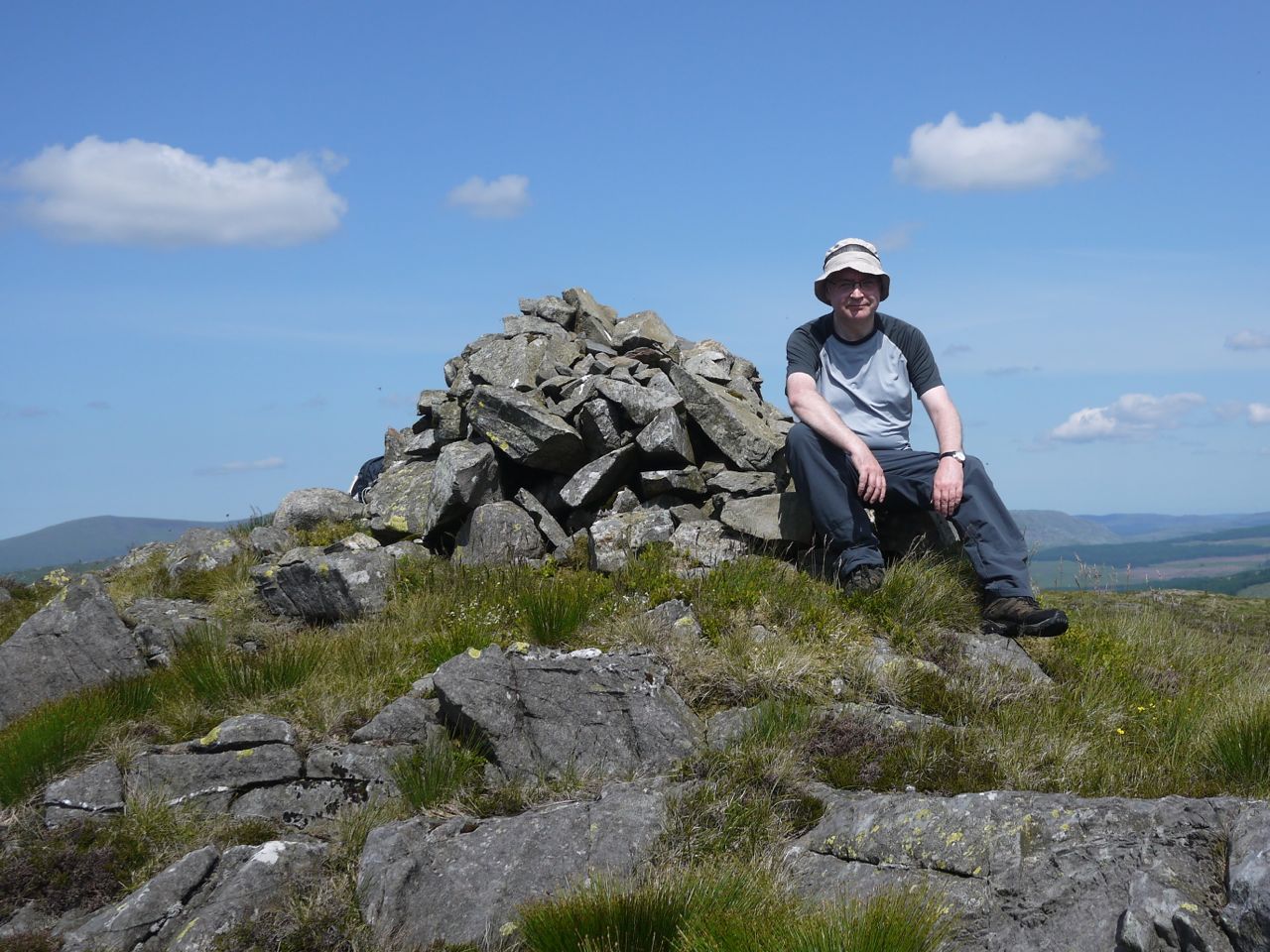
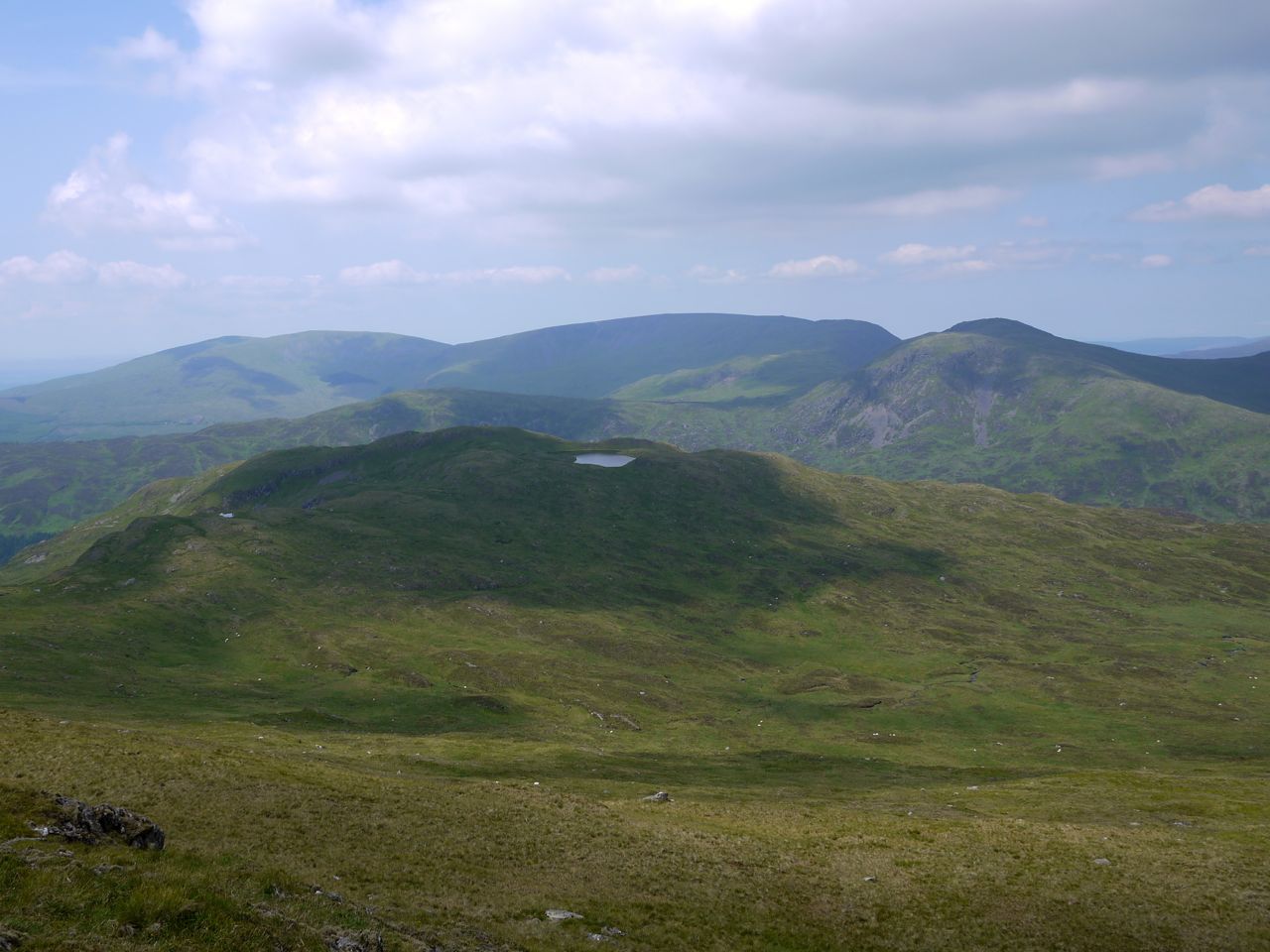
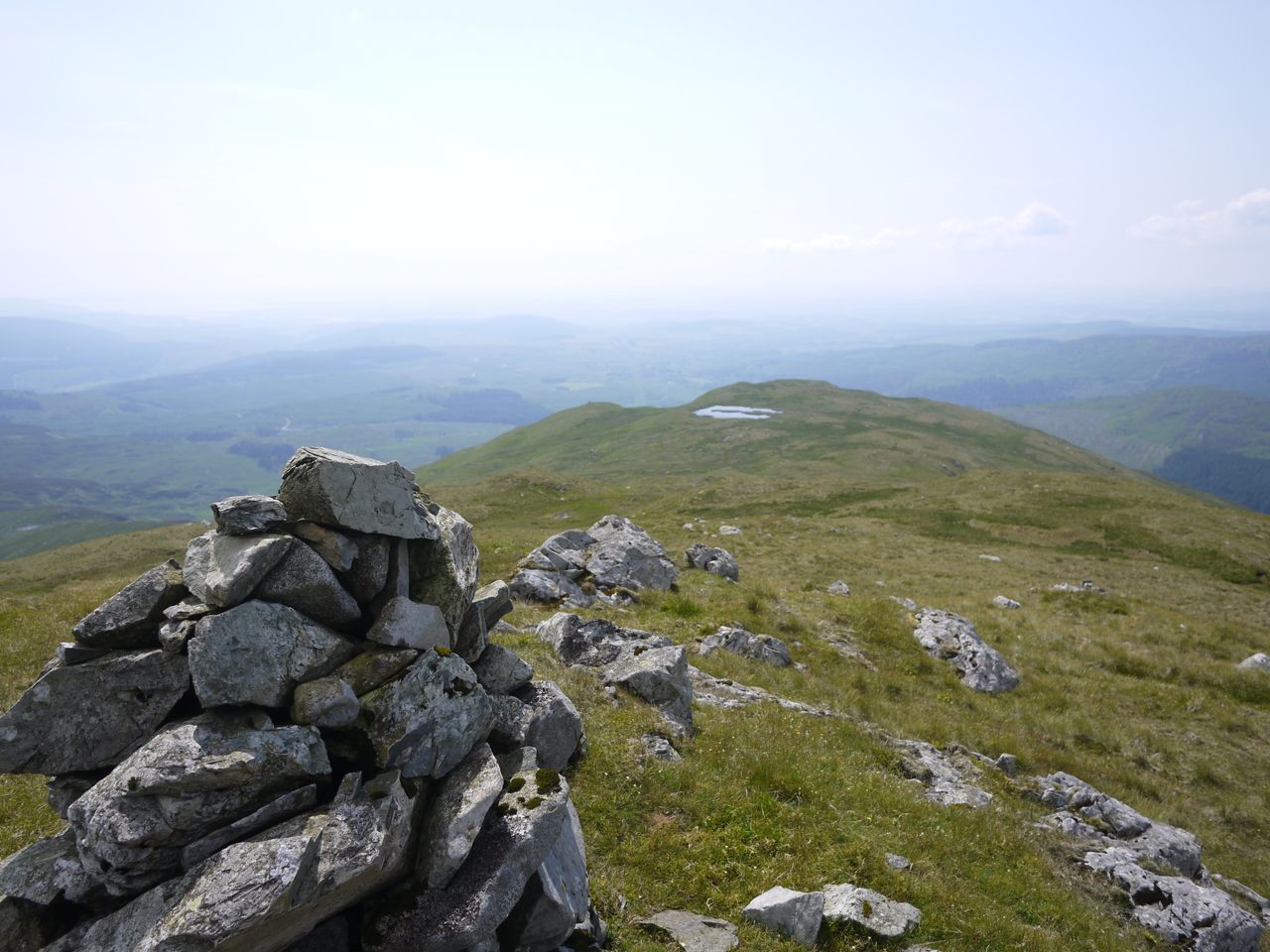
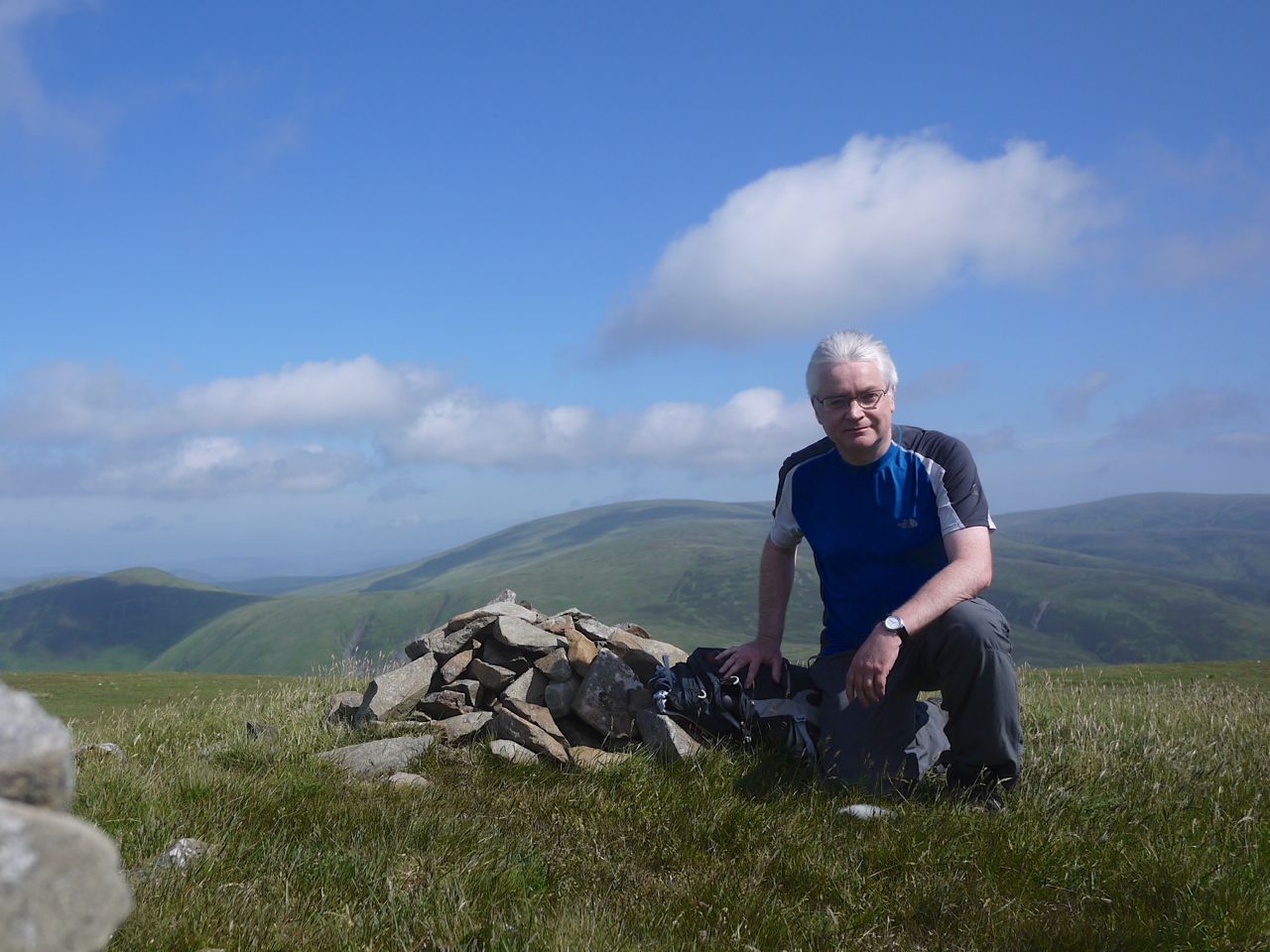
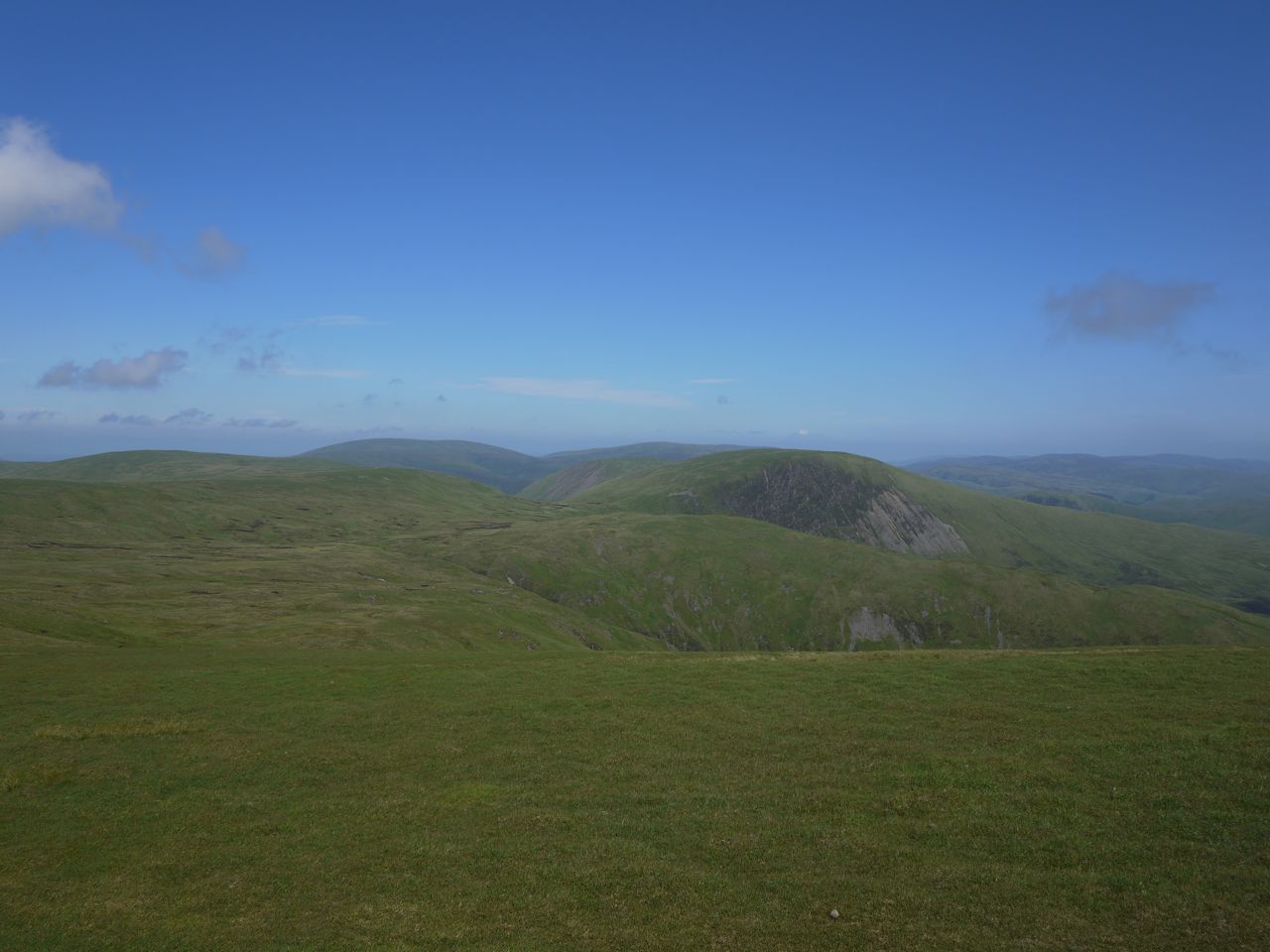
Craiglee has a top about half a kilometre long with a cairn at the eastern end, a trig pillar at the summit and a mini-cairn at the west. From Craiglee, Loch Finlas, the Loch of the white stream (fionn glas), lay in the valley like a flattened snake and Ailsa Craig was visible on the horizon beyond Loch Bradan. To the south the hills stretched from the Rhinns of Kells to the Dungeon Hills and the Awful Hand. To a casual observer Carlin’s Cairn would have seemed the Kells highest point but Merrick left no doubt that it was the chief knuckle of the Awful Hand. It was still too early for lunch so I put my camera’s memory card through its paces and then set off for the wee cairn at the western end of the Craiglee summit.

View south from Craiglee

View south from Craiglee

Craiglee

Craiglee

Loch Finlas

Loch Finlas

I was tempted to cool my feet in the lochan but the surrounding ground had a high water content so I sat down on a small erratic to work out how I would get back but couldn’t make my mind up. I decided to head onto the southern slopes so I could see the options a little better. Having surveyed the land I headed in the direction of the Castle Island in Loch Doon, contouring with descent across the slopes of Craiglee. This proved easy enough. I tried to contour but allowed myself to drift down the slope. There were a couple of steeper sections but nothing troubling. This line brought me to the Nick of the Mahm opposite Mulluss.

Bog Asphodel, Craiglee

Bog Asphodel, Craiglee

Should I go around it to the north or the south? Or over it? The top it was. The Nick here was relatively narrow, and did have a narrow burn. The grass was deep tussocks but dry. As I mentioned earlier Mulluss is a pile of craggy Knolls piled together, its highest knoll has a small cairn and there are poles atop a couple of the others. One of the lower knolls did have a seat sized erratic that served me well for lunch.

From Mulluss I headed down to a break in the tree line. The grass of the forest break was lush, wet and waist high in tussocks. How this grass managed to stay wet when everywhere else was dry, I don’t know. I had begun to regret choosing this route as I stumbled along with grass ensnaring my feet but then I spotted a small wooden footbridge just a few metres further down. The bridge was on the Craiglea Trail.

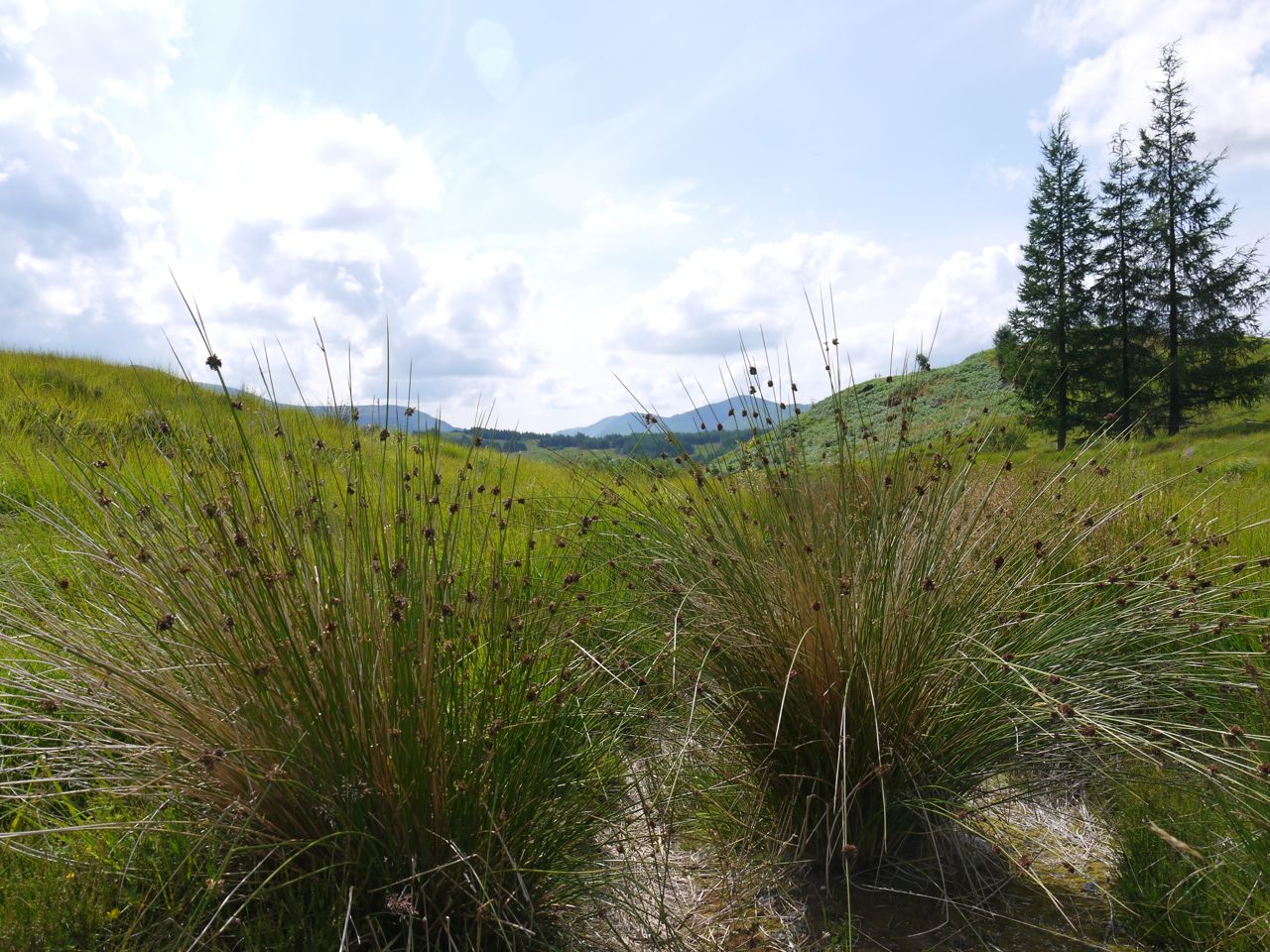
Rushes on the Craiglea Trail

Rushes on the Craiglea Trail

Rather than head back along the trail the way I had come I continued along the trail which passed through woods and then moorland along to Carrick Lane. The trail path was well maintained and where it might have been boggy a proper path had been constructed. The views from the trail were very good and there was an excellent viewing point with a seat at the end.

From Carrick Lane I returned to Loch Doon Castle by the lochside road, intending to have refreshments at the cafe near Craigmalloch, but unfortunately it had closed down, so I made do with a drink of water by the car instead.

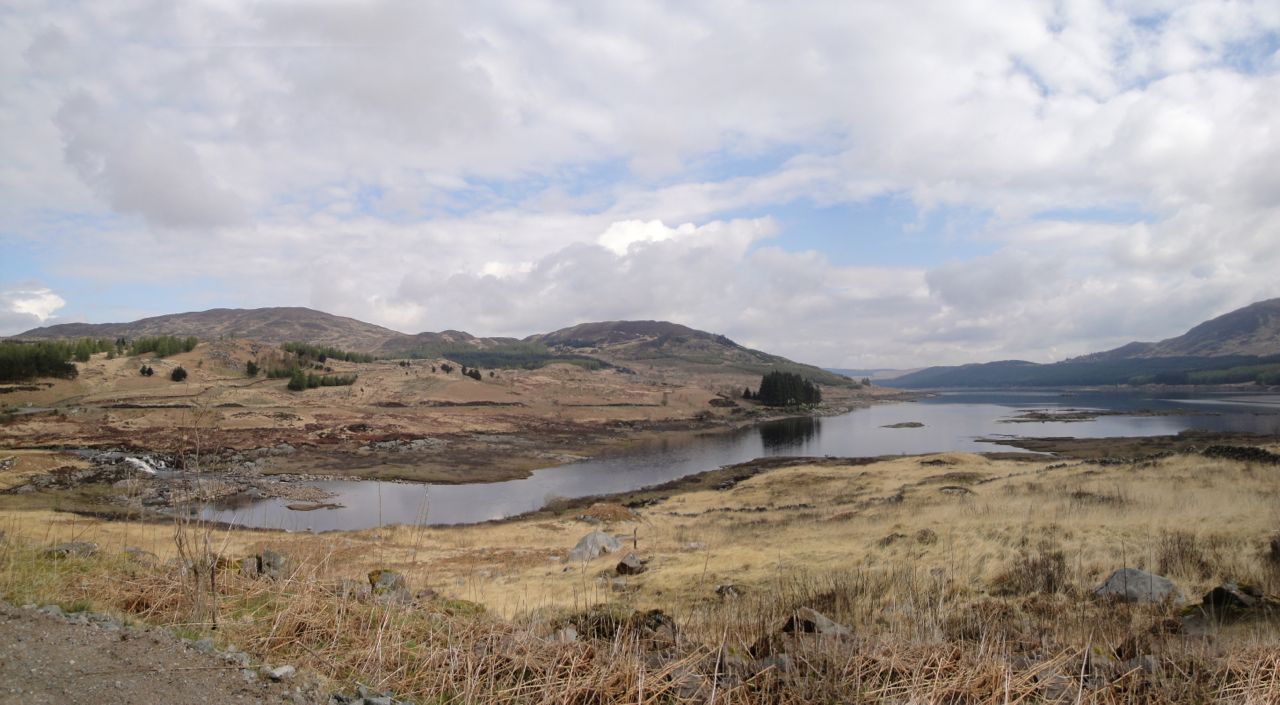
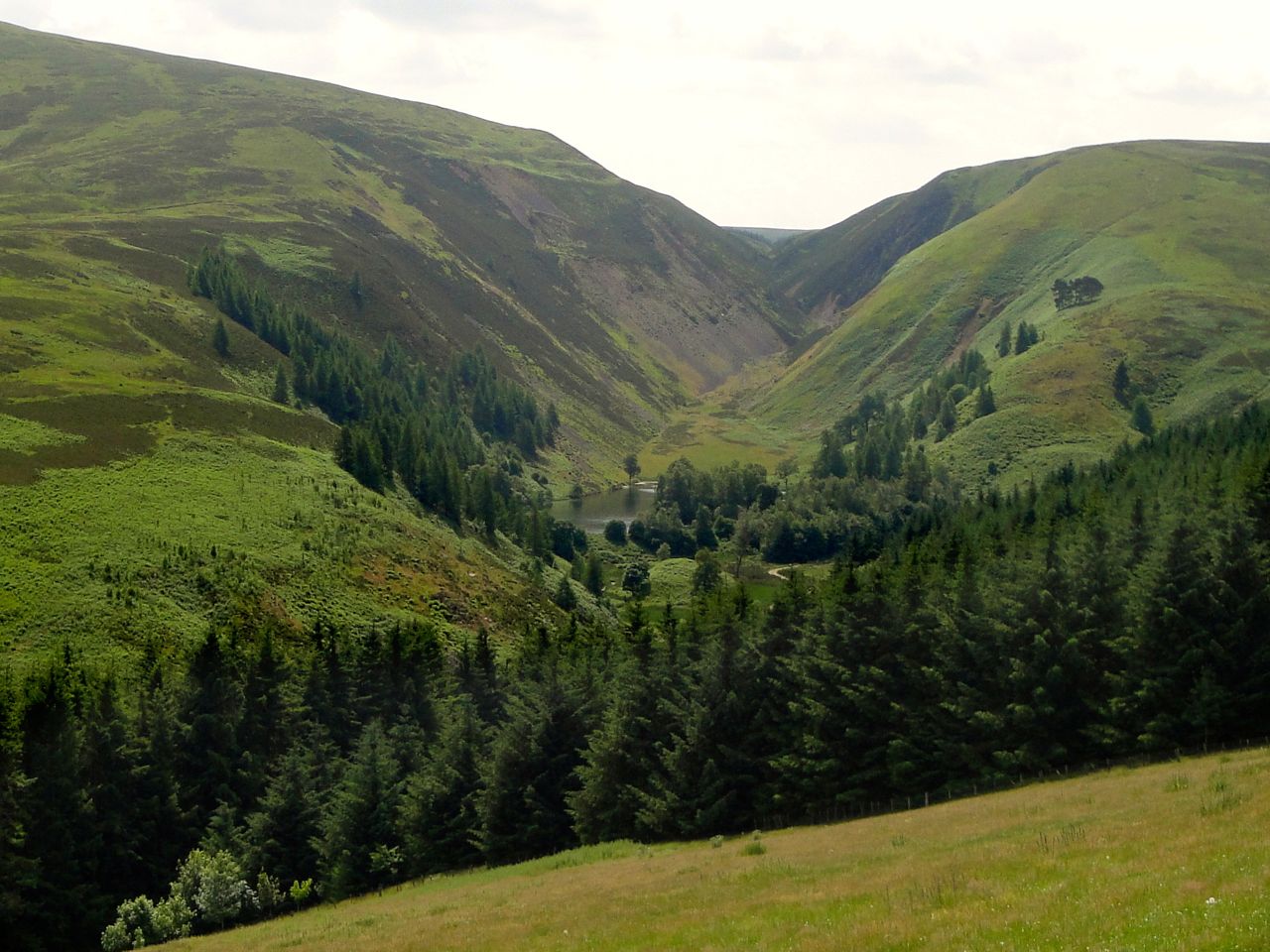
Craiglee, Mulluss and Wee Hill of Craigmullach from across Loch Doon in April last year

Craiglee, Mulluss and Wee Hill of Craigmullach from across Loch Doon in April last year

And the heavy rain in the forecast? That came when after I arrived home.

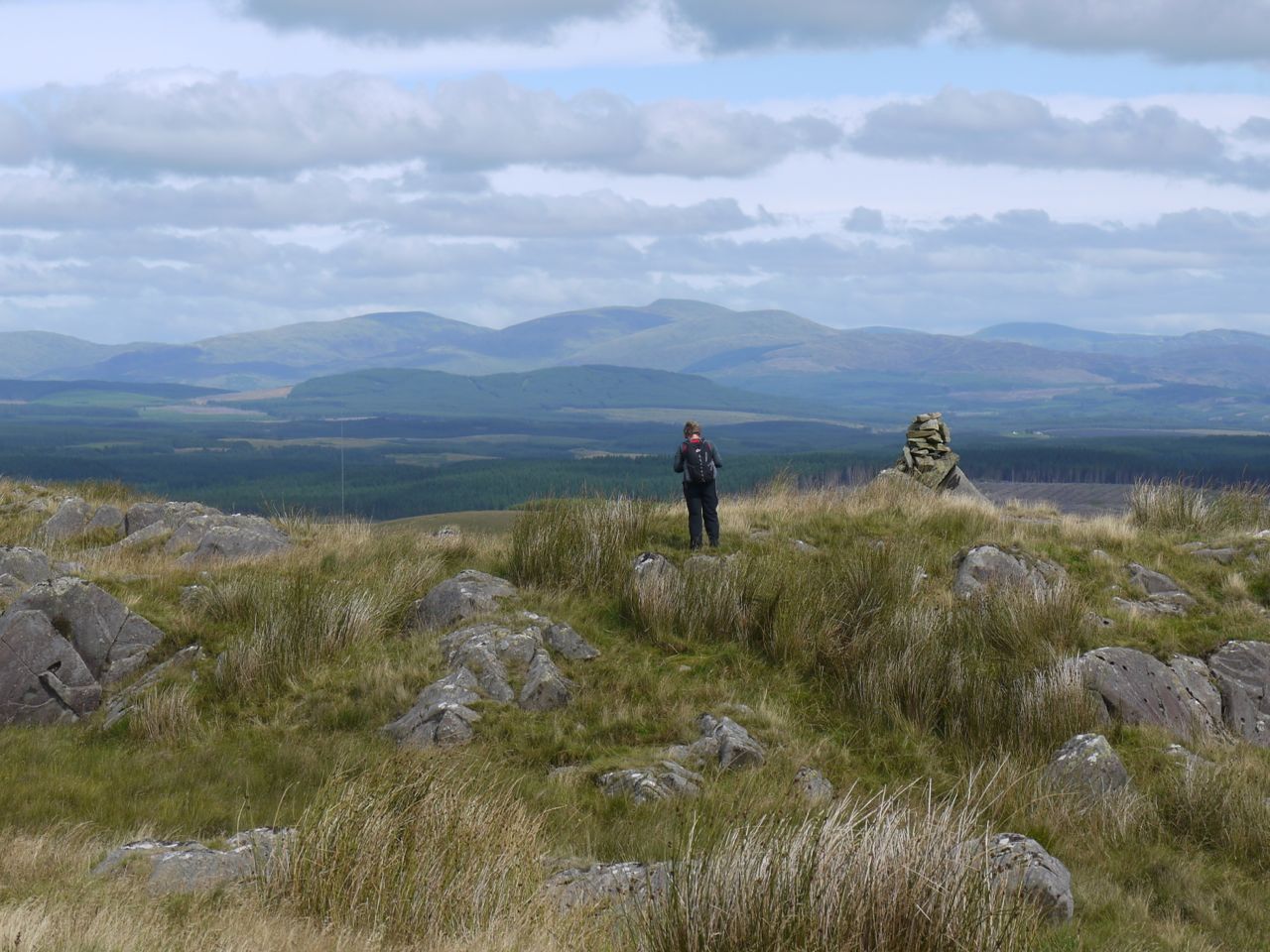
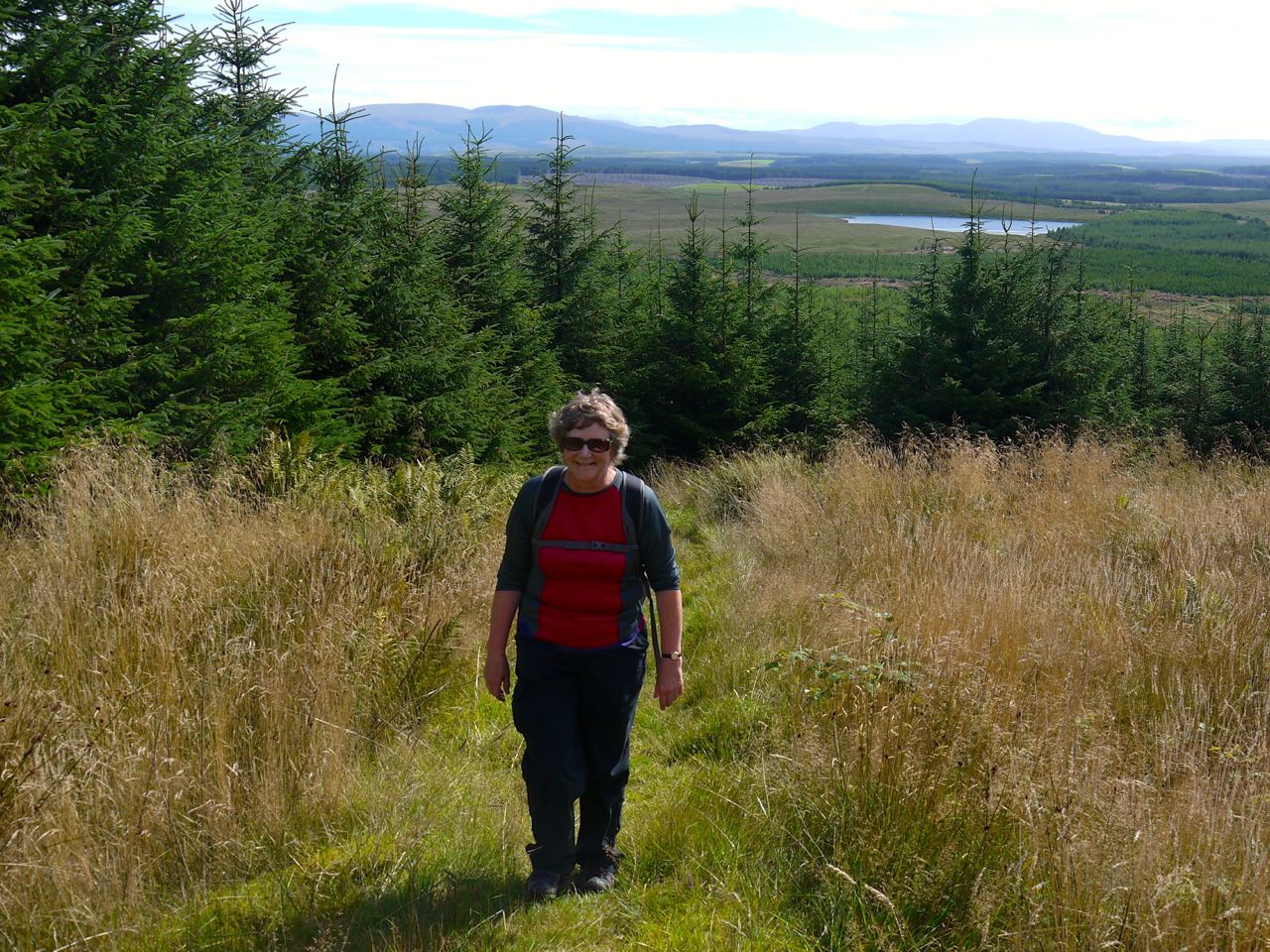
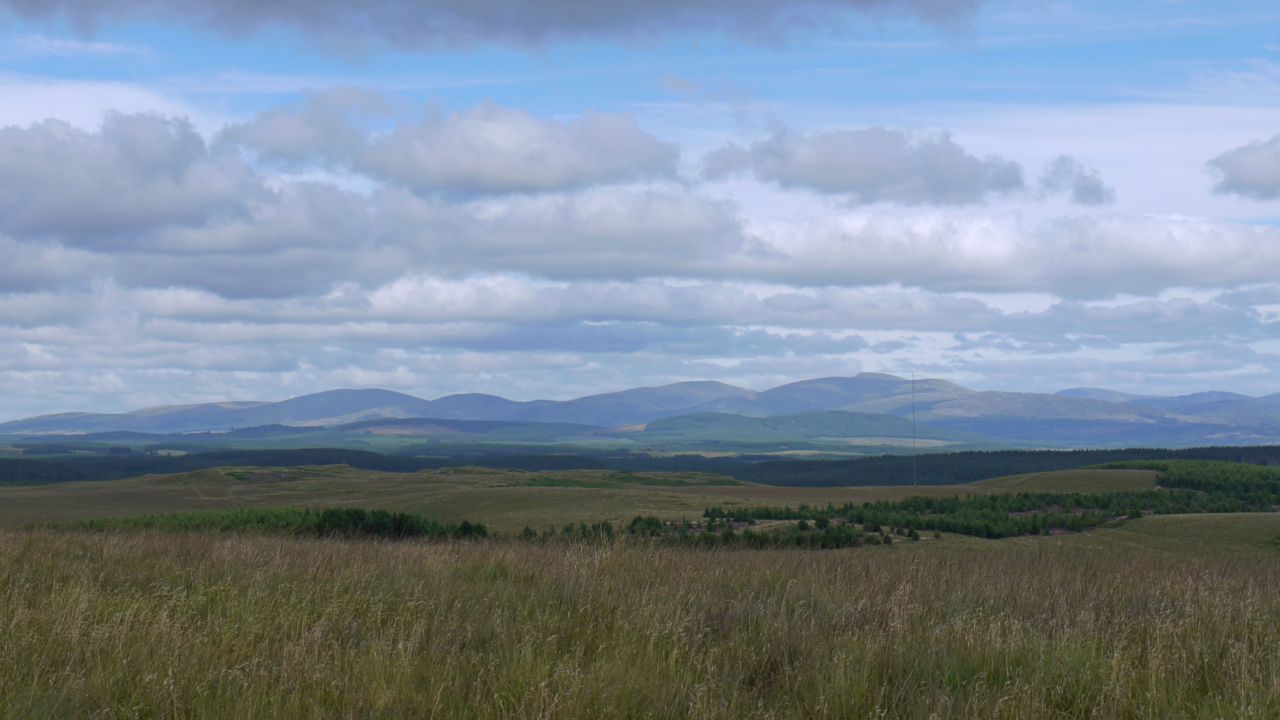
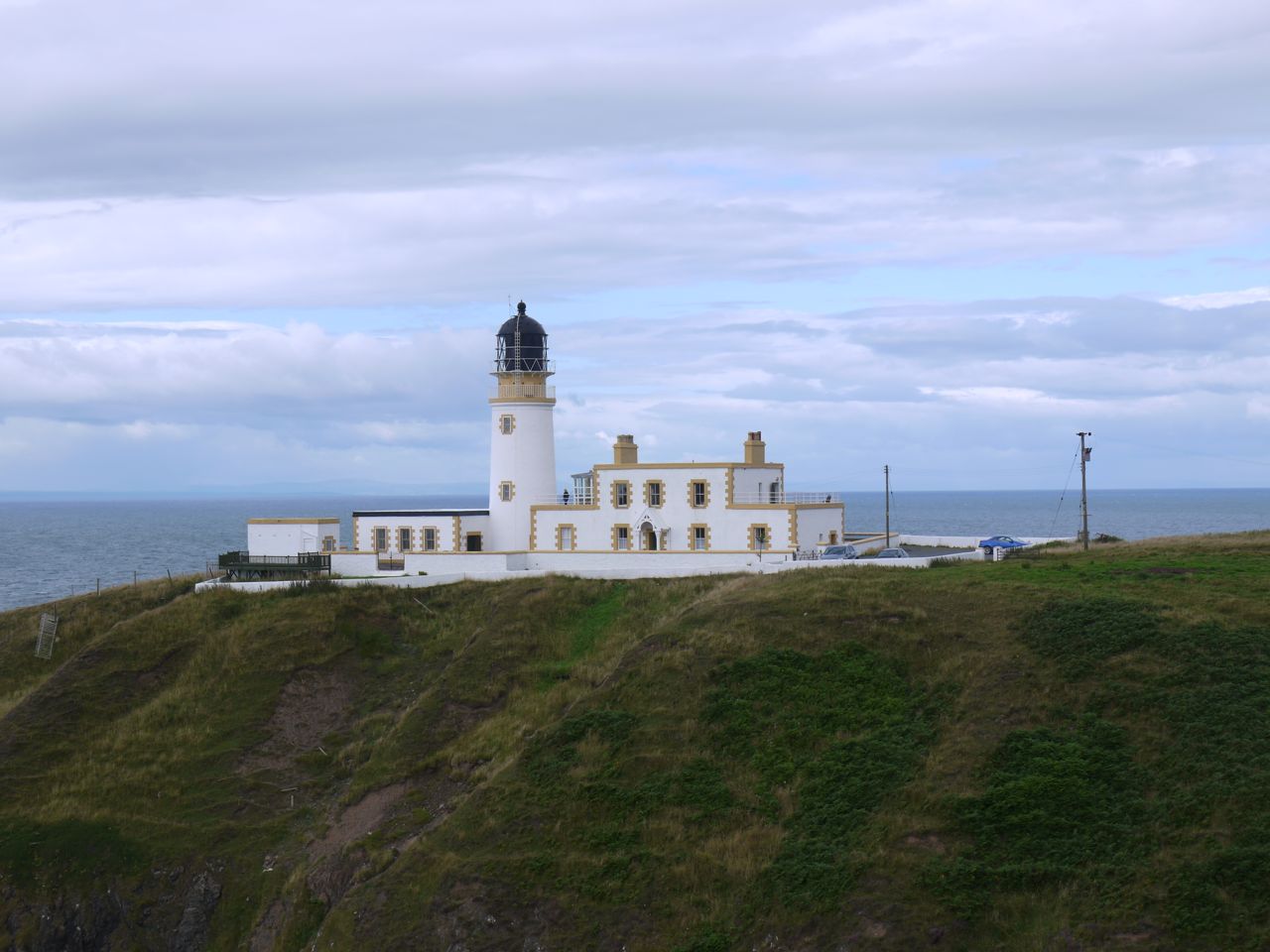
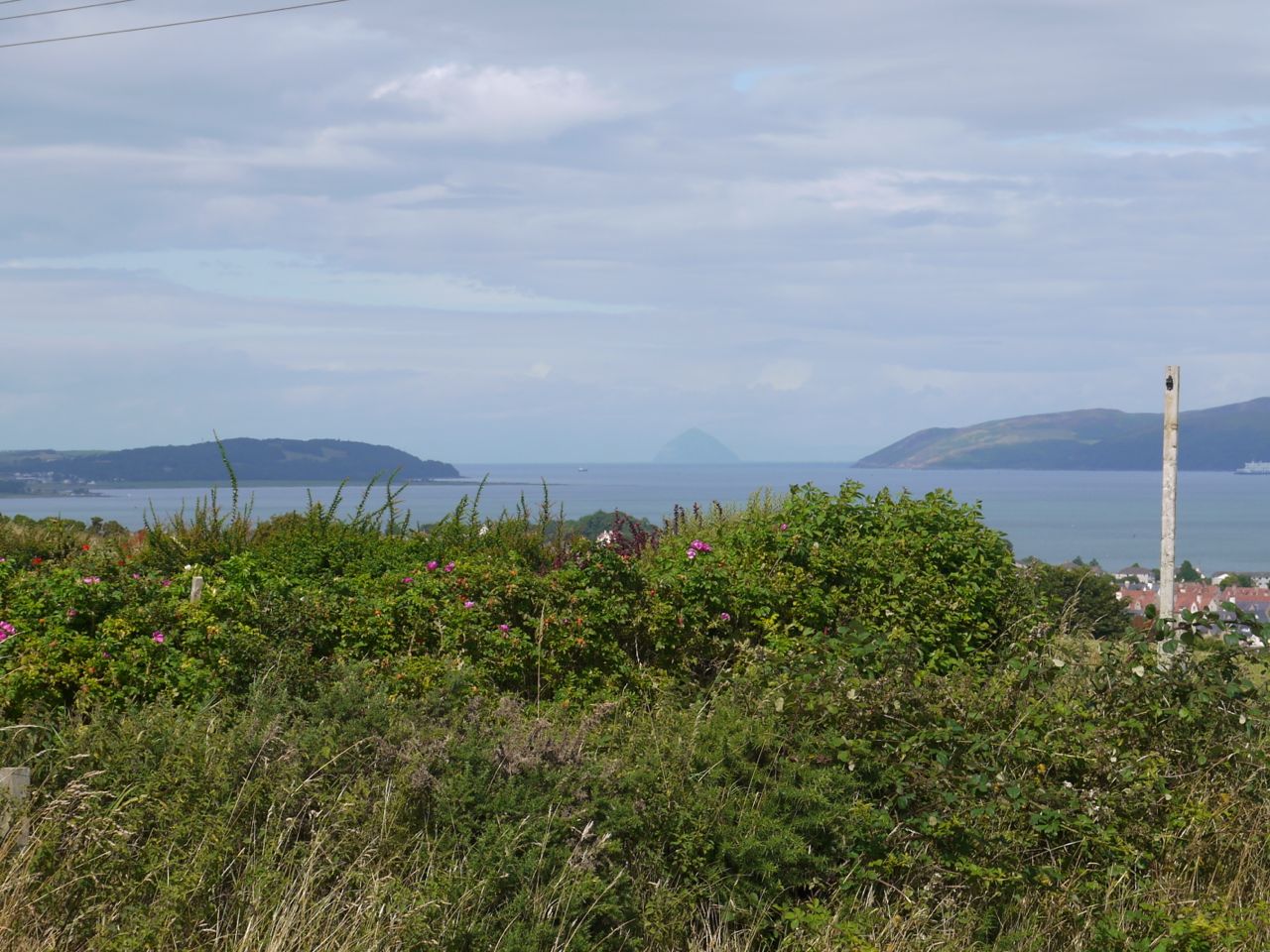
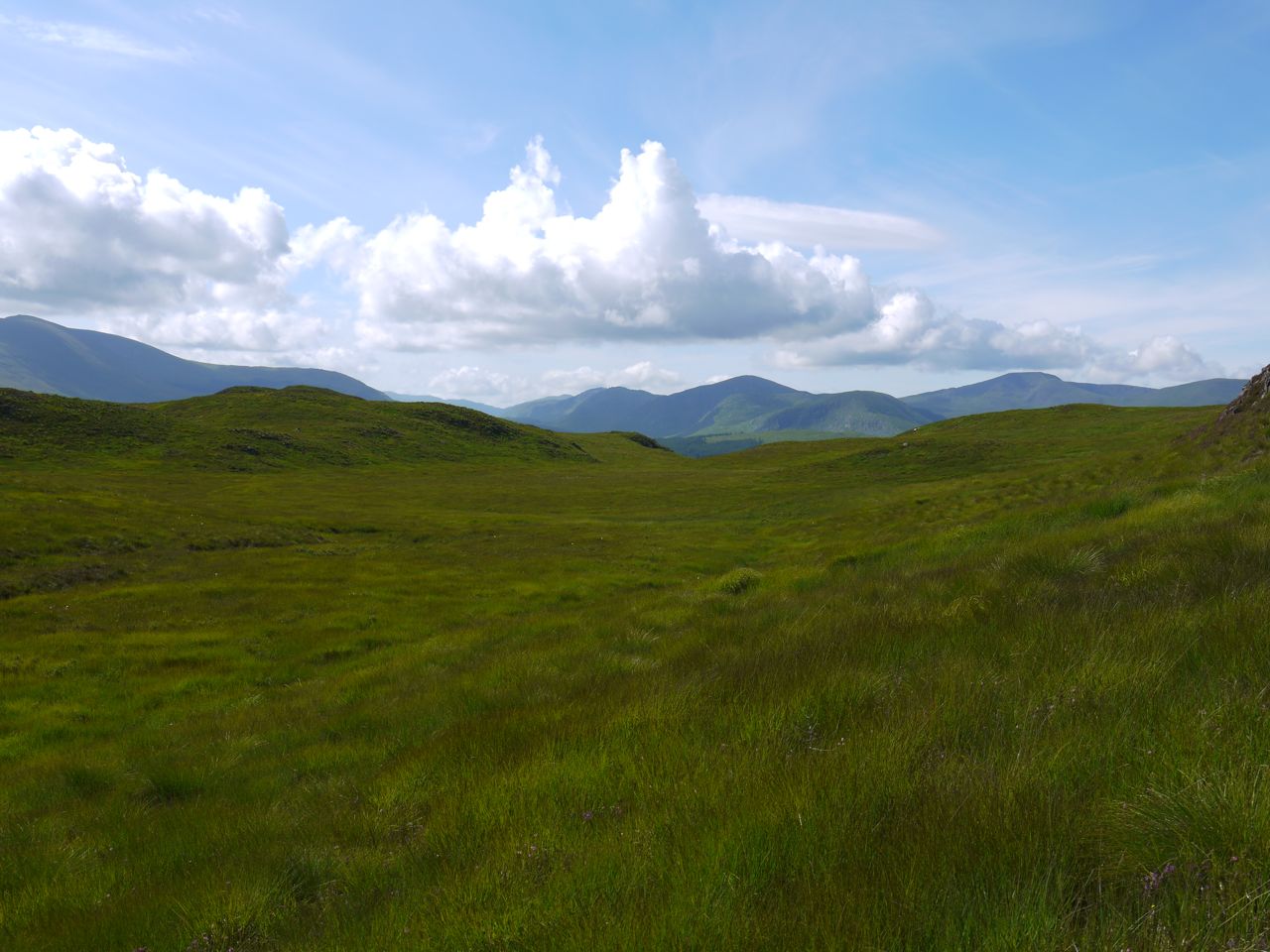
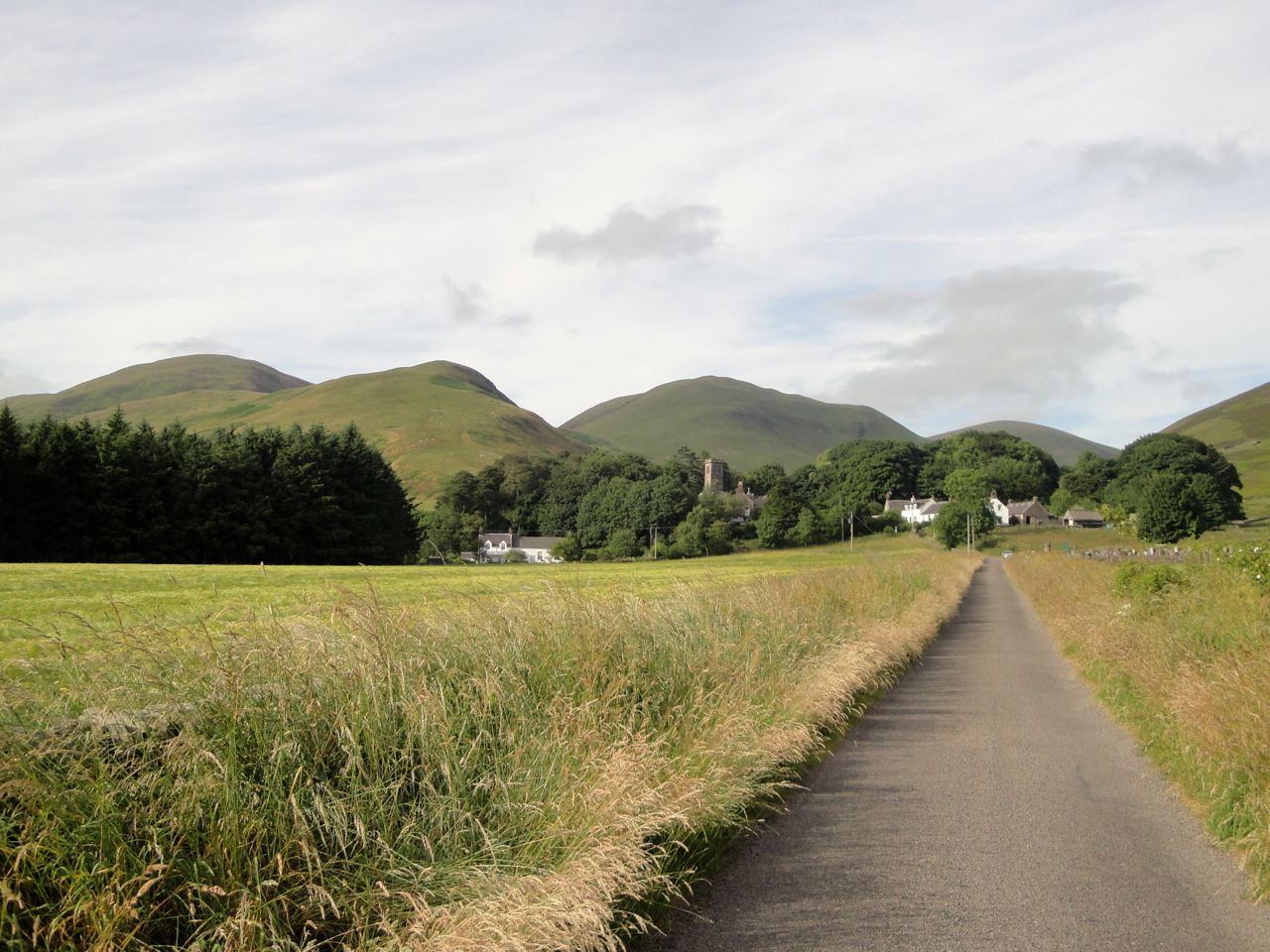
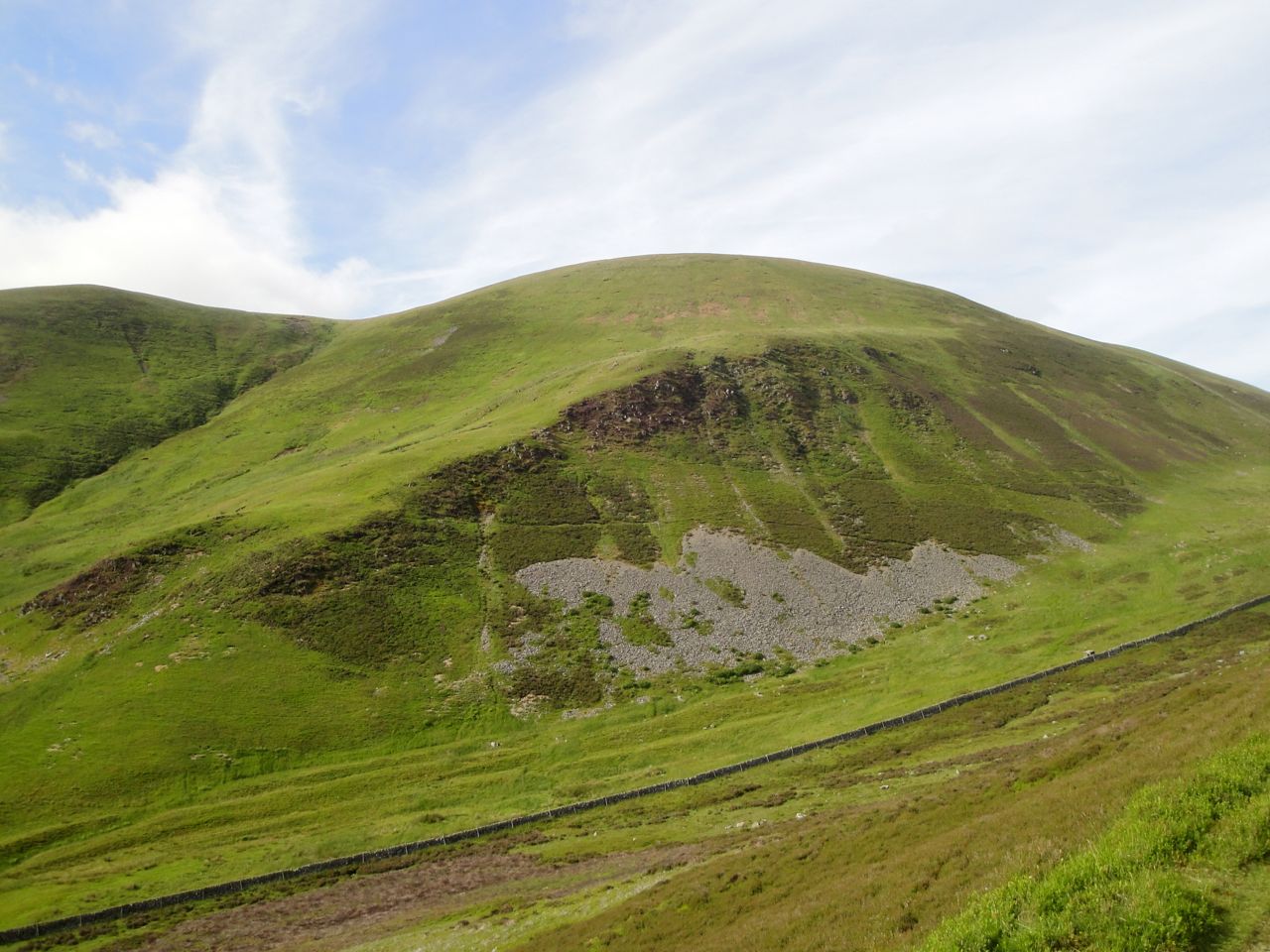
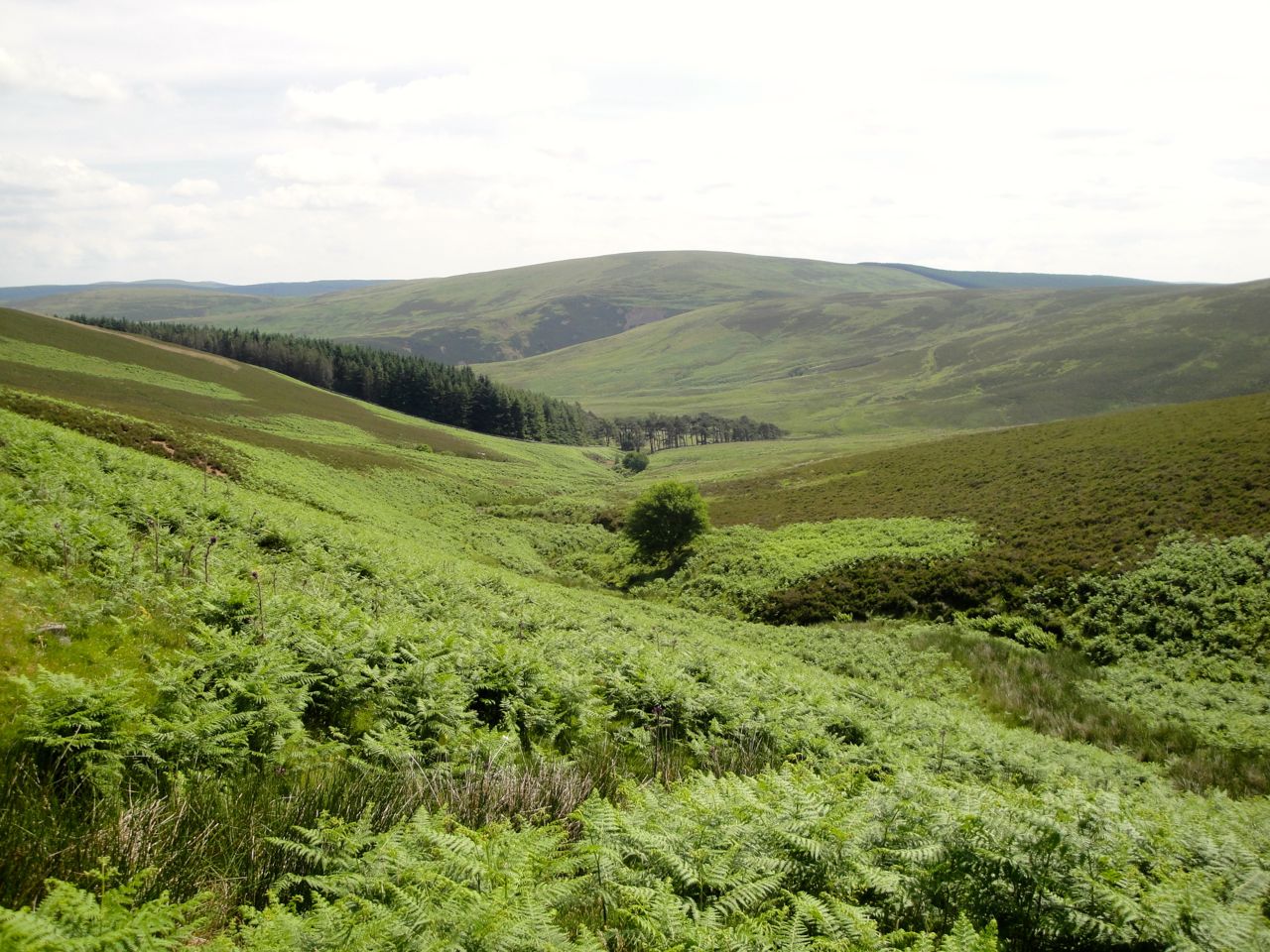
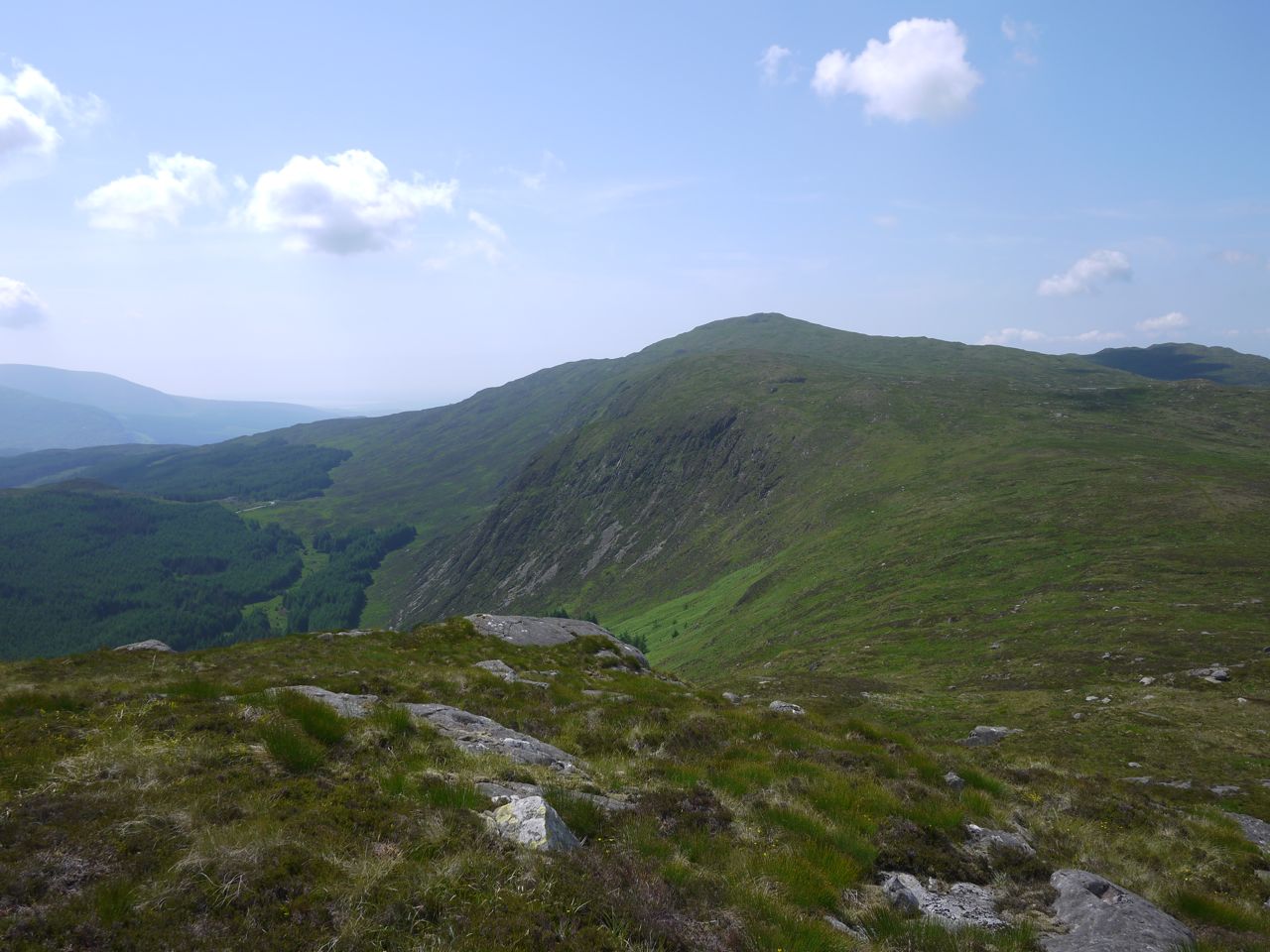
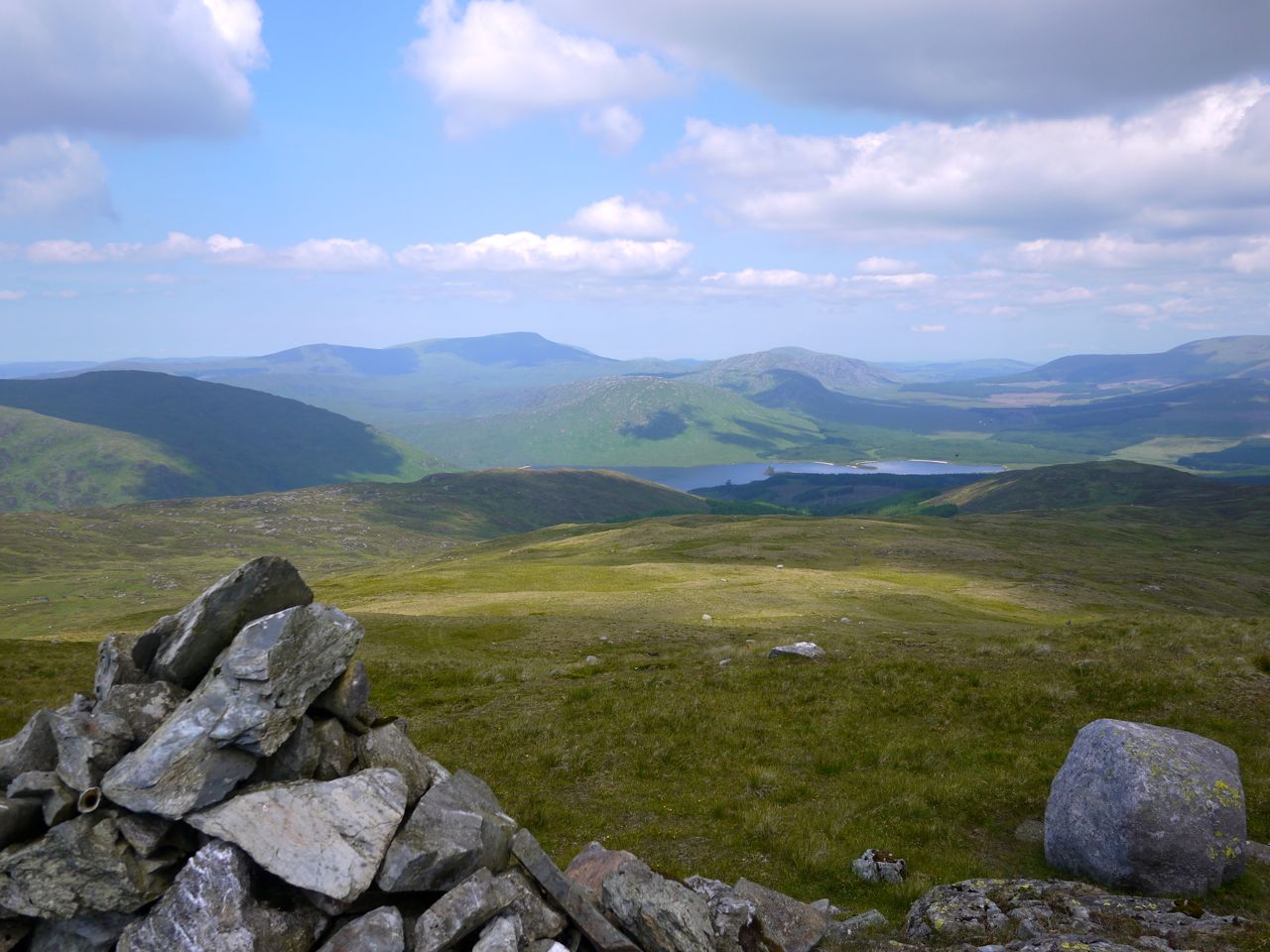
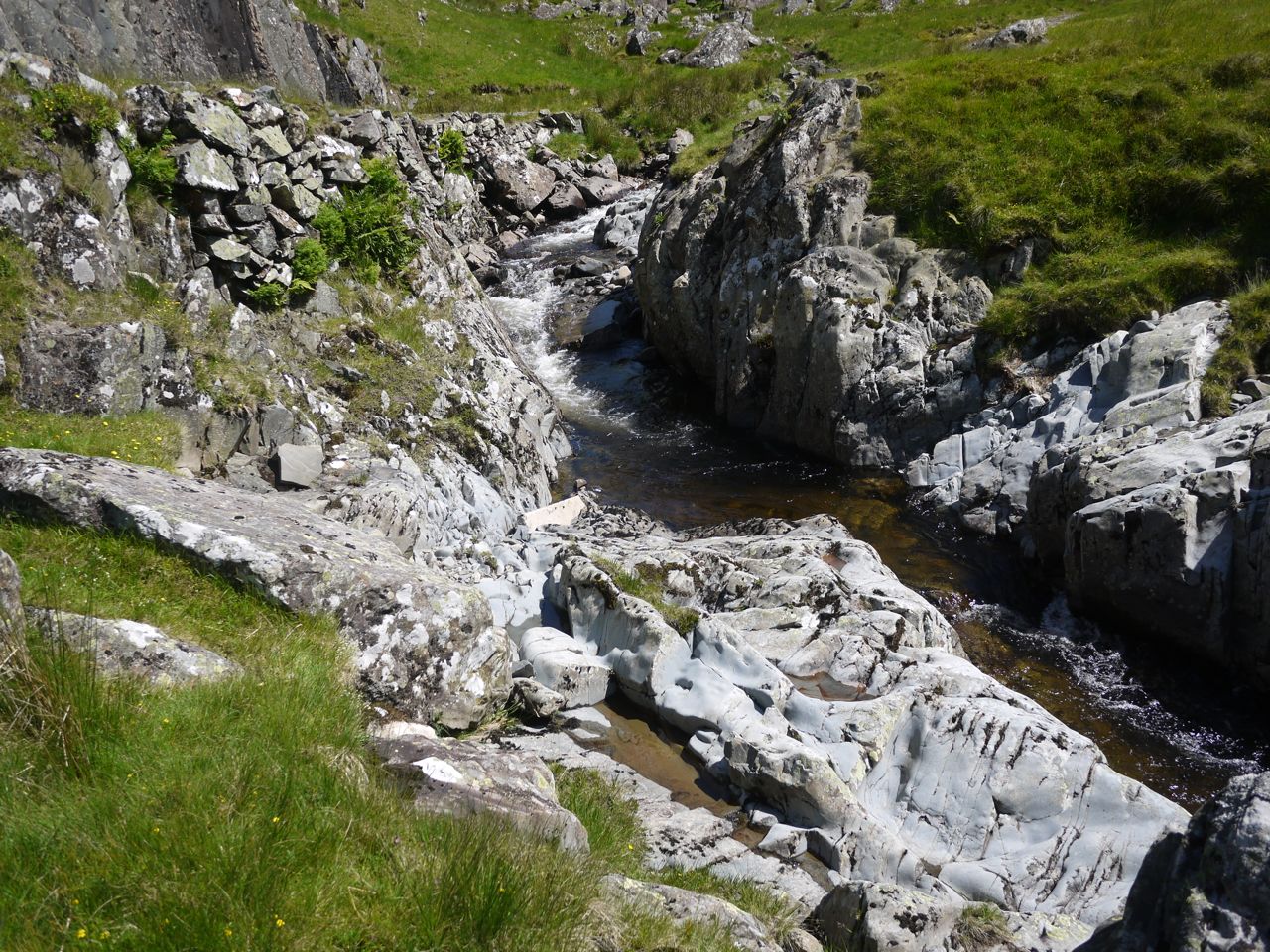
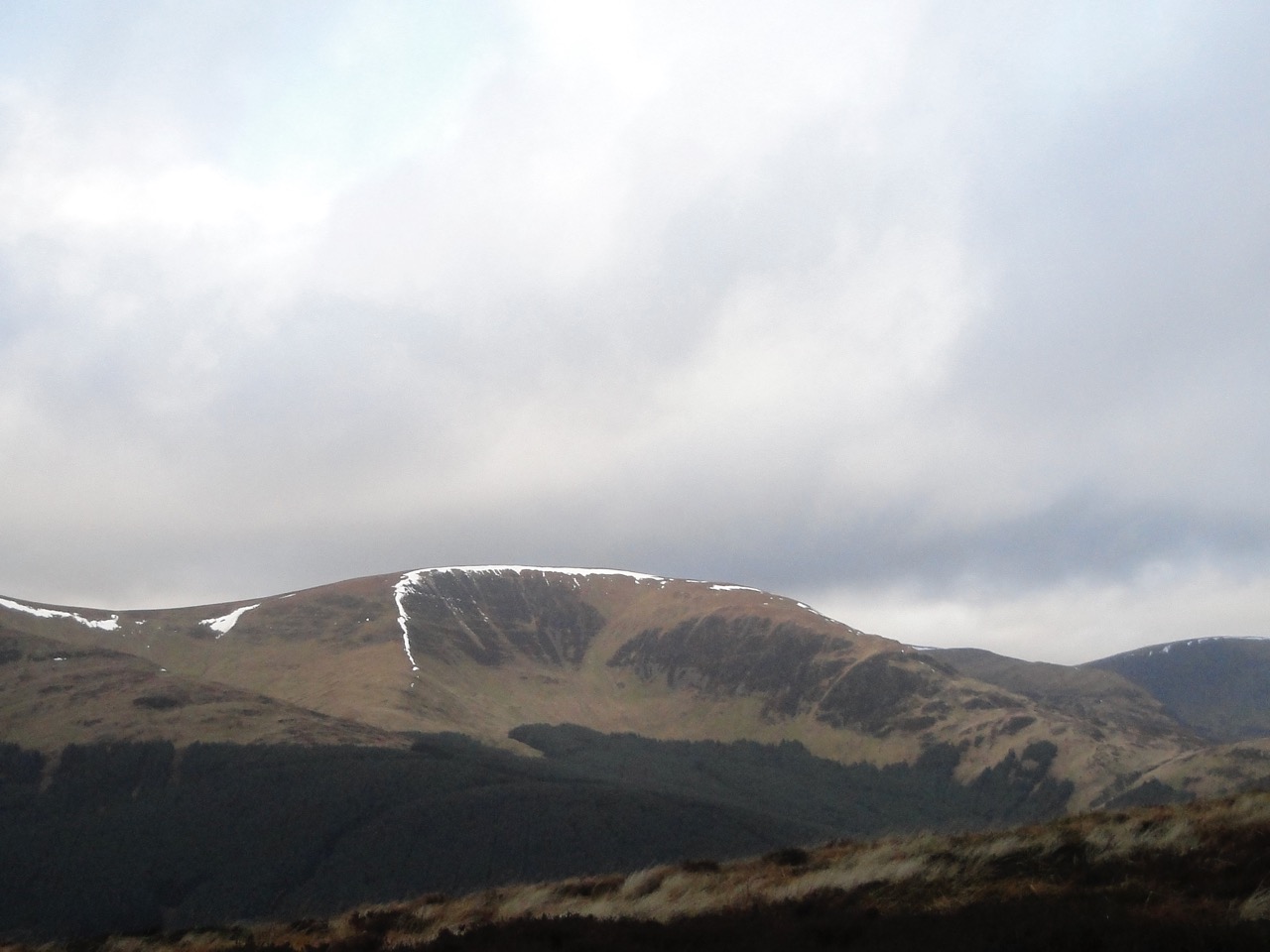
PS the hill in the picture at the top of the post is Mullwharchar, seen from the Craiglea Trail, with a bit of telephoto.


[osmap gpx=”http://www.screel.co.uk/walks/wp-content/uploads/2013/07/RK_gpx-_2013-07-27_0939.gpx”]


Posted in Ayrshire | Tagged , , | Comments Off on Craiglee and the Wee Hills

Ravens and Red Kites: Well Hill from Durisdeer

5.2 miles  2h 46m ascent 536m

Well HillDurisdeer-Black Hill-Turn Hill-Well Hill-Well Path

I have decided to award some hills “Honorary Donald” status for topographical merit. Well Hill is the first Honorary Donald. To be honest this is aesthetic rather than objective, but perhaps I will eventually find some objective criteria.

Well Hill sit among several Donalds but is separated from them by deep valleys. It is 12 feet short of 2000 feet high, but has 200m of drop, and is well over 17 Donald units from its neighbour. I don’t know why it is called Well Hill. There are no obvious wells nearby now but it does stand above an ancient route, the Well Path, sometimes known as the Wald path or Wellpeth. Wald is an upland forest, whereas well can carry the meaning ‘good’ as well as a water well. The hill above the good path, perhaps? Certainly that is true now.

Well Hills behind Durisdeer

Well Hills behind Durisdeer

This outing was a very hot day so I opted for a late afternoon walk. I applied sun-screen, had a good glug of water at the car and decided to take an extra litre of water along with me. That proved to be a wise decision since soon after setting off I felt water dripping down my legs, the top on my water bladder having come loose. I was spared a complete soaking of my shorts though since I have the bladder in a plastic bag.

When I reached the gate to the Wald Path and the sign informing me that Troloss March was 2 miles away, a chap sat on the memorial bench told me there was a red kite up the valley. He was quite right.

I left the Well Path almost as soon as I joined it and followed a track down and over a small wooden footbridge at the Kirk Burn. From there a grassy track leads up the ridge. This long ridge up to Black Hill goes over several knolls, Wether Hill being just one of them. I don’t know if it was the heat but the slopes felt quite steep in places and each time I reached the top of a knoll and then looked at the descent before the next climb I found myself stopping to admire the view a little more than was necessary for purely viewing purposes. The water from rucksack warmed in the tube to the mouth-piece so I had to take several sucks before being rewarded with some cold water, but I suppose that would help my hydration.

Black Hill from Wether Hill

Black Hill from Wether Hill

There was a large bird wheeling high in the deep valley between Penbane and Black Hill and I wondered if it might be the kite I had been told about. As I climbed higher, and closer to the bird, however, it was obviously not a kite and not alone. There were a pair of ravens. Their call was definitely raven and one of the pair gave me a couple of close passes so I could be sure.

Climbing up Wether Hill there are good views of the Well Path and the remains of the Roman Fort. Old maps show a “Celtic or Deil’s Dyke” at about 750 feet. I didn’t notice it on the the way up, but when coming back down the Well Path at the end of the day its line was visible in the vegetation. Once on Black Hill I treated myself to some cooler water from my bag and found there was just enough of a concrete lip at the base of the trig pillar to sit on (in the shade). Scaw’d Law sat to the SE looking particularly unimpressive, and the Lowther Hills with their radio equipment were my northern horizon. The large cairn atop Cairnkinna (Carn Cinaeidh [kinneh], Kenneth’s cairn) was visible to the naked eye seven miles away to the west. Sitting there by the pillar I noticed a wasp and was watching it with the awed interest of an amateur naturalist, but my brain must have calibrated to spot wasps because I soon became aware of wasps everywhere. I would probably have stayed there resting for longer but the wasps had strength in numbers so I relinquished the summit to them. Wisdom rather than fear, I’d like to think.

From Black Hill a track of slightly flattened grass was my guide over the slight rise of Greentrough Head and down into Glenbo Hass. The Hass was mostly dehydrated sphagnum moss but despite the recent dry weather there were still some wet and muddy patches. I imagine this is usually much wetter. Turn Hill stands between Glenbo Hass and   Well Hill. The fence actually skirts 30m below the top of Turn Hill but compulsion took me to the top.

Lowther Hills from Well Hill

Lowther Hills from Well Hill

The ruined wall begins in the col between Turn Hill and Well Hill and leads up to the summit of Well Hill with a faint track up its left hand side. The wall looks to have been built up into a small cairn near the summit, but photos are spoiled by the fence next to it.

When planning the walk I had thought about returning over Penbane but I decided that would be just too much in the heat. Now that I have seen the terrain I would suggest that if Penbane is included, it is climbed by its north ridge from the col below Greentrough Head with a direct descent to Glenbo Hass.

Well Path along Durisdeer Rig

Well Path along Durisdeer Rig

Coming off Well Hill directly to the Well path was interesting. The hill is typically convex and you can see the fence dipping down more steeply just ahead, and then steeper again and then steeper yet again. In the steepest section the soil has slipped leaving some scars of scree, which I thought it best to avoid, but elsewhere the soil had slipped into mini-terraces (solifluction?) that made an otherwise tricky descent manageable. The slope was teeming with rabbits which were in fact the main danger of tripping as they darted out in front of me. The Red Kite was there, presumably for the rabbits.

Wee Well Craigs, Well Hill

Wee Well Craigs, Well Hill

The 3km back to Durisdeer along the Well Path was all downhill, thankfully. The fields were filled with sheep and large lambs that scattered as I approached. Penbane and Black Hill look to be the larger hills from the vantage point of the path but fro the summit of Well Hill these are significantly smaller hills. I was able to have a good look along the ridge up to Black Hill and had on great view with Cairnkinna visible between Wether Hill and Black Hill.

Roman Fort on lower slopes of Penbane

Roman Fort on lower slopes of Penbane (old path visible)

There were sheep on the very steep slopes of Wether Hill and as I wondered if they ever fell a fluffy white bundle tumbled down the slope. I had thought it was falling but just before reaching the break in vegetation of the Deil’s Dyke it changed direction and came to a controlled stop. So just a rapid descent rather than a fall.

At the end of the walk I was able to make use of bench in Durisdeer for de-booting and cooling down. An ice lolly would have rounded off the walk nicely but the nearest shop was in Thornhill.


[osmap gpx=”http://www.screel.co.uk/walks/wp-content/uploads/2013/07/RK_gpx-_2013-07-20_1517.gpx”]


Posted in Dumfries & Galloway | Tagged , | Comments Off on Ravens and Red Kites: Well Hill from Durisdeer

The Donalds

on Tinto: the first
Birks Hill – the last

A little history

Percy Donald, wrote “The two-thousand feet tops of the Scottish lowland uplands” for the journal of the Scottish Mountaineering Club in 1935, listing 133 tops and 15 humps in southern Scotland. He had decided to visit all the “Lowland two thousand footers”. He didn’t define the “Scottish lowland uplands” but mentioned the area stretched from the Ochils to the Galloway Hills and the Cheviots. It has been presumed that he used the highland fault as his boundary. The two thousand footers he classified into Hills, Tops and Humps:

“Tops are all elevations with a drop of 100 feet on all sides and elevations of sufficient topographical merit with a drop of between 100 feet and 50 feet on all sides.”

“Grouping of Tops into Hills, except where inapplicable on topographical grounds, is on the basis that Tops are no more than 17 units from the main top of the Hill to which they belong; where a unit is either one twelfth of a mile measured along the connecting ridge or 50-foot contour between the lower top and its connecting col.”

“..humps, i.e. points enclosed by a single 2,000 feet contour but not meriting inclusion as tops”

Percy Donald’s original list has been adjusted over the years. The Glen Artney Hills have been added, some originals discarded, and some re-classified, bringing the list up to 89 hills and 51 tops. A modern attempt to rationalise the Donald hills has created “New Donalds”, which are defined as hills in Central or Southern Scotland at least 610 metres high with a drop of at least 30 metres all round. There are 118 New Donalds, all of which are either Donalds or Donald tops. I’m not a New Donald person but in walking the Donalds I’ve taken in all the New Donalds as well.

The highest Donald is Merrick at 843m, the lowest Dugland at 608m (which being only 1995 feet has been removed from the list). The lowest on the modern list is Keoch Rig at 611m.

In the SMC journal of 1935 Percy Donald records climbing his 87 hills and 46 tops over 167 days, with 27 days spent in the hills. His first ascent was Tinto on 12 December 1932, the last, Blackcraig Hill, above Afton, on 28 May 1933. He had definitely climbed some of them before but presumably he aimed to walk them all in as short a time as possible.

My first Donald was Merrick in 1995 or 1996, but I decided to start the project with the first Donald for which I had a definite date, which meant reclimbing those without definite dates. So, like Percy Donald, Tinto counts as my first ascent, on the 20th October 2009. My final hill was Windy Gyle on 5th May 2013; my last top, Great Hill on 6th July 2013; and the final hump, Birks Hill was visited on 13th July 2013. 1363 days from start to finish with 59 walking days.

Donald calculated his total mileage at 396, his ascent as 89,300 feet (27,219m) and the average cost as 2s 9d per hill, 1s 10d per top. My 59 days included 533 miles of walking and 40,926 metres of ascent. It has cost me £14.84 per hill, £9.43 per top, which corrected for inflation for 1932 would be 5s 3d and 3s 4d  (using the retail price index) or 1s 10d and 1s 2d (by average earnings). I’m on my third pair of boots but haven’t included them, other equipment or food in the cost, but I have included the one night in a B&B. Many of Donald’s walks were linear, whereas only one of mine was.

Here’s how I came to do it.

After coming to D&G, the first hill I climbed was Criffel, the one I could see from work. Merrick was an outing from work. Next I visited others I saw when driving around, Queensberry and Cairnsmore of Fleet. Then came the guidebook stage: “25 walks in D&G”, “40 walks in southern Scotland” and eventually the SMC Southern Uplands book which was really my first tick list.

With the coming of internet tick lists I began recording the hills I had climbed, the first hill logged being the lowly Lotus Hill on 27th September 2008. I noticed on the list that there were local Corbetts, Grahams, Marilyns and Donalds.

Somehow these outings meant I climbed quite a few of the D&G Donalds and it seemed a good idea to complete the Dumfries and Galloway Donalds. Once the D&G Donalds were done I felt driven to climb the rest. That was it, I was hooked. Around that time I became aware of the Donald tops, so started to include them as well. The humps I only found listed in Donald’s original article later. I had sometimes passed within a mile of a top or hump and in going back to them I had an opportunity to climb some hills a second time, but always managed to use a different route. Because of that gradual discovery of tops and humps after the hills I may not have climbed these hills in the most efficient way, but it was still a pleasure to revisit the hills.

Percy Donald had one walk that he said included all weathers except sandstorms or heatwaves. I didn’t have a single walk with all those weathers but my walks have been in sunshine, rain, mist, hail and snow; in gentle breezes, upland gales and blizzards; in the cold and a heatwave. I have fallen in watery ditches, waded thigh deep across burns, clambered up rocks, kicked steps in snow, and stumbled across tussocks, bracken, heather, scree, moss, bog and peat hags. I have sat with my feet in the cold water of a upland burn, lain on the warm grass of a sunny summit and huddled behind a cairn in winds too strong to stand up in. I have been buzzed by flies, bitten by midges, and shared the hills with deer, moles, voles, hares, badgers, foxes, rabbits, kites, grouse, pheasants, wild goats, cows and sheep. I have carried a first aid kit on every walk but used it only once. Why do fences in the middle of nowhere need barbed wire?

During the same period I have also headed out on 62 non-Donald walks so I have not been completely obsessed, even it sometimes felt like it, particularly this year.

Odds and ends:

Best names:

  • Curleywee (Cor le Gaeith [gwee], Hill of the Wind)
  • Drumelzier Law (Drum Medelwur, Hill of the fort of the Reaper Men/Slayers)
  • Carrifran Gans (The hill you pass on the way to Caer y Fran, the Raven’s Fort)
  • Mullwharchar (Meall na h-adhairce [aharky], Hill of the Hunter’s Horn)

Most inappropriate name:

  • East Mount Lowther, the most westerly of the Lowther Hills.

Hills named after wildlife:

  • Ben Ever (Eofer, wild boar)
  • Windlestraw Law (dry grass stalks)
  • Birkscairn Hill, Birks Hill (birches)
  • Hart Fell (deer)
  • Deer Law (deer, or perhaps oak, daur)
  • Carrifran Gans (ravens)
  • Cairnsmore of Carsphairn (carse fearn, field of alders)
  • Moorbrock (broc, badger)
  • Alwhat (Aill Chaat [haat], cliff of the wild cats)
  • Keoch Rig (sceitheog [skeoge], a hawthorn bush)
  • Benyellery (beinn iolaire [yillary], eagle’s hill)
  • Earnscraig (Eagle’s Hill)
  • Erie Hill
  • Falcon Craig
  • Capell Fell (Horse Hill)
  • Beinn nan Eun (hill of the bird)
  • Greenforet Hill (Green forest?)
  • Wedder Law (ram hill)
  • Ellers Cleuch Rig (ridge above the ravine of alders).

Most straightforward names:

  • Meall (hill)
  • The Law (the hill).

Oh I see names:

White Coomb: white hollow
Pykestone Hill
Gathersnow Hill
Saddle Yoke, from the col below White Coomb

Statistics:

Longest walk:
Rhinns of Kells (Meikle Millyea to Cairnsgarroch) 15.9 miles, 1332m, 8h 40m

Shortest walk:
Tinto 4.3 miles, 484m, 2h 10m

Average: 9 miles, 694m

Most Donalds on a walk: 7 …..Rhinns of Kells, 6 hills + 1 top; Across the Gameshope Burn, 4 hills + 3 tops; Cramalt Craig and its tops, 2 hills + 3 tops + 2 humps.

Walks abandoned due to weather: 2/59 (blizzard, gale)

Walks when no other walkers were seen 35/59

Walks in rain, drizzle, sleet or snow 17/59

Most frequent after-walk comment: “well that was a walk and a half”

Strangest questions asked of me on the hills:

  • “have you got any beer?”
  • “have you walked from Bowness?” (50 miles away)
  • “is there a shop?” (high in the Moffat hills)
  • “have you come from the up there?” (while walking down the hill)
  • “what Roman fort” (looking at the ruins of a fort)

Most welcome question:

  • “Would you like a lift?” (after 13.5 miles on the hills and walking back along the road to my car 2.5 miles away)

Well that’s my Donald Project complete. What started as a an occasional trek and evolved into an obsession is now officially over. Now I can turn my attention to the SUW.

I’ve chosen one photo from each walk for the gallery below. [edit: removed since the gallery is defunct – working on replacing it]

The Walks:

2009
Tinto
Cairnsmore of Carsphairn

2010
Rinns of Kells

Shalloch on Minnoch
The Roaring Linn
Law and Ordure
Seeking the Grey Man
The Rhinns of Hell


The Cold Hill
Brass Monkeys on Hart Fell

2011
Louthers in White and Green
What Roman Fort?
Alhang by map and compass
Lonely Donalds in the Mist
Daer Again
Lousie Wood Law
Mullwharcher
Following the fence posts to Curleywee
The Silver Flowe
Law, Shank, Hill, Fell, Craig and Pen

2012
(Sans-)Bodesbeck Ridge
Windy Standard in the Snow
Last of the Ettrick Donalds
Blackhope Round
Kirriereoch
The Blackcraig
Coran of Portmark
Cairnsmore of Fleet from Dromore
Moorbrock = the Polifferie round
The Crown of Scotland
Conquering the Raven’s Fortress
Across the Gameshope Burn
Good samaritans from Dollar Law
Raikin the Foulbrig
Limping round Drumelzier
Fell shin to Dun Knees
Gathersnow’s Ridge

2013
Heatherstane Law from Lamington
Crunching and Crackling over Cauldcleuch Head
The Glenrath Hills – bailing after Stob Law
The Glenrath Hills – all four Donalds
Moorfoot’s enchanted giants, secret cables and frozen land
Windlestraw Winterland
The Glenartney 2Ks
The Louther Hills
Wet and Dry: Scaw’d Law and Glenleith Fell
The Western Ochil Donalds
Glensherup Round
The Garden Path: Windy Gyle and the Cheviot
Ellers Cleuch Round
Beginner by the Bridges
Cramalt Crag and its Tops
Taberon Law to the Scrape
Lowly Dugland
Blackhouse Heights
White Coomb from Talla
The Buckdass of Cairnbaber


Tinto
C of Carsphairn


Meikle Millyea, Milldown, Corserine Millfire, Meikle Millyea (old GR)
Shalloch on Minnoch, Caerloch Dhu
White Coomb, Mid Craig
Queensberry
Merrick, Benyellary
Carlins Cairn, Meaul, Cairnsgarroch, Meikle Millyea, Milldown, Corserine, Millfire, Meikle Millyea (old GR)
Millfore
Hart Fell

Loch Eddy, Glendean Banks

Birks Hill

Posted in Ayrshire, Borders, Donalds, Dumfries & Galloway, Far away, Lanarkshire | Tagged , , | Comments Off on The Donalds

Birks Hill

7.9 miles  3h 21m  ascent 557m

Tweed Trails signBirks Hill, Birkscairn Hill, Glensheil Banks

"And birks saw I three or four,
      Wi' grey moss bearded owre,--
    The last that are left o' the birken shaw,
      Whar mony a simmer e'en
      Fond lovers did convene,
    Thae bonny, bonny gloamins that are lang awa'

This walk started on the road from Kirkhouse up towards Glen House. Parking wasn’t easy and I thought I might have to leave the car at the church in Kirkhouse but managed to squeeze it at the side of the road a little closer.

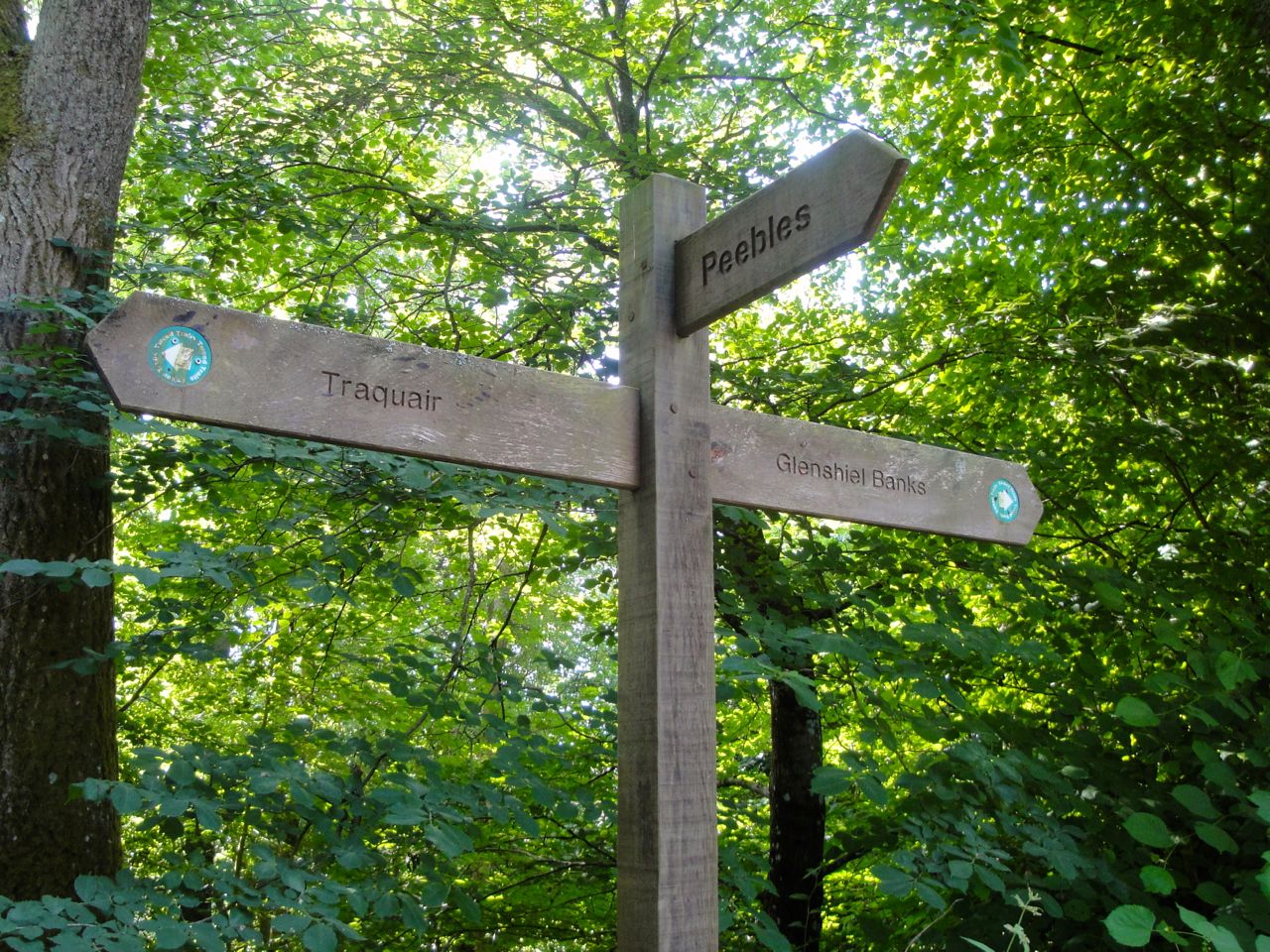
At a Tweed Trails sign, I followed the track signed for “Peebles”. This leads up towards Birks and gives the first views of Birks Hill. The OS map shows a path turning left towards the house at Birks but the Tweed Trail turns right through woodland and then drops towards the Glass Burn.

Tweed Trail by the Glass Burn

Tweed Trail by the Glass Burn

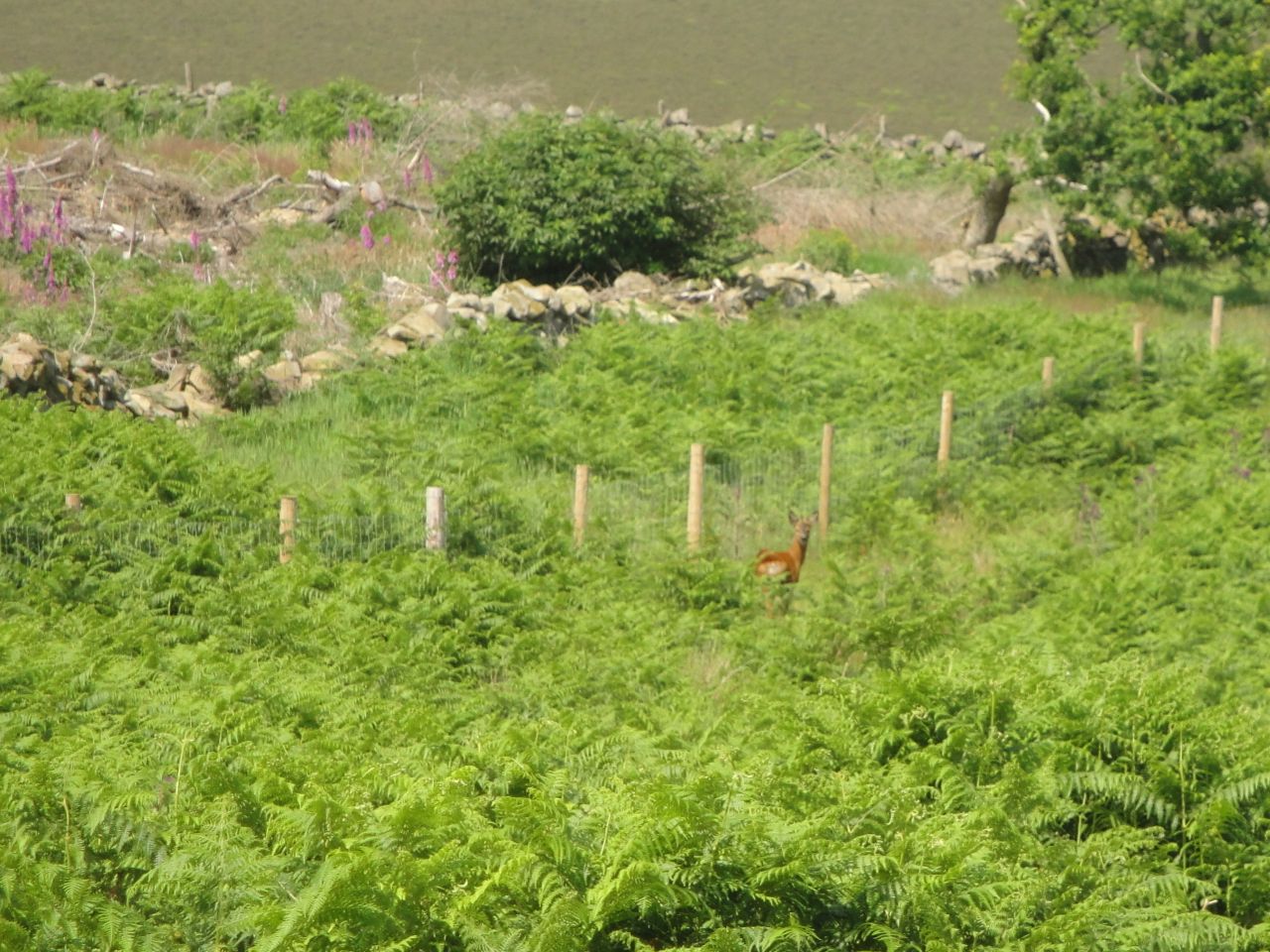
From here I headed north, still on a definite path, but one obviously not much used. There had been some tree-felling and by a felled field, filled with foxgloves, some rustling in the ferns beside the track turned out to be a deer that stood watching me for a moment before bounding off. The next rustling was a sheep. I don’t usually expect to see them in the ferns.

Deer at Birks

Deer at Birks

The path petered out and I set out across a field of ferns which then gave way to rushes. I expect this section could be wet but in the midst of the heatwave it was dry. At the boundary between fern and rush was a substantial stand of nettles, which made me regret wearing shorts. I hesitated briefly then pushed on through (a true adventurer?). Much to my surprise they didn’t sting.

After the rushes I met a well worn track that led to the col below Birks Hill. The track continued around Birks Hill climbing slowly onto its northern slopes. I left the track at its highest point, where there was a Tweed Trail marker post, and headed directly up the slopes. There seemed to be a swathe of grass through the heather, which I presume must once have been burned a few seasons ago, and that made the going easier.  I met a track coming from the NE which made me wonder if I had missed a direct route up from the col. There are a couple of small cairns on Birks Hill. One might be the summit though to my eye an un-cairned rise to the SW looked higher.

Birks Hill

Birks Hill

A faint track led across a dried-up bed of moss in the col and up to Birkscairn Hill where there was a cairn big enough to sit on for lunch.

Birkscairn Hill

Birkscairn Hill

Birkscairn Hill, on a different day.

Birkscairn Hill, on a different day.

From Birkscairn Hill I walked down and joined the Old Drove Road which is now just a faint track. This took me over the shoulder of Stake Law and across two wee burns. Though it must be well over a century since the drovers used this pathway it still remains and must be kept in existence by occasional walkers. It is certainly a pretty glen to walk in though the ground looked as if it could muddy up with a little water. Once I could see Glenshiel Banks I headed directly down the slope towards it.

Banks Burn, Looking down to Glenshiel Banks from the Drove Road

Banks Burn, Looking down to Glenshiel Banks from the Drove Road

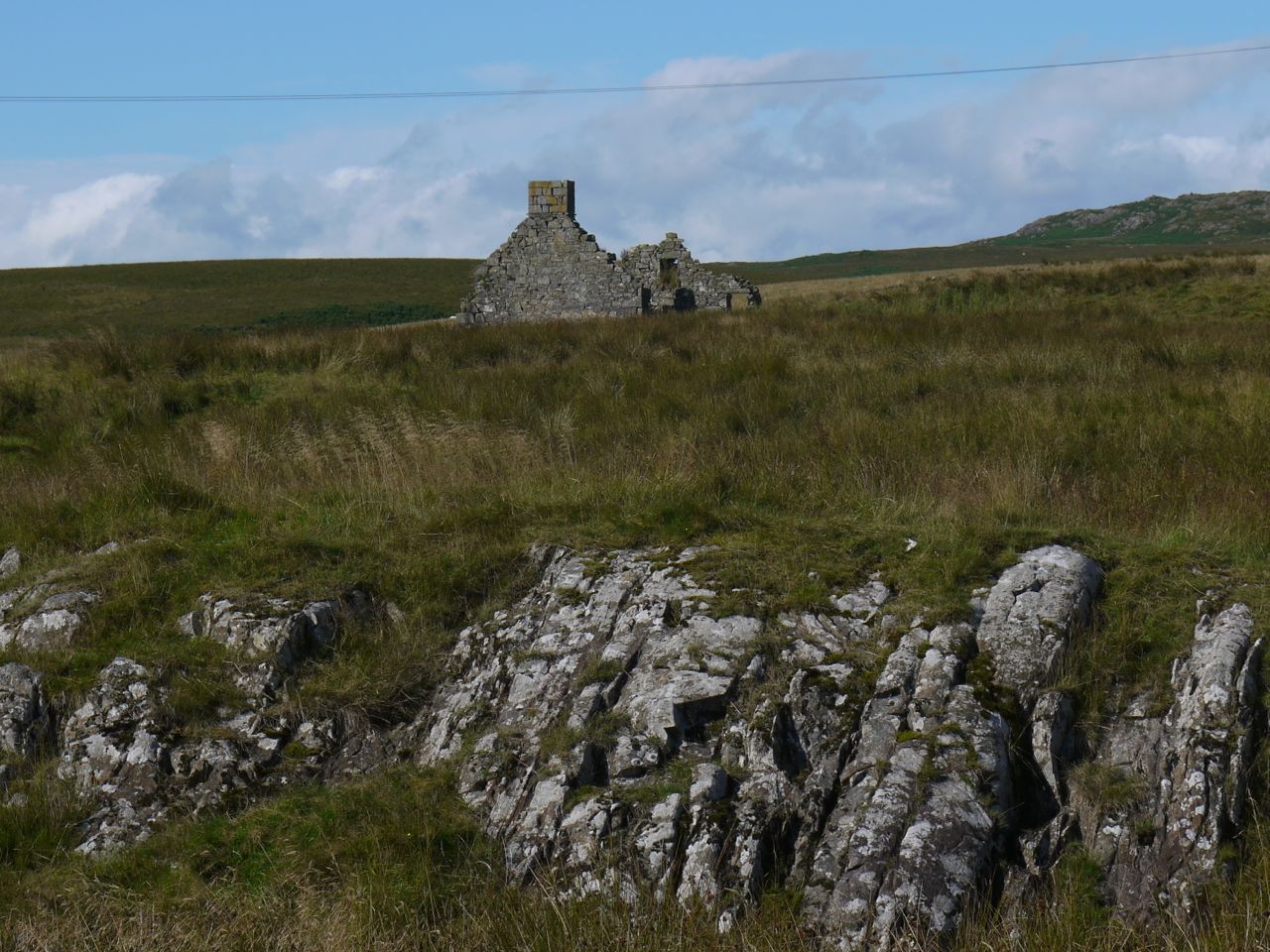
Glenshiel Banks is enclosed in a stone wall. A small cottage is obviously still used and a ruined building stands nearby. There is a bridge over Banks Burn which is a major tributory of Quair Water. From there it was a slightly monotonous farm track back to the start. But the hedgerows were brimming with plants and butterflies and there was a good view of Loch Eddy nestling in its deep glen. A future outing perhaps.

Glenshiel Banks

Glenshiel Banks

Loch Eddy, Glendean Banks

Loch Eddy, Glendean Banks


[osmap gpx=”http://www.screel.co.uk/walks/wp-content/uploads/2013/07/RK_gpx-_2013-07-13_1033.gpx”]


Posted in Borders | Tagged | Comments Off on Birks Hill

The Buckdass of Cairnbaber

6.5 miles 564m 4h 33m

CairngarrochCairngarroch, Cairnbaber, Millfore, Millfore SW top

Another mopping up outing, this time for Millfore’s southwest top that I had gazed upon but had not previously visited.

I parked by the road just after the T-junction before Craigencallie House. Turning left here, away from Craigencallie, there is plenty of parking space near a quarry.

Looking up to Cairngarroch I considered heading directly up the slope from Bell Knowe. The vegetation by the track looked a little thick though, so I walked up towards Craigencallie hoping to find a better place to get on to the hill, but I was soon at Craigencallie so carried on up the drive. I had thought Craigencallie was disused but there were signs of habitation and I felt a bit uneasy walking past flower-pots and washing lines. I would skirt around the buildings and land if coming again.

Slopes above Craigencallie

Slopes above Craigencallie

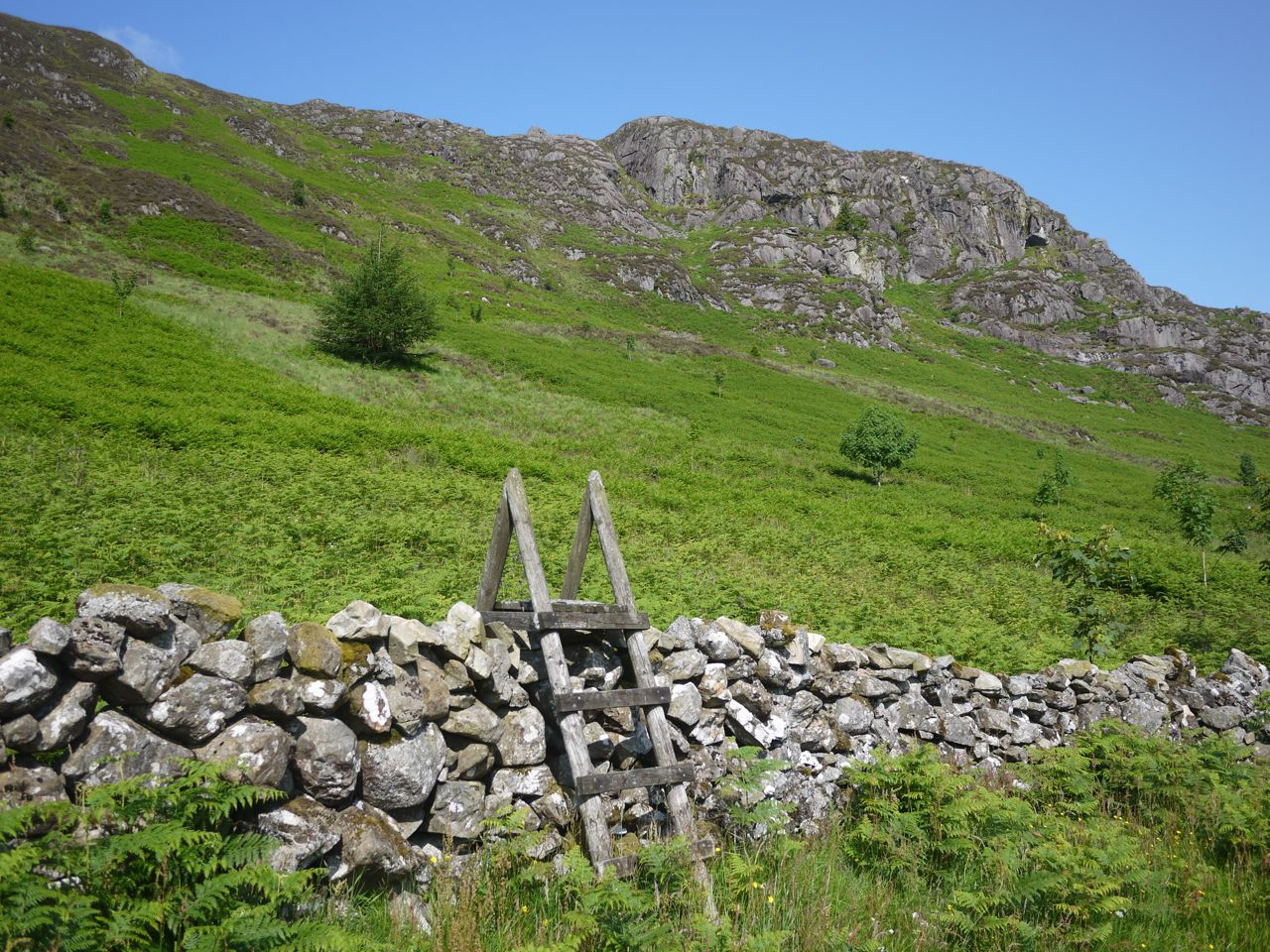
There is a ladder over the stone wall behind Craigencallie. The lower slopes were a gentle climb through waist-deep ferns. There was a faint gap in the ferns which turned out to be a watercourse, dried-up but eroded down to rocks, which gave me a firmer footing with less entanglements. Once I reached the rocky outcrops, the ferns gave way to tussock grass and heather and the gradient increased. I suspect his steeper section would have been boggy between the tussocks but the heat had left this dry for me.

Terrain on the slopes of Cairngarroch

Terrain on the slopes of Cairngarroch

There was no obvious track through the steep heather and tussock-covered slope which proved quite tiring, but at least there were plenty of boulders to rest on. Unfortunately during my climb I was dogged by flies, which circled me like electrons around a nucleus, and clouds of midges, which found me strangely attractive. Whenever I stopped for a breather the insects in outer orbit came in closer to buzz me. My face was burning as I climbed and I wondered if I should put on more sunscreen, but then realised that the sun was on my back so the facial burning was heat rather than sun burn. My water was already warm by this time, so I was hoping that there would be some wind once I got onto the top.

Cotton grass on Cairngarroch

Cotton grass on Cairngarroch (that’s not the summit, just a knoll with an erratic)

Above the outcrops the hill opened into a flat bowl filled with cotton grass. Beautiful to behold, and all the more so since it was moved by a gentle, and cooling, breeze, but it is not called bog cotton without reason. This ground was squelchy with small areas of standing water. Each footfall, even on dried out moss, sank a centimetre or so, like walking in soft snow which I am sure increased the effort of walking.

Cairngarroch summit

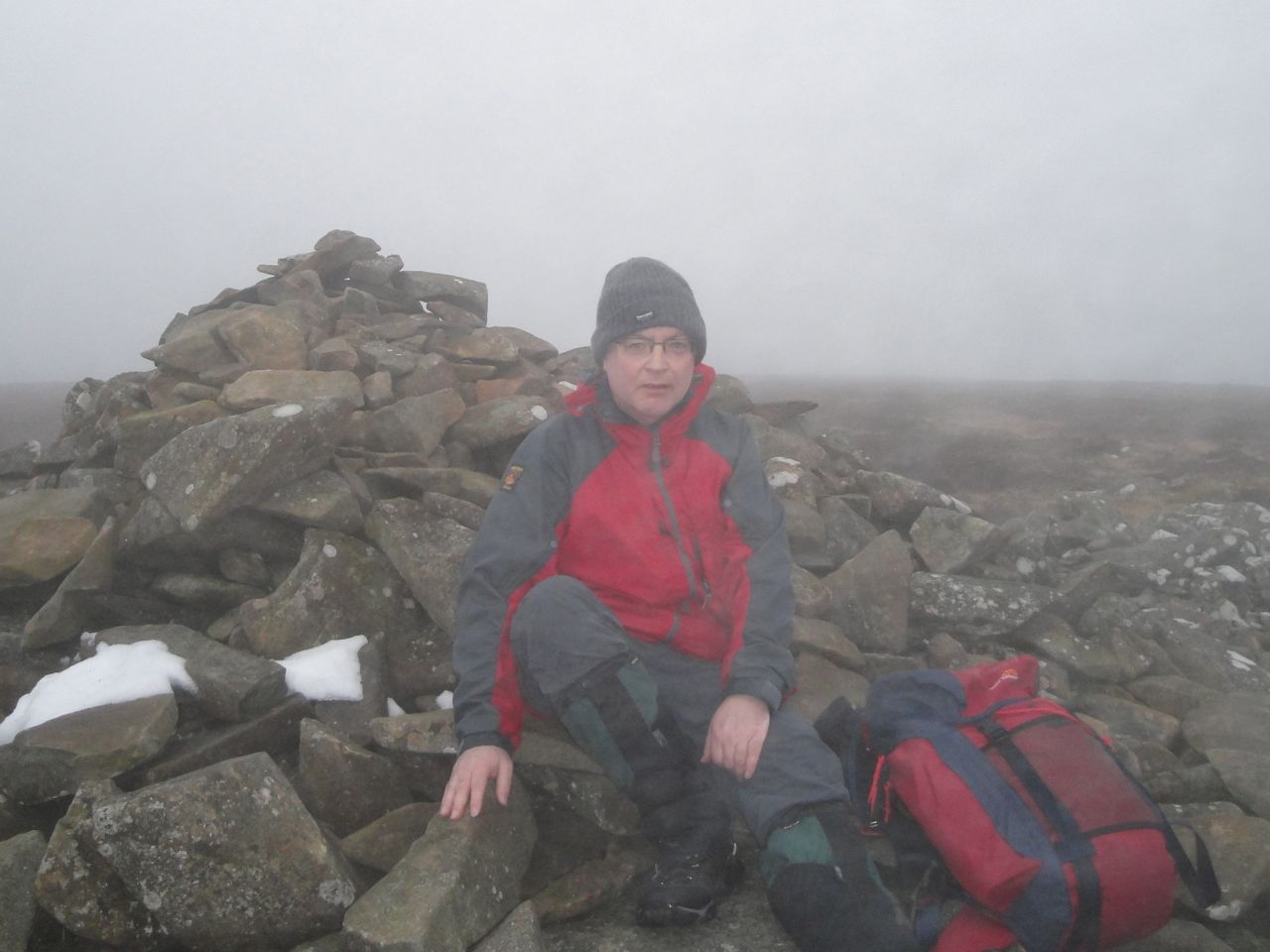
Cairngarroch summit (sunhat deployed)

Cairngarroch’s summit is rocky outcrops and small lochans, and though boggy in places was much easier than the slopes and the faint breeze seemed enough to keep the orbiting insect numbers down. There were great views of the Galloway Hills and I spent some of my rest time looking at the The Dungeon Hills granite bright in the sunshine, the numerous small lochs and the mass of Curleywee. Millfore looked impressively large and, unlike most Donalds, has a pointed top.

I did wonder if another outcrop, by a lochan, was higher than the cairn and made my way over to check it out. It might have been higher, but it was far from certain and there was certainly not much in it.

Millfore and Buckdass of Cairnbaber from Cairngarroch

Millfore and Buckdass of Cairnbaber from Cairngarroch

The low ground between Cairngarroch and Cairnbaber is the Nick of the Rushes, so you can guess that it has boggy sections. Cairngarroch certainly lives up to its name, Carn Garrogh, Rough Hill, on the slope down to the col, with wild moorland vegetation between rocky outcrops. Half way up Cairnbaber there was a faint track which led to a stile over an old fence but petered out a little way past the fence. I presume that walkers choose their own course across the col but once they see the stile they all head for it. I am surprised that someone had put a stile there but I suppose it protects the fence.

The ridge of Cairnbaber (the Buckdass of Cairnbaber) is rocky knolls separated by boggy ground so I stuck to higher ground where I could, but there were often rocks to use as stepping stones in the boggy areas.

The final pull up to Millfore looked steep but was not too bad once I got there.

Galloway Hills from Millfore

Galloway Hills from Millfore

White Lochan of Drigmorn

White Lochan of Drigmorn

My last visit to Millfore had been in quite different conditions. The cloud had been low enough to limit the views and it had begun snowing while I was at the top. I had no trouble believing the derivation of its name as Meall Fuar (Cold Hill), but having seen how impressive Millfore looks from either Cairngarroch or the glen, I am inclined to give more weight to Meall Mhor (pronounced vore) meaning Great Hill. Cairngarroch certainly lives up to its name as a rough hill. Cairnbaber, I can’t find a meaning for, though the Buckdass is the “ledge of the buck”. Older maps have Cairnbaber as Garnbabbyir or Carnbabyirt, which hasn’t really helped me much. Cairn is obviously hill and I wonder having looked up at Cairnbaber from the glen, if the “baber” might have been bábhan, rampart. That would be a true description of the hill as looking like a rampart and it’s top a ledge with bucks. That would be a mixture of Gaelic and Norse but it wouldn’t be the first hill with a name of mixed parentage.

Fuffock from Millfore's SW top

Fuffock from Millfore’s SW top

From Millfore’s southwest top I contoured around Millfore, over the flat section of Kirkloch Rig, and down towards a break in the trees below Munwhul. I took a photo of the slope down to the track but it didn’t capture the reality. The uneven, hole ridden, tussocks interspersed with frictionless ground look more like a sloping bowling green.

I had managed to get as far as the trees without wet feet but all good things come to an end. The low ground was tussocks growing from water and despite great care a stepped in one space that proved deeper than expected.

A forestry track led from there back to the car, and was downhill all the way.

Buckdass of Cairnbaber

Buckdass of Cairnbaber


[osmap gpx=”http://www.screel.co.uk/walks/wp-content/uploads/2013/07/RK_gpx-_2013-07-08_1005.gpx”]


Posted in Dumfries & Galloway | Tagged | Comments Off on The Buckdass of Cairnbaber

White Coomb from Talla

9.7 miles   5h 25m   ascent 681m

Gameshope Linn-2


Carlavin Hill-Molls Cleuch Dod-Firthhope Rig-White Coomb-Great Hill

I could say that I had previously approached White Coomb from Carrifran Gans and from the Grey Mare’s Tail, wanted to try this way, but in truth White Coomb was an afterthought. Carlavin Hill and Great Hill were the actual targets, my final and penultimate Donald Tops.

The weather forecast was excellent, summarised my Mrs M as “scorchio“, and I arrived at Talla in warm morning sunshine, and with my first section of climb was in cooling shade. Perfect.

I walked up the road towards Megget with, according to the road sign, its 20% gradient, until the slopes of Carlavin Hill eased a little and then headed up the slope. This was just about half way to the bridge, above where the trees began down in Talla Water’s Cleuch.

Talla from the northern slope of Carlavin Hill

Talla from the northern slope of Carlavin Hill

This slope was grassy steps with scattered rocky outcrops. Some short sections were steep enough to allow hand use without bending but nothing really worrying. Once the the crags gave way to the grassy plateau, the gradient eased and was much easier on the legs and lungs.

Carlavin Hill summit

Carlavin Hill summit, Broad law in the background

Carlavin Hill had a small cairn and the stone wall running along to Molls Cleuch Dod ensured there was always somewhere to sit during rehydration breaks. Throughout the walk there were great views of the Moffat hills and the southern Manor Hills. At Molls Cleuch Dod there is a small cairn about 50m from the wall and a larger one by the wall. There is also a small hollow by the wall that would be a useful shelter when it is windy. The wind had in fact picked up enough to force me to put on a jacket but not enough to take to the hollow.

I followed the wall up to Firthybrig Head and then along to Donalds Cleuch Head, Firthhope Rig and White Coomb. You could easily miss Donalds Cleuch Head, the gradients being so mild, if not for the fence posts heading off towards Great Hill. The wind was blowing directly in my face as I walked the southwesterly part of this dog-leg, and the wind was aware of my thoughts. Just as I was thinking that the wind required increased effort but was not impeding my progress, I was struck by a sudden strong gust that stopped me in my tracks. Luckily it didn’t happen again.

Lochcraig Head from White Coomb

Lochcraig Head from White Coomb

Saddle Yoke, from the col below White Coomb

Saddle Yoke, from the col below White Coomb

From White Coomb I mad my way back to Donalds Cleuch Head and had a break for lunch. One Donald top to go, just 1km of grassy upland away.

Col before Great Hill

Col before Great Hill

Great Hill itself is not spectacular, though it is a good viewpoint for the surrounding hills. The summit is flat with a couple of areas which could be the highest point. The one I thought most likely had a couple of stones and a jaw bone pressed into the ground.

Atop Great Hill

Atop Great Hill, by the fence posts. The summit is behind me

From Great Hill I made for the junction of Donalds Cleuch and the Gameshope Burn. This was not visible from the summit so I headed for the Aerial on Broad Law, visible above the col between Carlavin Hill and Molls Cleuch Dod. There were erratics on the slope which would be good for sitting on if this route was used for ascent. They were also useful for sitting the camera on.

Gameshope Glen, the lower slopes of Great Hill

Gameshope Glen, the lower slopes of Great Hill

The burns were relatively low so finding a place to cross was easy. The banks were however still quite boggy in places.

Up until this point the boggy sections were almost dry and the mud had dried with cracks. Not so by the Gameshope Burn where a bonny burn became a boggy burn. In one section, by an old sheep shieling I sank deep into red mud and had to clamber to higher ground to find shallower bog. Water running out from the scree was a deep red colour.

Gameshope Linn

Gameshope Linn

The Gameshope glen is well worth a visit with its steep sides, scree slopes, rocky outcrops, waterfalls and pools. Having just emerged from the mud and reached the rocky, and dry, track at the bothy I met a family in white trainers and advised against heading further up the valley.

Gameshope Bothy

Gameshope Bothy

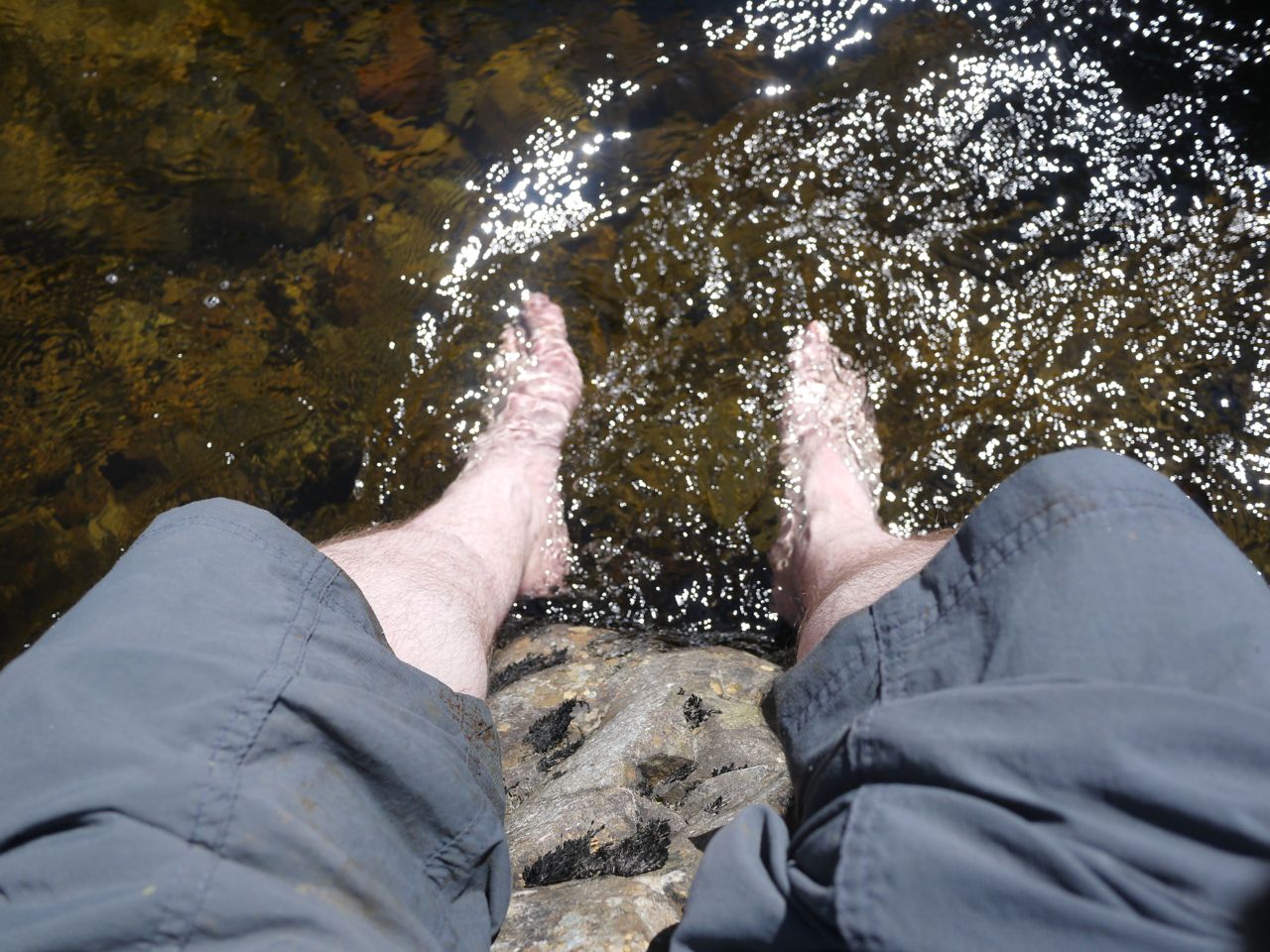
The Gameshope Burn has several small waterfalls and gorges so I decided to treat myself to some water therapy. I found a smooth rock to sit on, took off my boots and socks and soaked my feet in the chilled water. looking about I could see that the water level would at times be higher than where my head was. I can see how this burn washed away its bridges.

Further downstream, a family was swimming in a rock pool. It looked wonderful, but they must have been a hardy bunch, my feet were almost numb in the water.

Resting in Gameshope Linn. A knotted hank would have completed the look.

Resting in Gameshope Linn. A knotted hank would have completed the look.

.


[osmap gpx=”http://www.screel.co.uk/walks/wp-content/uploads/2013/07/RK_gpx-_2013-07-06_0921.gpx”]


Posted in Borders | Tagged , | Comments Off on White Coomb from Talla

Blackhouse Heights

7.2 miles  3h 40m  ascent 521m

Cottton grass on White Cleuch HillLanghaugh Hill-Waddyside Rig-Black Cleuch Hill-White Cleuch Hill-Black Law-Sting Rig

Back to the Manor Glen once more, I parked opposite the mysterious doorway in Langhaugh Hill that may look like the entrance to the Hall of the Mountain King but is actually an access portal for the Megget-Manor aqueduct. This is provided with a handy bridge over the Manor Water. I had planned walking along to the stand of trees about 300m away before heading onto Langhaugh Hill, but the slopes weren’t particularly daunting so I just headed directly up. There were in fact animal tracks through the ferns and it was easy enough to avoid most of the scree.

Speak friend and enter

Speak friend and enter

On the way up I passed a couple of cairns, at about 470m and 5oom, and can’t think why they were there. A little beyond the top of Langhaugh Hill I picked up a faint track that I  followed up Waddyside Rig. I call it a track but it was really a gap in the heather where grass fought with sphagnum moss for supremacy. The grass was losing the battle and several sections required diversions around some particularly boggy areas. The track ran below the top of the ridge and by the looks of it contoured round onto Black Law. Since it did not turn towards Black Cleuch Hill, I left it to join the dilapidated fence to Black Cleuch Hill.

Bogs on Waddyside Rig

Bogs on Waddyside Rig

The going in this section was harder. The heather was deep, the mosses particularly sodden and the route littered with water filled ditches. It looks as if this had been triggered by vehicles on the fragile peat, but I can’t imagine anything other than tracked vehicles being able to move there. This was to be the terrain for many sections of the walk, not particularly difficult but extra work for the legs. I was surprised by the profusion of cloudberry and was at times walking over huge mats of green leaves amid the heather.

Cloudberry

Cloudberry

Black Cleuch Hill, my main target for the day, did not have a definite top so I did my usual wandering about visiting areas that looked higher until I got there and looked back. If I’m ever found collapsed on a hill, the forensics people will review my GPS log and think I had just lost my mind. It would show me walking directly up a hill and then wandering about apparently aimlessly at the top. Amongst the boggy moorland there was not a firm seat to be had for a break so I set off to White Cleuch Hill following the line of the fence where the ground allowed. Coming back I did try the other side of the fence hoping it would be less soggy but neither side was better than the other.

White Cleuch Hill and Glenrath Hills

White Cleuch Hill and Glenrath Hills

White Cleuch Hill gave me another look at the Glenrath hills that I’d walked a few weeks earlier, but the day wasn’t one for great views. The visibility was good enough to see the Eildon Hills twenty miles away but it was hazy and overcast turning the hills into silhouettes. By the time I was back to Black Cleuch Hill, Cramalt Craig’s summit was in cloud and Dollar Law soon followed.

Black Cleuch Hill

Black Cleuch Hill

The walk over to Black Law was easy enough, just 1km of heather, cloudberry and cotton grass and 50m of gentle climb. Shallow parallel trenches run up to Black Law and along to its SW top, and looking back they also ran back up to Black Cleuch Hill. Immediately adjacent to the fence and too straight to be natural my first thought was that they must be vehicle tracks but they were too deep and spaced wrongly. They look more like the furrows you see in forestry plantations.

Black Law, with furrows, from Black Cleuch Hill

Black Law, with furrows, from Black Cleuch Hill

Blackhouse Heights is sometimes given as an alternative name for Black Cleuch Hill but it is better thought of as comprising Black Cleuch Hill and Black Law’s two tops. The central top of these three is the highest at 698m. A gate stands near the summit and beside it lay a a large log that served well as a seat for lunch. I presume this was a substantial gate post, never used. It was certainly larger than needed for a fence post. The letters GPO 1909 were carved into it, but its condition was too good for it to have lain there for a century.

Moffat Hills from Black Law

Moffat Hills from Black Law

The trenches continued along to the SW top where I turned and headed down Sting Rig. Once over the hill’s convexity I could look down the rig and see a track though close up this was less easy to discern. The terrain and vegetation were not too bad though. I was caught out by a hidden hole which swallowed both of my legs to the knees so care was required. On the lower slopes, below a fence and gate I picked up a constructed path and followed that down to a shallow ford on the Linghope Burn.

Manor Glen from Sting Rig

Manor Glen from Sting Rig

There was then a short stretch across a meadow with butterflies dancing about and a wheatear flashing his white rump before I crossed the Manor Water on a wooden footbridge that has seen better days.


[osmap gpx=”http://www.screel.co.uk/walks/wp-content/uploads/2013/06/RK_gpx-_2013-06-29_0950.gpx”]


Posted in Borders | Tagged | Comments Off on Blackhouse Heights

Lowly Dugland

12.5 miles  5h 30m  611m ascent

Carsphairn Hills from Windy Standard

Trostan Hill-Windy Standard-Dugland

Dugland was No.133 on Percy Donald’s list of “two-thousand feet tops of the Scottish lowland uplands” but it has been struck from modern list now its height is reckoned to be 608m, and therefore below 2000 feet. That said, it still feels like a Donald to me and I wouldn’t feel I had completed the Donalds without including Dugland. And its only a wee hill after all.

Dugland and Trostan are admittedly awkward hills to reach, at least by Donald standards. They can be approached from the south (via Moorbrock, Cairnsmore of Carsphairn or the valley between them), the northeast (over Windy Standard) or the west (through Carsphairn forest) and I chose to walk from the west since I had not explored that area before.

From the A713 at Meadowhead there is a minor road that looks to have been the original A713. The OS map has a toll bridge marked on it but no toll is needed now.  A branch of the road heads off across moorland to the Water of Deugh and then runs alongside the river. It was a slow drive with many the lambs on the road, but at least there weren’t any potholes. Below Shalloch Rig there a gated bridge barred the way, and though the gate was not locked, it was shut, so I took the hint and left my car beside the road where there is room for a couple of cars.

Sign by Water of Deugh

Sign by Water of Deugh

A small information plaque by the bridge has details of the Water of Deugh Trail (which has waymarker posts) and I followed the trail as far as Moor. I needed waterproofs right from the start of this walk and though the rain was mostly light drizzle there were periods when it was heavy enough to keep the camera packed away.

The first mile and a half was alongside the Water of Deugh which was flowing quite energetically with the rains. Craignane, a hill standing above the forests, was soon visible and grew larger as I made my way. At Brownhill there is a footbridge and an inhabited house on the opposite bank. The road became a track.

Water of Deugh Trail marker, above Moor

Water of Deugh Trail marker, above Moor

The next footbridge was a little before the uninhabited buildings at Moor. Here the Water of Deugh Trail crossed the bridge but I continued on the track towards Craignane. The track here was less used with fir trees encroaching upon it. The spruce had new growth of a much brighter green than the old needles and the pines new red growth, giving the trees the appearance of Christmas trees with lights.

Pine with new growth

Pine with new growth

Spruce with new growth

Spruce with new growth

Below Craignane the path forked and I turned right and climbed steadily towards Polwhat Rig, the wind turbines coming into view ahead. There were a few deer about, and  two stood right next to the track, so well camouflaged that I didn’t notice them until they turned to run away.

I had intended leaving the track near a quarry to climb through the trees and onto the rig but the forest had been felled and it looked as though the climb through the remains of the trees would be difficult. My luck was in though. There was a track, not shown on the OS map, running across the col below Polwhat Rig at the Craigs of Dunool. This allowed me to avoid the felled forest and make my way up instead through sphagnum moss and blaeberry, aiming for the nearest wind turbine.

Cairnsmore of Carphairn from Polwhat Rig

Cairnsmore of Carphairn from Polwhat Rig

Once at the turbines I made use of the service roads and the steps of one turbine were my seat for a slightly early elevenses. I sat there in the rain musing on my summer attire of full waterproofs, multiple layers, wooly hat and gloves. The Southern Uplands summer collection.

The road to Trostan Hill dipped and climbed across a col but I had to leave it for a while to wander about the various candidates for Trostan’s highest point. Trostan Hill isn’t much to talk of but does have great views of Moorbrock and Cairnsmore of Carsphairn, even the Rhinns of Kells appeared out of the mist every now and then.

Cairnsmore of Carphairn from Trostan Hill summit

Cairnsmore of Carphairn from Trostan Hill summit

From Trostan I thought I might head onto Windy Standard since it was only half a mile away. The road has a large loop to the north so I left it to head directly up the hill. The ground was quite boggy in places but there were enough firm sections to pick a way through.

Windy Standard summit

Windy Standard summit

The last time I was on Windy Standard the going was tiring in snow but this time it was much easier reaching the summit. Unfortunately my arrival at the trig pillar was soon followed by a heavy rain shower so I didn’t hang about.

Dugland from Windy Standard

Dugland from Windy Standard

I then retraced my steps back to Polwhat Rig and on towards Dugland, sheltering in a small hollow beside the road for lunch. Back on the move I left the road by some rotting fence posts to climb up to the small cairn marking Dugland’s summit.

Southern Uplands Summer collection on Dugland summit

Southern Uplands Summer collection on Dugland summit

From Dugland I headed back down to the dilapidated fence. My plan was to follow the fence and continue along in the same direction when the fence turned. Had I continued on that line I suspect I would have rejoined the service road but I didn’t. It was becoming misty and I couldn’t see the expected road so I used a forest break instead. This meant that instead of an easy stroll along a road I found myself slipping down steep banks, tramping through boggy tussocks and fighting my way through dense branches. I was even fooled by a mirage of a path that convinced me to climb down 30m through steep boggy forest into what turned out to be Galloway jungle. I hadn’t brought the equipment required for that terrain, waders and a machete, so I was forced to climb back to the forest break.

Eventually I reached a quarry and a path back to the forestry tracks. I sat down on a wet rock, in the heavy rain, getting my breath back, too tired even for self pity but a rest, and a little food and drink worked wonders. That was the worst bit over, so I thought.

After 5 minutes the forestry track split, one branch contouring along Waterhead Hill, the other, which I took, heading down and running parallel but 50m lower. My plan was to take the third or fourth fire break down to Shalloch Burn, follow that to the Water of Deugh then north to the bridge where my car was parked.

Unfortunately, the forestry had felled the trees leaving a nightmare of mud, branches and bottomless pools. There was no sign of the ‘easier’ ground of the fire breaks. There was nothing for it but to look for a reasonable line and head across the harvested forest. Keeping close to stumps was helpful, the ground there being firmer and I managed to avoid falling despite several trips and slips. I was less lucky with the pools of water and got slightly wet feet. I am describing them as slightly wet now, though at the time I considered them to be very wet.

The line I had taken brought me down to the Water of Deugh about 400m south of the bridge where the car was parked. Had the river been lower and slower I would have been tempted to wade across and walk back up the road, but that was obviously not a safe option, so I headed along the bank. The ground was marshy but since I had wet feet I didn’t care so much.

The Shalloch Burn proved quite a problem though. It was full, and too deep to see the bottom. I walked upstream, though finding a way along the bank wasn’t easy, but I could not find anywhere for a dry crossing so I found a slow flowing section and lowered myself in to find how deep it was. It was knee deep so I waded across. Then I really had wet feet. The far bank, and that of the Water of Deugh proved slow going with steep slippery banks or dense undergrowth to choose from. Luckily I had a change of trousers in the car.

This could be a pleasant walk if not for the final couple of miles. It would probably be better to continue on the forestry tracks and cross the Water of Deugh at the next bridge, at Waterhead, an extra hour or so walking.


[osmap gpx=”http://www.screel.co.uk/walks/wp-content/uploads/2013/06/RK_gpx-_2013-06-15_0850.gpx”]


Posted in Ayrshire | Tagged | Comments Off on Lowly Dugland