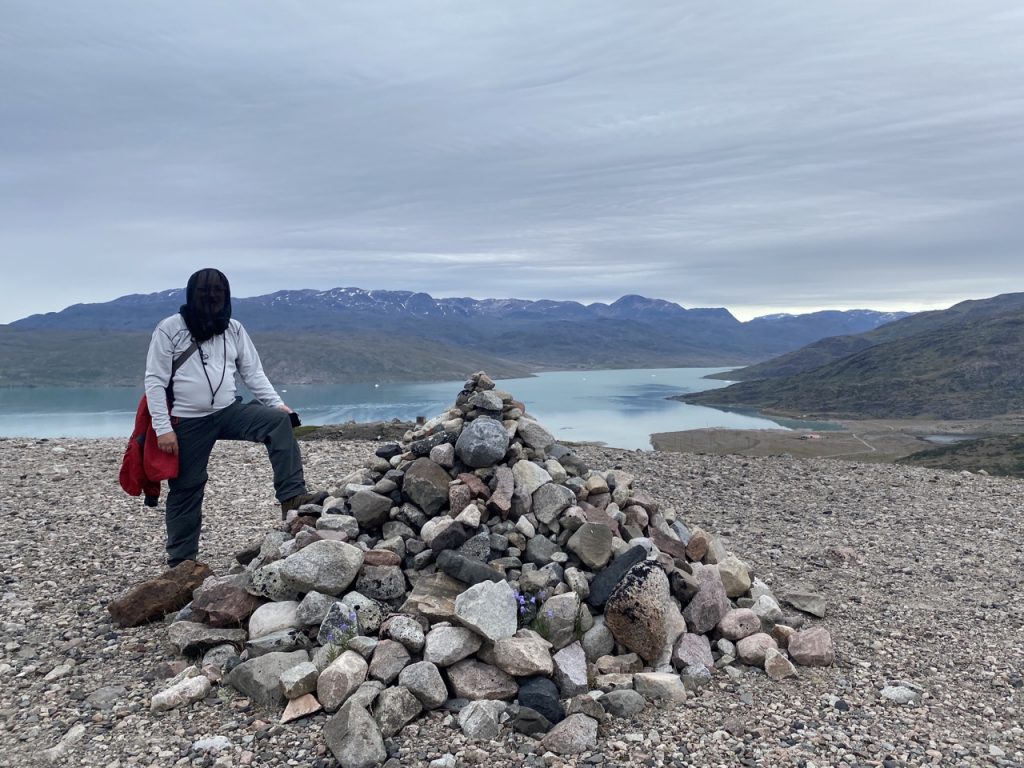
Breakfast: scrambled eggs, crispy bacon and mushrooms. View: an iceberg strewn fjord, on one side Erik the Red had established a Norse outpost in 986 AD, on the other, the US built airstrip at Narsarsuaq. A small aeroplane, a Cherokee or something like it, rose from the runway and climbed over us.
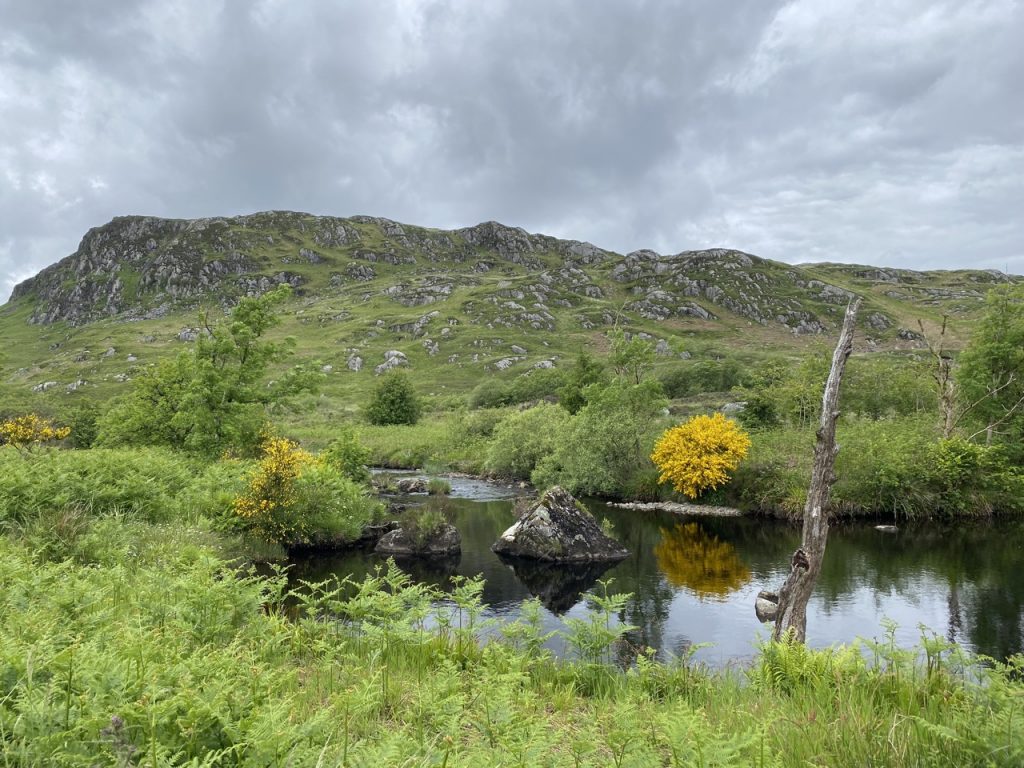
The Ordnance Survey shows a footpath between Polmaddy and Carsphairn. For more than 500 years it was part of the main route through the Glenkens to the south coast. It was once part of a network of routes across SW Scotland bringing pilgrims from Glasgow and Edinburgh to the cradle of christianity in Scotland at Whithorn. King James IV used the route to visit the shrine of Saint Ninian in the 1490s. But with construction of the turnpike (now the A713) the old route fell into disuse. With forestry planting and upland land improvements in modern times the path was beginning to disappear. Parts had become impassable. The Glenkens Pilgrims’ Way project spent three years rejuvenating the route and reopened it in 2020.
Glenkens Pilgrims Way
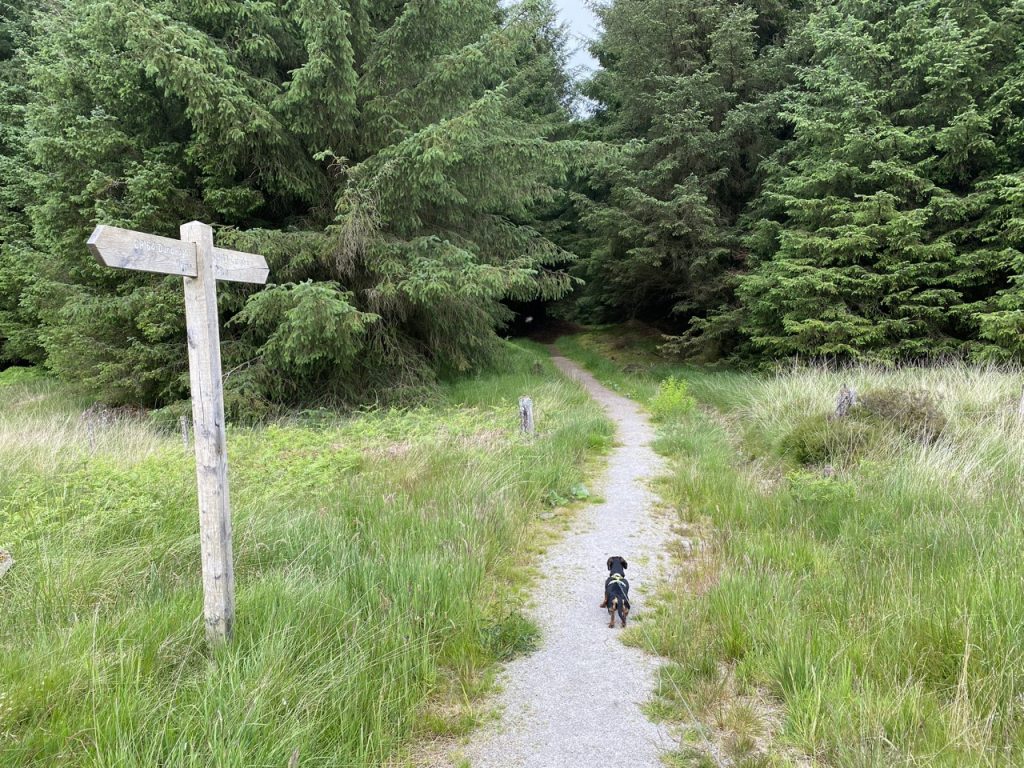
The Glenkens Pilgrims Way runs from the abandoned settlement at Polmaddy to the bridge just south of Carsphairn. Our plan was to visit the ruins at Polmaddy and walk the Way, there and back. Fallen trees meant the path proved a little more trying than it might have been. To be fair, the Forestry Commission website had said the path was closed by storm damage. We did manage to scramble over, climb under or find a way around the fallen trees but it slowed us down quite a bit and when we reached Bennan, the wee hill above Carsphairn, I decided to forego the final walk down the hill (and the enevitable re-ascent). So we turned back and retraced our steps.
“I was born on Sunday, the 22d of October 1775, (I ascertained these points in 1805,— I did not exactly know my age in 1794) and baptized a fortnight after, on Tuesday 7th November — stated in the register of baptisms to be the 27th, but the old style is understood, (in the register.) The place where my father then lived is called Dunkitterick, or commonly Kitterick; in Earse, Dun-cheatharaiach, — the know of the cattle. It is on the burn of Palneur, on the south side, about a quarter of a mile from the burn, and on a rivulet that flows from the high hills above on the south. The hills of Craigneildar, Milfore, and others, quite overshadow the spot, and hide it from the sun for three of the winter and spring months. The cottage has been in ruins for more than twenty years, as the farm is herded from the house of Tenotrie, the tenant of which holds both Tenotrie and Kitterick. This place, now laid open by a road, was, when my father lived there, in a completely wild glen, which was traversed by no strangers but smugglers.”
Alexander Murray, Manse of Urr, July 20, 1812.
Yet another Galloway Forest Walk. From the car park at the easily overlooked Brockloch Bridge, along to the Red Deer Range, up the forestry track to High Craigeazle, from where you can see the three Cairnsmores. Then the track and wee footpath to the ruins of Dunkitterick Cottage. An easy enough stroll but with 1000 feet of ascent.
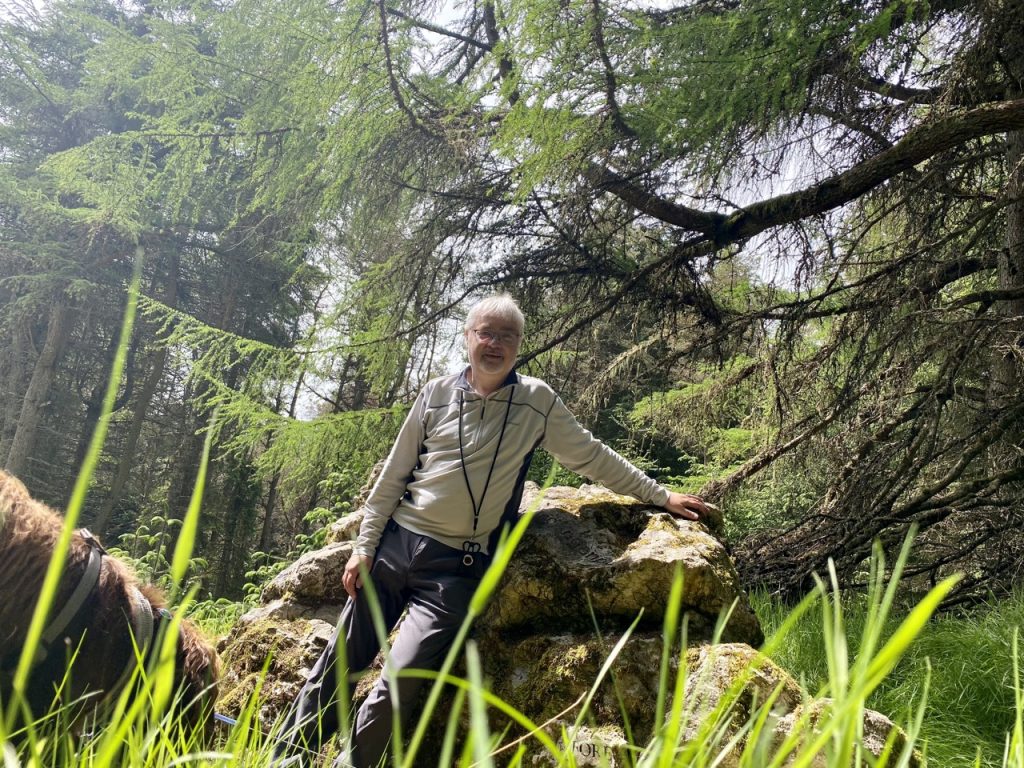
There are 7 stanes and, until today, I had visited only six: The Ghost Stane, The Heart Cleft Stane, The Gem Stane, The Giant Axe Head, The Talking Head Stane and the Border Stane. It was time to plod up to the Meteorite Stane and complete the set. So on a nice sunny day myself and the dogs set out for Glentress, a pretty drive marred somewhat by finding the B712 closed at Drumelzier (just for the one day!).
St Medan-Monreith-Myrton-Drumtroddan Stones (return)
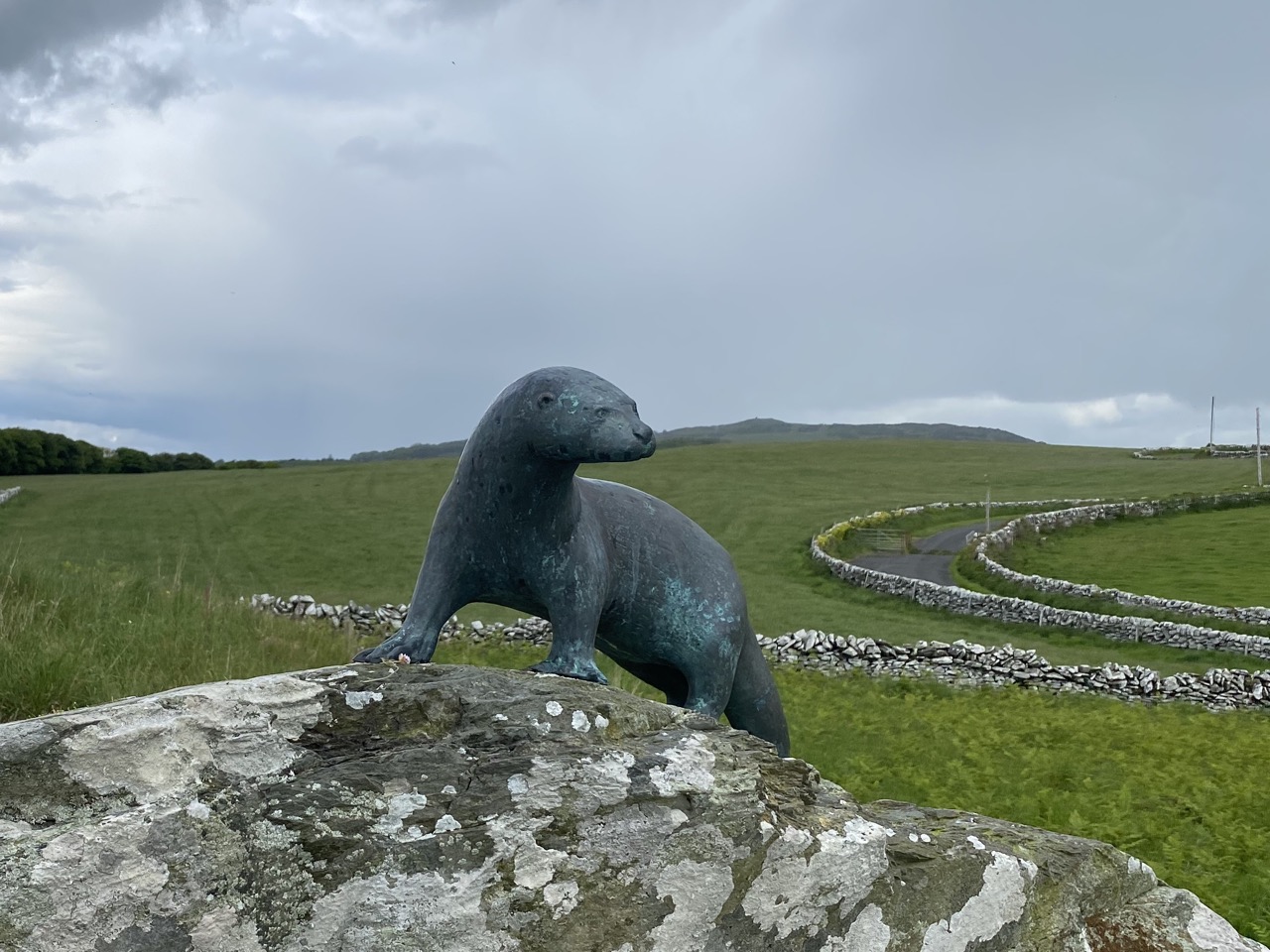
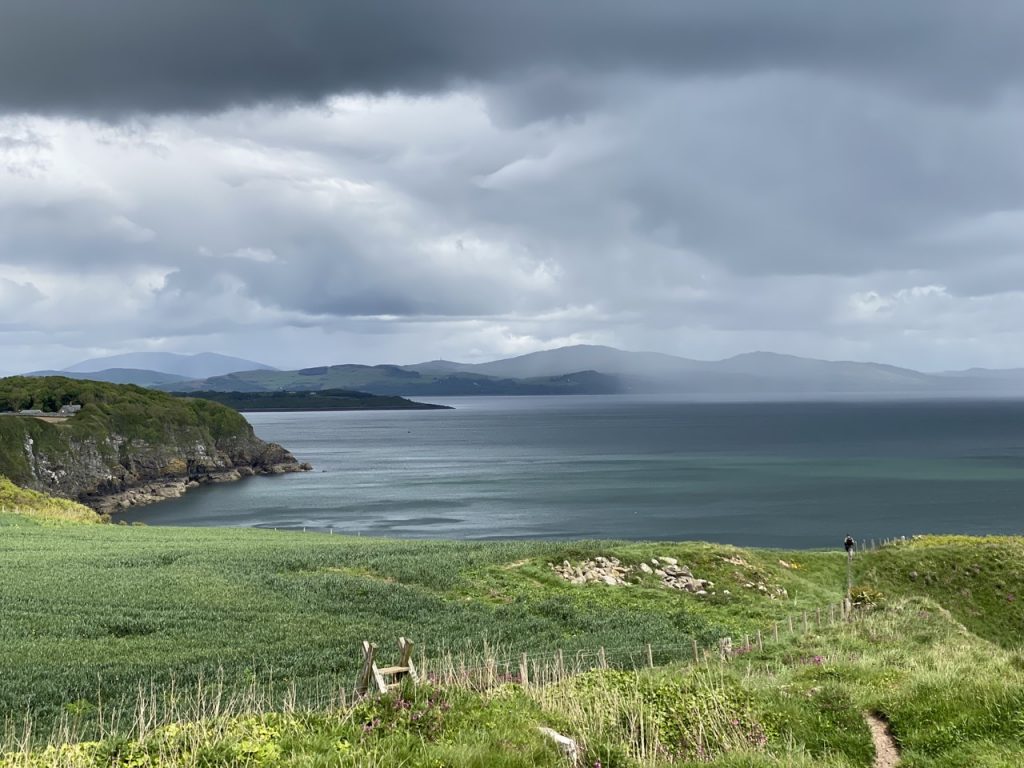
A bronze otter stands on the lichen covered rocks of Craigengour. His head is turned to look over the Lag promontory towards the Isle of Man, on the horizon. A memorial to the author of A Ring of Bright Water. The plaque reads “Gavin Maxwell, 1914-1969, author and naturalist. Haec loca puer amavit – vir celebravit.” These places the boy loved – the man celebrated.
Garlieston Harbour is the closest port in Scotland to the Isle of Man. A sign warns that this is a working harbour and I can understand why such a sign was needed. It was once a busy fishing port but now mostly used by leisure sailors and sea anglers. We saw only one vessel that might have been a commercial fishing boat and that was high and dry
I sat nursing the last vestiges of a hangover, warmed by the afternoon sun. The planned morning walk had not panned out. We had found the lakeside path closed. Three generations had succumbed to post lunch somnolence but I felt in need of a wee stroll. Half an hour would clear my head.
Our first Eden Way sortie of 2022, indisposition and inclement weather having delayed us. There was neither deluge nor drama and it was no great distance. But I cannot say it was painless. The first gate we encountered crushed my thumb in a malfunctioning fastening and a later one snagged my index finger. We only had light rain but the long grass had held onto the previous day’s rain and soaked our feet. The local custom seems to be to tie gates shut with nylon string which forced us to use stiles, many of which had been designed by Satan himself. In fact I think I can still hear his demonic cackling as I write this.