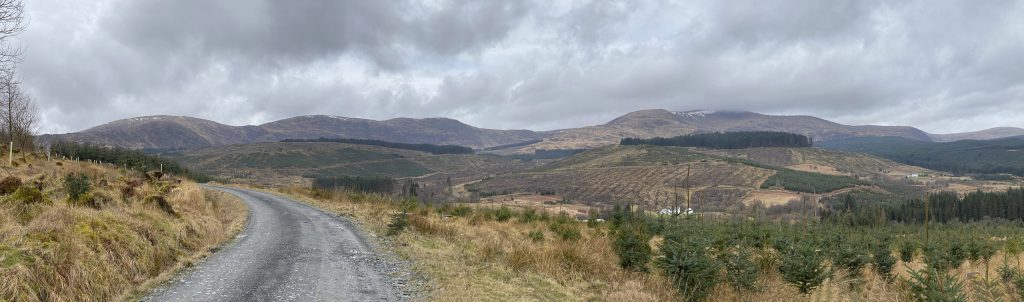
“Corse o’ Slakes, Cross of Rocky Hills – Slakes in Saxon meaning rocky hills or rocky brows. In Galloway there are no roads so wild as the one which leads over the celebrated pass of the above name between Cairnsmoor and Cairnhattie. It is a perfect Alpine pass, and was a haunt of Billy Marshall and his gang in days of yore.”
“The initial idea was to create 19 memorial sites throughout the UK (19 being the significant number relating to Covid 19). The sites will provide an eternal living memorial, a focal point, place of comfort and solace to those grieving for the loss of their loved ones. Places to relax, reflect and remember. I would like to ensure those friends, family members, acquaintances, we have lost are not in vain, they are not just a number or a statistic”.
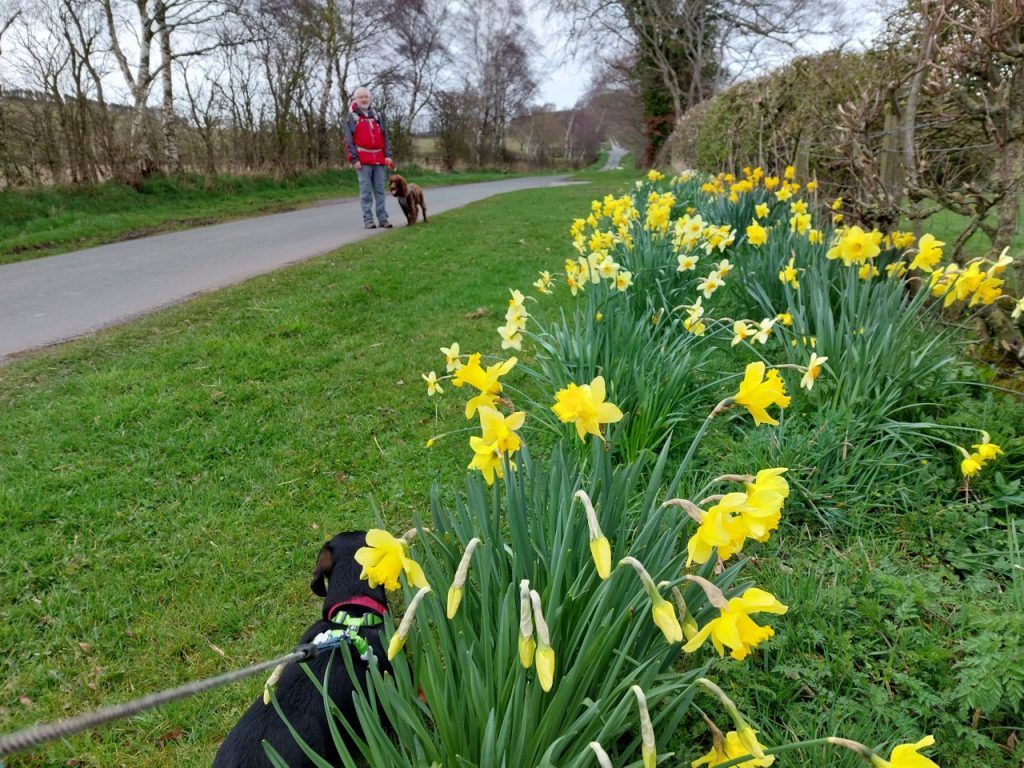
“The route will be approximately six miles long, meandering through several villages and will be marked by several areas of daffodil displays, memorial benches, and sculptures along the way. Whilst this is a stroll it is along country lanes, therefore, will be accessible on foot or by vehicle, and has public transport links at Low Hesket and Armathwaite. Daffodils are symbolic of the time of year when we started ‘Lock Down’ in March 2020. People were coming out of their houses to take their daily exercise along these lanes.” Belinda Fox and David Ryland, 2020.
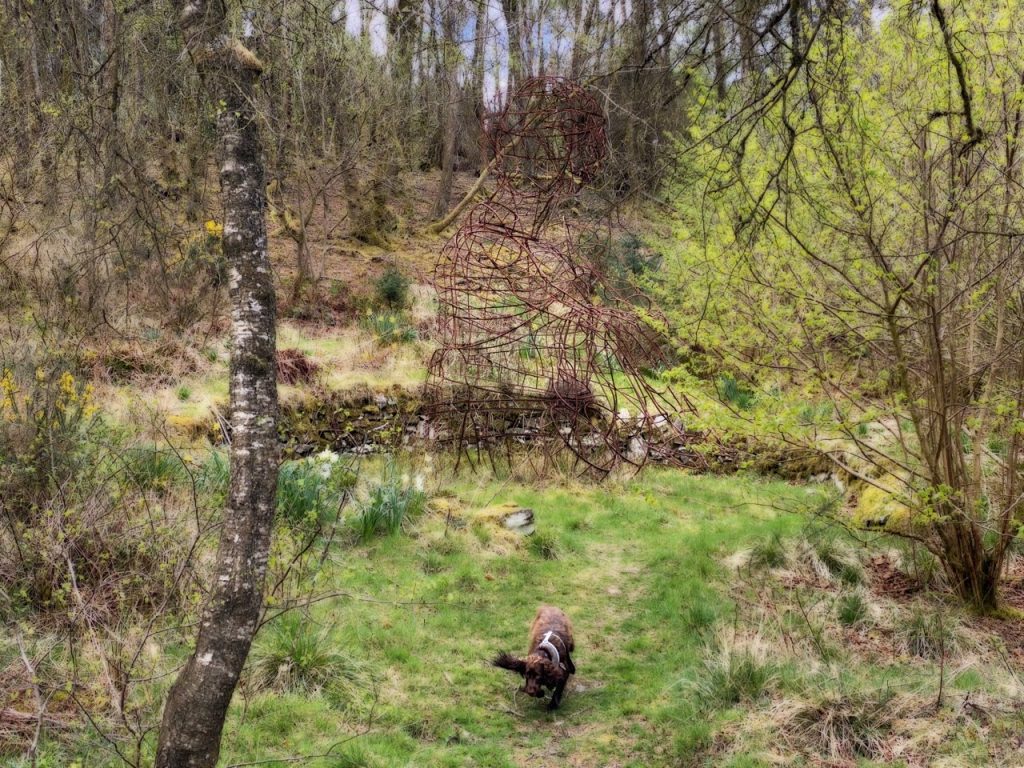
The memorial is still in its early stages. It certainly has plenty of daffodils of many varieties. There are several benches along the way, some dedicated to specific people, others embossed with “2000” and presumably dating back to the millennium celebrations. But no sculptures as yet. The route is mostly on quiet country lanes, with only short sections on the pavement of more major roads. There are local bridleways and pathways that might have been used instead of roads but I understand the aim was to have a route suitable for walkers, cyclists or even drivers.
This, the longest of our Forrest jaunts, was without doubt the most trying, though not due to the terrain, the weather or my map-reading. The day was warm and mostly dry. When it did rain, on the home stretch, it was light enough that the rain jacket stayed stowed. The day’s objective was Torrs, a wee hill south of the Polmaddy Burn.
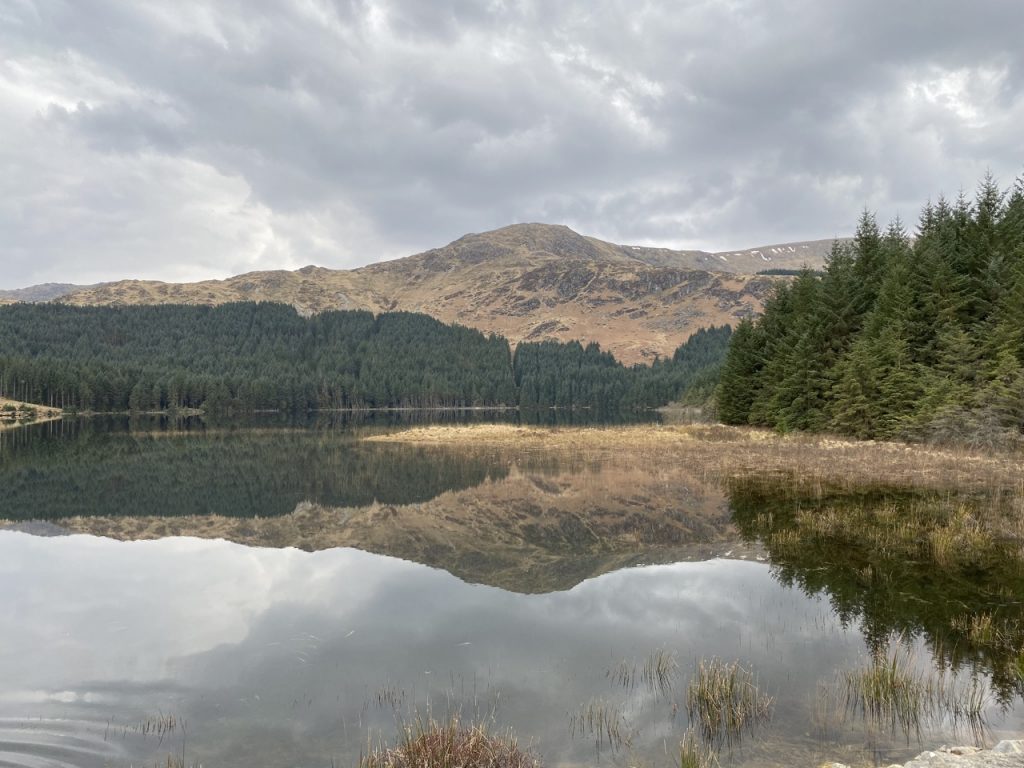
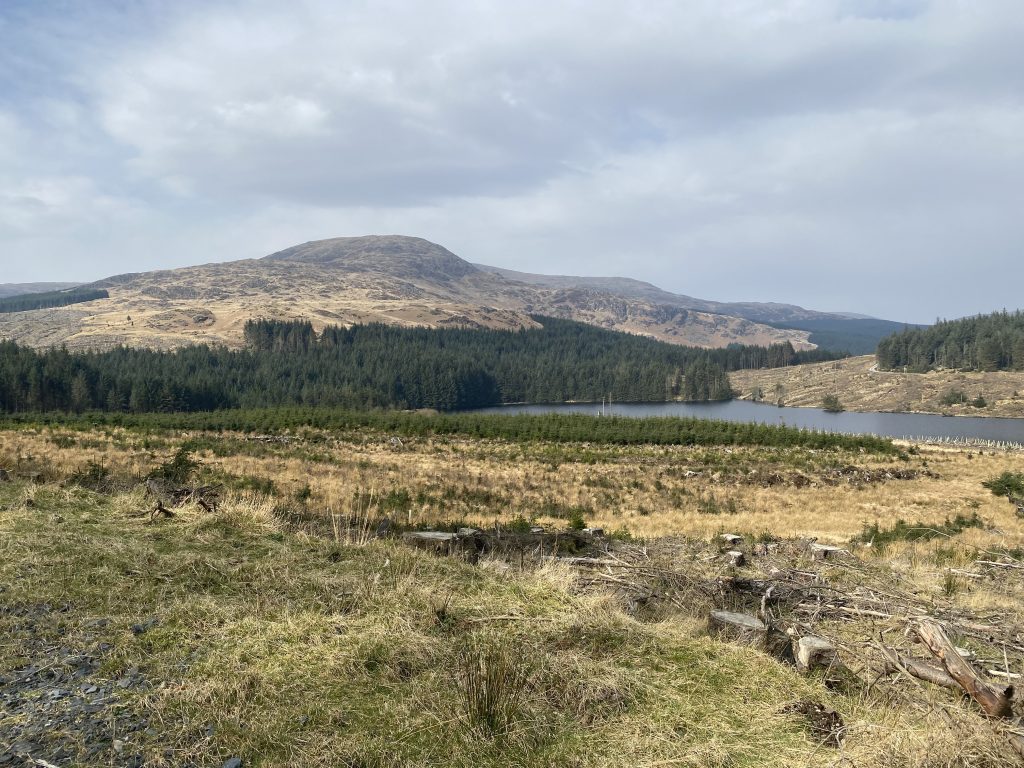
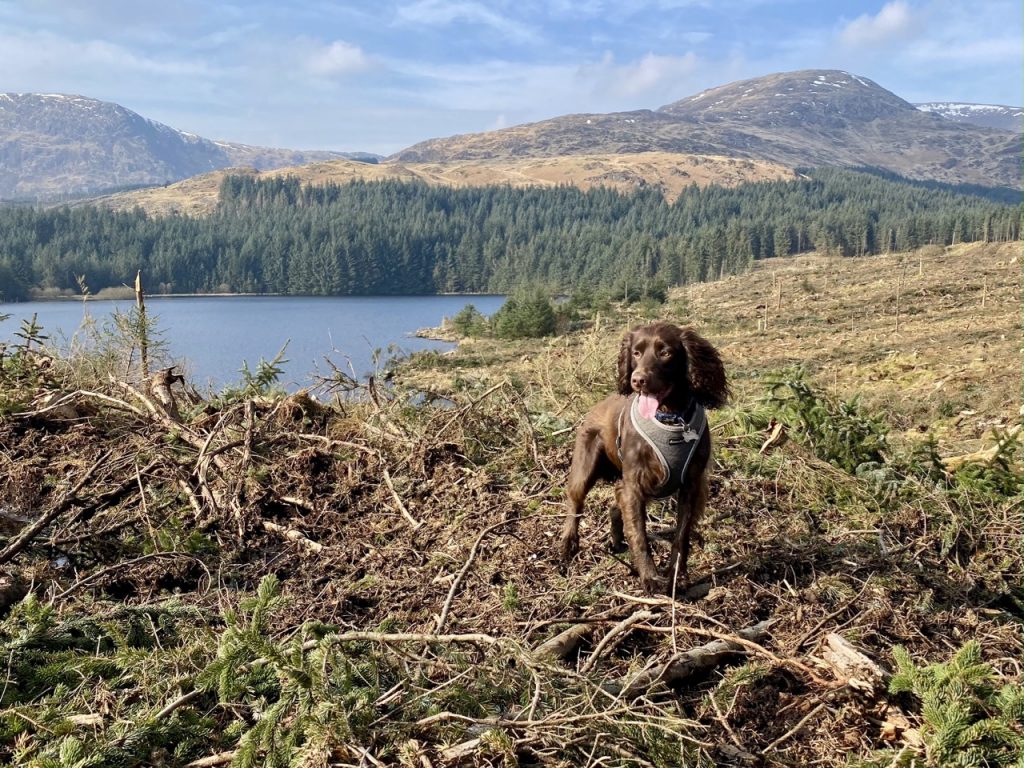
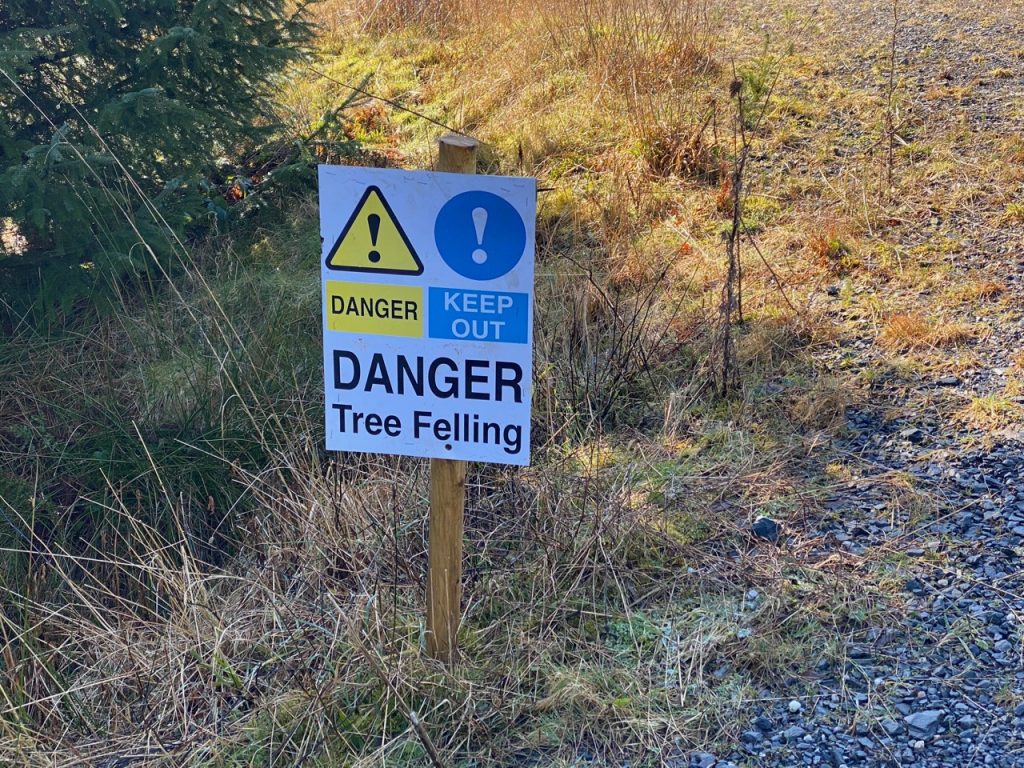
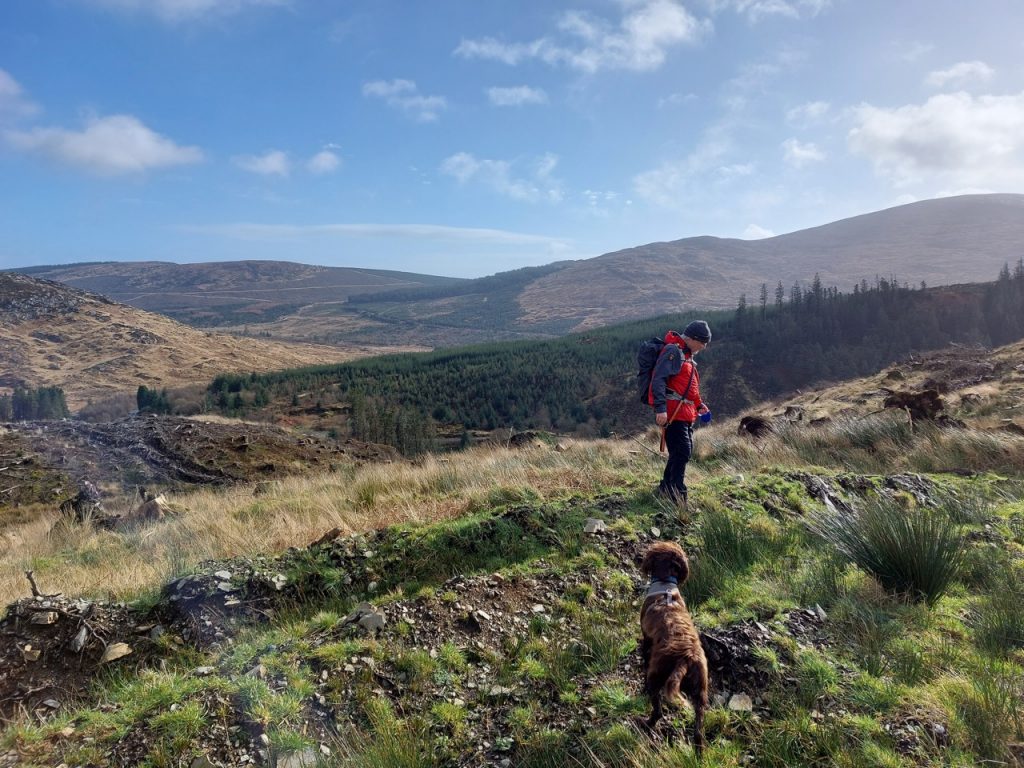
This outing was planned to visit the memorial that stands beneath Milldown, but we also took in Loch Dungeon and walked by Haggis Hawse and Loch Minnoch. The sun was out and Winter’s chills had relaxed into the warmth of Spring. When I had walked through the Forrest Estate a few years ago, in my Donalds phase, the forest was mature, the views limited and my mind had been on the hills ahead of me. Much of the forest has now been felled.
I mounted at the Water of Ken and had a monstrouse bad road to the Brig of Dee, and from thence to Minygaff. All the way is either full of precipices or rocks. The pass called the Sadle Loup is here about 4 miles from Minygaff. Nothing in the Alps is worse.