Woodhead Hill – an itch scratched

4.16 miles  1h 51m  ascent 262m

Woodhead Hill is my closest Marylin. I see it most days. That its name does not have a tick next to it has been an irritation for some time. This was the last weekend of the year and I was working until Sunday lunchtime. It was too late to go far, the weather had been wet, wet, wet, but I felt the need to get out in the fresh air. The time had come to conquer Woodhead Hill.

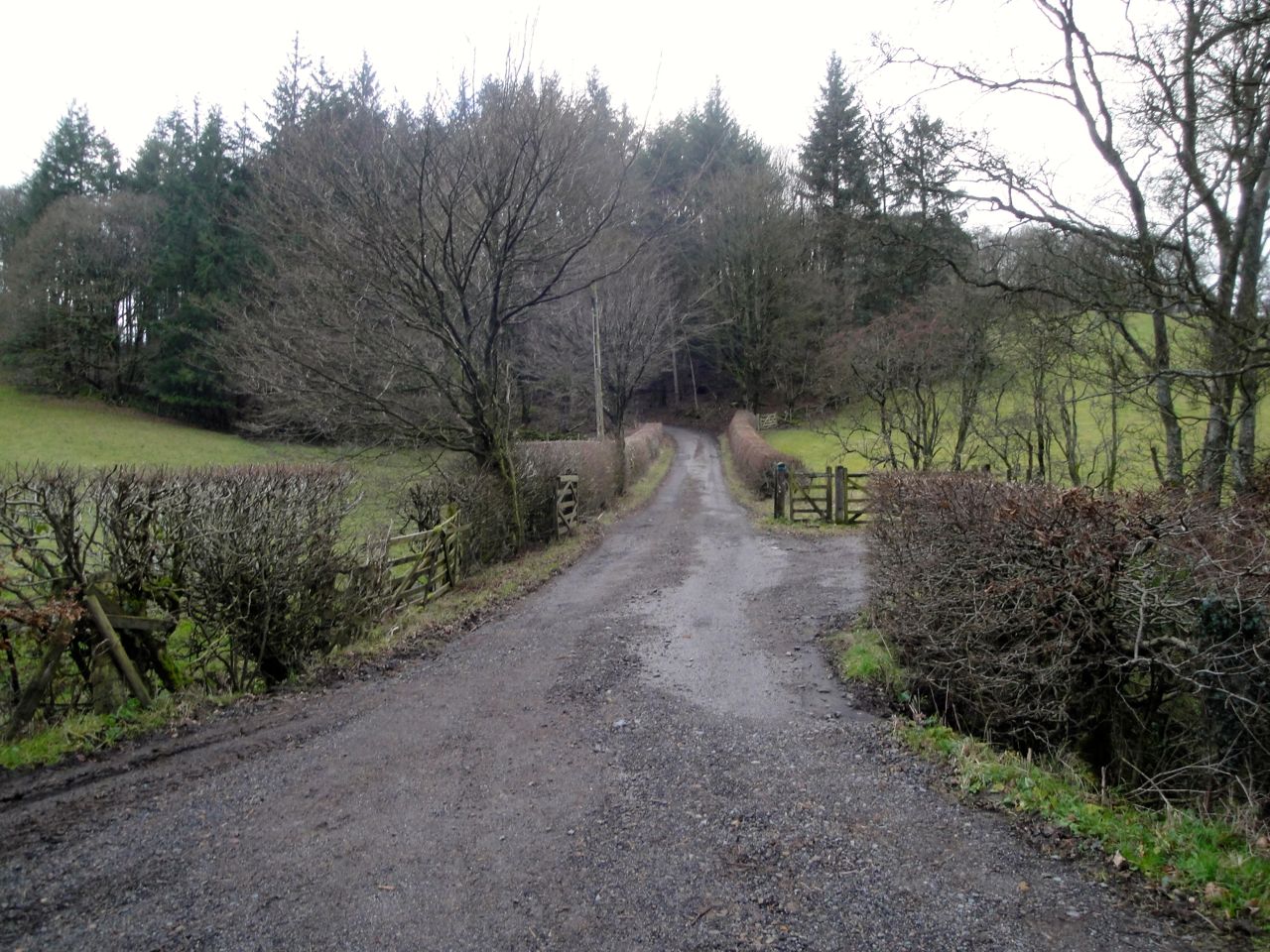
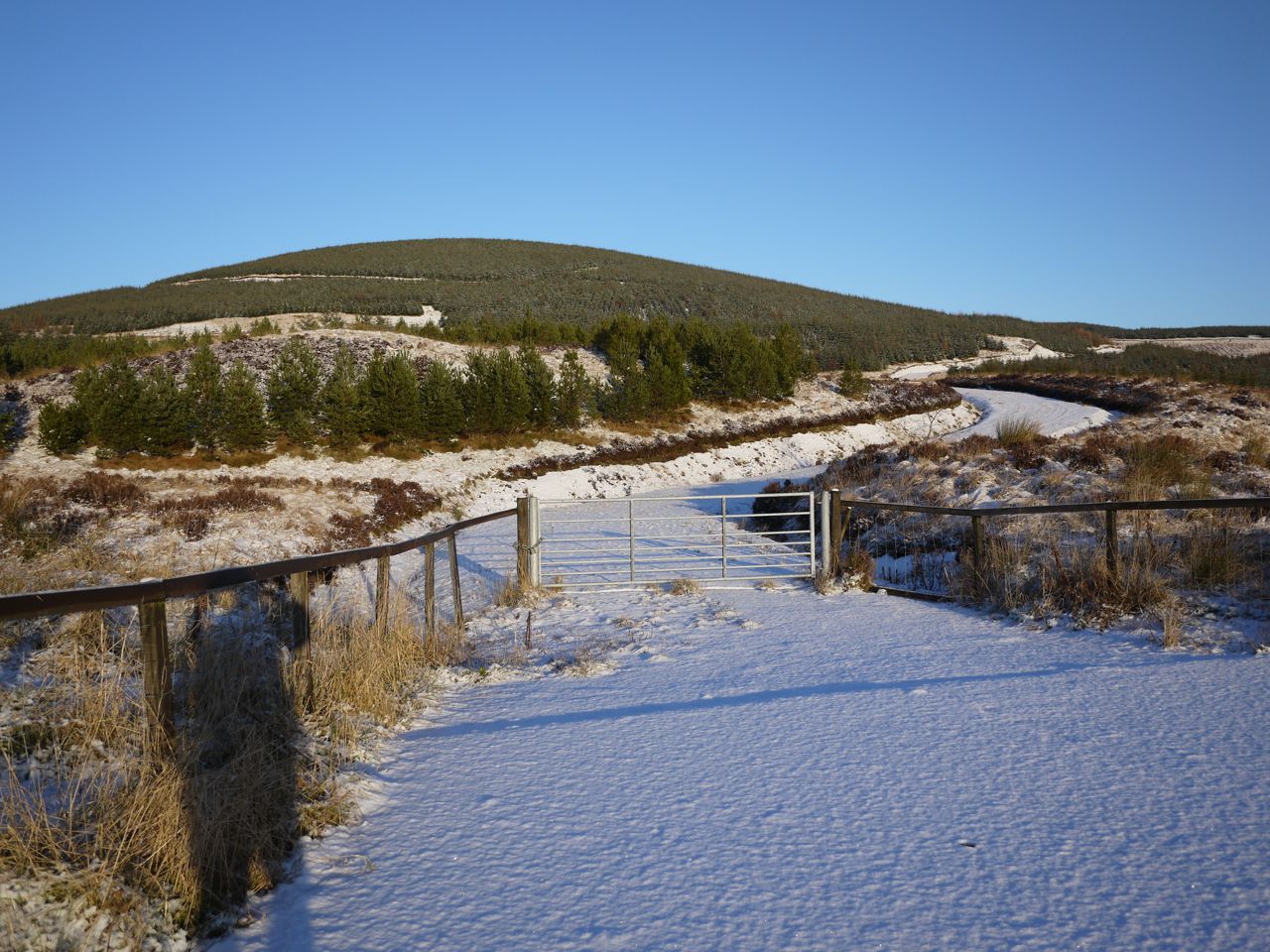
I parked in a lay-by on the A711, near Lochanhead, then walked up the authentically pot-holed farm track to the forestry track running around Mabie Forest. Here I turned right and after about 300m there is a moss covered wall running up the hill. Given the recent downpours I had expected, and dressed for, a mudfest but the ground was firm and well drained.

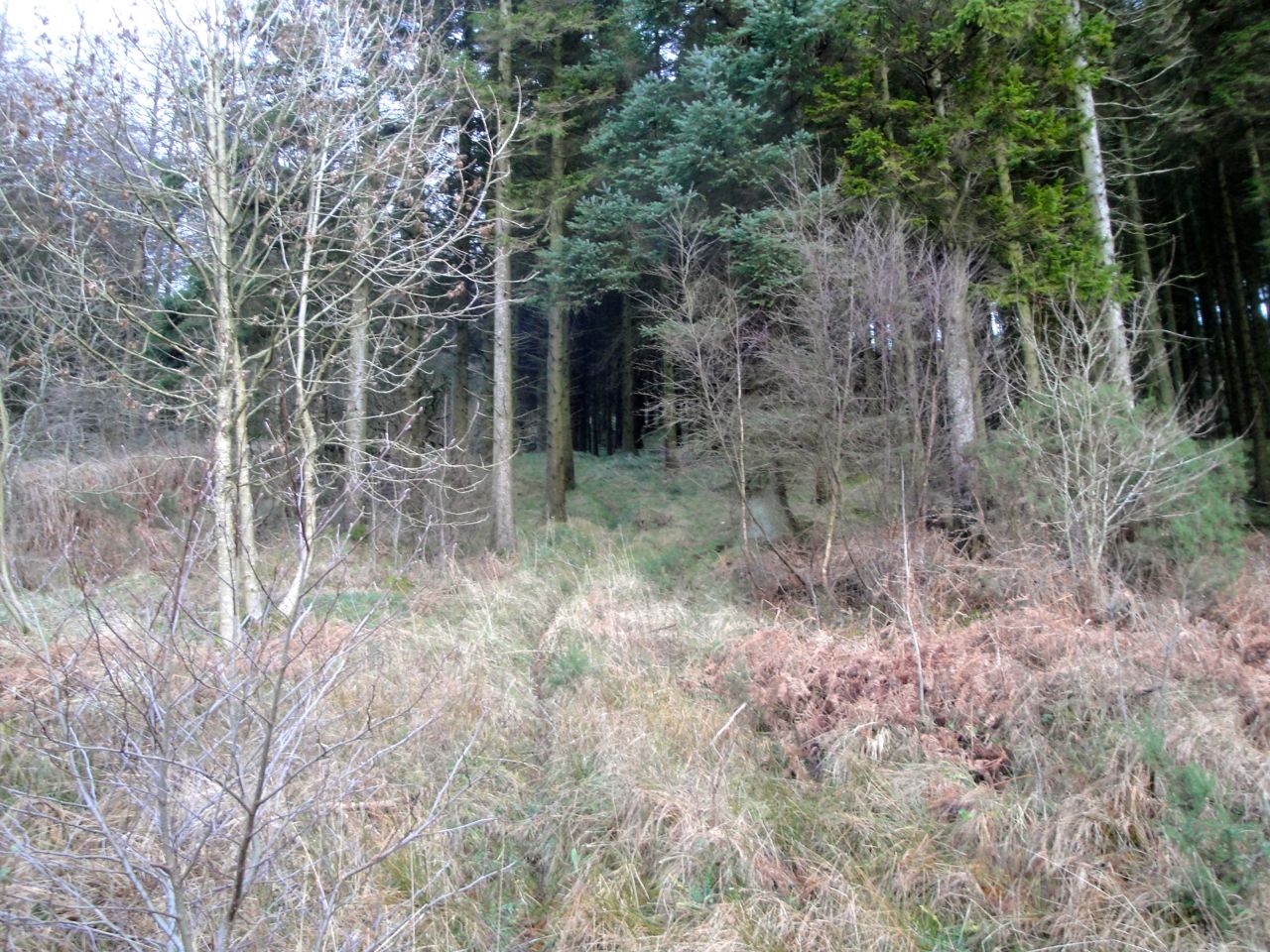
The way up through the trees. This is the view from the forest track and the wall is just on the left, visible to eyes but not camera

The initial steep section was easy going on an obvious faint track, but as the gradient eased the way was often blocked by fallen trees requiring  some zig-zagging since I had neglected to pack an axe. The plan was to follow this wall until I found the wall heading off to the right at the 215m contour. It was well camouflaged in moss but I was looking carefully and spotted it. It could be missed.

This new wall proved impossible to follow due to young trees so I struck off into some clear ground just to the left of the wall hoping to find a forest break heading in the right direction. I climbed a wee knoll to get a better view and noticed a track next to a wall. I presume this is the same wall I had tried to follow earlier.

Once on the track the going was easier under foot but navigation was a challenge since all that could be seen was forest. All was going well but then the track took a ninety degree left hand turn. Another track joined from the left after about 50m and one headed off to the right after another 50m. This was heading in the right direction so I turned right.

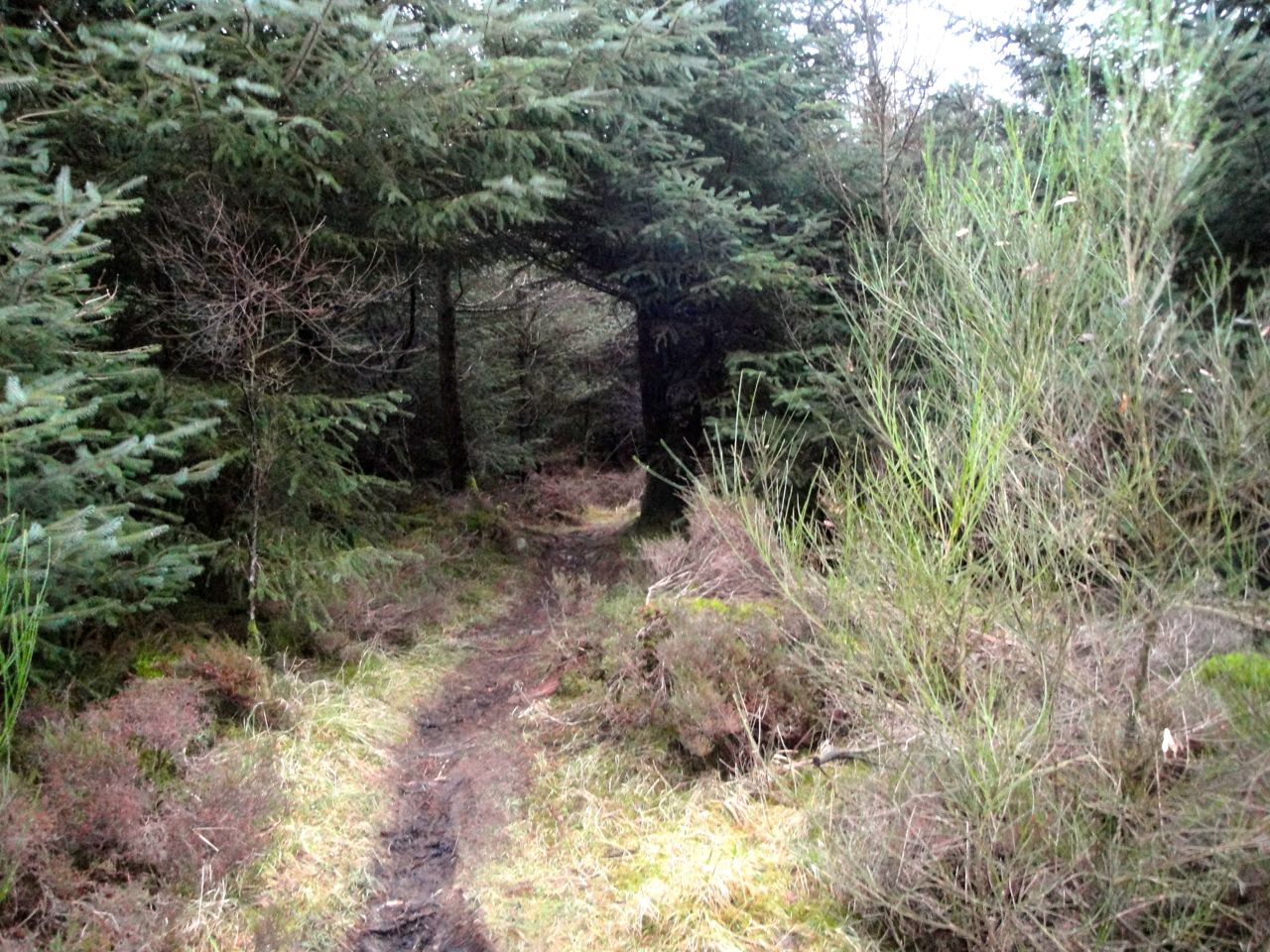
MTB track. This is the track that leads up to the summit, heading due south at this point.

The map contours suggest it should be up hill from here but there is some up and down. At first I thought I had missed the summit as the track went downhill but I pressed on and eventually it started climbing again.

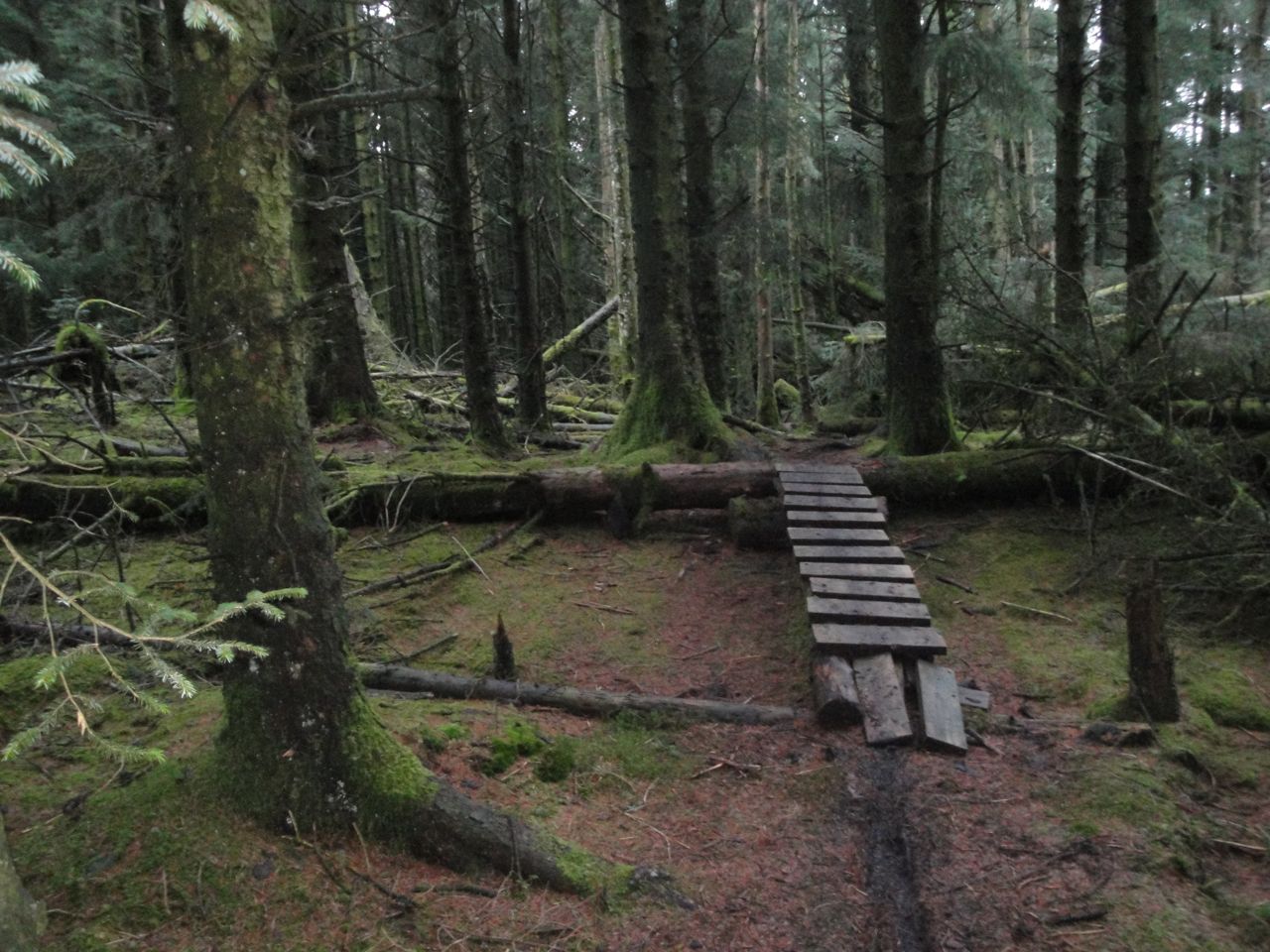
Eventually I reached a place a wooden ramp over a fallen tree, where the track was reasonably straight, and it looked to be the highest point. I had read that the summit is just off an MTB track and is marked by a small cairn. No sign of the cairn though.

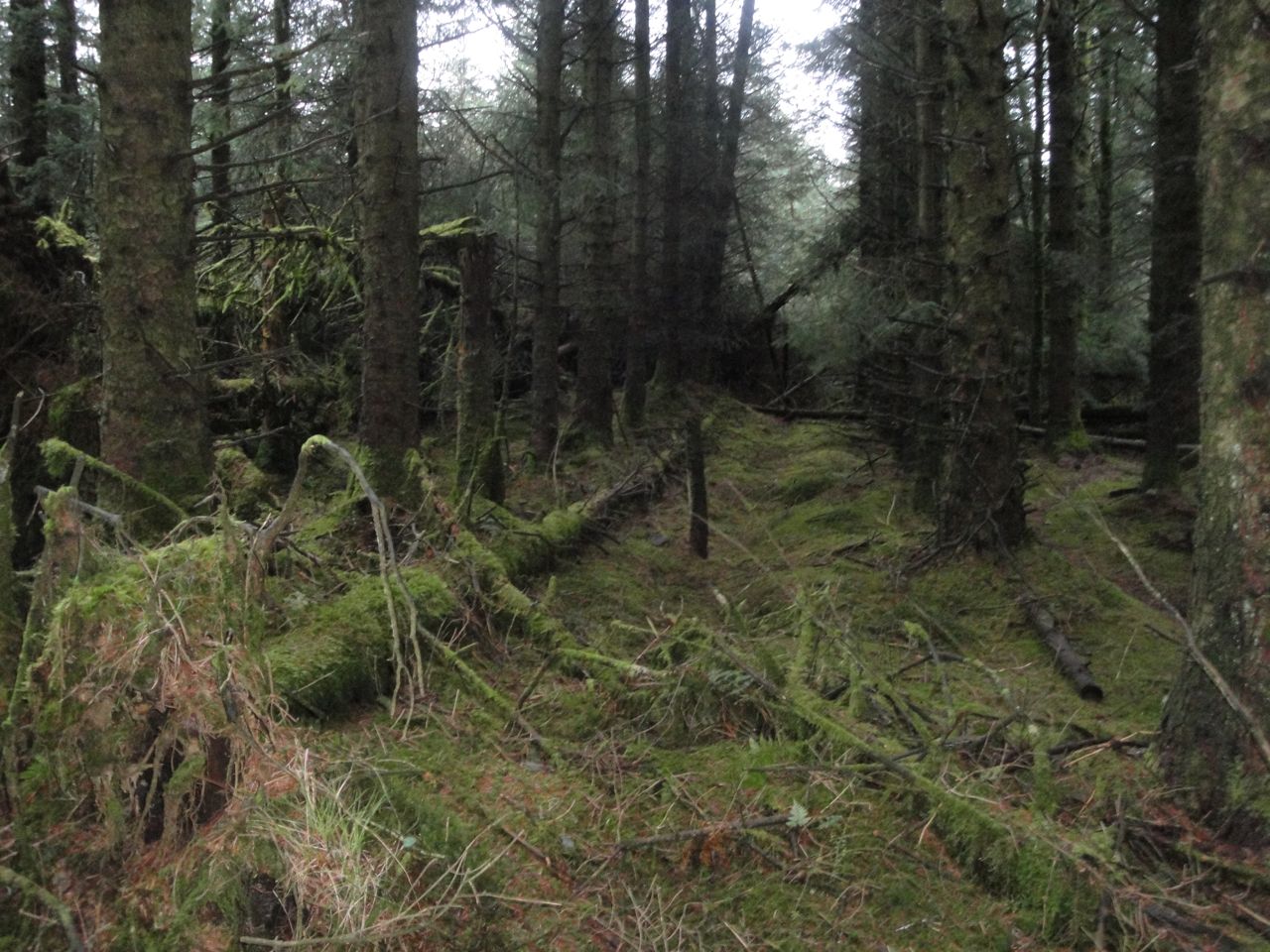
Near the summit

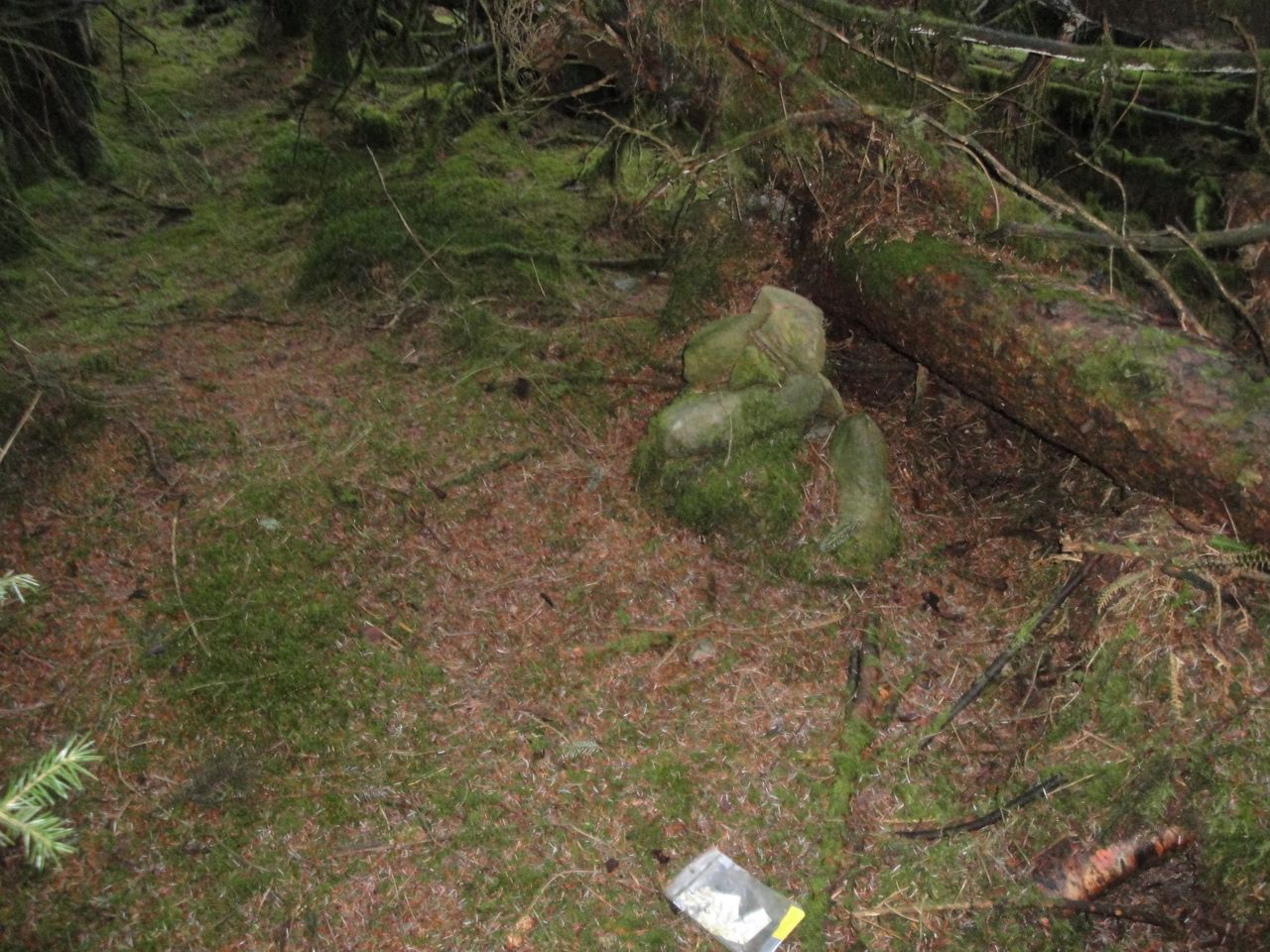
The summit cairn is just over there

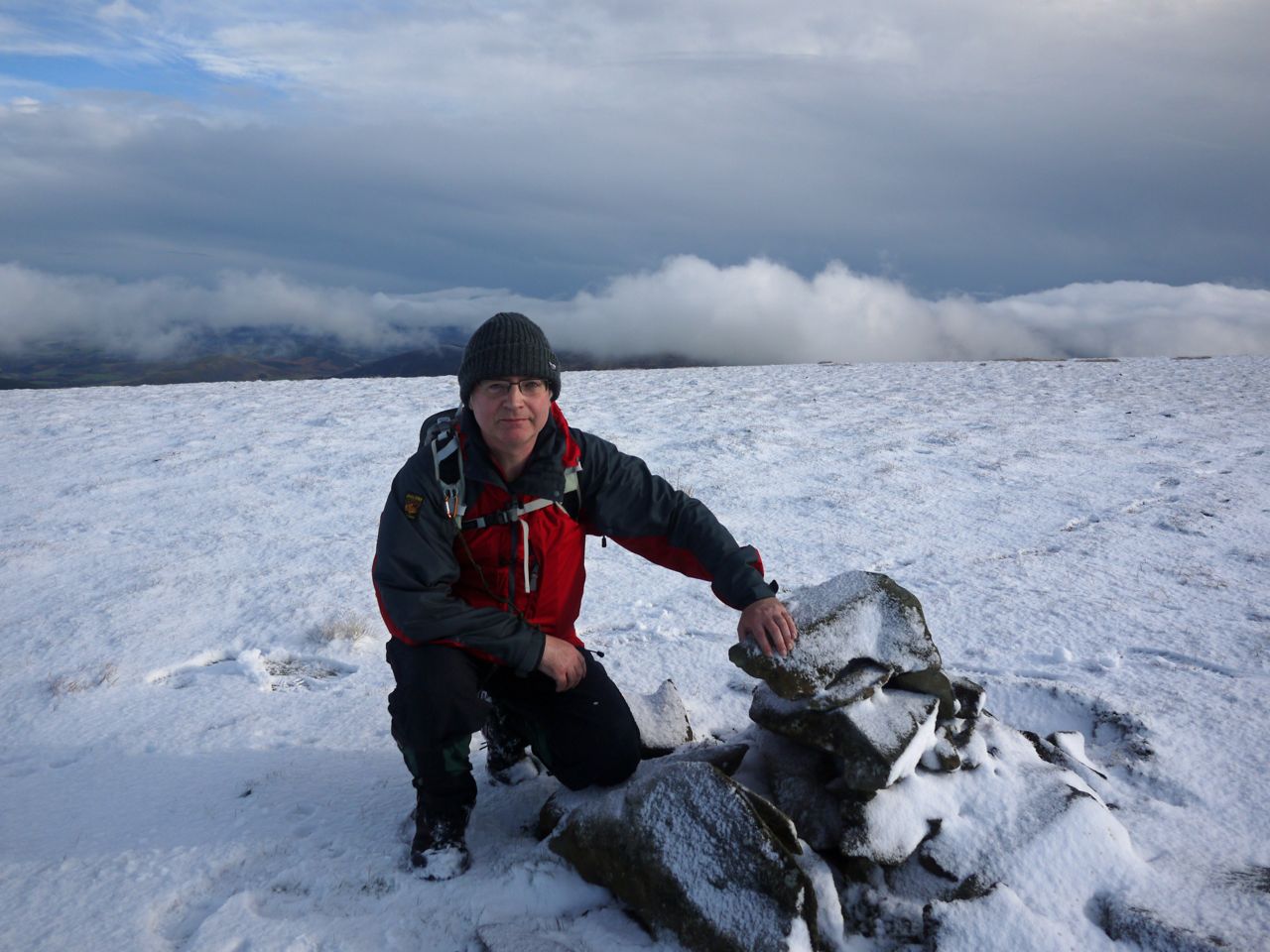
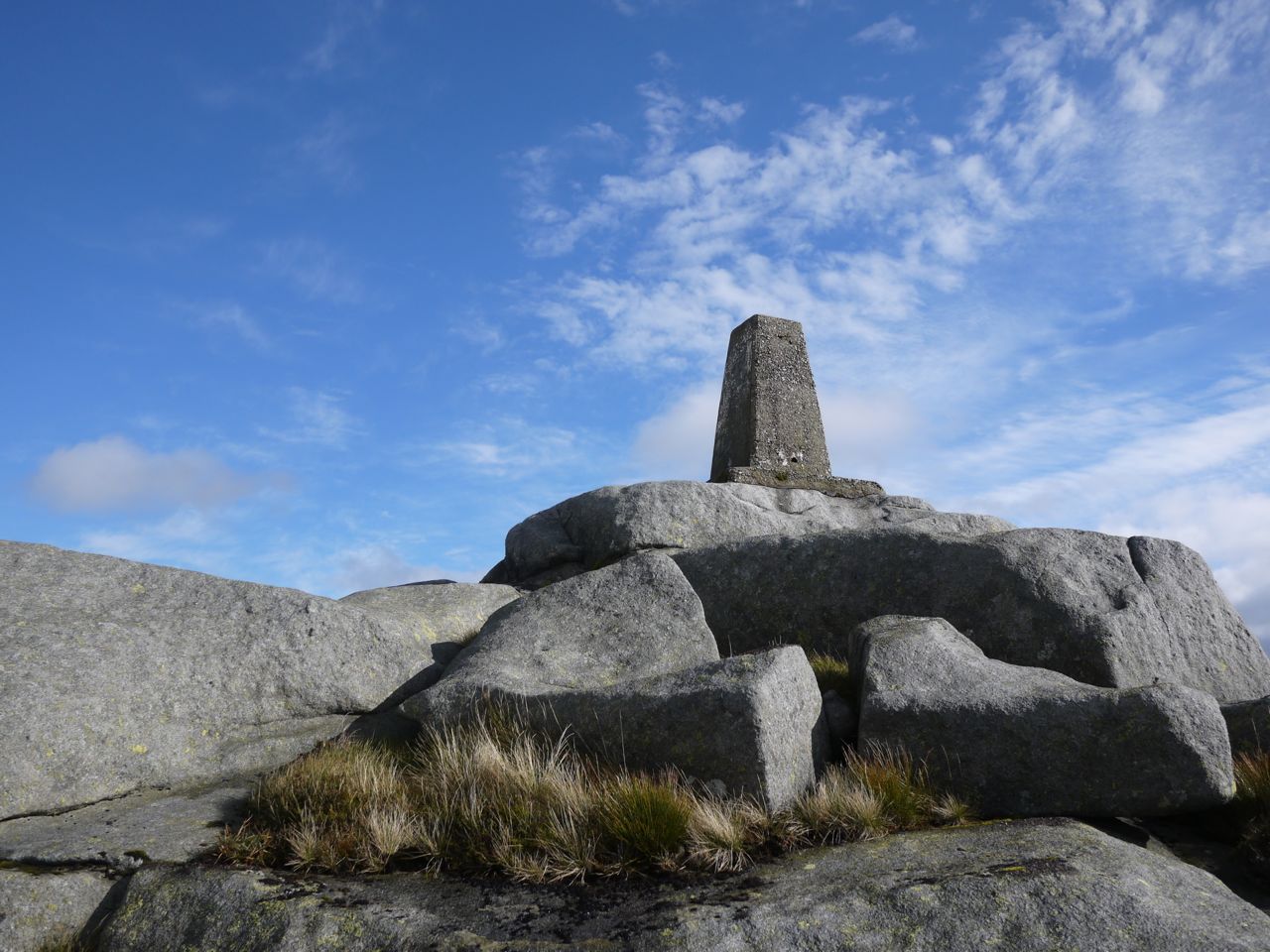
Woodhead Hill summit cairn

I had my excuses ready (getting late, soon be dark etc) and got my GPS phone out. I was clearly very close to the summit, indeed it was only ten double paces off the path. The cairn is hidden amongst fallen trees and once you know where it is it can be seen from the track.

I decided to follow the MTB track back down and hopefully find an easier route up, but I was not successful in that particular endeavour. There were several MTB tracks and I took photos at the various junctions, but they all look the same. At each junction I tended to chose the track heading in the right general direction, but made an early mistake by turning onto the track mentioned earlier (50m after the left hand turn on the way up). This initially went north but then gradually turned west rather than east. I didn’t realise this until I came out of the trees and saw the River Nith in the distance.

I was tempted to backtrack but the light was failing and I wanted to get out of the forest while there was still light. This track brought me onto one of the major forest tracks at about 200m and I turned north again. This large track ends after 200m.

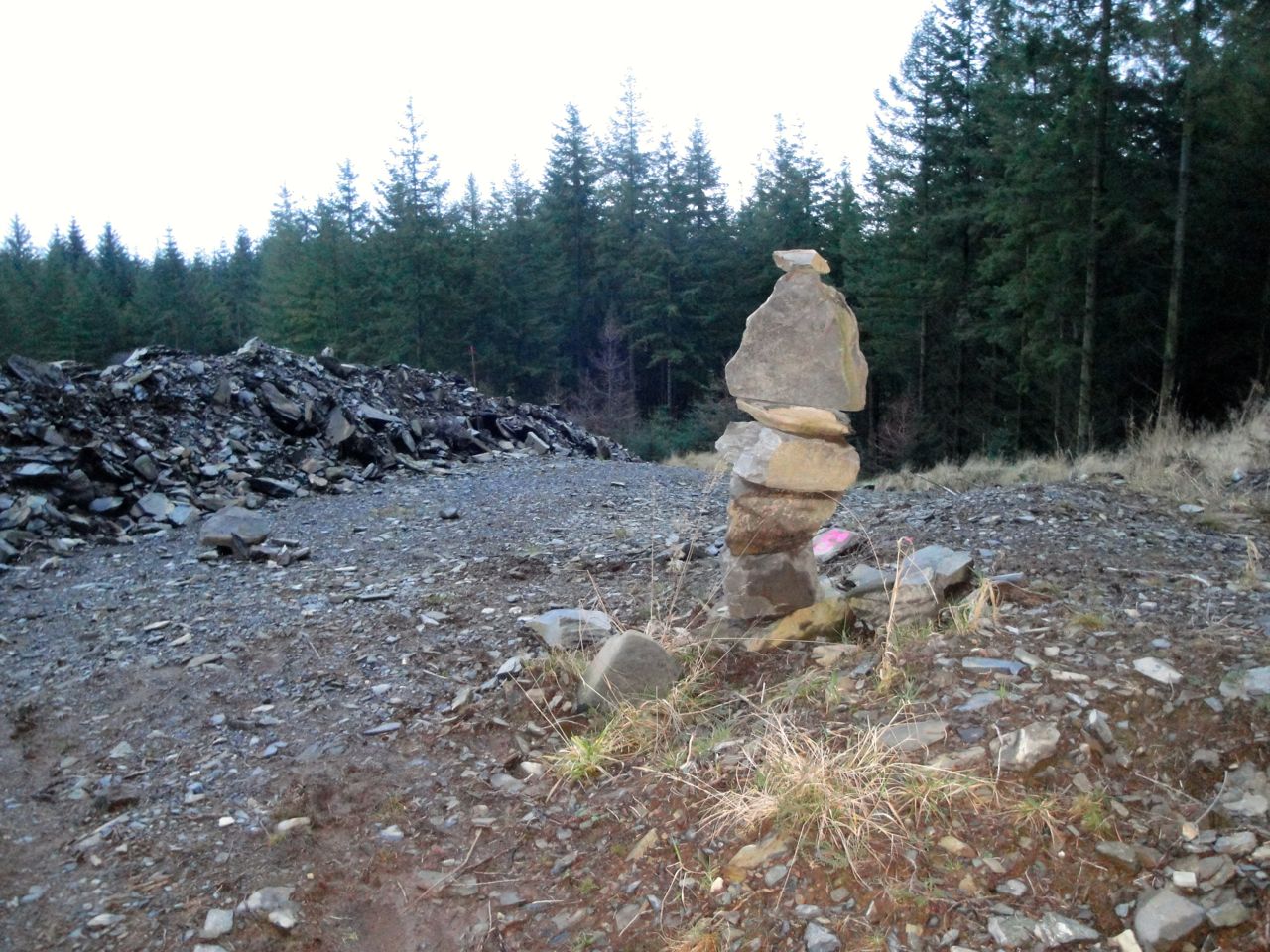
Cairn above the quarry where I emerged from the trees

There are MTB routes heading off to the right which join up with the perimeter track but I headed onwards through the woods since I have walked that way before and it is less of a zig-zag than the MTB route. This way I came out of the forest due south of Hillhead Farmhouse. It was then a gentle stroll back to the car in the rain.

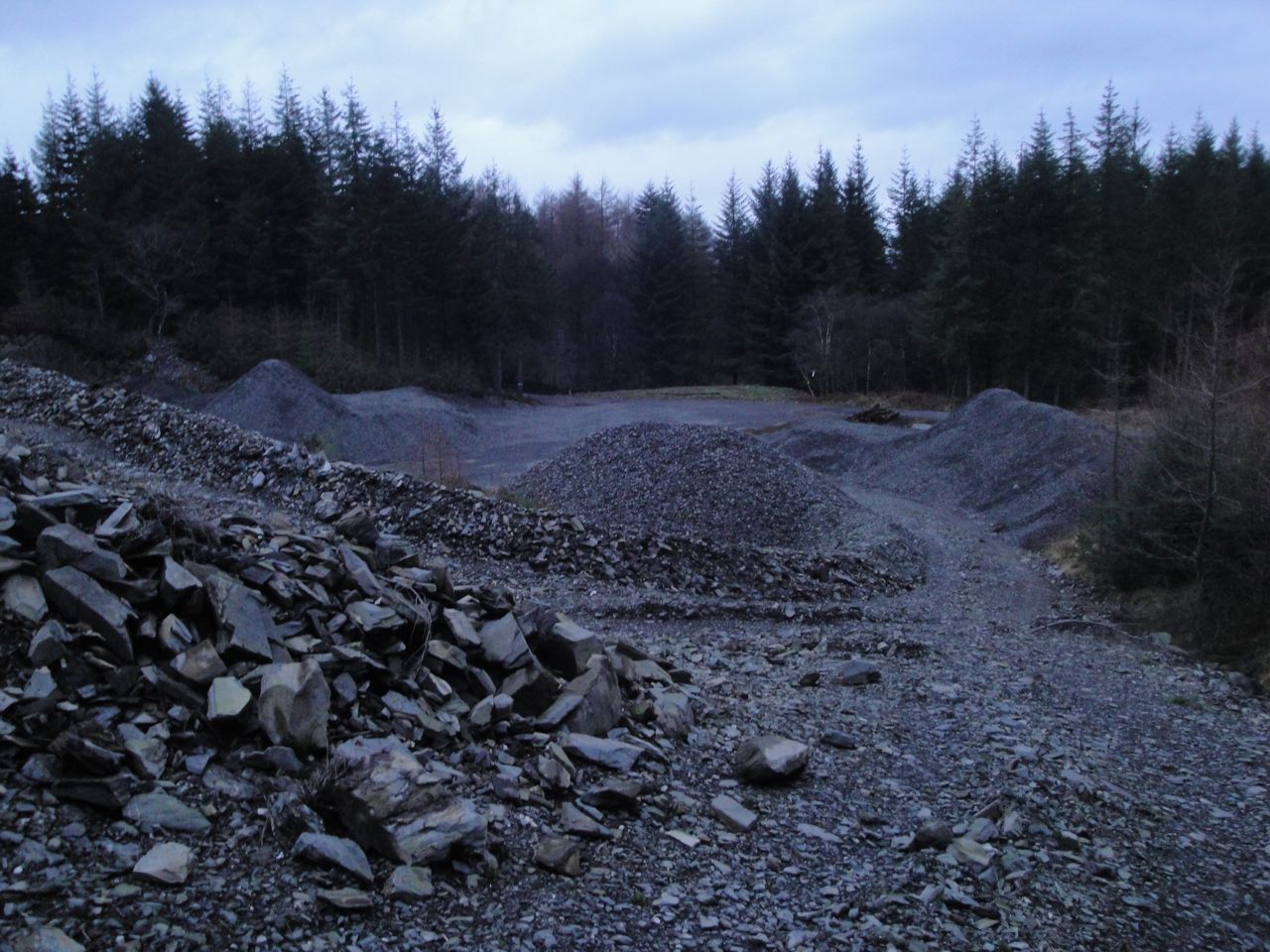
Quarry in twilight

Posted in Dumfries & Galloway | Tagged , | Comments Off on Woodhead Hill – an itch scratched

See Morris Hill

2.26 miles 50 mins  162 m ascent

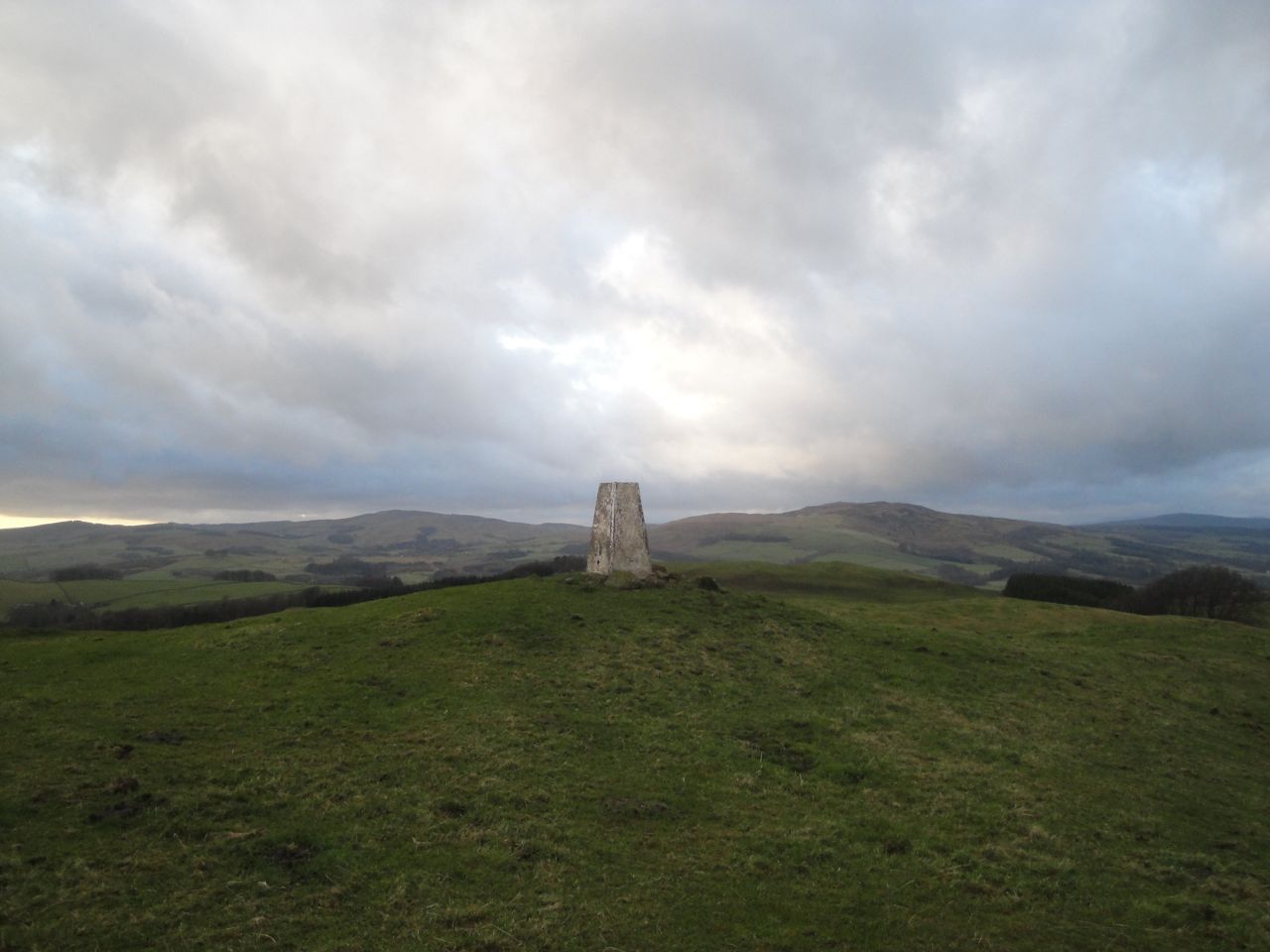
A very short walk and an easy route. I started from the foot of the track to Riddingshill and followed the road up until I was just below the giant aerial. From there I left the road and headed across the grass, through a gate, and to the trig pillar.

The weather wasn’t great but there were good views of the surrounding hills, Criffel, Screel, Bishop Forest Hill and Queensberry.

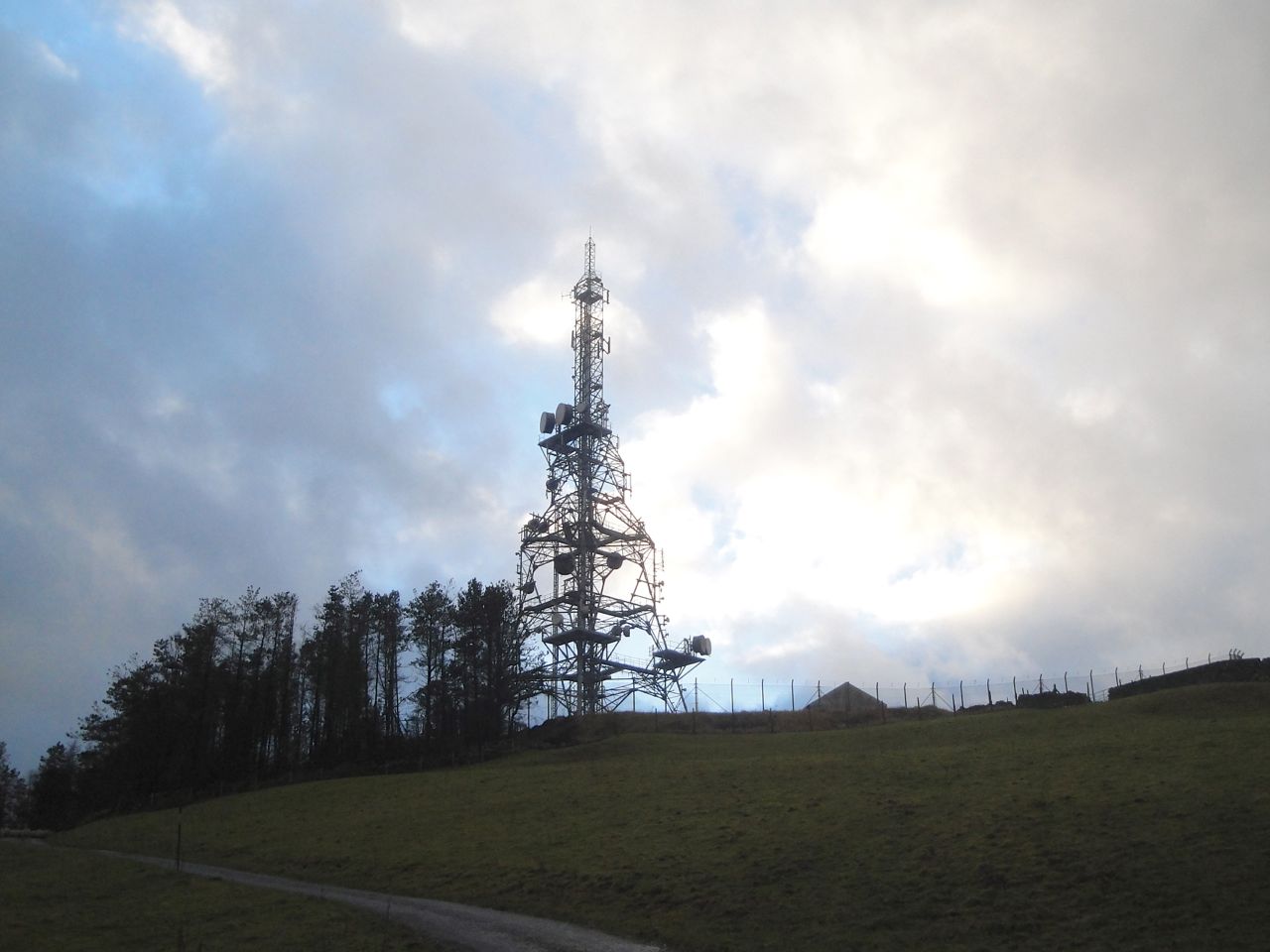
Aerial on See Morris Hill

As I walked across the grass I felt that it was pre-quagmire, but we have had heavy rain.

See Morris Hill with Bishops Forest Hill and Bennan in the background

I had wondered if I should have taken the eastern side of the Aerial compound, as I did, or the western, keeping to the road. I’m pleased I did because, looking down from the top, the ground was very boggy north of the compound.

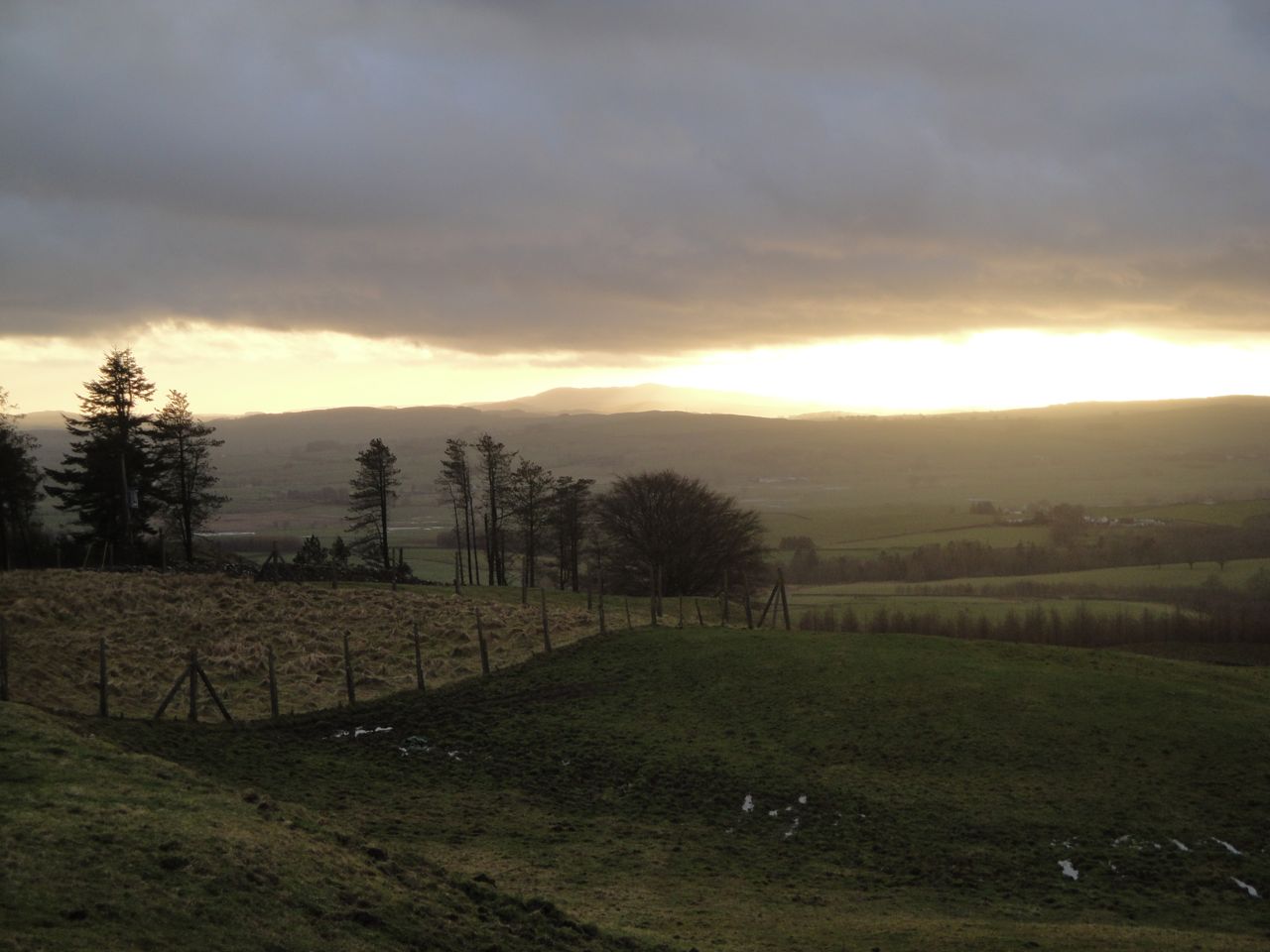
Sunset over Screel from See Morris Hill


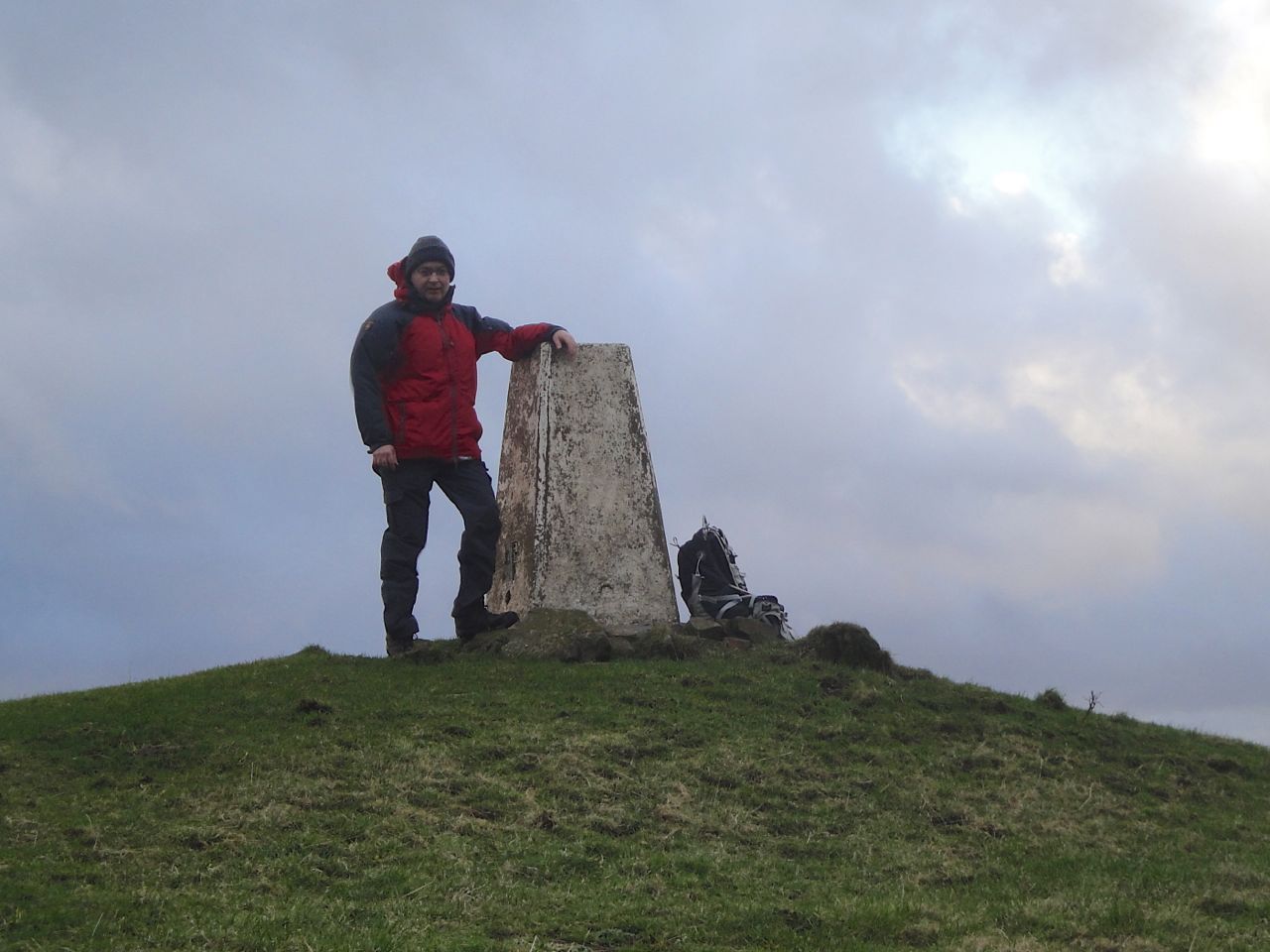
See Morris Hill in the wind

Posted in Dumfries & Galloway | Tagged , | Comments Off on See Morris Hill

Gathersnow’s Ridge

9.2 miles  5h 48m ascent 702m

Coomb Hill-Gathersnow Hill-Hillshaw Head-Coomb Dod-Glenwhappen Dod

A cold day, -3C according to the car. This walk starts from the A701, near where Fruid Water joins the Tweed. I parked near a locked gate at the start of the forestry track that climbs around Weird Law. The path had a coating of snow about an inch deep and the trees had a light dusting of snow so the scene was like something from a Christmas card.

The road to Weird Hill

After about 2 km the forestry track flattens out. There is a small lochan, not marked on the OS map, at NT 077242 and I left the path here to climb over to the Kingledoors glen. There is a track marked on the OS starting by the Glenbow Burn , but I headed directly over to the Glenmuck Burn. This took me between the two minor prominences of Glenmuck Heights and Bank Head. This was across heather but the going was easy enough. I made the mistake of heading directly along the burn which led me into a narrow steep section. I tried climbing the east bank but gave up when it got too steep so headed over to the other side where I found a faint animal track. It would probably have been better to stay a little east of the burn, the side with a sheepfold, and avoid the narrow gully.

The Kingledoors Glen was strangely free of snow given the amount in the Tweed valley and on the hills. I had worried about crossing the Kingledoors burn and as I looked at it my worry grew. It was too wide to jump, too full to find stepping stones, and the bridge I had seen on google earth images was nowhere to be seen. But it proved easier than I had thought. Twenty metres upstream the burn narrowed enough to easily jump.

Craigengar from Glenmuck Hill

From there I made my way up to a farm track, then headed up Craigengar. The contours were furthest apart in a line running from a ruined farmhouse to a cairn on Craigengar, and I was a little way off this line so I headed up then across. There was a faint track but this petered out at about 400m. The lower slopes were grassy but higher up the heather took over making the going a little more strenuous. There are a series of small cairns below the larger one on the map, though they look more like the remnants of something more substantial. I wondered if they had once been grouse butts.

Looking back down the hill I could see a bridge over Kingledoors burn, close to the ruins. It had a rather strange, Mobius strip appearance. Since I couldn’t see it when down in the valley I wonder if it has collapsed into the burn.

Once on the ridge I found myself in a winter wonderland of snow, cold wind, and excellent visibility showing the surrounding snow capped hills.

Culter Fell from Coomb Hill

I had hoped there would be a path along the summits, particularly between Gathersnow Hill and Hillshaw Head but if there was it hidden beneath the snow. I could sometimes see vehicle tracks in the distance, but up close they were invisible. Despite that the going was easy. Presumably any boggy sections were frozen. I did give some suspiciously flat area between peat hags a wide berth in case they hid unfrozen mud.

One problem on this section was finding a place to rest for lunch. There was no shelter from the wind, the hilltop cairns were diminutive, and there was nothing to sit on other than snow covered heather. I decided that I would stop in the col between Gathersnow Hill and Hillshaw Head. There is a gully at the top of Fingland Burn, but rather than providing shelter this was more like a wind tunnel.

Hillshaw Head

So my lunch was taken a little further up the slopes of Hillshaw Head. My sitting mat proved useless in the snow so I sat on my rucksack having thought through the contents, checking off in my mind whether there was anything vulnerable to being squashed. As I sat on the rucksack munching through my sandwich I remembered the banana.

From Hillshaw Head the heather seemed to be deeper and the going became more difficult. It is only a short climb up Coomb Dod, with its weathered trig point and from then on it is mostly downhill so the deeper heather was somewhat easier.

The way off Coomb Dod

Without doubt, the most tiring section of this walk is that over Glenwhappen Dod and White Knowe Head above the forest. There was deep heather covered in snow. This was like the section in assault courses where you have to step over ropes, but in addition every now and then the ground would prove lower than expected. I feel pleased with myself that I only actually fell over once.

I fell for the old “grass being greener on the other side of the fence” ploy here. I was separated from the forest by a barbed wire topped fence and the terrain over there looked easier. I wondered if the forestry folk might have been driving above the trees. So I manoeuvred myself over the fence only to find things were just as bad.

Once on the summit of Glenwhappen Dod I could see that there was more of the same tiring deep heather to come. Since the summits were no easier I decided to contour around the next couple of prominences. Then I spotted a track in the snow. It was a few metres above the tree line at about 500m.

As I got closer it began to look as if it might be a ruined wall, but even that would be easier then the heather. When I reached it my heart sank. In a film I would have looked up to the sky and screamed “No..oo..oo…oo..oo…oo” my words echoing away as the camera pulled back. It was a ditch.

So I walked beside the ditch. The ground immediately downhill from the ditch had slightly deeper snow fully covering the heather giving the appearance of a path. But the ditch hadn’t finished taunting me. After a while it became wider, less deep, and broader. Since its base was free of heather, and apparently dry, other than snow, I found it was easier to walk in it. But before long it became narrower making it difficult to walk and then deeper. Once the edges were up to my elbow I gave up and climbed out.  I took just short of an hour to cover 2.5 km above the trees.

Once past the trees the forestry track was in sight less than 1km away. Here the fence and an old wall weave along occasionally meeting. I followed the wall initially then headed between a stand of newly planted trees and a more mature plantation to get back to the forestry track where my footprints were still there in the snow.

Posted in Borders, Lanarkshire | Tagged , | Comments Off on Gathersnow’s Ridge

Fell Shin to Dun Knees

8 miles 4h 15m  ascent 673m

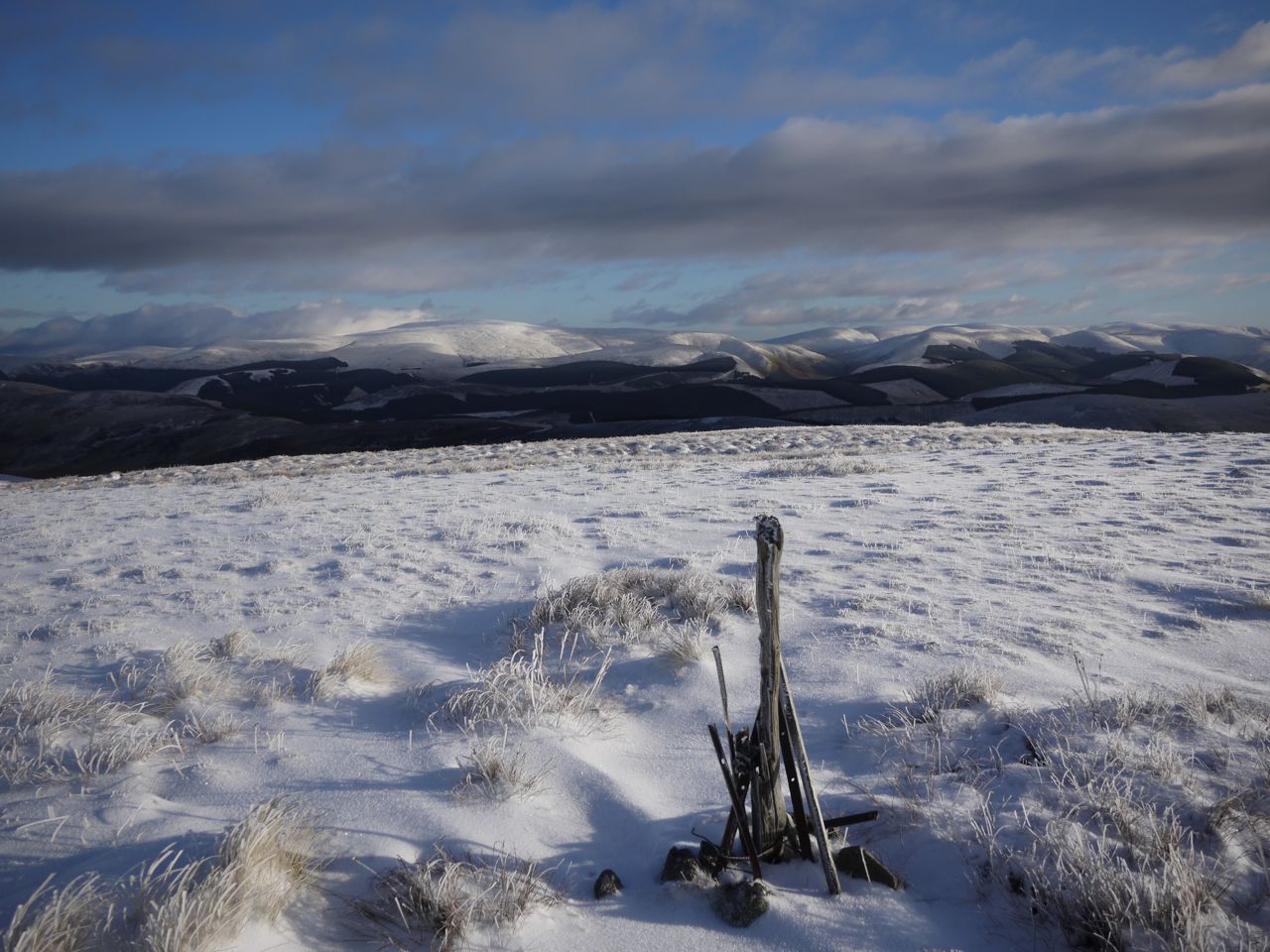
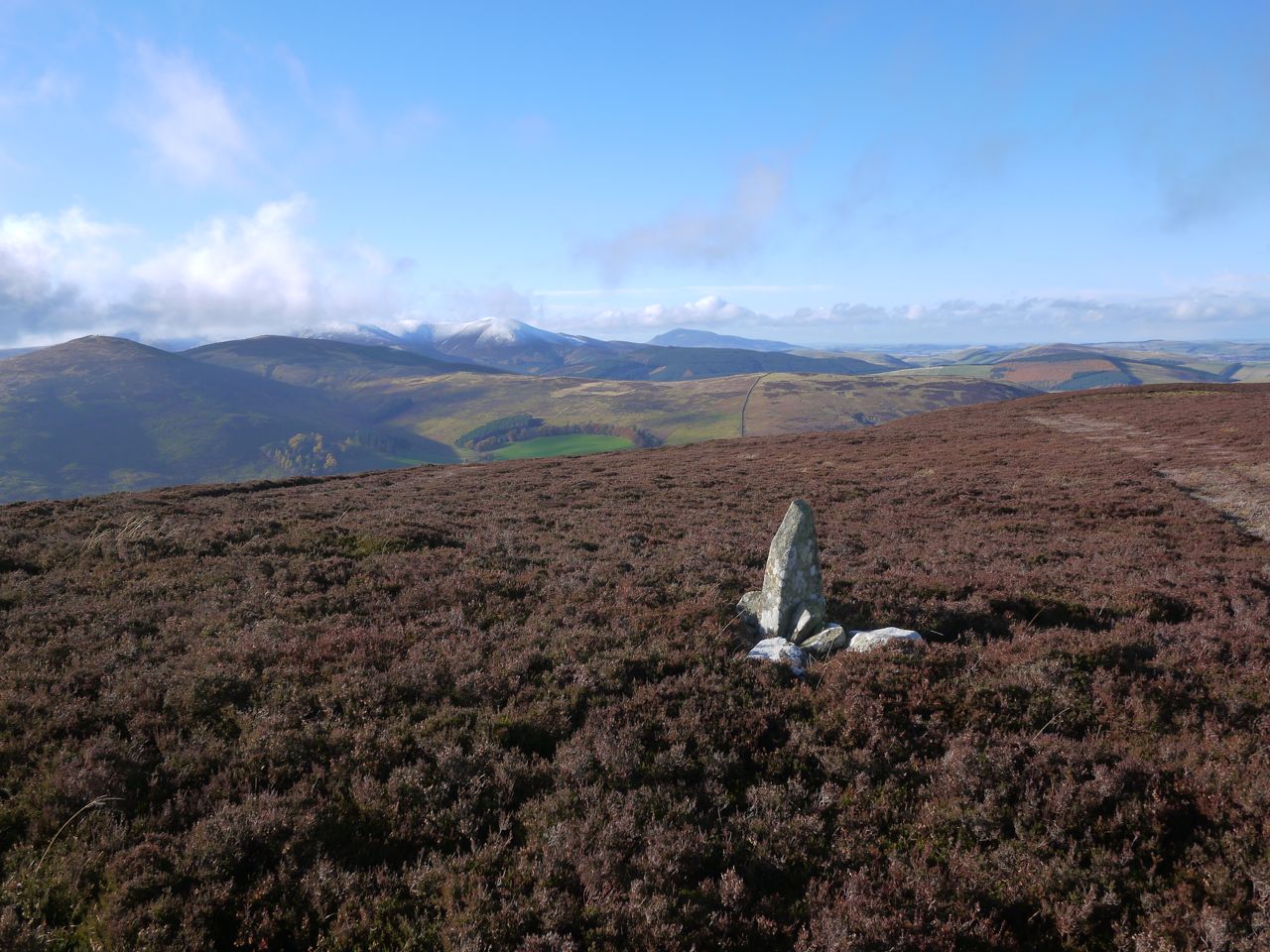
Cairn at 680m Fell Shin, Chapelgill in the distance

Culter Fell-Chapelgill Hill-Cardon Hill

The parking place, by the burn, past Culter Allers farm was flooded requiring some careful car placement to allow dry access to the door and boot; and the weather required hat and gloves even in the sheltered valley.

After about five minutes the road crosses Kings Beck and I left the tarmac to climb a rather muddy track. This track looks to have been made by fleeing villains. At some point one of them must have shouted “split up” and from there several fainter tracks head in various directions. I tried to head up Fell Shin as directly as I could while making use of tracks where our directions coincided. I reached the line of Grouse butts at about 350m and then climbed up in line with them. It must be quite a slog lugging guns up there, unless one’s valet carts them up?

There is a small outcropping of rocks at the top of the line of grouse butts and once there the gradient eases off. Culter Fell has three distinct sections when climbed this way. There is a steep climb through fern then heather up Fell Shin, by the grouse Butts. Next is a gentler walk from 520m to 620m over firm ground with a covering of short heather (which looks to have burned back a season of so ago). The track here was waterlogged and unusable. There is then a short climb to a cairn at 680m. Finally there is a very gentle gradient up to the summit across boggy ground and waterlogged peat, easy on the muscles but demanding of care by those who prize dry feet.

Looking back down Fell Shin from the rocky outcrop

My navigation homework for this walk was to guess distances and climbs then check the map. My estimates are getting better I think.

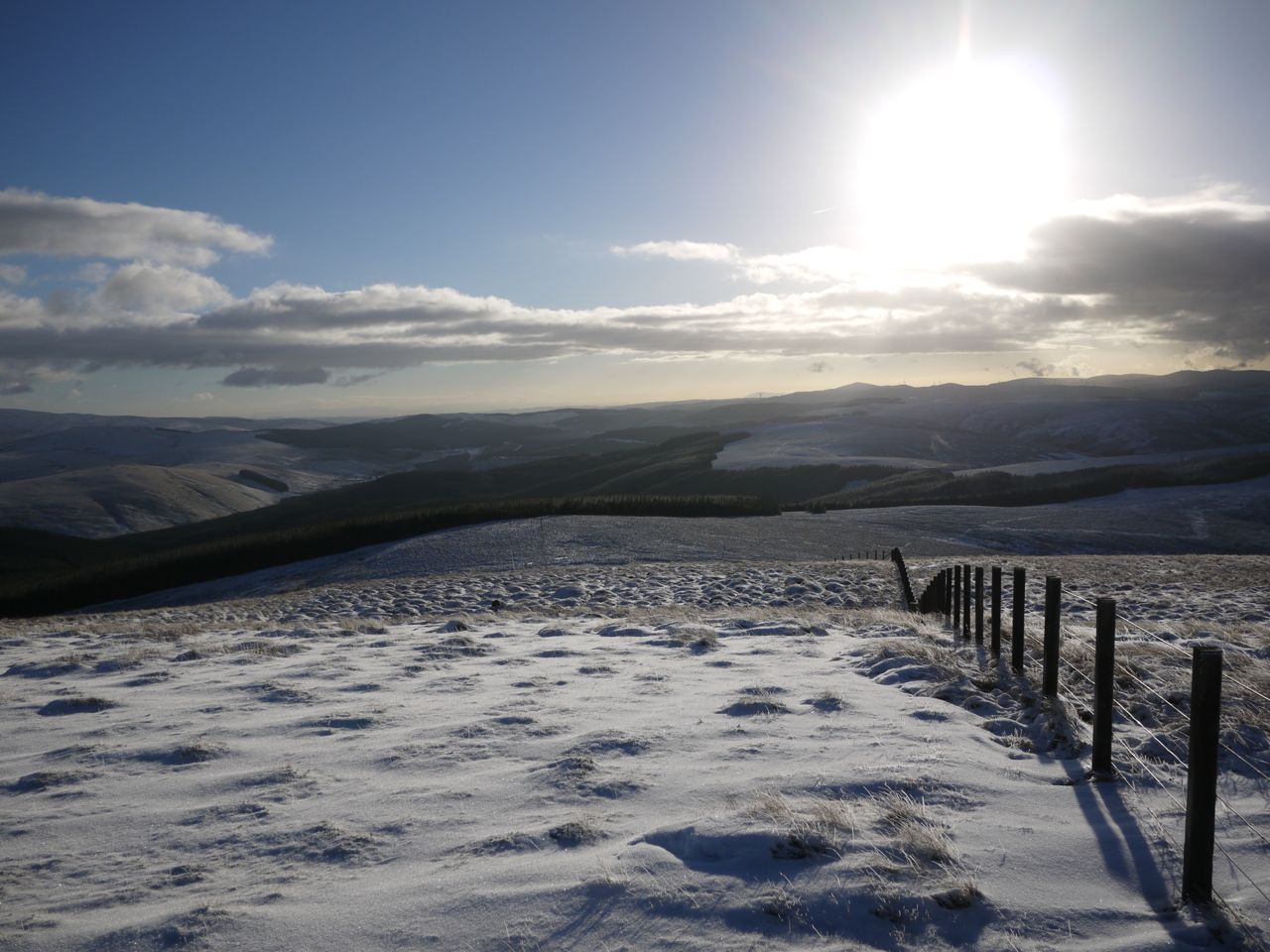
Tinto in the distance was topped with cloud throughout this walk, and Culter Fell’s summit was covered as I approached, but then cleared when I was only a couple of hundred metres away. So I was able to have a good look across to the ridge on the other side of Holm Burn, a future walk no doubt. Looking over to Chapelgill Hill, I could see it was actually a triform hill with Cardon Hill and Chapelgill Hills at its ends and Birnies Bowrock at the apex. There is only 23m between the heights of these summits. The whole hill is connected to Culter Fell, like a dog on a lead, by a ridge made up of Dun Knees and Glenharvie Moss.

Tinto in the distance, from Fell Shin

The walk down to Glenharvie Moss is on firm ground mostly, but there are muddy sections where the grass has slipped beneath the weight of boots and careful foot placement was needed at times. The Moss is a peat bog and given the recent weather it was wet. The hags here are not too well developed so there wasn’t much hag-hopping to be done. There were squalls of rain visible throughout the day and I crossed paths with a snow producing one here.

Glenharvie Moss

On the way up Dun Knees, which by the way has a special resonance for a rheumatologist, I came across a fence not marked on the OS map. This led to a few seconds of navigational doubt until I convinced myself I was were I thought I was. I followed this along to Chapelgill Hill’s summit. There were a couple of small cairns there but I suspect the summit is a small unmarked mound nearby.

Chapelgill Hill

I followed the fence back fora short distance but then decided to strike out directly for Birnies Bowrock. A mistake. The vegetation was thicker and deeper with marshy sections so I got back to higher ground which proved easier going. Birnies Bowrock has the biggest cairn of the three summits and I decided to use this as shelter for lunch.

I remain amazed at the additional bounce in my step that a lunch break brings and found myself virtually skipping across to Cardon Hill which stands a good 2m above Birnies Bowrock. As I walked back down to Dun Knees you might guess what happened. My left knee started playing up again. Luckily this coincided with a twenty minute hail storm, mostly blowing straight into my face which acted as distraction therapy. 

Walking down towards Glenarvie Moss I could see a track climbing along the ridge that led to Park Knowe. This looked to be a way to avoid the hags. I could see a black thing at King Bank Head and headed for that. This turned out to be peat hag that had lost its covering of vegetation. A topless hag. From the topless hag I joined the track but soon enough it disappeared so I headed up to the top of the ridge. This had me negotiating a way across deep hags surrounded by mud. So no jumping off them. I should have continued further along the ridge before climbing up.

Topless Peat Hag

Once on the top of the ridge there was a track to follow. This track continues along the ridge but I planned to head down over Juniper Knowes. There was a distinct path heading down that way which made the descent much easier. The stand of trees below Juniper Knowes are pines and some spruce. I didn’t see any junipers.

Once back on the road, the car was only a few minutes away.

Posted in Borders, Lanarkshire | Tagged , | Comments Off on Fell Shin to Dun Knees

Limping around Drumelzier

9.8 miles  4h 30m  ascent 723m

Pykestone Hill

Pykestone Hill, Middle Hill, Drumelzier Law

This walk starts at the tiny settlement of Drumelzier. The area has a close link with Merlin (Myrddin) who was killed here by a method he himself had predicted; to be bludgeoned, stabbed and drowned and apparently a thorn tree marks Merlin’s grave. There are ruins of a fort, presumably the fort of the reaping-men which gives Drumelzier its name. I had intended visiting these but developed a painful knee while tramping over the hills and left with just my newly bagged Donalds.

Footbridge at the ford

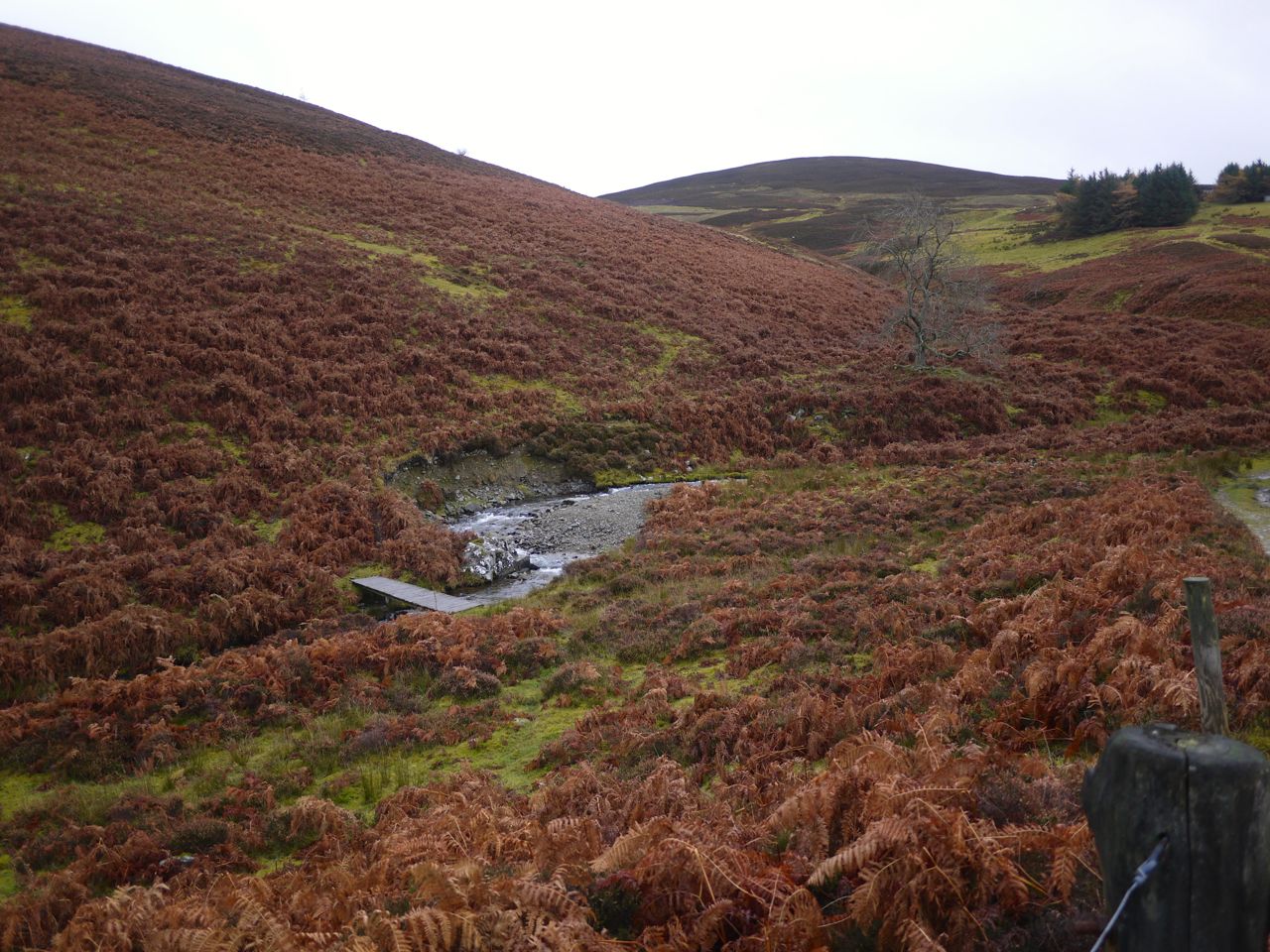
Luckily the lower stretches of Drumelzier Burn have plenty of footbridges, and it certainly raises one’s spirits to find a bridge where the OS marks a ford. The bridges were basic, without handrails, and were slippery with moss, so some care was needed.

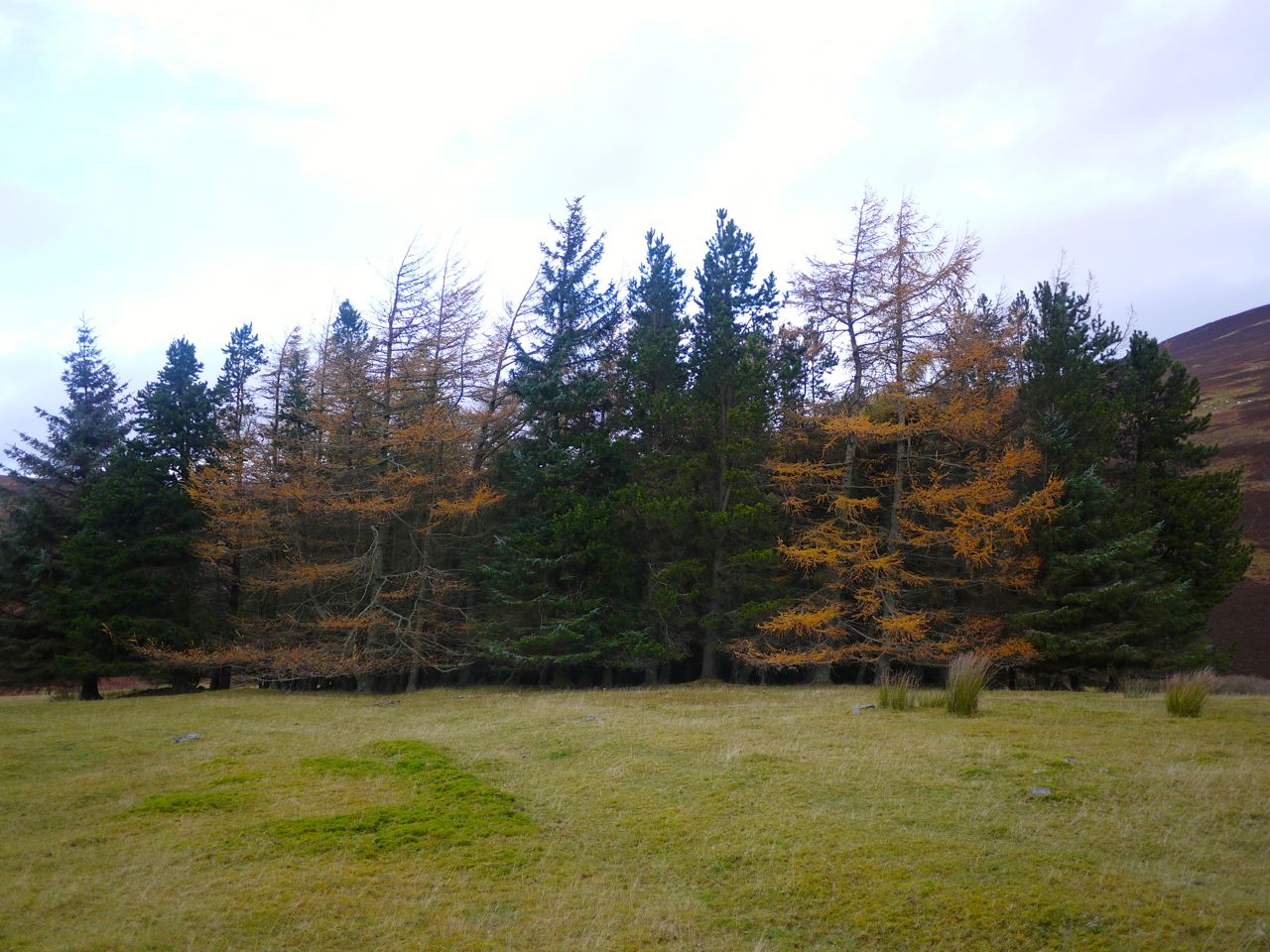
Larch and Spruce

I crossed one of these bridges close to where I had parked and walked along the east bank of the burn for 500m before crossing back to the farm track and crossing again where there is a choice of bridge or ford. This leads between two stands of trees. These were a mixture of autumnal larch that were shedding their golden needles and spruce holding on to their greenery.

The path on the east bank of the burn had a mild slope, enough to be noticeable but not difficult. I mention this now since I wonder if it was a trigger for my later problems.

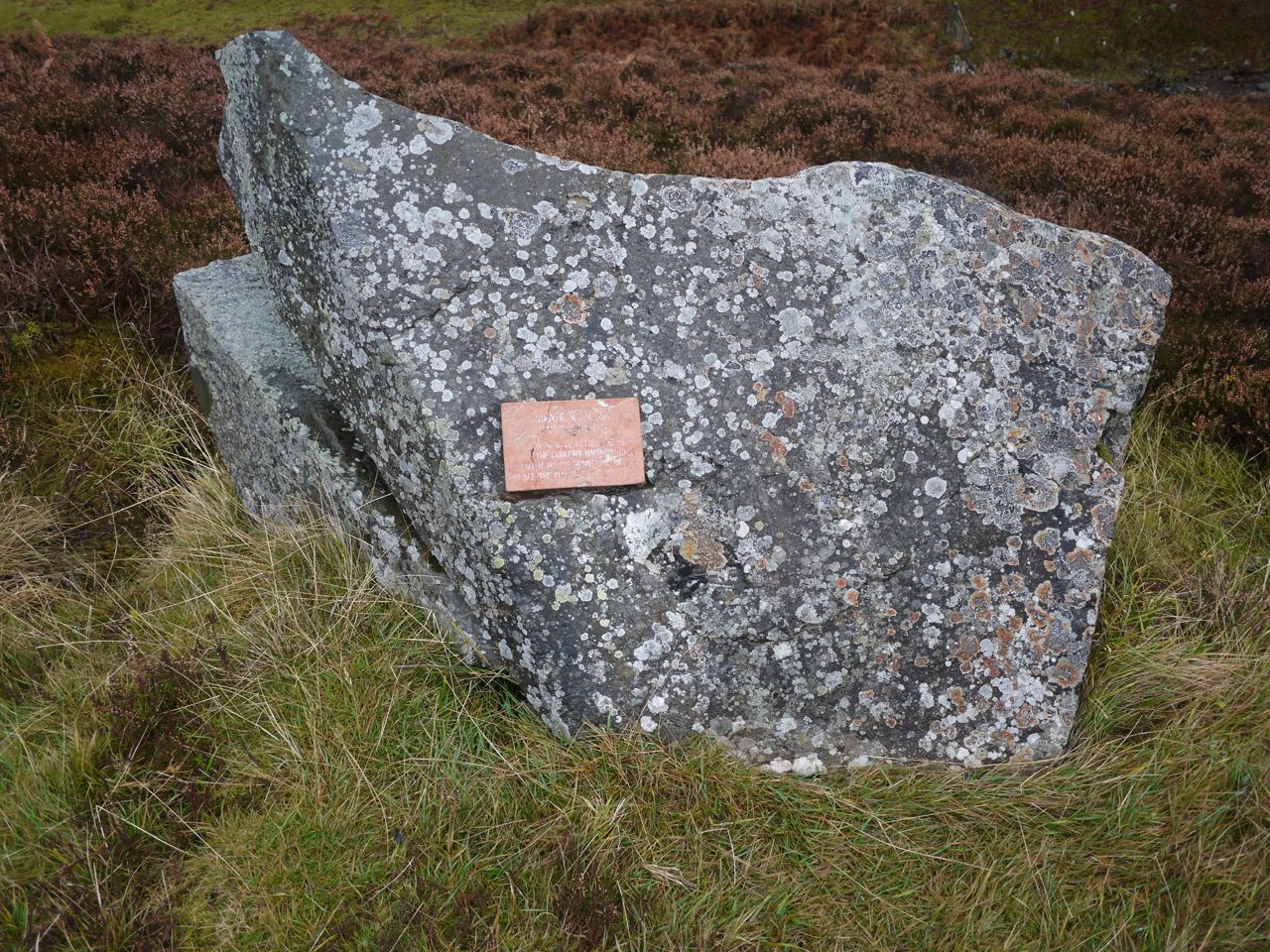
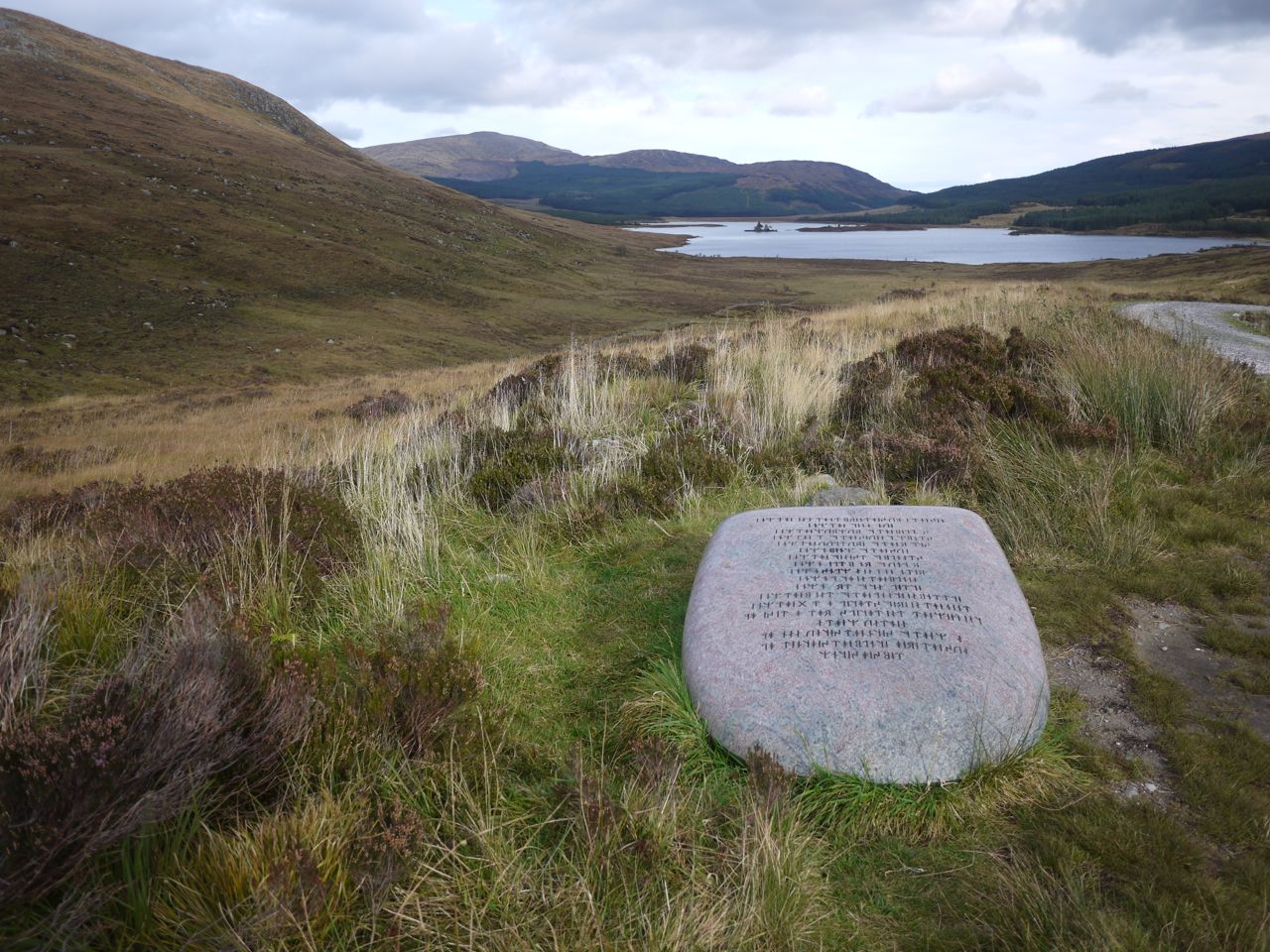
Beside the track is a rock with a small plaque inscribed:

Jim Cox
1934 – 2003
In memory still I climb the hill
and hear the curlews haunting call
listen to the murmuring rill
and see the purple heather bloom

After the spruce and larch the path splits, and I took the fork to the right which slowly climbs over Den Knowes. I climbed from autumn into winter, the heather gradually becoming hidden beneath a thin blanket of white. Once over Den Knowes Head, the snow was deep enough to crunch beneath my feet (reminiscent of a pericardial friction rub). I suspect that the path over this last kilometre to Pykestone Hill is usually boggy, since an additional sound, of cracking ice, warned of deeper puddles. I decided it was better to avoid the path and walked on the heather instead.

By the time I reached Pykestone Hill, with its trig pillar and small cairn I was in a winter wonderland. It was a little too early for lunch so I pressed on for the next target, Middle Hill. There are a couple of minor summits on the way, but this is essentially a ridge walk. The going was unpleasant but not difficult. The ground was boggy with scattered pools but snow hid the boggy sections.

The Thief’s road could be seen wending its way up the side of Dollar Law. Presumably it was somewhere beneath my feet but lost under the snow. It was while walking down from Pykestone Hill that the unpleasantness in my left knee began to manifest. Anterolateral discomfort worse when the knee was bent, much worse going downhill but unaffected by heel-strike. This was the first time in several months I had ventured out without a walking pole, having decided that carrying the pole, usually strapped to my rucksack, was a waste of effort. I blame to sloping path at the beginning, though decrepitness and lack of stretching may have played a part.

Grey Weather Law

The first of the minor summits was Grey Weather Law. This lived up to its name. The top was covered with light mist that still allowed the sun to be seen but diffused the sunlight. This combined with the white ground made me wish I had brought sunglasses. Visibility was very poor, but cleared as I descended just a few metres.

In the col between Grey Weather Law and Long Grain Knowe, the Thief’s road heads off towards Dollar Law and I headed up the deeper heather threading between boggy sections. Middle Hill was also in mist. There was a lone pole in he ground but I felt the highest point was a little way beyond it.

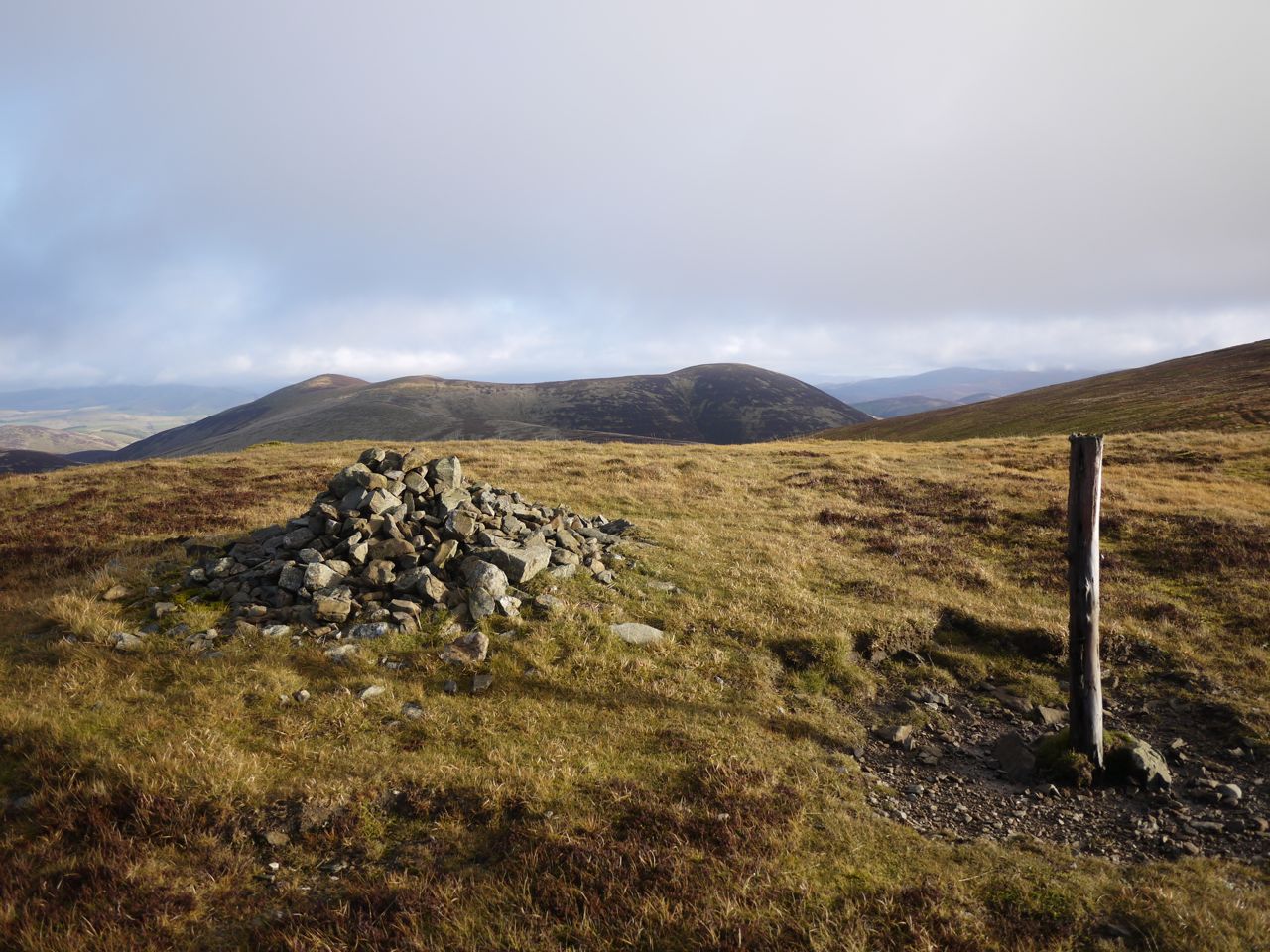
Shepherd’s Cairn, Glenstivon Dod

I returned to the bend in the fence and finding myself in mist headed out on a bearing for the Shepherd’s cairn on Glenstivon Dod. I was pacing out the distance but after a couple of hundred metres I emerged from the cloud and could see the cairn. Glenviston Dod is in fact higher than Drumelzier Law so that was the last of the mist.

Whereas all the other hills were white, Drumelzier Law was black from here with a double white line of a path climbing it. The descent to the col awakened my knee pain, but the ascent, done in the walking equivalent of first gear, was not especially sore. Unfortunately, the path which should have offered the best terrain was icy, so it was more climbing up heather.

Drumelzier Law: no lunch here

There is a small cairn on a knoll at the top of the steeper section of climb and I decided to break for lunch in the lee of this. It seemed to get colder as I sat there, despite the addition of an extra layer. At first I thought this was just because I had stopped walking, but the next event made me question this. I poured myself a coffee from my flask and the wind blew the coffee out of the cup, mostly over me. Luckily it was lukewarm so it didn’t do any damage.

Drumelzier Law summit

I put lunch back in the bag, wiped the coffee from my glasses and got moving. By now the wind had turned very cold indeed so I didn’t hang about at the summit. The first 100m descent was quite painful so I decided to change my descent route. The original plan was to head down towards a sheepfold where the Finglen and Drumelzier burns meet. I chose instead the gentler gradients over Logan Head and Finglen Rig.

Culter and Tinto from Logan Head

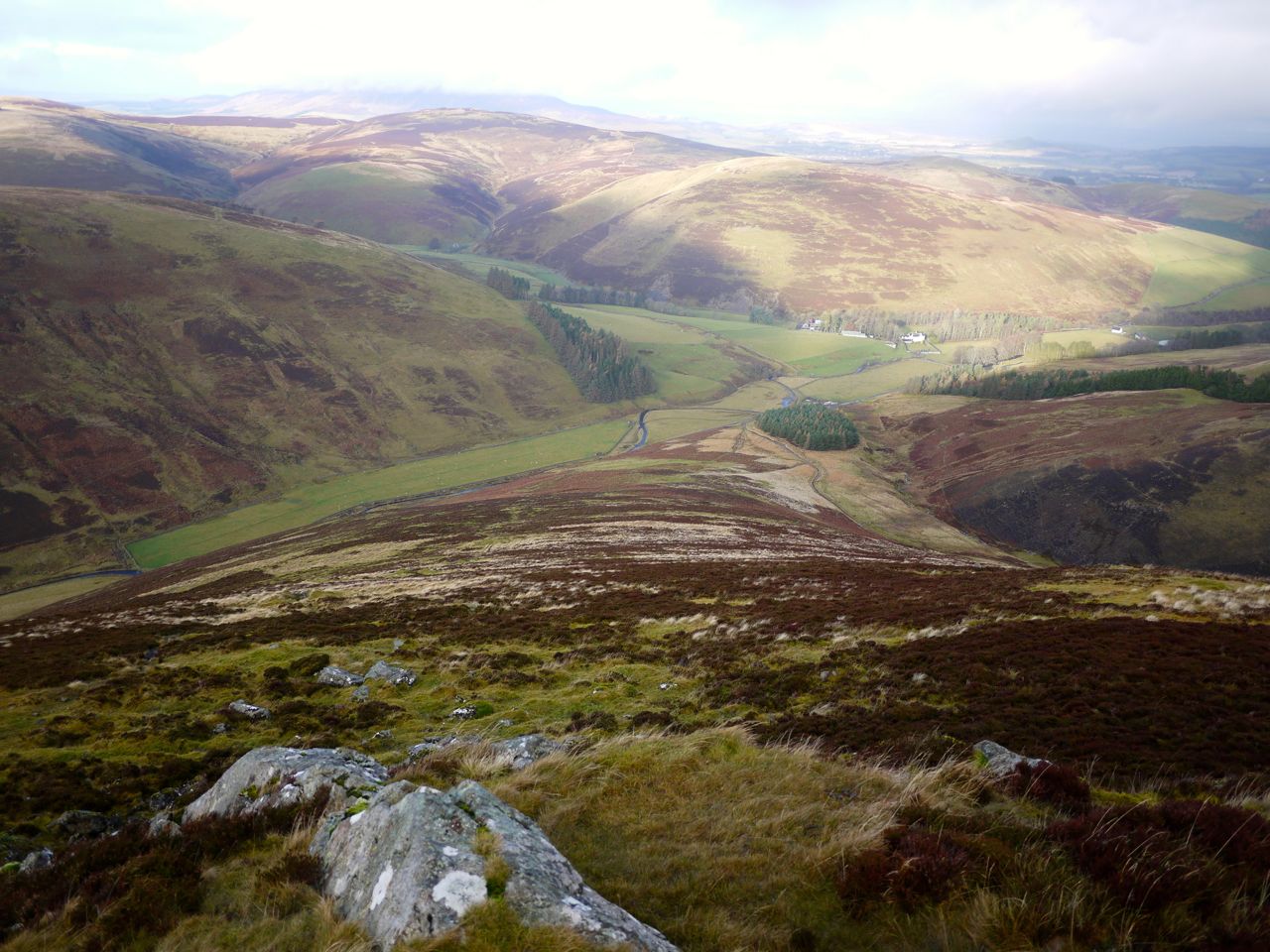
This was harder going at first in deep heather but then I came across a track of burnt heather where the going was very much easier. There where several small cairns along the way. In the picture you can see a cairn and the path of burnt heather, with Culter and Tinto in the distance. I rejoined the farm track by the ford marked on the OS (where there is also a bridge) and followed that back to the car.

Den Knowes from Logan Head

I left the ruins of the fort etc. for a day with a better knee.

Posted in Borders | Tagged | Comments Off on Limping around Drumelzier

MLT expedition: should have eaten my spinach

12.8 miles  950m ascent   2 days (probably 14 hours)
Where do I start this tale? I’ll skip the story of the packing and begin at breakfast. Preserved Killick, fresh out of Portsmouth, could not have beaten it. I slipped the serviette from its holder laid it across my lap and set about the fresh homemade muesli, toast, bacon, eggs, sausages, tomatoes, haggis, mushrooms and a cafetiere of coffee, while our landlady filled my flask with coffee and delivered the day’s sandwiches. I had of course been exercising a degree of self control, not wanting to be bloated whilst walking, so had foregone the porridge (which had it been taken would have been sweetened not salted) and declined the offer of additional toast.

At breakfast David and I received the news that Marcin had been recalled by work and wouldn’t be able to join us on the expedition which was very unlucky for him. I hope he gets to complete his MLT at some point.

After breakfast we had a final kit check, packed up our belongings, said good-bye to our landlady and loaded the car ready for the drive down to our rendezvous at the road end near Glenmore Lodge.

Just outside Grantown we spotted some of our fellow trainees changing a flat tyre. Poor Marcin was with them having accepted a lift rather than taking the bus. I hope he made his train in time. Our exped’s start was going to slightly delayed. The drive down was relaxing though and it looked as if the weather was turning out better than predicted: not so cold and not so wet. Near Glenmore we passed Santa’s sleigh drawn by some reindeer, but I didn’t see Rudolf. Perhaps he is only required for night flights. Either that or his nasal erythematosis has been cured.

Once at Glenmore Lodge we got our kit, split into the two groups from Monday and headed off. As the morning went by each of us was given leadership of the group and had to keep the walkers happy, safe and content. Pete Hill threw some spanners in the works pretending at various times to be hyperthermic, confused, potentially violent and eventually content (“this walk is worth every penny of the thousand pounds”). He managed to detach Nick from the group briefly without the leader noticing immediately and played the part of a “helpful” group member pointing out possible paths every few minutes. I think Ben shone dealing with Pete’s pretended foibles.

We were looking for a path, marked on the OS, leading up to the shoulder south of Creag nan Gall. We saw the other group climbing up through steep pathless heather and hoped we would encounter an easier way. We found a path after a burn, and therefore not that marked on the map. This was definitely a route that had been used by other walkers. We were spared the heather since this route rose through the woods, but it was steep and muddy in places offering opportunities to practice our spotting. It would have been real problem descending by this route.

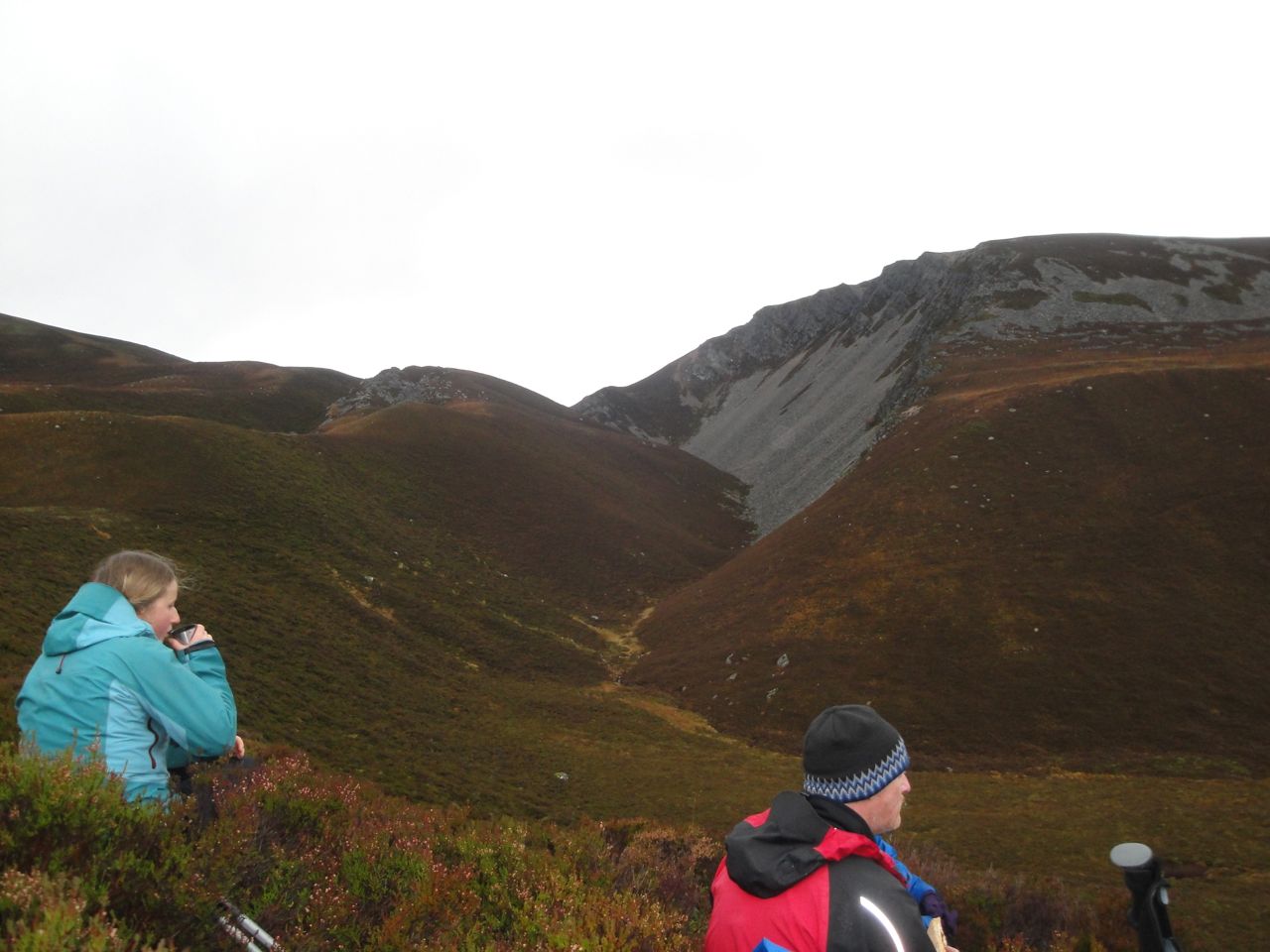
Once up the mudslides and out onto the hillside we stopped for a break near a gnarled ancient Scot’s Pine with Tom da Chiomhead across the burn.

After the break we had some navigation practice, heading first for the ring contour at 003098; then the lochan at 005096; burn confluence at 012092. I chose to skirt the ring wee knoll that lay between me and then headed directly for the lochan, or directly as one could given the boggy terrain. When heading for the burn confluence however I chose to take a more indirect route than the rest of the group with the aim of climbing out of the bogginess sooner. This added about 300m to my leg, and in retrospect the benefit was not worth the extra effort. If anything the bog was easier than the heather on the slopes.
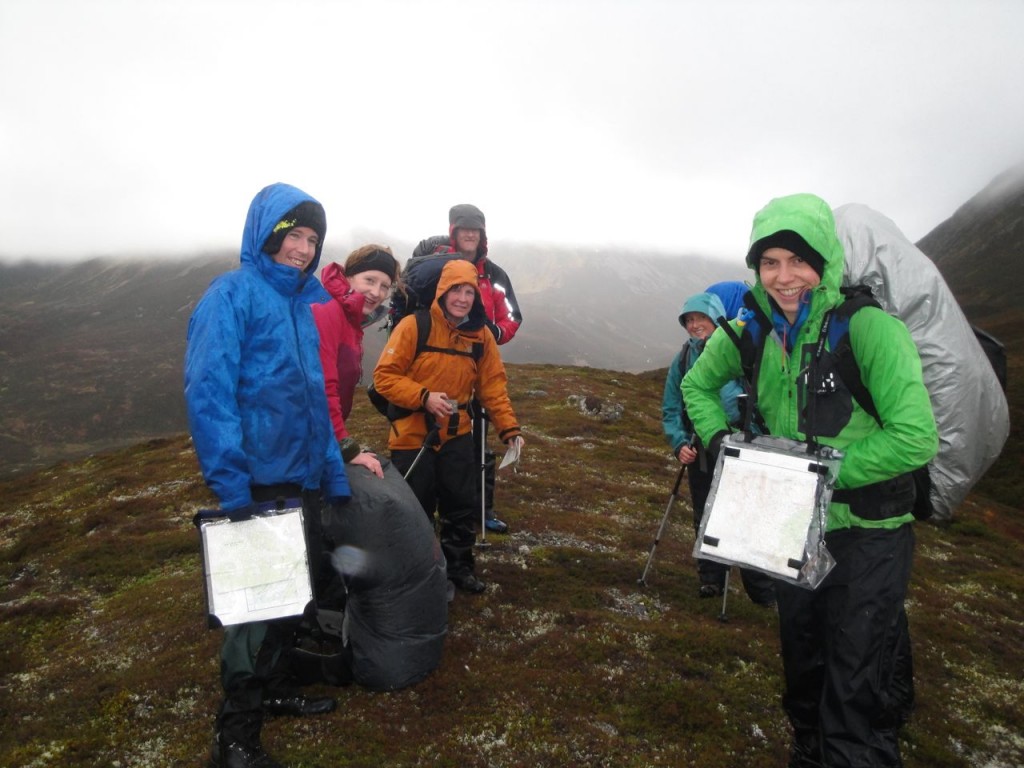
Our next target was a 672m spot height. We all headed upstream and chose various points to head up onto the col. My decision had been to follow the burn for 500m then head onto the col. As it turned out the burn ran in quite a narrow section and in the real world I would have ditched my plan and climbed out for the possibly easier slopes above, but I stuck with my plan to see how it worked. This and the previous leg, probably helped by the heavy rucksack sapped my energy so I was last up to the 672 pt by quite some time I think. While here we spotted a pair of reindeer on the horizon.

From here we headed down past a small lochan and along curving spur down to Strath Nethy. Just past the lochan I took a tumble into the soft heather but found myself stuck on my back like a beetle on its back, until I was dragged back to my feet.
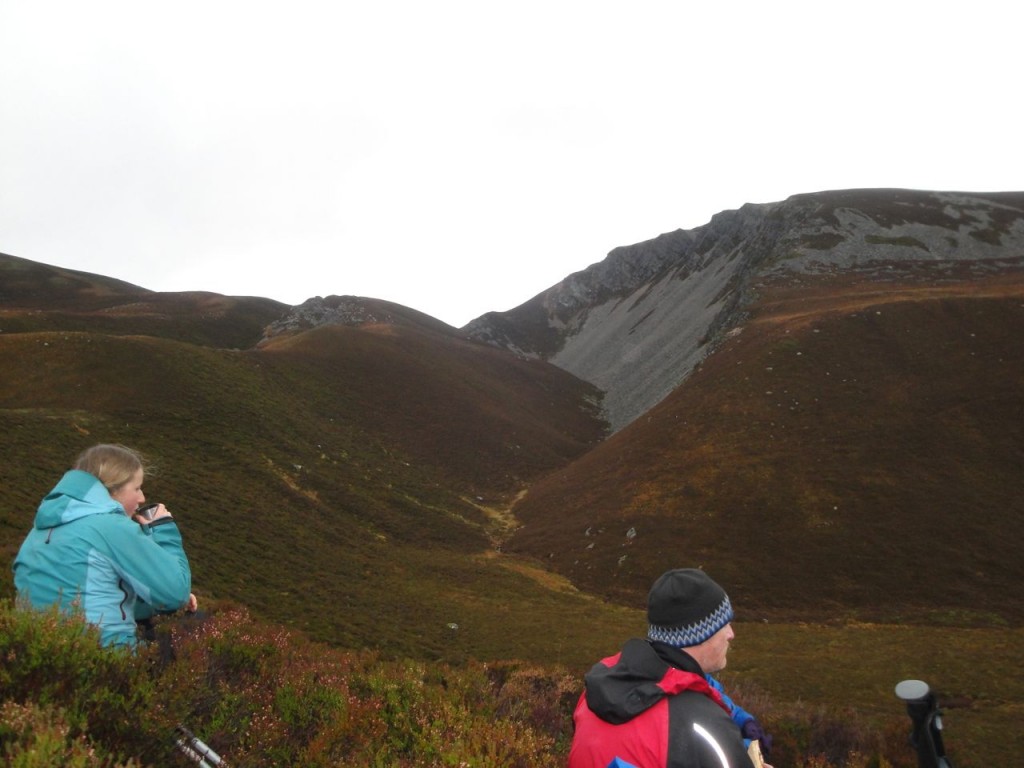
a deserved rest

I suspect I had knackered myself out and found myself on the slippery slope where I was fatigued and therefore slower, the group arrived at targets before me and had a longer rest than I did at each one, so I steadily got slowed even more. A break overlooking the steep scree slopes of Stoc na h-lolaire though did give me a chance to refuel and rest. From there is was mostly downhill.

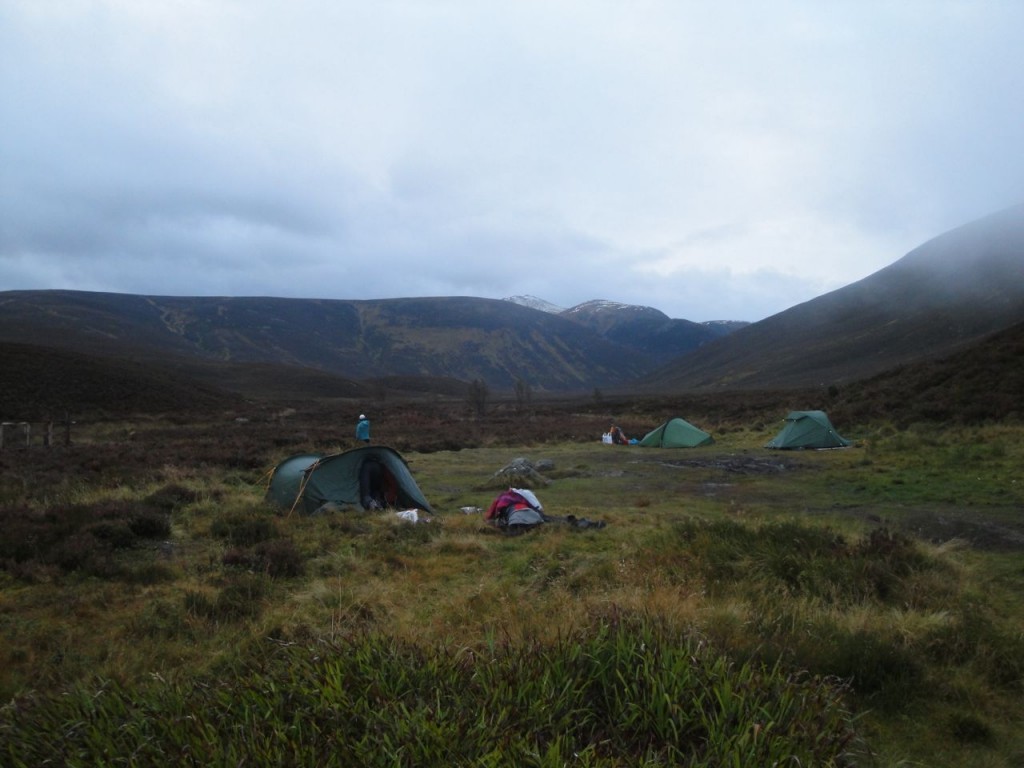
We eventually found the faint track on the valley floor and followed it up to Bynack Stables where we were to camp. I had managed to maintain a reasonable degree of dryness throughout the boggy terrain but within 250m of the campsite I stepped into a hidden pool and wetting both feet. The other group were already camped, tents up and cooking their tea.
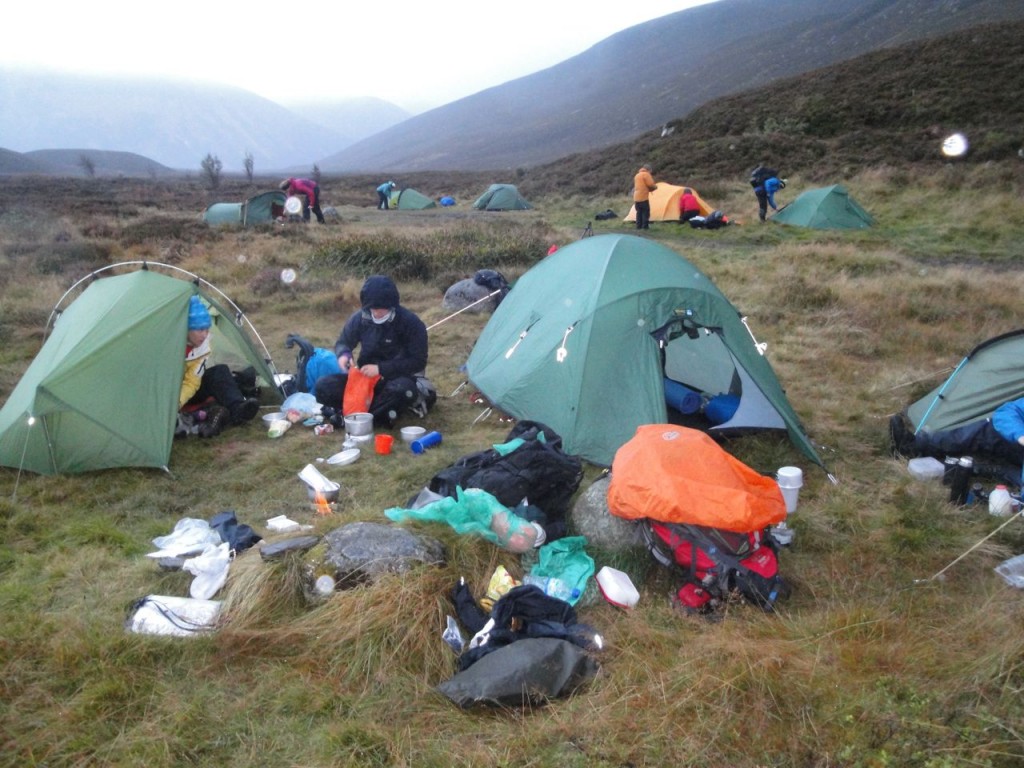
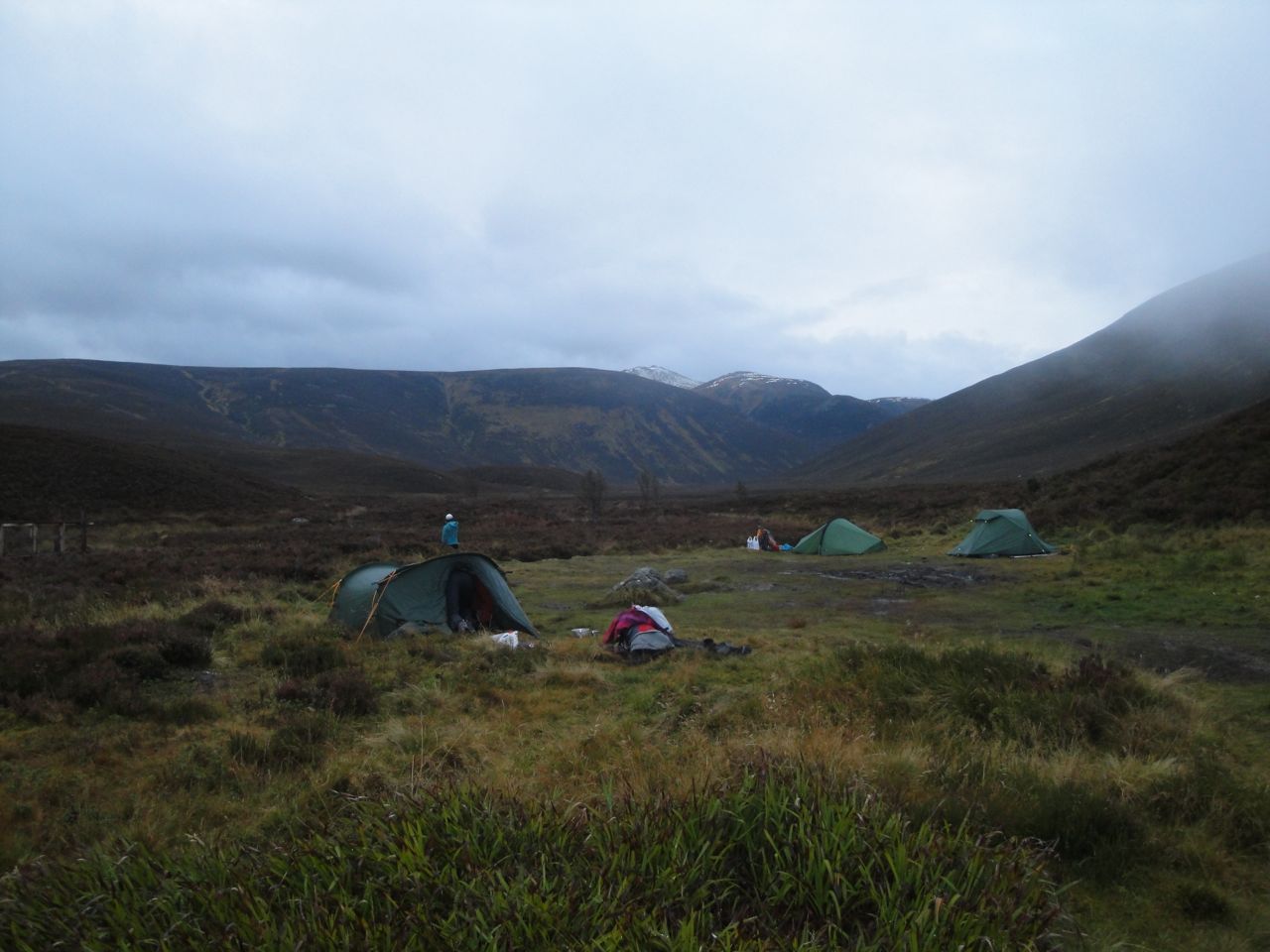
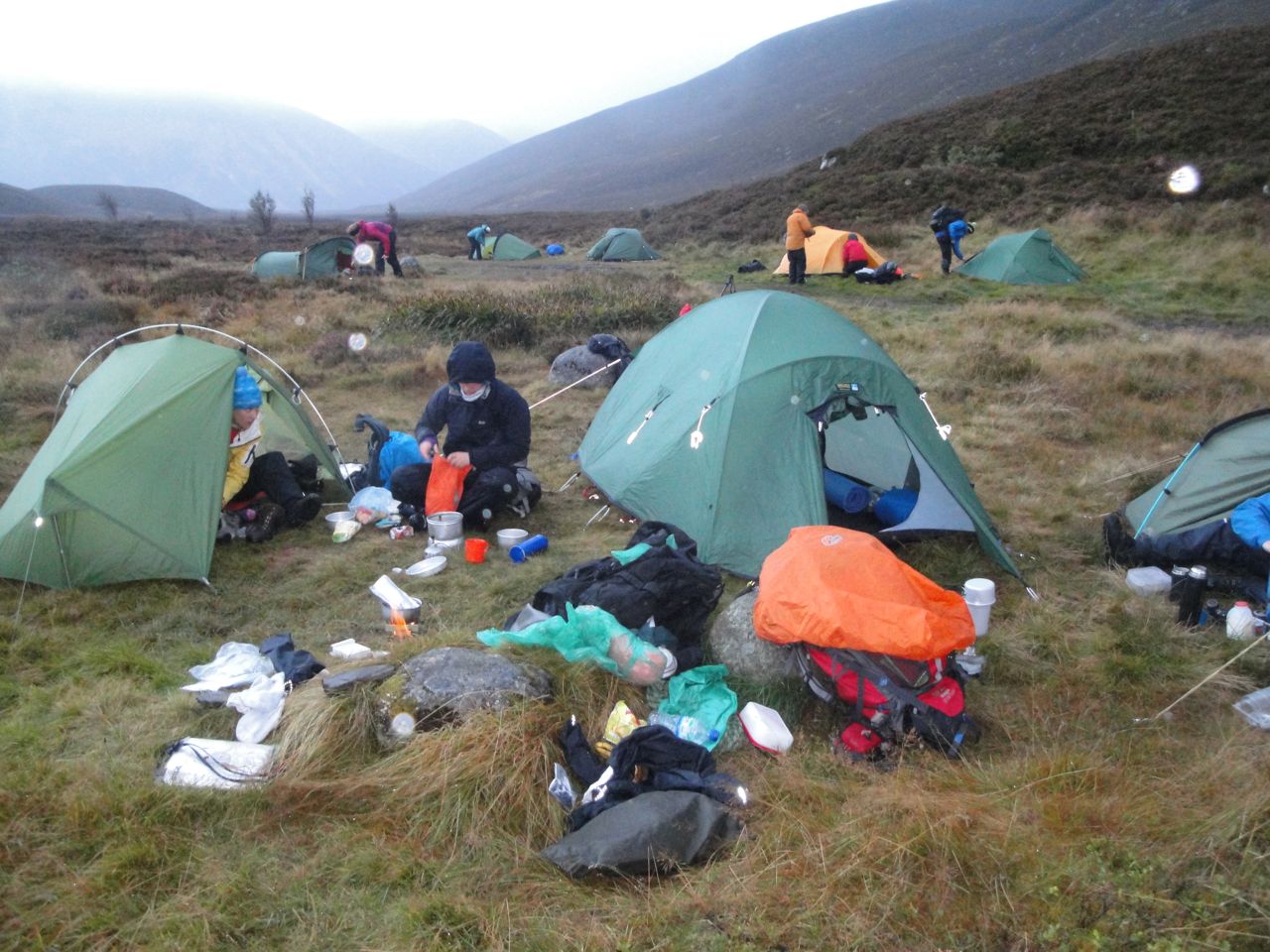
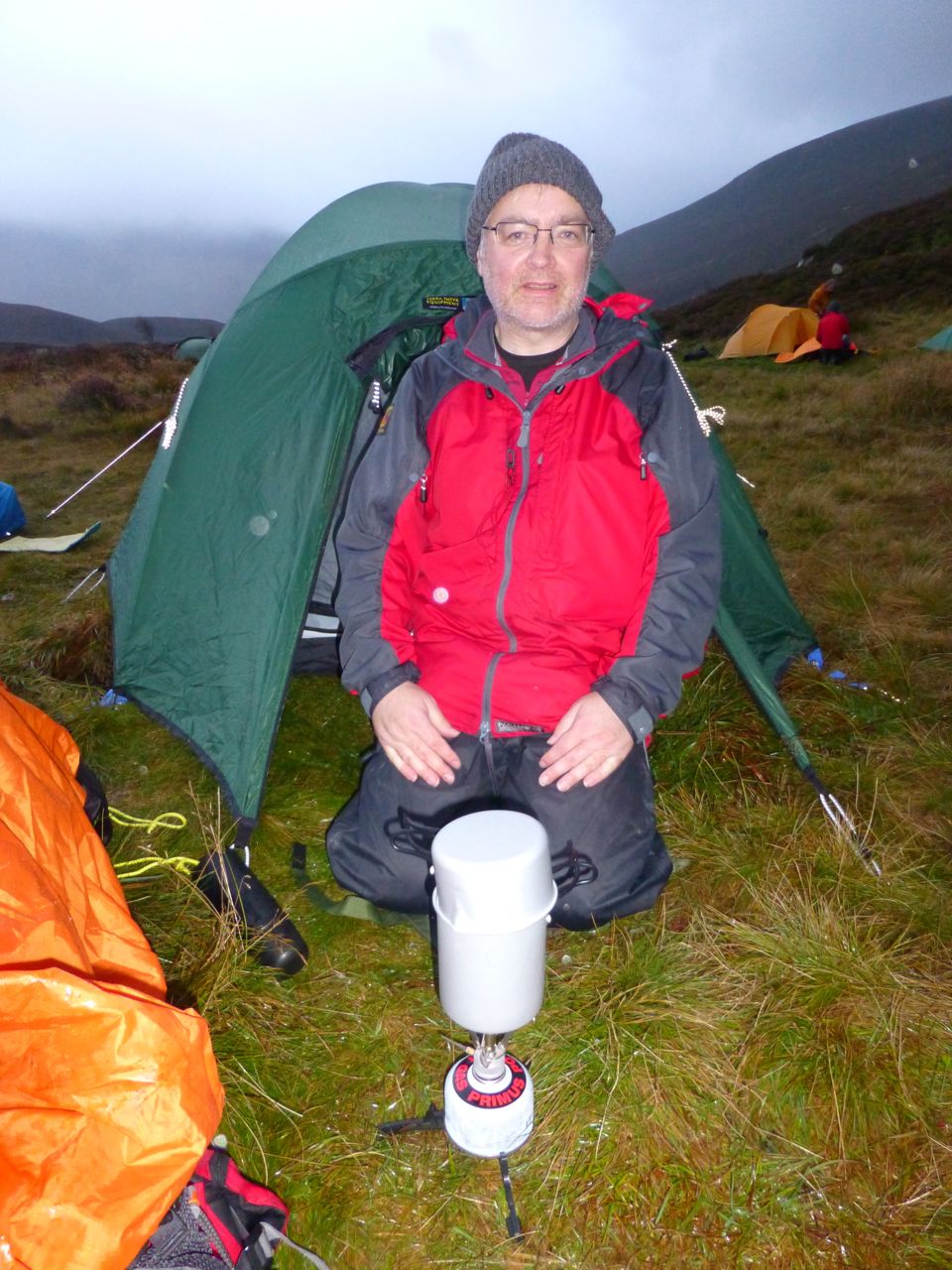
Camp craft keeping it tidy

I unpacked my gear, put sleeping stuff into the tent and kept my things in reasonable order, or so I thought. Photographs prove otherwise. I certainly felt better for getting dry socks on and some warm food into my stomach. I then lay on my mat waiting for the night navigation exercise: ETD 7.15 pm. We were told it would last about three hours.
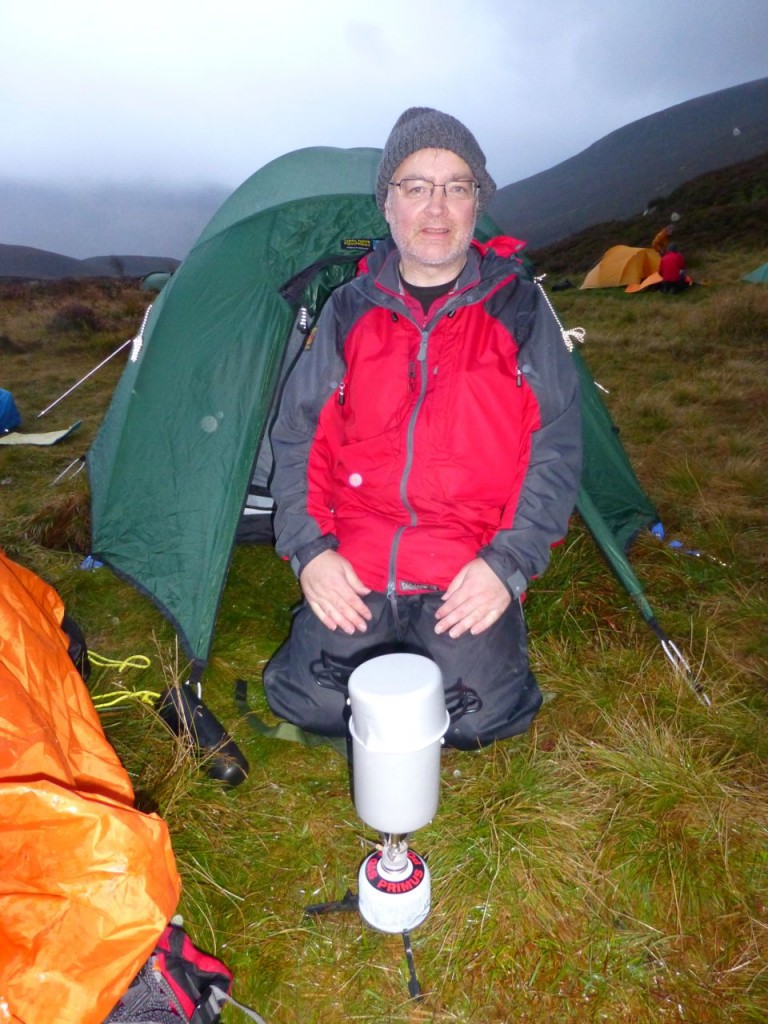
I had thought the rucksack would feel lighter without tent, mat, cooking stuff, spare clothes, flask etc, but it didn’t. I was pleased that my head-torch was up to the job, though it did seem weak compared with Pete Hill’s which could I imagine have been used as a searchlight for enemy aircraft.

The night was a series of legs following bearings while pacing out the distance to various ring contours, lochans, stream junctions. On the return journey we were following one person who had a destination known only to them, and had to identify where they went. All this was in heather and bog. Great fun but again I tired markedly at the end and was certainly glad to get back to camp. We had been out over 4 hours. I sat on a comfortable rock and ate some dates washed down with half a litre of fresh water (a schoolboy error).

Lying snug in my sleeping bag, the rain pelting on the tent and some animal making a noise ouside, I rued my nocturnal fluid intake. I tried mind over matter, using Tai Chi techniques but eventually had to accept that I would have to get up, get dressed and go for a pee if I was going to get any sleep. At least the rain stopped for me. It was, however, a useful excursion. Not only did I significantly improve my level of comfort, but I also realised how little I could see without my glasses on.
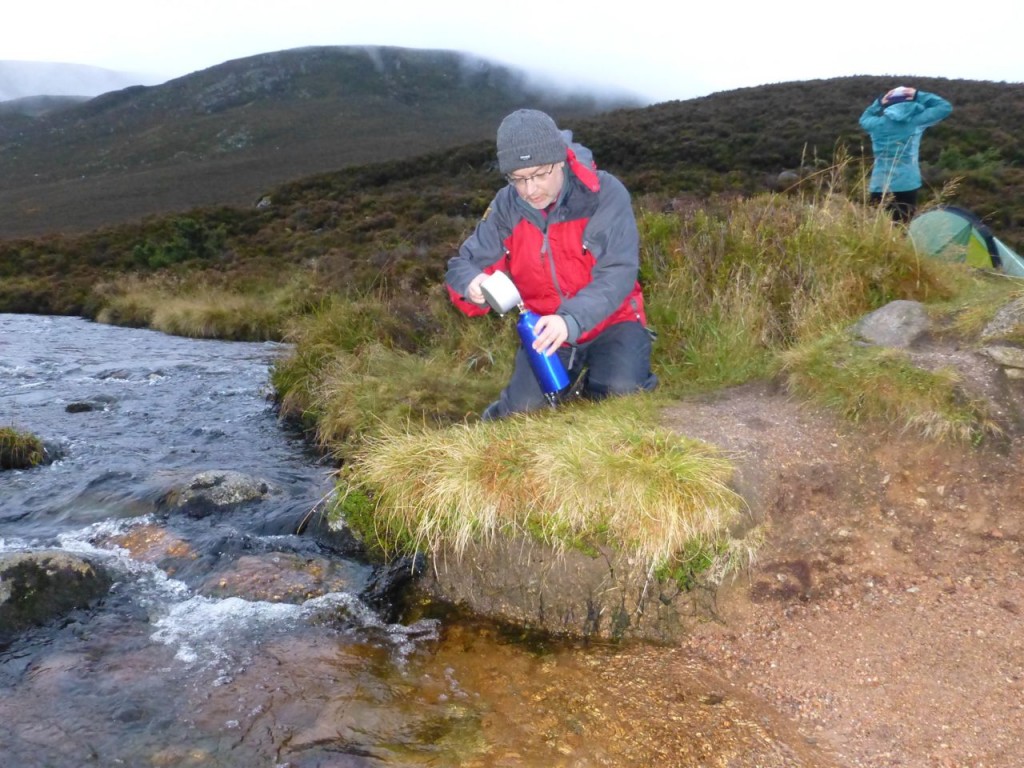
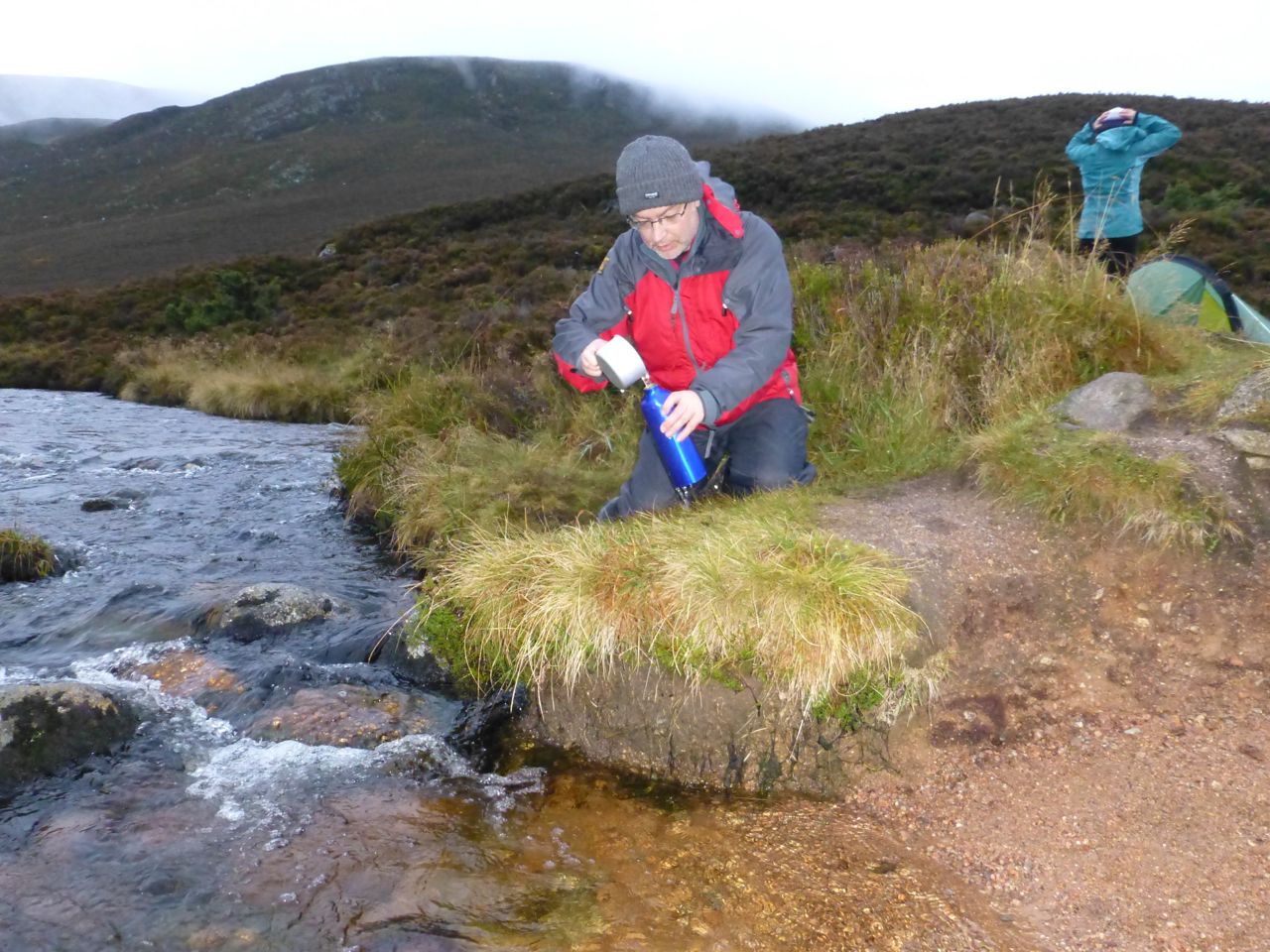
fresh water

Two cartons of Oat so Simple, some dates and a cup of instant coffee was a smaller breakfast than the previous day but just as enjoyable. Then everything was stuffed back into rucksacks and we set off for Meall a’ Bhuachaille.

As on the previous day we each had stints at leading the group. Our first leader decided that we should start off with a bit of a run to warm up, an option that didn’t really appeal to me. So as everyone nodded I was the killjoy saying I would rather warm up gradually. So we mad our way along the track noticing and discussing land features and plants. There was some discussion as to whether we should head directly for Ryvoan Bothy (heathery bog) or take the path (firm but further). The decision was the direct route but on closer inspection we reverted to plan B.
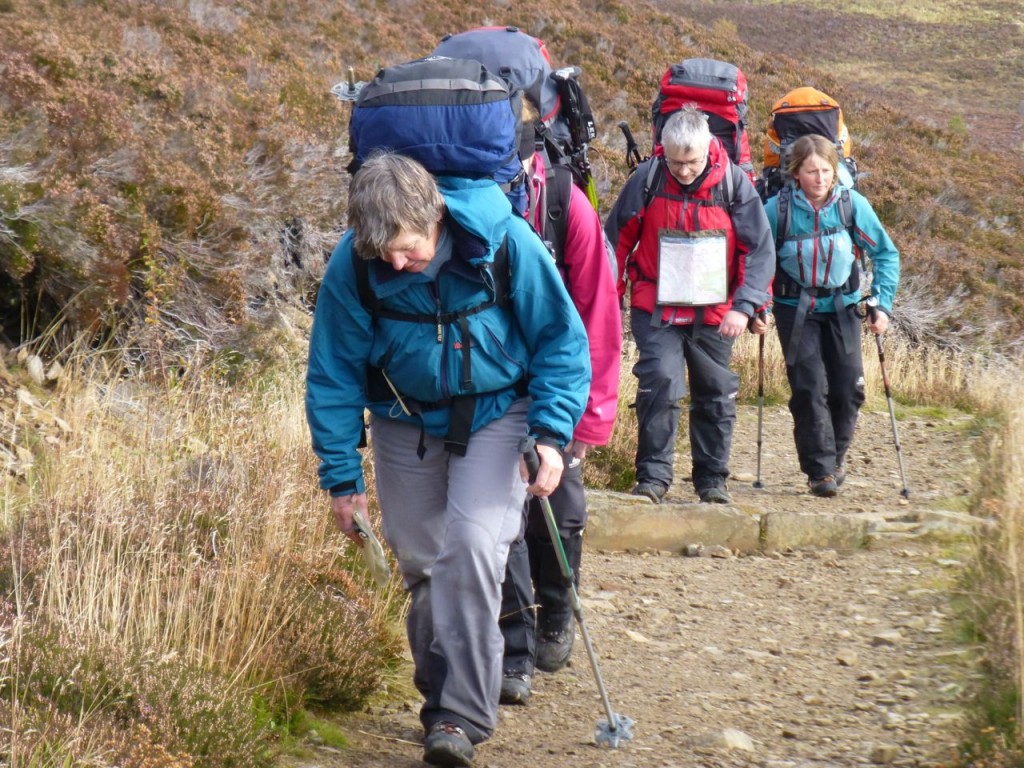
We then took the path up the Corbett, stopping at times to practice finding our position using land features, slope aspect and bearings from distant features, and estimating the time it would take the group to reach particular points. This latter task was I think quite a clever variation on how long you yourself would take.
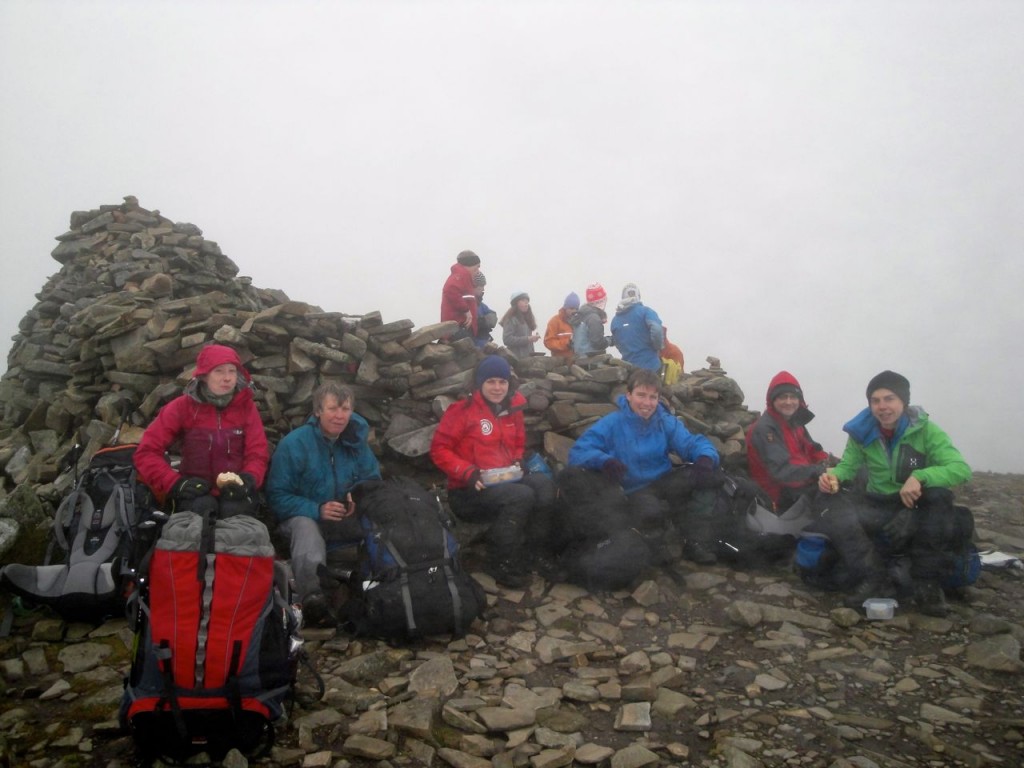
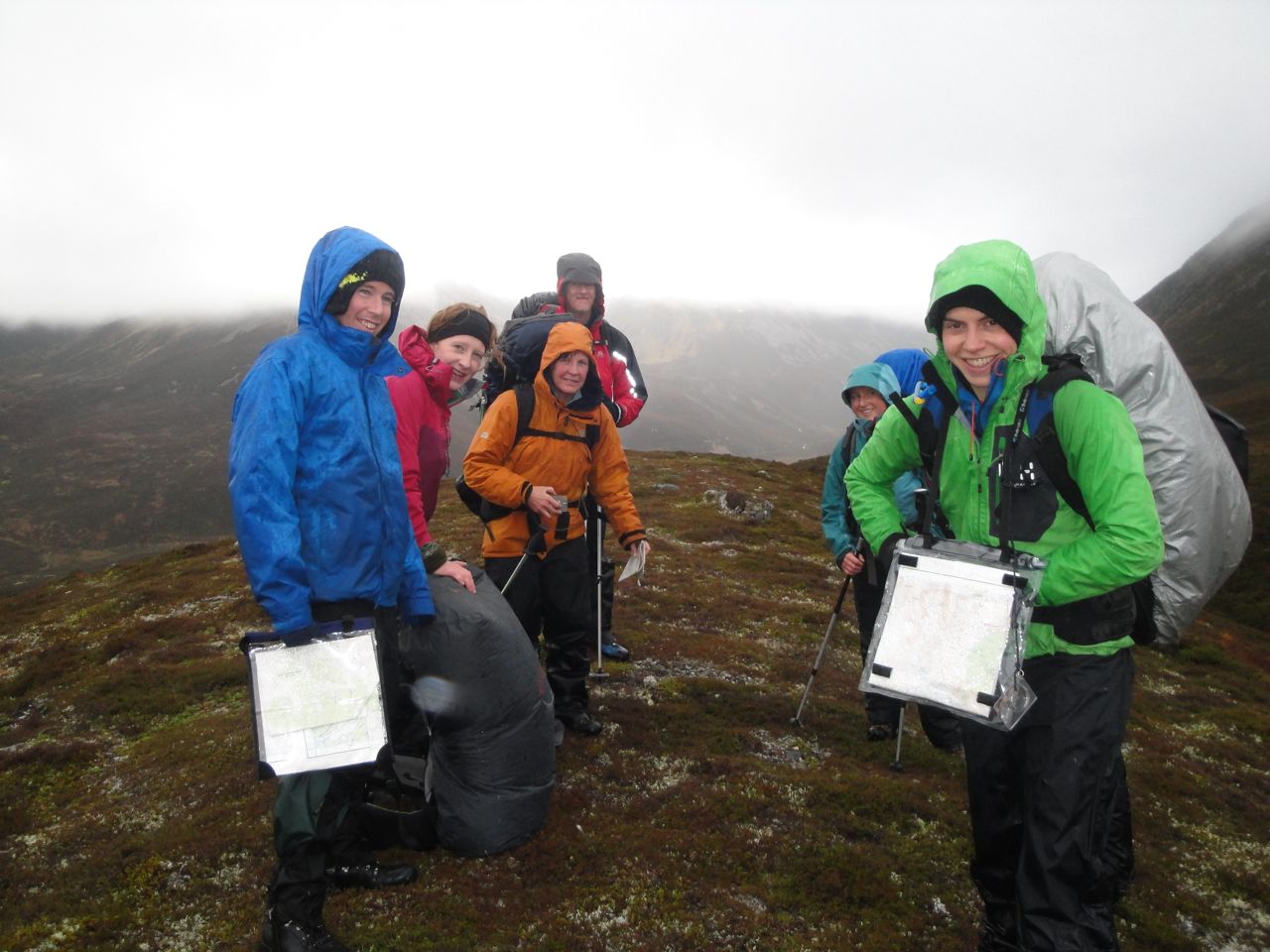
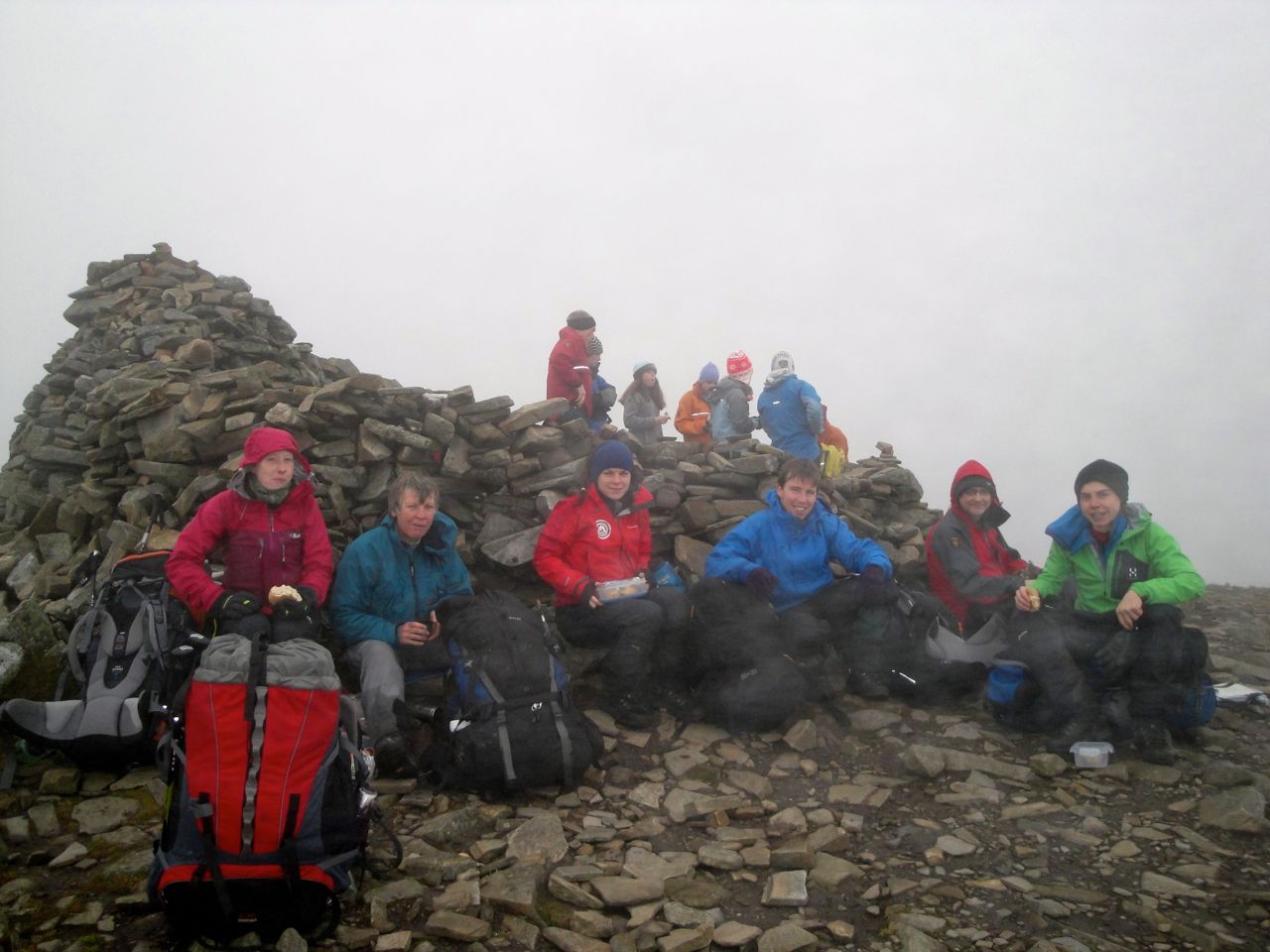
At the summit: group Lou
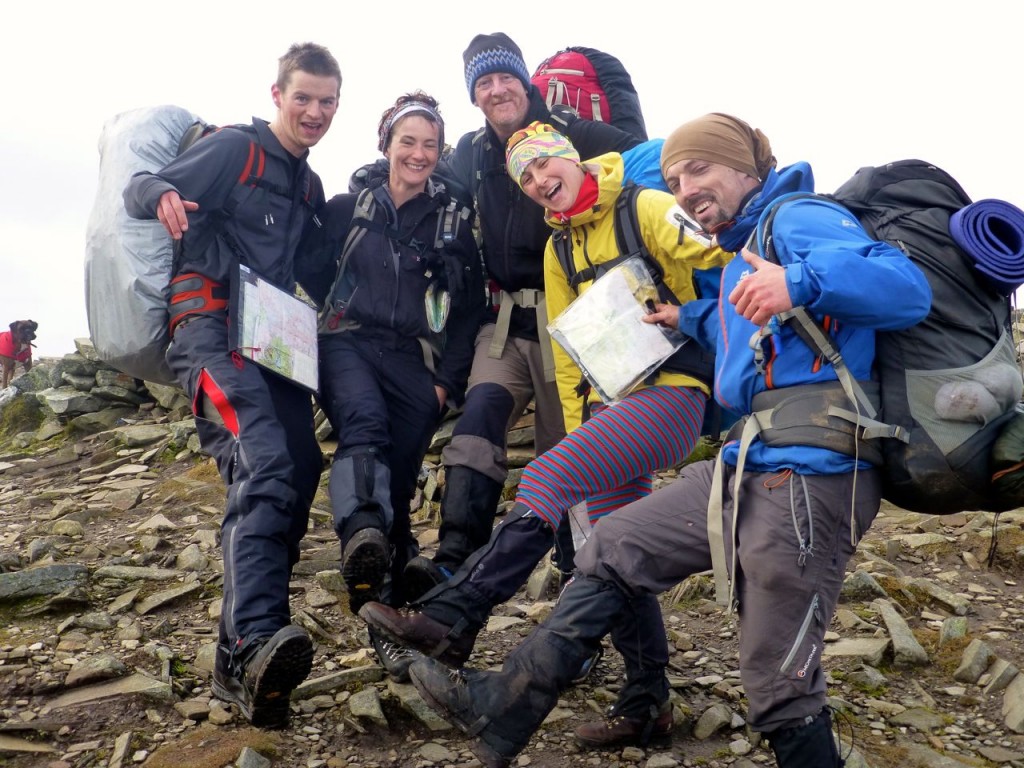
At the summit: group Pete (note different temperament)

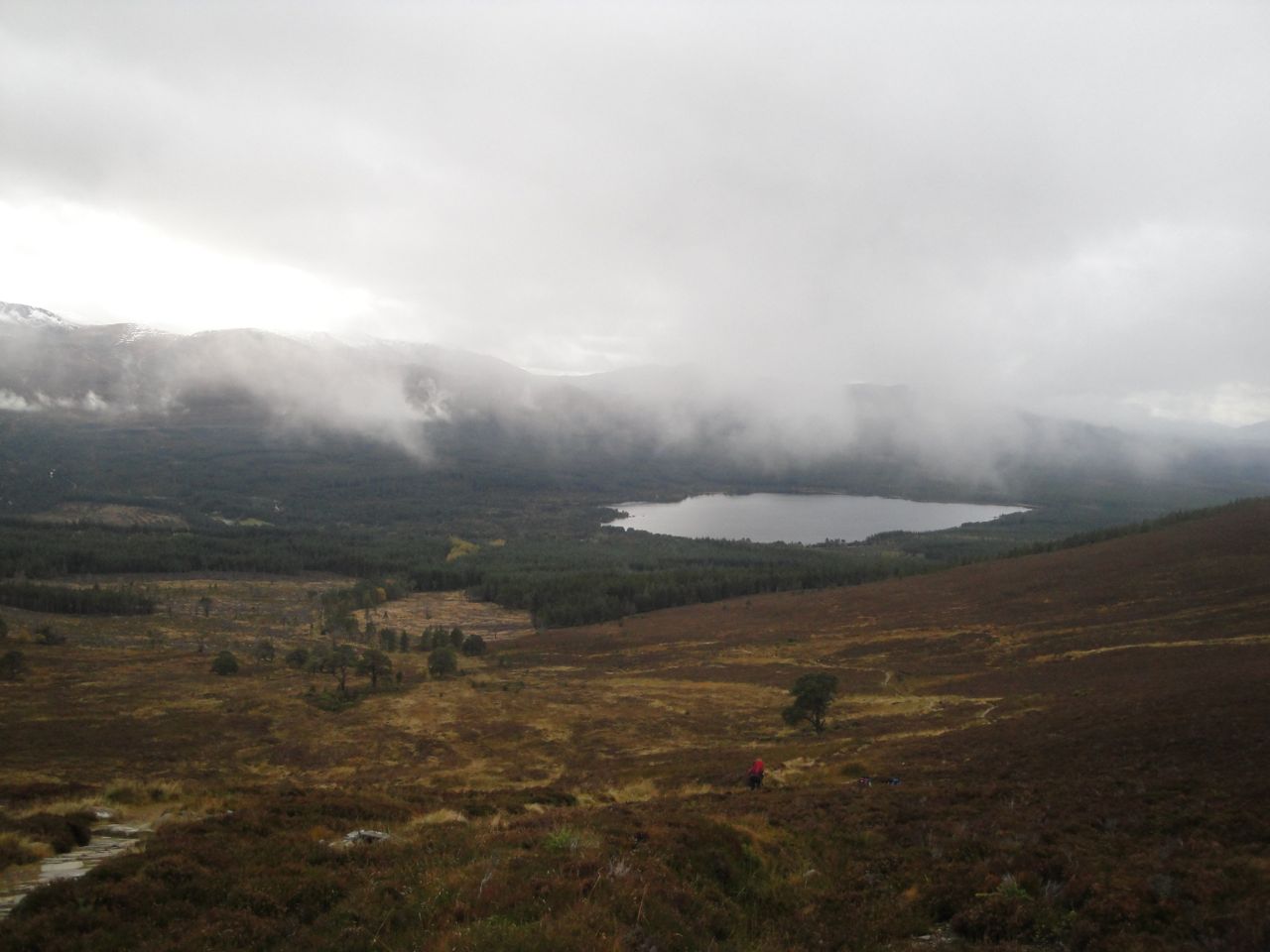
After a break at the summit cairn we headed down following the path that leads to Allt Choire Chondlaich, with nice views of the snow topped Cairngorms and Loch Morlich, a kettle lake (http://en.wikipedia.org/wiki/Kettle_(landform)).
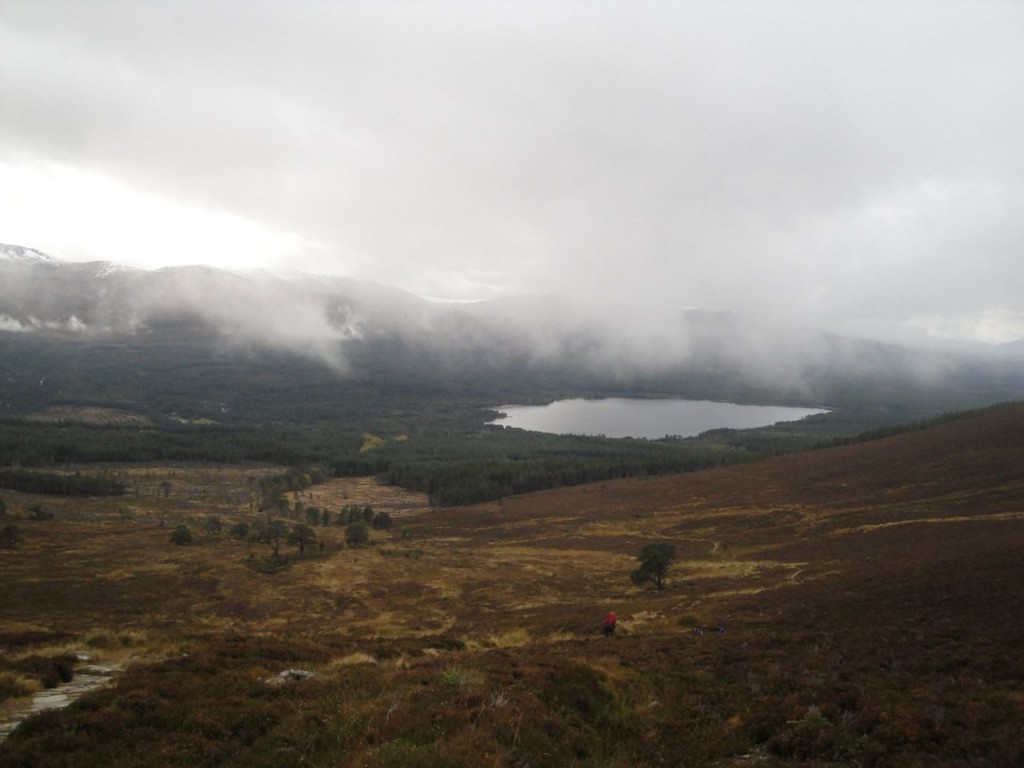
Loch Morlich

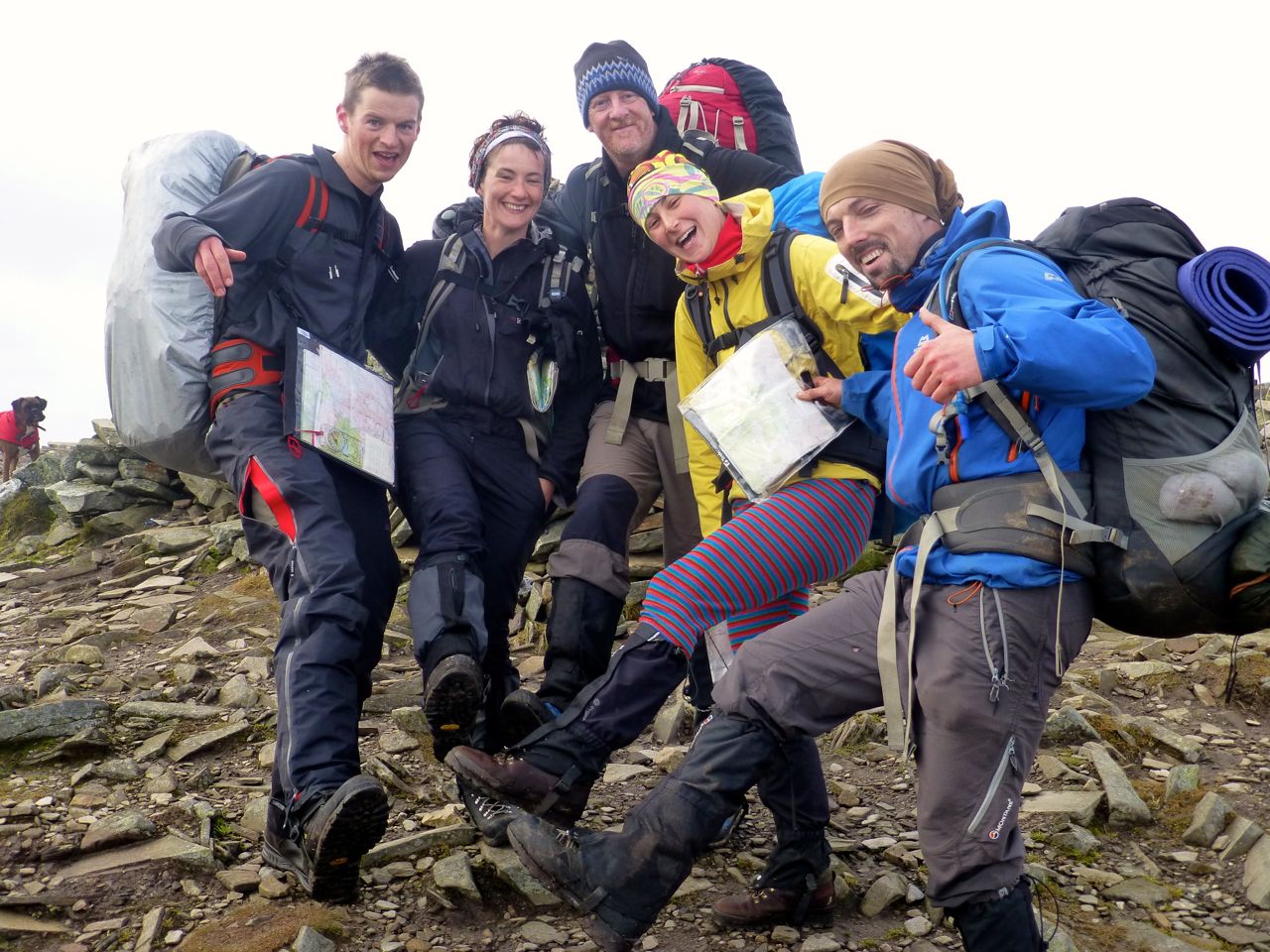
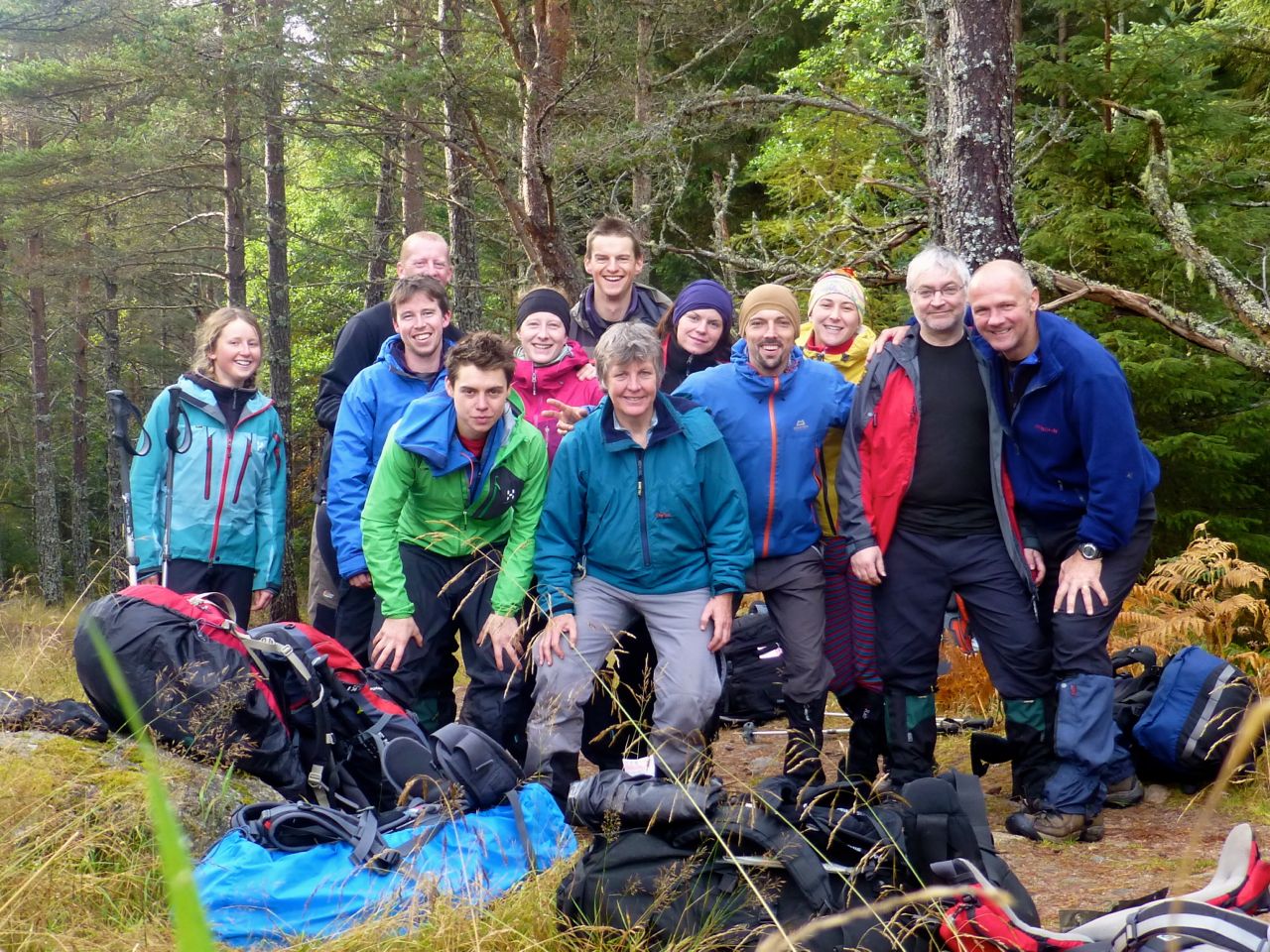
There was a stop for a group photo and personal debriefs in the forest, then we returned to the cars, our log books were returned and we got into some dry clothes.
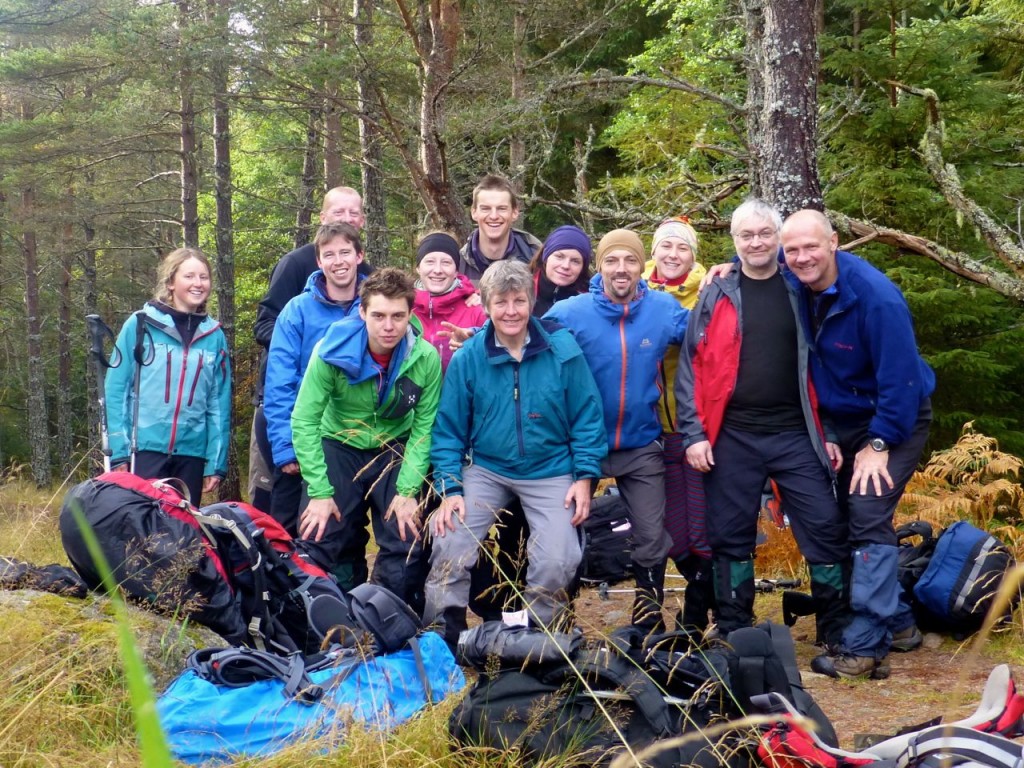
A select few had coffee and cakes at a nearby visitor centre then we went our separate ways, our ML training course finished.

I learned a great deal on the course. The course trainers were all excellent and the other trainees were a good bunch of folks. I’ve been pacing distances even going into work or walking the dogs and will be putting Flora Celtica on my Christmas list.
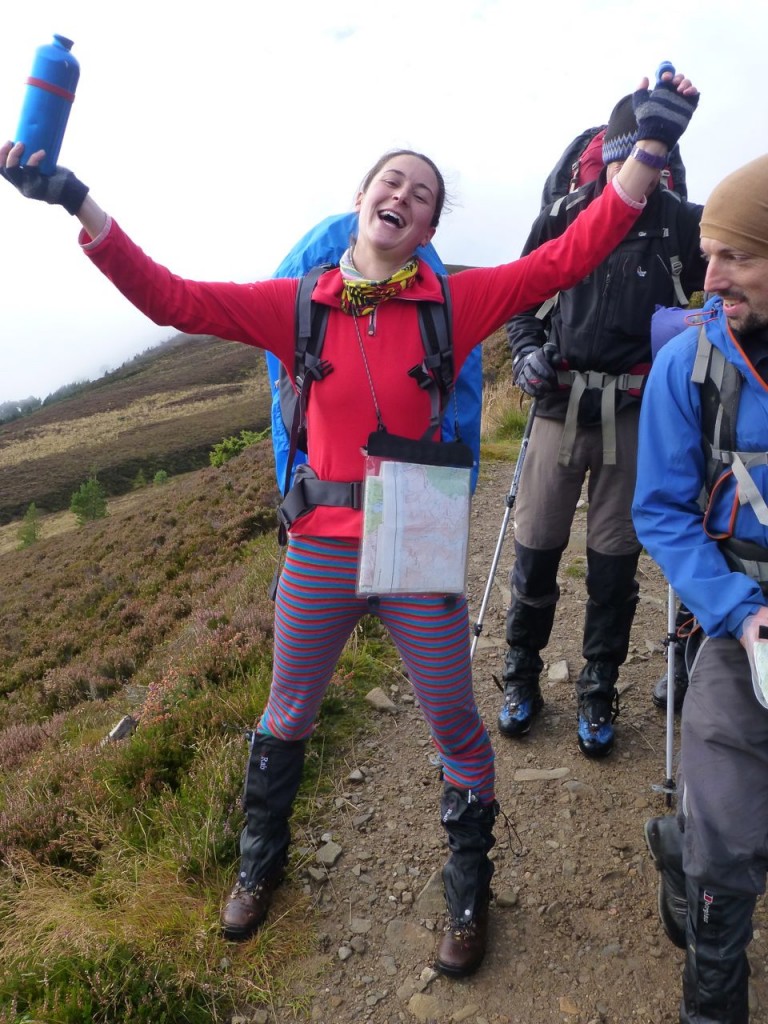
camoflage for the colour blind
 

Posted in Far away | Tagged | Comments Off on MLT expedition: should have eaten my spinach

The Rig of the Jarkness

9.1 miles  5h 55m   ascent 642m
Loch Trool-Gairland Glen-Rig of the Jarkness-Craiglee-Glenhead

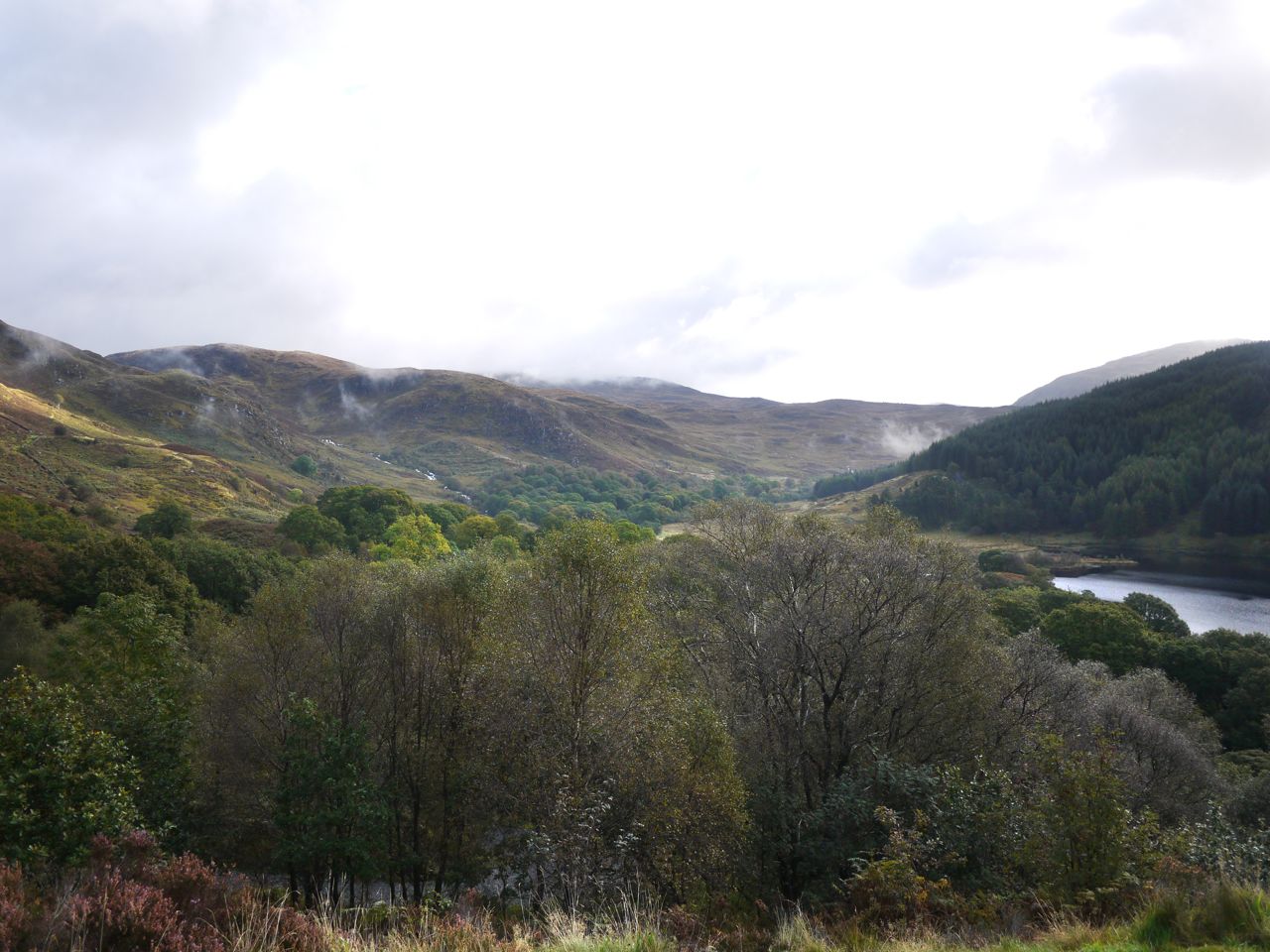
Best done during a hose-pipe ban. I started with a stroll up to Bruce’s Stone overlooking the loch. From there I could see the white water of the Gairland Burn which worried me since my route would entail its crossing but the weather looked great with sunshine and some wisps of morning mist, and autumn’s colours filled the glen.
Gairland burn in the distance

My first section would take me up the side of Buchan hill to the Gairland Burn and when I set off it was with the enthusiasm of the seven dwarves singing on their way to work (hi ho, hi ho, etc). Once I left the road however, the mud required all my attention, silencing my inner voice. This section hadn’t been this muddy the last time I was here, and the higher sections even then had been a quagmire. What lay ahead?

Anyway, I picked my way along the muddy track congratulating myself on the decision to wear gaiters when one muddy section proved surprisingly deep, my leg sinking to well above boot top. Beware here, there is a temptation to step to the side of the boggy path, but the whole section is terraced, though hidden below undergrowth, so it is easy to take a tumble. Perhaps I should have unstrapped the trekking pole, but that would have impeded my sudden arm waving when trying to maintain balance.

The plan was to cross the Gairland Burn at the section marked “ford” on the OS map, but I can only presume the ford has been washed away. The burn was not in spate, however, but neither was it in drought. There is a section where the burn splits forming a small island but the water either side was rather intimidating so I chose a spot immediately downstream of the island where there is a large boulder midstream.

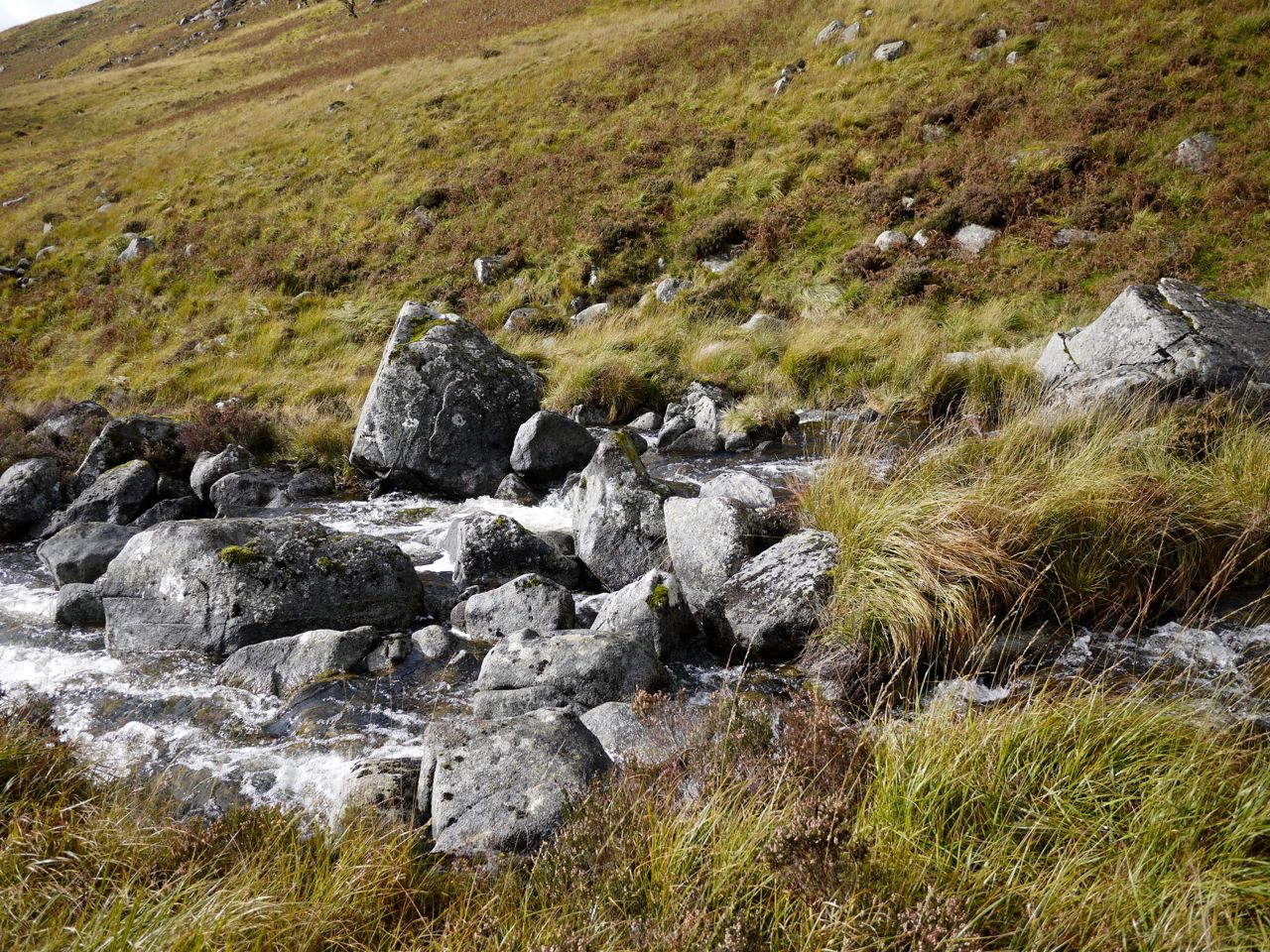
Gairland Burn crossing

The rocks were wet and slippery and crossing did require the use of some submerged rocks, but at least that washed the mud off my boots. I had hoped for best but planned for the worst, putting all my possessions into waterproof bags before the crossing, but made it across in one piece. Amongst the things I packed away was my watch, which was to have an effect later in the walk.

Once across the burn there was a flat area of boggy tussock grass which looked as though it should be easy walking but wasn’t, and then the climb up to the Rig of the Jarkness, which in places required the use of hands. I hesitate to call it scrambling when it is on vegetation.

Once up on the Rig the views were fantastic. I slowed to a snail’s pace looking around at the Dungeon Hills, Merrick and Curleywee. The terrain here is granite blocks embedded in boggy grass with numerous scattered erratics. Looking southwards, in the direction of the sun, the ground sparkled with reflected sunlight, as if someone had sprinkled glitter over the entire hill. I found myself just stopping to take in the view and listening to the silence. In fact it wasn’t silent. Just at the limits of hearing I could hear a waterfall. Wonderful.

Merrick from the Rig of the Jarkness

I had read that ten lochs can be seen on this walk so I was keeping a count. The most I could see at any one time was six, but throughout the walk, ten it was (Lochs Trool, Dee, Clatteringshaws, Long Loch of Glenhead, Round Loch of Glenhead, Dow, Narroch, Valley, Neldricken and Enoch).

Wandering along the Rig of the Jarkness I would sometimes come upon a track but none that persisted. The ridge undulated and required some care in picking a route around water and over rocky knolls. The Clints of the Buss are a shoulder of Craiglee and mark a change from the relatively flat Jarkness to a rocky climb with a significant worsening in the bogginess. This is particularly bad around the Dow Loch and the small lochans nearby. Some of this mud is deeply churned and had deep round prints reminiscent of the mud near farm gates and much to my surprise I spotted four cows grazing at about 500m.

Dow Loch

Once at the Dow Loch I was beginning to feel a little weak and decided to stop early for lunch. The original lunch spot was to be Craiglee’s summit, still over a kilometre away. As I was getting the sandwich out however, the rain started so I took out my jacket instead and carried on in the hope that the rain would soon stop.

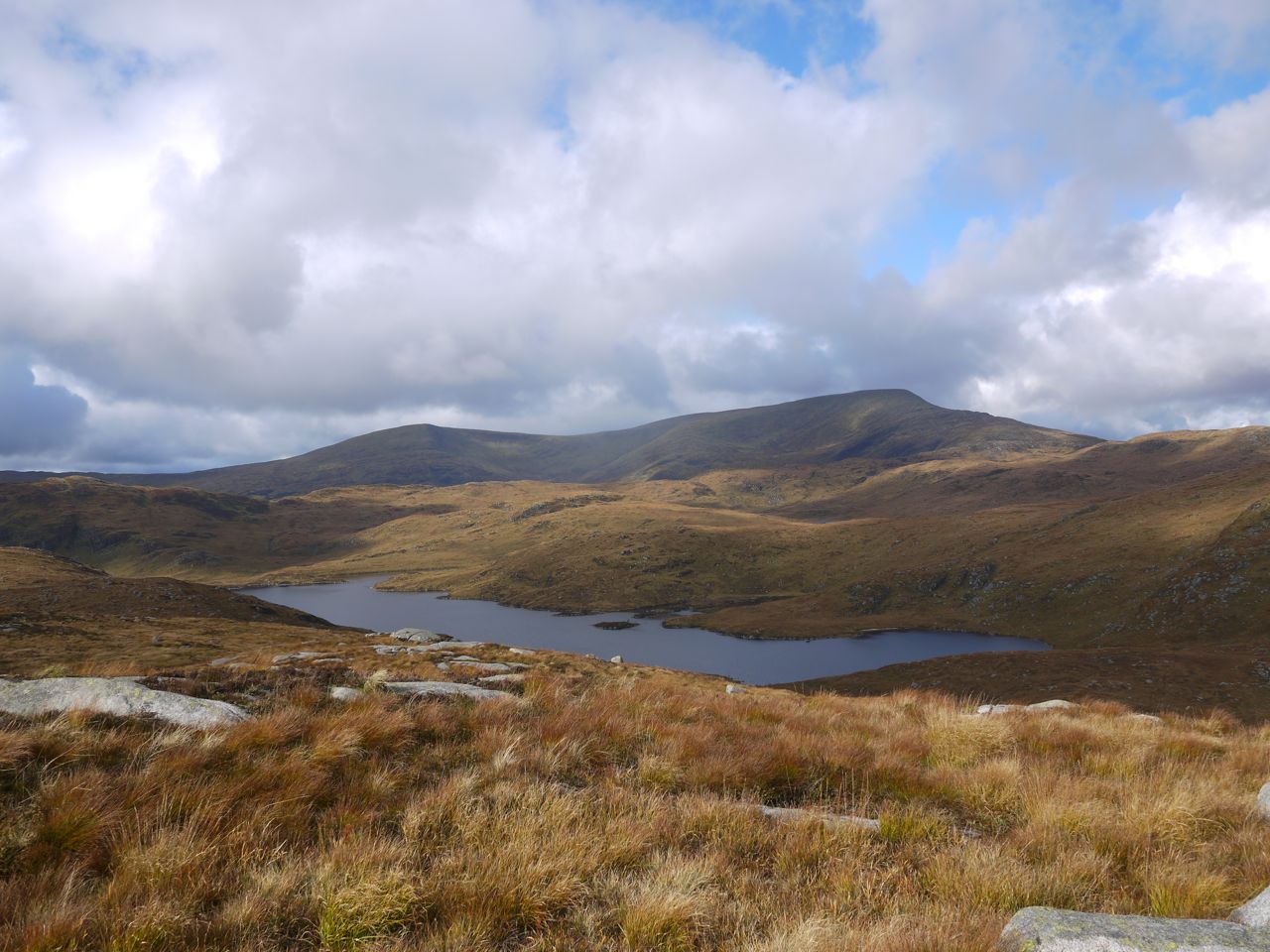
Craiglee and the Glenhead Lochs

The final half mile to the summit involved crossing several rocky ridges. These were a little like false summits except having reached the top of one of these ridges I had to climb down before climbing the next, and all this on an empty tank.

At the summit I dug out my watch and realised I had been walking for 3h 45m without a break other than my pauses on the rig. No wonder I felt washed out. Lunch certainly revived me. Craiglee’s trig point sits on a pile of boulders and has excellent views. I could even see the Silver Flowe glittering, living up to its name.

Coffee on Craiglee

From the summit I intended to head directly down to where the SUW crosses Dargall Lane near the Giant’s Axehead. I took a bearing and found that I could use the the burn coming off Curleywee as my target.

Unfortunately I could not find a safe way off Craiglee in that direction and had to backtrack a good 250m to avoid the bluffs. The rest of the descent was mostly boggy tussock and hidden watercourses. I came across several deep holes with water cascading down them and even more areas where I could hear them but not see them. I presume one of these might be the Buck’s hole marked on the map. I would worry about this route in poor visibility. It was certainly a relief to reach the firm track of the SUW.

Giant’s Axe Head and Loch Dee

Despite weary legs I detoured to the Seven Stanes’ Axehead and used it as an excuse for a quick break. from there I just followed the SUW back to Glenhead (downhill) then the road back to the car (uphill).

The Rig of the Jarkness is a beautiful place, a secluded wilderness with wonderful views. The routes to it are not difficult but do exact a price in effort, but that probably contributed to the effect of the rig.

PS I’m annoyed that I can’t find a convincing meaning for the Rig of the Jarkness. It is suggested to mean the ridge of the turbulent waterfall, but the absence of a turbulent waterfall is a little odd if that were true.  The best I have come across is  [rig (angl.), “ridge, back”+dearg (gael.), (a specific shade of)”red”+ness, (norse/danish) “nose,promontory”].

Posted in Dumfries & Galloway | Tagged , , | Comments Off on The Rig of the Jarkness

Kirkconnell Flow: the lost patrol

3.6 miles   1h 42min  60m ascent

Kirkconnell Flow National Nature Reserve

Today there was a important conjunction of environmental and personal events, heavy rain and laziness, which led me to choose an easier walk in place of that originally planned. (Shakes head) Had I learned nothing from the Almorness misadventure?

Rather than climbing hills I decided take the dogs for a slightly longer walk than usual. Though obviously not too far since they’re getting a bit grey in the muzzle. I thought a stroll around the nature reserve at Kirkonnell Flow would be reasonable. I even thought I could call the report “Kirkconnel Flow: first recce”. Well it didn’t go to plan. Poor Sweep is limping around the house and Leo is in hibernation.

The Scottish NNR say of it:

Restored from its formerly damaged state, this site represents one of the most threatened habitats in the world. The sodden surface of the bog is a palette of green, purple and red shades of Sphagnum mosses and wet-loving plants, giving a sense of a remote wilderness among the busy surrounding fields. Colourful butterflies flit over the moss, whilst adders and lizards bask in the sunlight.

Who could resist that? This raised bog has a floating pathway around its edges, which allows access for nature lovers such as me.

The car park was empty. The rain was heavy and the wind was strong. Both dogs were shivering. The information board was empty. All of this contributed to the atmosphere of wilderness.

Having said that, a well constructed path of wood bark leads from the car park. The visibility, firmness and dryness of this path follows the inverse square law, whereby its quality deteriorates rapidly as one walks from the car park. But that is probably appropriate in order to maintain the feeling of wilderness.

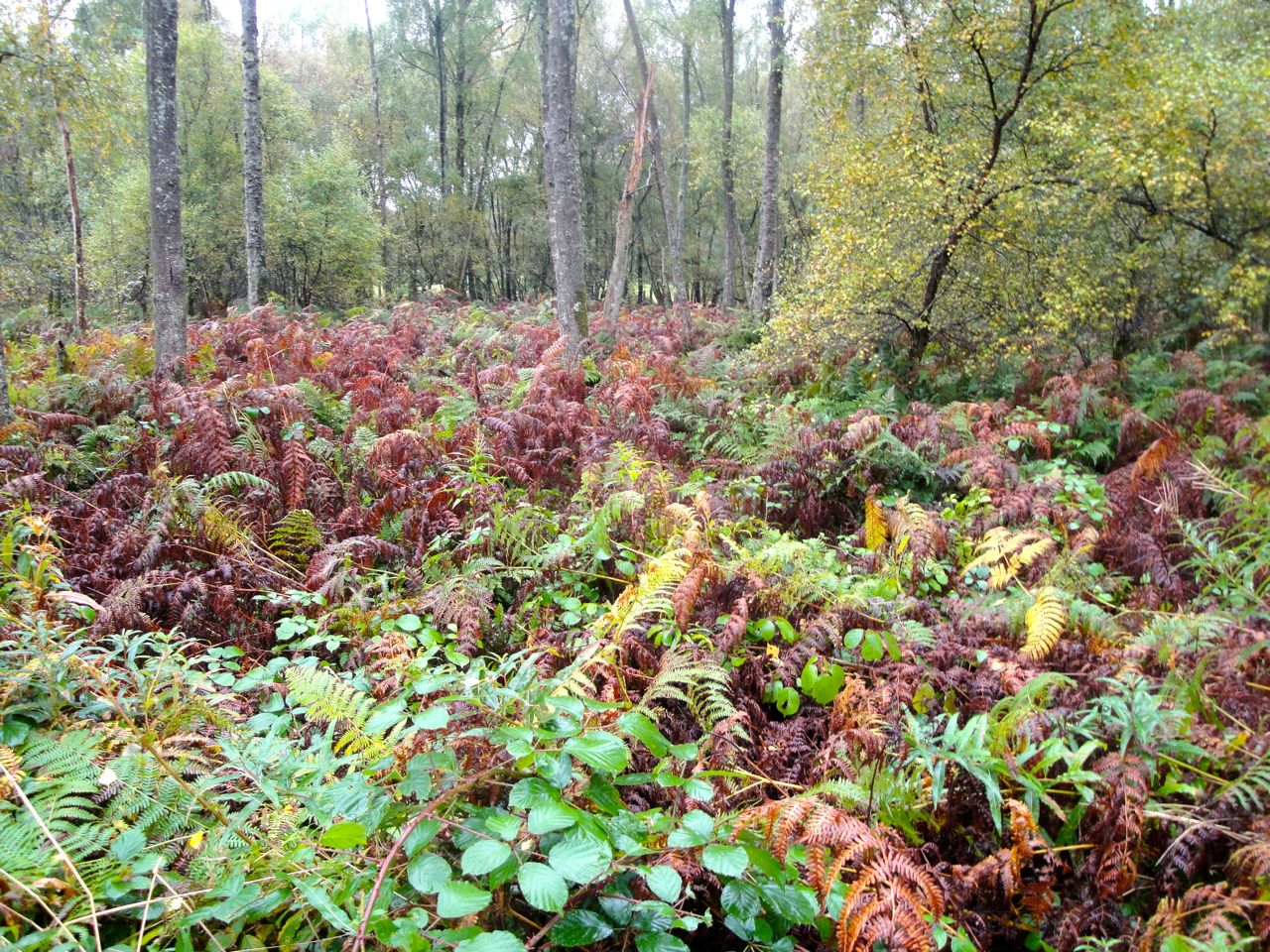
I am sure that I would have appreciated the flora better were it not for the heavy rain. There were certainly a great variety of plants in their autumnal colours.

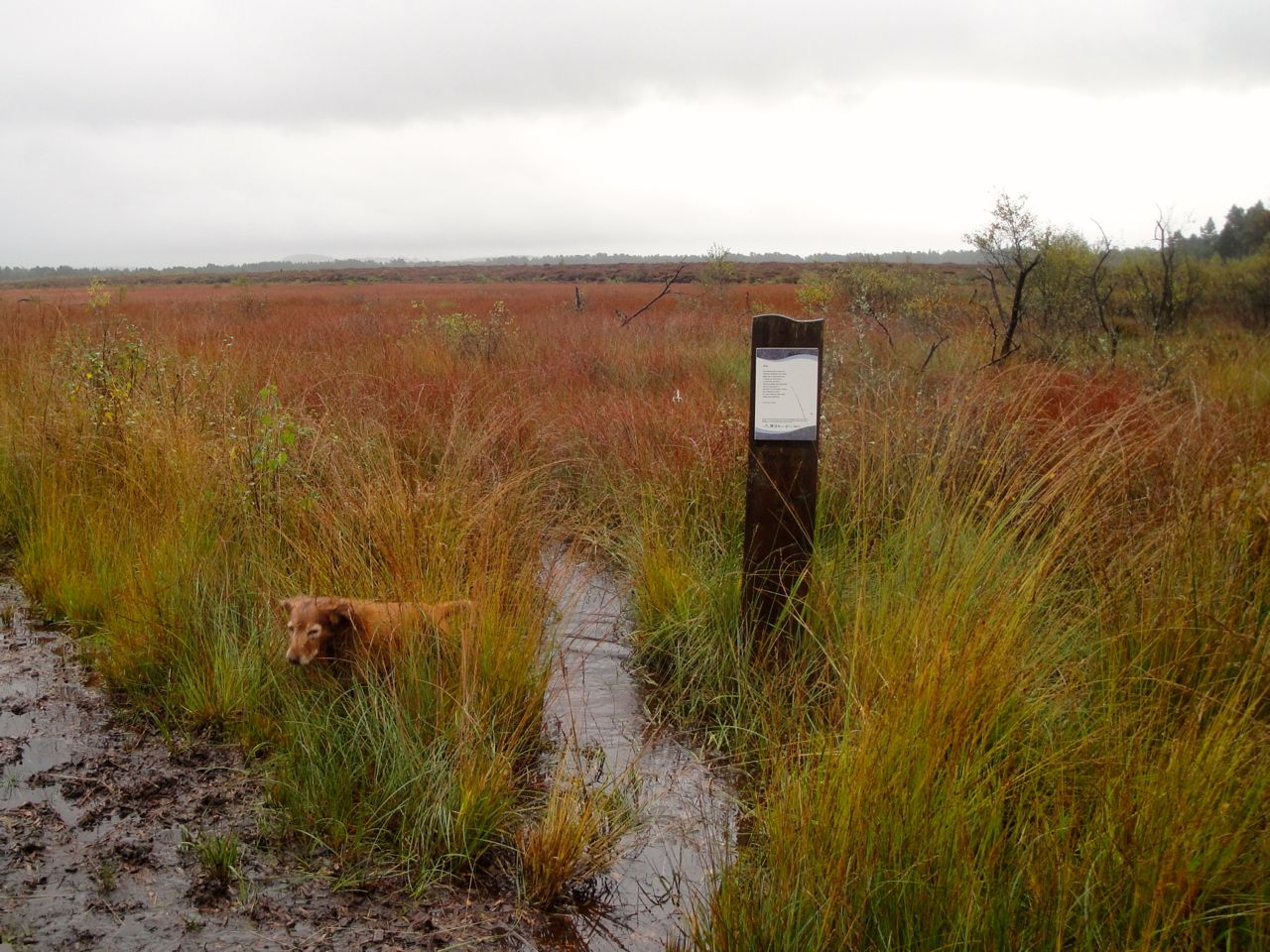
The bark path gradually became waterlogged so that its consistency was like porridge, the dogs’ legs, and my boots, sinking significantly. I thought it best not to stand still. Then the bark ended. It was possible to follow a faint track which at times had posts nearby, which are presumably way-markers but unmarked.

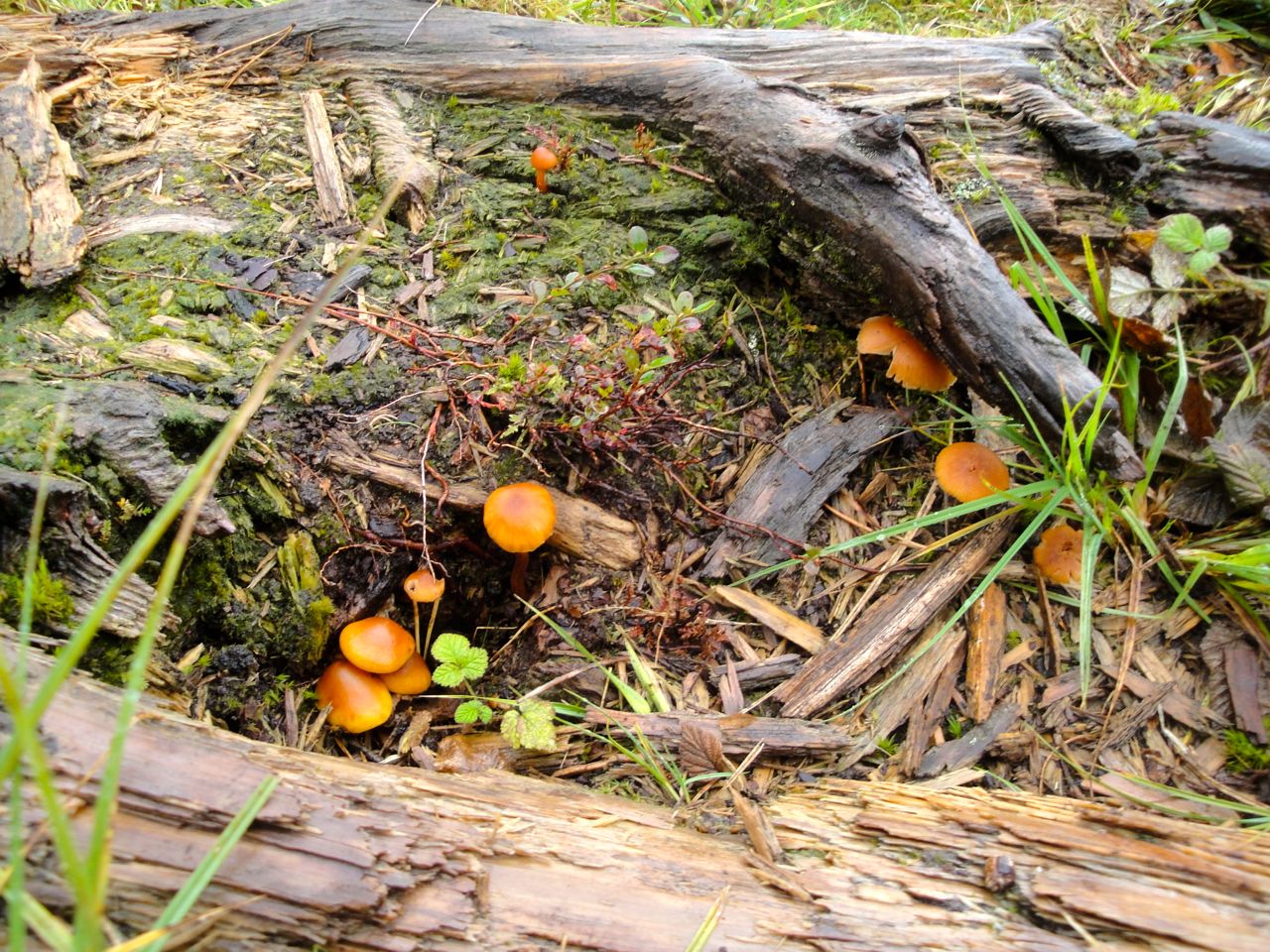
My passage through this section was aided by knowledge from a detective novel I am reading at present. In this a murder victim is thought to have had some safety training since when walking along a tunnel in the London underground he had avoided stepping on the sleepers. These are apparently slippery and those who slip may come into contact with live tracks. The track in this section has numerous rotting logs across it, which were indeed extremely slippery so I did my best to step elsewhere. I was also careful to stow my camera before moving off. I’m not sure if the entire place is full of logs or if these are part of the path. I suspect the former.

There were large areas of standing water, but I suppose one can expect that in the middle of a bog during heavy rain. Sweep bounded from pool to pool while Leo and I edged around as best we could.

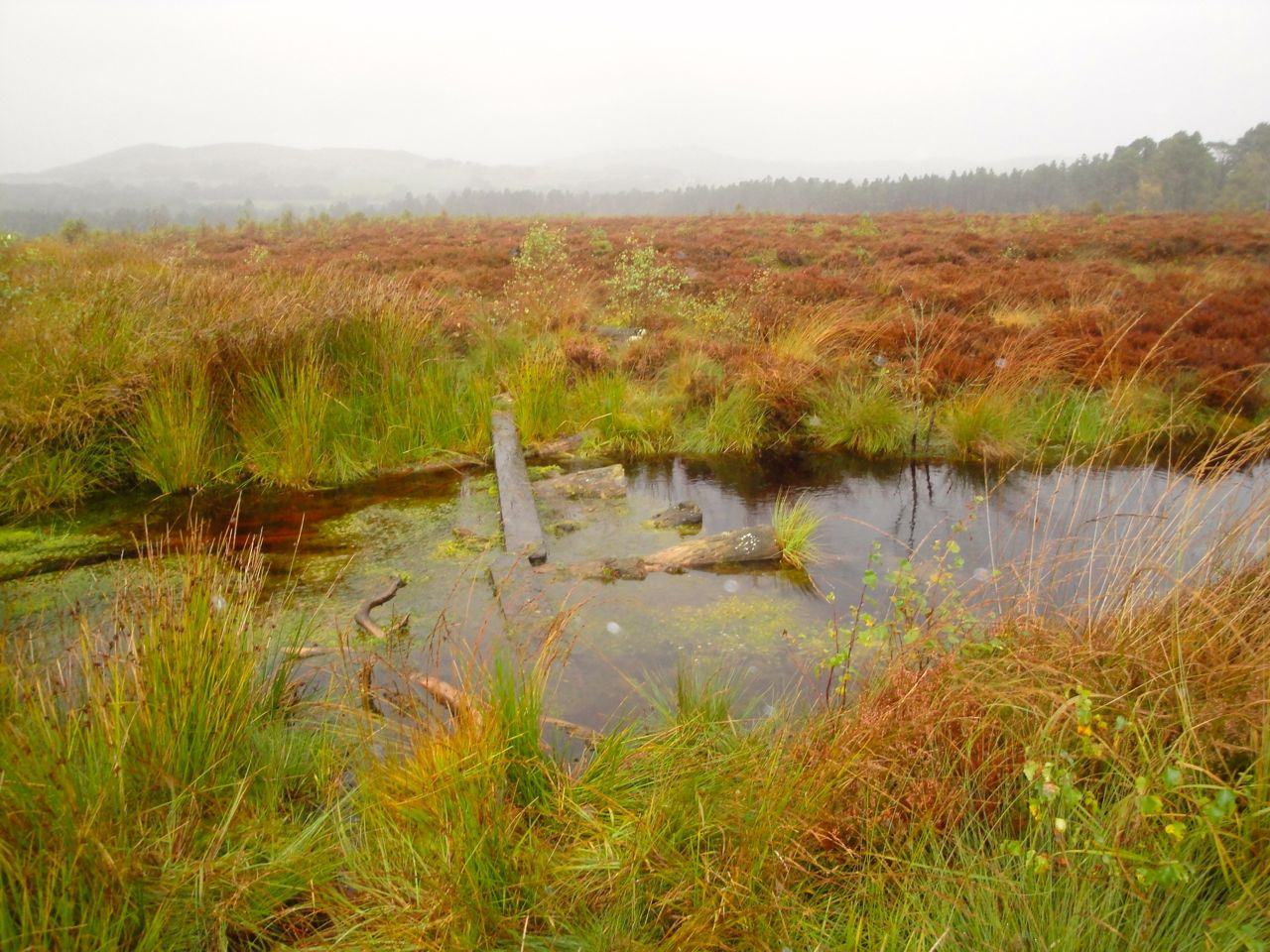
We then came upon a stretch of water with a couple of moss covered planks thrown across it. Sweep swam across and Leo, on an extendible lead, took the planks but had to swim part of the way. I edged carefully over but Leo decided to cross back as I did so upsetting my equilibrium. The final metre of planking disappeared below the surface so I leapt.

The thrice crossed water, from the far side

Imagine my surprise to find that the extendible lead in my hand suddenly became taut. Leo had walked around a bush and snagged the lead. I managed to make the far bank but the lead was well and truly stuck so I was forced to cross back, un-snag the lead, cajole Leo across in front of me and cross yet again.

The far side was more boggy but it was easy enough to find a way through and though it was now difficult to discern a path or track we did come to a gate in a fence which made me think I was still on track. Eventually we came to the end of the open ground and another gate.

Once in the trees there was a bark covered path but as before this gradually petered out. The path again became less distinct and eventually I could see no sign of it. On google earth the track is obvious but on the ground it must have been lost beneath the ferns.

So we carried on where I supposed the path would be, presuming that we would come upon it again. In the woods however I was straying further from the path and the undergrowth became increasingly difficult with dense undergrowth. I saw a break in the trees to my left and made for it, the undergrowth becoming even thicker and difficult for the dogs to get through.

Then ahead the trees ended, separated by a barbed wire fence from a lake. My heart sank as I contemplated backtracking through the woods. On closer inspection, however, the lake was merely a flooded field and it looked as if we could get across. There were no holes in the fence for the dogs so I had to manhandle squirming sodden dogs over the fence then get over myself.

The field proved easy enough except one section of water and mud which needed a just-go-for-it approach. Then we were on a road, near a junction. But what road? I hadn’t thought a map would be needed so finding the name of a farm on a sign wasn’t helpful. I did at least have a compass so was able to choose which road seemed to be going in the best direction and followed that back to the car park.

Sweep didn’t seem to like us stopping and took to barking at me whenever I stopped to think and consult the compass.

There is a very short section in trees after the fence and gate but after that I should have remained out of the the woods. I know now.


Posted in Dumfries & Galloway | Tagged | Comments Off on Kirkconnell Flow: the lost patrol