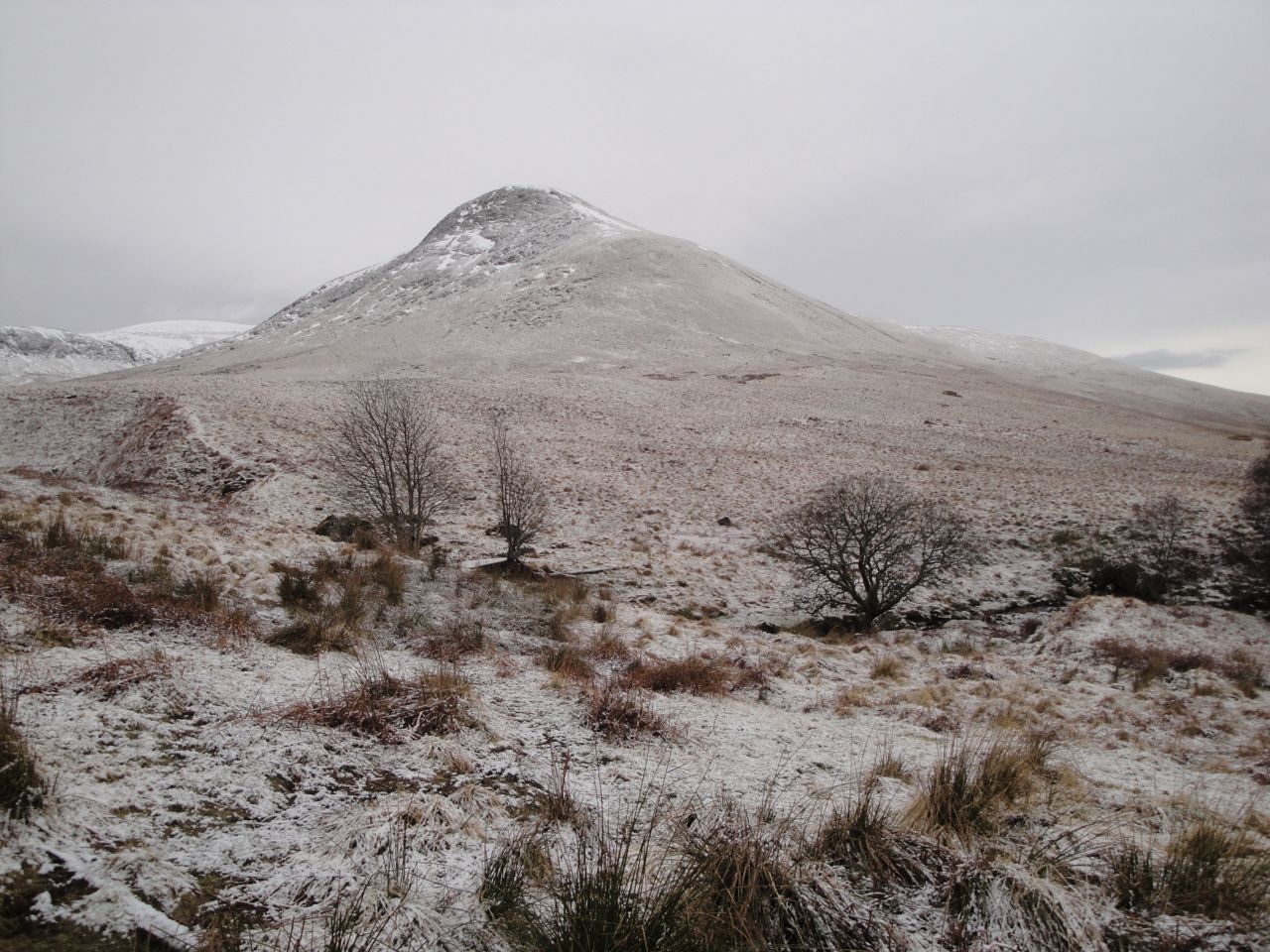
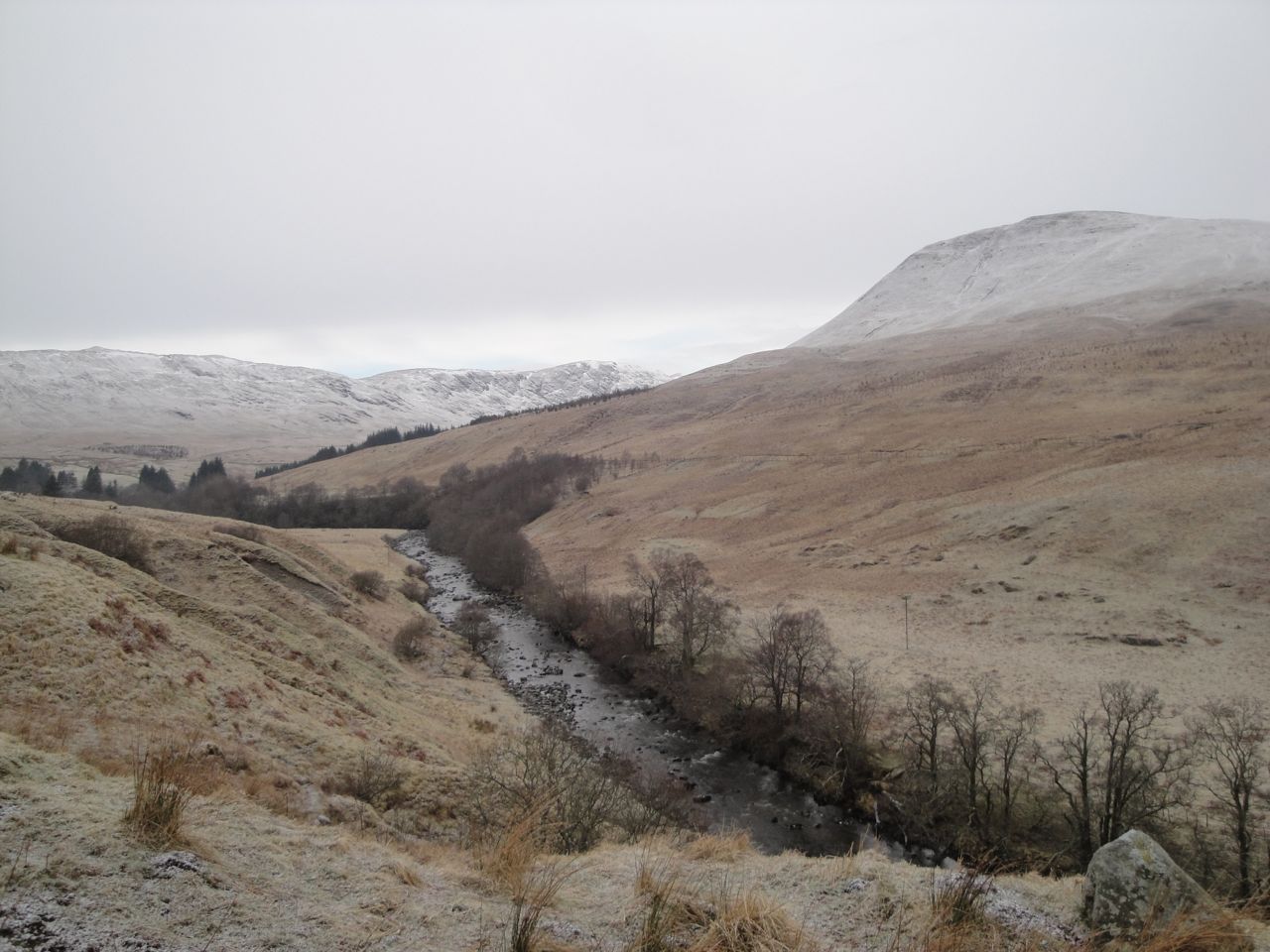
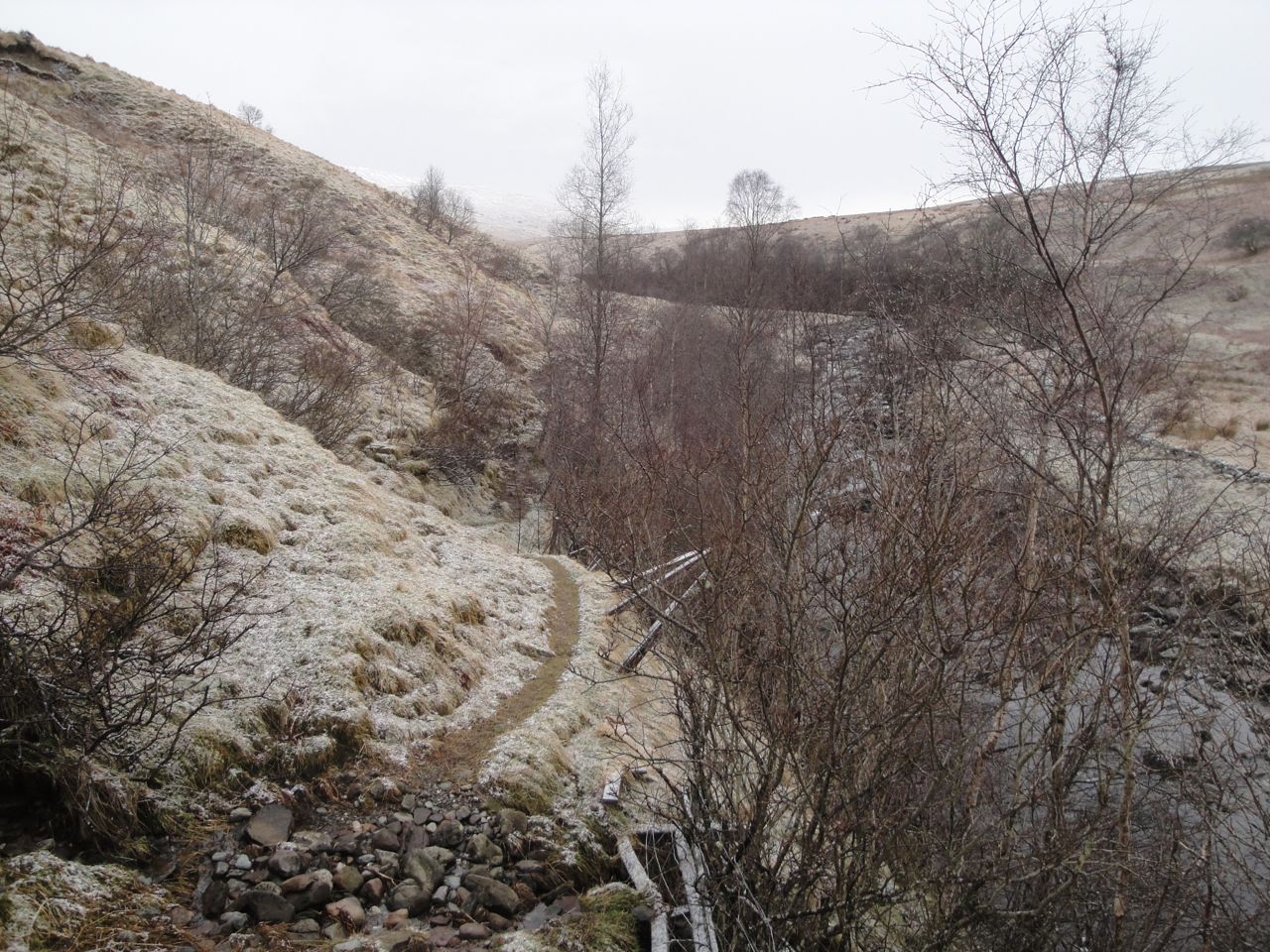
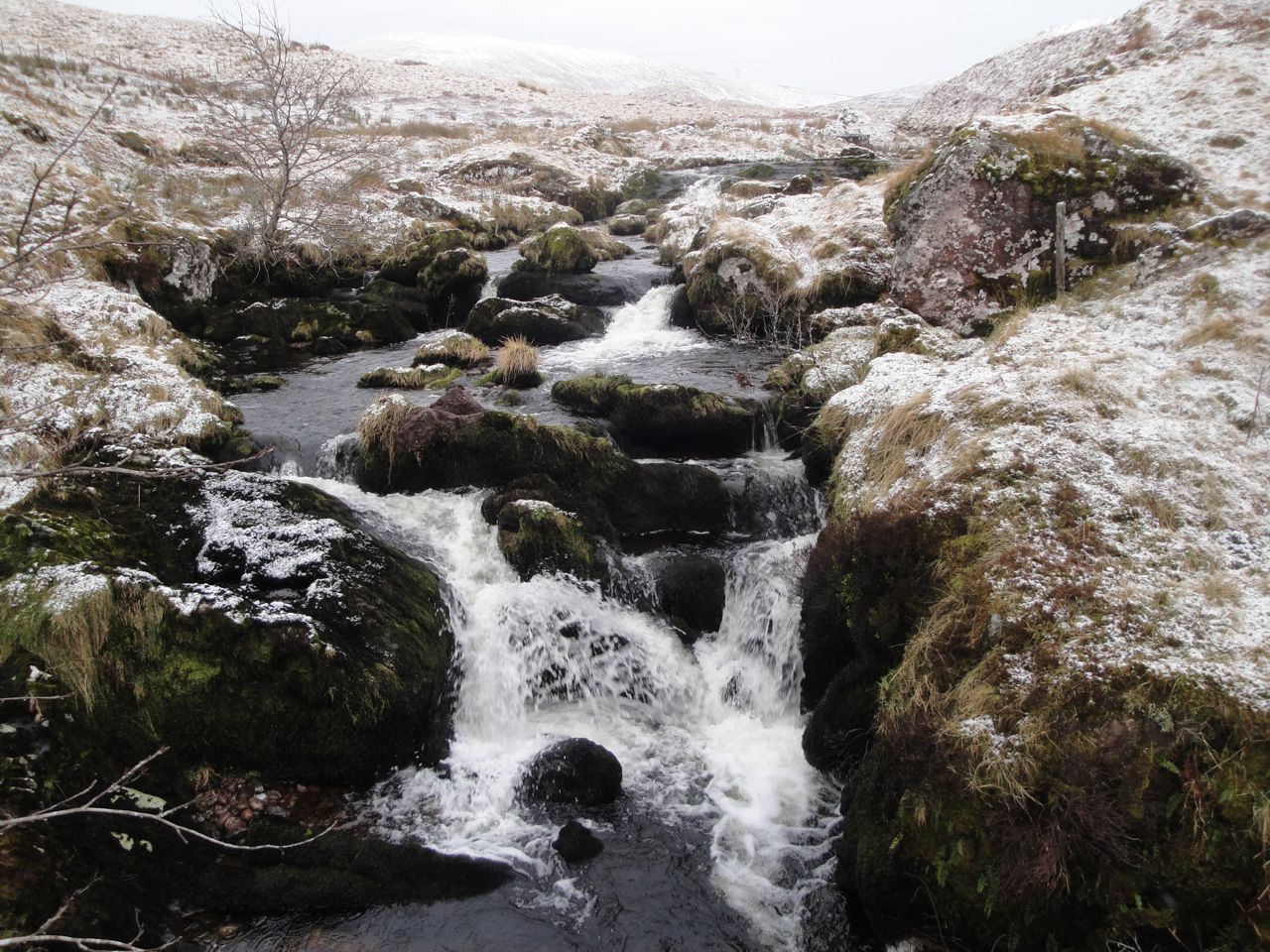
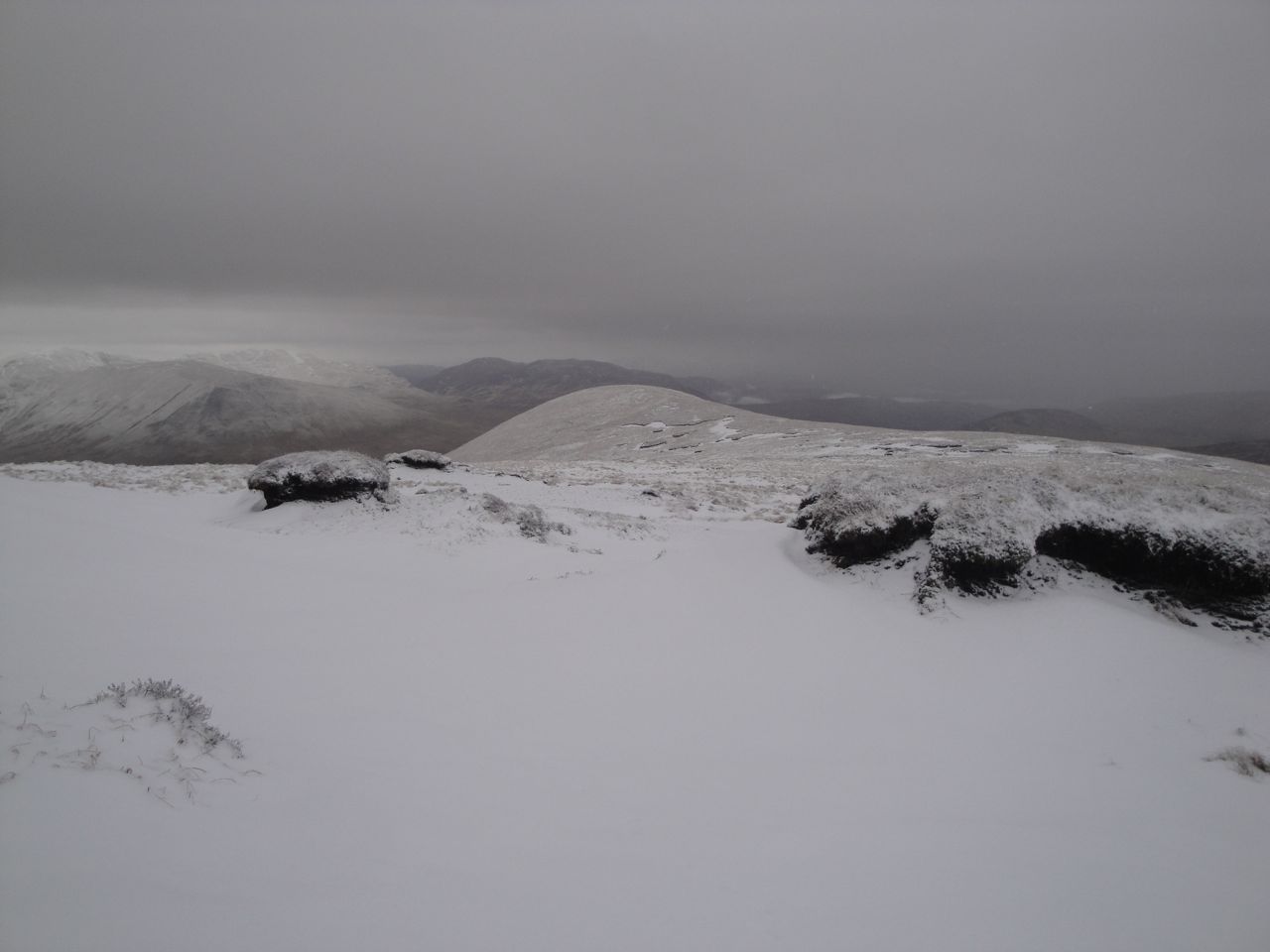
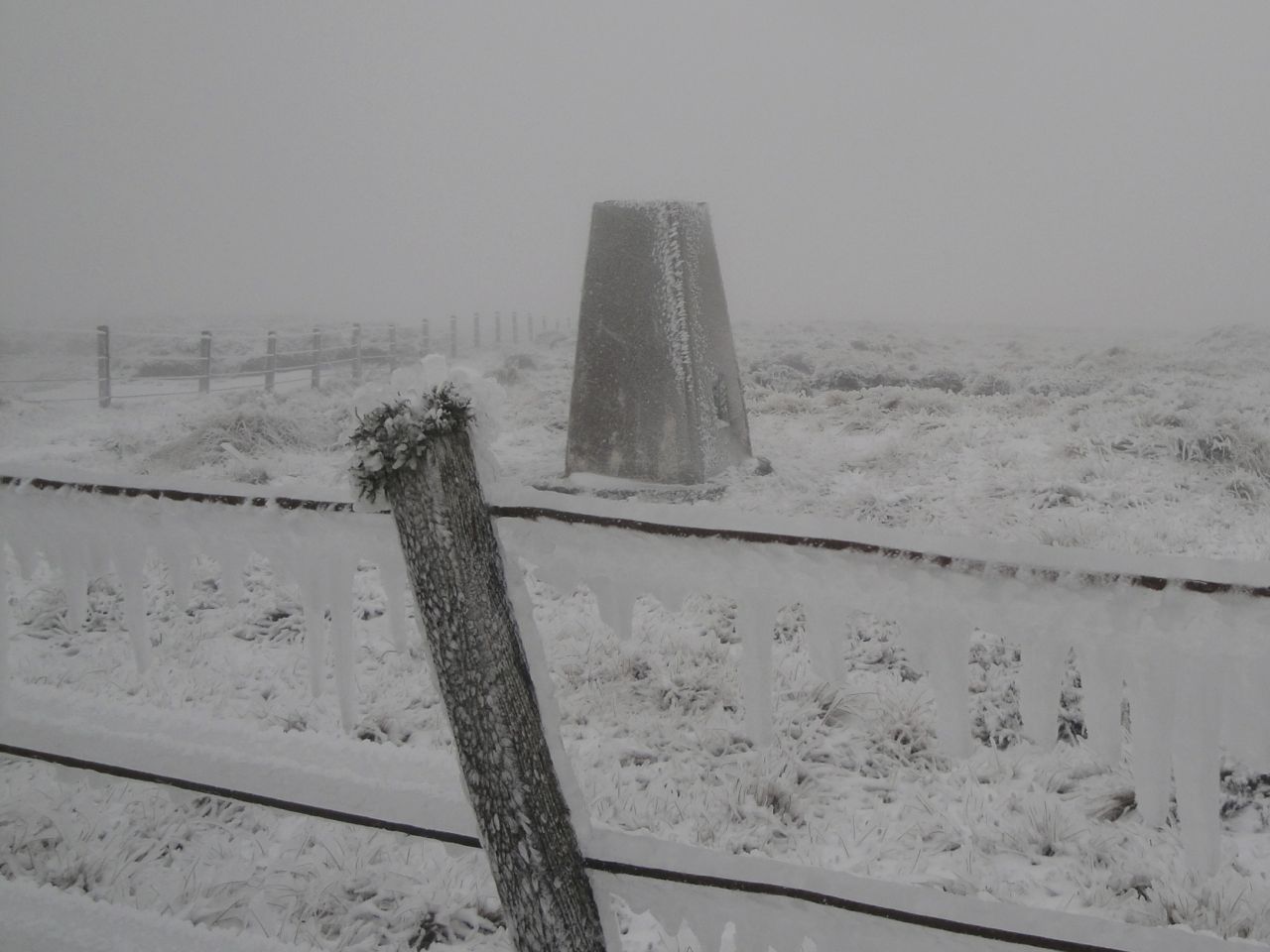
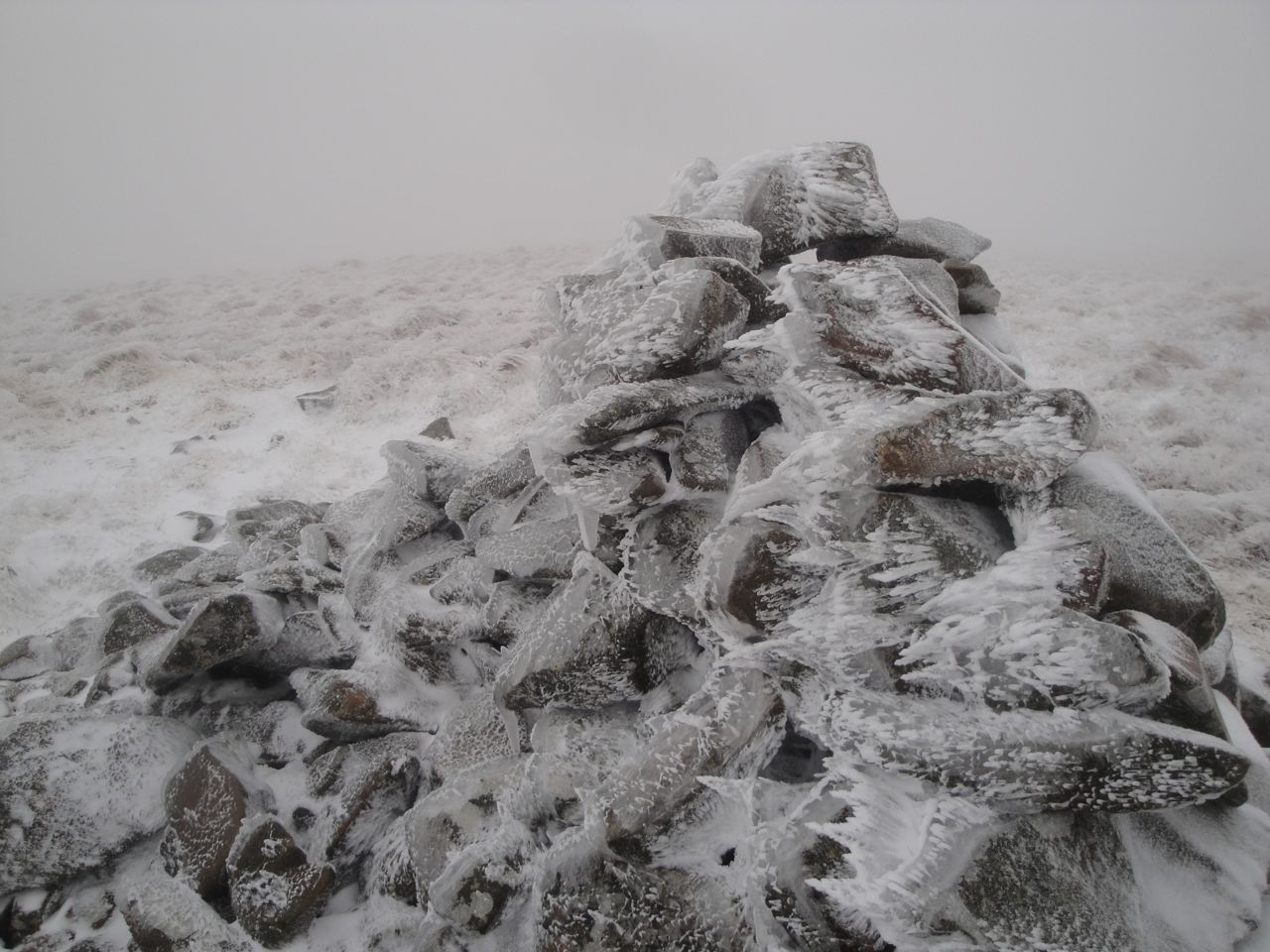
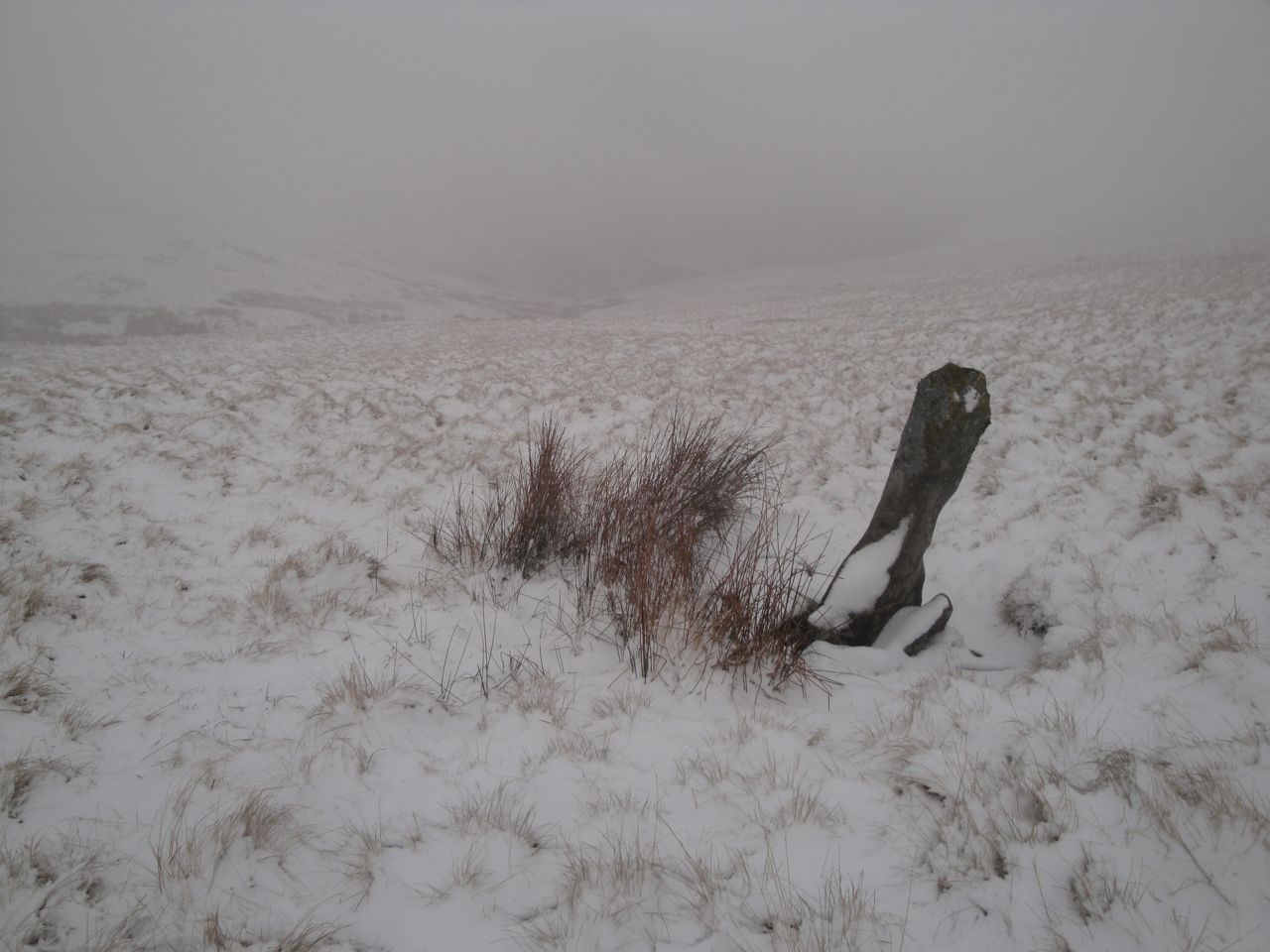
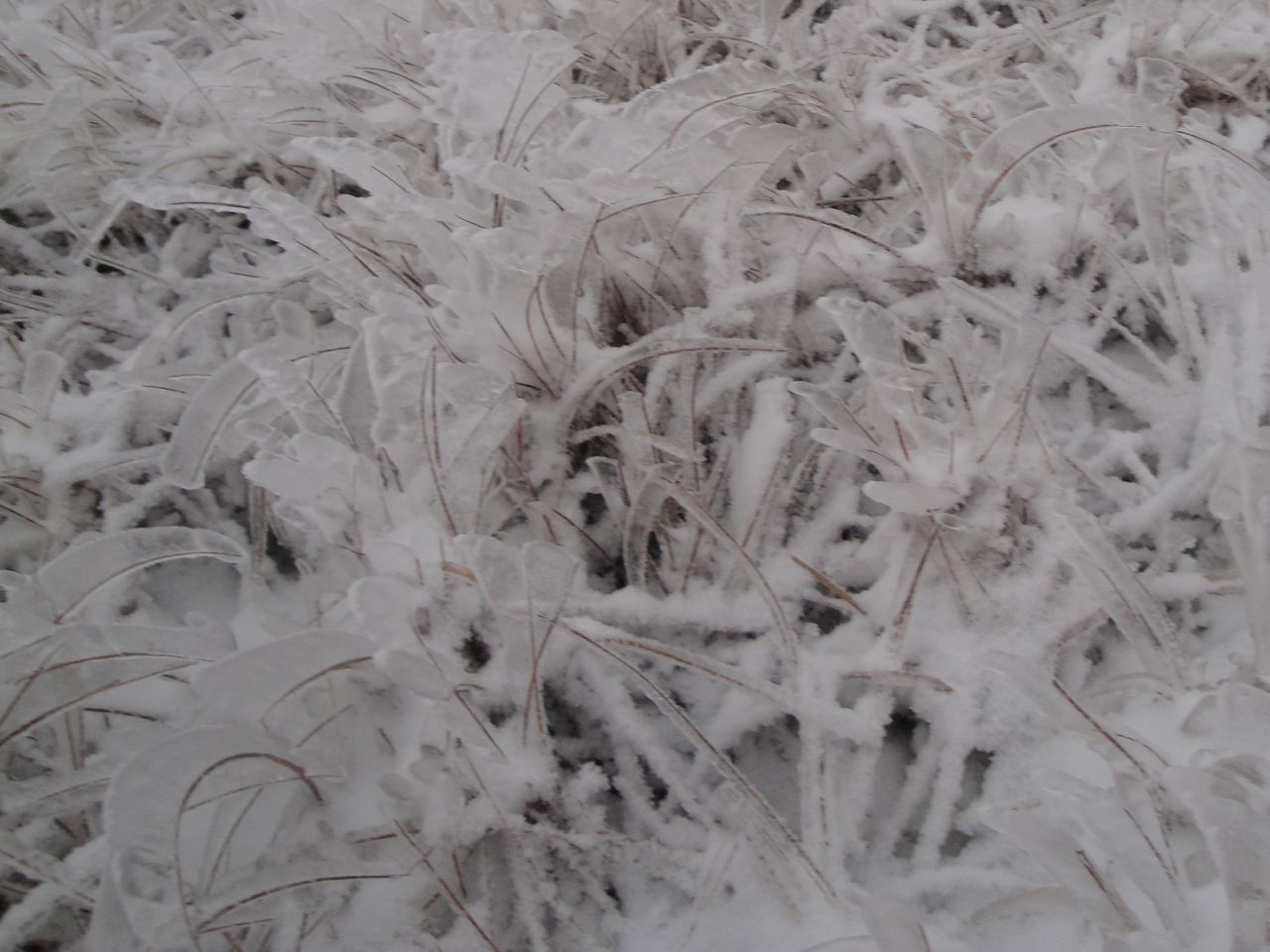
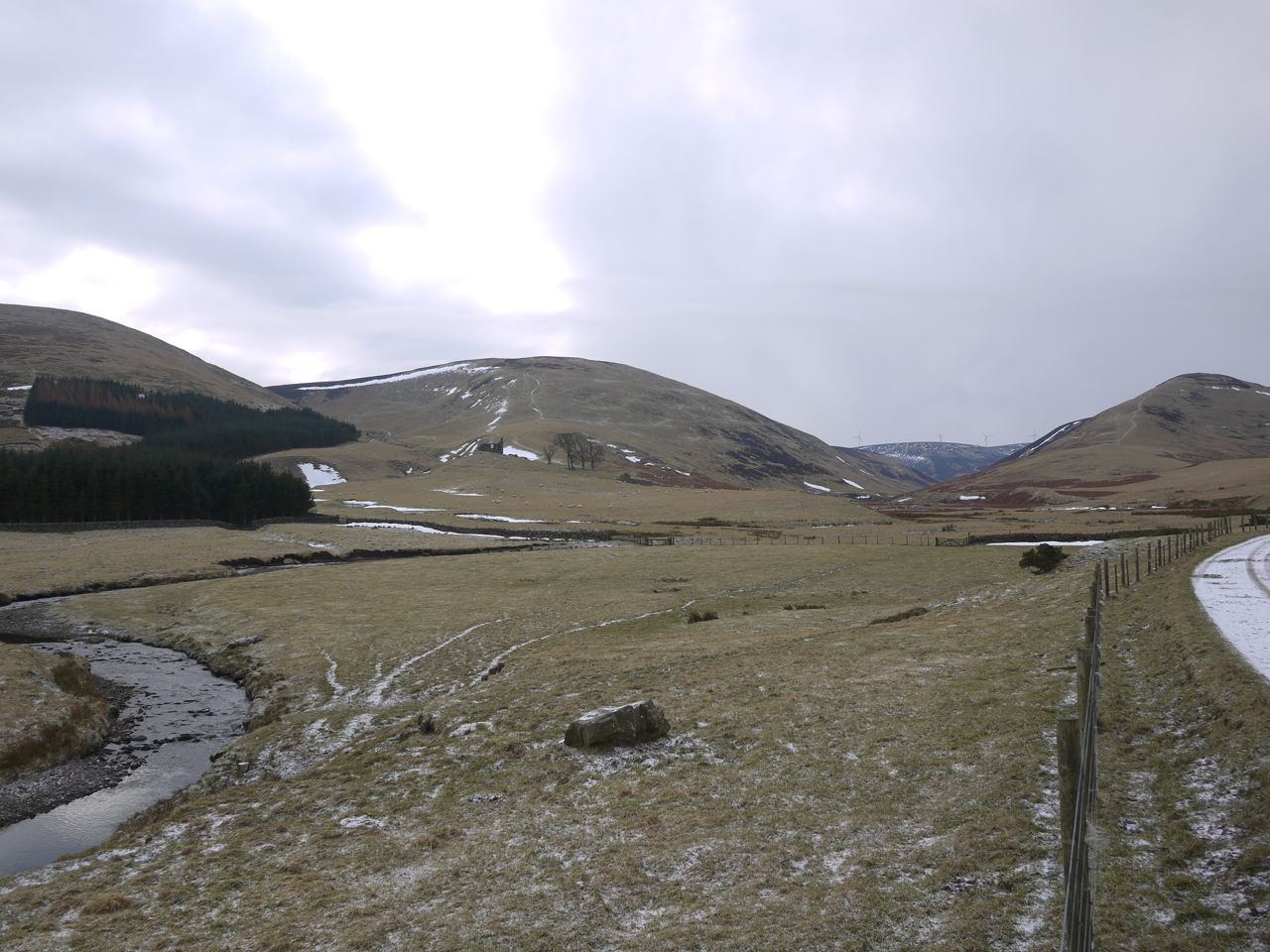
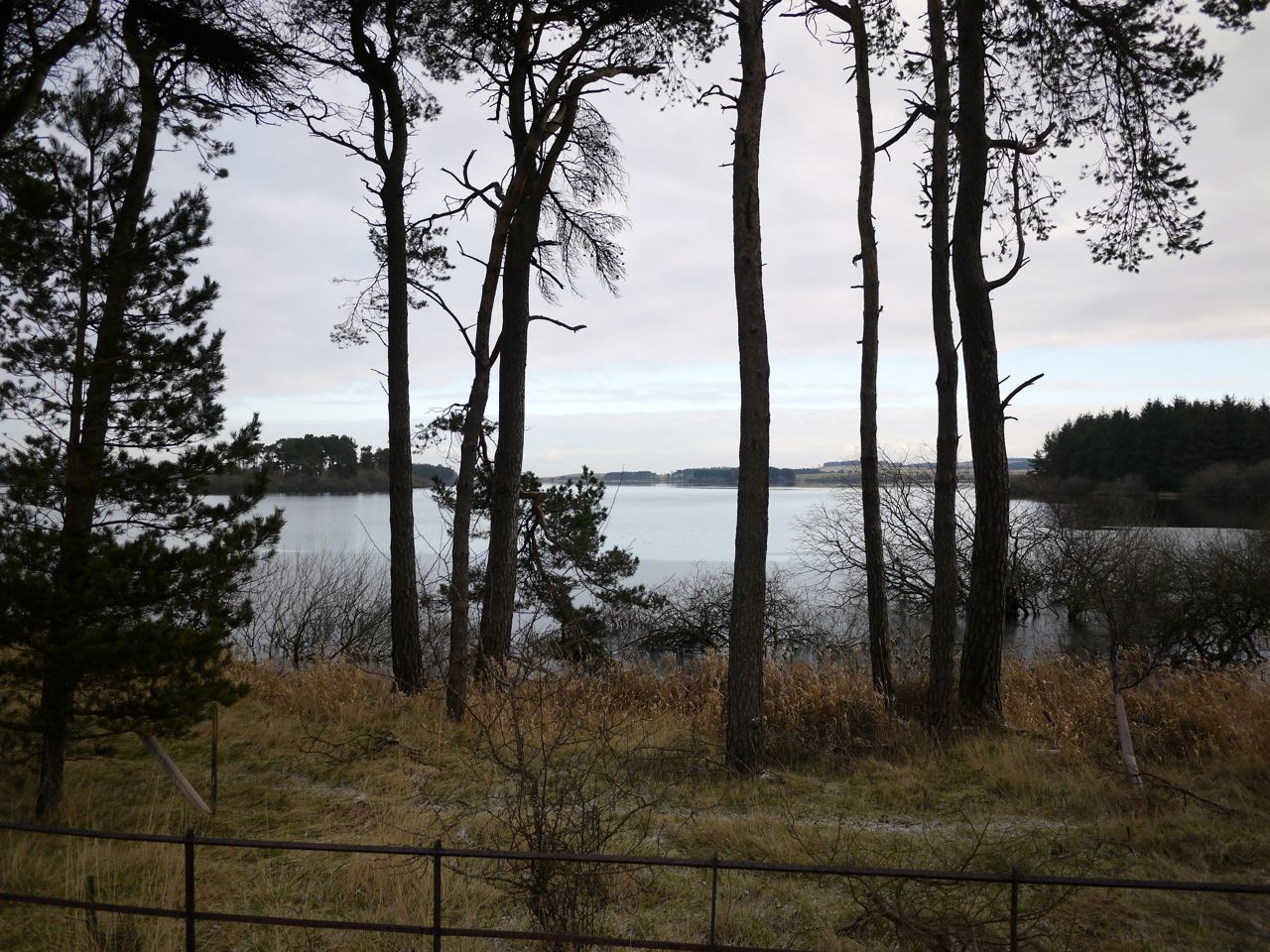
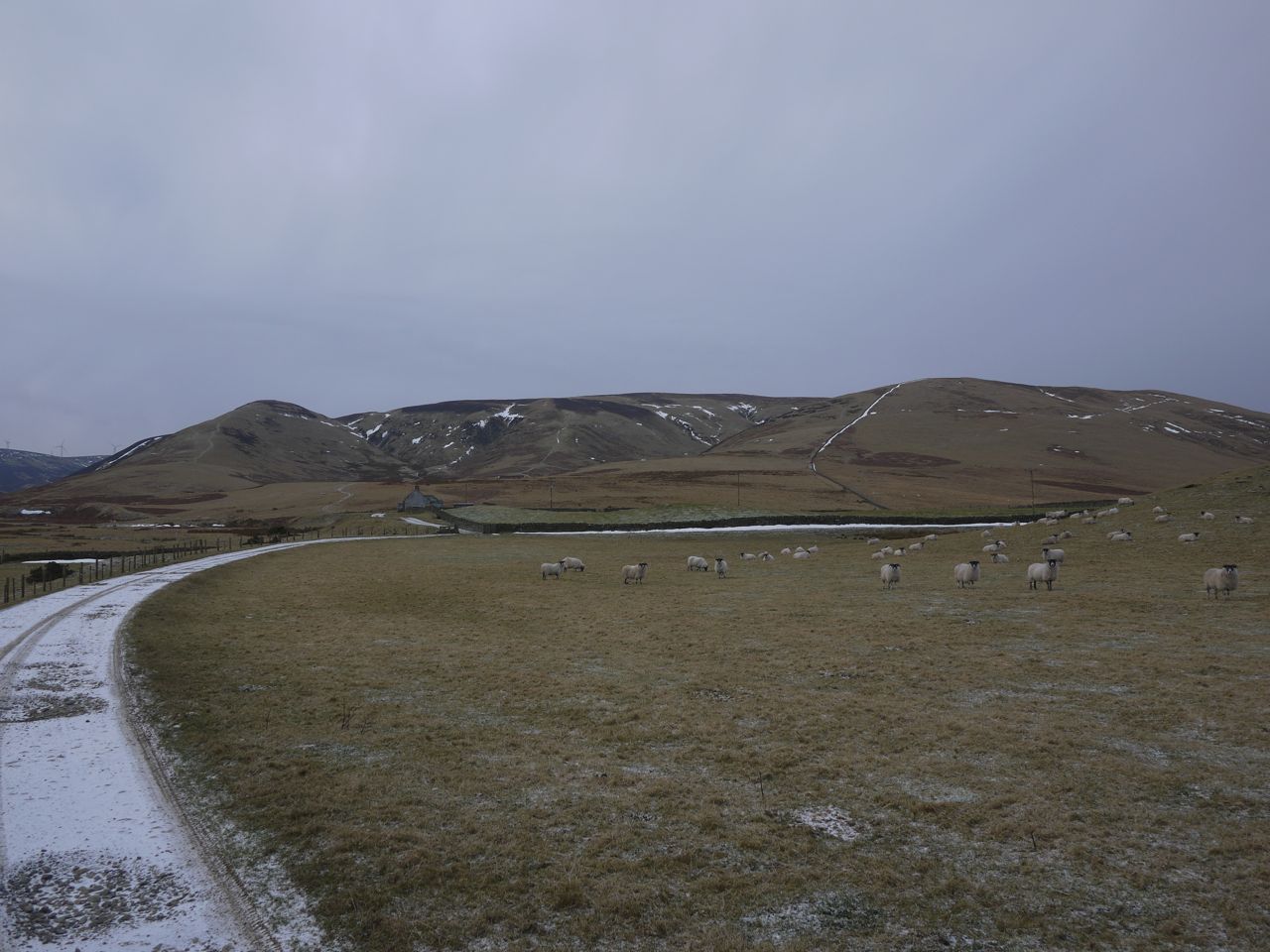
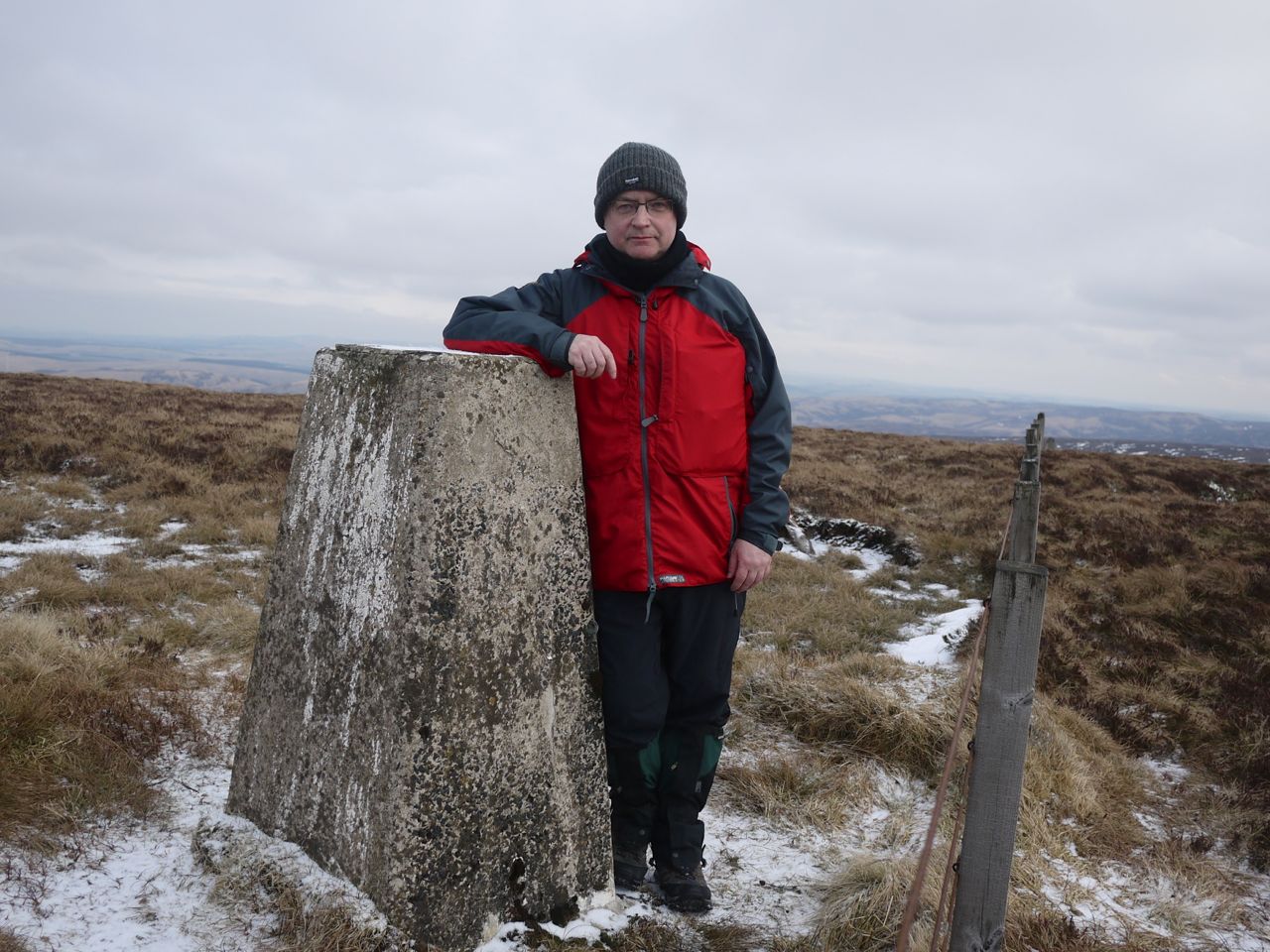
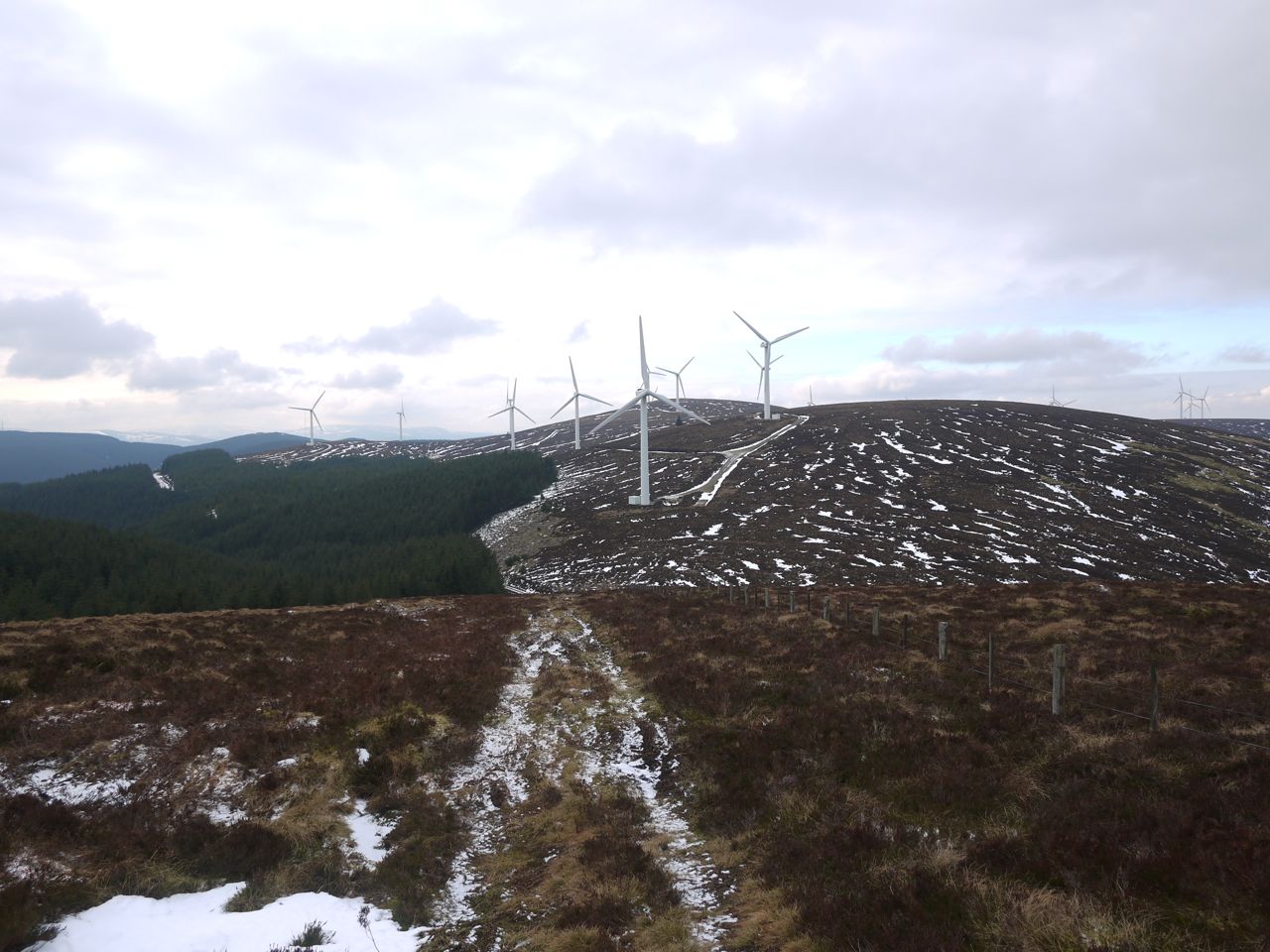
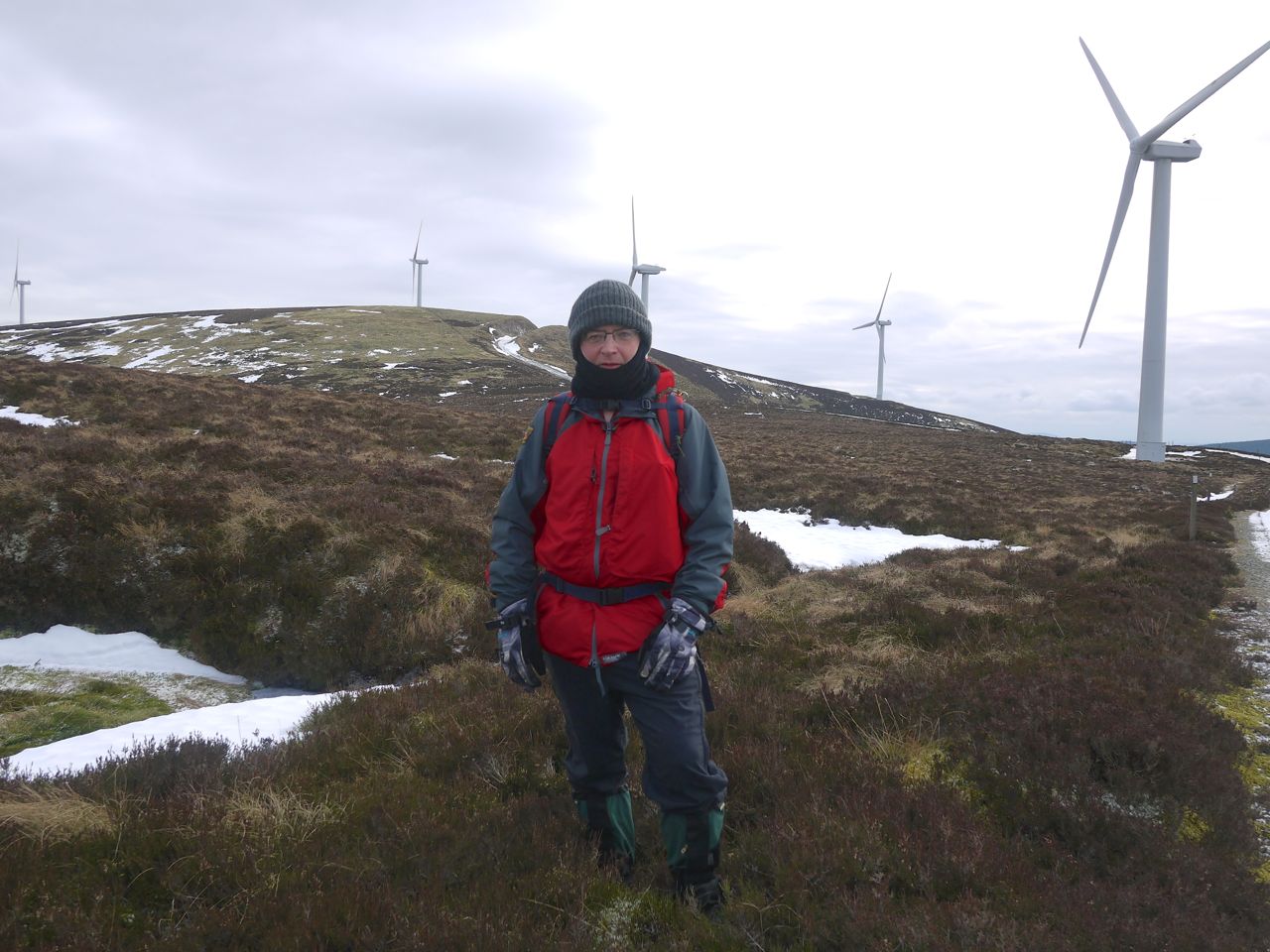
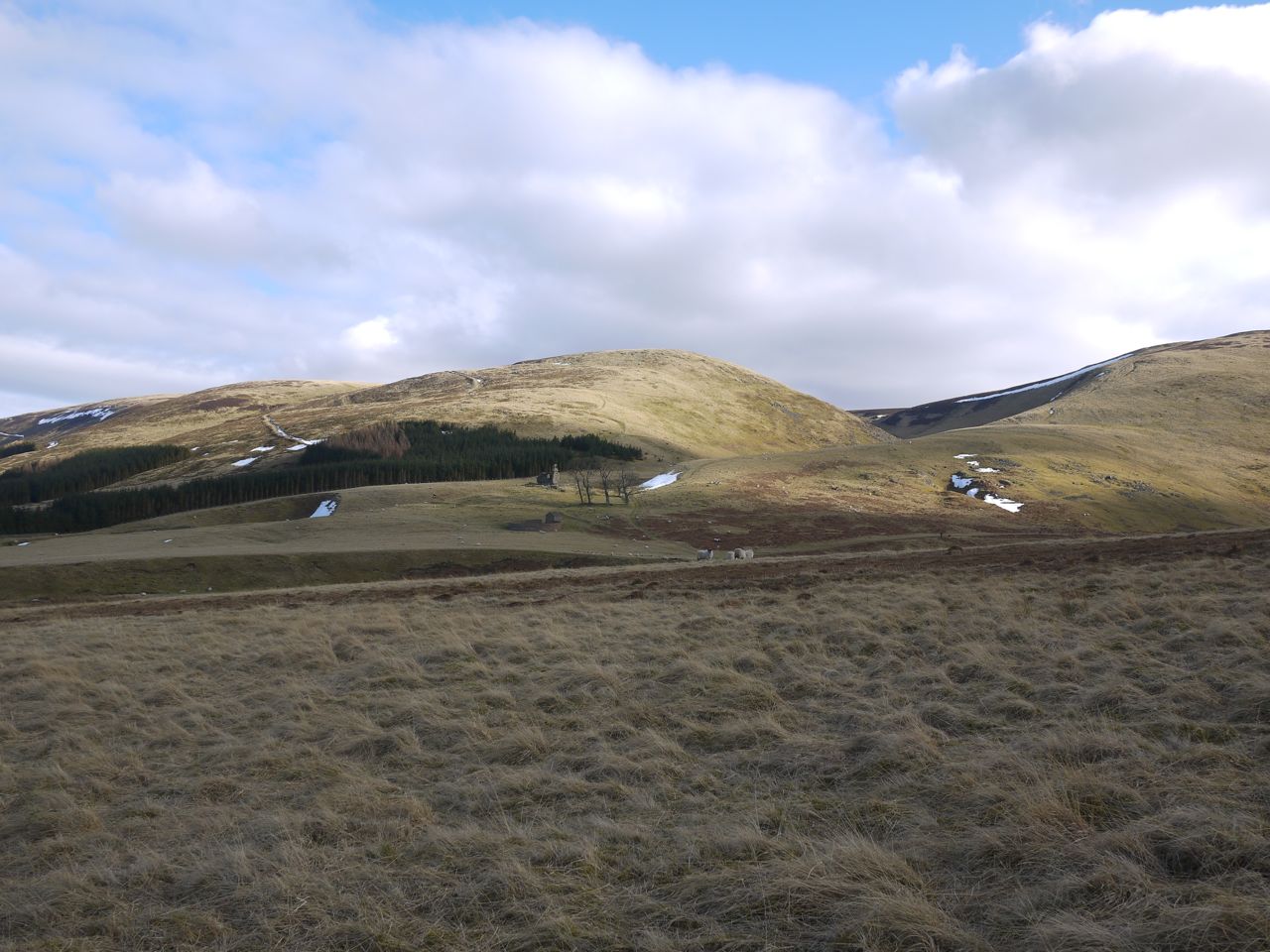
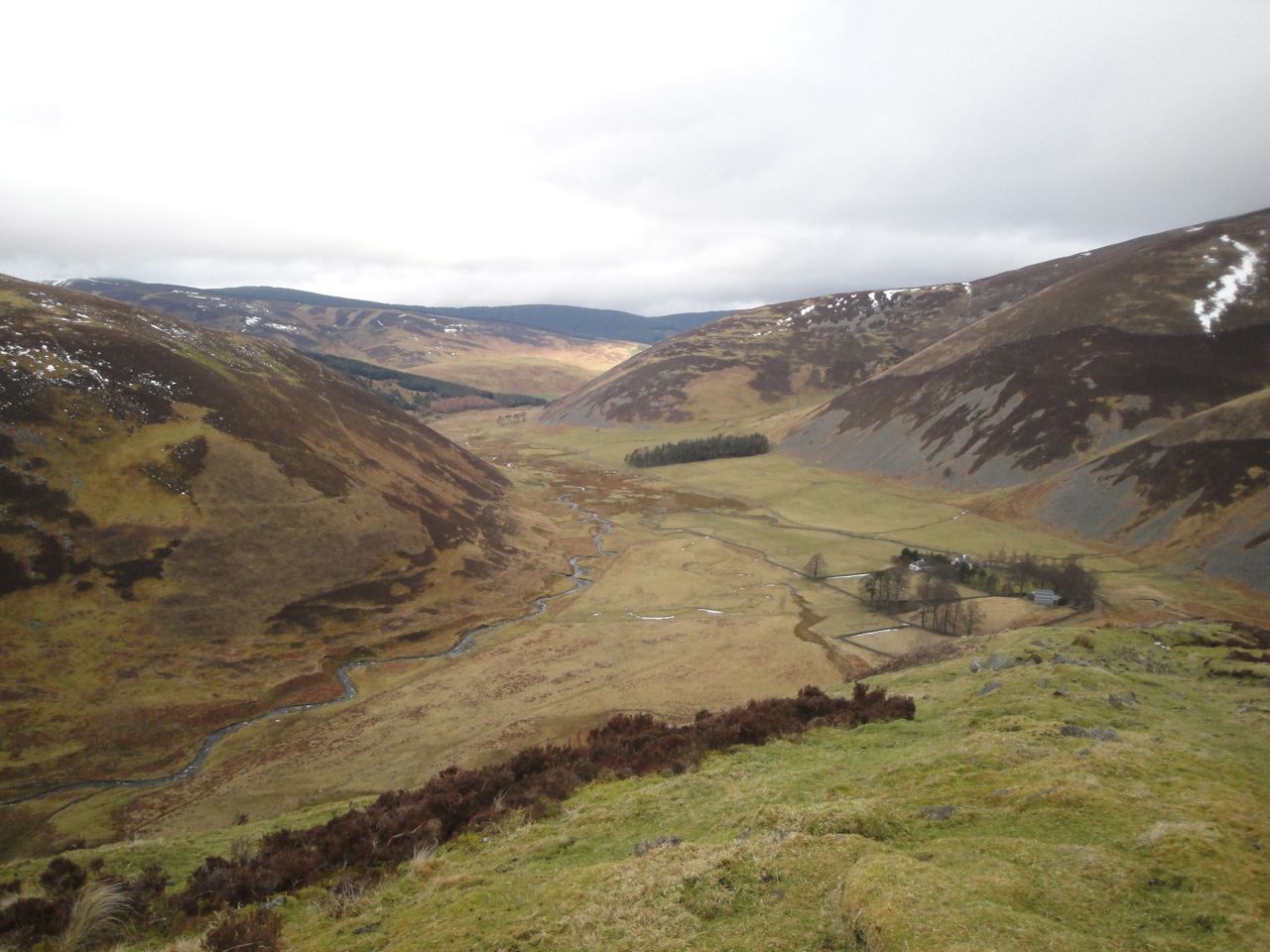
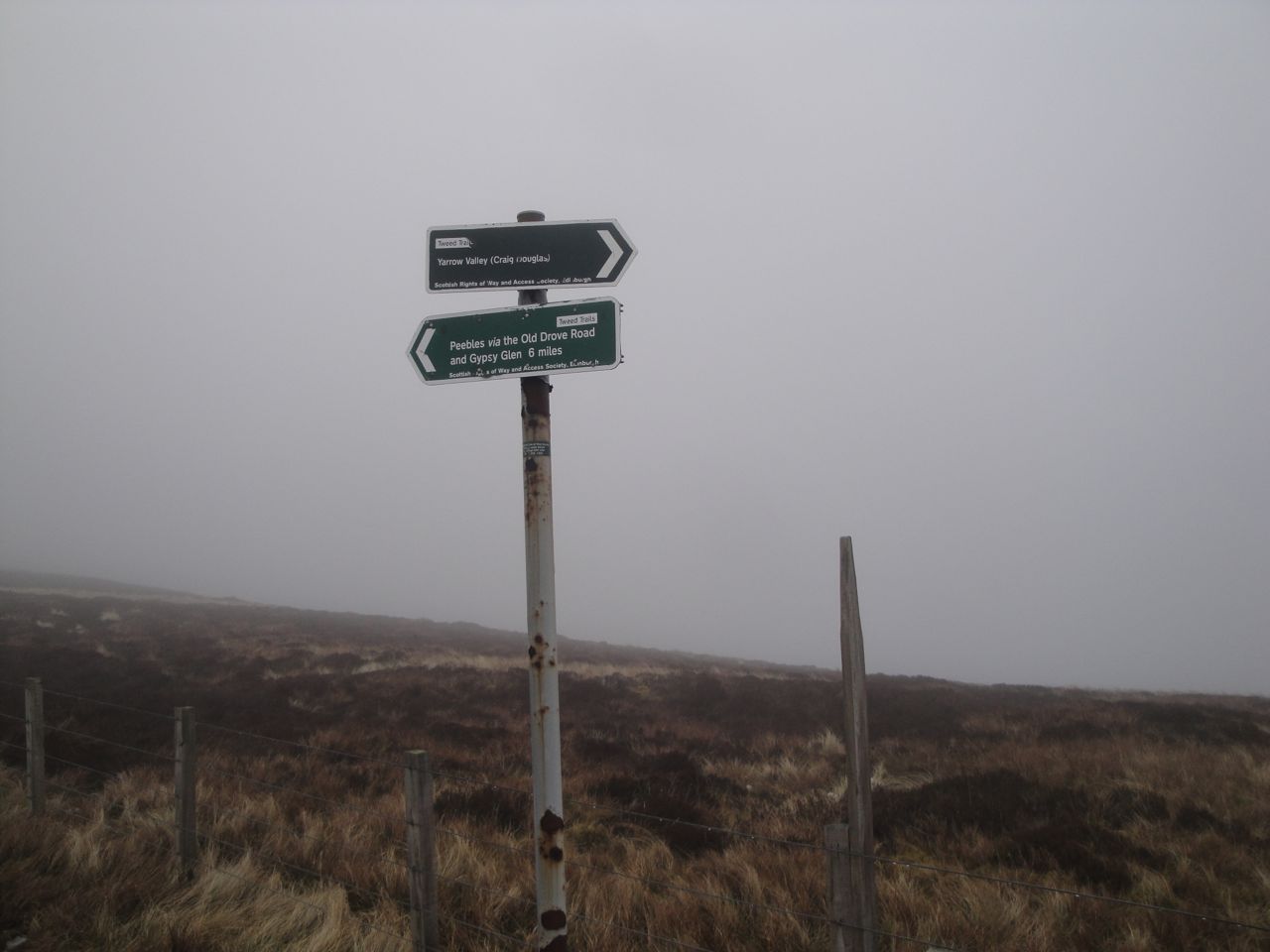
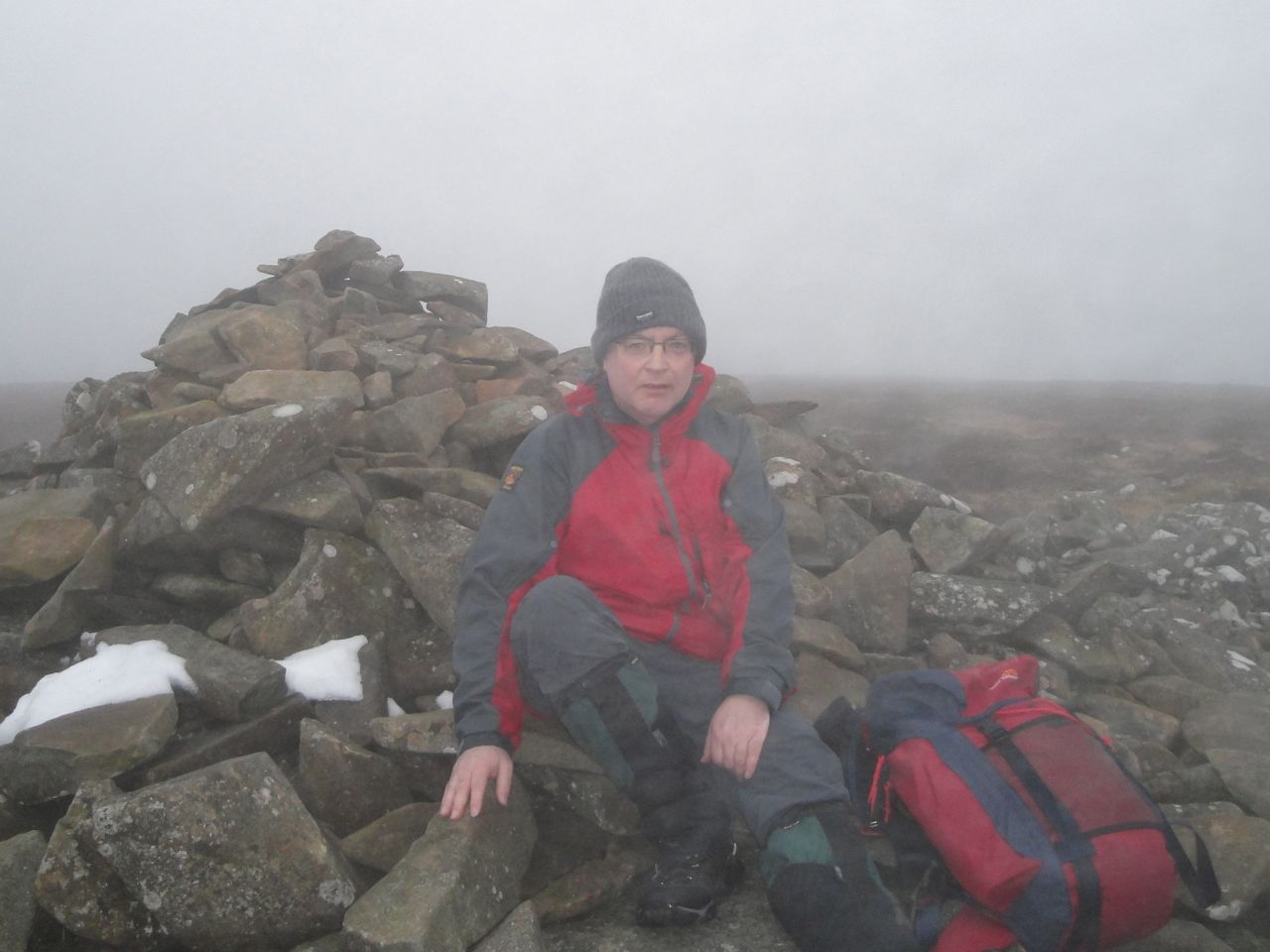
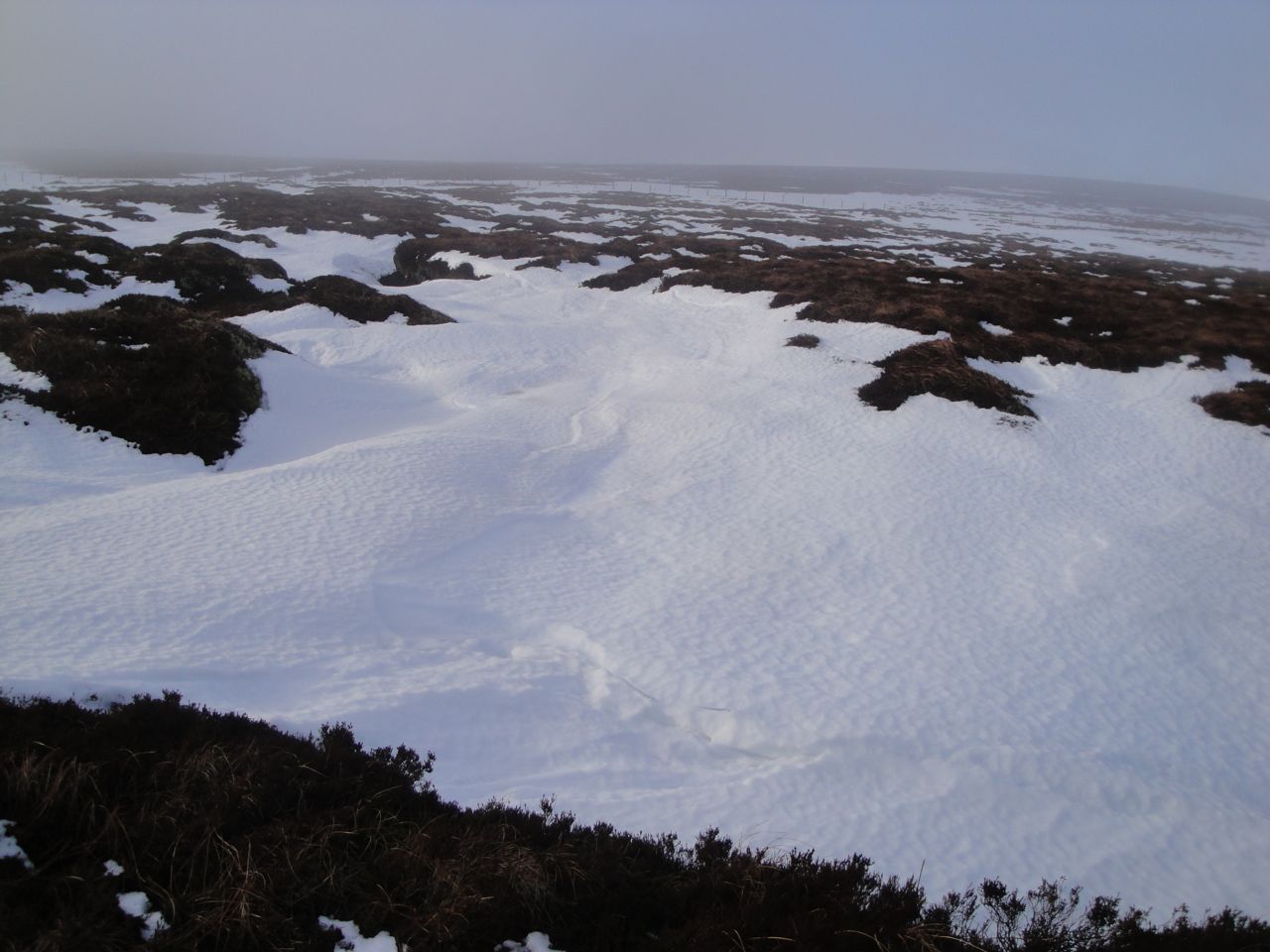
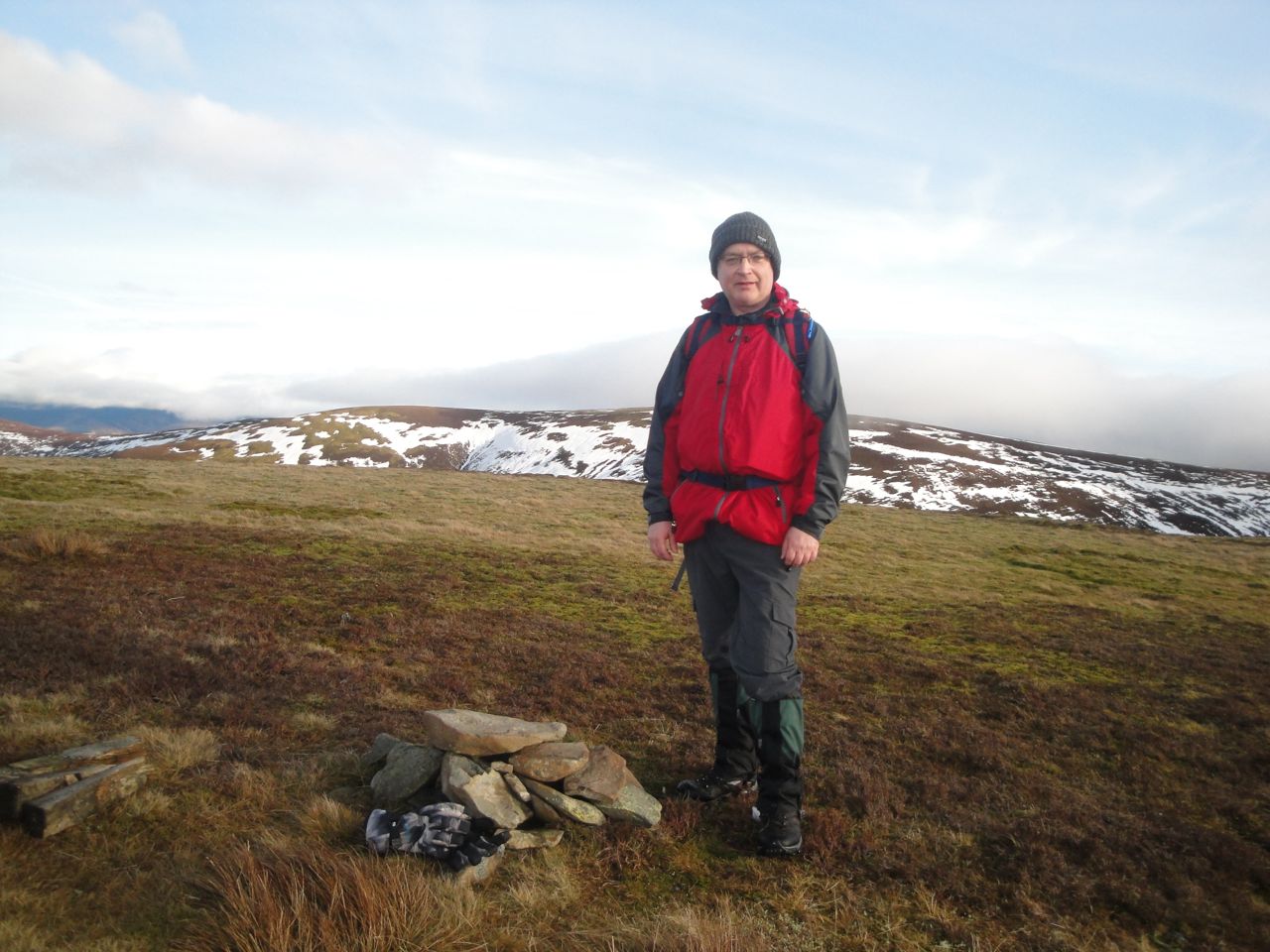
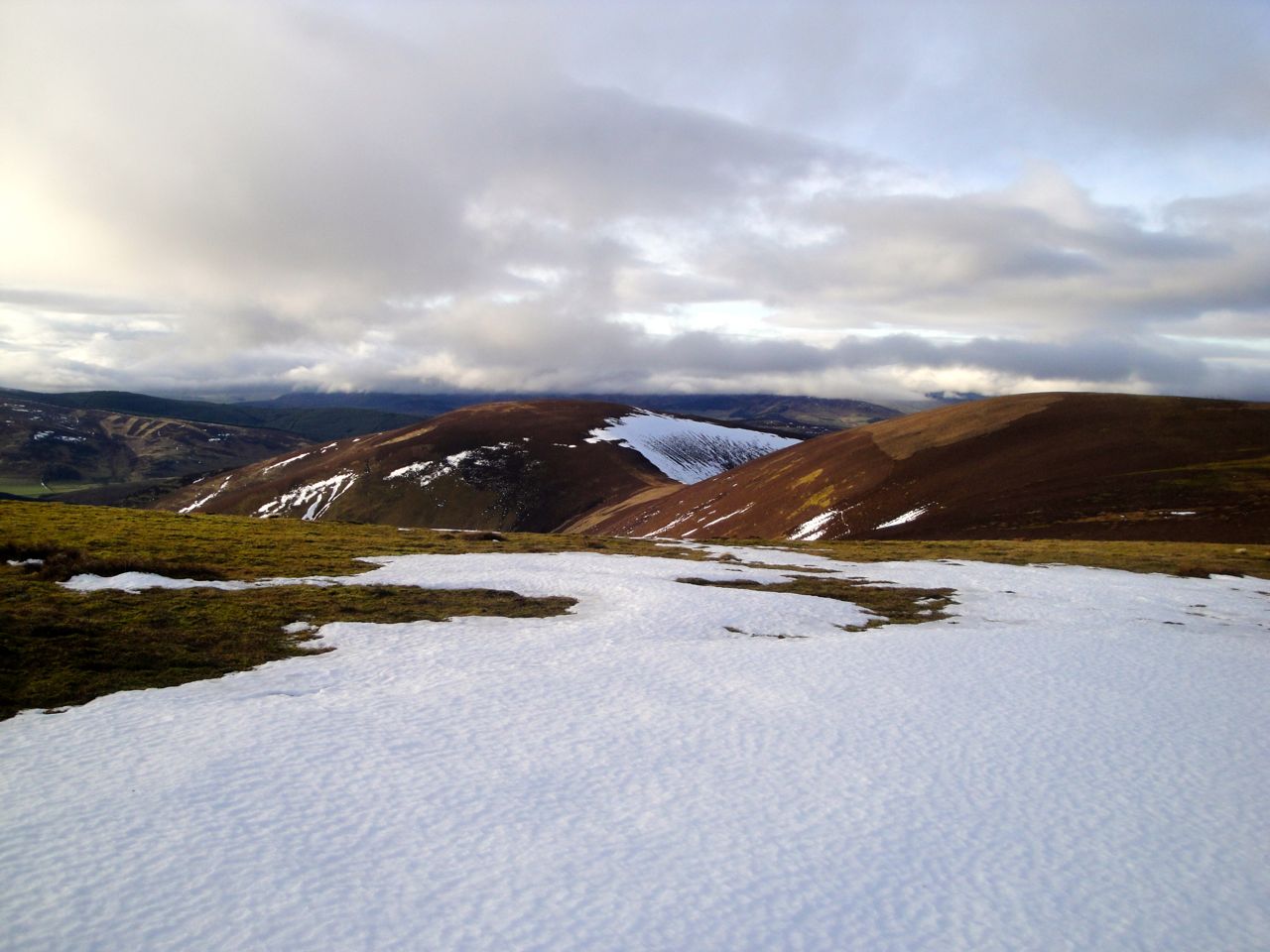
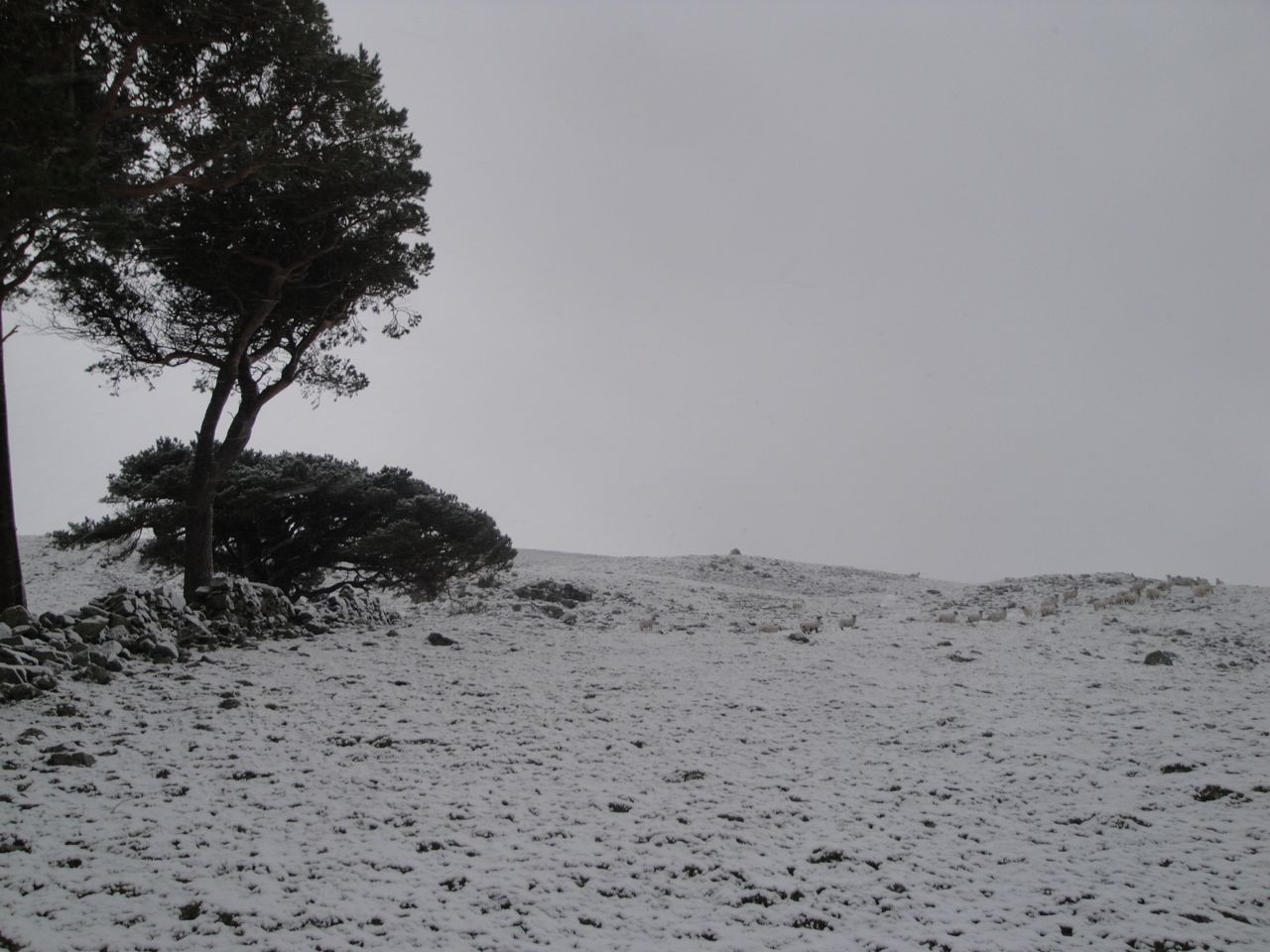
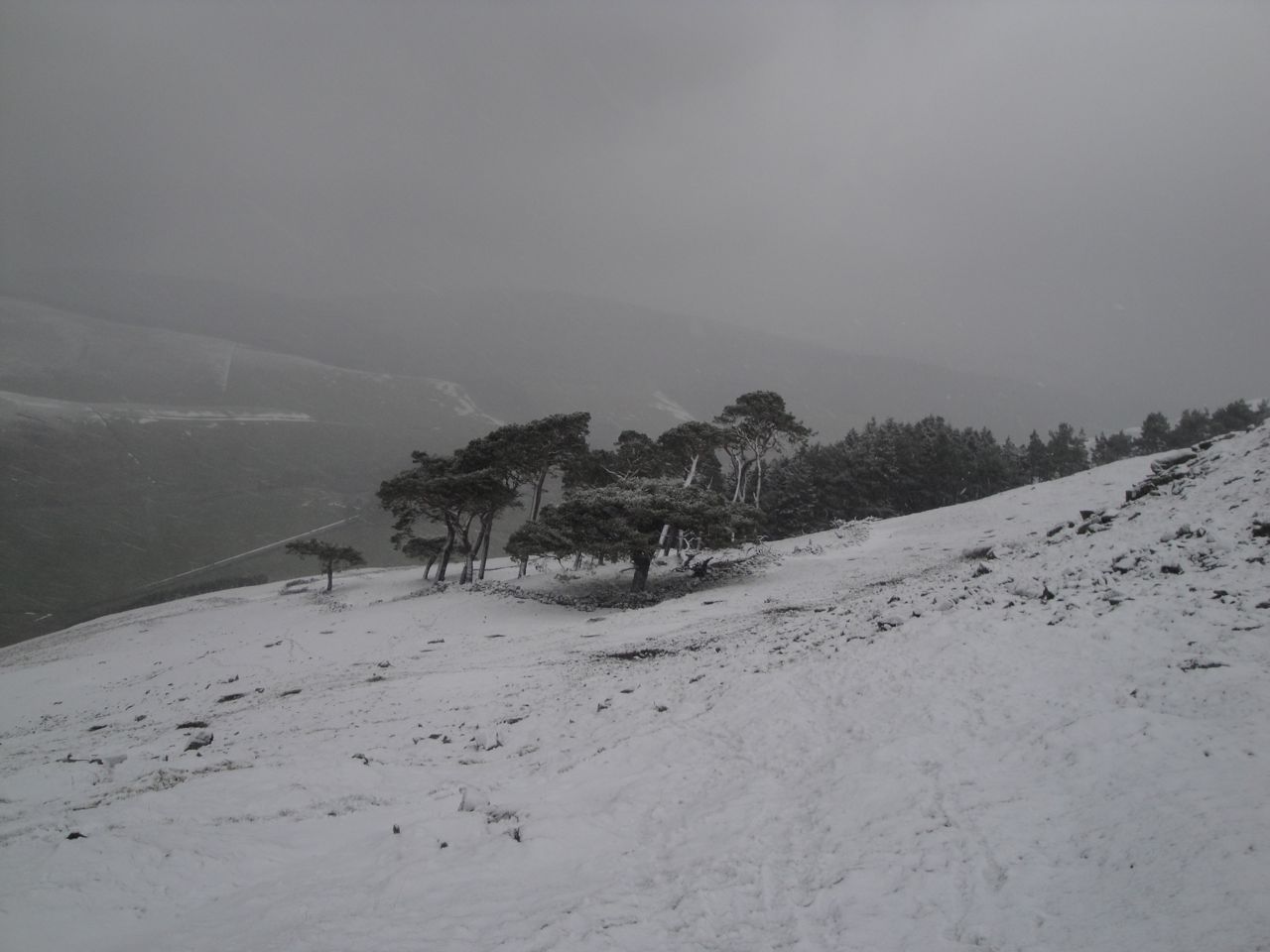
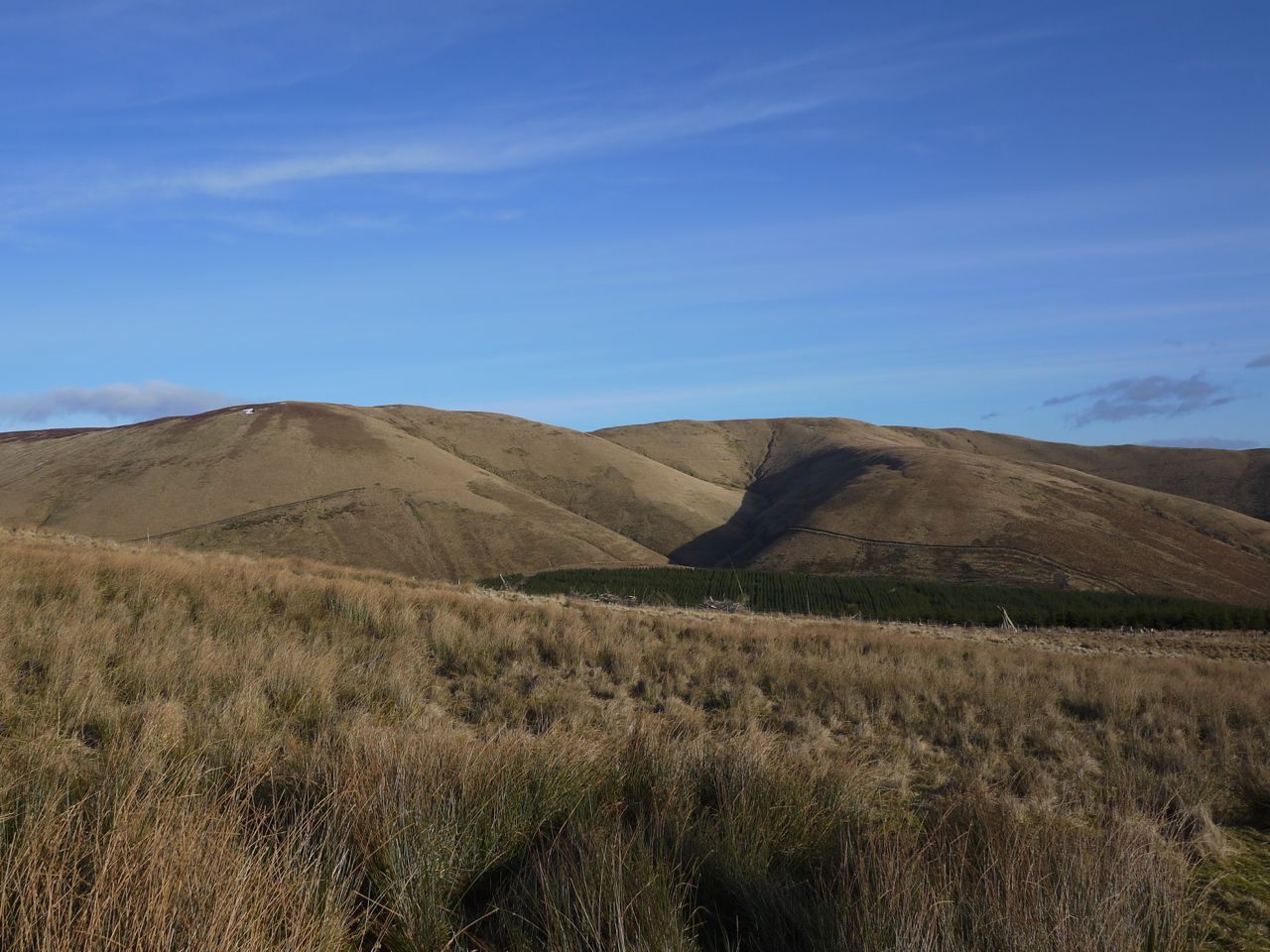
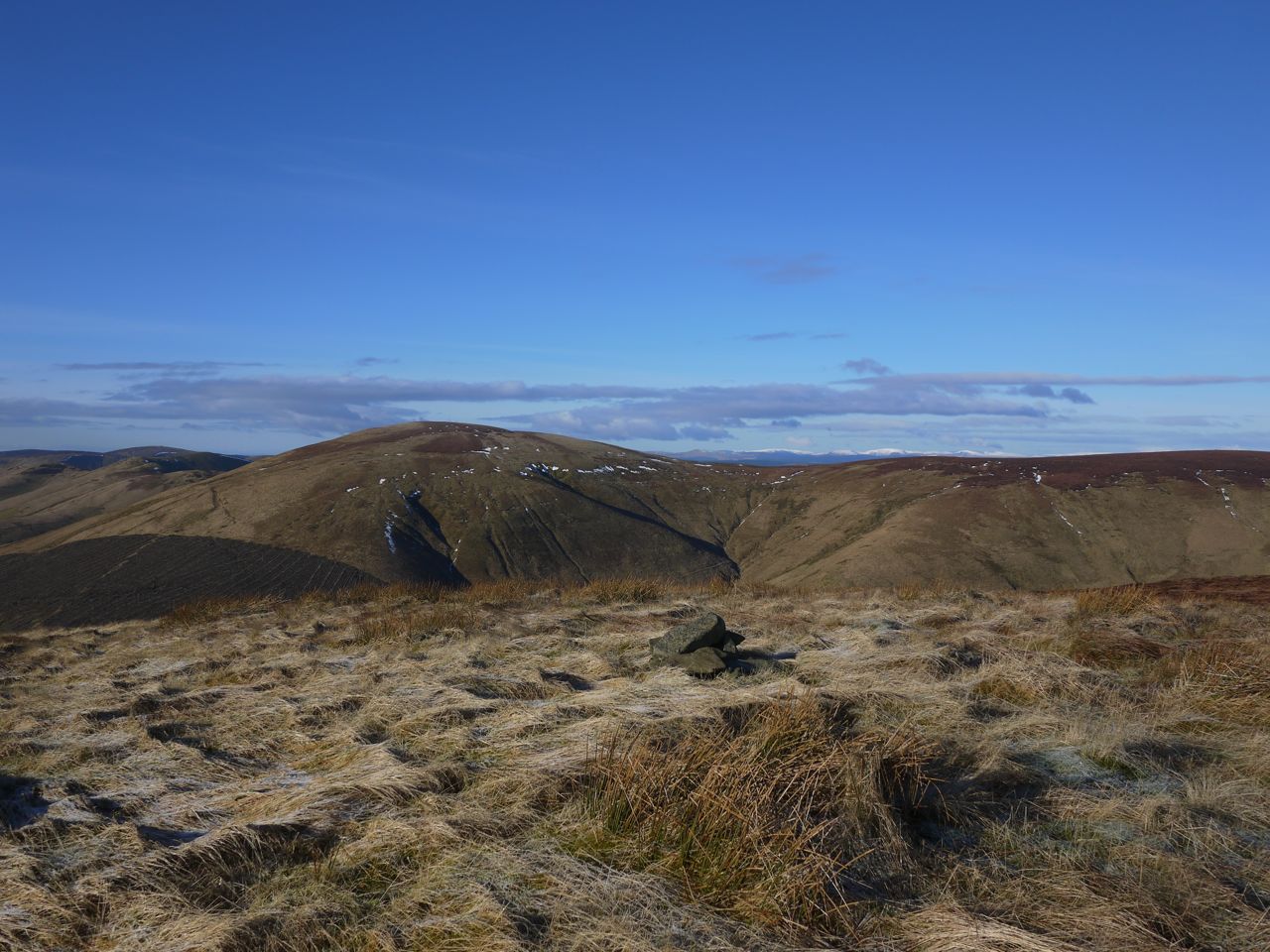
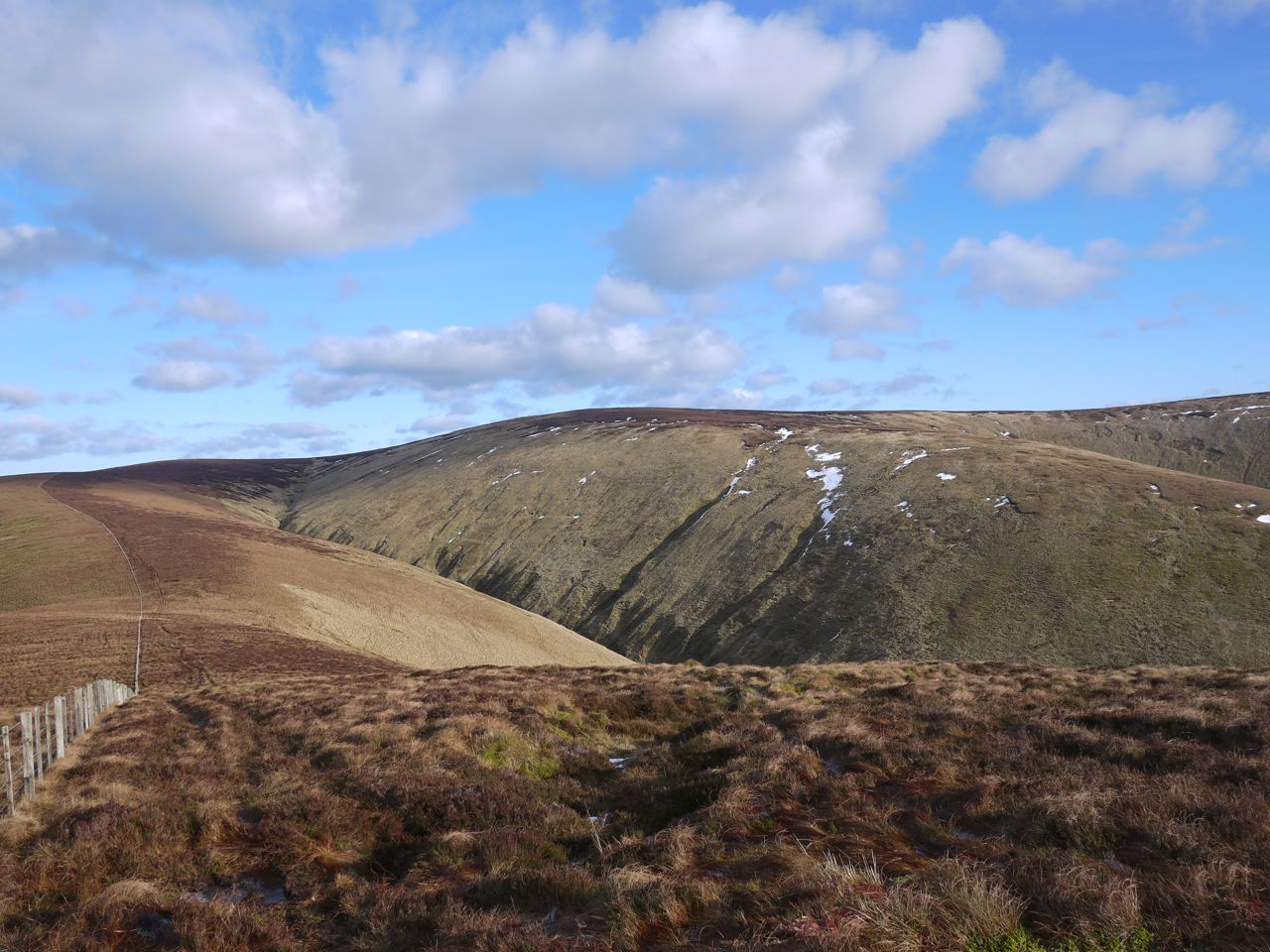
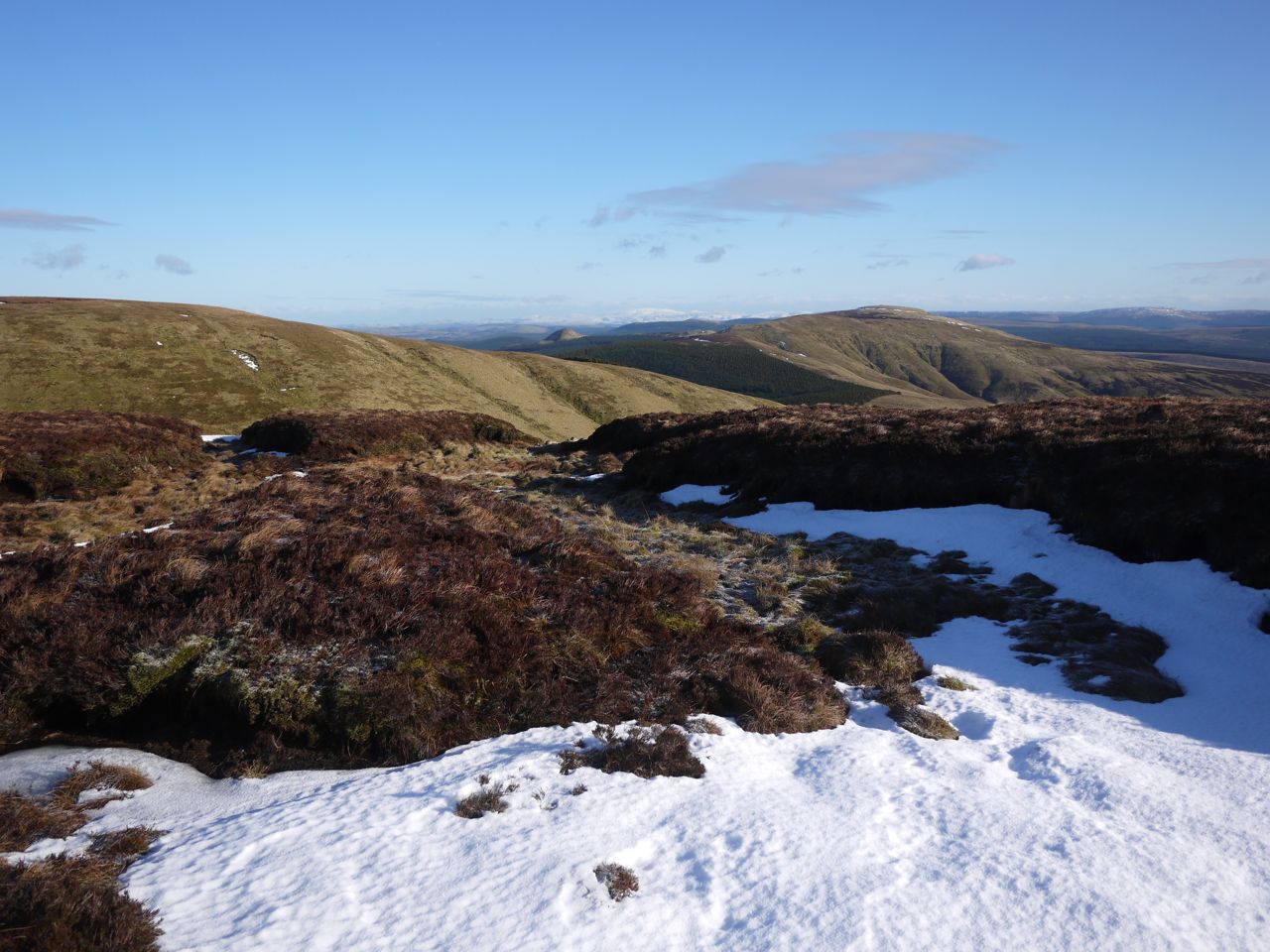
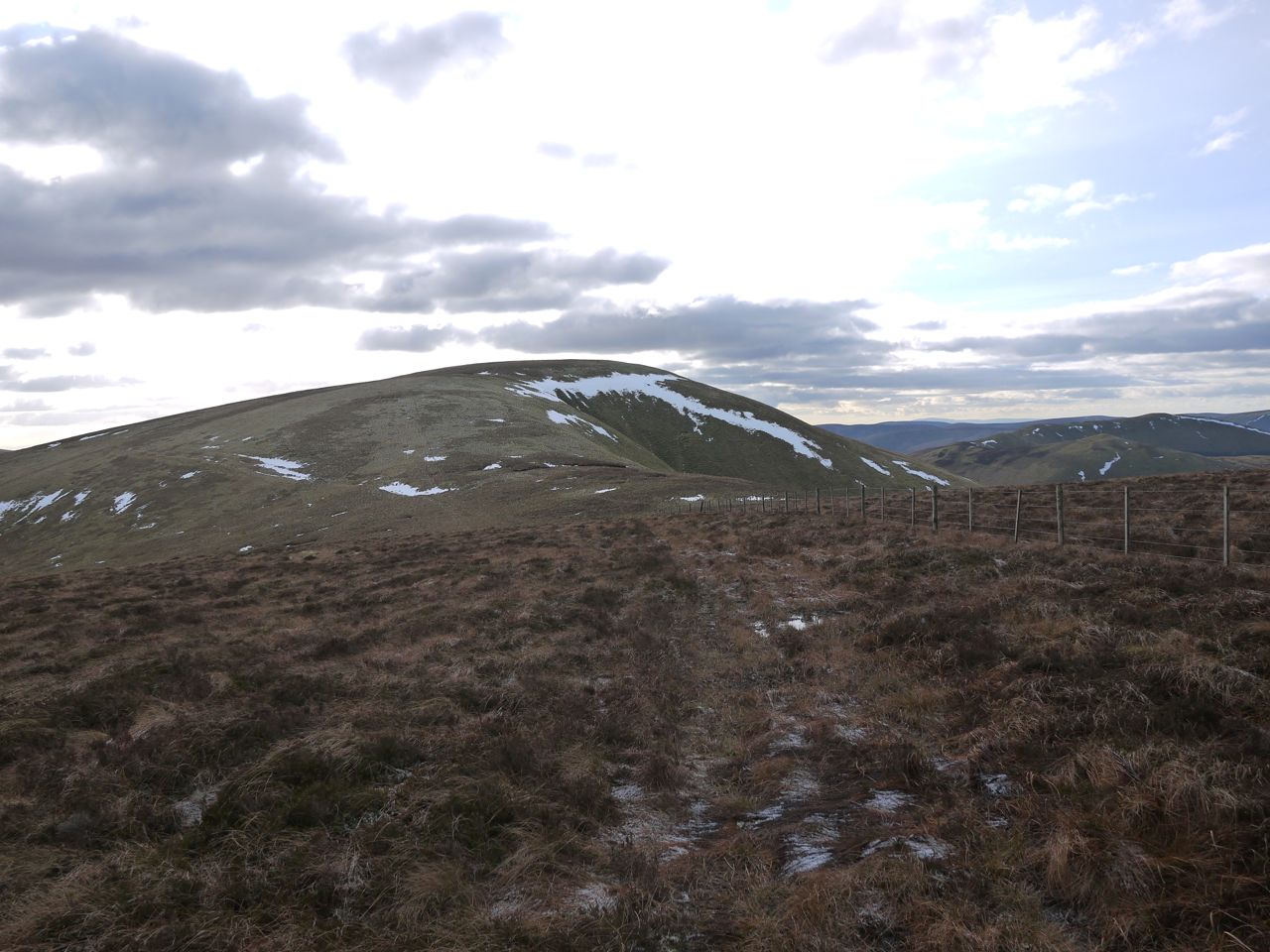
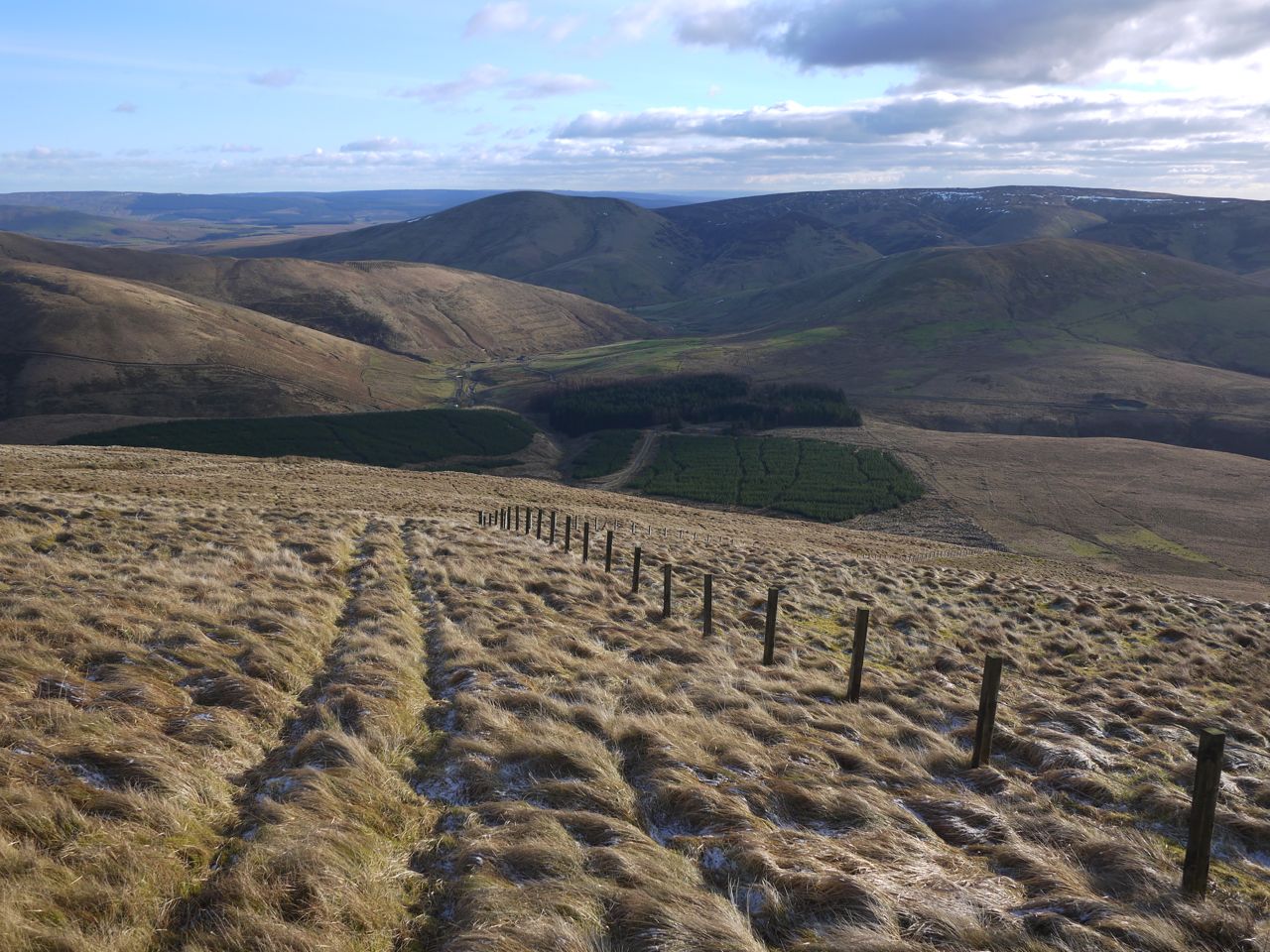
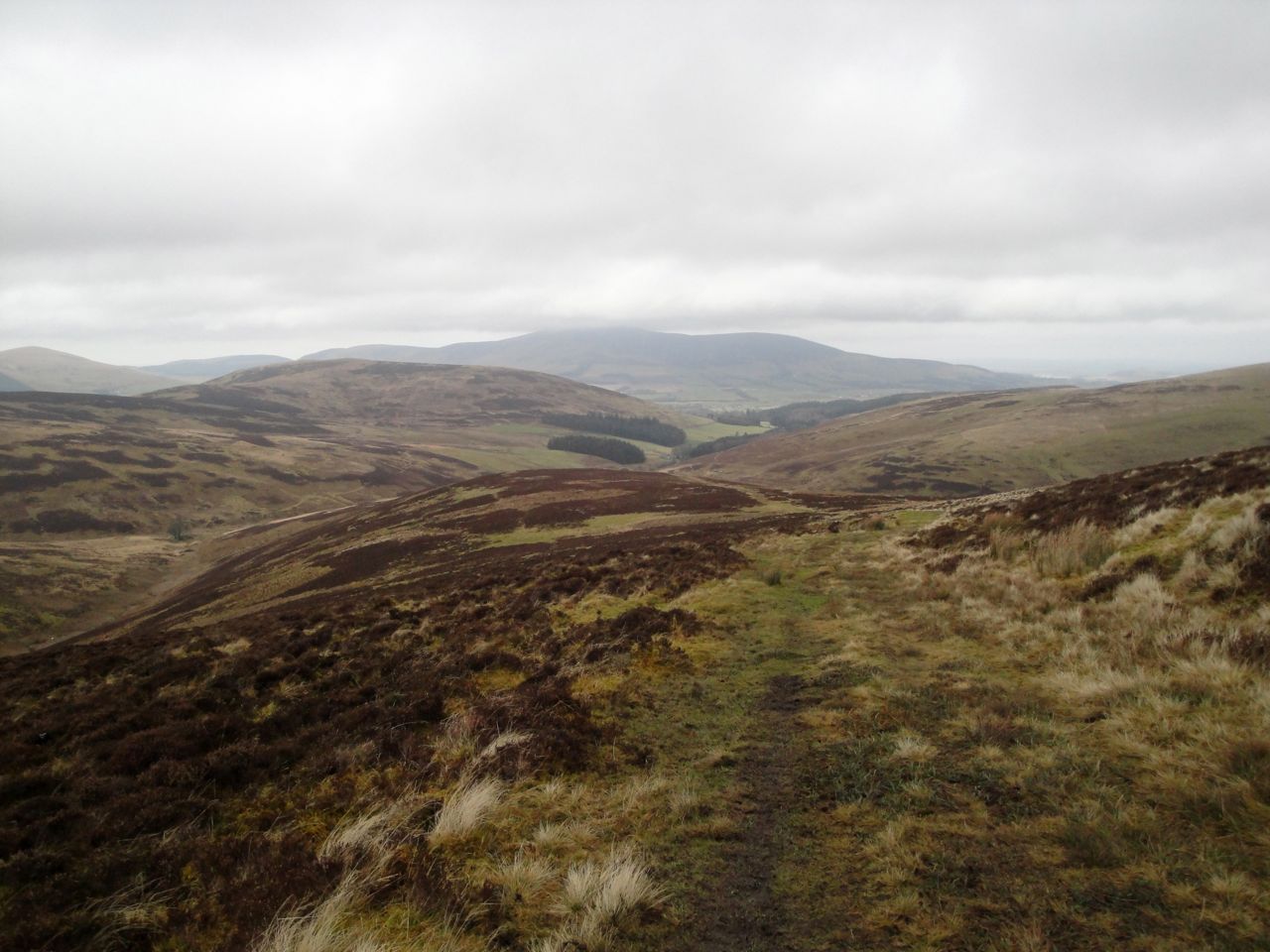
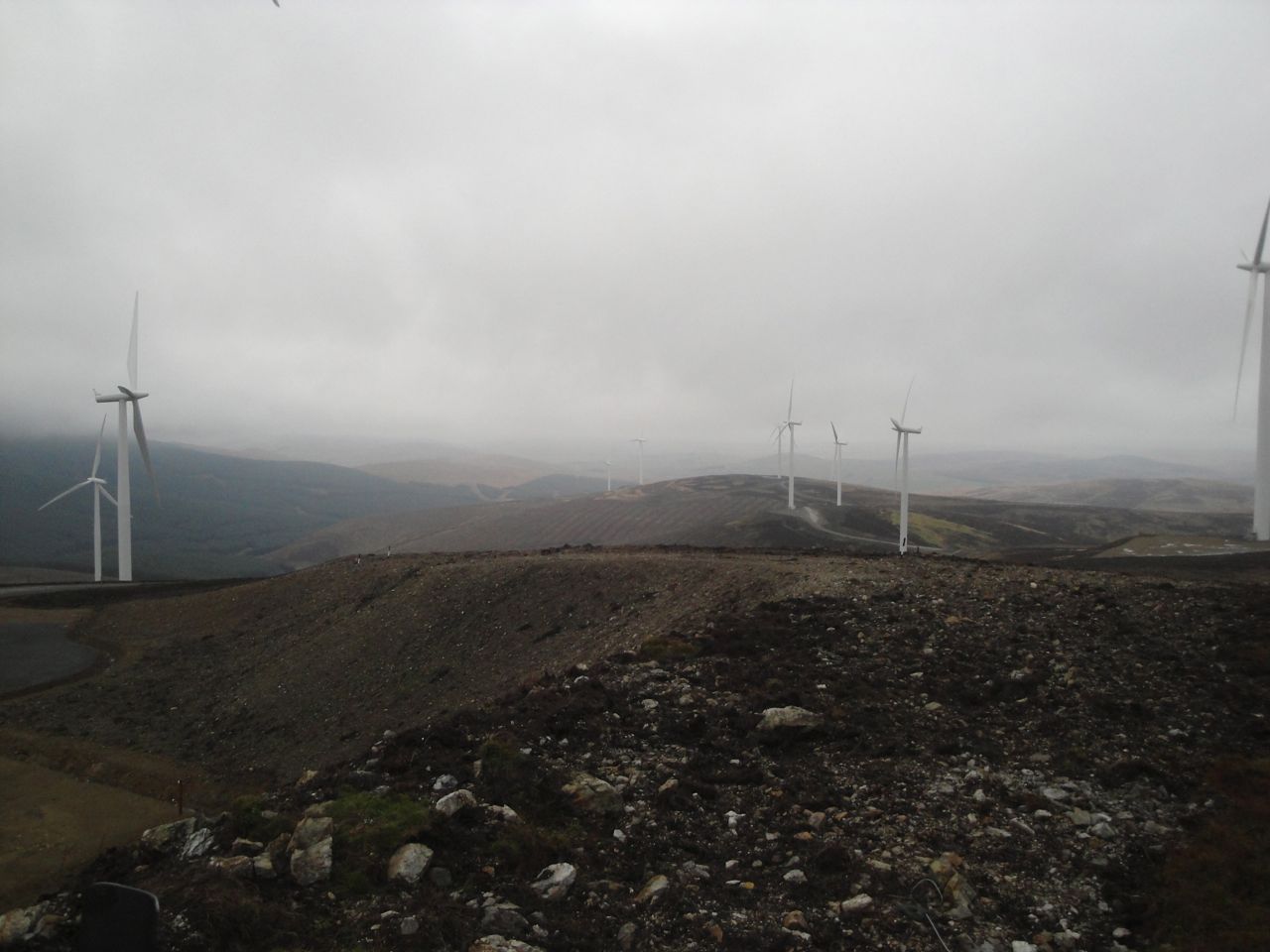
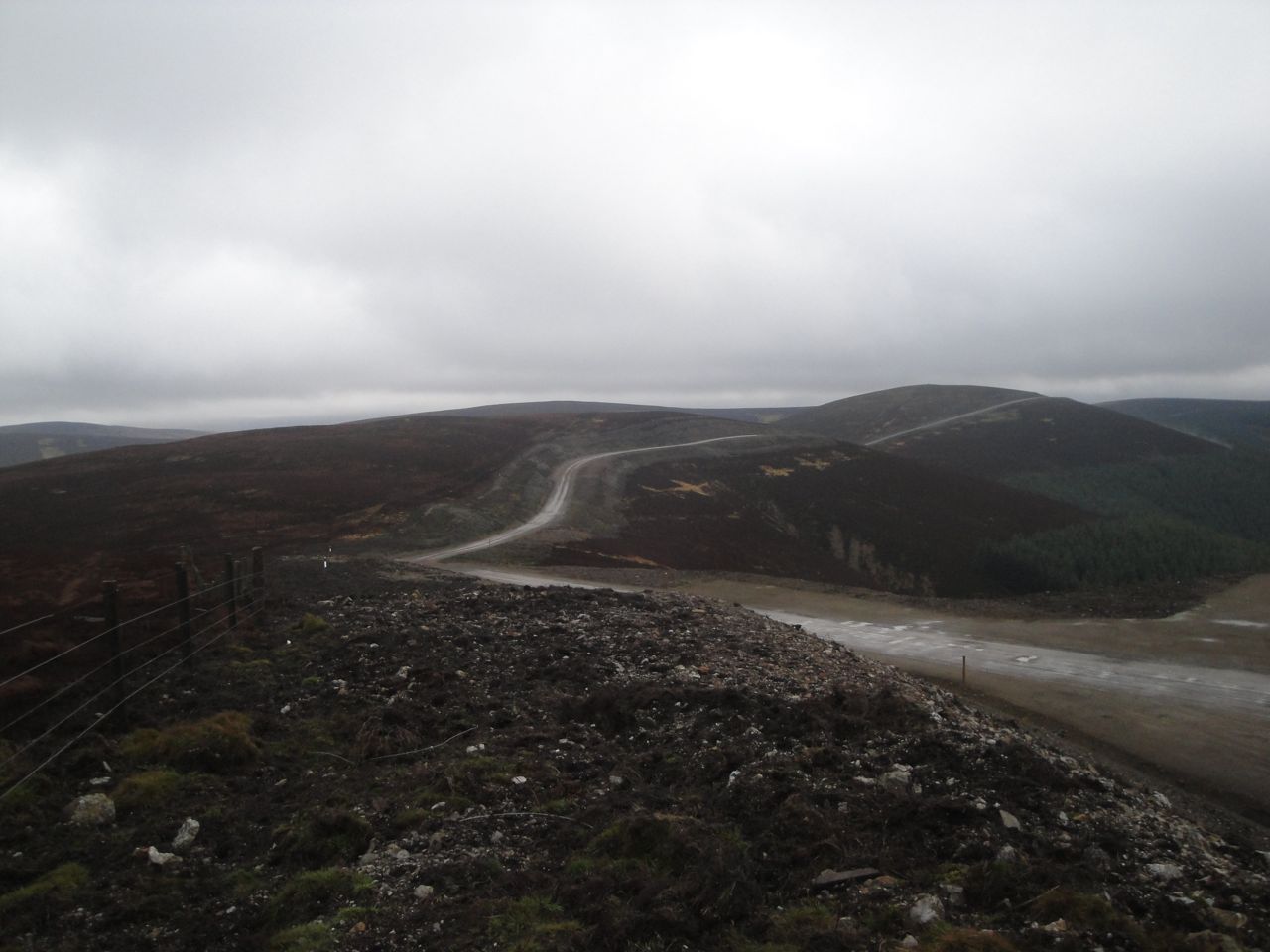
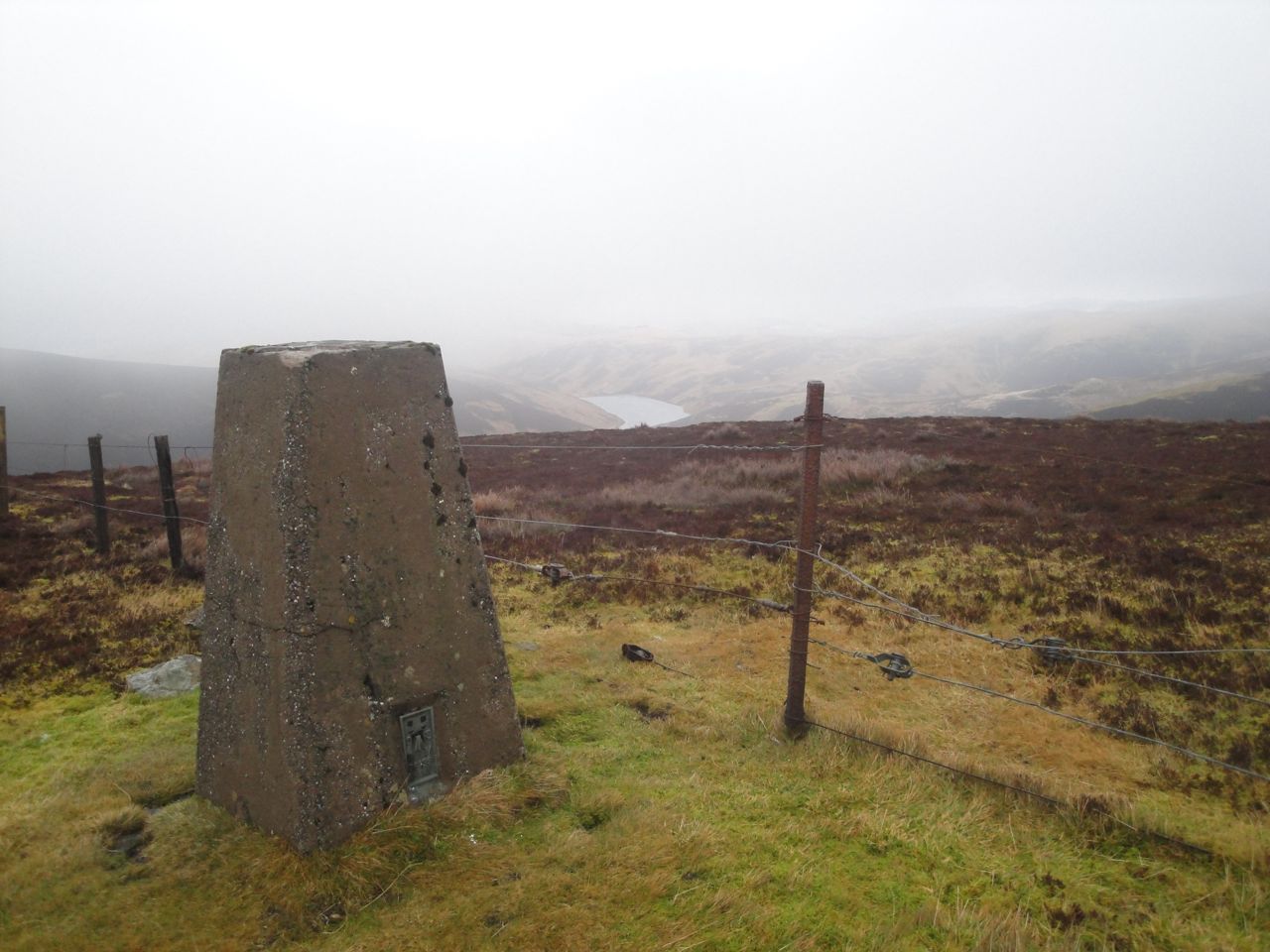
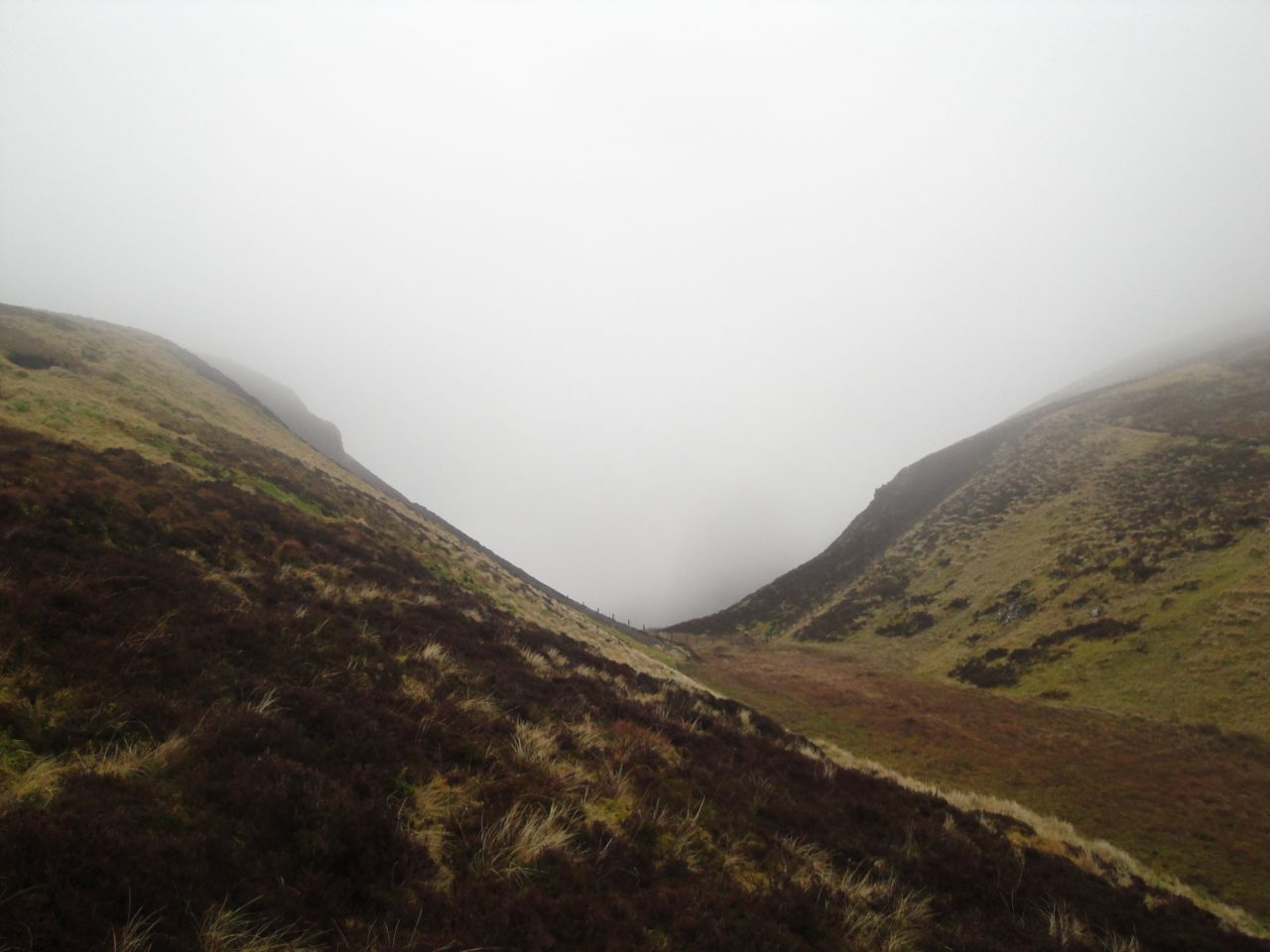
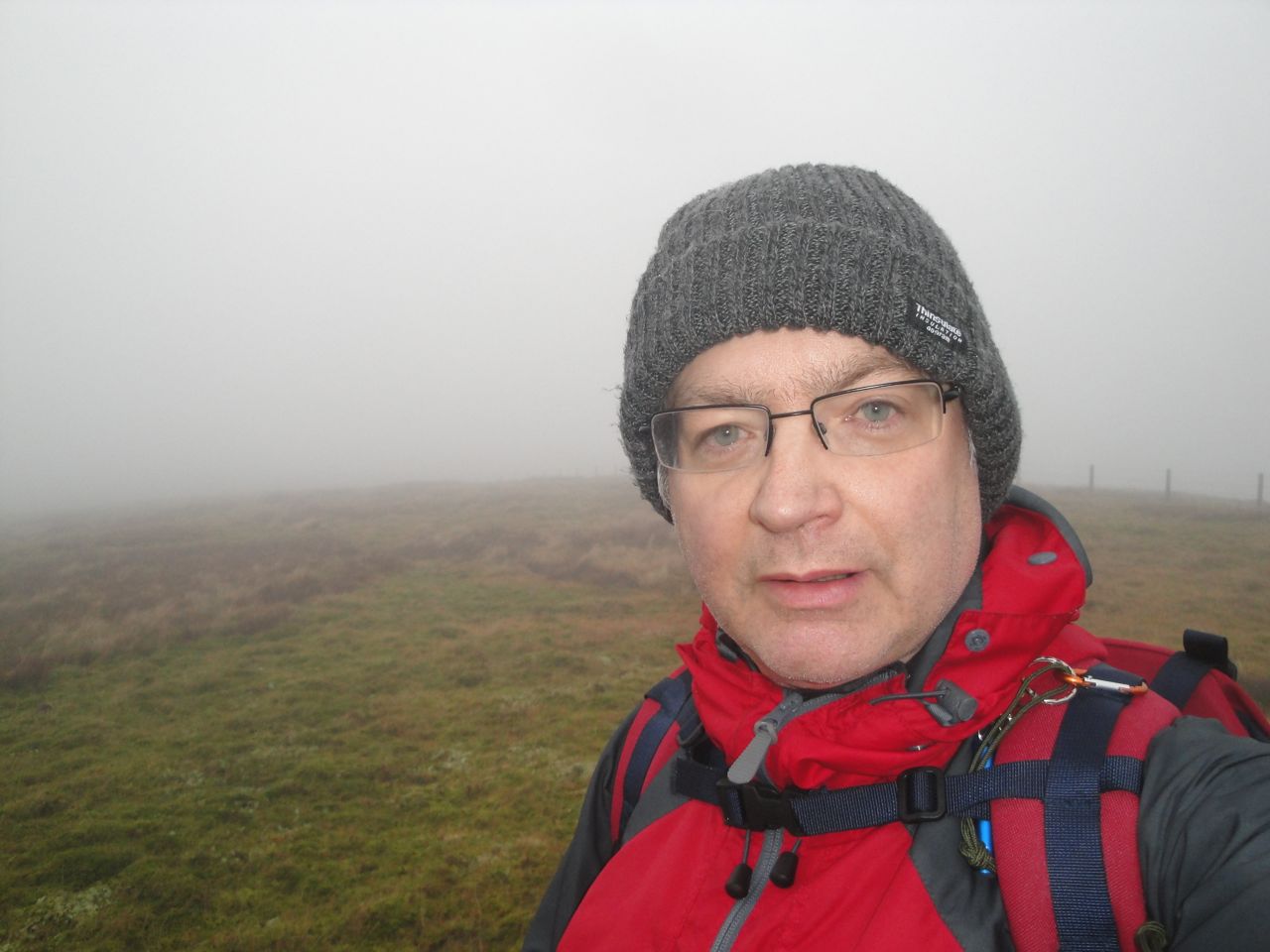
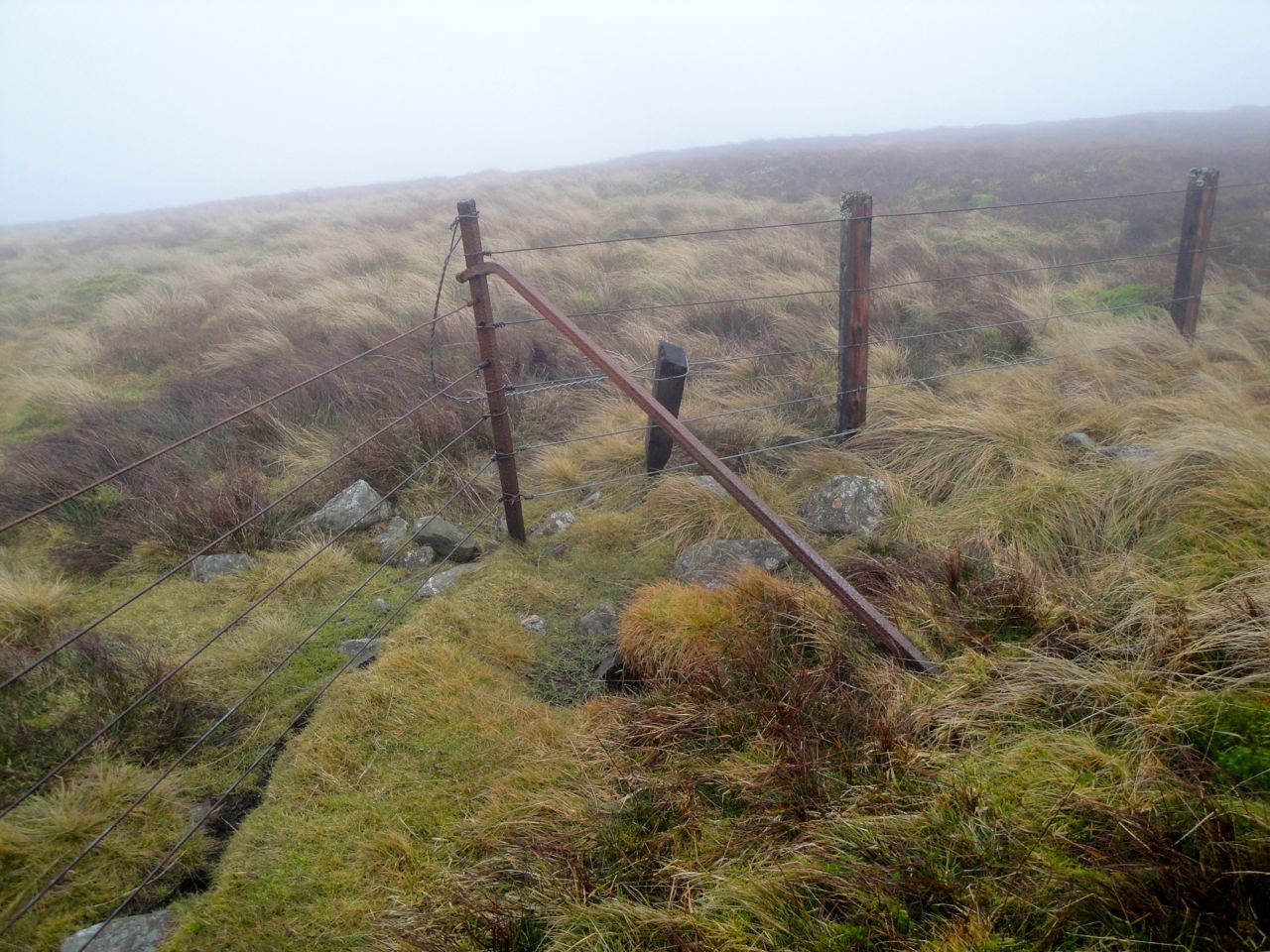
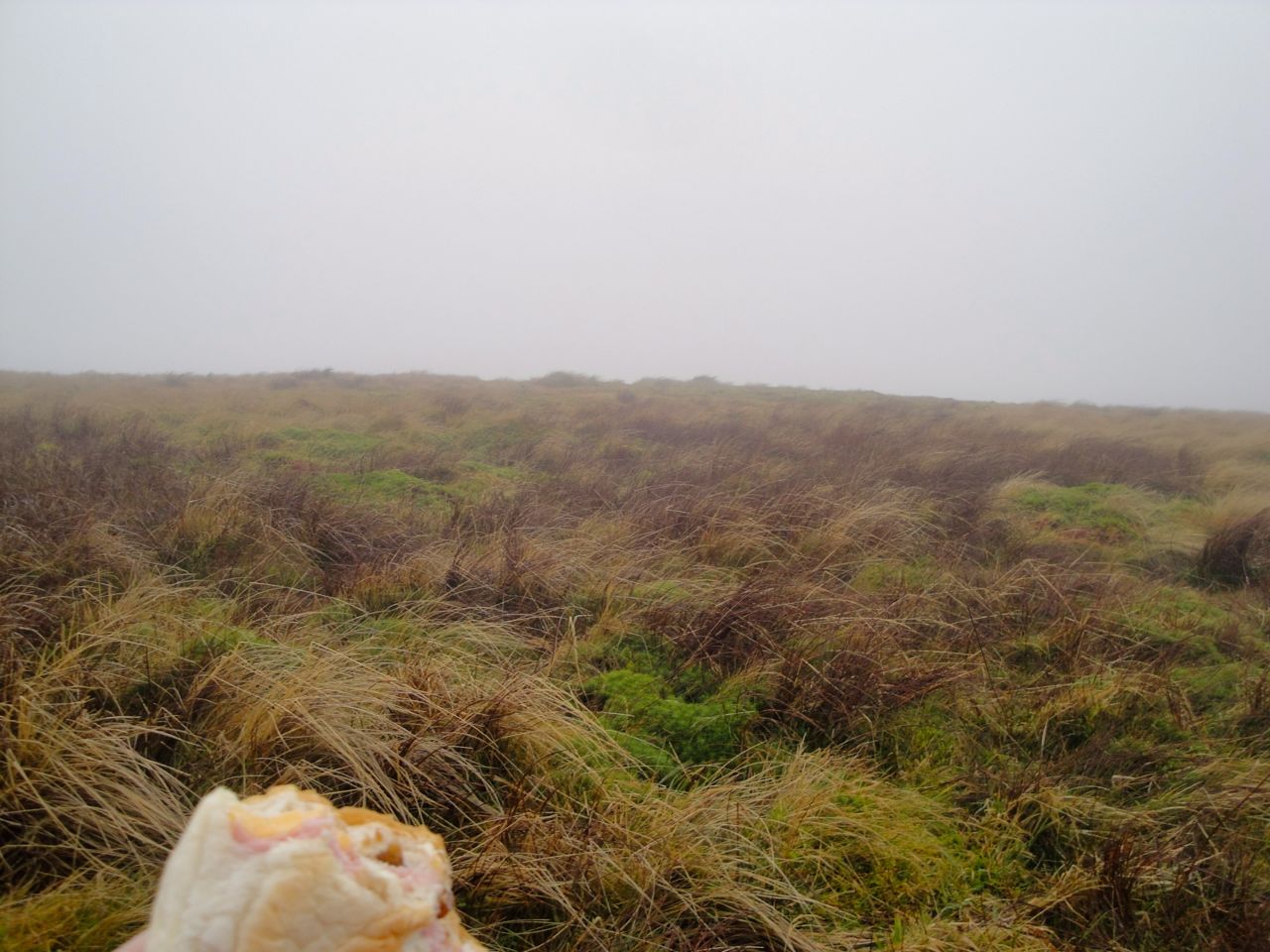
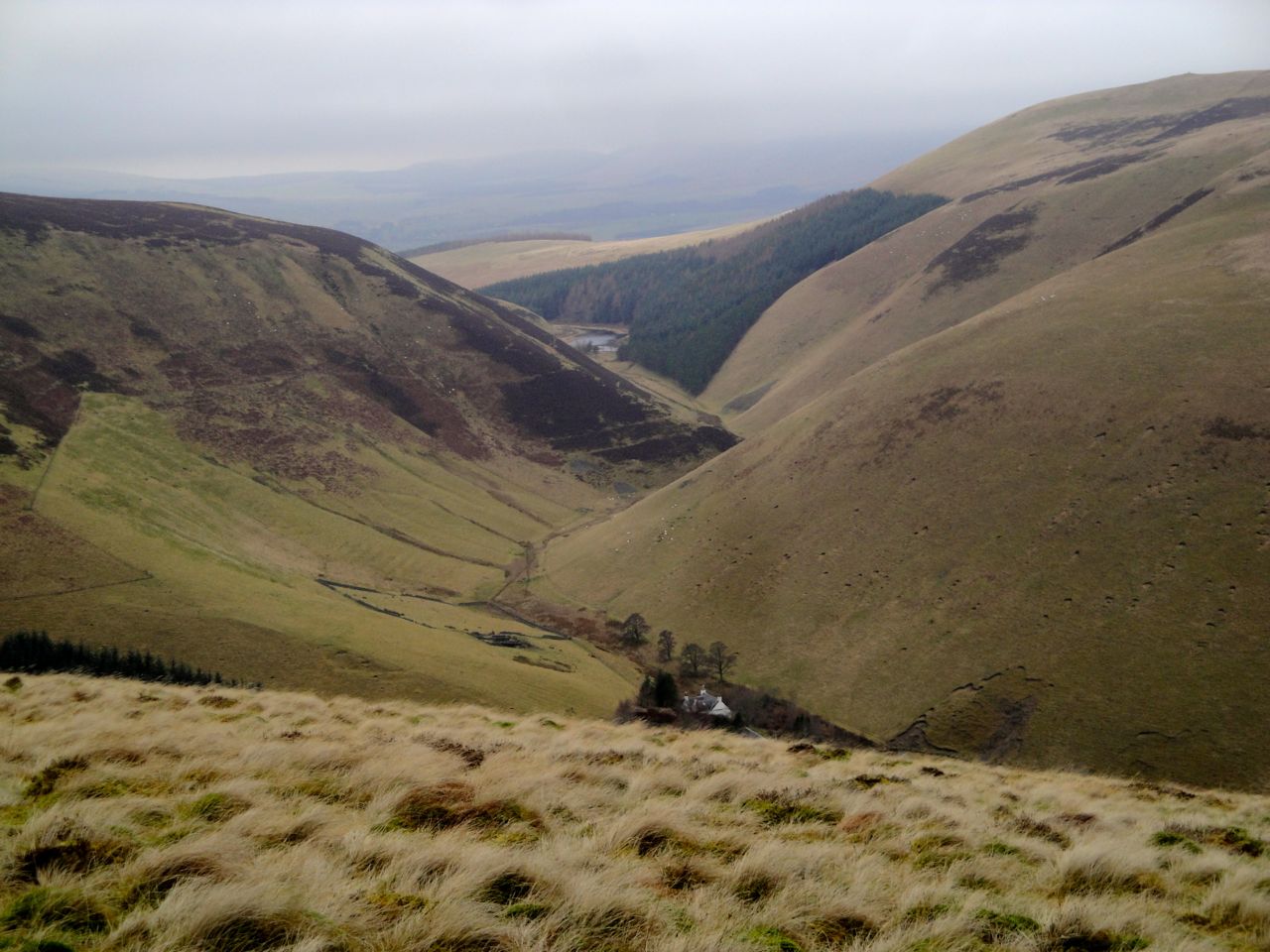
4.71 miles 2h 42min ascent 553m (abandoned: strong winds)
Looks like I picked the wrong week for my two day Donald-bagging in the Ochils.
The planned walk for day 1 had been: Ochils Woodland Park-Silver Glen-Ben Ever-Blairdenon-Glenforet Hill-Ben Buck-Ben Cleuch, then back over The Law to Tillicoultry. I even thought about an extension to include Andrewgannell and King’s Seat Hills if energy and time allowed (I didn’t expect it would). As it was this turned into a Ben Ever there and back.
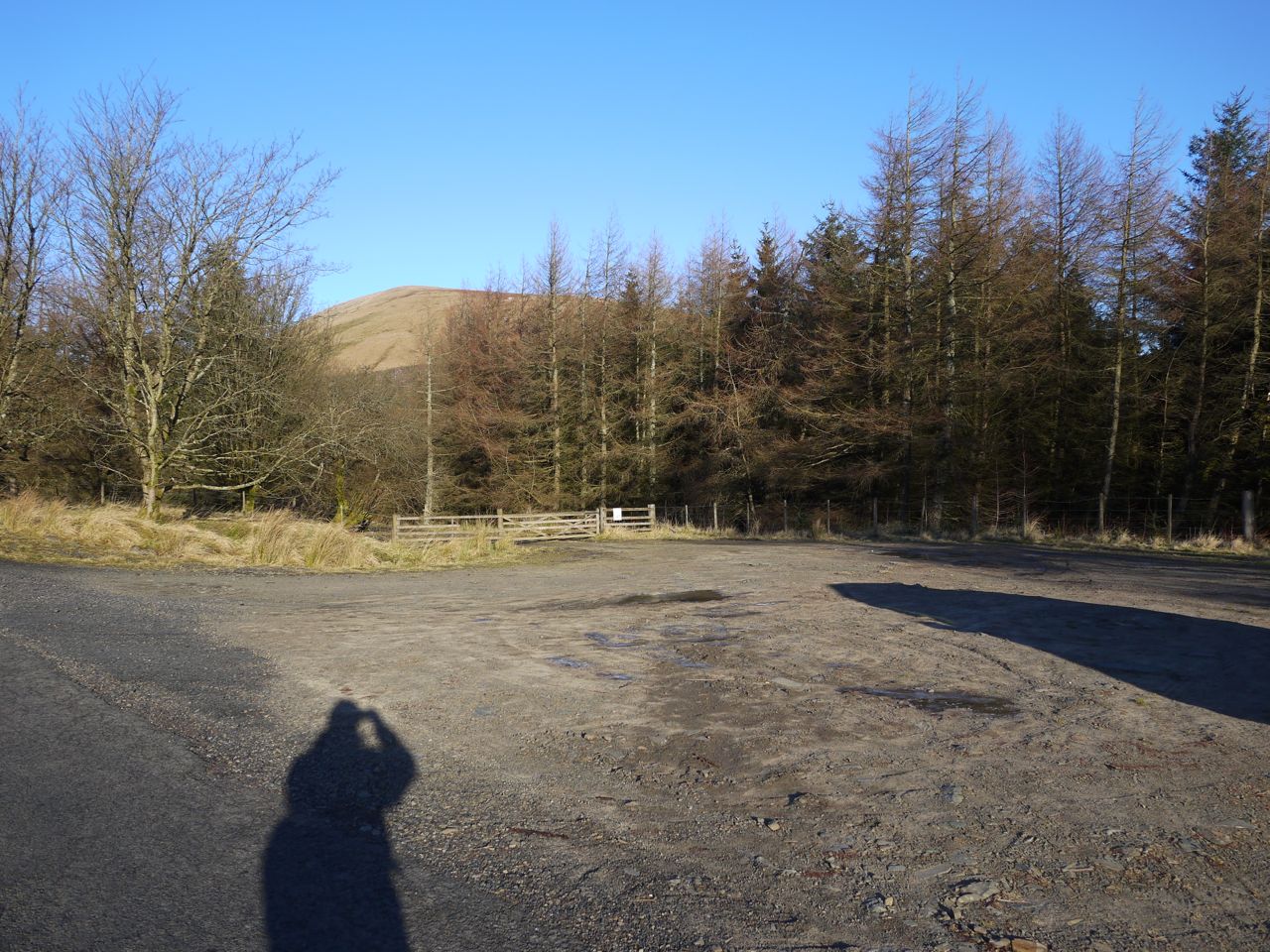
I parked in a small car park in Ochils Woodland Park, though reaching the car park proved more difficult than expected. Several construction vehicles were blocking the road and passing places, requiring complex manoeuvres to allow cars to pass. Sitting in the car I was able to consider how much more useful it would have been at school to have considered problems where three lorries/JCBs could be moved to allow cars to pass either way with passing places each large enough for just one vehicle, rather than the “if two men take four hours to dig a trench…”. Mustn’t moan too much though. They did actually make the effort to let me through, and the car park, being a picnic area had benches to sit on while tying laces etc.
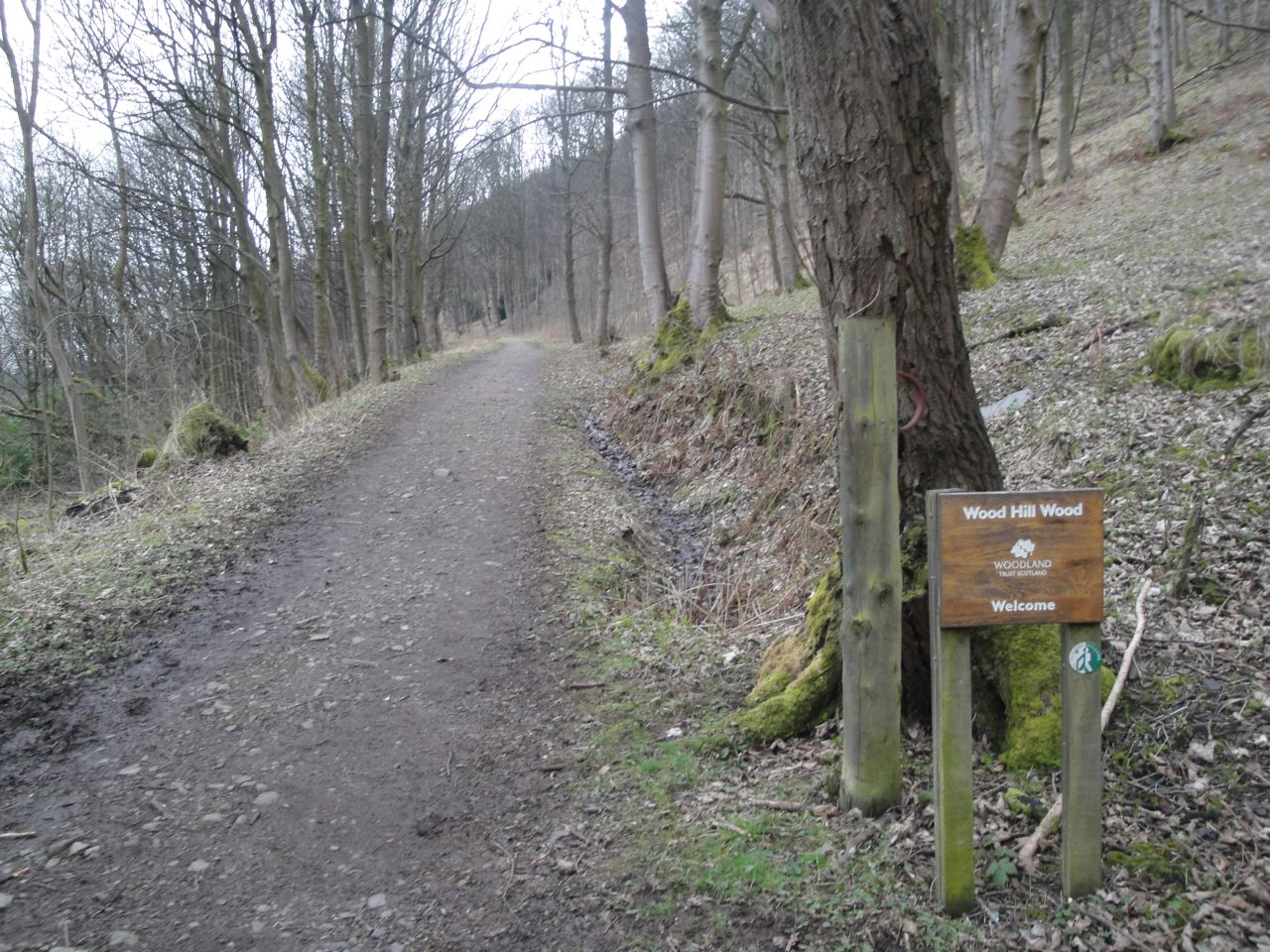
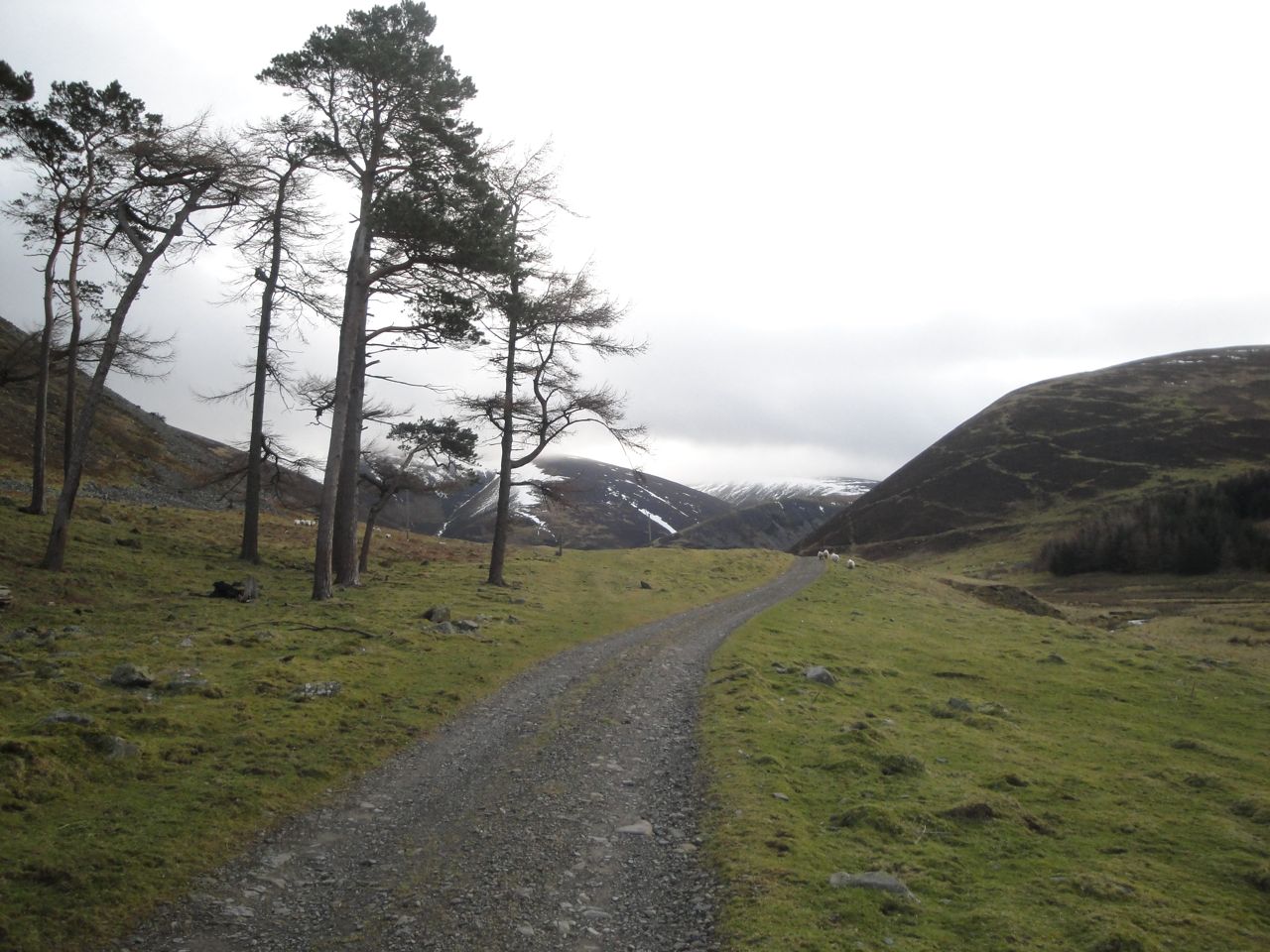
Path from the car park
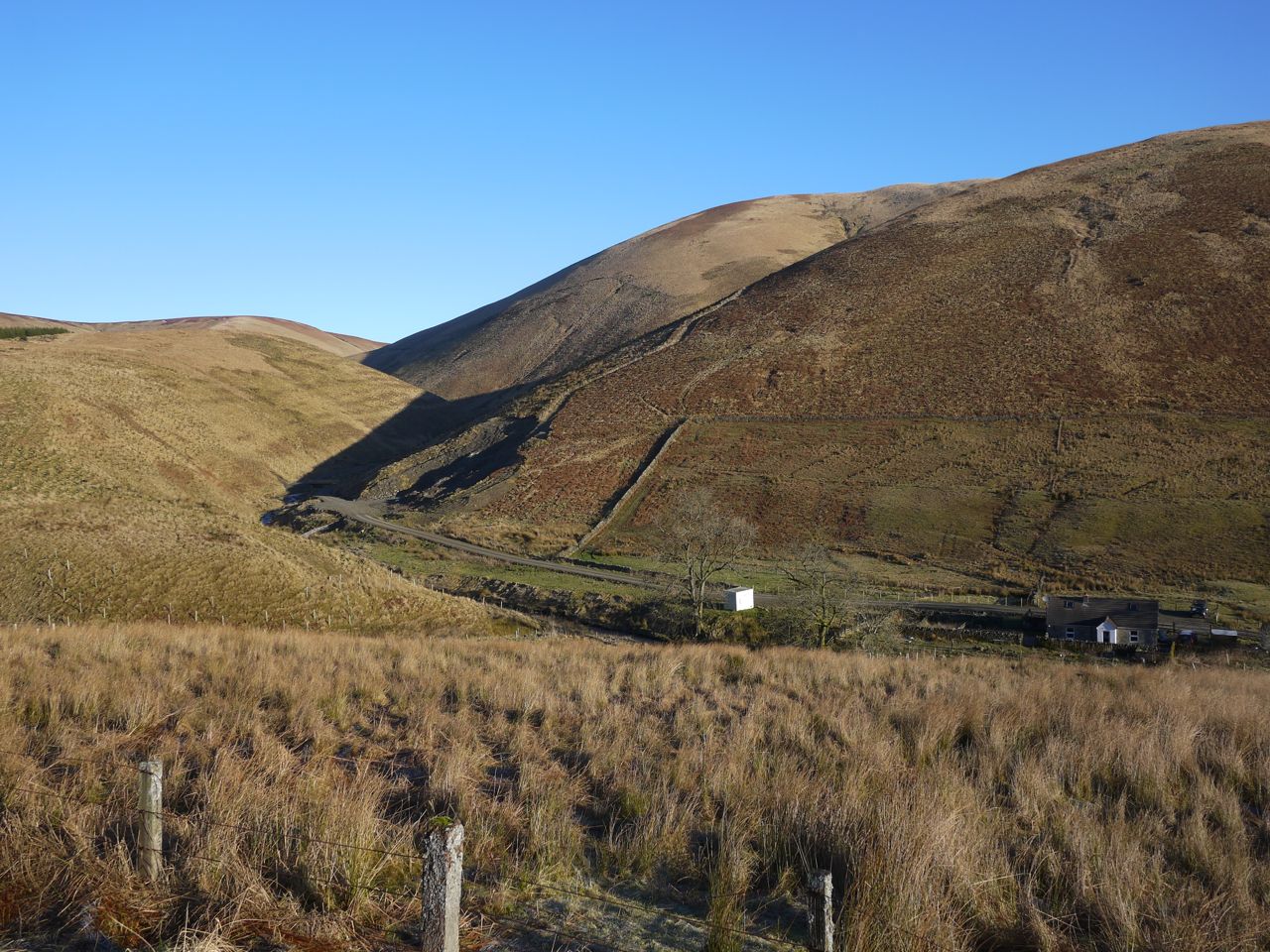
At the car park it was cold but not overly breezy, being amongst the trees. A good track, with a red way-marker starts by the car park. This led up through the trees, climbing steeply at times, to the Silver Glen, joining the large zig-zag track at about 200m.
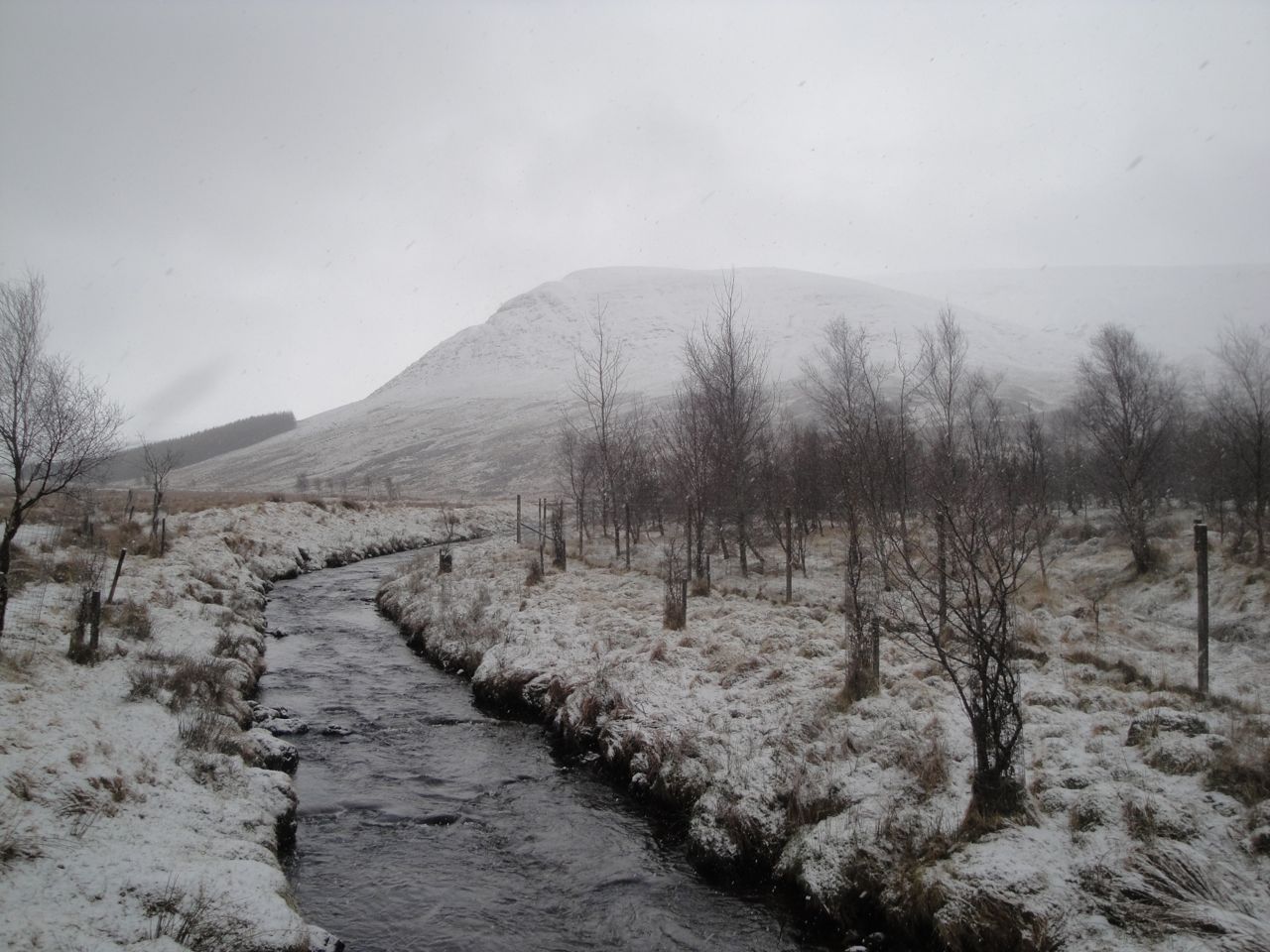
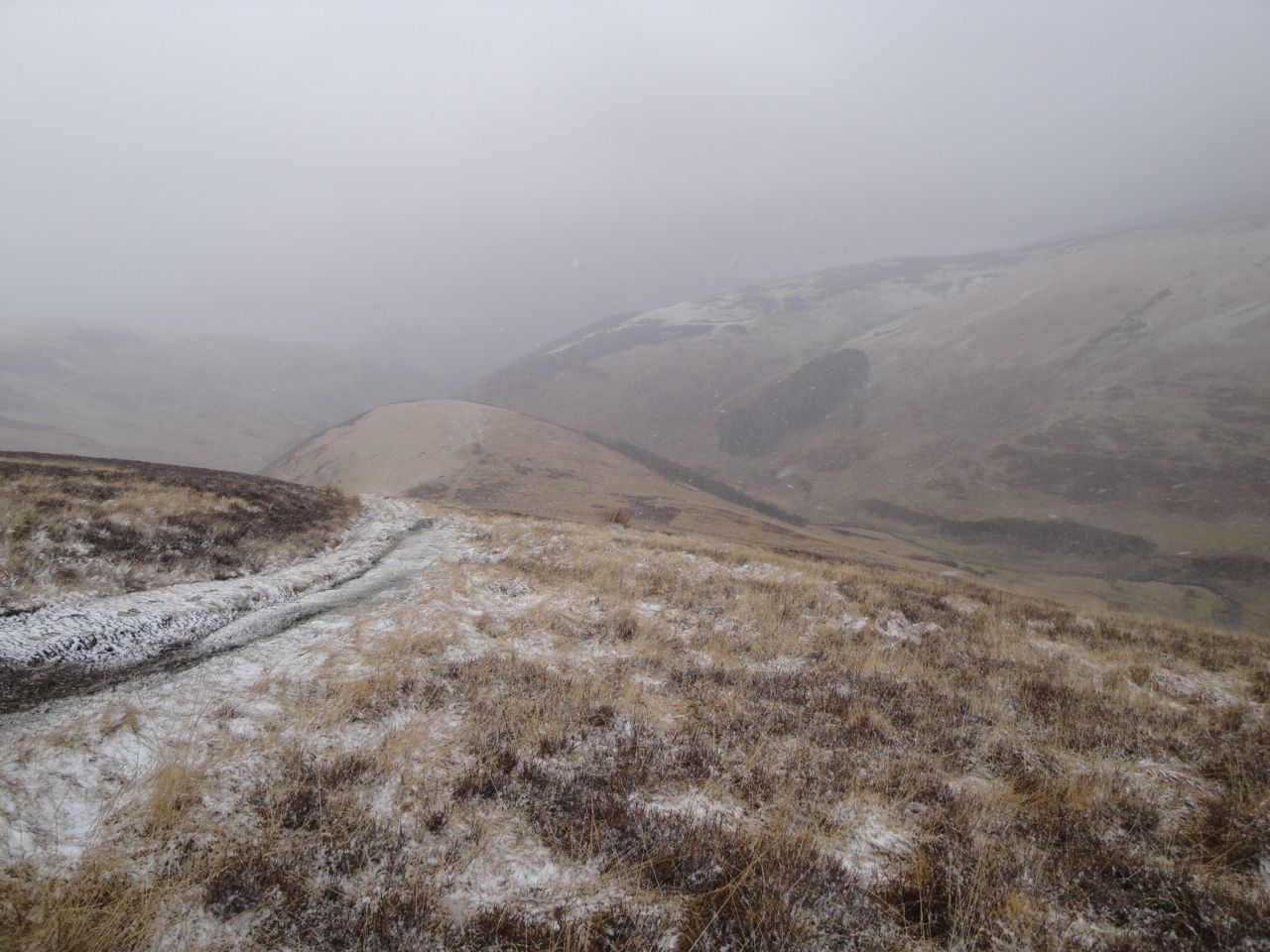
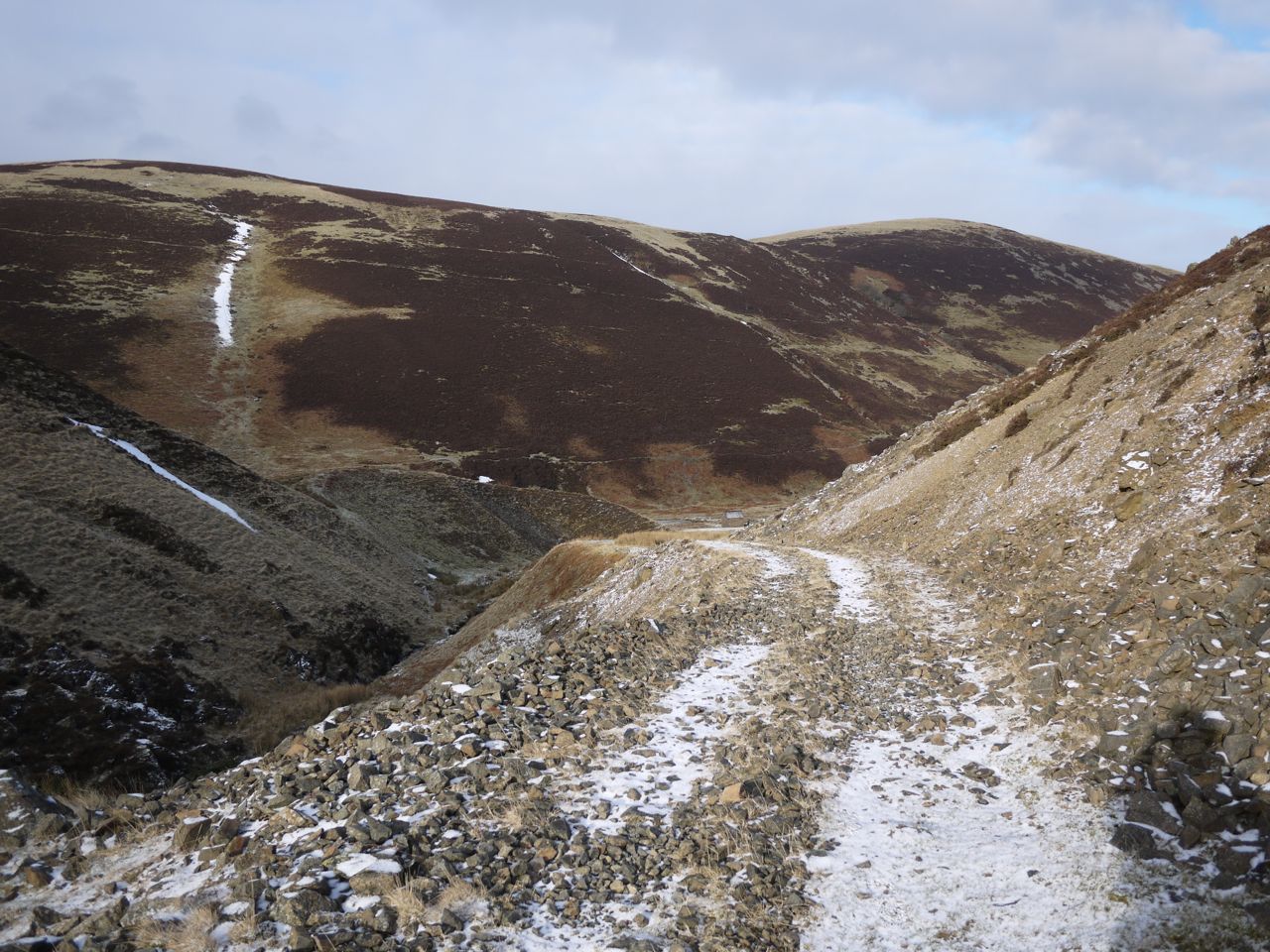
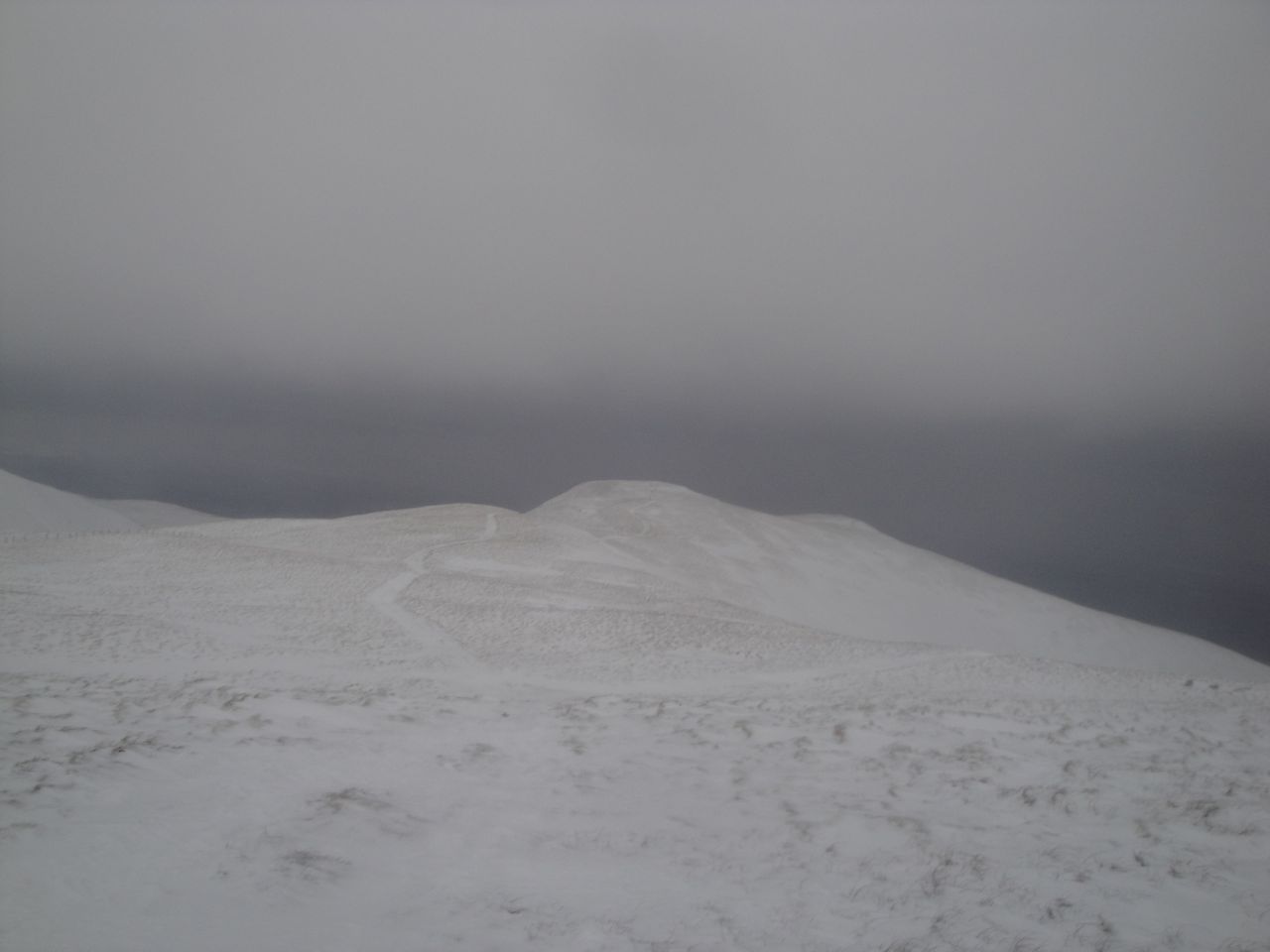
The zig-zag track was warm-me-up steep and soon climbed from dry and brown to ice and snow covered. The forecast was easterly or ESE winds so I had assumed it would be sheltered in the glen. I hadn’t considered funnelling which somehow had the wind blowing in my face as I trudged onwards and upwards. It is strange how the wind blowing in your face can take your breath away. I’m sure this is more than just the extra effort, perhaps a Venturi effect actually stealing my breath away?
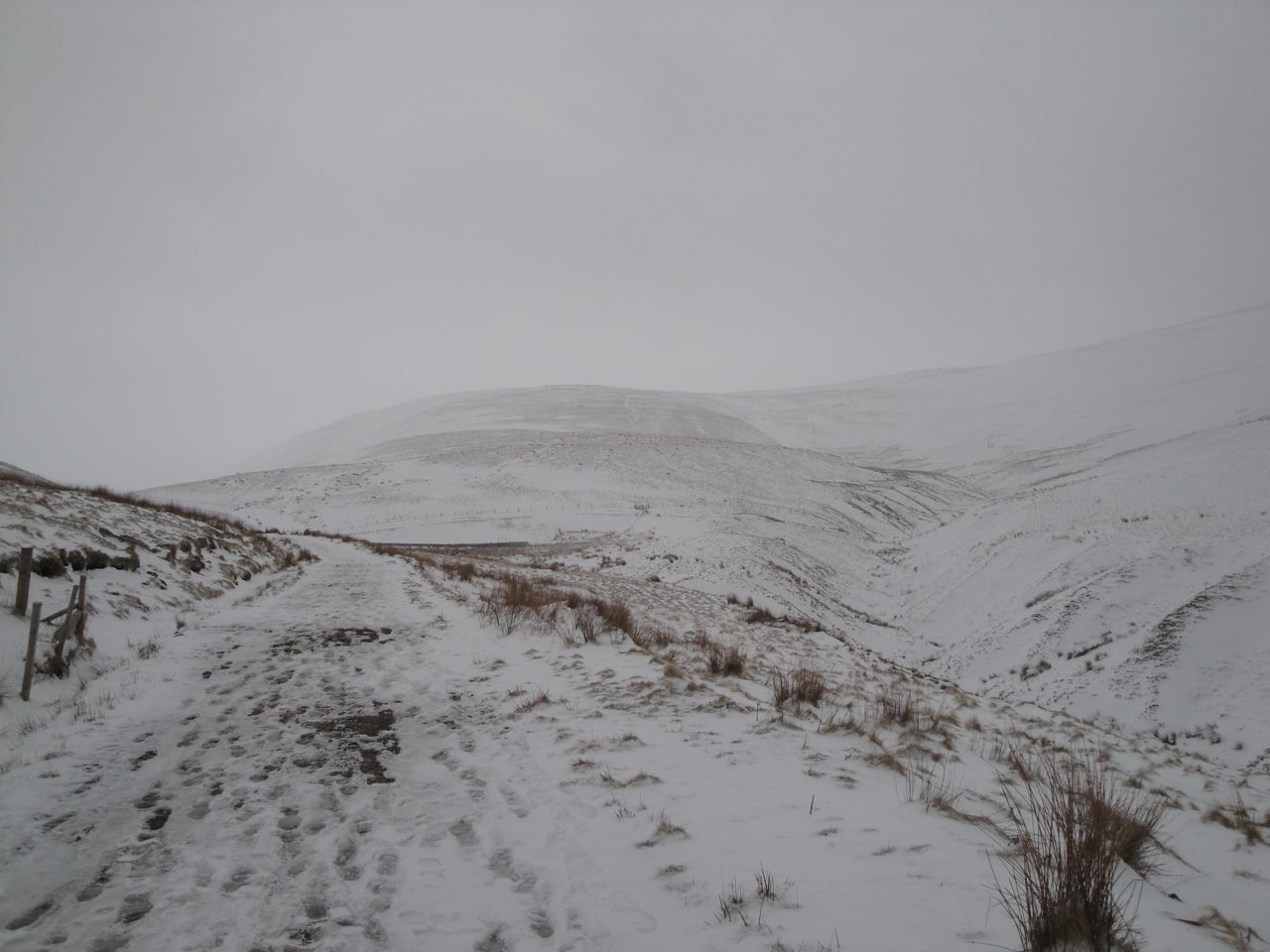
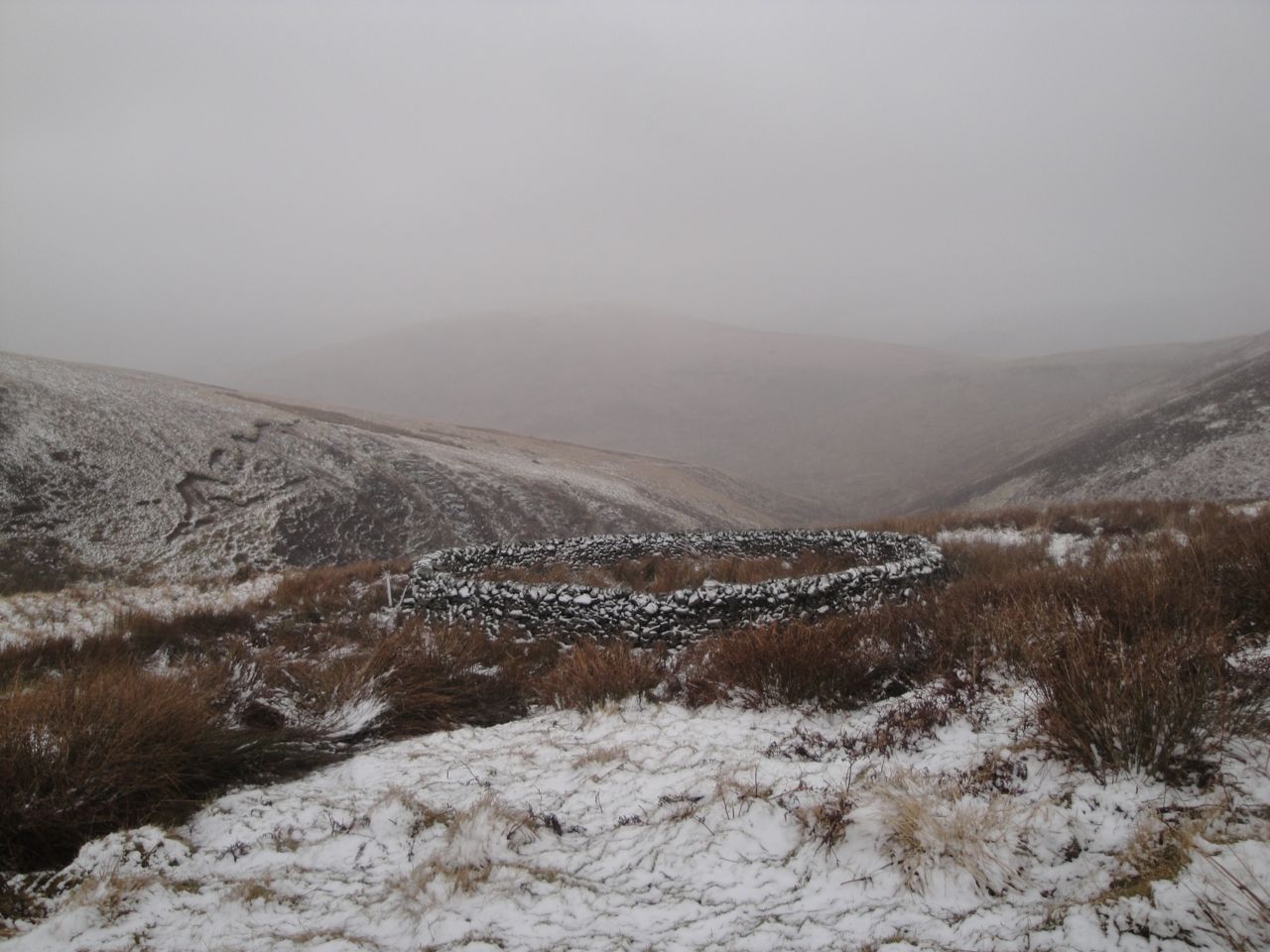
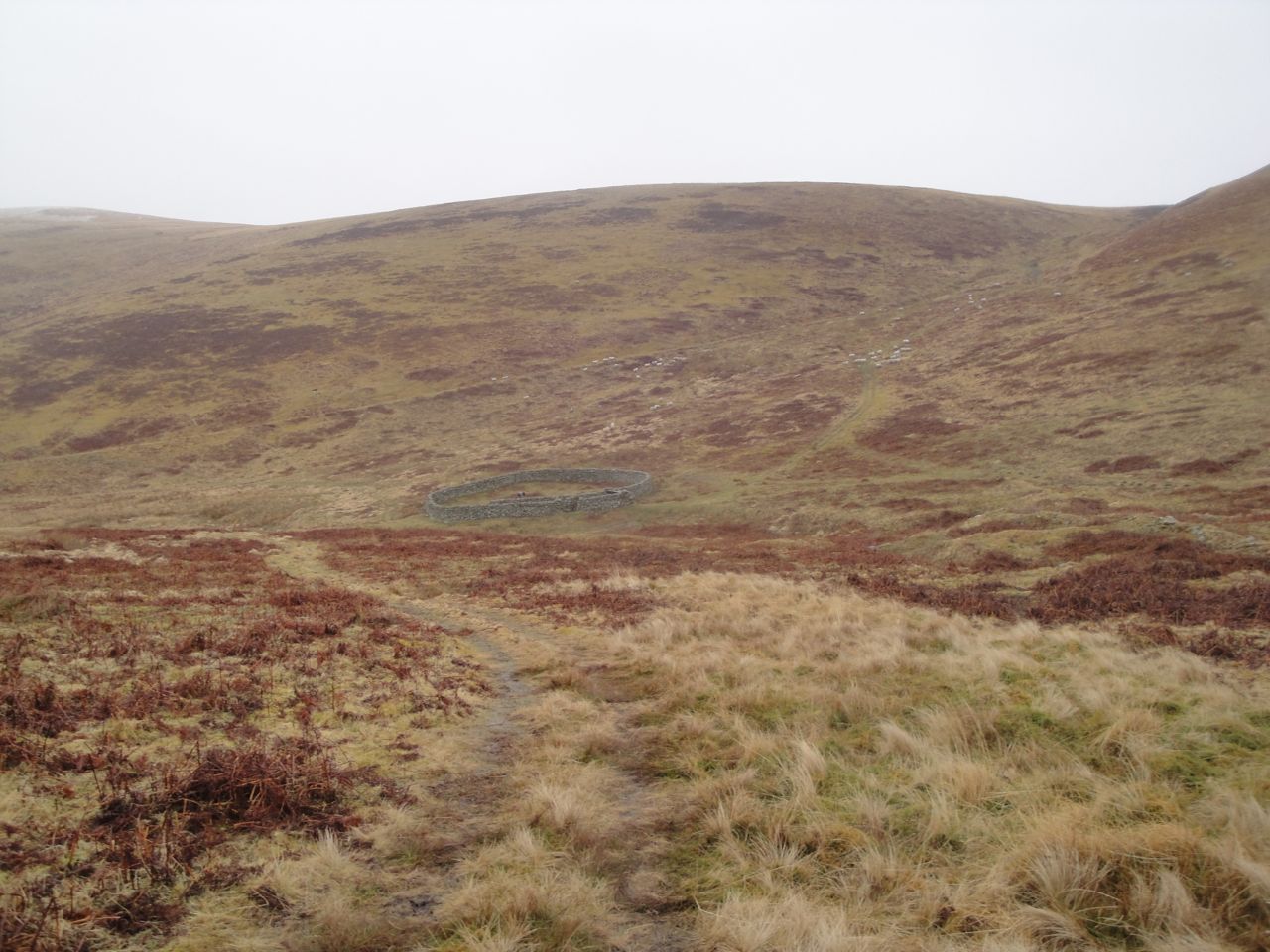
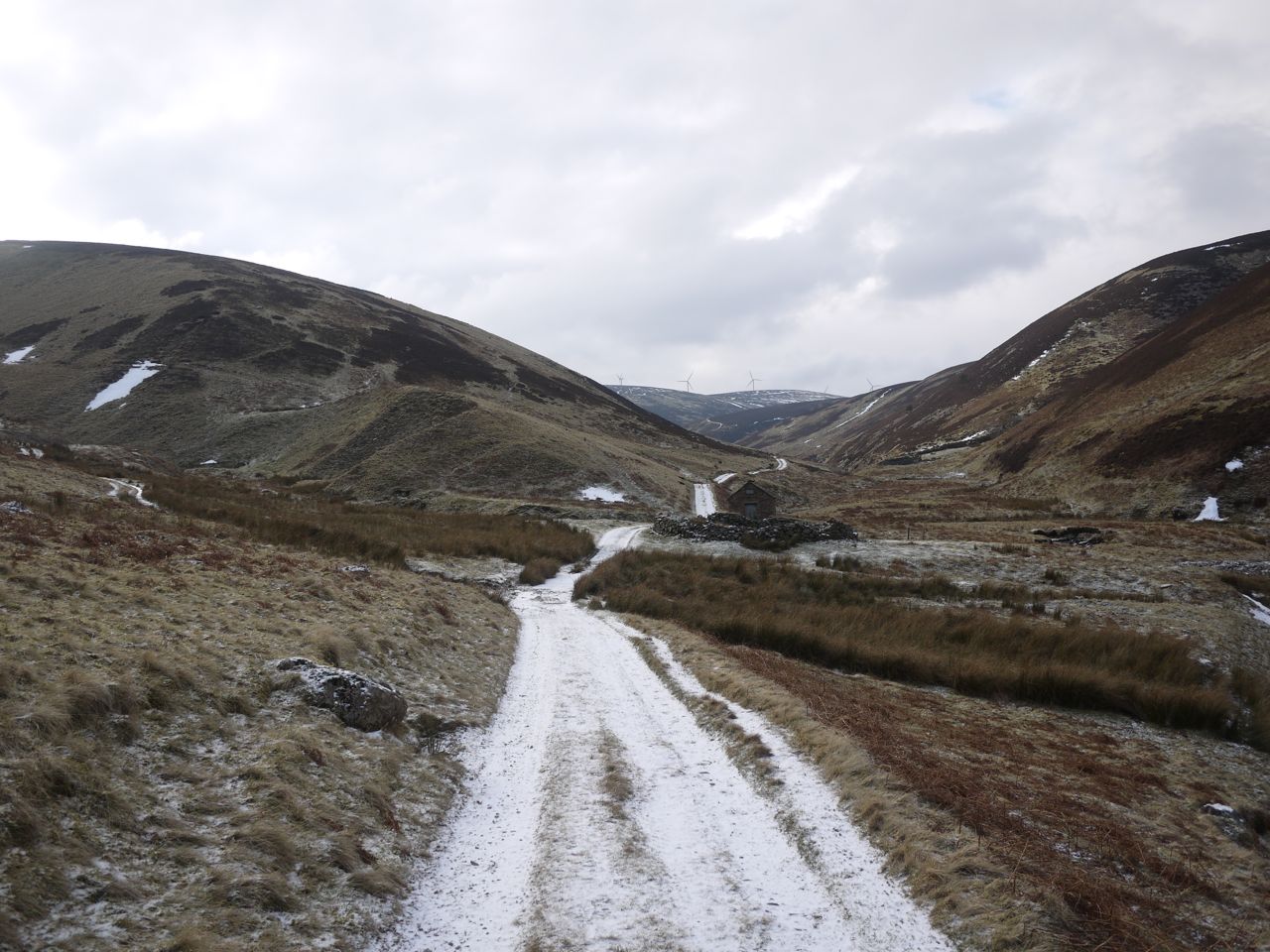
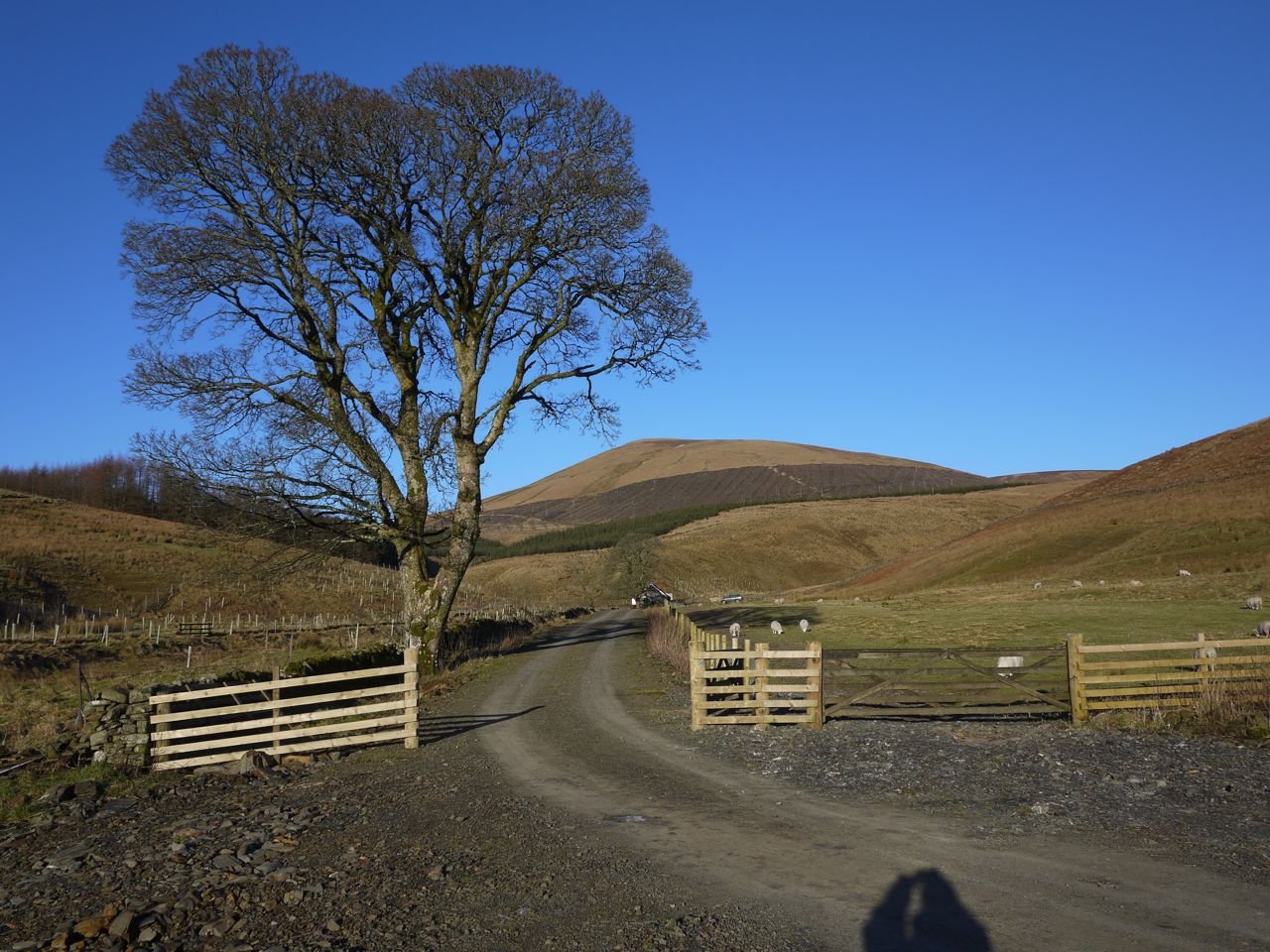
Approaching the sheep pens below Ben Ever
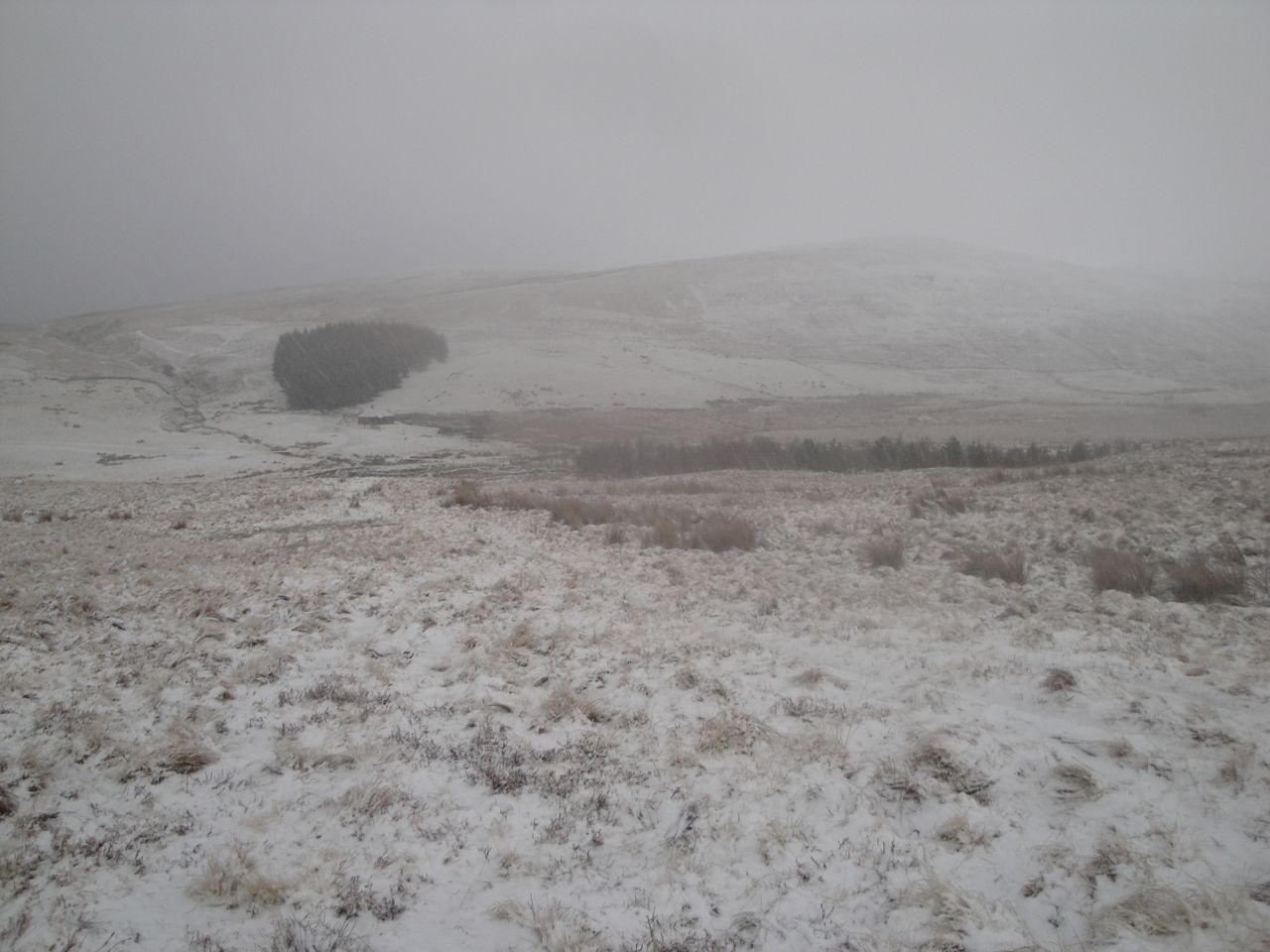
The trudging became increasingly arduous and as I walked up the Silver Glen’s track I decided that I would ditch the Blairdenon/Glenforet arm of the route. By the time I had reached the fences and gates at 360m the snow was deeper and collecting in small drifts.
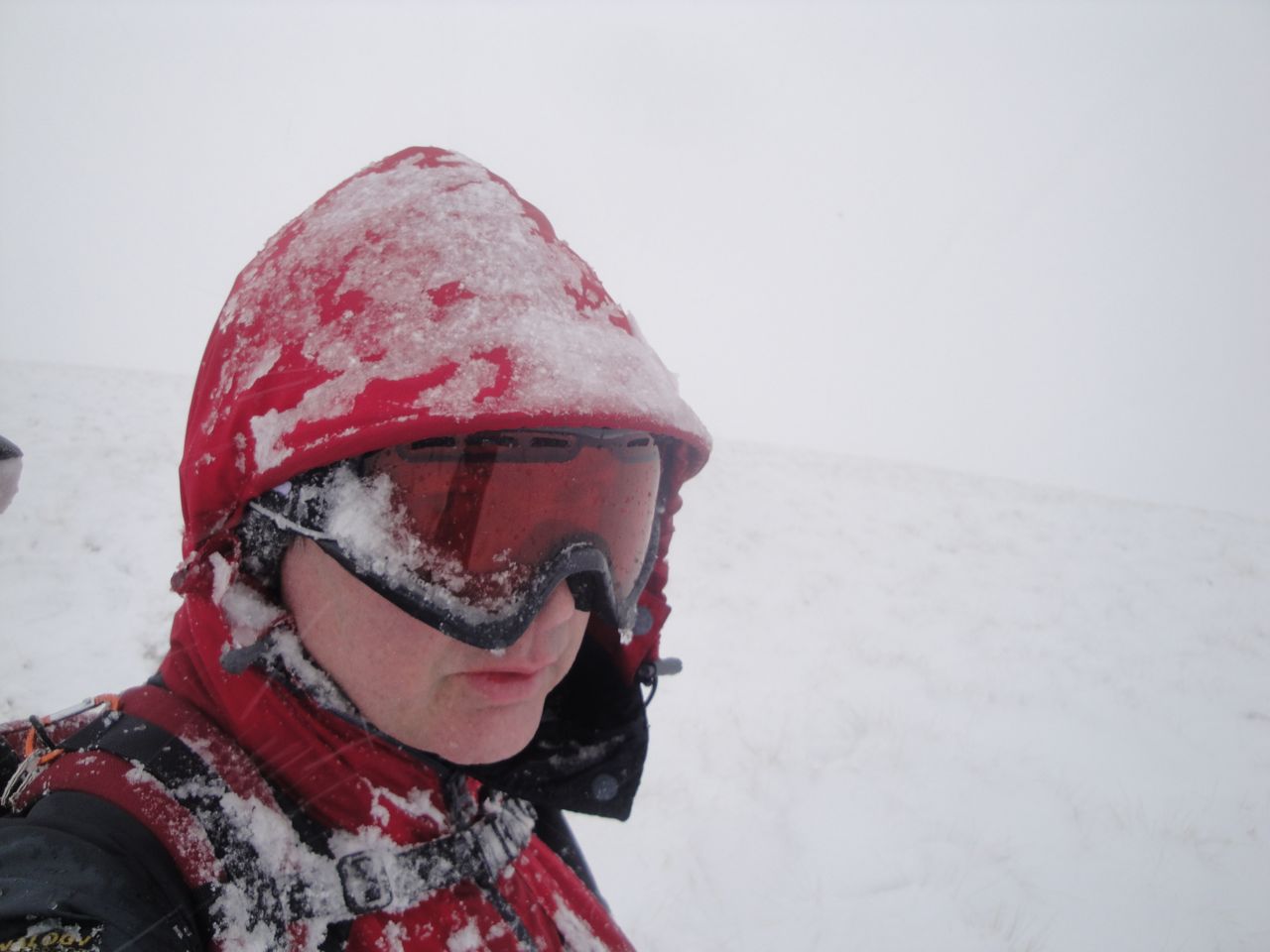
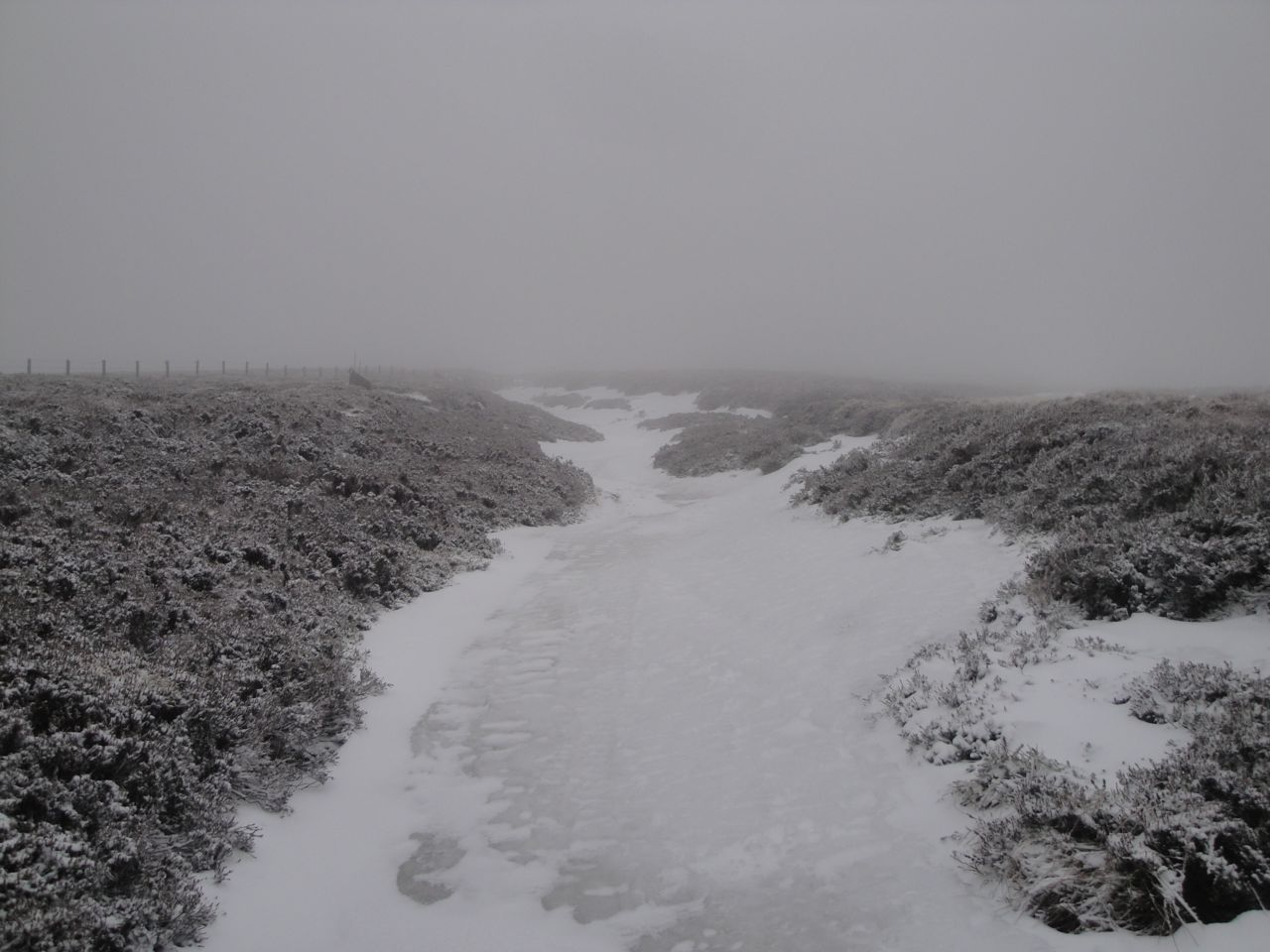
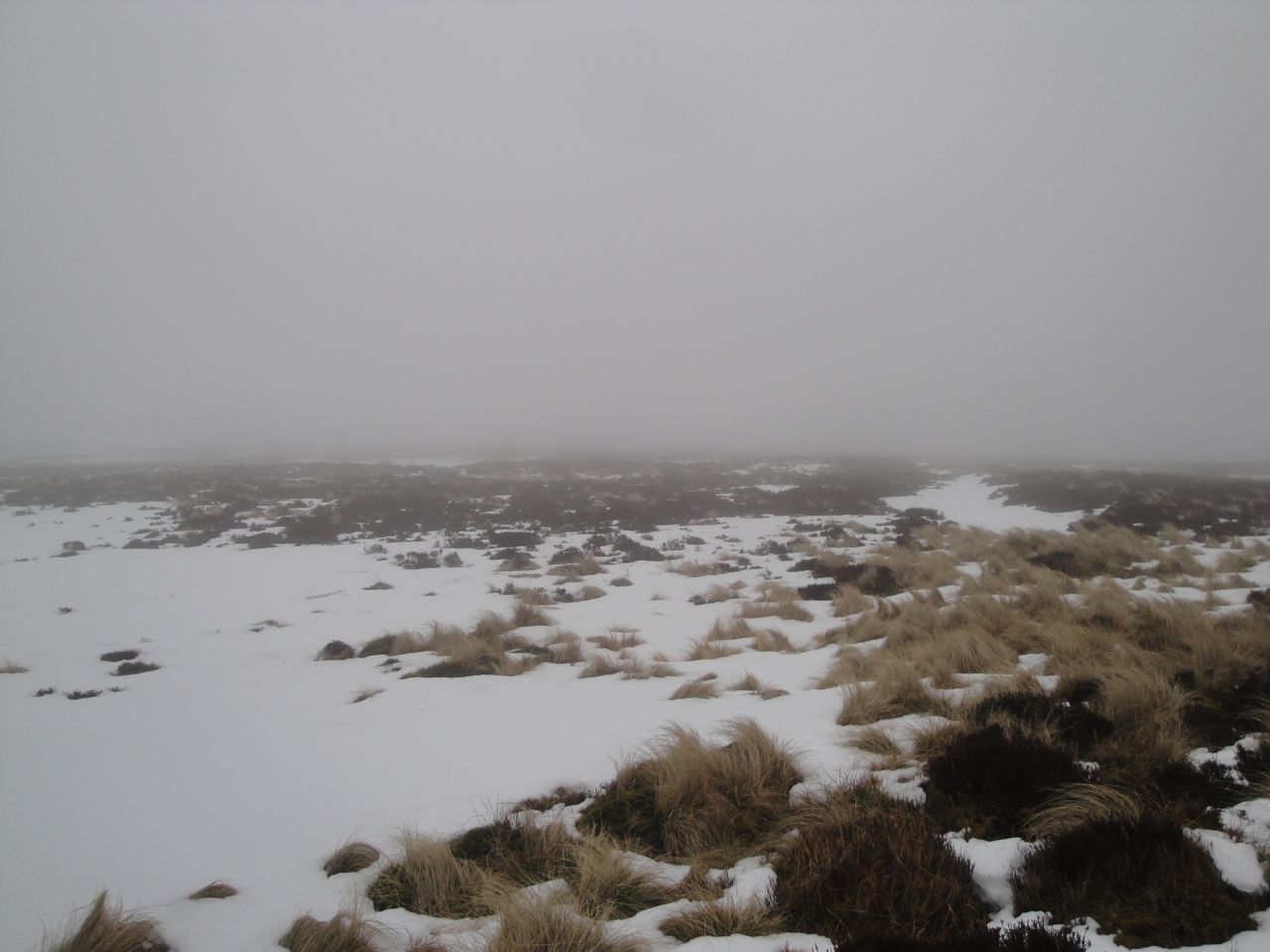
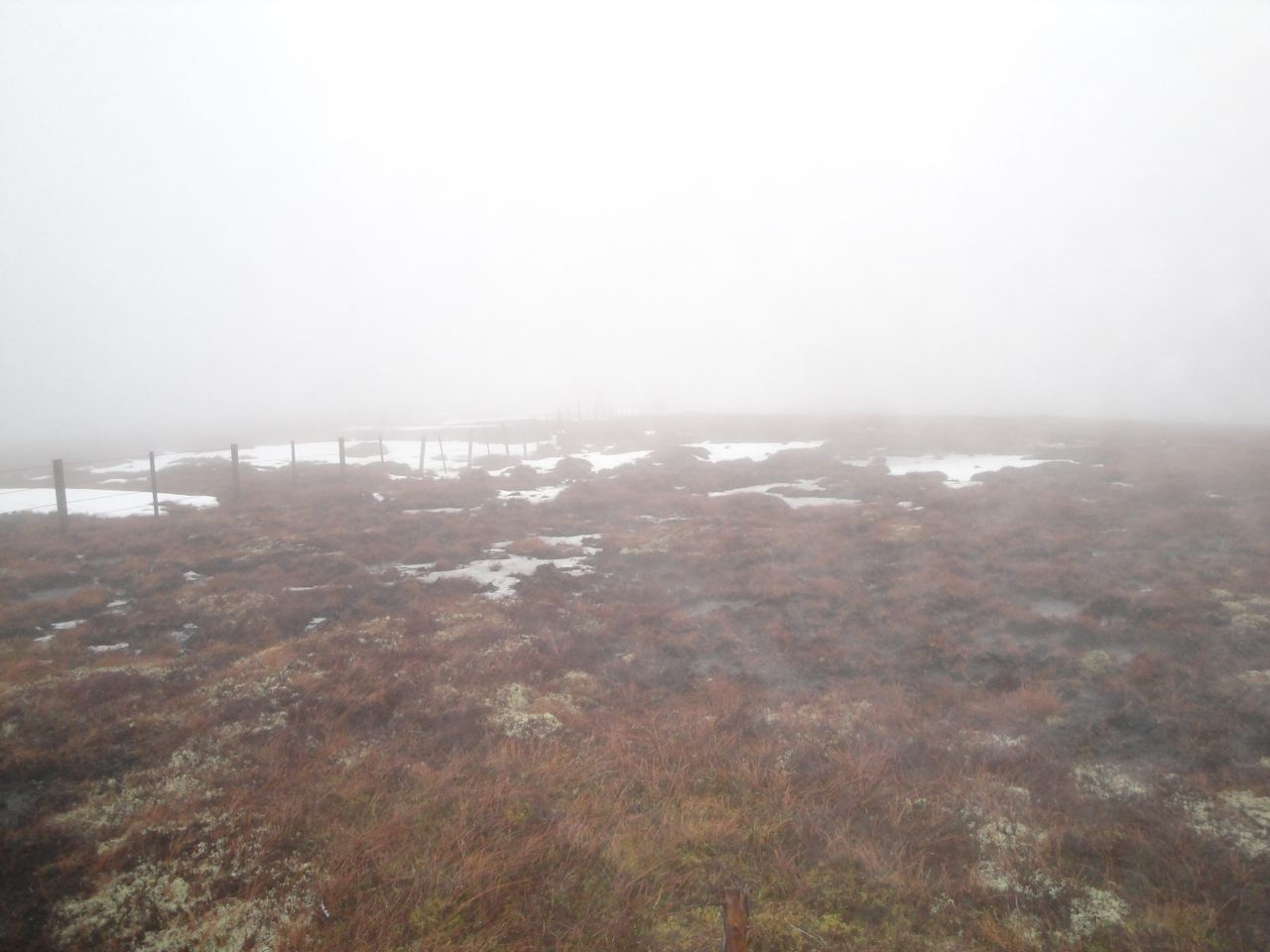
Despite the snow, a track was still visible heading up Ben Ever. The snow was initially calf deep but soon reduced to a more manageable ankle deep though as ever the snow was deeper on the path than on the surrounding grass. The wind by then seemed to be blowing against my right cheek (face), and though it was not actually snowing, the air was filled with sharp ice crystals. Drifts were collecting beyond any obstruction, particularly larger tussocks, and should have alerted me to the actual wind direction.
As I climbed out of the glen, the wind strengthened and I began to wish I had chosen a smaller, svelte rucksack, rather than the sail I had on my back. By then it was difficult to stop for a breather without kneeling down, and the wind would occasionally have me stumbling to the side.
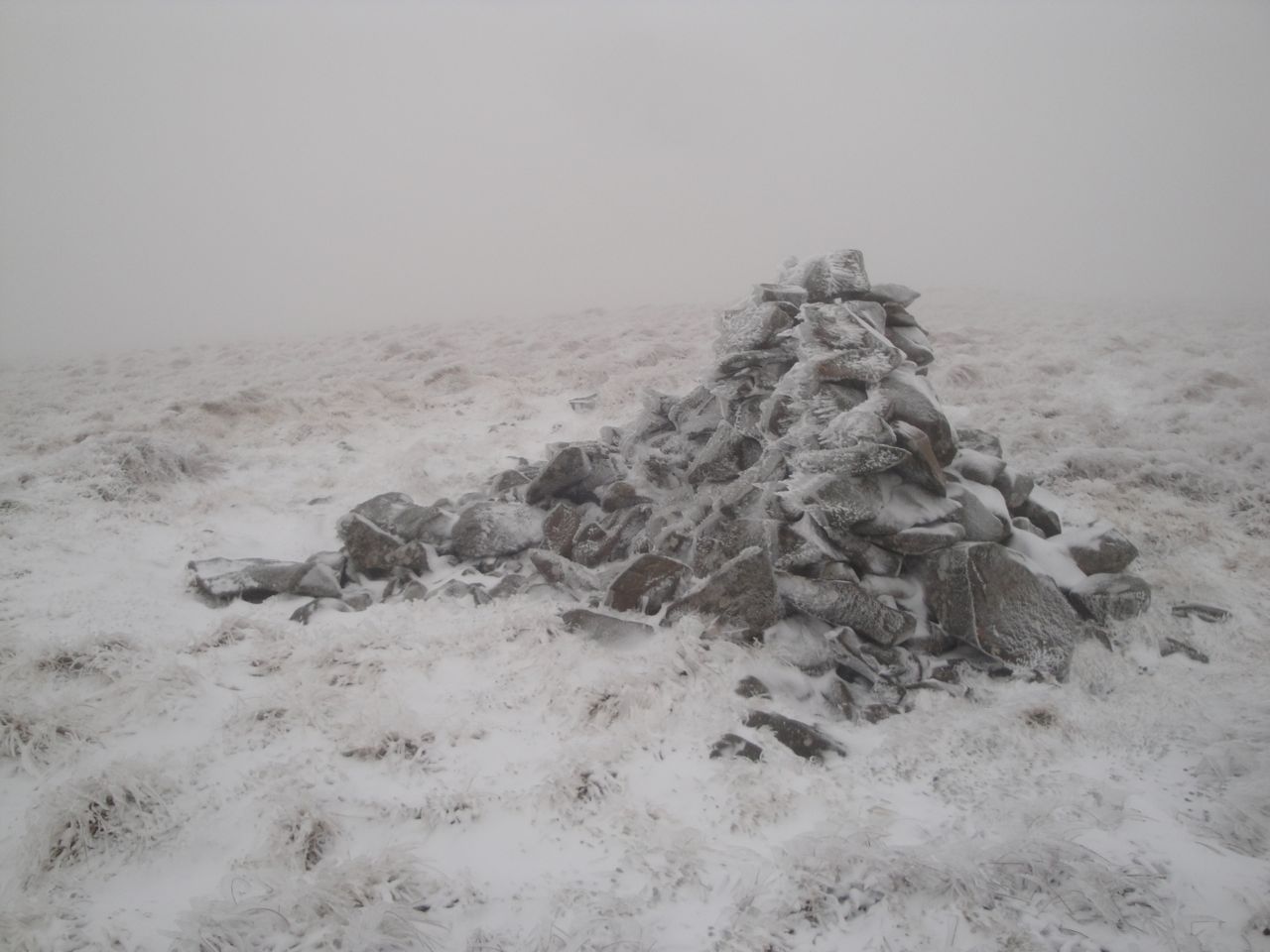
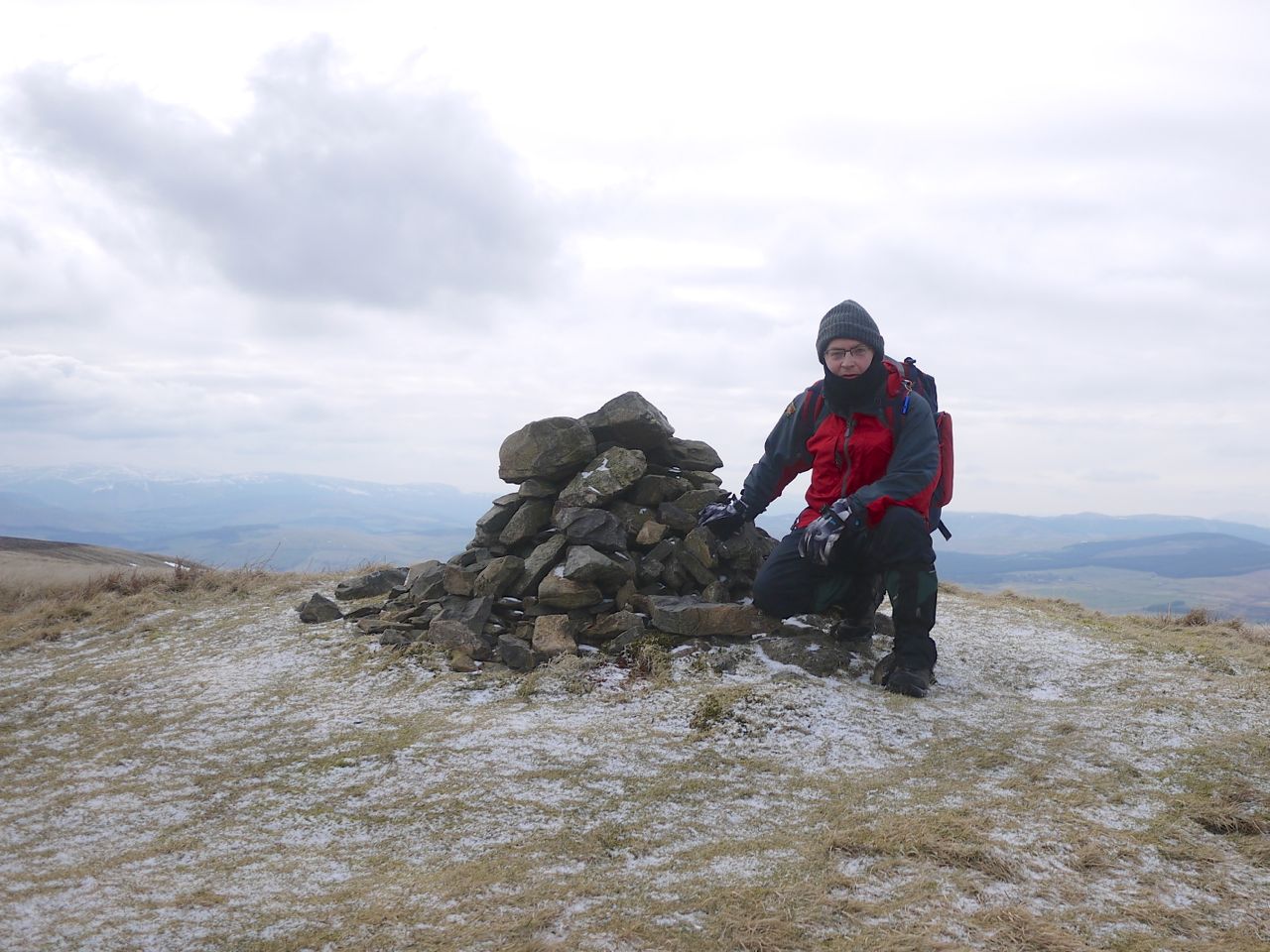
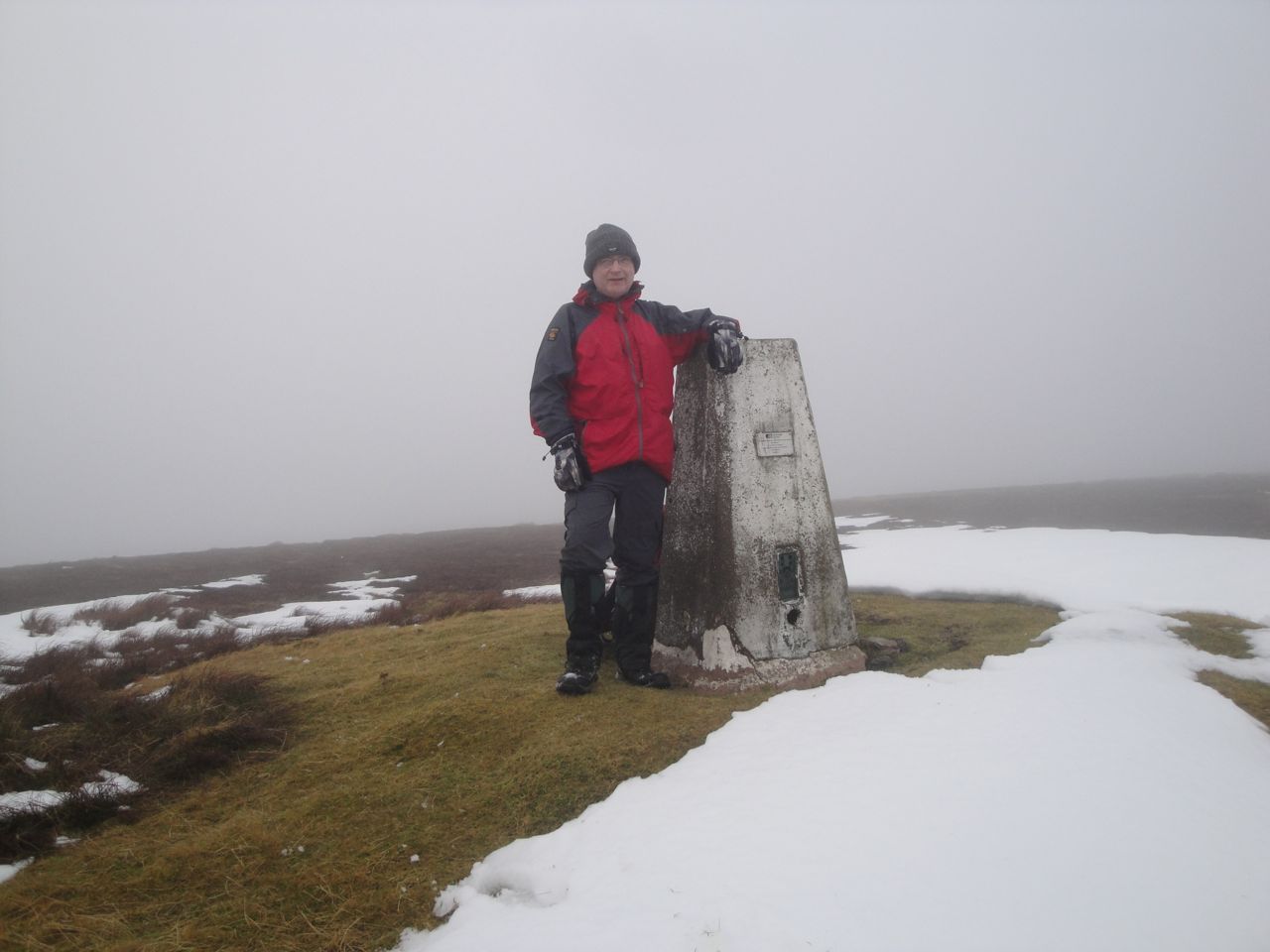
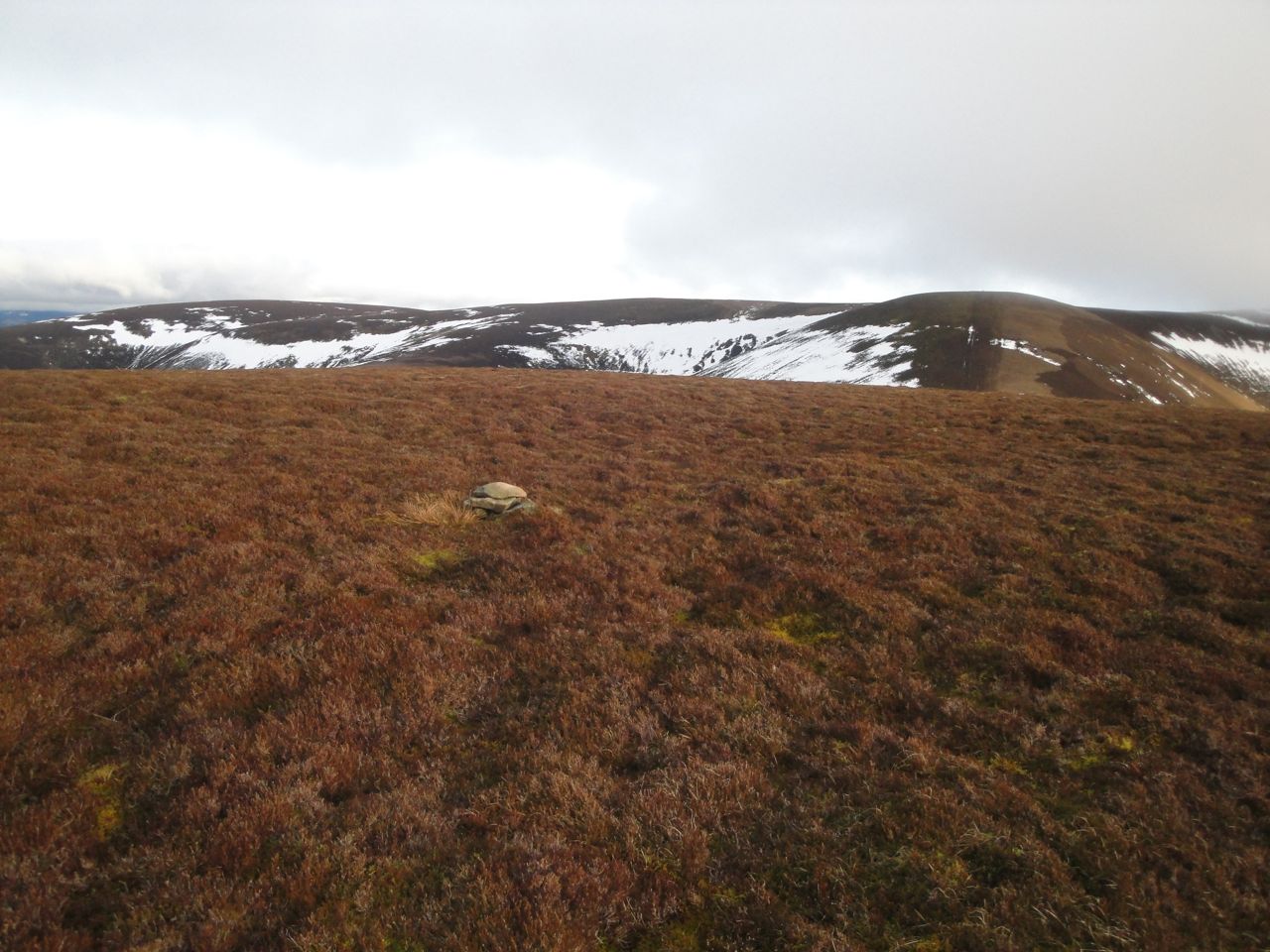
At the summit there were two cairns, a wee one right by the track and a larger one perhaps 10-15m to my right. To be honest, the small one looked a more likely summit candidate but I felt it would be prudent to visit the larger one.
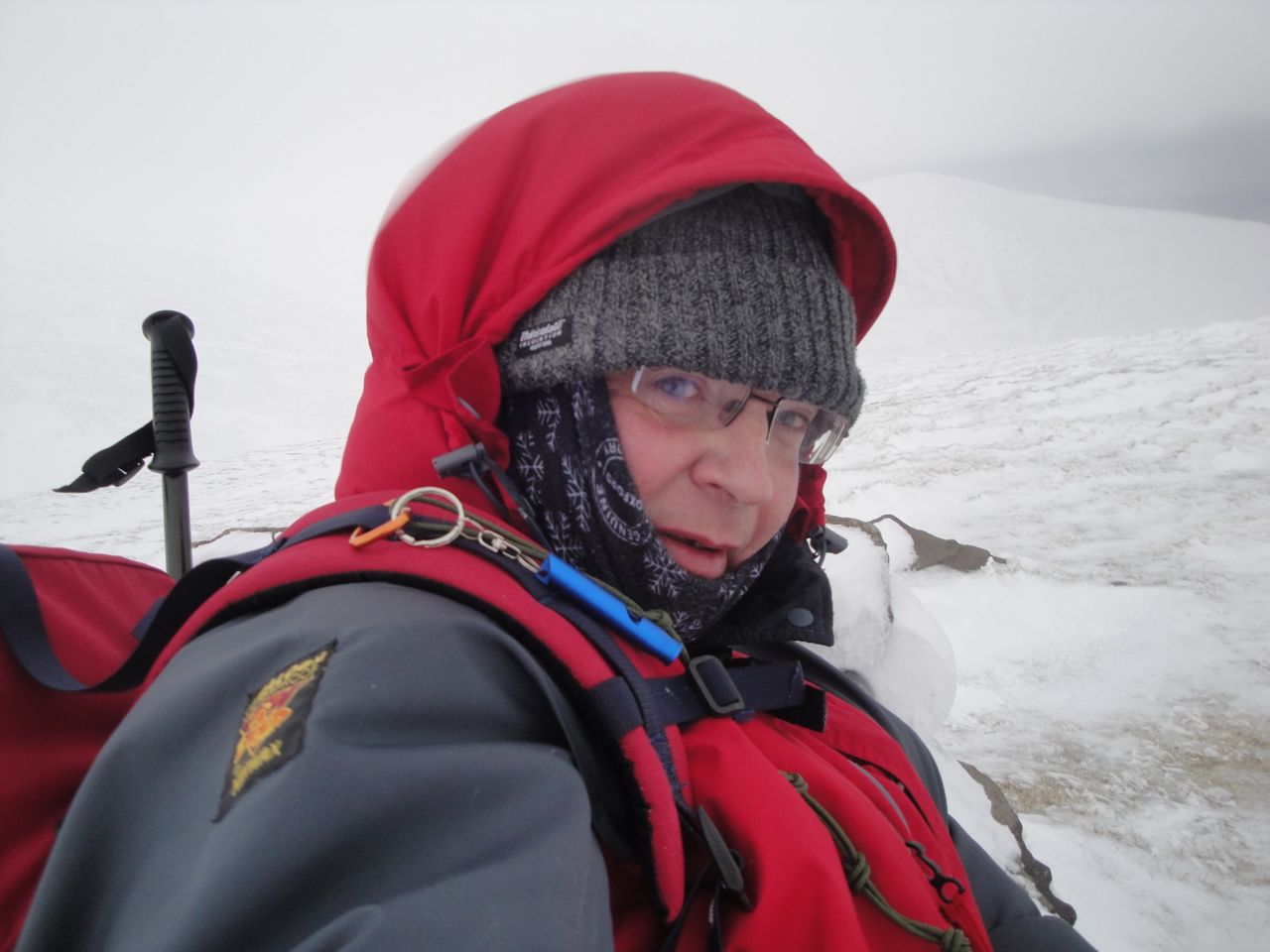
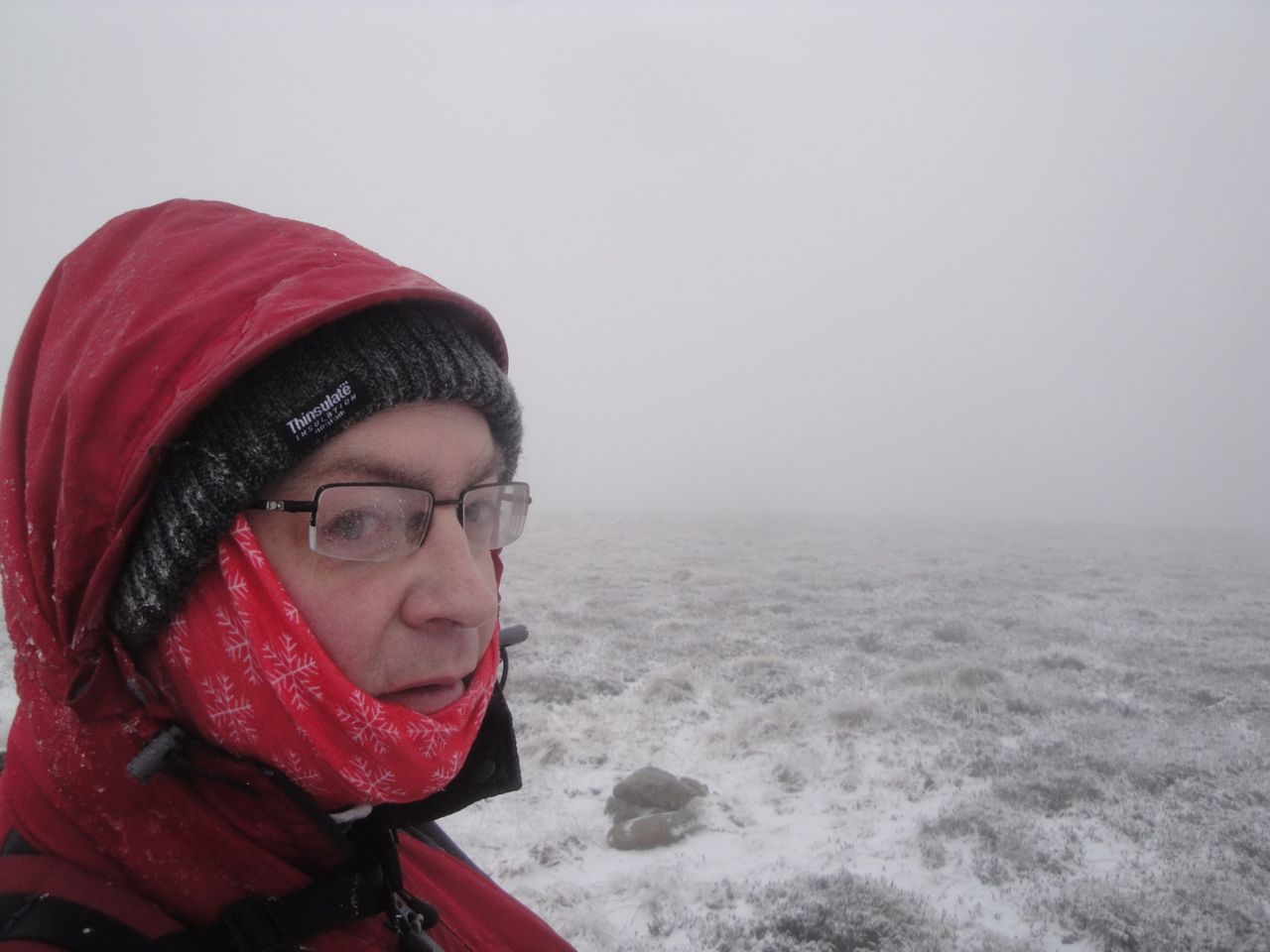
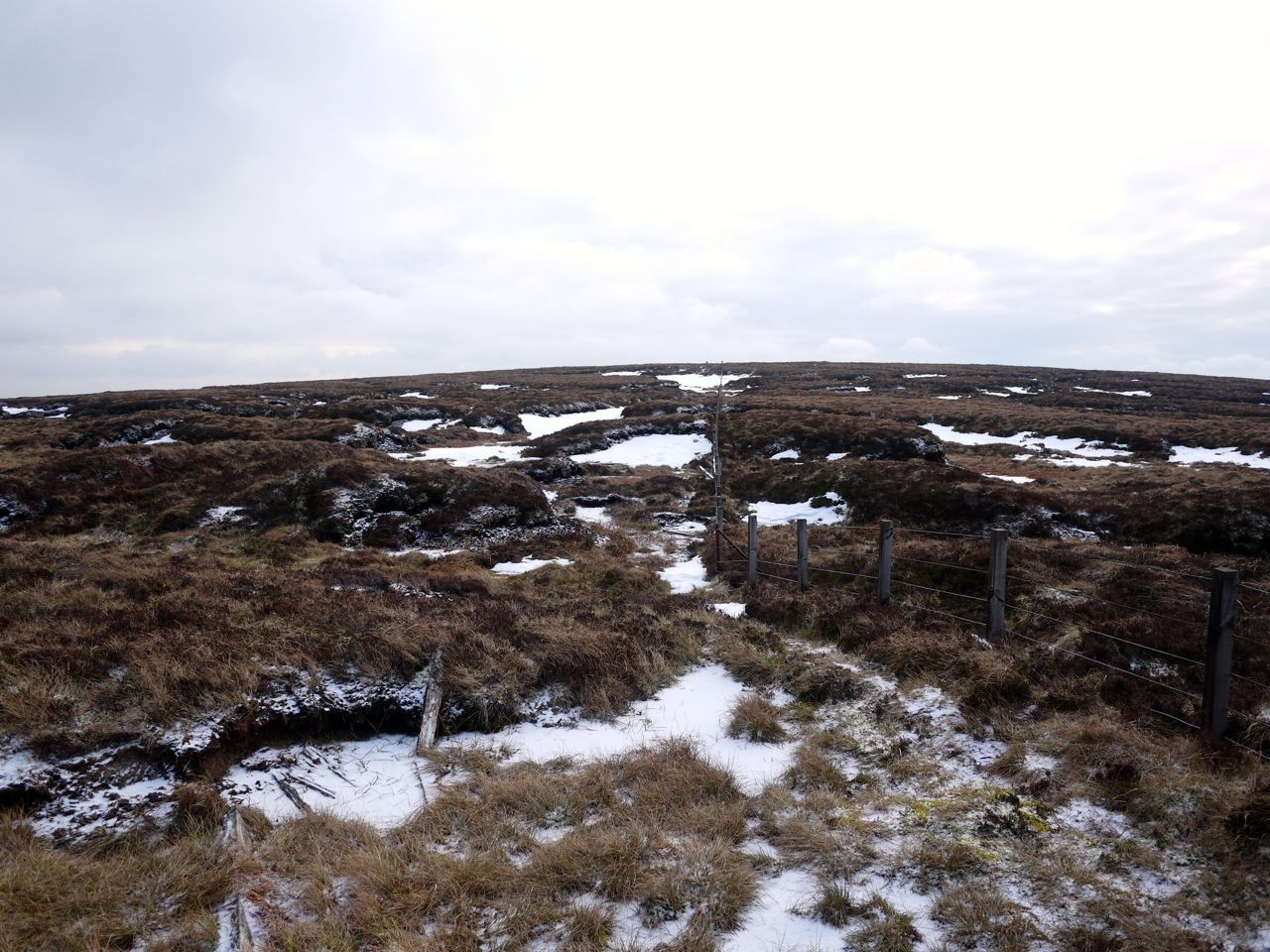
Buffeted on Ben Ever’s summit
Here I experienced the wind fully for the first time. I turned towards the cairn and was immediately blown backwards. No matter how hard I tried I could make little headway towards the cairn. I found that I could only move forward if I crouched but subsequently found that getting on all fours worked best. I had hoped I could sit behind the cairn but the only way to avoid being blown over was to lie down. I wondered if this was the wind felt to its full extent for the first time as I emerged from the relative shelter of the lower slopes, or a particularly strong gusting episode, but on reflection I decided it hardly mattered.
This seemed an excellent opportunity to adjust my plans in light of the conditions. Tactical matters first: there was no way I could have a cup of coffee there. Indeed I suspected that if I took my rucksack off, either I or rucksack would fall below critical mass and be blown away. Then to strategic matters: There was no way I would be able to get over Ben Cleuch in wind of that strength. I can see why in similar conditions people might have to crawl into a survival bag and wait for it to pass. But I would be able to get off the summit relatively quickly in the direction of the wind and back into the milder winds of the lower slopes.
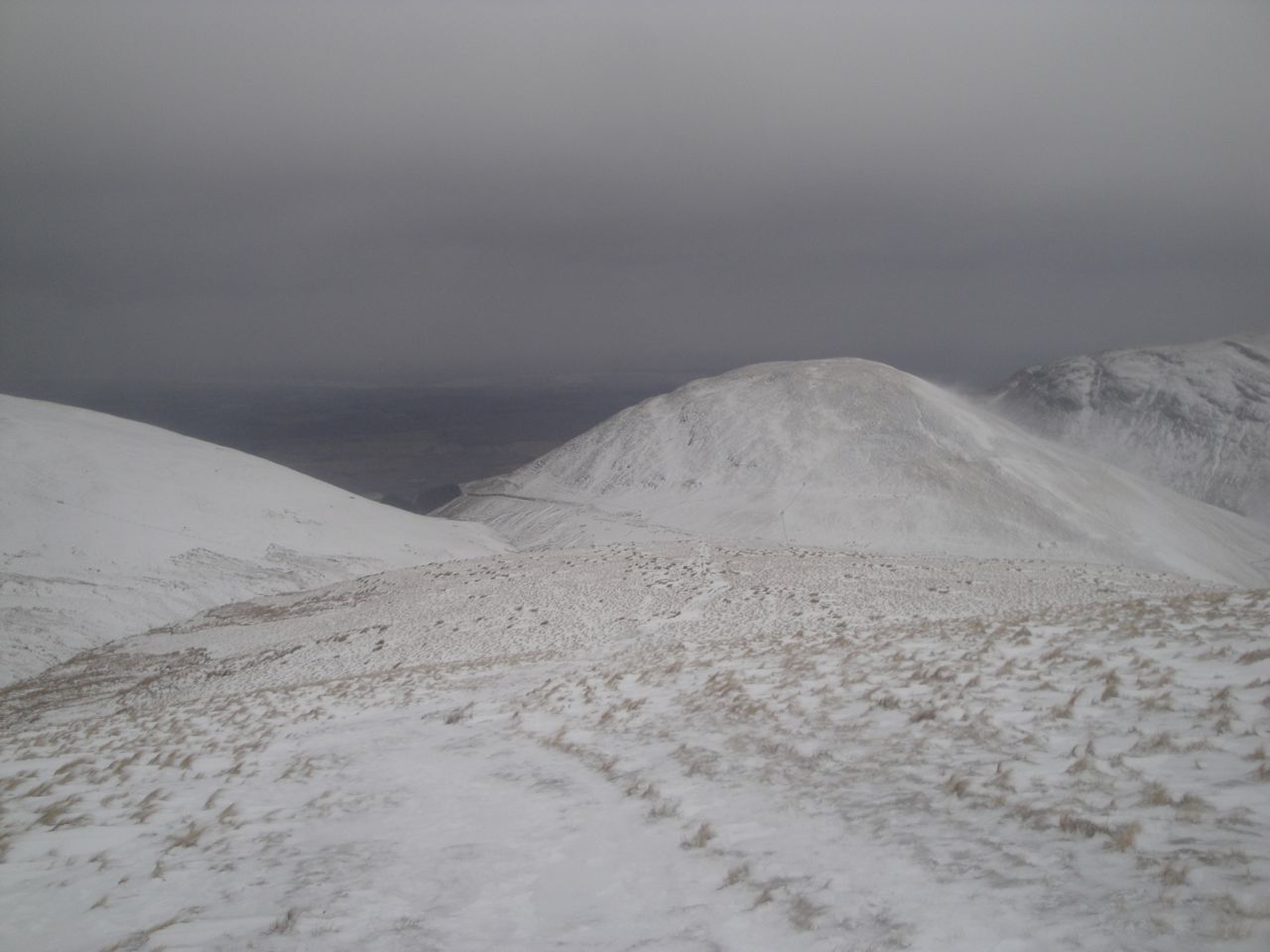
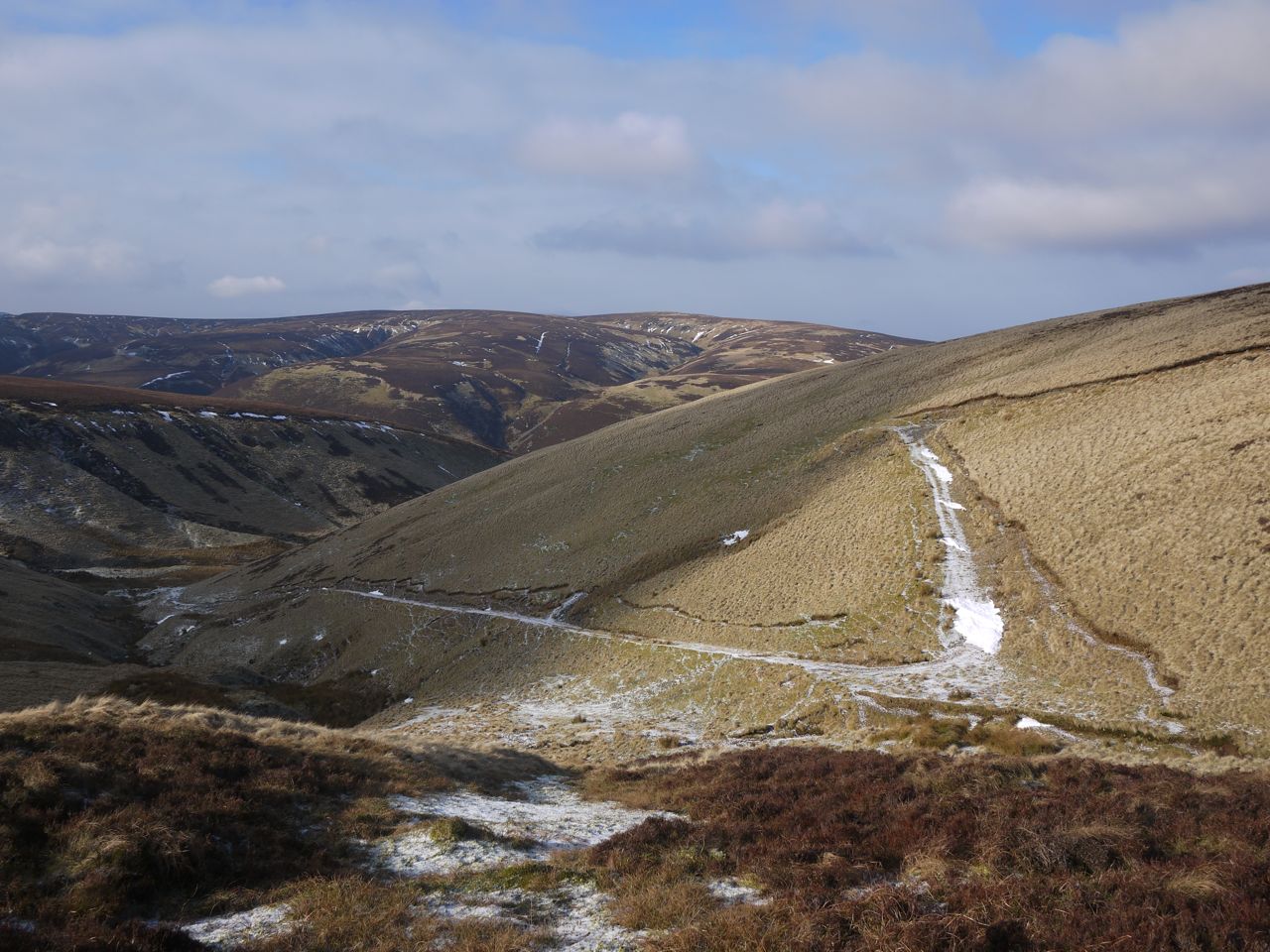
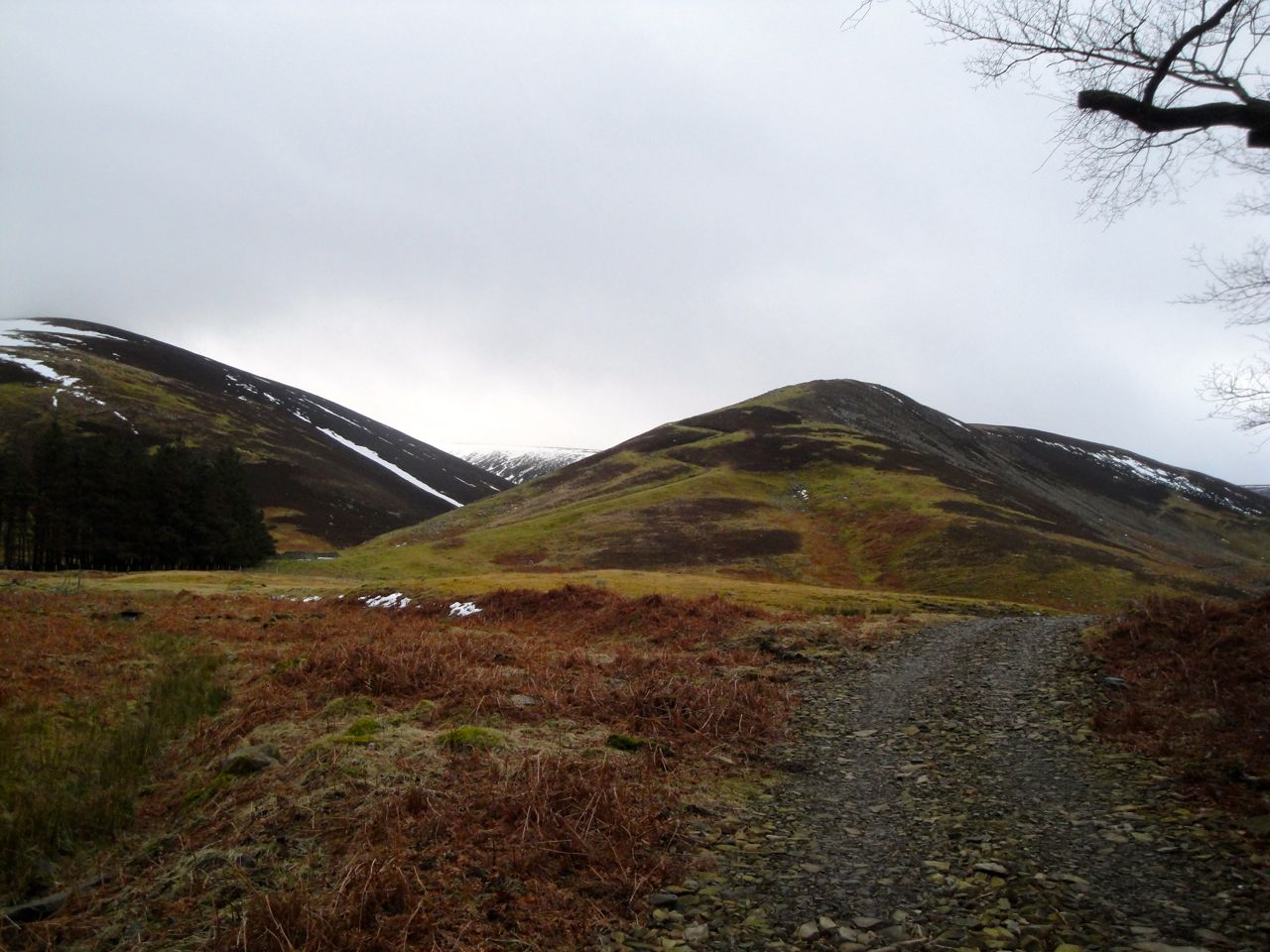
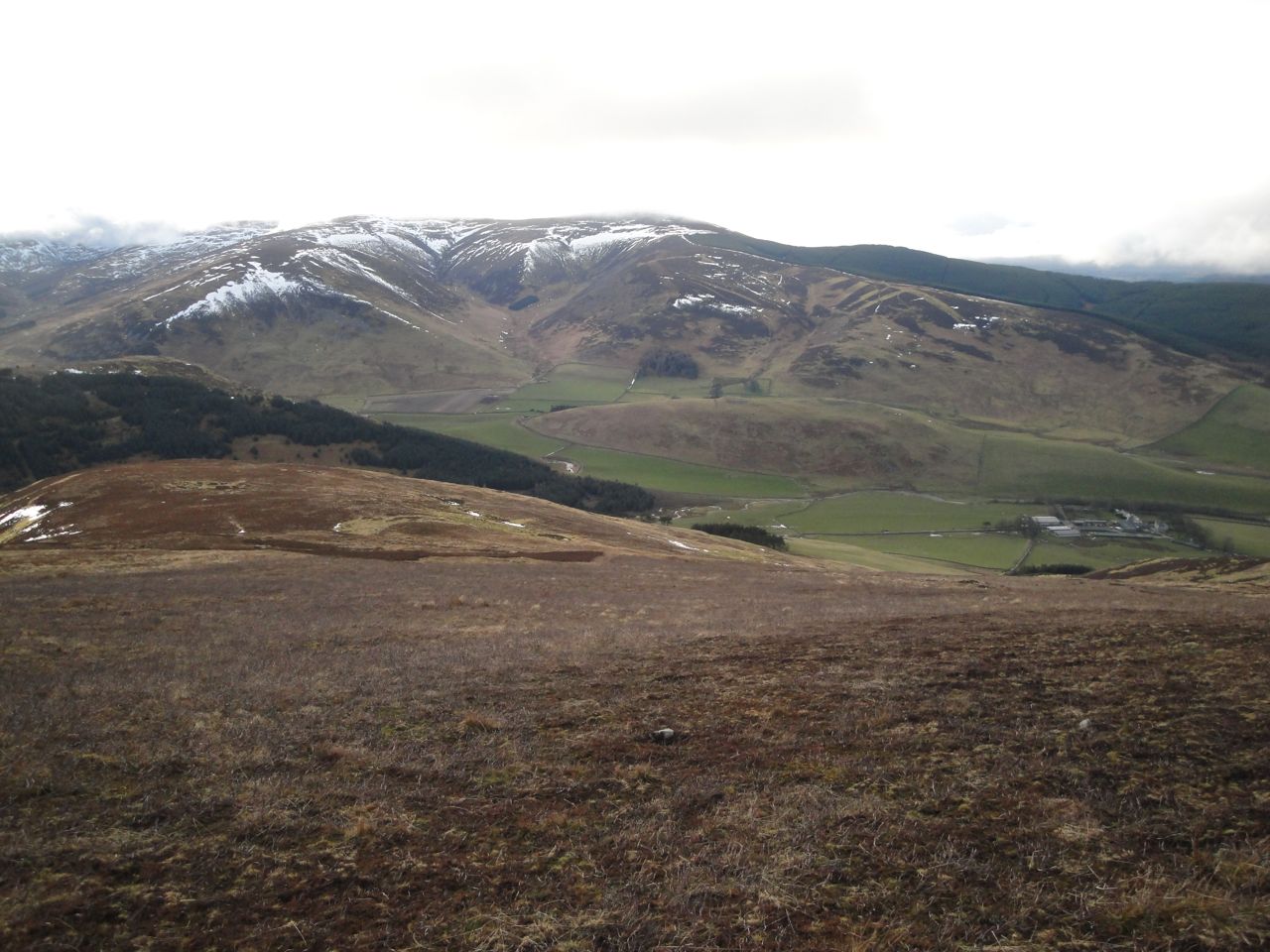
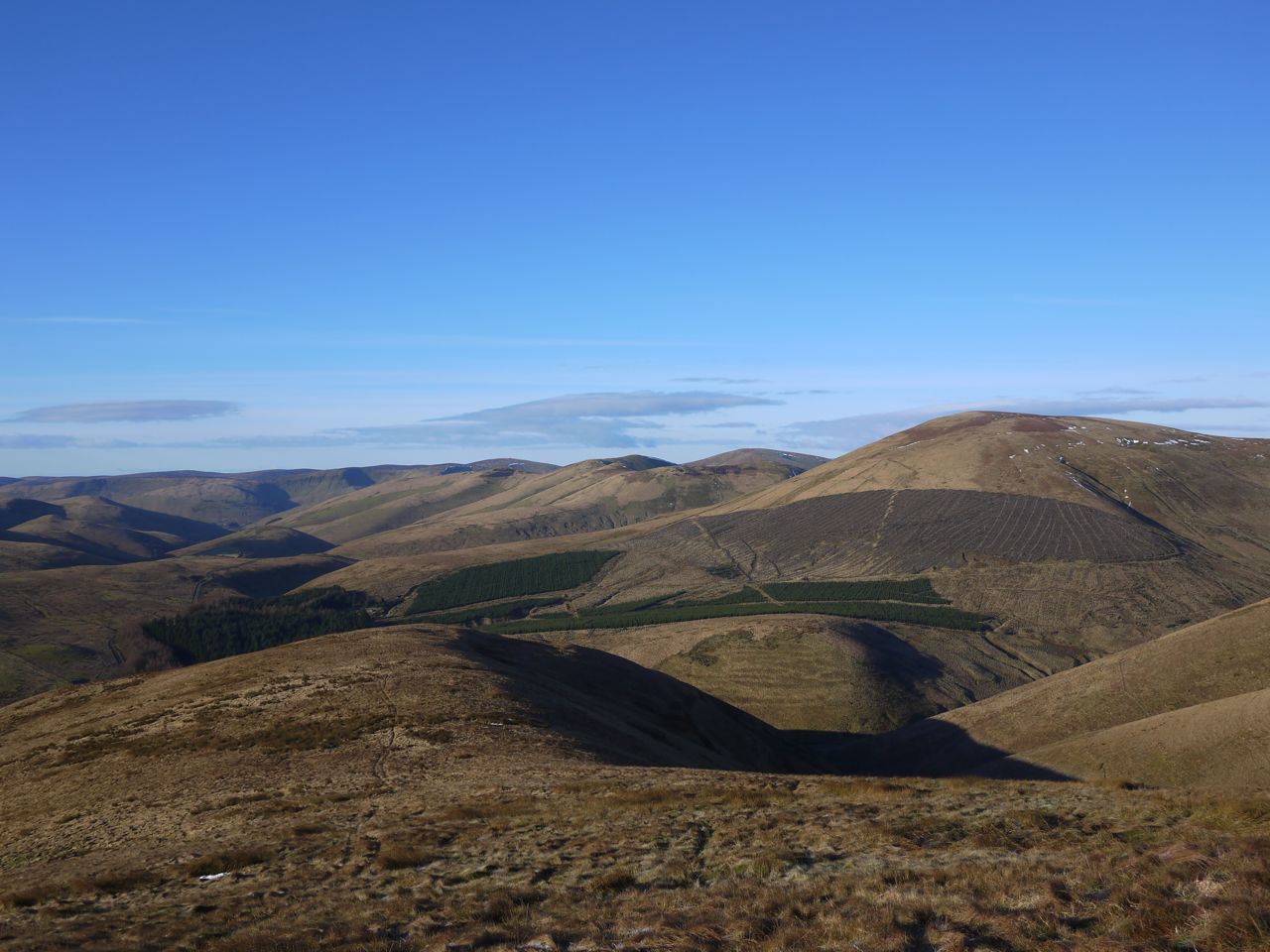
View of The Nebit on the descent
In coming off the hill I realised that my impression of the wind being in my face when climbing was mistaken. It was now blowing into my left eye. But as ever, the first law of hillwalking proved correct, and downhill was easier than uphill. On the way down I was accompanied by snowballs of various sizes rolling down beside me and, unexpectedly, a water vole, black against the snow, ran across my path. I hope it found its way home.
Back at the car I looked at the forecast for the next day “East or southeasterly, in the range 40 to 60mph; gusts on some higher summits and ridges may reach 80mph”. So my planned two days in the Ochils became just a half-day.
Am Beannan-Meall Clachach-Uamh Bheag-Beinn Odhar-Beinn nan Eun
The Glen Artney Donalds. What? If Percy Donald didn’t include them, why should I accept them as Donalds. Mind you, we shouldn’t blame the hills themselves. It is not as though they have been arguing for their inclusion in the list. Clearly Mr Donald didn’t feel they were in the Scottish Lowland Uplands, but others have decided that the Highland Fault should be the boundary. Since my own geological training is at the I-spy book level I can’t argue on that point.
So as self-appointed arbiter on the matter, I thought of this as an aesthetic rather than geological choice. Much akin to regarding a tomato as a vegetable. Did these hills feel Highlands or Uplands? I stopped every now and then and asked myself which it felt like. I had presumed it would be an obvious distinction, but despite a prejudice towards agreeing with Percy Donald, it wasn’t as easy as I had thought.
Ruchill Water from the road
Well, back to the walk. After negotiating water filled potholes in the road, and some reversing back to passing places (perhaps I need to be more assertive?), I parked in the Glen Artney Church car park. This even has a rubbish bin to spare me transporting my banana skins all the way back to the lowlands.
I had wondered if it would be better to walk over Auchnashelloch Hill or take the road. My choice was the road to the bridge over Ruchill Water. The reasoning was that it would avoid an unnecessary climb and allow me to warm up on firm ground. I was somewhat annoyed therefore to find myself walking uphill yet significantly above Ruchill Water from which I inferred that I would soon be descending. I don’t like heading down only to climb up again. (That sentence had to be reworded to avoid unintended innuendo).
Track along Ruchill Water
At the bridge over Ruchill Water I had my first view of Am Beannan which helped me since I find walking is easier when I can see my target. There was a faint track over boggy ground along the east bank of the burn but it became more distinct further on. There are two steeper sections of bank and at the first the track was easy to follow though as it passed through some trees their branches caught my rucksack at times. I’m surprised that the track seemed so defined here, suggesting regular use, yet the tree branches encroached so much. Perhaps it’s used by animals. At the second steep section of bank, I could not see a defined track and the ground was covered in light snow making the grass slippery so I headed up 30m of bank to reach the flatter section above. This must be the beaten track since I soon picked up another track leading directly to the bridge over Allt Ollach at 280m. The photo at the top is the view heading for the bridge with Am Beannan in the distance.
Allt Ollach from the bridge at 280m
I’m pleased the bridge was here since I wouldn’t have fancied my chances on the moss and snow covered rocks of the burn. Looking at my map I had a moment of realisation, Allt Ollach rather than Ollach Burn. Linguistically I was in the highlands.
The plan from here was to head for the sheepfold at 310m and once there decide whether to head directly up Am Beannan or walk up to the Coire na Fionnarachd. The sheepfold was not visible from the bridge, hidden beyond a slight rise and the faint track leading from the bridge disappeared as the ground became boggier. Presumably people take a variety of lines across this wet area so no track forms.
The line up Am Beannan did not look as steep close up and its rocky terrain was more inviting than a boggy trudge up to the corrie. There is a prominent shoulder on the climb up Am Beannan and I headed directly up to this, with a little zig-zagging. Some sections were steep enough to allow hands to be used but overall I surprised how easy the climb proved to be given the slippery terrain.
On the shoulder I stopped for a breather and got the only glimpse I would have all day of Ben Vorlich. Then as I enjoyed a cup of coffee the first snow began to fall. By the time I reached the top of Am Beannan the hills to the north were becoming lost in cloud but Uamh Bheag and Beinn Odhar were still crystal clear. The stroll up to Meall Clachach was uneventful. The snow covered heather was relatively short and the peat hags either small or easily crossed. A fox must have come the same way along the ridge and I found it reassuring that we were taking a similar line. At one point the faint track disappeared and after walking across heather for a while I came back onto the snow to find the fox’s prints there as well.
Looking back to Am Beannan
The col below Meall Clachach had taller peat hags and it was much easier to walk in the snow-filled peat gullies where the snow was firm enough to support my weight. I soon learned that the snow would collapse where it lay on heather such as at the edge of the gully.
At the boulder 100m from Meall Clachach’s summit I was able to set the camera for a delayed timer shot but this was the last time that would be possible. From the Meall Clachaich summit I headed directly down to rejoin the fence halfway to the col, then followed the fence up Uamh Bheg. Within 20 minutes the area switched from clear in light snow to blizzard mode.
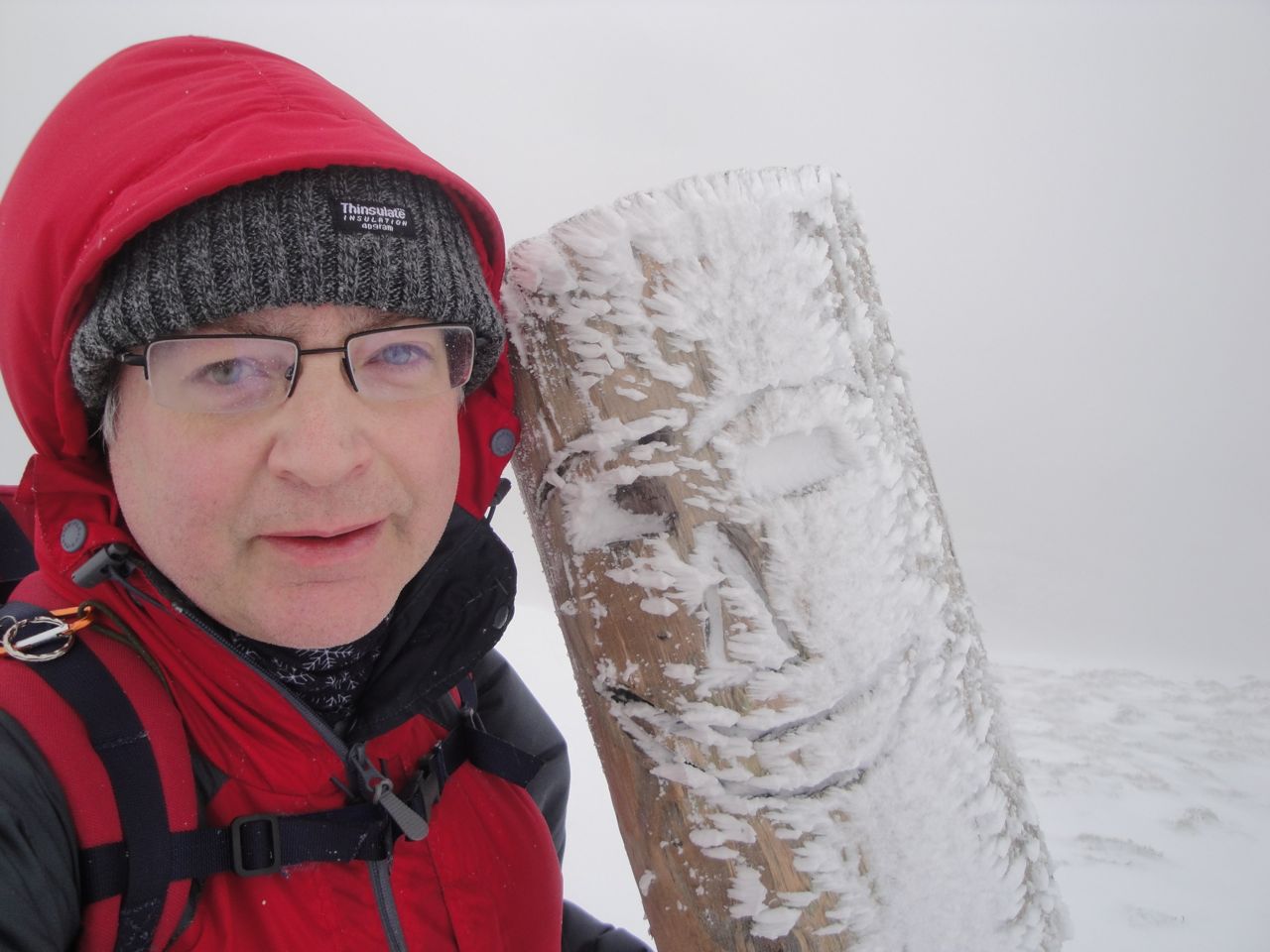
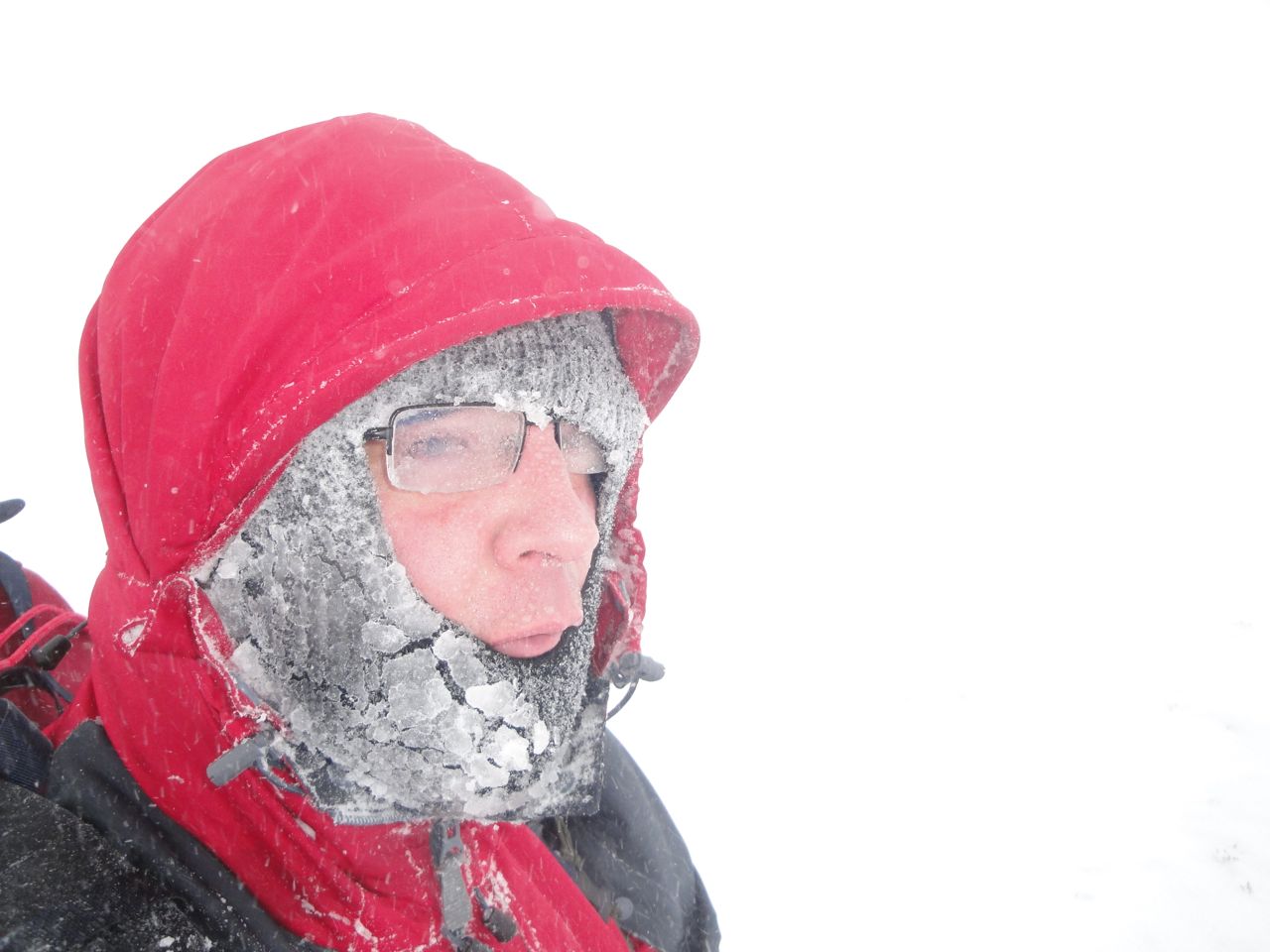
There was now way to set up the camera, so I was reduced to a hand-held self portrait with the wooden head, which turned out better than I had hoped given the buffeting from the wind.
Me with the Uamh Bheag head
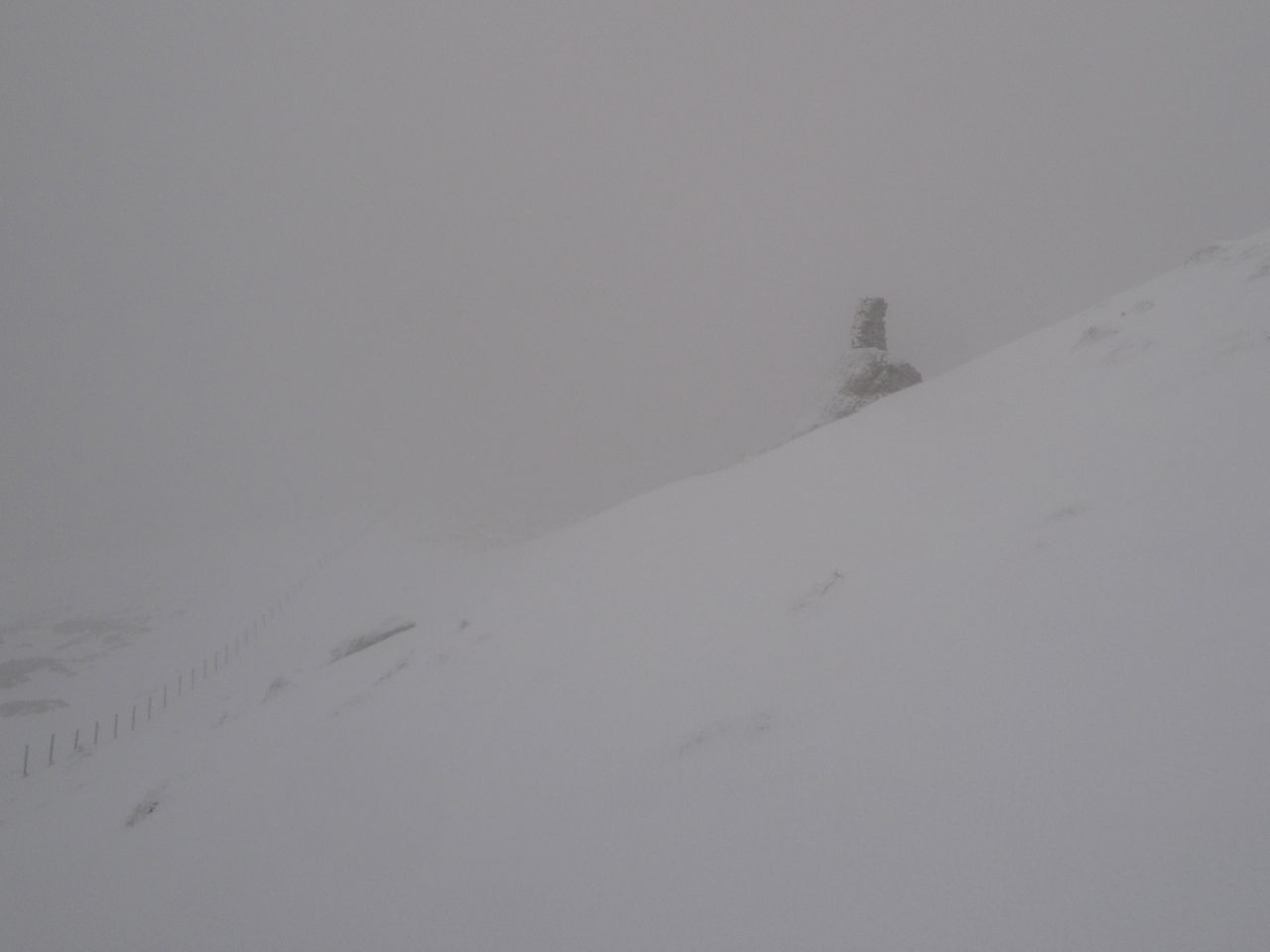
My option to include Uamh Mhor was ditched and I headed along past the trig point and down towards the col. The visibility was now only a few metres but I had the fence as a guide. There was a steep craggy section which in the snow required a small detour. This left me on some snow sloping steeply down to the fence. Kicking steps in the snow didn’t work since the snow gave way to waist height, so I made my way over heather back to the fence. There was a stone man above this section and I suspect it marks a way which avoids this dip.
Stone man, slopes of Uamh Bheag
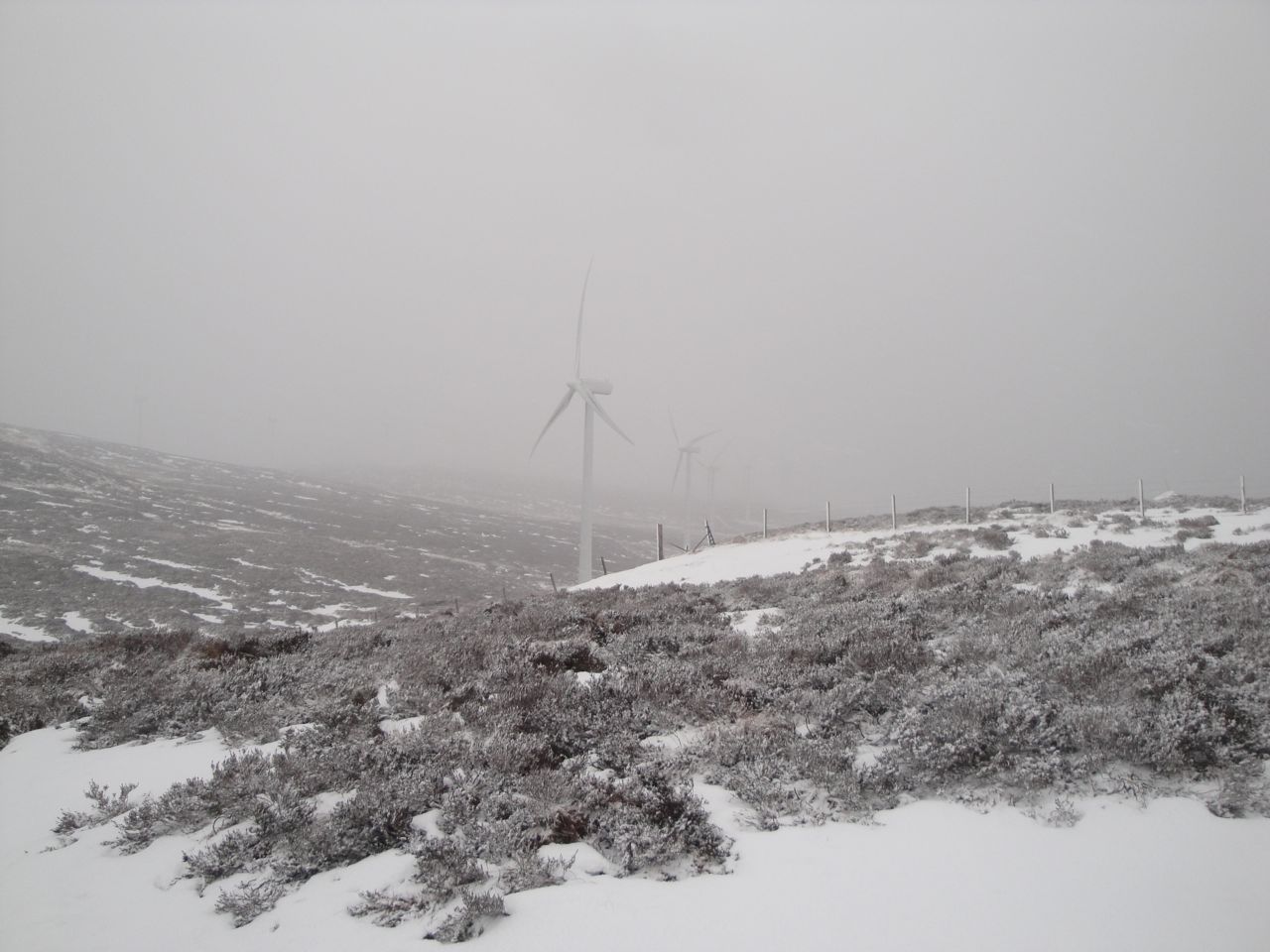
I find it interesting that the camera seems to have captured more than I could see. Further along the fence, the first wind turbine came into view, grey against a background of grey. As I stood looking at it, another became visible and then four more. I don’t think the visibility changed, so presumably my brain was gradually resolving these from my perception over a few seconds.
Beinn Odhar’s turbines from the better visibility of the col
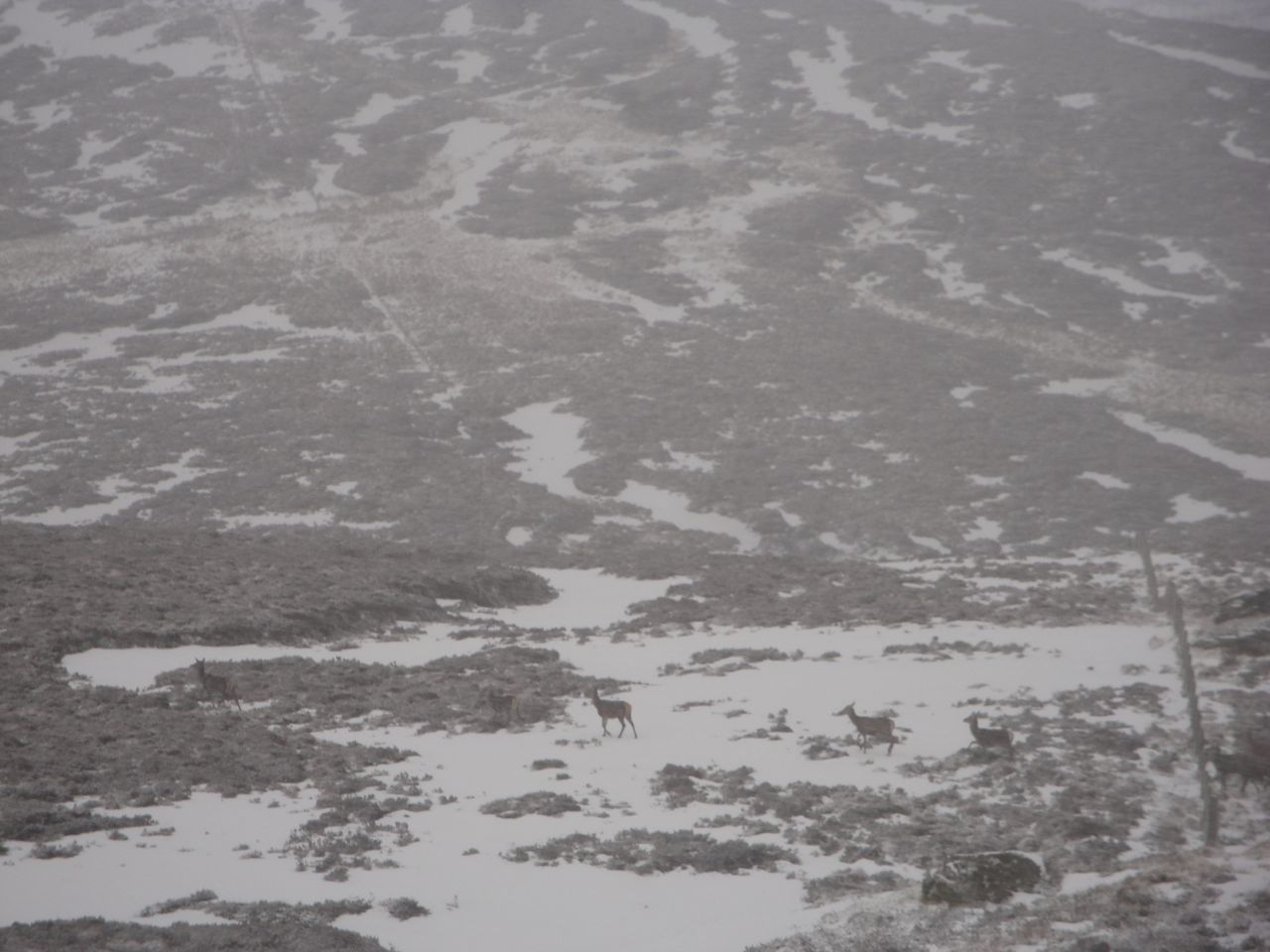
There was smaller stone man (a stone dwarf?) above another small drop to the col. Below me a group of deer were making their way over the fence, the last small one seemingly unable to get across though after several attempts it found a way through the fence.
Deer below Uamh Bheag
In the photo above you can see the fence heading up Beinn Odhar. What isn’t visible is the deep gully cut by the headwater of the Garvald Burn. This burn was narrow enough to step over but the banks were steep and snow covered requiring a brief derriere slide.
The fence continues up Beinn Odhar to just above the highest wind turbine at 560m. The going along the fence was tough so I used the snow filled peat gullies where I could. Whereas a fox had walked before me on Am Beannan, a bird had done the same here. The prints were large and I had presumed it would be grouse or pheasant, but the four clawed print (NW, N, NE, S) is not a game bird according to my books at home.
Above the highest wind turbine the gradient eased considerably but the blizzard set in again. I was trying to follow a bearing with my snow covered compass but my glasses, though providing protection from the wind, were now hindering rather than enhancing vision. In the lee of a peat gully I had some more coffee and carbohydrate, and dug the snow kit out of my bag, swapping spectacles for goggles.
Blizzard kit
The peat gullies in this section were like a maze, and following a bearing was difficult, but taking a direct line in the heather, and climbing over gullies would have been very tiring for a grade 1 lazybones such as me. After wandering about atop Ben Odhar I chose a bearing for Ben nan Eun and headed off into the snow-filled mist. The easiest walking was in the peat gullies which weaved about and gradually seduced me off my chosen bearing and a little north of the col. It had been quite difficult to assess the gradient visually in the mist and snow but when it became steeper my non-visual senses were alert to the change, as I accelerated. At least the terrain here made it easy enough to contour around back to the col, then up to Beinn nan Eun. I wasn’t convinced the cairn/stick was the top so wandered about a little before returning to the cairn.
My way off would have been easy in good visibility, but now needed a little more care. I planned to head almost directly north for 400m, then turn in a direction to take me down the wide ridge between Allt Mor and Allt na Stainge. Winding peat gullies plus step counting plus on the fly corrections for that winding led me to overestimate the distance I covered, and turn 100m too soon. This error became obvious as I found an increasingly steep slope to my left, but was easily corrected by contouring until I was back on the ridge.
By now the wind and snow were easing off so I took off the googles to find that everything had become disconcertingly bright and blue. Thankfully by the time my glasses were back in place the brightness and dyschromopsia had resolved. A little further down, now in heather and tussock rather than peat hags, I emerged from the clouds to find a featureless valley spread beneath me. It looked as though a manufacturer of valleys had put the basic contours in place, coloured it all in shades of brown but had yet to add basic features like streams. I had hoped I would be able to see enough to identify a target but that would need more descent.
My plan had been to head for the junction of Findhuglen Water and Allt Mor, and the grouse butts marked on the OS map in the hope that I could pick up a path near them.
Descending to Finghuglen
While still in the mist I had found myself walking on a vehicle track, which gradually became more defined. Once out of the mist this track turned NE and I decided to stay with it rather than striking out across the moorland. In soon became clear that it was leading to Findhuglen. The valley floor there was very boggy, but squelchy rather than deep.
I had initially decided to head for the stream junctions downstream because I was sure there were bridges there, but I’m pleased to report that Finduglen is well stocked with bridges. The photo below is taken from one of those bridges and as you can see, Beinn nan Eun was already emerging from the clouds by the time I had got there. The rain (as it now was) had eased considerably but that was just a temporary lull and just a few minutes later when I considered taking a photo of the railway carriage amid the buildings at Findhuglen it was raining heavily enough that the camera remained stowed.
Beinn nan Eun above Findhuglen Water
As much as I like walking on hills it was good to have a firm farm track back to the car park. I was able to have a look at the burn junction I was originally aiming for and could see no sign of paths coming down to it, though the bridge and nearby grouse butts must have a path of sorts between them.
This walk was mostly in snow and mist but it wasn’t especially cold. The winds were strong enough to prevent me setting the camera on fence posts but not enough to interfere with walking. It’s a shame that I missed the views but there is something enjoyable about walking in the mist.
So should these hills be included in the Donalds? I don’t think so. I “feel” these are foothills of the highlands but exhibiting some southern upland features. So, I think these are not Scottish Lowland Upland Hills, but to be honest the case is “Not Proven”. Does it matter? Not really. Are they worthy of climbing? Yes, without a doubt.
Glentress Rig-Windlestraw Law-Siller Road-Whitehope Law
A winter’s day. Snow fell as I got my kit on and it proved colder than I expected. My fingers were soon numb making rummaging in the rucksack difficult.
I parked by the road between Glentress and Blackhopebyre and walked up the road to join the path climbing Glentress Rig. This proved to be muddy despite the temperature forcing me to walk on the heather rather than the path in some sections. Once on the flatter section of Glentress Rig the ground became boggier and the track even less usable, the passage of vehicles having frightened off the grass and heather, leaving semi-submerged sphagnum moss. I had also climbed into cloud in snow and a very cold wind. My camera was stowed in a waterproof bag and whenever I brought it out my fingers numbed within seconds. I can’t seem to work the buttons while wearing thick gloves.
Hillside Knowe from Glentress Rig
The path leads to a line of grouse butts on Wallet Knowe which would have been tempting spots for a break had I come across them later in the walk. I think the track ended here but it was difficult to tell in the snow. I am uncertain whether the track led me into a gap between peat hags or this gap was still the path.
Wallet knowe by the grouse butts
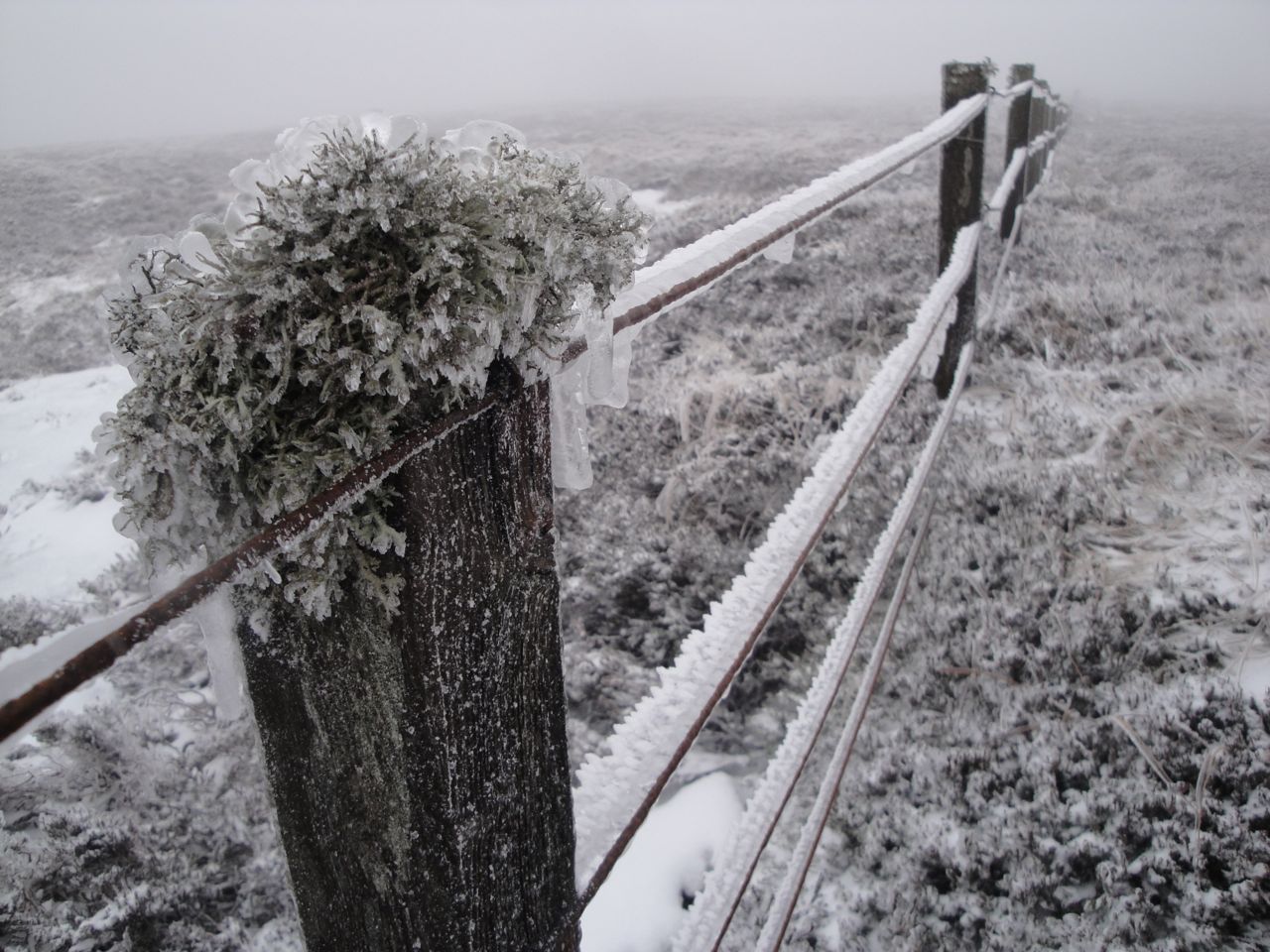
The weather had worked wonders here. There was ice, a little too tilted to walk on, which must presumably have frozen while running off the higher ground. A nearby fence had horizontal icicles and blobs of ice hanging from clubmoss on the fence posts. I was then rudely awoken from my nature induced wonder as the snow beneath my feet gave way leaving me in a thigh-deep hole. I cannot understand how an arch of snow had formed in this way and I trod somewhat more carefully after that. I was not the first to walk this way, however, there were paw prints (from a hare according to subsequent research) which gave me some warning of hidden holes further along.
Icy fence
The peat hags then gave way to heather, and a tiring walk in strong winds and poor visibility. I was guided by the frozen fence and a little after the gradient eased I met another fence and the trig pillar was visible perhaps 20m away. The wind here was too strong for self portraits but I treated myself to coffee and kit-kat sheltering behind the trig. Very welcome warmth without any of that melted chocolate mess one gets in the summertime.
Windlestraw Law trig
The fence icicles here were vertical and even the grass was covered in ice, a separate shard for each blade. These cracked beneath my feet as if a giant chandelier had shed its crystals on the hilltop. The fence guided me to the SW top (just 2m lower across a col at 628m). I suspect this is boggy at times but the ground had frozen firm. I spied a large thing in the mist just north of the fence and thought it might be a cairn, but it gradually resolved into a large boulder, the second-summit cairn being further along near a fence junction. This cairn was adorned with horizontal icicles.
Cairn on Windlestraw Law SW top – close up
My plan was to walk along Bareback Knowe to the col between it and Dod Hill, then cut across to Glentress cottage or take the Siller Road if the terrain looked especially unpleasant. So perhaps now is the time to introduce the concept of quantum navigation. Much as in quantum theory, in quantum theory it is possible to exist in many locations, with varying probabilities, but certain actions can cause the quantum probabilities to collapse into a single reality.
I set off from the SW top, following the fence, on a heading for Bareback Knowe but contrived in the mist, to turn right about 200m too late. There were many reasons for this, but for the sake of brevity let’s just call it ineptness. I was in two places at the same time: where I thought I was and where I actually was. Both continued to exist as separate places while the corroborating evidence supported both.
As height was lost visibility improved. On the ridge of Bareback Knowe I would have expected the ground either side of me to be lower (the first law of ridges) but I found I was in a depression (geographically). The quantum possibilities collapsed. Could I be approaching the Glentress burn or the Hope burn. Direction of travel would have supported either but my fervent hope that it was the former was dashed when I checked the time. I couldn’t have covered that much ground in the time.
Standing stone on slopes of Bareback Knowe
I was in the upper reaches of Hope Burn’s valley. The valley floor was carpeted in reed type grass, the southern slopes steep, so I headed down the northern slopes. The vegetation was tussock grass, not the easiest terrain, and it and the snow hid some holes that kept my balance mechanisms on full alert. I spied a rock and headed for it hoping it would be a cairn marking a track of some kind but it wasn’t. Then I saw a wooden feeder and thought that a farmer would need to reach it somehow, so it was my next target. I can only presume that it is filled by helicopter or teleportation. Next port of call was a sheep fold at about 400m, beyond which the burn ran through a narrow cleuch, but the ground was now emerging from the snow.
Sheep pen in Hope glen
A short climb up a steep slippery section after crossing the burn had me on a flatter shelf where I found a faint track. This crossed the burn a couple of times but led me easily to another sheep fold at 300m where I joined the grassy track of Siller Road. I presume in better weather the ridges would offer better views but I doubt the going would be any easier.
Approaching Siller Road
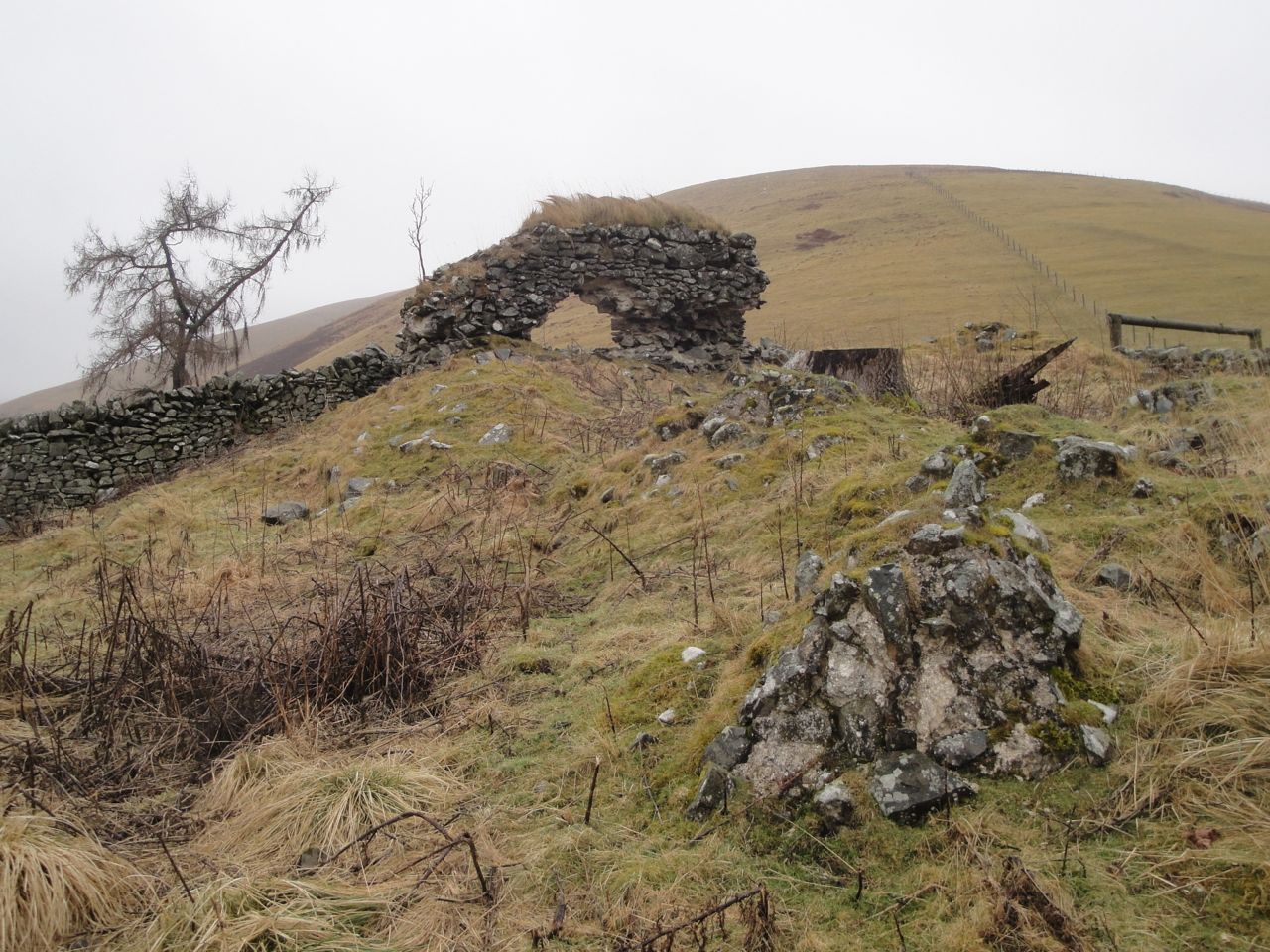
There are the remains of Colquhar Tower where Siller Road joins the B709, but it a sorry ruin. If it had any lingering soul, it was probably exorcised when the telegraph pole was erected amongst the ruins. Or perhaps I just wasn’t in the mood to experience a ruin.
Colquhar Tower
Having come down Siller Road I had a few minutes walk up the road to Whitehope. Since I had come this way I intended to take the farm track onto Windside Hill, whereas had I come down via Glentress cottage I would have taken a direct route up. The Leithen Valley was merely cold rather than freezing so I could take off my now soaking gloves and have a look around. In that short time I saw a couple of birds of prey, a smaller one with a ginger tinge, a red kite perhaps, and a larger one silhouetted so hiding its colouring.
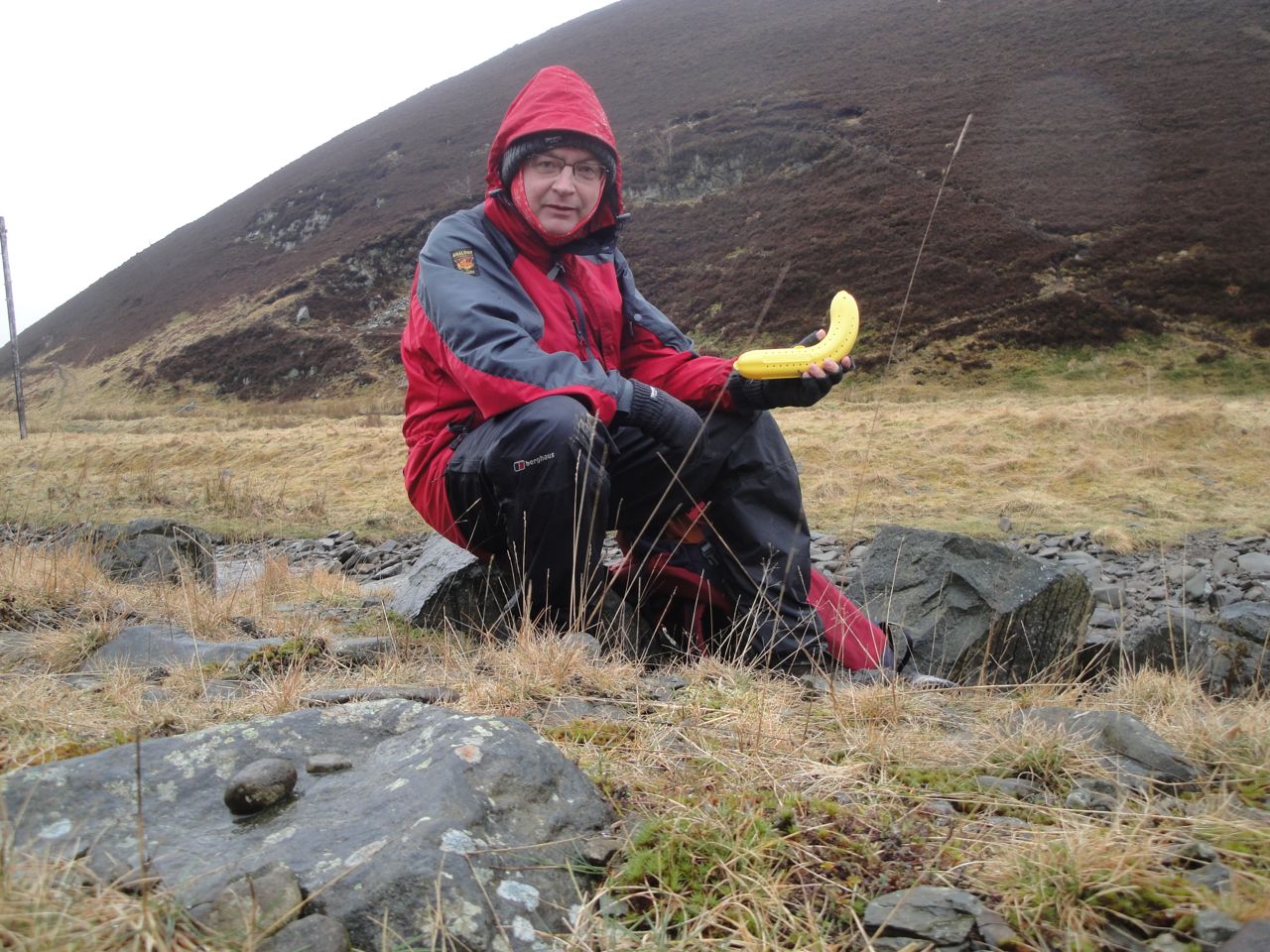
There were a few boulders by the bridge over Leithen Water so I had a riverside lunch. My latest piece of equipment is shown in the photo, a banana protector. (A gift rather than a personal purchase). But what do you get for the man who has everything?
Banana protector
Replenished and rested I set off past Whitehope farm. I was met by a terrier pup working hard to earn his guard-dog badge. I gave him some feedback: need to lose the cuteness, and wagging your tail gives away your real intentions. I doubt he listened, they never do at his age.
The farm had quite a collection of birdlife: chickens, some white, some brown some mixed; a variety of geese and a huge muscovy duck. I wish I’d had my bird book with me for the geese.
The farm track crosses and then follows the Whitehope burn. I followed it to about 330m then took a fainter path up Windside Hill. This path gradually faded and before long I was back on featureless moorland in poor visibility, freezing winds and snow. This proved to be a very trying ascent, I was making slow progress and uncertain of how far I had left to climb. The heather was often deep and my energy and spirits were ebbing despite having stopped for lunch about an hour earlier.
I decided that the hillwalking equivalent of a hamlet cigar was in order so I found the edge of a heather covered hag to sit on, had a drink (the water was nicely chilled) and a bite to eat, then dug out the GPS to get a grid reference. I was almost there, further along than I had thought, about 400m from (and 100m below) the summit.
Whitehope Law summit
Whitehope Law’s summit cairn was small enough to have been passed through the alimentary tract of a large mammal. The views were breathtaking mostly because the wind took my breath away, visibility being only a few metres. But I must be honest and say there is something special about being on a hill in these conditions.
For descent I took a bearing for Blackhopebyre and set off over the heather, compass in hand. It was easier to follow grass filled tussocks between the heather where they existed and I was making excellent time but then stepped into a heather covered hole. My ballast (rucksack) proved not to be a securely fixed as I had thought, and shifted, forcing my balance mechanisms into slapstick mode. My face was planted then hammered home a fraction of a second later by my rucksack. Hilarious to observe (personal experience), embarrassing to experience (personal experience). Mind you, who can really claim to have conquered a hill if they have not rolled in its heather?
I emerged from the clouds heading directly for Blackhopebyre and soon found a track to follow. I was pleased to see a bridge over the burn, but then noticed it was enclosed within the garden of the buildings. there was a two trunk crossing but I dismissed that as likely to be dangerously slippery. The burn itself was not particularly high and I surprised myself when after turning away having decided one section was just too wide, another part of my brain decided to over-ride the decision. The words “sod it” escaped my mouth, I turned back, ran at the burn and leapt across.
By now my car was almost within a stone’s throw. I just need to cross a small fence and a boggy field. I leant on a large fence post, the top of which disintegrated at a vital moment pitching me into the sodden field on the other side. At least I missed the sheep droppings.
Icy grass
Most of the Donalds lie in a broad swathe below the southern upland fault with some outliers further north below the highland fault line and a couple to the south on the Iapetus suture line. Windlestraw Law and Whitehope Law (my 80th and 81st Donalds)complete my southern upland fault Donalds. It is appropriate that they were walked in drow ‘n smirr.
It was a crisp cold morning with a forecast for snow flurries and summit temperatures of -4° C. Wondering what a flurry might be I had researched this prior to the walk and found the following explanations: “Snow: This refers to the white, cold, flakey stuff itself. It does not describe any particular manifestation thereof. Snow Flurry: Light, intermittent snowfall without any significant accumulation of snow on the ground.” Now I know.
Gladhouse Reservoir early in the morning
I parked at the southern tip of Gladhouse Reservoir, just short of the “No parking beyond this point” sign, where there is space for half a dozen cars. From here I followed the road to Moorfoot farm and then along the farm track to Gladhouse cottage, the sheep filled fields reminding me of the flat well drained swards of my youth, in places like Tatton Park, quite unlike the boggy irregularity of my adoptive home in D&G.
Three ridges from Jeffries Corse
I could see the three ridges descending north from Jeffries Corse, one of which would be my route off the the hills. The easternmost two had definite vehicle tracks, the western a dyke, but from here no obvious track. At this point I had thought Long Shank, the most eastern ridge, would be the best choice for descent, but would later change my mind.
Shed at Clinty Cleuch, South Esk valley
After Gladhouse Cottage the vehicle track crosses a small bridge over the River South Esk. The track then throws off a branch towards the ruins of Hirendean Castle. I must say that this wasn’t a very impressive castle and looked more like a house to me but perhaps an Englishman lived there? There is a track up the ridge from the ruins to Hirendean Hill but I chose to continue on the track along the valley since I was a little concerned that the steep section might be icy. The track I was on was certainly iced in places.
Rocky path up Clinty Cleuch
At Clinty Cleuch there is a sheep fold and a shed. Here I turned left along the rocky path up the cleuch. Clinty Cleuch is a Y shaped valley and ideally I would have liked to head along the right arm of the Y but the track leads up the left arm. This section was get-warm-steep (no swearing required), whereas a direct attack over to the right arm would be sweat-buckets-steep (swearing likely).
Path up Clinty Cleuch
At about 500m the path begins a zig-zag. I left at the first zig, but with hindsight the second zig would be a better choice. There was a snow coated gully leading up but I chose instead to cross the gully to what appeared to be a track beside it. Though free of heather it proved to be a water course filled with sphagnum moss. In warm weather this wouldn’t be a good route but the moss was semi-frozen so it was dry. Once on the plateau, though, I was faced with trackless heather and moss which was hard going for five minutes until I came upon a track which I think came from the second zig. This soon had me at the fence which would guide me to the summit.
It was a slow climb to Blackhope Scar across moorland scarred by eroded peat hags. The hollows were filled with snow which was firm enough to take my weight and where there was standing water not covered in snow the ice was weight bearing. I imagine that in warmer weather this route should be reserved for those who don’t care how wet and muddy they get.
Frozen moorland on Blackhope Scar
As height was gained I passed a lonely grouse butt and paused to look back down the South Esk Valley to Gladhouse reservoir with Edinburgh beyond it, then it was back to tramping up the increasingly windy moorland. The summit of Blackhope Scar has a trig pillar which allowed me some shelter from the wind for a quick cup of coffee, but by now it was becoming much colder so I decided not to hang about. Over the fence and onward over the frozen mud.
Blackhope Scar summit
The Bowbeat wind turbines where my next target. I followed the fence along Long Edge where the terrain was similar but with fewer peat hollows. There was initially a very faint track which became more distinct when it was joined after a few hundred metres by a vehicle track from the south. Two further tracks joined later converting it gradually into a substantial track of frozen churned mud.
Long Edge heading for Bowbeat
The section between Long Edge and Emily Bank has more of a dip than I had expected from the map and from the bottom a substantial road heads off SW. I got my map out to see if I should go along it and found I had committed the school-boy error of planning the walk on a 1:25k and walking it with a 1:50k. The windfarm roads aren’t marked on my 1:50k. One of my previous “things I have learned” had been that if you don’t take a map you will regret it. I recalled that I intended to use a road through the wind farm, but this one was heading down so I ignored it and headed directly for the nearest turbine.
Five minutes climbing up here where the heather was deep and neither the ground nor the sphagnum moss was frozen, warmed me up nicely. I suppose if I was a real wild-man I would have eschewed the road, but, (hanging head in shame), I treated myself to a couple of miles of road walking. When I entered the wind farm, at the sign warning me of the danger of death, the turbines were just starting to move, but by the time I left they had picked up the revs considerably and the temperature had dropped further. The tall gently whooshing turbines had a bewitching quality akin to the sirens. One’s eyes are drawn skyward, one’s attention wanders. Luckily, potholes in the road can rapidly dispel this enchantment. So take care, don’t break your leg gawping at a wind turbine.
Wind turbine, you can’t help looking up
I left the road at its highest point to visit Bowbeat Hill’s summit. The OS map suggests the summit is at a change in direction of the fence but the highest point is definitely before that. Perhaps the fence has been altered?
Chilly times on Bowbeat Rig
Back on the road I walked over Bowbeat rig and along to the most northerly turbine which has a house sized building next to it, the site office. From this last turbine I planned to head up onto the high ground heading NW then between the 590m contours at the headwaters of Leithen Water and Hawkster Gill Burn. This is barren moorland with a ridge at 590m hiding any obvious visual target.
Looking out from the turbine there was a relatively new gate in the fence about 100m away. I had hoped it would lead to a track of some kind but it didn’t. Having said that, as I walked across the moor I would occasionally see what looked to be a track and would follow it for a while. It would fade away then I would find another one a few metres away.
RIP
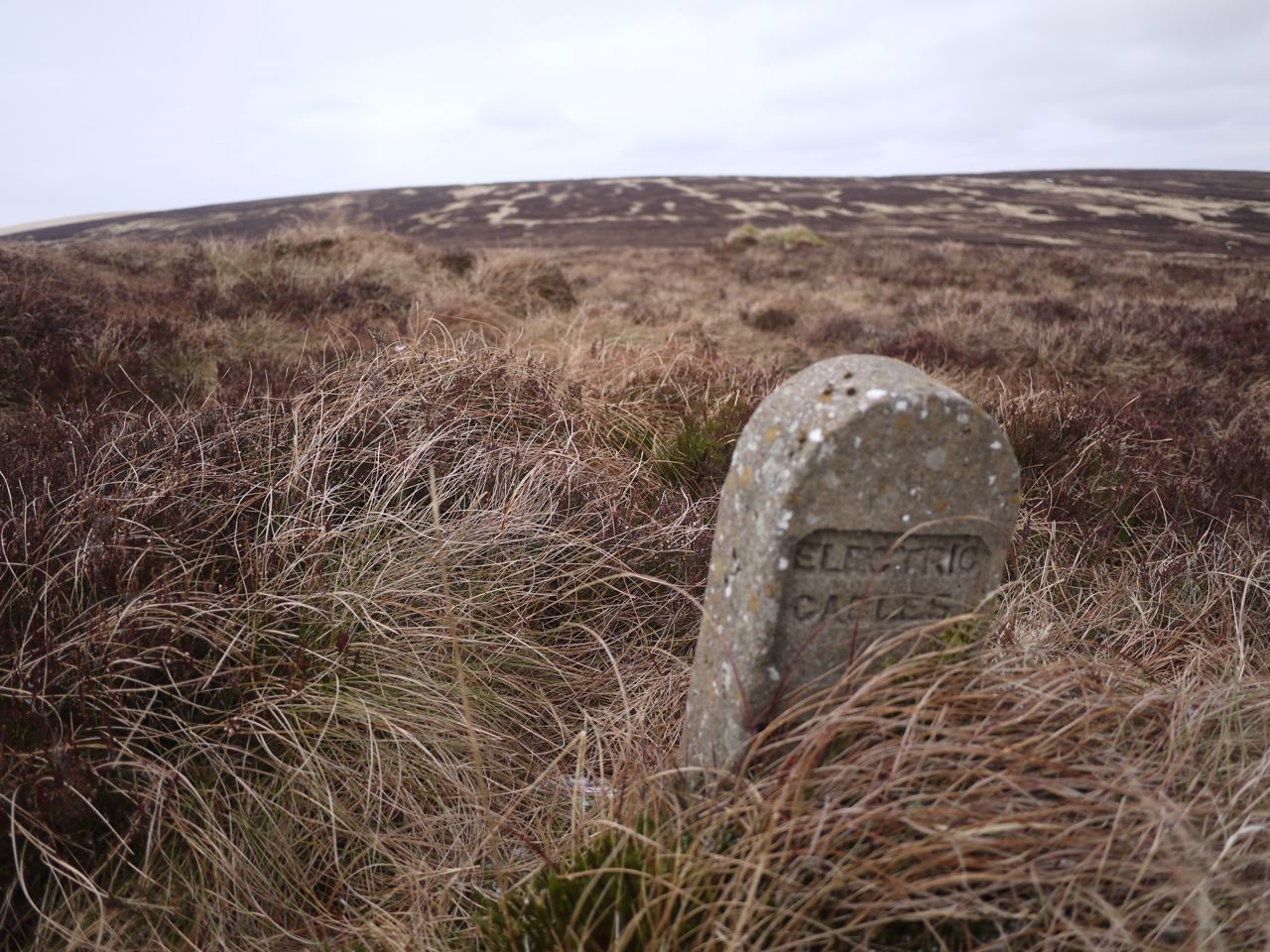
I passed 6, perhaps 7 (I lost count), concrete stones shaped like mile stones and marked “electric cables” so I presume I was following the line of the cable and coming across tracks left by the vehicles used to lay them. The frozen ground made this section easier than it might have been, but frozen ground does still have holes so care is needed. The ambience of wilderness was made complete with flurries of snow blowing horizontally across the heather.
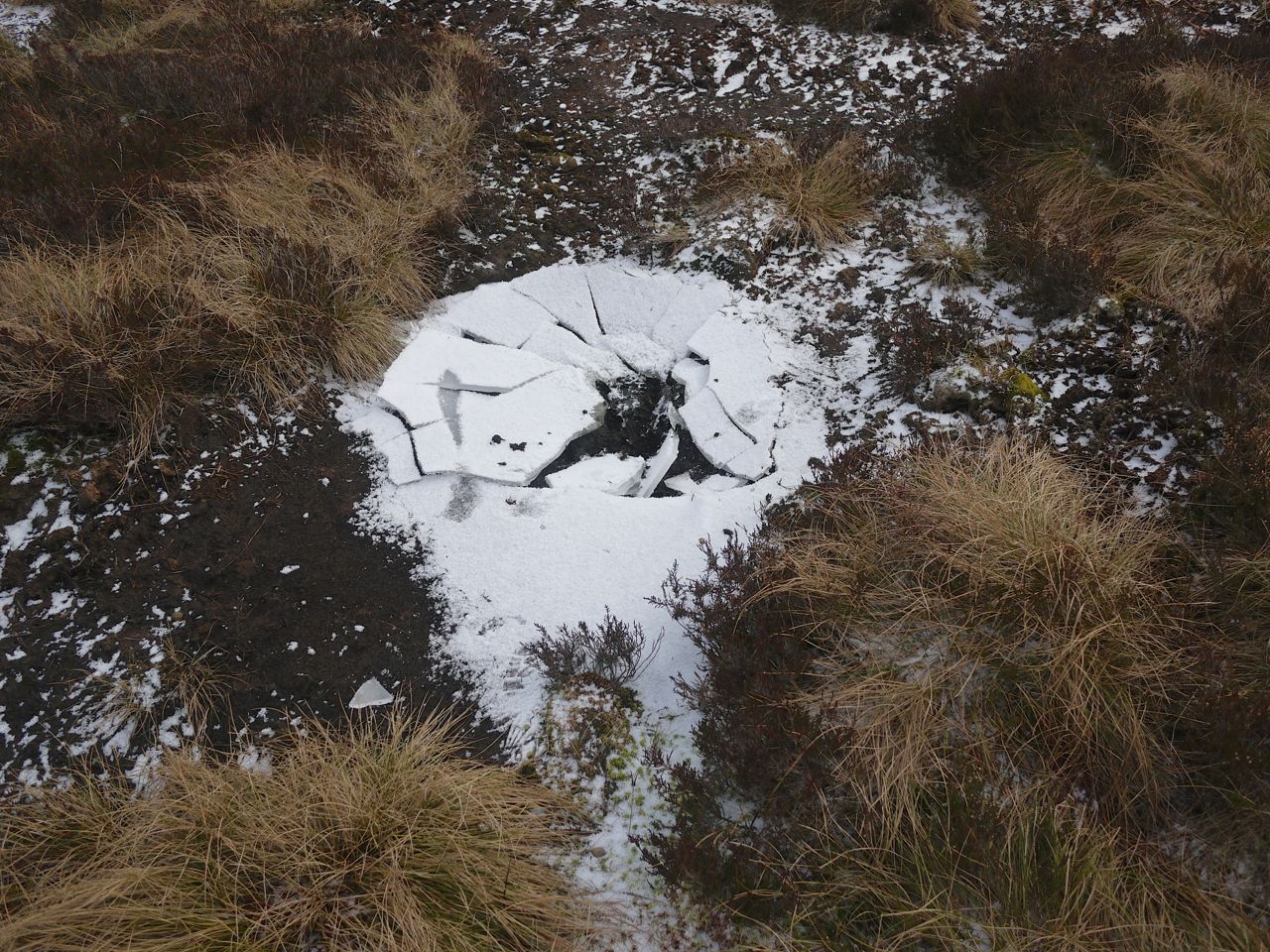
Don’t step on the ice
The ground between the two headwaters is, as might be expected, boggy. I passed a small fenced off area which looked just the same as the surrounding ground but must presumably have swallowed farm animals in its time, unless it guards some rare lichen. This area was wet despite the temperature and my feet sank into the deep sodden moss despite the top layers being frozen.
From this bog the ground rose into the peat hags between Jeffries Corse and Dundreich. Gaining the ridge I was greeted with a view of the Pentlands bathed in sunlight. It was about 400m to Dundreich’s summit though the trig was not visible until it was much closer.
Dundreich Summit
The views from Dundreich were excellent, the only down side being that I could see heavy rain, or perhaps snow, approaching rapidly from the NE. The cairn didn’t offer much shelter from the now icy wind so I hunkered down behind the trig pillar for lunch. This must be what makes it all worth while: lukewarm coffee, freezing cold water, and a slightly dry sandwich, sitting on snow covered ground in an icy wind, the views disappearing in mist and rain approaching. But my boots were dry inside, I was on the home straight and there were just 10 more Donalds to go.
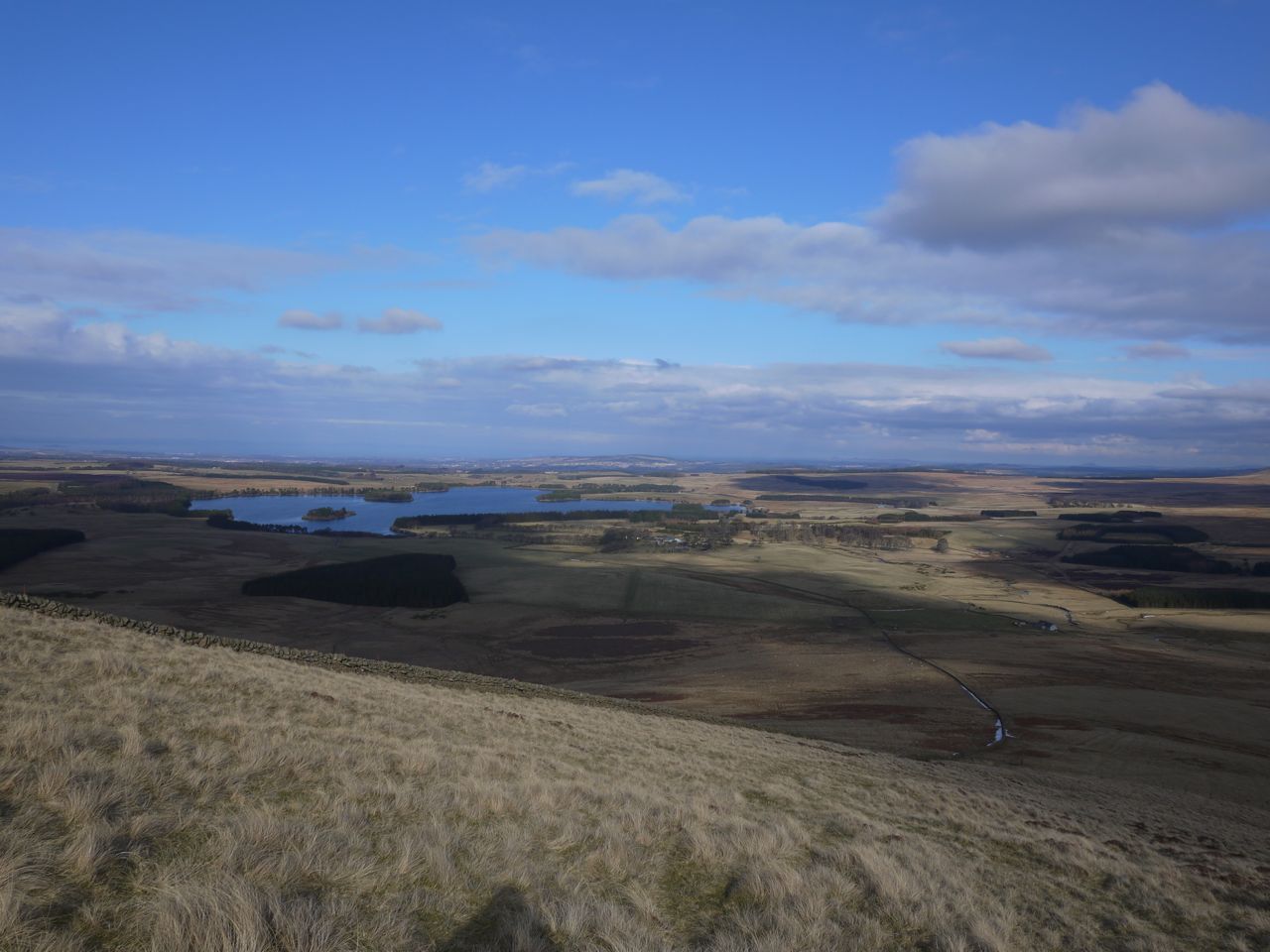
Gladhouse Reservoir from Cotley Hill
As it turned out the rain passed just to the north and the descent was mostly in golden sunshine. I was at Jeffries Corse in no time and had at last to decide which ridge to take for the descent. I had intended using Long Shank, the ridge closest to the South Esk valley, but had seen that I would need to cross the burn at its foot. The burn looked to have plenty of rocks for crossing but given the iciness I thought it best to avoid this, so I left the fence and headed north towards Cotly Hill following a faint track, then followed the dyke down to Gladhouse Cottage.
Hirendean Castle
From the cottage I rejoined the farm track and road back to the reservoir.
Posted inBorders|TaggedDonalds, Grahams, Winter|Comments Off on Moorfoot’s: enchanted giants, secret cables and frozen land
Windy Neese-Dun Rig-Birkscairn Hill-Glenrath Heights-Stob Law
Last week I abandoned my expedition to these hills at Stob Law. If at first you don’t succeed…. try it anticlockwise.
Track to Glenrathope
The Manor Glen at Glenrath looked the same as it had previous week, though it was definitely less windy. I parked at the same spot (NT207342) and opened the car door to screeching as a small dog made short shrift of a bird nearby. An omen? Did this mean I would vanquish these hills? There were so many pheasants around that last week I had thought this should be called Pheasant Farm. I doubt a wee dog could catch one of those, so perhaps it was something else.
Windy Neese…give us a K
The first half hour was spent warming up along the track to Glenrathope. Back Burn was full to brimming with melt water from the previous week’s snow so the bridge at Glenrathope was a welcome finding. I skirted the farm buildings, where there is a large solar panel, and headed up the stony zig-zag on Windy Neese, the firm footing making the climb easier.
The views back down Glenrath glen were good and it was interesting to see the many different lines that burns had previously taken across this flat valley. I thought there was a path continuing south along Glenrathope Glen but couldn’t see how far it went. It isn’t visible on Google earth but the images are from 2007.
Glenrath from Windy Neese
Once the gradient on Windy Neese eased the track became straighter, and swapped stone for bogginess, but the terrain and conditions became distinctly more unpleasantabove 550m.By then I had climbed into mist; the track, which had become gradually fainter, ended at a line of grouse butts having led me into trackless deep heather interspersed with broad snow covered areas. Early on I had come across one of these snow covered areas with a hole revealing water beneath it, so I stuck to tramping through the heather where I could. I walked on for what seemed an eternity guided by my trusty compass. Time itself slowed down (my watch suggested half an hour had passed but it seemed much longer) and I might as well have been walking on a treadmill, since no matter how far I walked everything looked the same. Eventually after a very long half hour, a fence line appeared ahead out of the mist, the fence junction only a few metres away.
Windy Neese about 600m
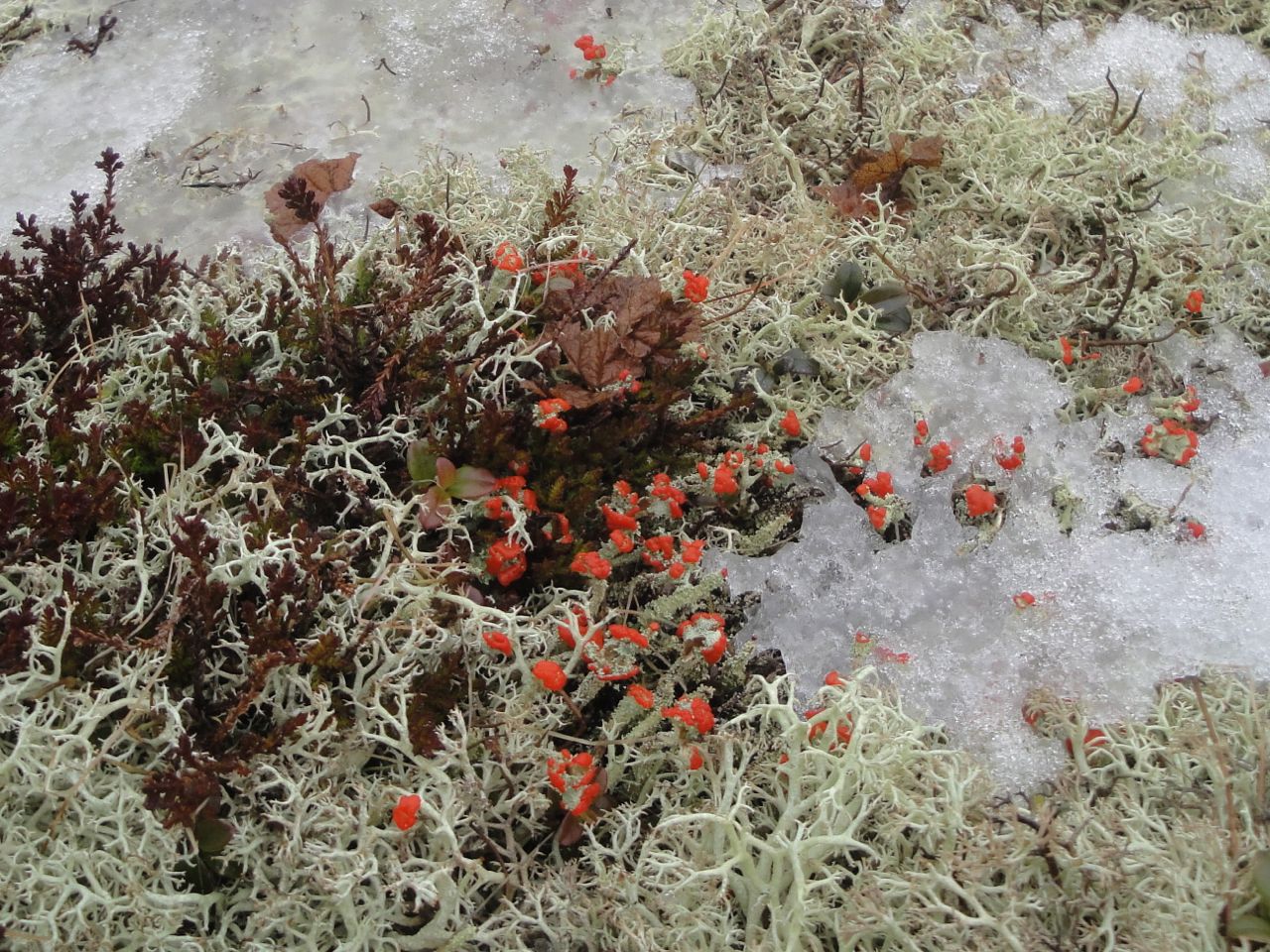
I had expected to find a track running along by the fence but if there is one it was lost beneath the snow. There was more bogginess but once I was on the rising slopes of Dun Rig the ground changed for the better. The deep heather and bog was replaced by firm ground covered in short mosses with numerous sprigs of cowberry. Amongst this mist covered white, green and brown was a single patch of orange, a scarlet cup lichen?
Dun Rig Summit, the trig is there in the centre
This was certainly a more pleasant walking experience than the deep heather, but all good things must come to an end. As the ascent ended I realised I had reached the top of Dun Rig. There, at what felt to be the highest point, was a stake driven into the ground. But there was supposed to be a trig pillar, where was it? Was I on a minor shoulder, the real summit hidden in mist? I decided to get the GPS out to check where I was but as I unslung the rucksack the swirling mists briefly thinned to reveal the trig pillar a few metres away, definitely lower than where I was standing. I have subsequently looked more carefully at the OS map and I see that the trig is not the top. The trig pillar has a small plaque with a phone number to ring if you find the pillar damaged. I don’t recall seeing one of these before.
Dun Rig trig
My plan was to decide whether to include Birkscairn Hill once I got to Dun Rig. So I had a wee snack, a cup of coffee and consulted my watch. Since I was bang on time, a Birkscairn Hill there-and-back seemed reasonable. As it turned out, the section between Dun Rig and Birkscairn proved to be the most difficult, and set my timings back a bit.
The fence descending from Dun Rig takes a turn to the left, which the unwary might mistakenly follow in poor visibility, but a line of rotting fence posts continues on towards Stake Law. These led through a coven of peat hags where the hollows were filled with snow. The snow had those special characteristics, such that with care one could stand on it but lifting one foot to take a step caused the snow beneath the other to collapse. I met a couple of walkers coming the opposite way just as I tumbled having sunk to my thigh in a snow drift. I lost my dignity but I then had their footprints to warn me of deeper sections.
Crossing the Drove Road
By Stake Law, the fence was reconstituted, the hags gave way to boggy heath and there were even boggy tracks to follow. In the middle of this wilderness (made more wild by the limited visibility of the mist) it was strange to see a sign post where the drove road crosses the Stake Law-Birkscairn Hill col. There was a stile there, and amidst the miles of bog this was a tempting seat for lunch (it could seat two). As it was, I had lunch sat on Birkscairn Hill’s large cairn. As I sat there looking about, in the mist, it seemed to me that the highest point was a little way NW of the cairn, so sandwich in hand I wandered across there. My phone, nestling in the rucksack recording the GPS log, didn’t capture this.
Birkscairn Hill
Heading back towards Dun Rig, the mist started to lift giving me my first views of Glensax valley and closer, a hare with a blue tinged white coat. I was now able to see the three cairns above Stake Law, which are set amongst a field of stones south of the fence (other possible seats).
Snow filled peat hollows
Dun Rig was still in cloud but it was certainly good to get back on the firmer ground of its western slopes. From the col between Dun Rig and the unnamed 713m spot height I decided that following the fence further up just to head back down was foolish. I would cut the corner and rejoin the fence lower down. In doing this I made the mistake of trying to cut too directly for the col. Coming out of the mist I could see a cleuch blocking my direct line and had to pick my way between hags along the 700m contour line.
Small cairn, Glenrath Heights
50m down and 80m up through boggy heather and occasional snow had me on the firm ground of a mist free Glenrath Heights, with views over to the Tweedmuir hills. I then followed the fence over the 600m col to Stob Law.
Stob Law from Glenrath Heights
On Stob Law I found the cairn I had visited last week and confirmed to myself that it was not the highest point. I realise now that I was right to abandon last week’s walk here. Stob Law is covered in a thin firm carpet of heather and moss that presumably has been burned off previously. Walking here had been tiring enough last week in the snow but had I carried on to Glenrath Heights, and the deeper heather of Windy Neese I’m sure it would have been very unpleasant.
Summit Stob Law
Coming off Stob Law this time I headed directly for Glenrath Farm, walking down by Hanging Cleuch burn. Closer to the farm I picked up a track that skirted the final field and retuned me to the Glenrathope track.
Mrs Drow ‘n’ Smirr had gathered her brows like a gathering storm. Her view being that the weather forecast and my plans for the Dun Rig Donalds were incompatible. I was not to be easily dissuaded, however. The Met Office, BBC and MWIS forecasts predicted the Borders would escape snow until evening, and would indeed be dry.
The plan was to start from Glenrath Farm in the Manor Glen, head up Stob Law then on over the other Donalds and back down to Glenrathope. If the weather turned nasty I would would turn back after Glenrath Heights, leaving Dun Rig and Birkscairn Hill for another day.
I parked just off the Manor Glen Road (NX207342). I could have driven further but felt parking near the farm would be like someone parking in my driveway. The angry farmer from a couple of years back still makes me anxious, and I was walking on a public right of way then.
Out of the car, and into the drizzle, protected by SOAC and waterproofs I headed past Glenrath Farm along the track, past several pheasants, towards Glenrathope. The hills had a dusting of snow and the visible lower tops (600m) were free of cloud.
Scots pines and cairn above them at about 350m
I left the track a little way past a cattle grid and headed up towards a stand of trees, passing through the remains of walls and scattered Scots pines at about 350m.
Looking back at the pines
From there I could see a small cairn a little further up and headed towards it. There was a faint track but it was soon lost in the snow. At this stage I was in the lee of the ridge leading to Glenrath Hill but once I reached the ridge the wind picked up significantly. The wind was strong enough to blow me off route, the snow biting into my face, requiring deployment of the balaclava.
I stopped by some rocks on the flatter section at about 500m to rethink the walk. The wind was my main concern. I was making much slower progress than planned so decided on the shorter walk. I would to turn back if the weather worsened or the snow became deeper.
There were some white sections amongst the mixed dark and white of the snow covered heather, which I presumed were tracks. The snow tended to be deeper in these so I walked beside them where they existed. The heather was shallow suggesting it might have been burnt within the last few seasons. The possible track I was following eventually started to fall off down the slope so I switched to the “up the maximum slope” navigation method.
The view near the summit
Out of the mist and snow came a fence that was not marked on my map.It clearly wasn’t running along the top. I walked along the fence while it was climbing but soon enough it was descending again. Unfortunately visibility had worsened, and the wind was both stronger and colder, making me wish I had brought goggles. Looking along the fence it was easy enough to see it for 30m or so but elsewhere everything was white.
The time had come to turn back.
I thought it would be an idea to dig out the electronics and check where I was by GPS and found I was inside the 670m contour. Since the summit is at 676m so I would head there then bail out. The up the slope method proved difficult here since the summit is relatively flat and without GPS it would have been impossible to find it. There was a small cairn of half a dozen rocks but I suspect it was not at the actual top.
Visibility returns
Visibility was still limited but at least the wind was now behind me. I headed west and eventually came upon one of those white gaps in the heather that might have had a track beneath it, and followed it down. I came out of the clouds looking down the Hanging Cleuch towards Glenrath, but rather than heading down into the flooded fields near the farm I walked across to the pine plantation and back down to the Glenrathope track.
Posted inBorders|TaggedDonalds, Winter|Comments Off on The Glenrath hills: bailing after Stob Law
Stob Fell-Pennygant Hill-Cauldcleuch Head-Millstone Edge-Tudhope Hill
There is a plantation of larch and spruce on the road above Billhope with space to park a car or two at its gate. From there, in bright sunshine, but freezing temperatures I set off for Billhope and the bridge over Billhope Burn. Walking down the road, ruminating on how appropriate -hope (hollow) was as a name, I spotted an opportunity for a shortcut by crossing a field directly to the bridge at NY445977, perhaps saving 400m. Entering the field proved easy since there was a gate, but exiting presented what management types call a challenge, with two barbwire topped fences in the way.
Parking spot above Billhope. Note the parachute on my shadow.
After about 300m of the path along Billhope burn there was a small quarry with a path leading up onto South Mid Hill. The first section was steep enough to mimic a scree slope but soon eased off. The right thing to do here would be leave the path before it turns into the cleuch and head directly up the hill. I say that with the benefit of hindsight since I stayed on the path which carried me into an increasing steep sided cleuch and then petered out.
Billhope Burn. The quarry and path can be seen.
The climb up to the ridge of South Mid Hill proved interesting since it was over partially frozen moss, grass and pools of water. The sensation and sound was like walking in snow: crunching, and occasionally the more worrying crackling of frozen puddles. Once I got onto the ridge there was a faint track, which was presumably made by walkers who had not stayed on the path as far as I did.
South Mid Hill from Stob Fell
I walked through the semi-frozen bogginess of South Mid Hill, the sun glinting on pools of water, and found that the ground firmed up once I reached the higher ground of Stob Fell. There were small areas of snow in hollows but the distant Cheviot and Moffat Hills were completely white.
Pennygant Hill and Stob Fell (from Tudhope)
The route was straightforward, following the ridges from Pennygant Hill via Muckle Land Knowe to Cauldcleuch Head, then along Footman Hass via Millstone Edge to Tudhope Hill.
Pennygant summit, Tudhope Hill behind.
There are a number of interpretations for the meaning of Pennygant (Pen Y Gant) Hill: the hill of the foreigners, hill of the boundary/edge, or hill of the wind. Having walked its ridge I would tend to support pen y gwynt (hill of the wind). Whether it is a hill of wind, boundary or foreigners, Pennygant is a pathless boggy moor, with heather and deep moss. Walking across it was a good aerobic workout and in poor visibility would be a challenge.
Orange topped stakes on Blackgrain Side
Someone had planted a number of orange topped stakes along the way which proved as good a route as any and once at Muckle Land Knowe there was a fence to follow for the rest of the walk. A my appetite grew I wondered where I might find some shelter for lunch. The hollows were filled with snow and I worried if I might be swallowed up by peaty mud beneath it. Archeologists millennia from now would find me and write papers on the meal I had eaten before being cast into the bog. “As with many of the peat bog bodies he had eaten the ritual meal of bread, ham, cheese and pickle”.
Cauldcleuch head from Langtae Hill
Cauldcleuch Head, the main aim of this Donald-bagging walk, proved quite underwhelming of itself. Nothing other than a trivium of fences marked its summit but being the highest point thereabouts it had extensive views: Skelfhill Pen and the Eildons to the north, and the snow covered hills of Moffat and the Cheviots to west and east.
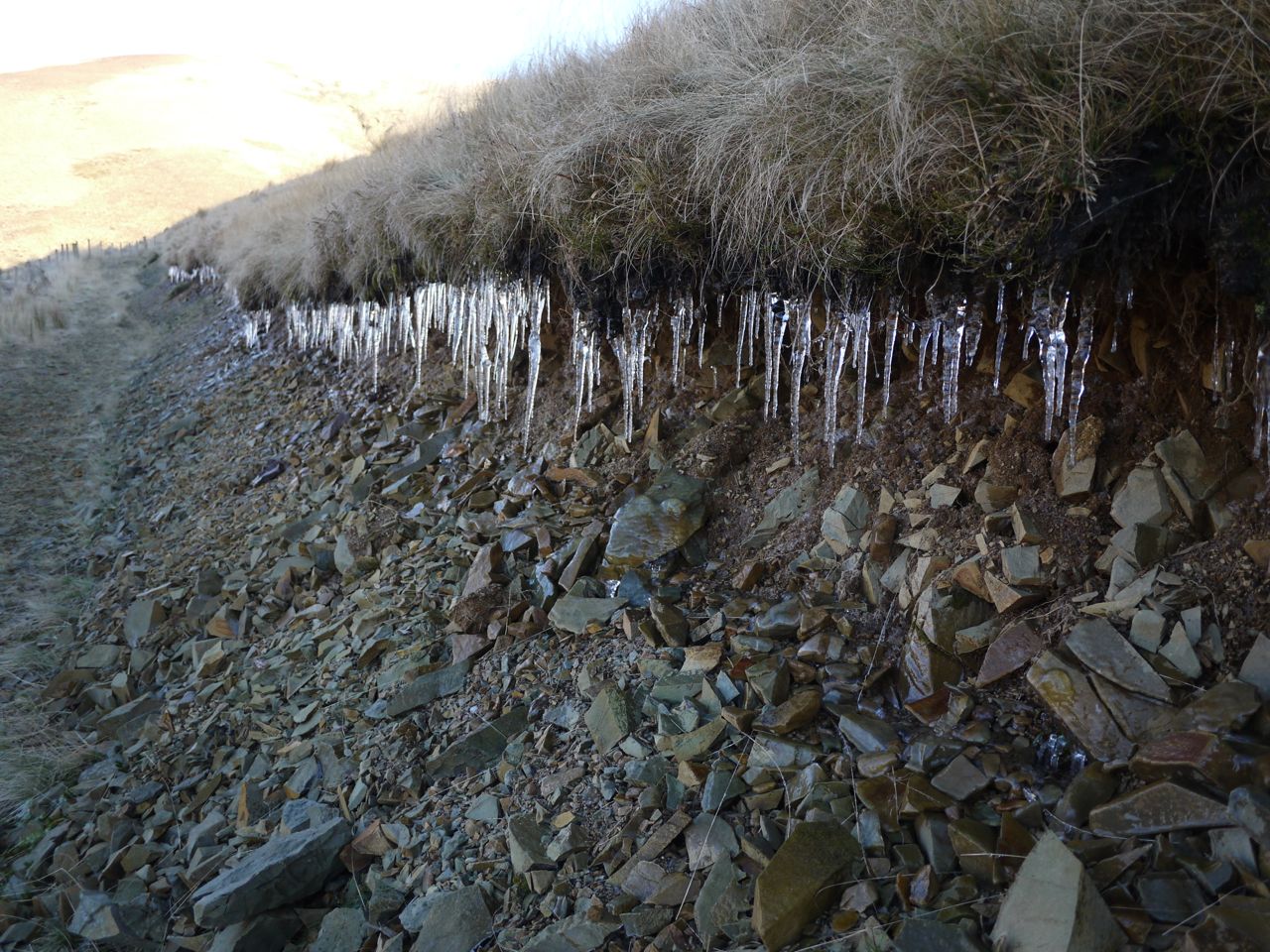
Icicles above the quarry
The temperature dropped considerably on the north slopes of Cauldcleuch Head (the clue is in the name I suppose) and this produced an intense feeling of fear for a few seconds until rational thought regained control. Presumably this must have been some sort of adrenaline mediatedautonomic response. Weird.
Maiden Paps and the Cheviots in the distance (from Muckle land Knowe)
Tramping through the semi-frozen moss and heather of Footman Hass, listening to the crunching beneath my feet, boredom must have set in, and I began to wonder if with my eyes closed it would seem I was walking through snow. So kids, just take it from me, if you are walking through deep undergrowth on uneven ground, don’t close your eyes. Don’t ask, just follow uncle Michael’s advice.
Tudhope Hill from Millstone Edge
Tudhope Hill (which locals pronounce without vowels, T’d’h’p) has a trig pillar and appears to be the highest point of this walk, though it is 20m lower than Cauldcleuch Head. The descent from Tudhope Hill was a bit of strain on ageing knees but the ground eventually became firmer. I began to wonder if this walk might not have the usual terrain set-up of these southern hills: wet undergrowth that thoroughly cleans footwear surrounded by a ring of muddy ground to re-encrust them just before the end.
Descending Tudhope Hill
On the lower slopes my smile faded as I looked down on the rush like grass between me and the car. The sun had worked its magic on the ground there and thoroughly defrosted the mud.
I suspect this will be a very wet walk on warmer days.
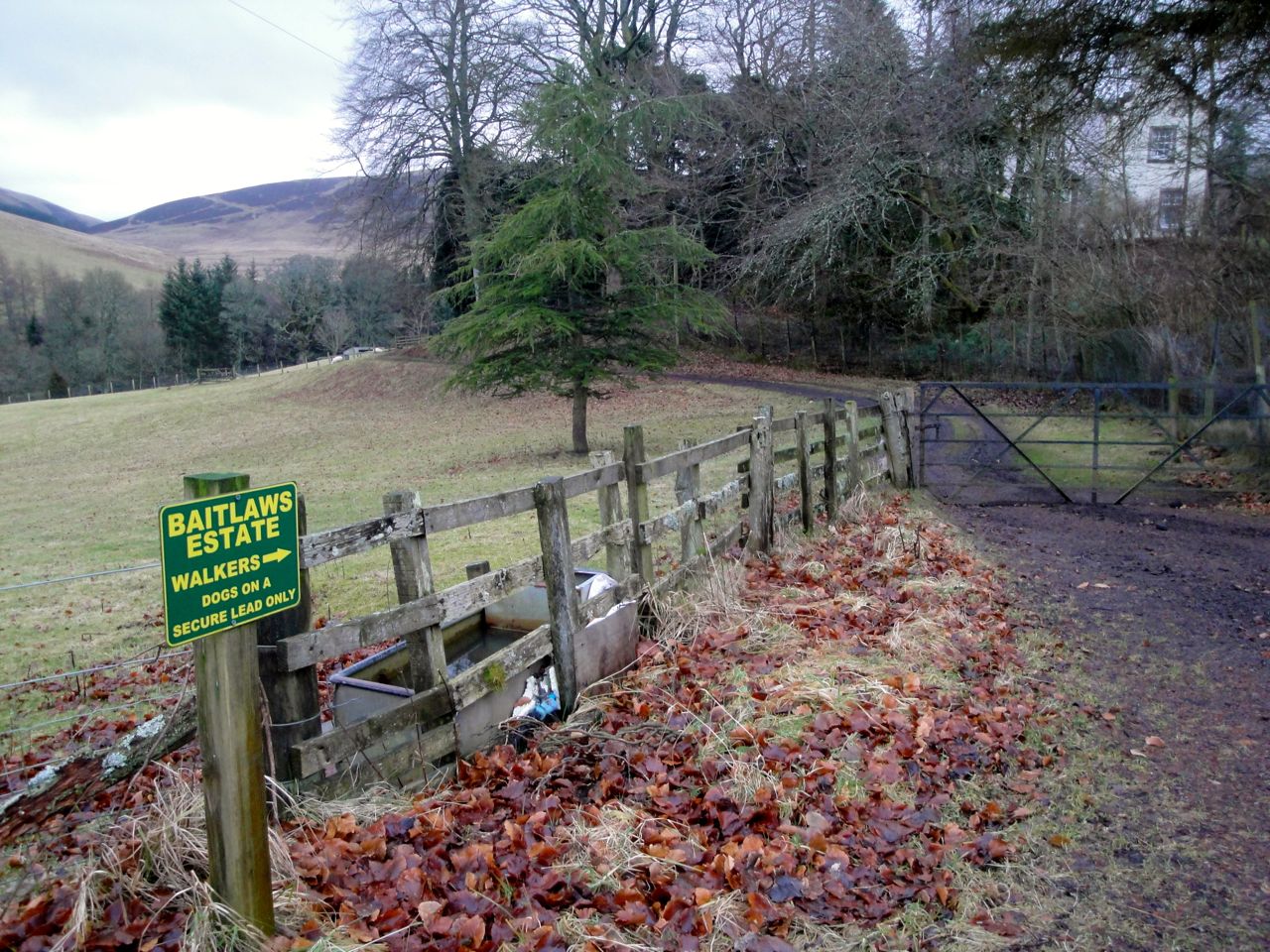
This walk started at a pleasant car park near the church in Lamington. There is a tree lined single track road leading up to Baitlaws which would be good for tree spotting in the summer. It was gently uphill which brought a warmth to my heart, knowing the last kilometre homewards would be downhill.
Baitlaws
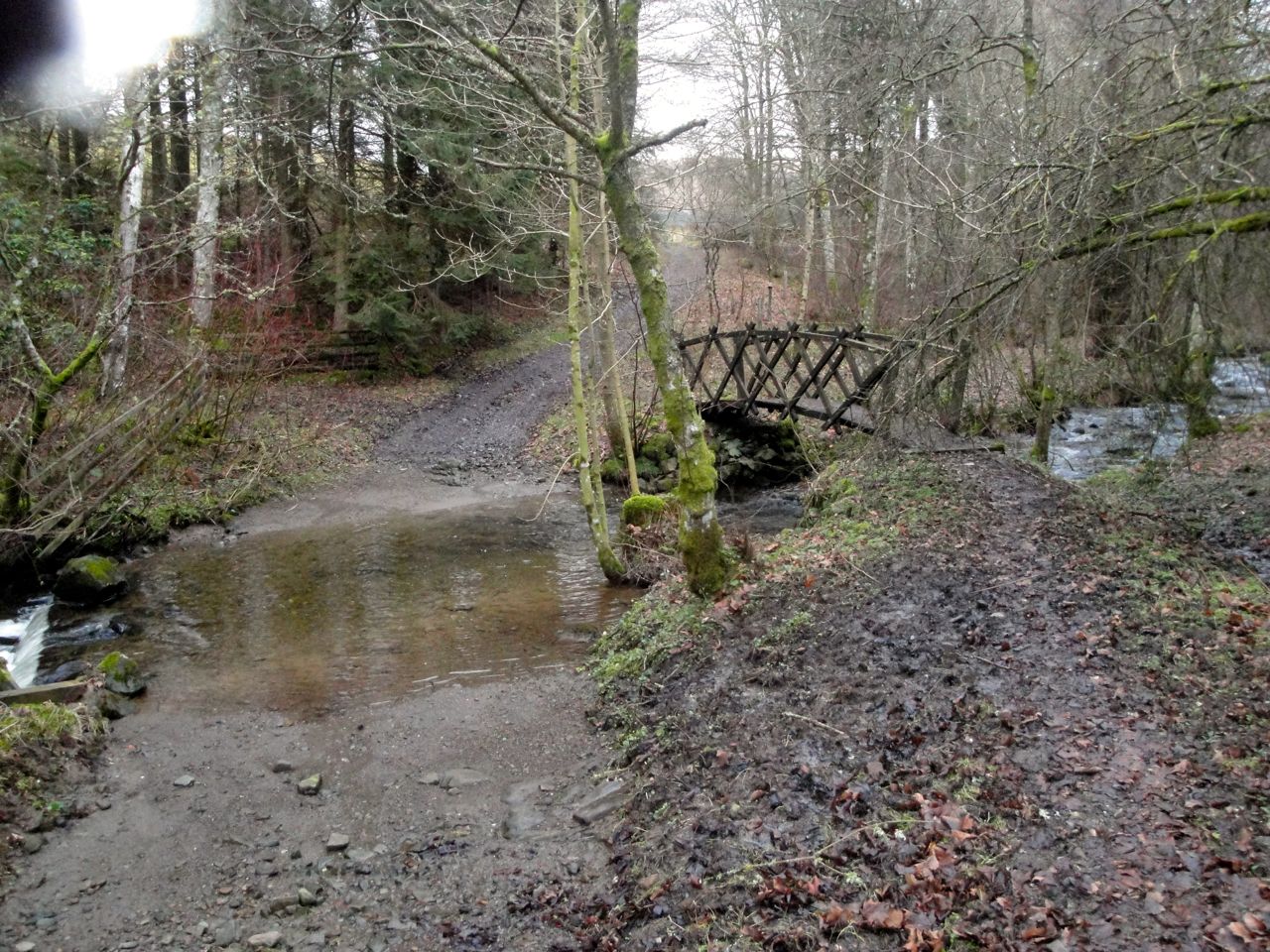
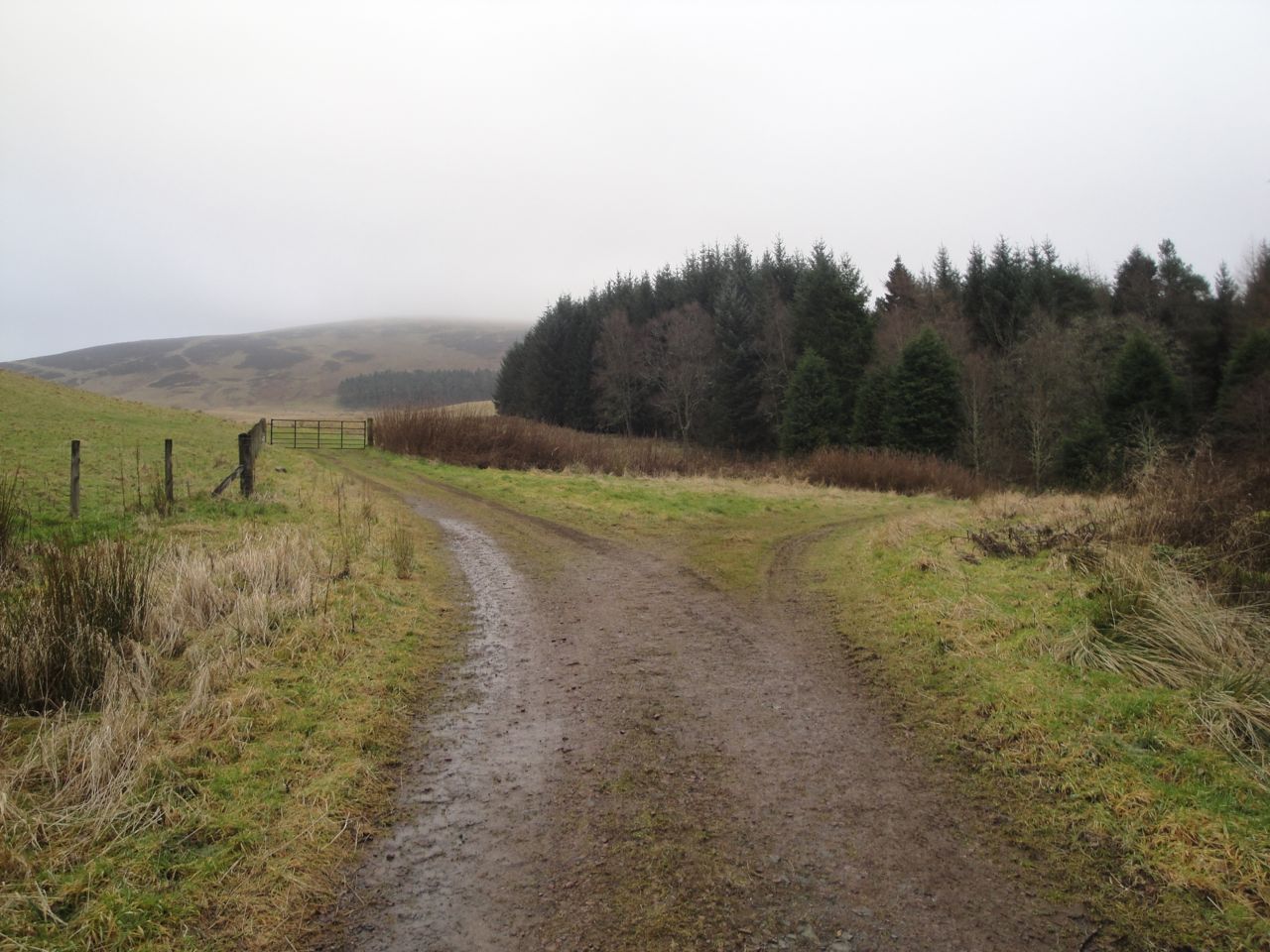
At Baitlaws there is a sign encouraging walkers to head left down to the burn where there is a choice of wet feet (ford) or dry feet (wooden bridge). Beyond Lamington Burn, and just after leaving the woods, the path forks. I took the right fork and eventually returned down that on the left 5 hours later.
Lamington Burn
The right hand track passes briefly through the trees where it crosses a couple of small burns then turns south and leads to the farm buildings at Bleakfield. Here again there is a choice of ford or bridge and then a track leading onto Easkgill Rig.
The fork near Baitlaw
Easkgill Rig would appear to be a rather boring 1.5 km of climb through heather and moss, but has I think got a Bermuda triangle-like region at about 450m. I had been tramping up the Rig, picking my way through soggy areas, watching deer running away and looking at nearby geological features to pinpoint my position. The hilltops were in cloud and the level dropped at times to embrace me.
Bleakfield, looking up Easkgill Rig
I was expecting to meet a fence or wall coming from my left. All I needed to do was follow the fence up to Hardrig Head. By this time I was in mist and was surprised to meet a fence coming from my right. So either I was not where I thought or this fence was not the one on the map. I was certain that I was on Easkgill Rig, so I decided that the fence’s line might have been moved. It did look new and its bearing was not the same as that on the map. I followed the the fence, but something was wrong. I was now going down hill. Time to stop and think.
Back where I had met the fence there were several faint tracks leading in at least four different directions. The cloud now lifted to show a hill to my right with wind turbines atop, Hardrig Head. The fence led directly up to it.
Looking back down Easkgill Rig. Tinto in the distance
Once out of mist I could see what had happened. There was a gap in the fence where I was and presumably vehicles had begun to divert from the mapped path to use this opening. The track I was following had turned to the left but in the mist I had not noticed the change in direction. Had the fence not been there I would soon have had warning that something was awry with my route as I stopped climbing.
I decided to follow the fence line rather than the path, in case the cloud dropped again and led me astray. The way up by the fence was pathless heather and the cause I think of the following day’s aching legs.
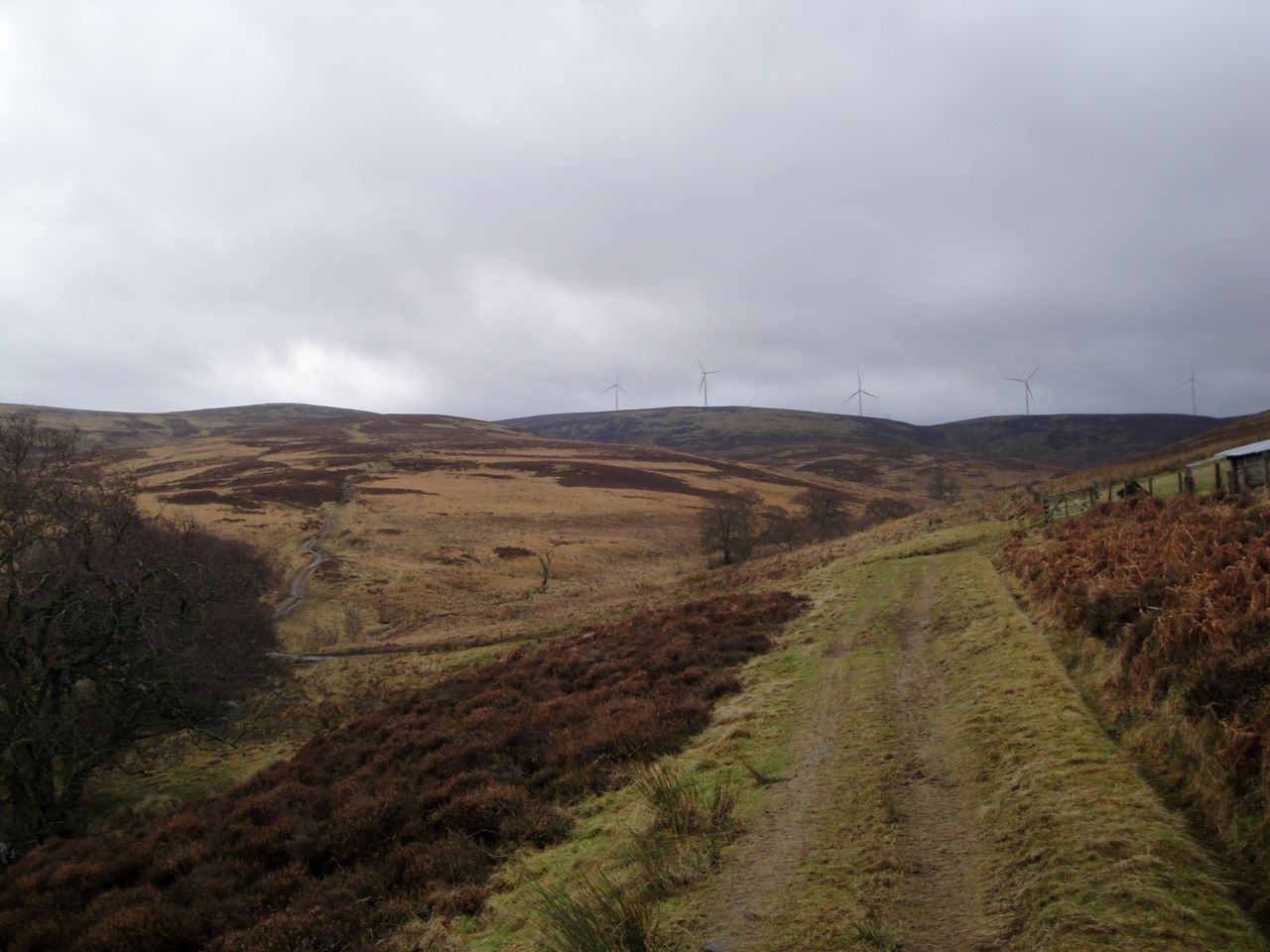
Hardrig Head, industry in the hills
Hardrig Head is at the eastern end of a wind farm array. The map describes a cairn but I did not find one at the highest point. I suspect that either the high point or the cairn may have been destroyed in construction of the wind farm. Looking north from here there are hills and nature. Looking south a broad road linking the wind farm arrays scars the hillsides. Mind you aesthetics are strange things. Perhaps a visitor from millennia past would have looked north and shed tears that the land was now virtually denuded of trees. He would have looked south and seen strange white giants on the hilltops but a valley full of trees.
Road to Whitelaw Brae
Whitelaw Brae
I chose to use the wind farm road to rest my legs for a while, but once at Deil’s Barn Door I relented and returned to the heather and sphagnum of the ridge over Whitelaw Brae to Windbank Gate. There is a trig pillar on Whitelaw Brae which I used as a windbreak for a my elevenses. From here on the walk was in cloud until after Hudderstone’s summit. The SMC Southern Uplands book uses the phrases: “good view”;”splendid view”; “fine view” in describing the glories of Whitelaw Brae and Hudderstone. I was denied these views by cloud but I suppose this meant I paid more attention to the mosses and heather I was walking over. This was certainly a very soggy ridge and a good test of footwear waterproofing. Certainly my boots were clean at this stage of the walk.
Splendid View, between Duncangill and Windgate Bank
From Windgate Bank the fence drops steeply into Kyegill Slop. Looking down, this steep valley was filled with mist giving it the appearance of an abyss. I decided that descending into an abyss was outside my abilities so walked further along to a less steep, and more visible, section. I crossed the slap near an animal pen then made my way back to the fence which I followed up to Hudderstone.
Mist filled Kyegill Slop
Kyegill Slop is an interesting name. Gill (Norse) and slap (Scots) both refer to narrow valleys. I presume that Kyegill Slop, Cowgill Glen/Rig and Key Cleuch have the same root, but what does Kye/Cow mean? Kay/Ceo are Gaelic for fog, and having looked down into this mist filled valley I am inclined to believe that I am not the first to have done so.
Hudderstone summit, nowhere to put the camera
Hudderstone (Heatherstane Law being its earlier name) does not have an obvious summit so I had the usual wandering about to find a high point but then set off to find the pile of stones marked near the 620m contour on the OS. These hills are short on places to sit for lunch, being made of wet moss and heather. If any erratics were dropped here they have been swallowed by the peat, so piles of stones are a valuable find for a sit-down lunch.
Seating for lunch, Hudderstone
View during lunch
There is a track down Cowgill Rig, at first faint, but eventually joining a constructed path at a gate around 480m. From this path there are views of Cowgill Reservoir, Woodycleuch Dod and Key Cleuch with Cowgill Loch. Ahead was Lamington Hill. After some consideration I decided not to include it in the day’s walk so headed off Cowgill Rig down the western side of a plantation of pines.
Key Cleuch, Cowgill Loch just visible
The easiest going was close to the trees but beware, there are a great many fence wires lying about to trip the unwary. The upper slopes are heather and the lower slopes tussock grass. At the bottom is the single track road serving Cowgill Reservoir. Cow Gill runs in an unusually shaped flattened valley floor that was presumably once a glacial meltwater channel.
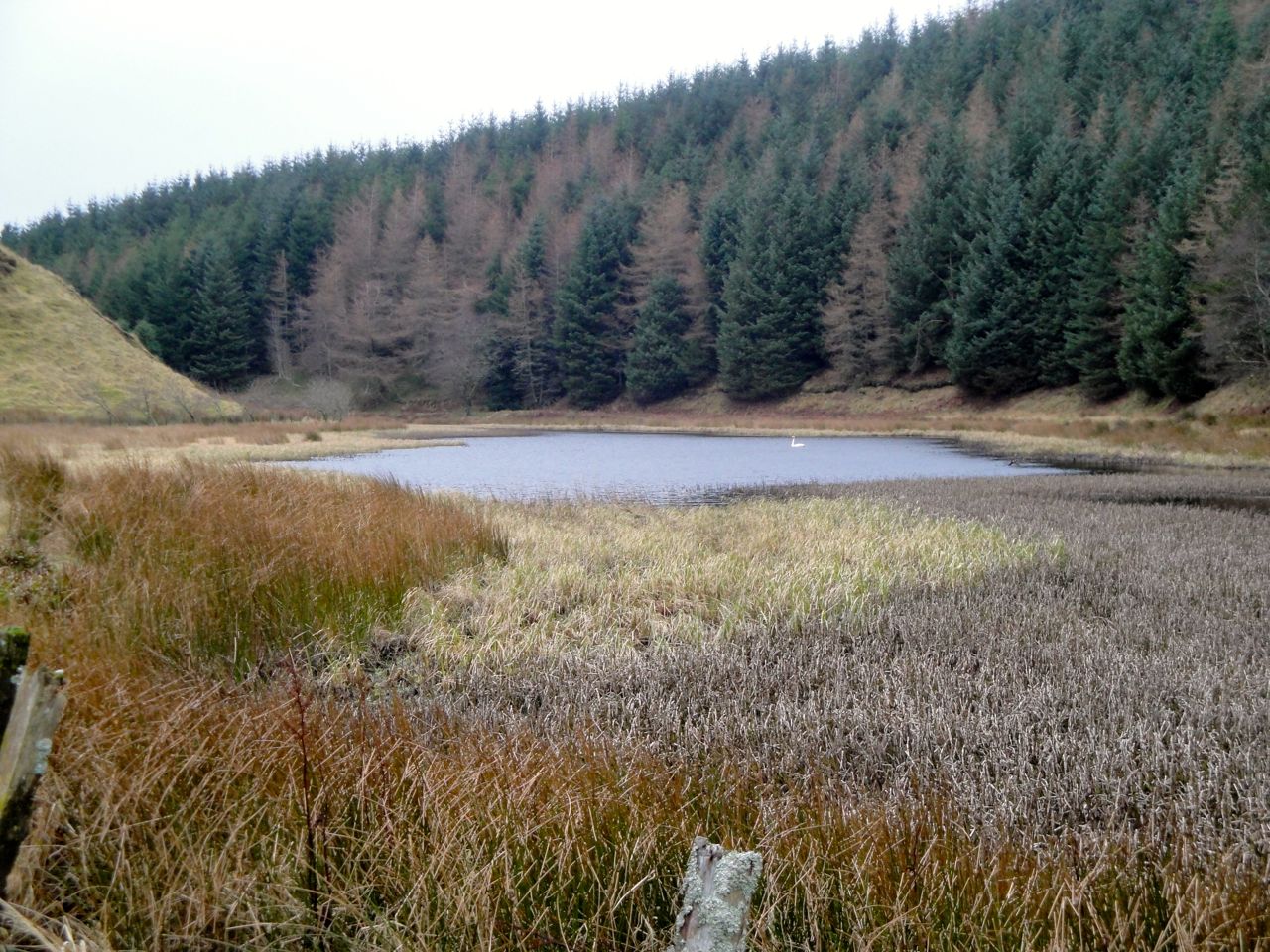
Cowgill Loch
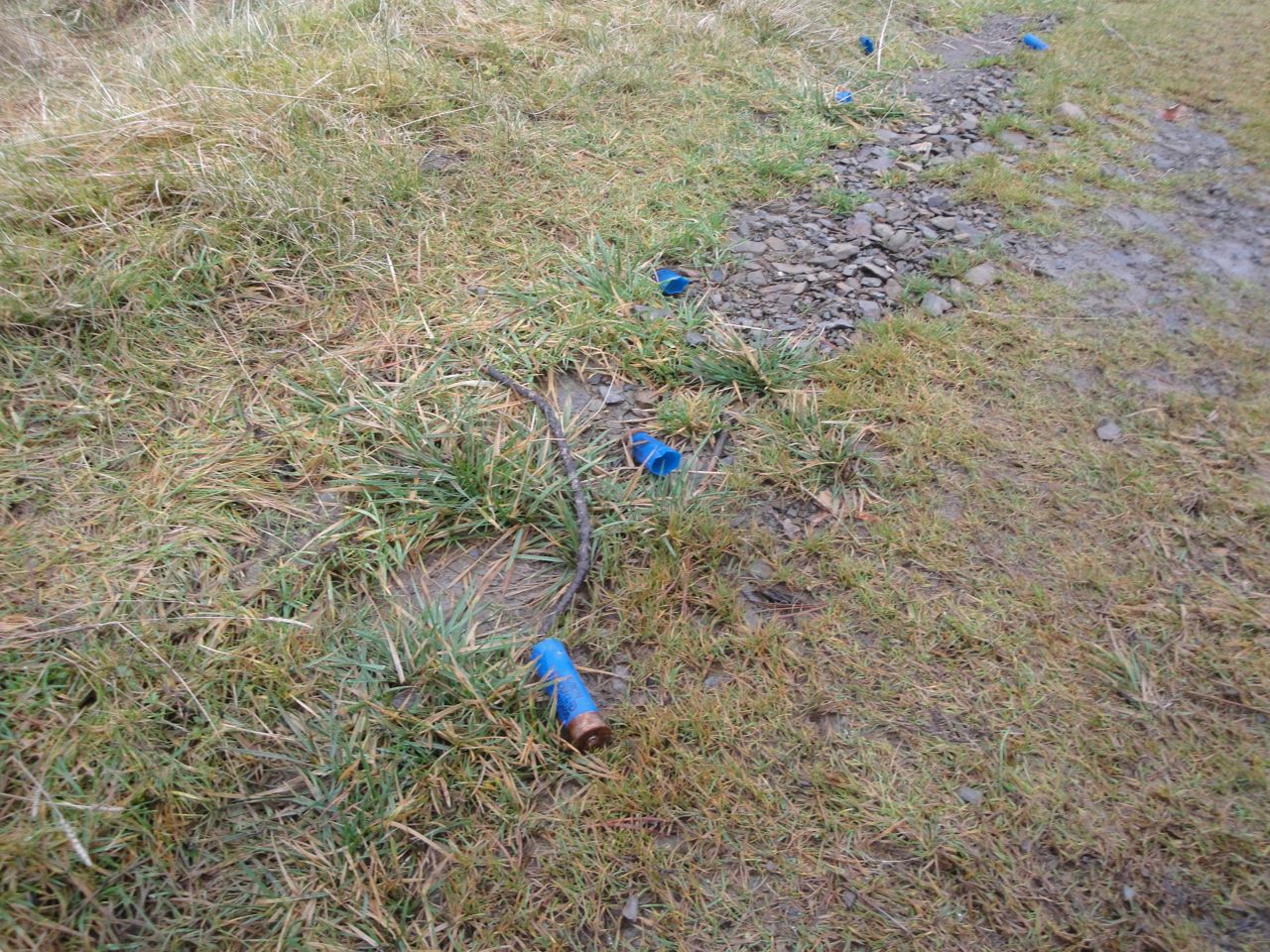
I then followed the path along Key Cleuch, past Cowgill Loch and back to the track to Baitlaws, a nice gentle end to the walk, though the spent shotgun cartridges along the way were a little disquieting.
 Looks like I picked the wrong week for my two day Donald-bagging in the Ochils.