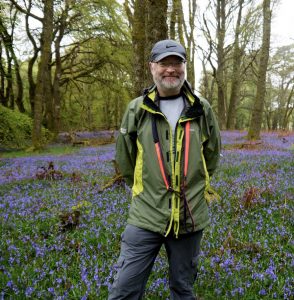
Romans and Reivers: 5 – Craik Forest

7.7 miles 3hours ascent 295m

P1060978aCraik Forest Car Park to Craik Cross Hill and return

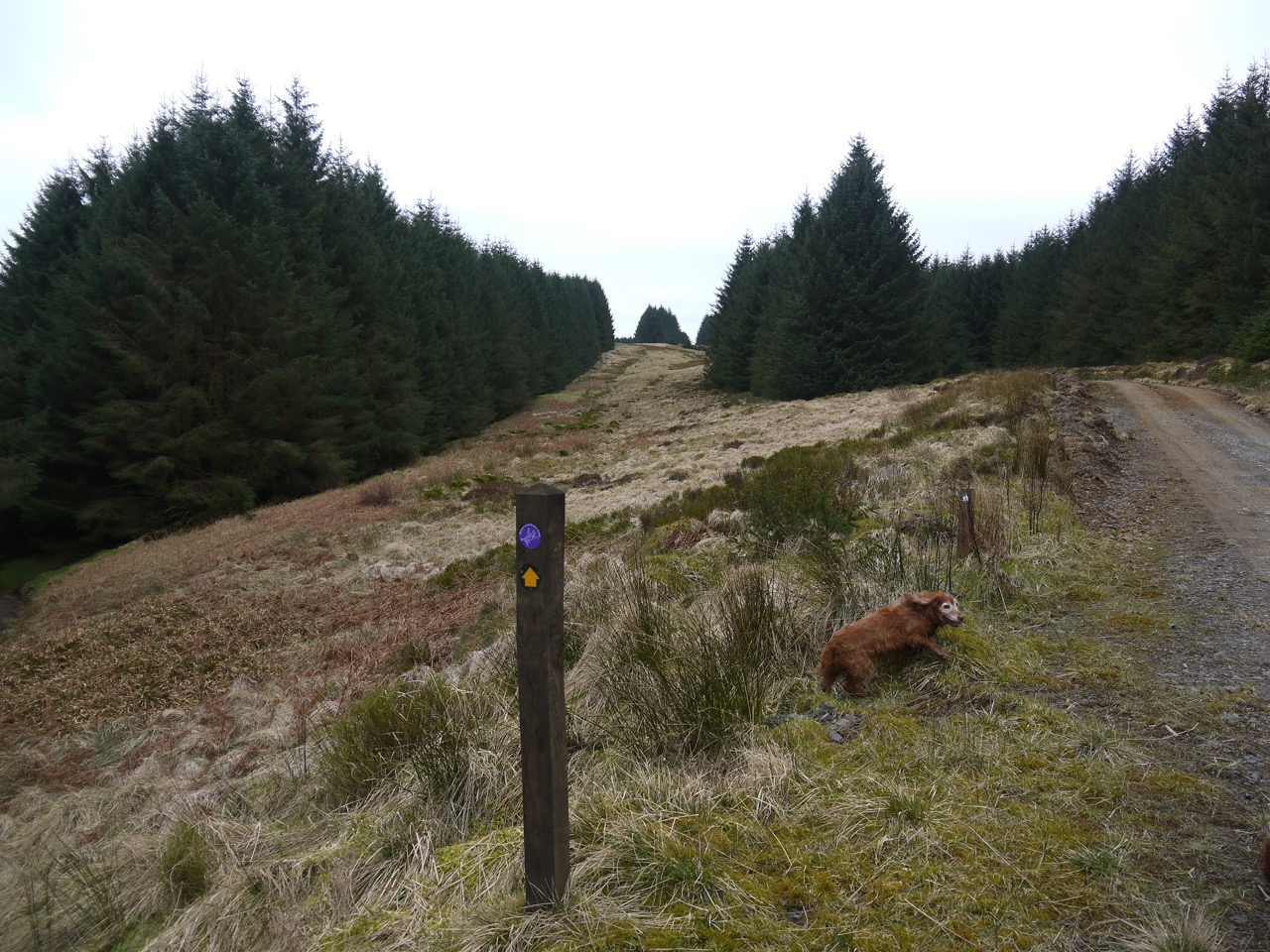
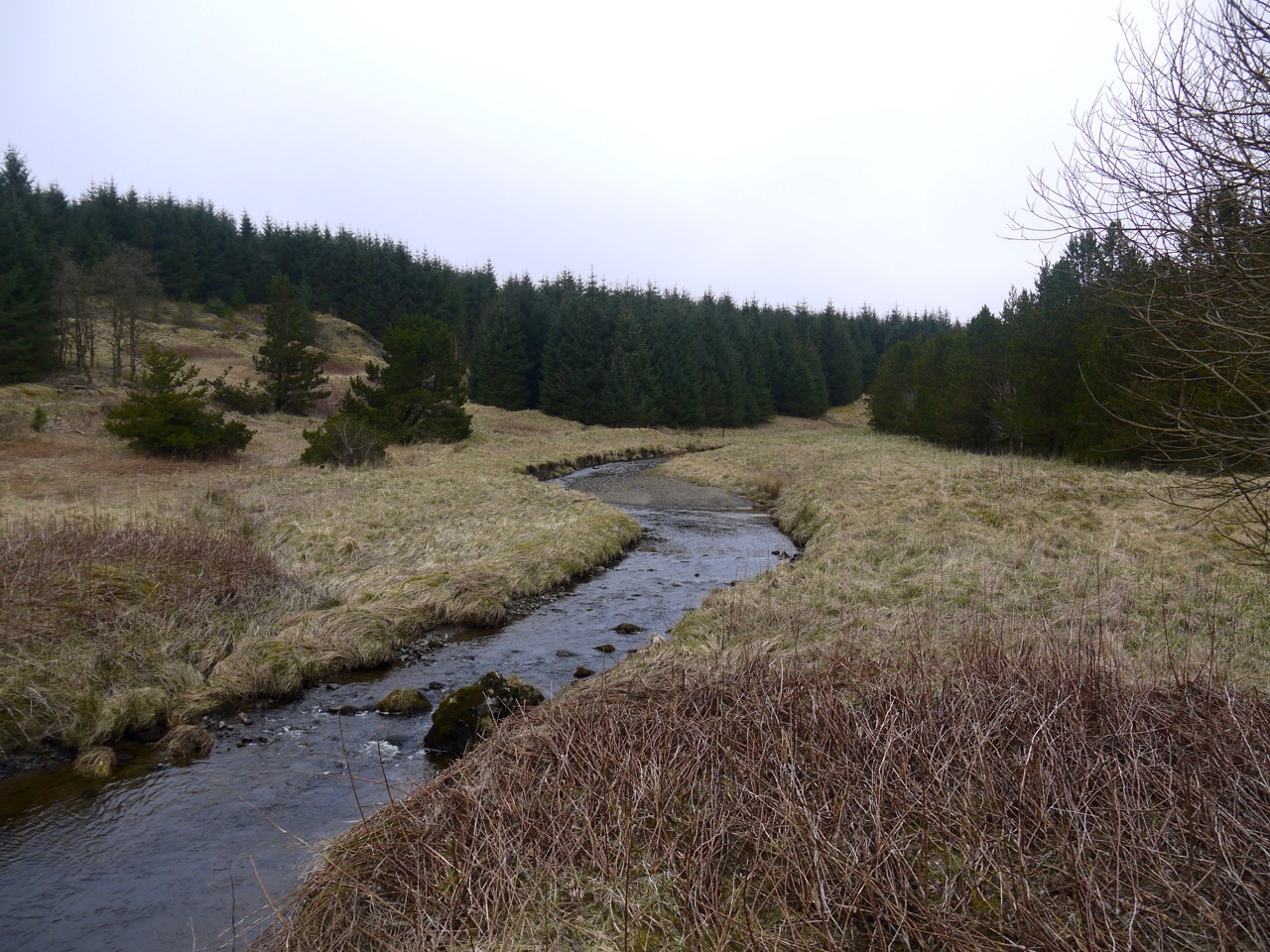
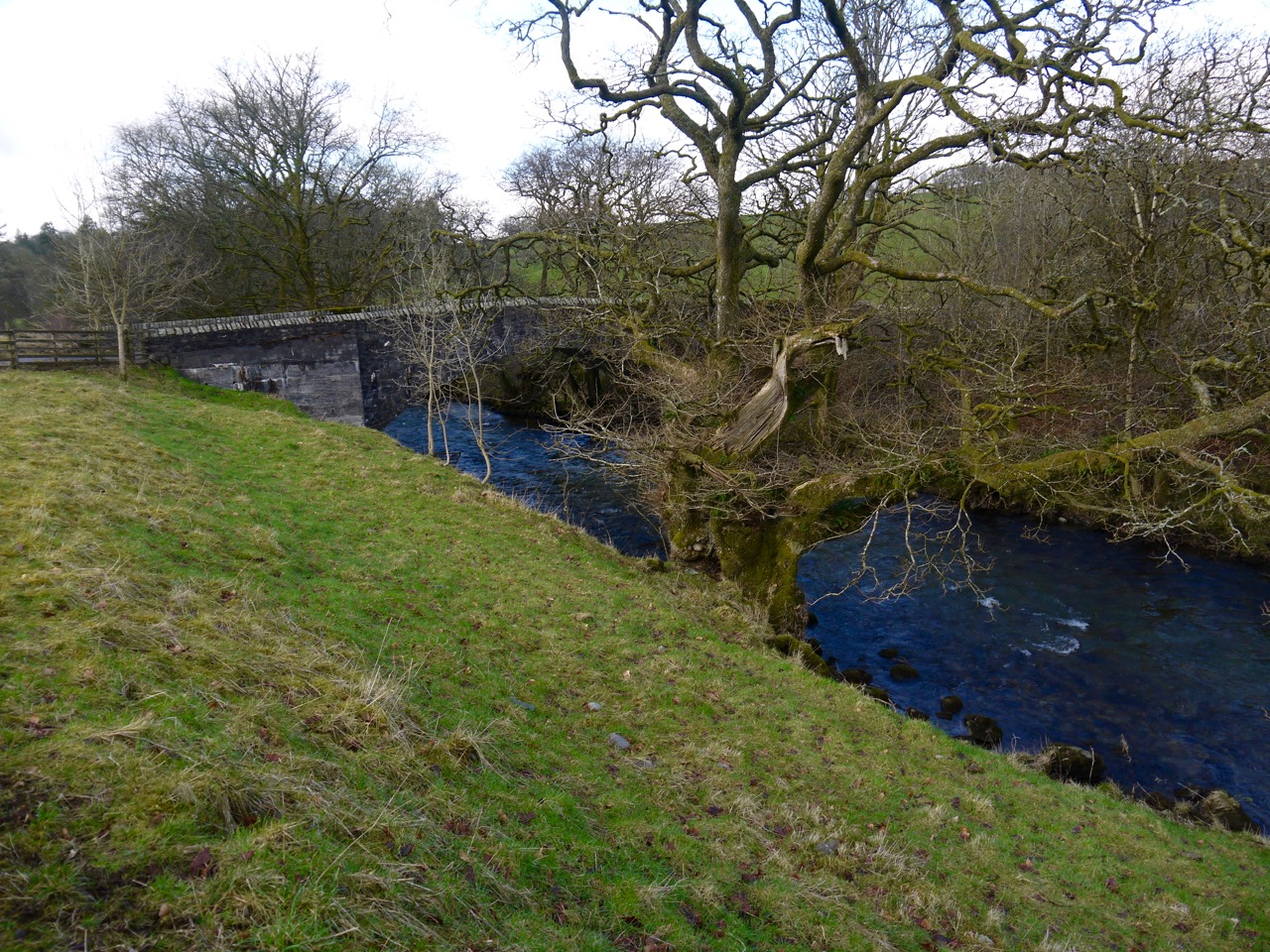
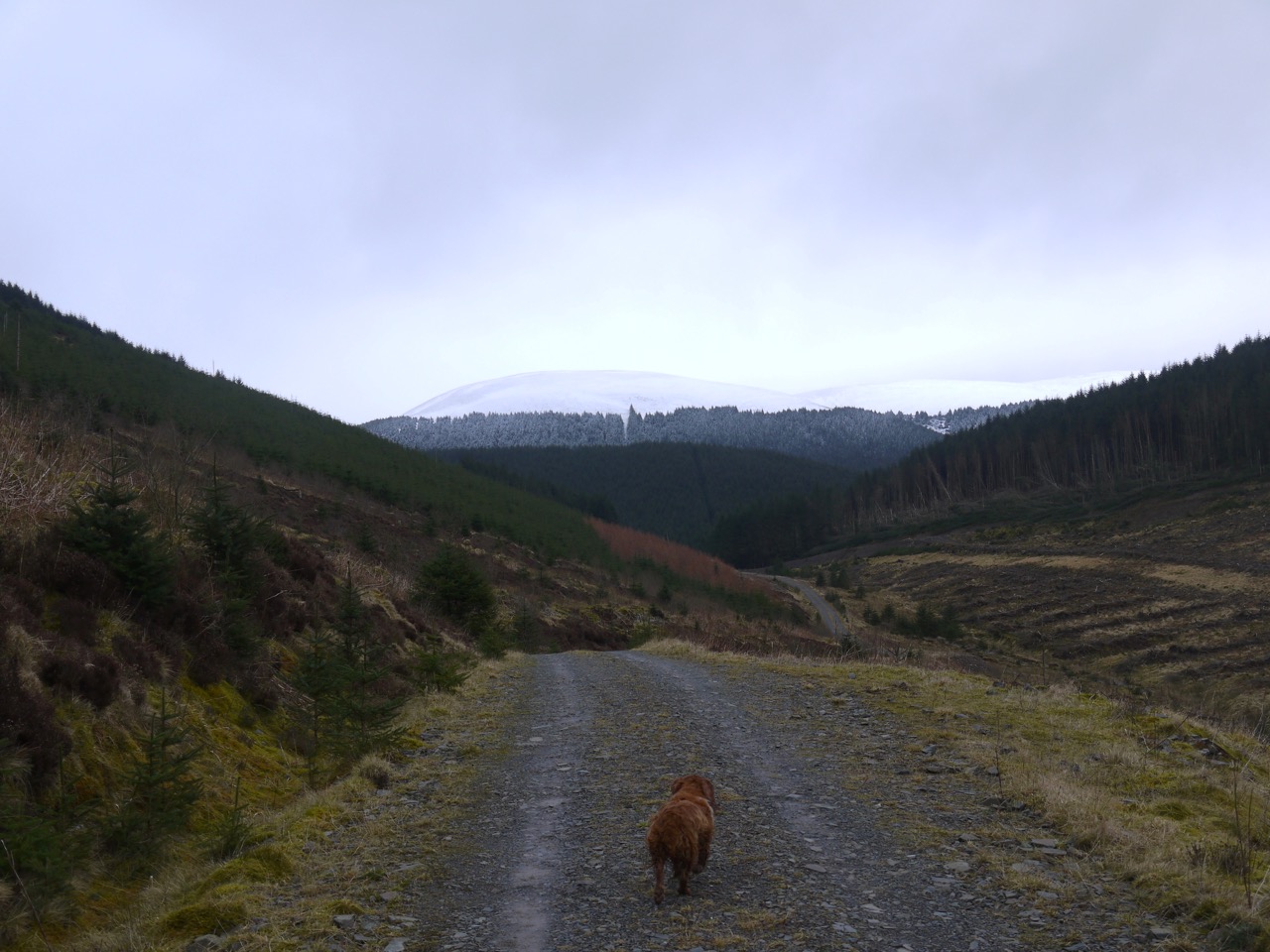
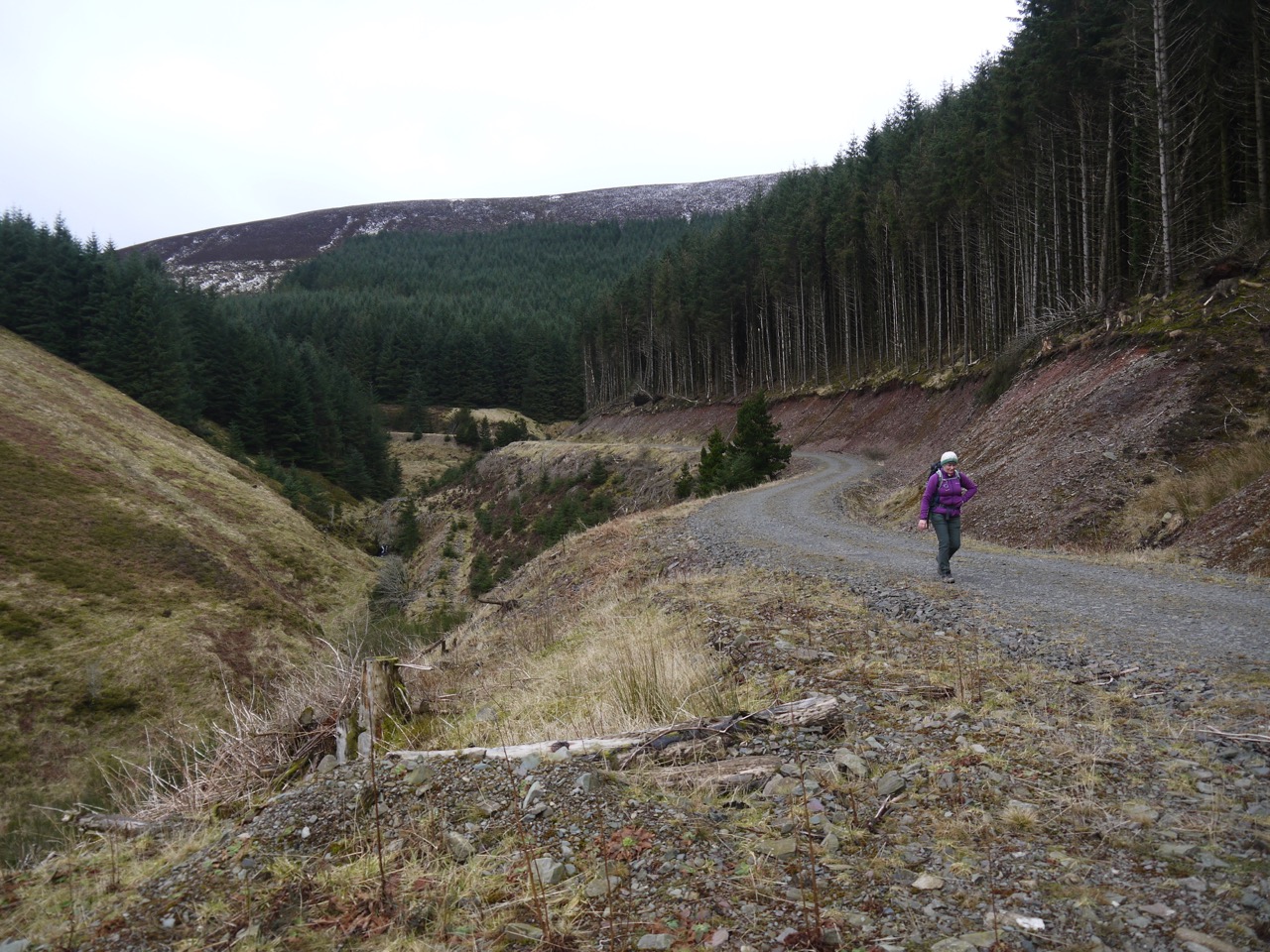
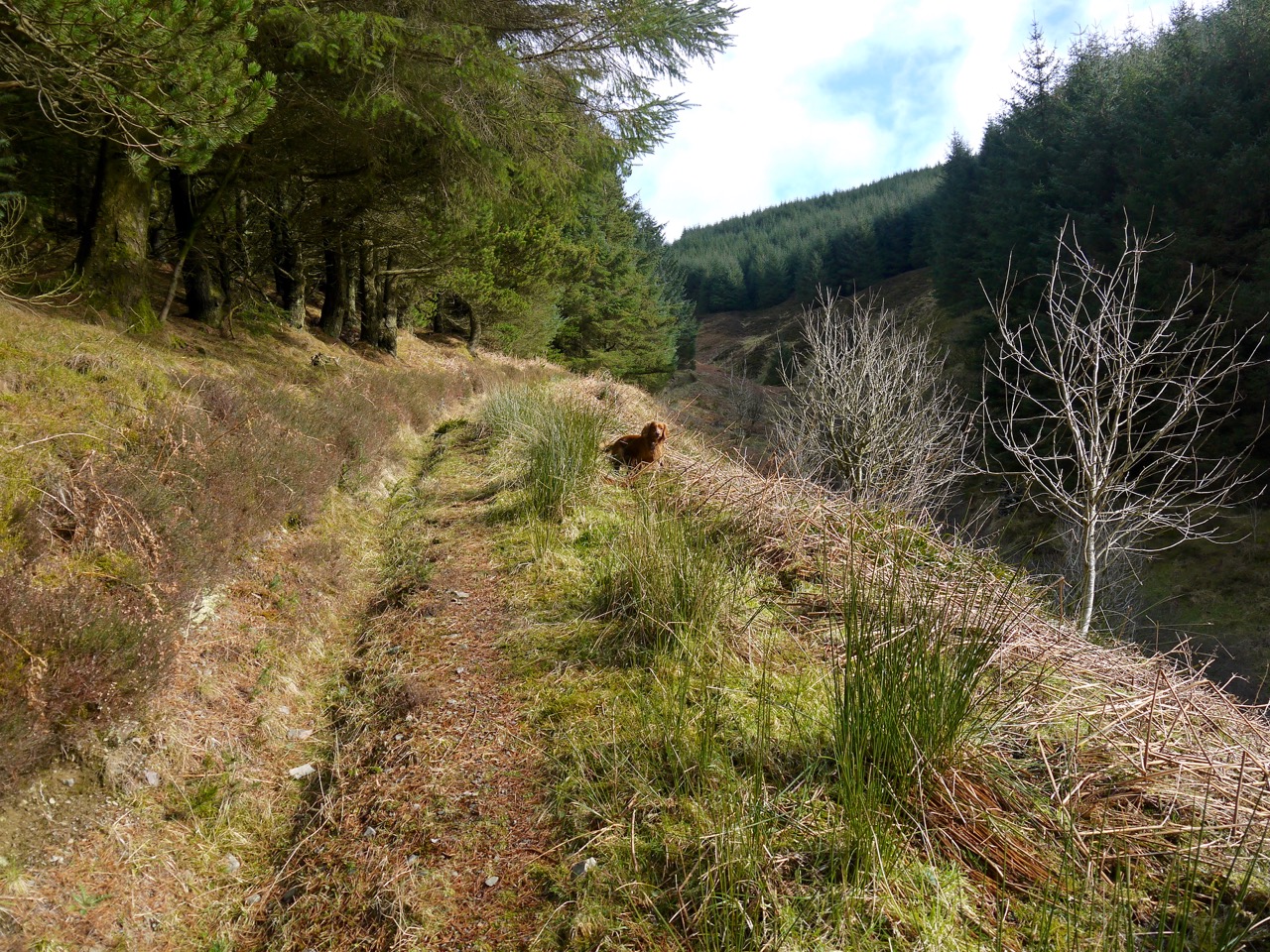
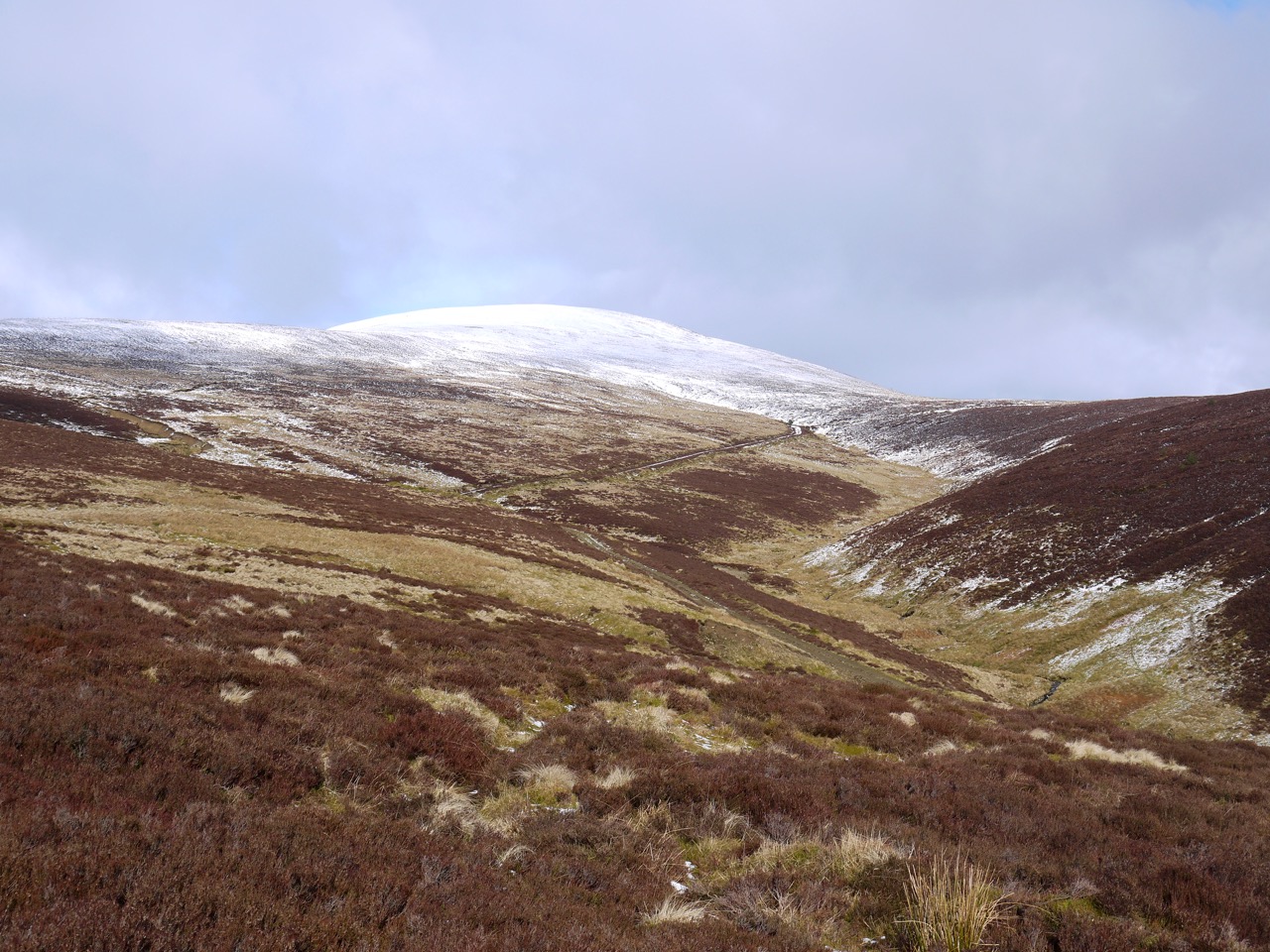
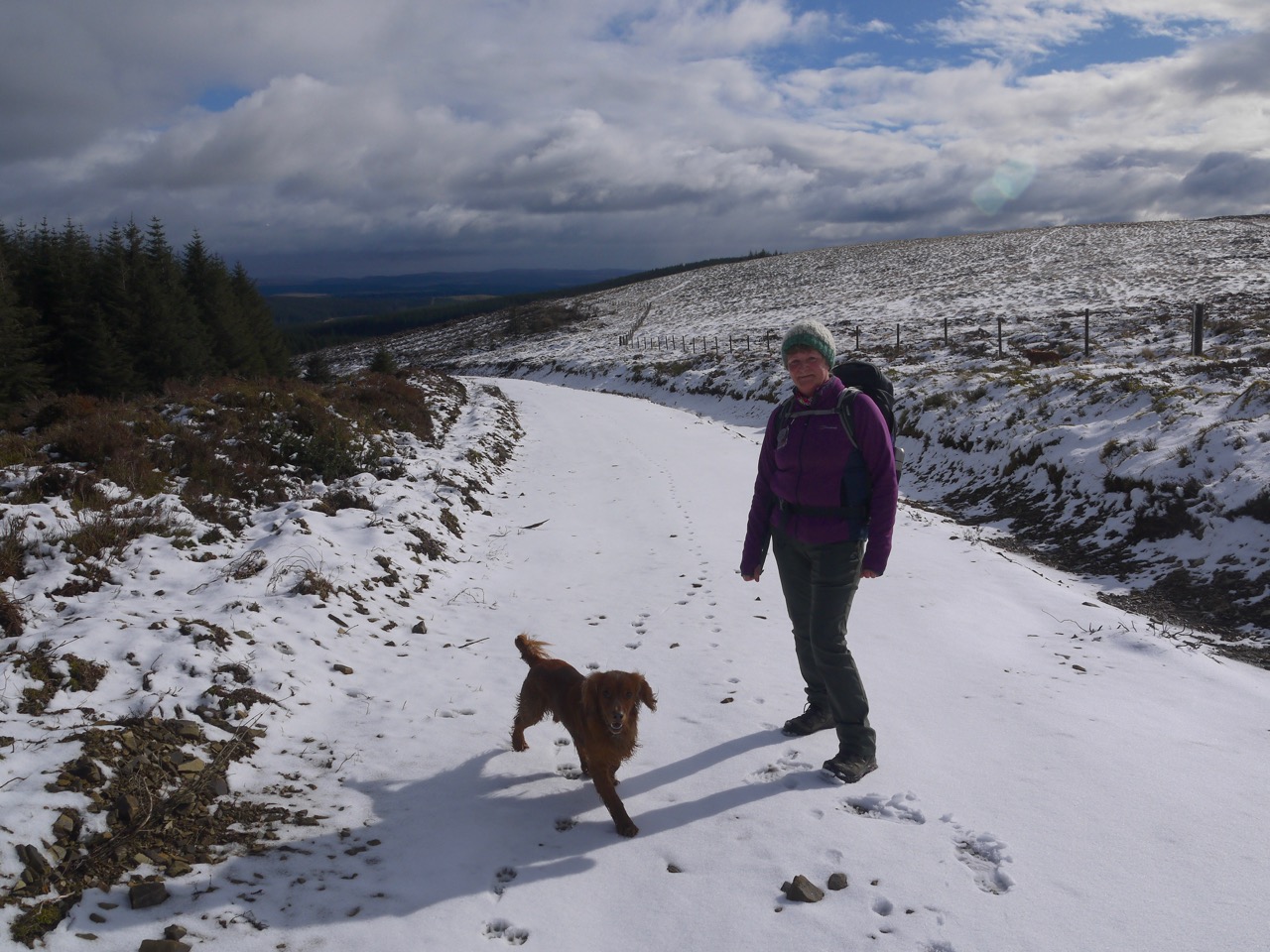
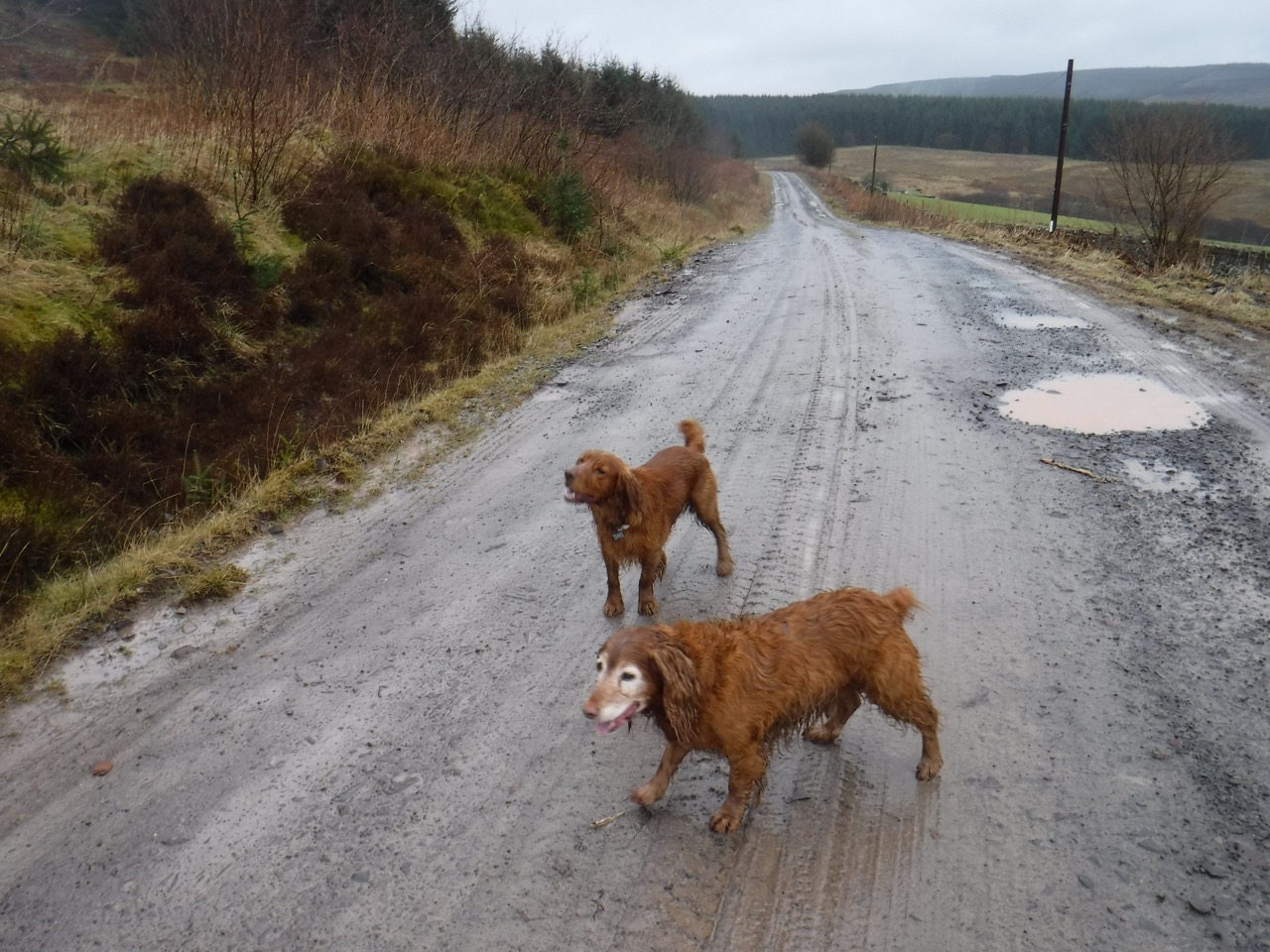
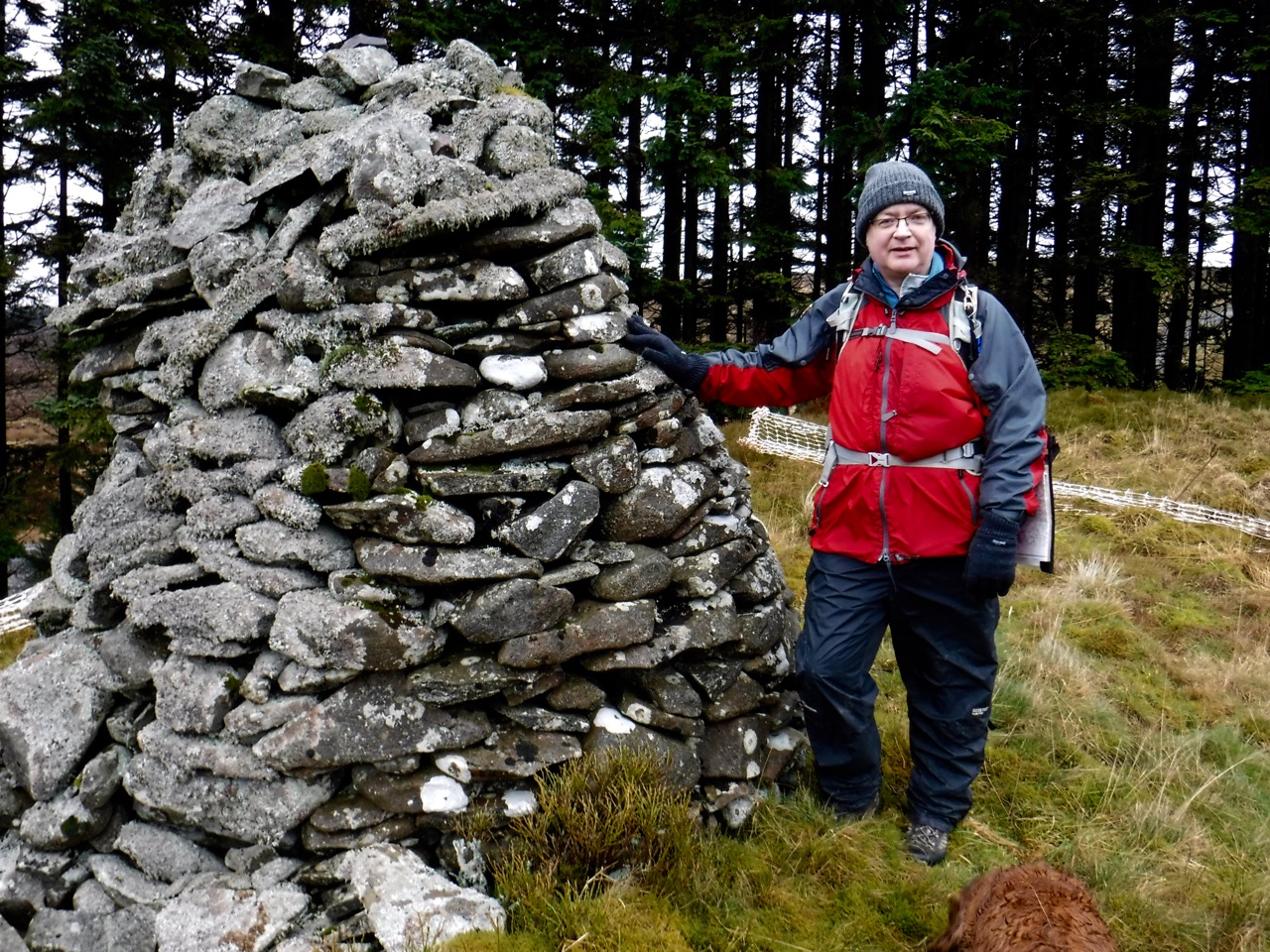
This was a straightforward and relatively short route for once. We parked in Craik Forest car park and followed the R&R way markers up to Craik Cross Hill, and then came back the same way. The rain stayed away and it wasn’t especially cold.

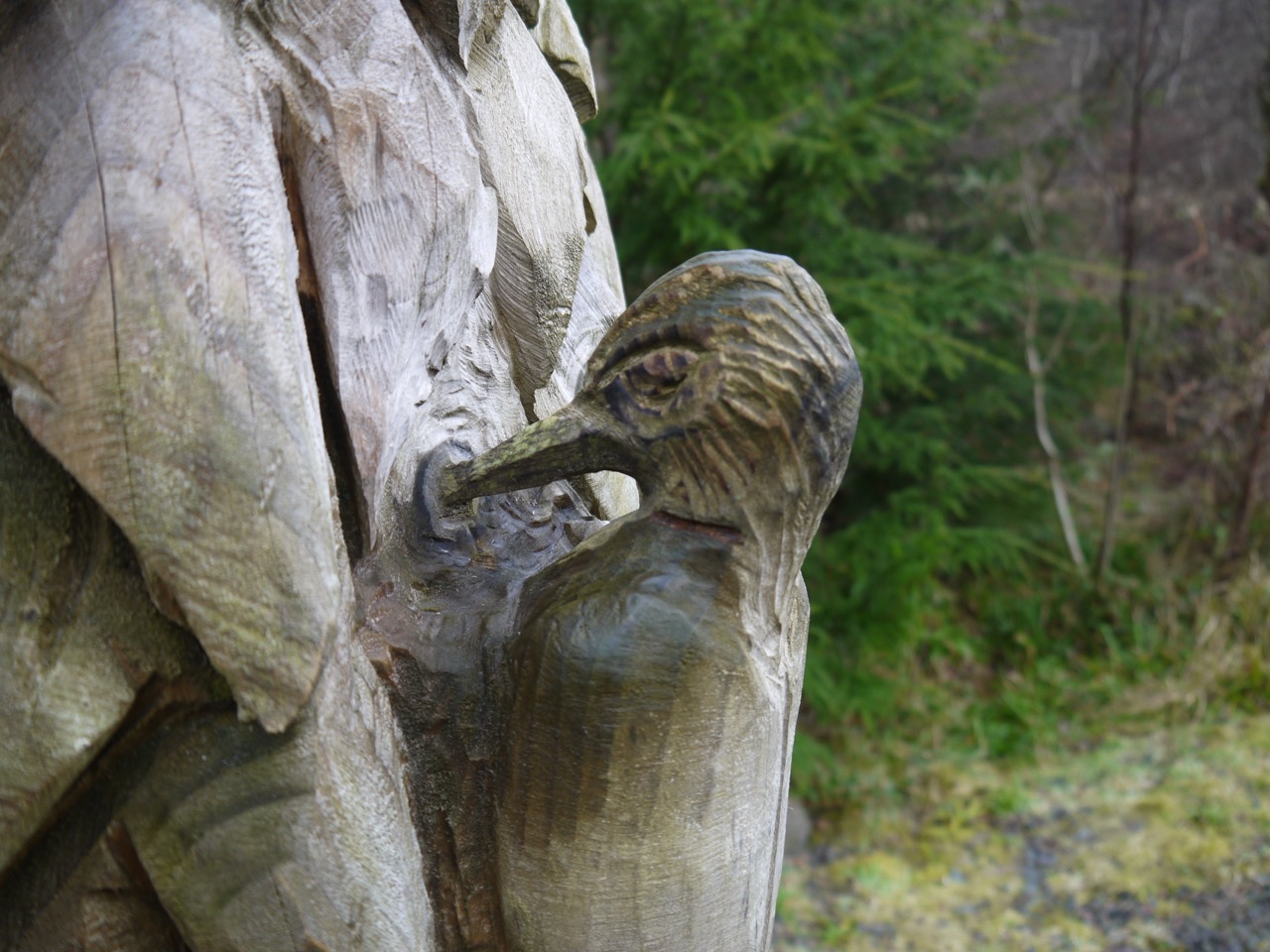
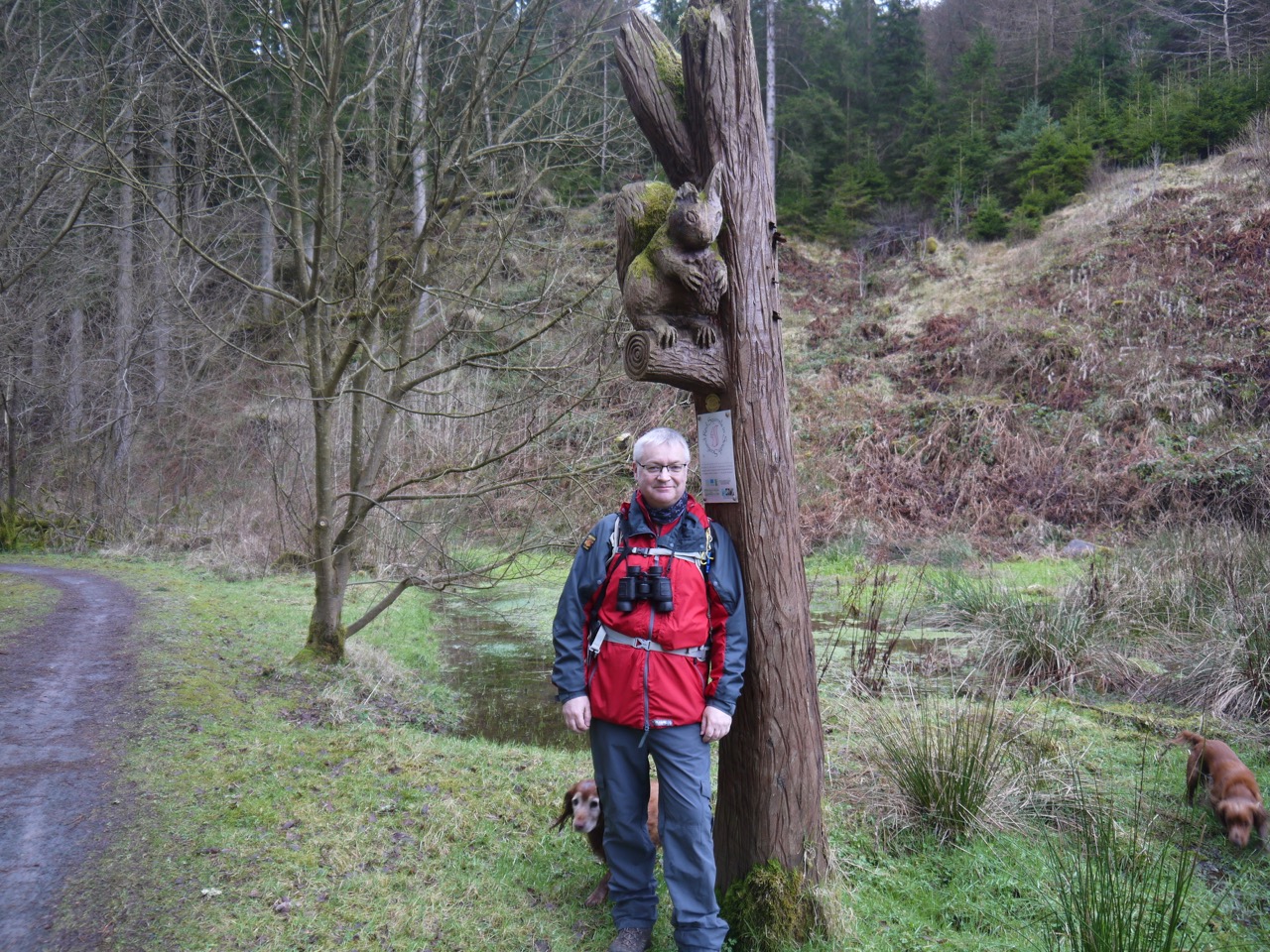
In the car park we found a wooden toadstool and a carved squirrel, but not any actual red squirrels. There is also a memorial to the eight man crew lost when a Halifax Bomber crashed near here in 1944.

Halifax JP190 took off from RAF Lindholme, Yorkshire at around 20:00 hours for a cross country Navigation exercise over the Scottish Borders. At around 20:30 hours the aircraft was witnessed flying in a westerly direction by a farmer in the village of Craik, reportedly with an engine on fire. Shortly after passing over the village the aircraft was seen to dive into the hillside and explode in a ball of flames. The farmer and a colleague set off in the direction of the crash, and discovered the shattered remains of the Halifax on a hillside 800m (c. ½ mile) from his farm. Five bodies were also discovered. The next day a local Police unit and personnel from RAF Charterhall climbed to the site [on the slopes of Muckle Knowe], and located a further 3 bodies. (Info from Air Crash sites Scotland)

Roman Road on the left

Roman Road on the left

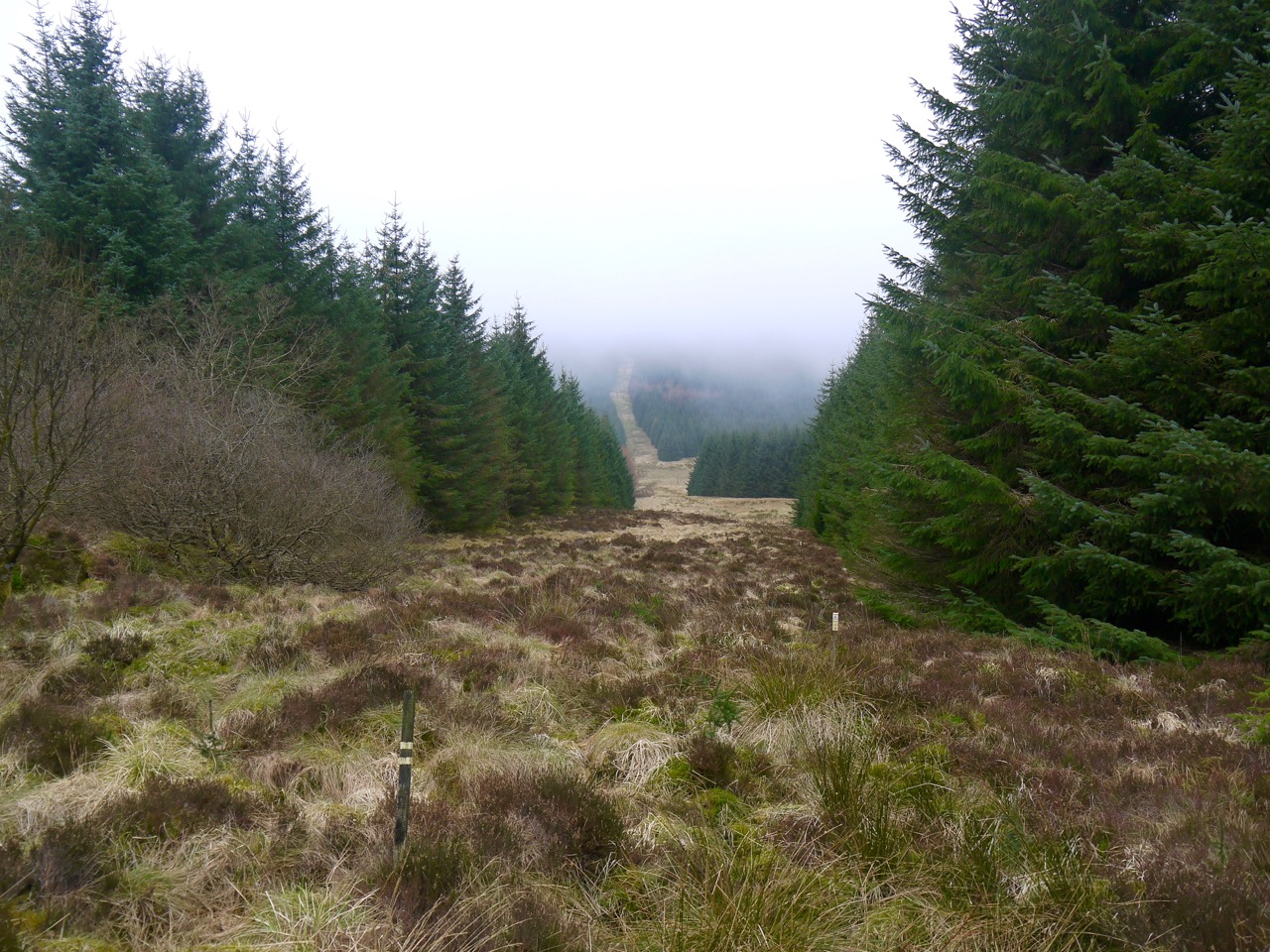
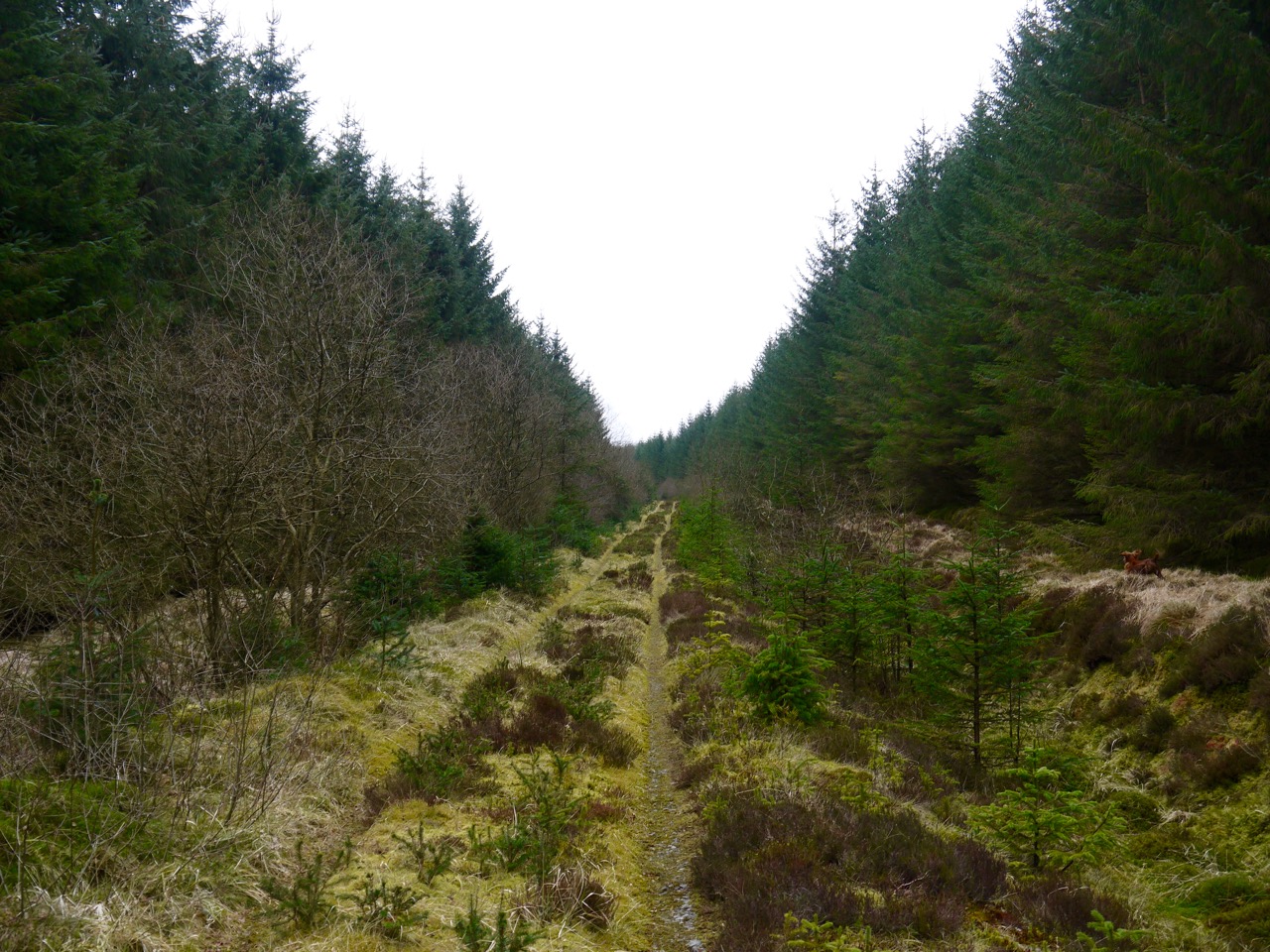
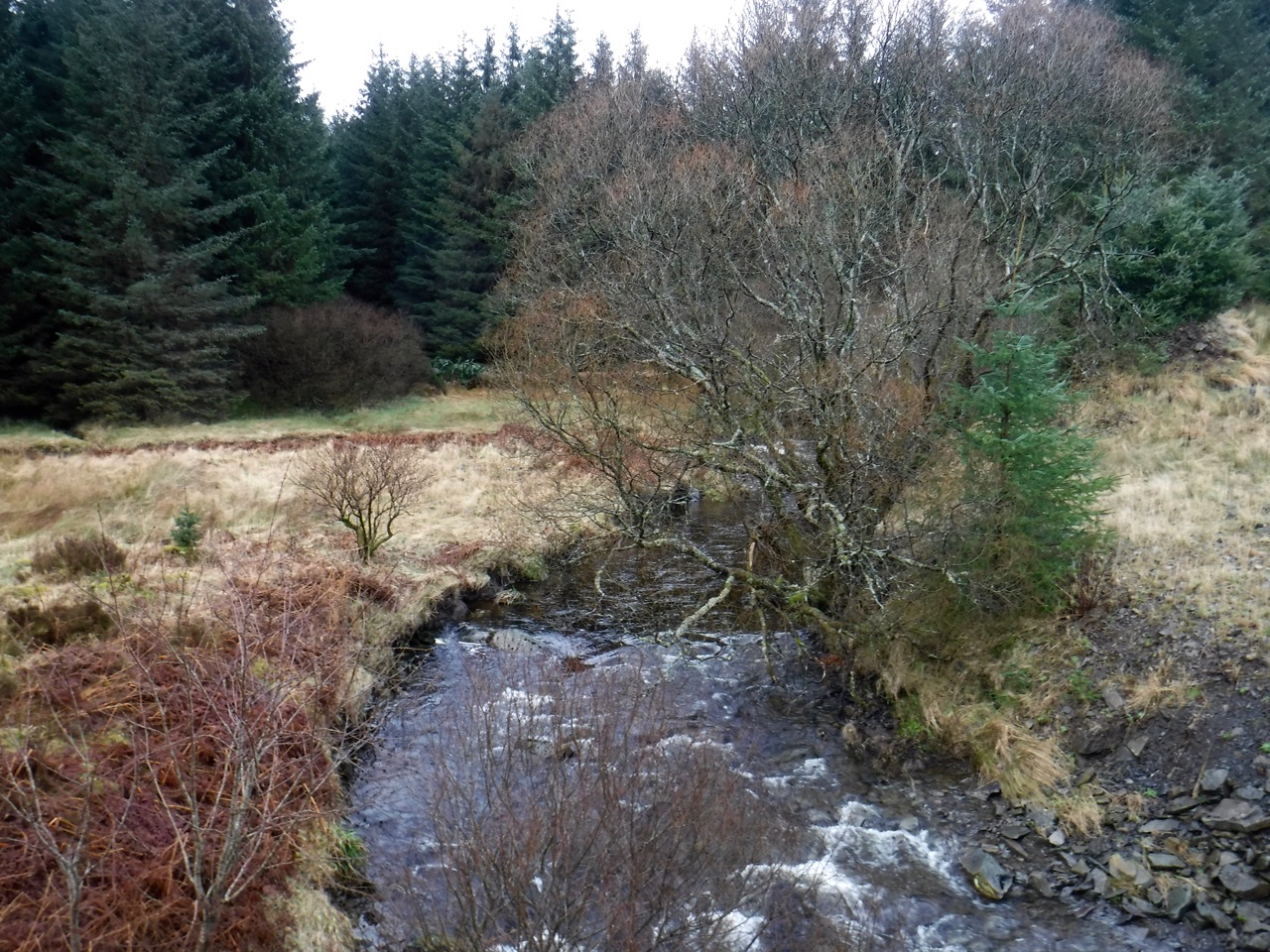
Our route ran beside or coincided with the old roman road for much of the climb to the summit of Craik Cross Hill. And we had better visibility this time though the summit itself has tree on most sides limiting views from there. We were able to stand at the county border though and gaze down into both D&G and the Borders.

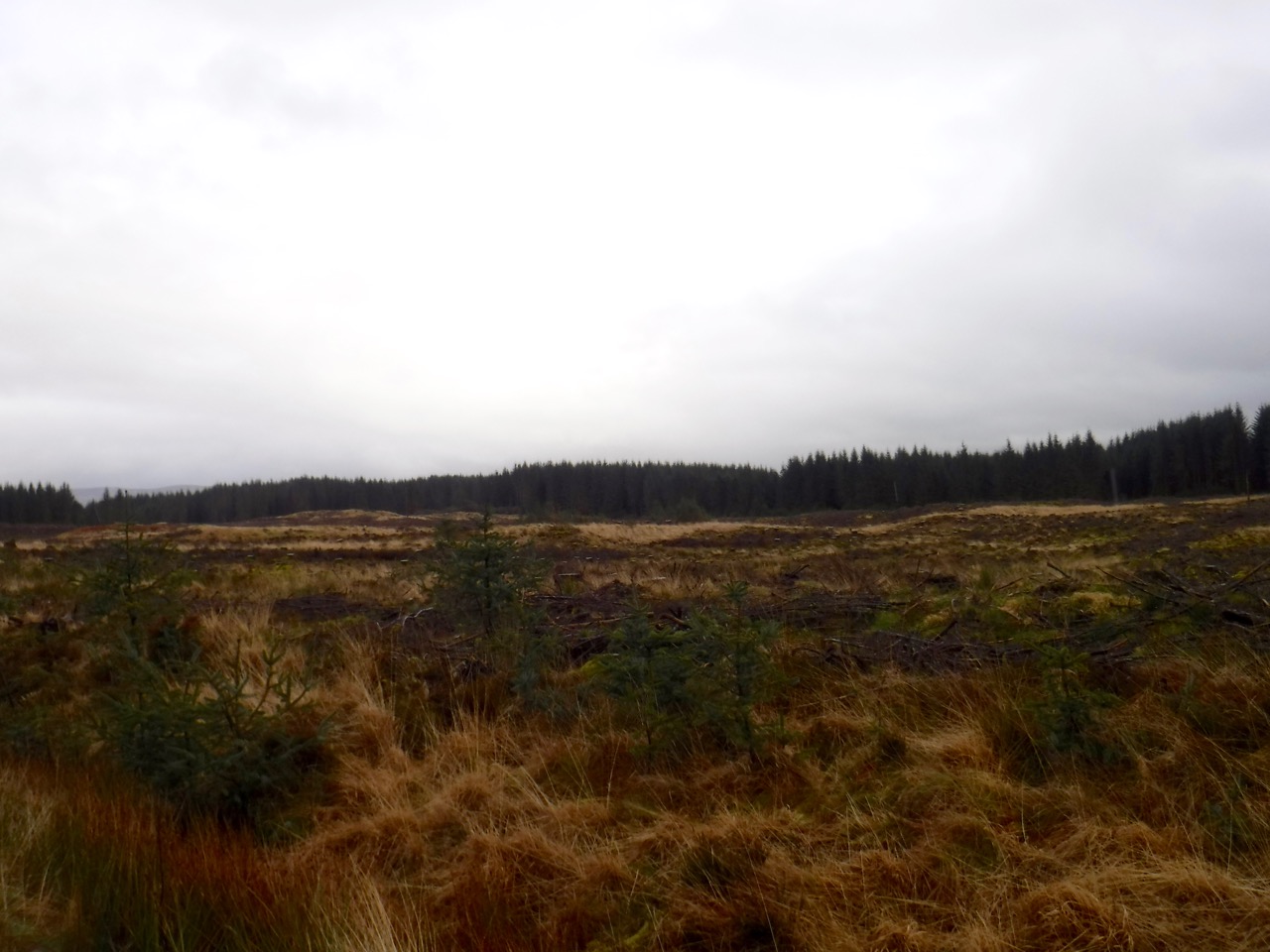
A small track heads north along the border. I had wondered about following other tracks to the north and meeting this track as a way up but suspect that would be an unpleasant route. Looking across from our route on the way up it would seem we would have had to cross areas of felled forest and when we investigated the track heading north, it soon deteriorated into spongey moss.

 
[sgpx gpx=”http://www.screel.co.uk/walks/wp-content/uploads/2016/03/RK_gpx-_2016-03-19_1049.gpx”]

Posted in Borders, Dumfries & Galloway | Tagged | Comments Off on Romans and Reivers: 5 – Craik Forest

Romans and Reivers: 4 – across the White Esk

14.2 miles 5h 50m ascent 484m

P1060916Garwaldwaterfoot to Craik Cross Hill

My original plan had been to walk from Garwaldwaterfoot to Craik Forest, a linear walk of about 10.5 miles, but getting there with cars at each end would have meant five hours of driving, so instead I split this section into two circular walks and this was the first.

Garwaldwater

Garwaldwater

We parked at Garwaldwaterfoot in a small lay-by and set off walking along the B709. What I did not realise at this point was that the route of the R&R as marked on the OS map, and the SOCT website differs from the way marked path.

At an R&R sign we left the road for a forestry track, with me believing we were at Dumfedling, whereas we were at Tihill. We crossed the White Esk and followed the R&R signs. The route in my mind, and on the map, was north and then east without any junctions in the first 3 miles.

Tihill

Tihill

So I was perplexed to find I was walking towards the sun. Then we came to a track off to our left with a Scotland Countryside Trail sign pointing left. But not an R&R sign. A large solitary Larch stood by the junction looking quite different from the larches one sees in forests.

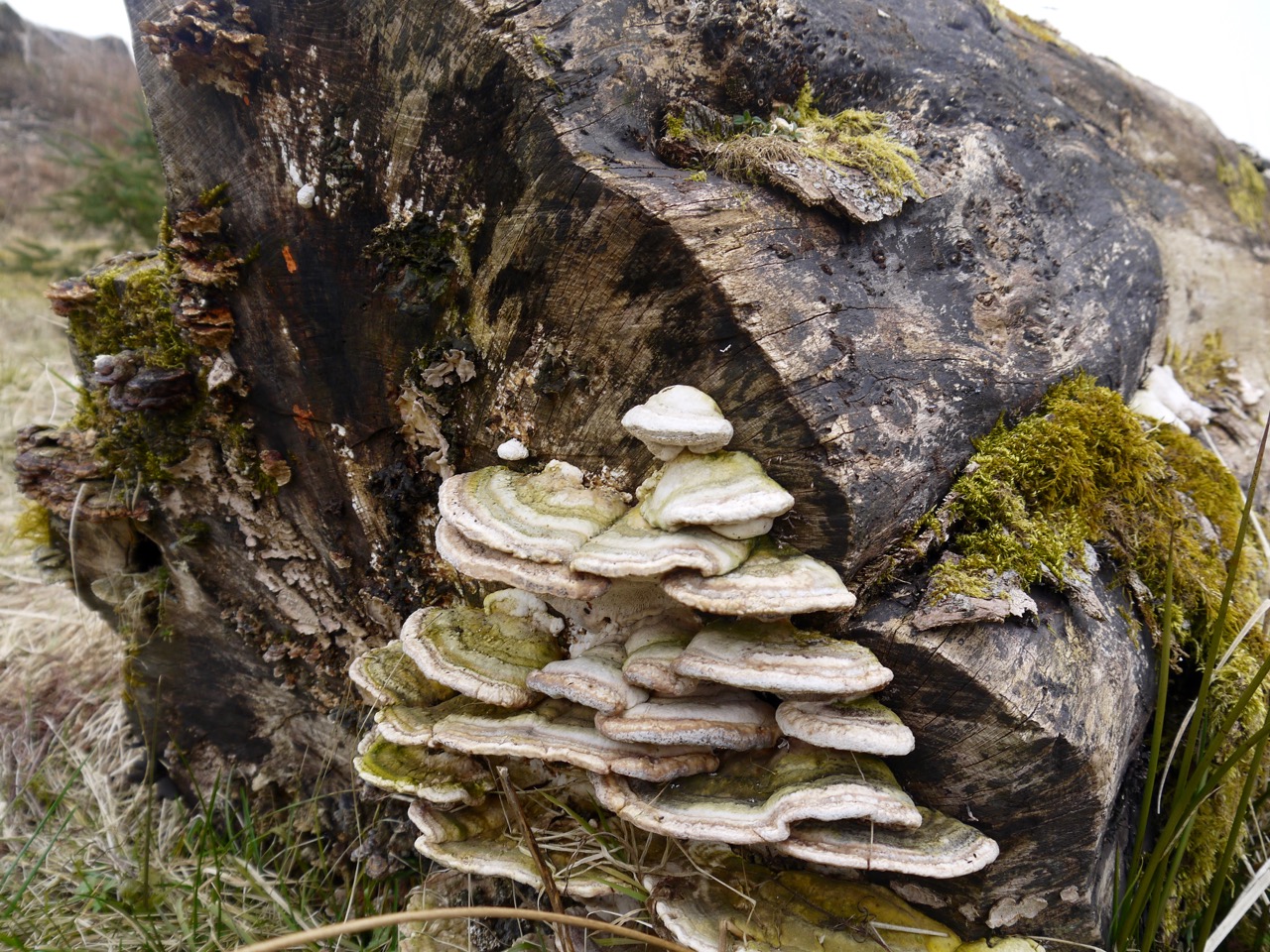
FungusWas this the R&R or a different route? We decided that is wasn’t the R&R … but it was. We walked on. Unfortunately there was low cloud so we couldn’t use hills to get our bearings and forest all looks much the same but after a mile or so it things didn’t seem right so we turned back and took the track at the signed turn.

Coltsfoot

Coltsfoot

We presumed we were on the track that passes on the eastern side of Dumfedling Hill and expected to rejoin the R&R to the north of the hill. Then we walked past an R&R marker, which rather than reassuring us, just confused us further. By the time we joined the track about 500m from Aberlosk it was clear to us that the R&R is not as marked on the OS map.


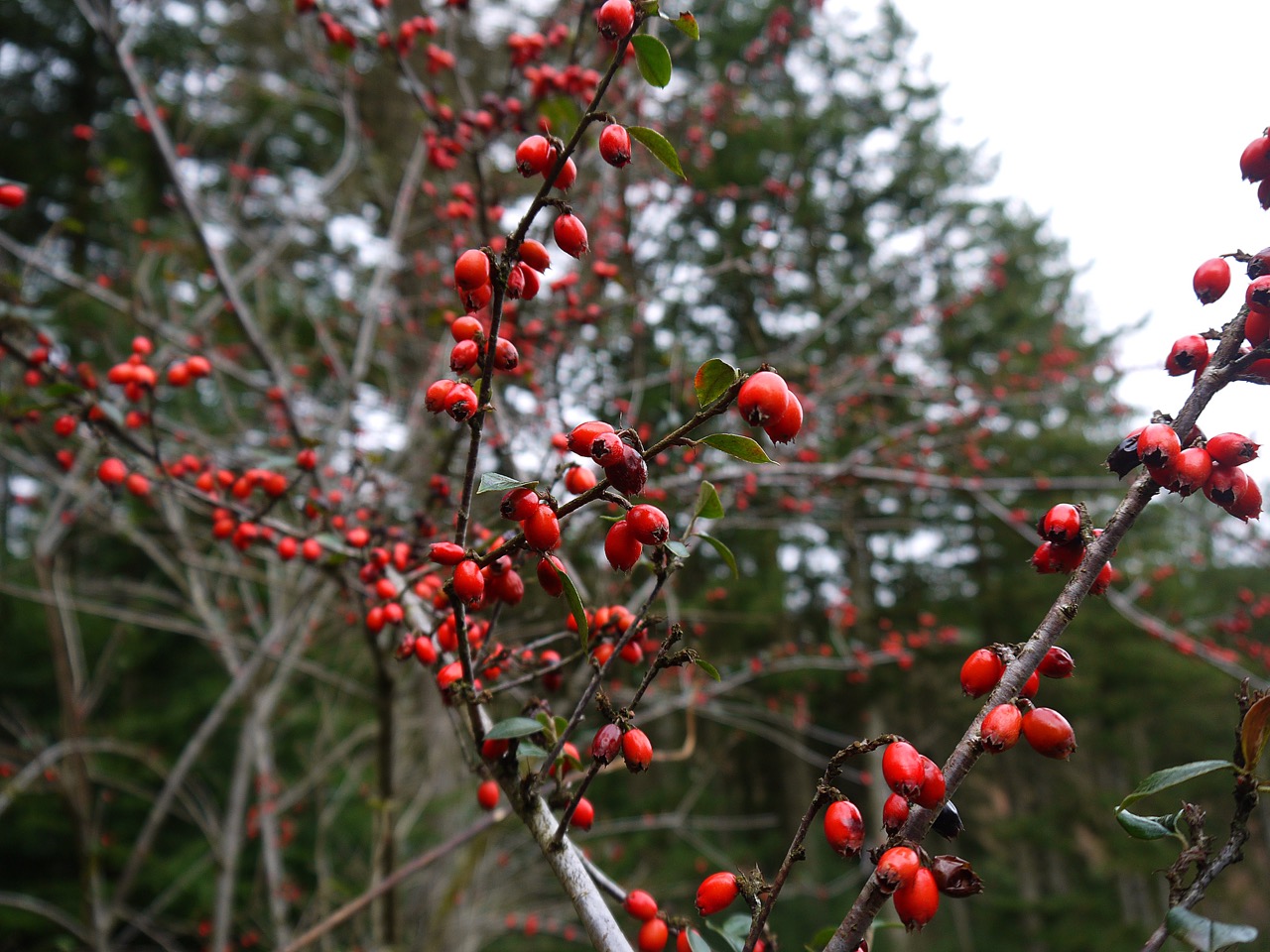
Cotoneaster

Cotoneaster

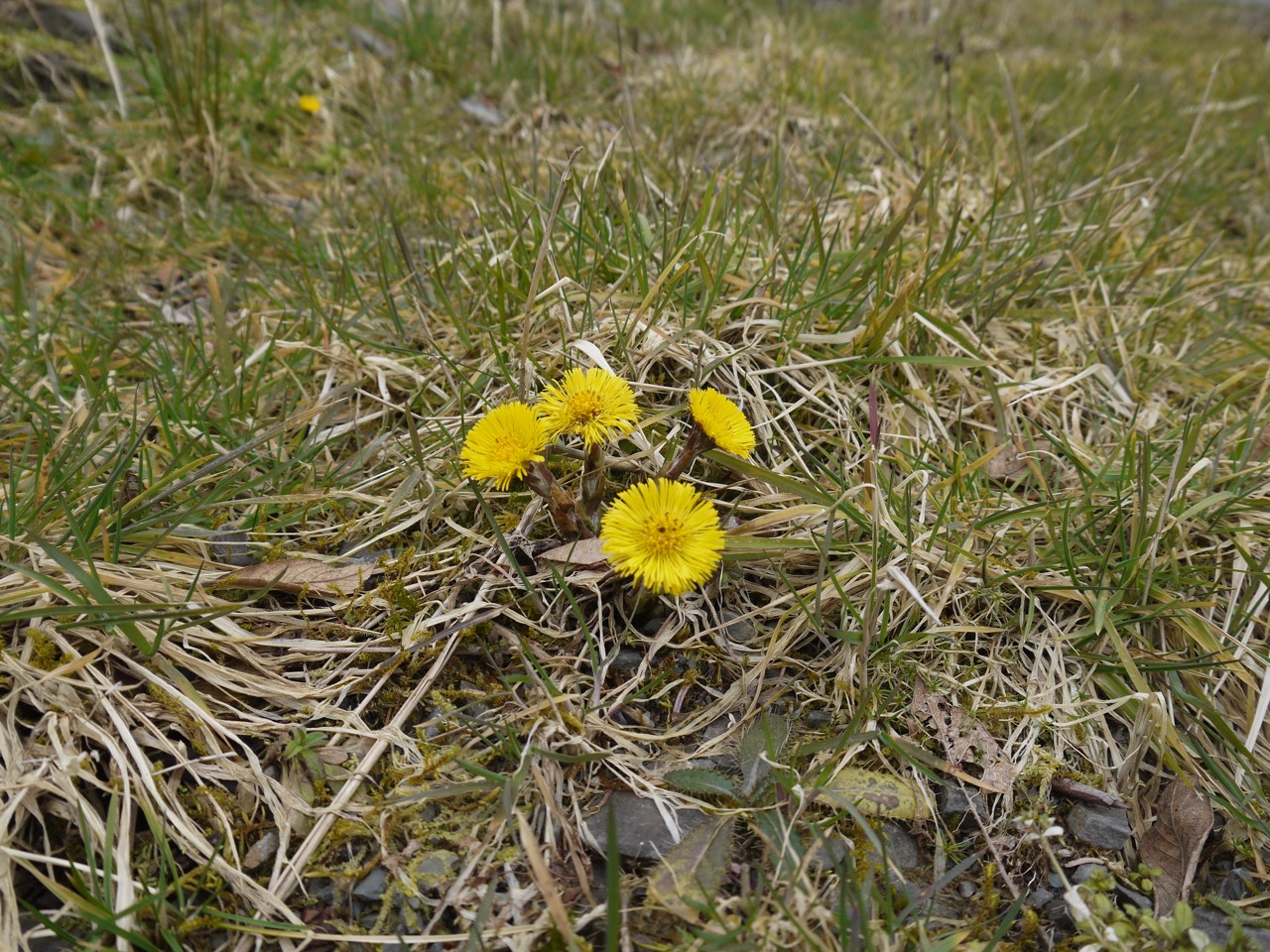
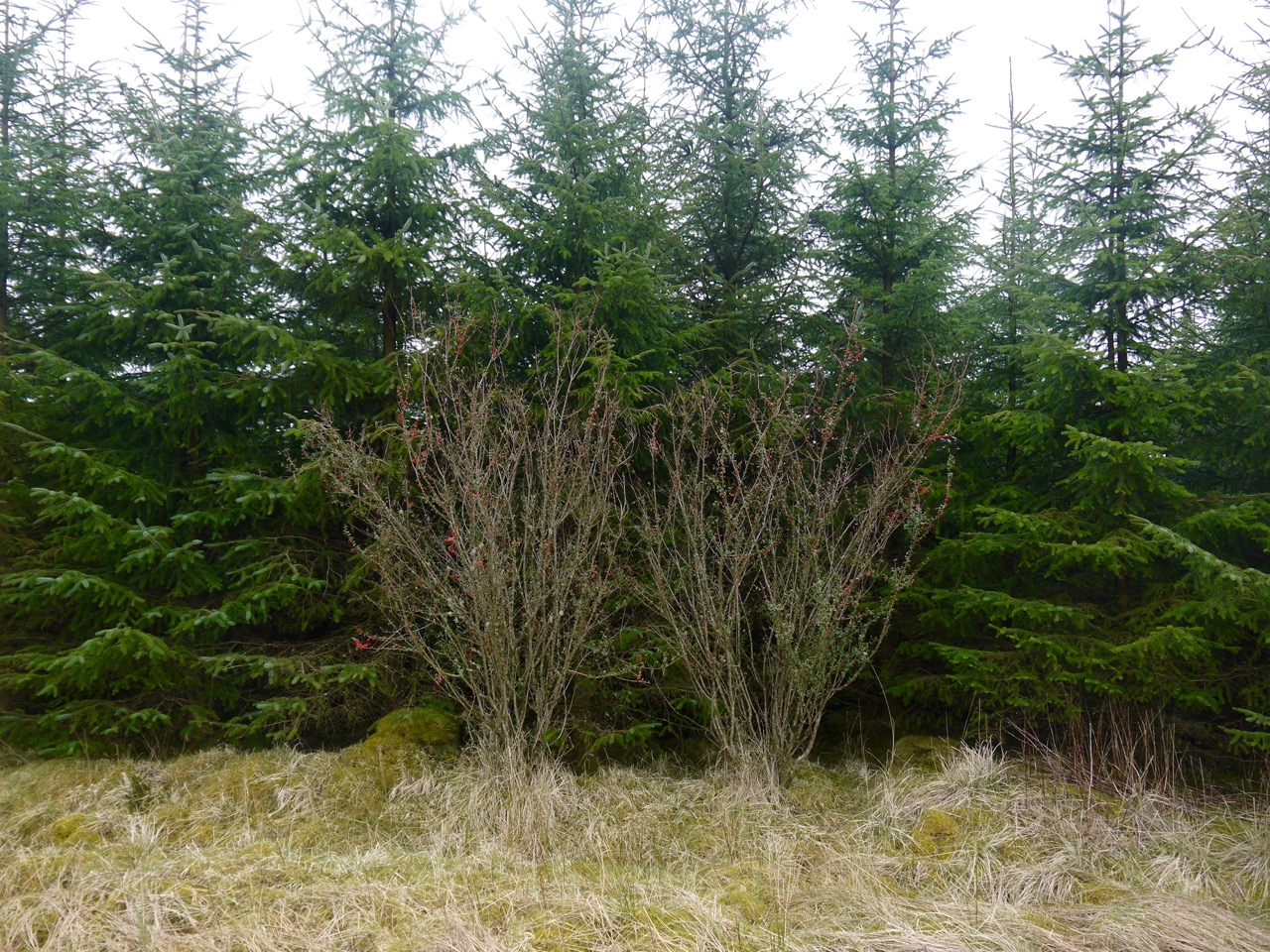
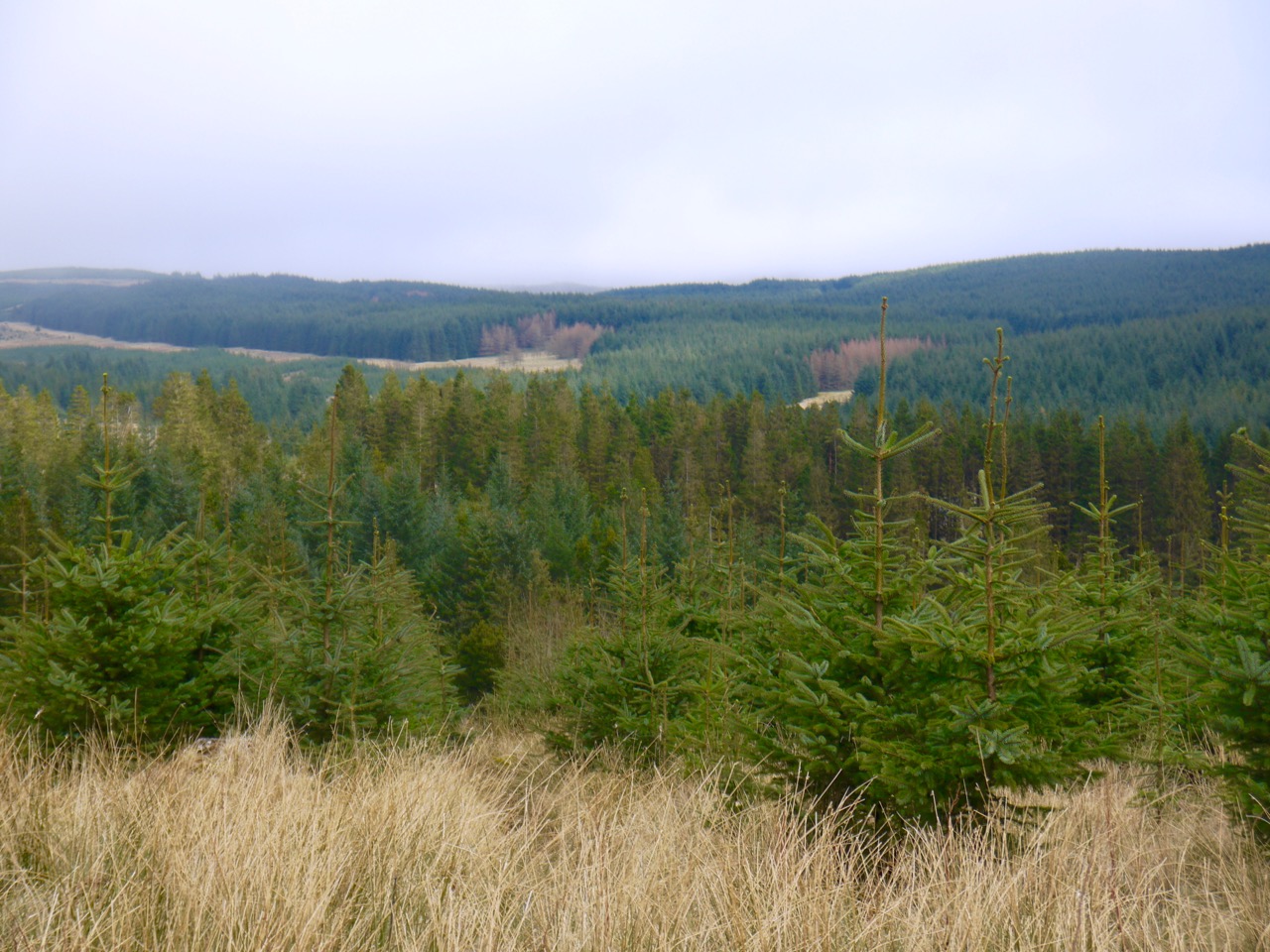
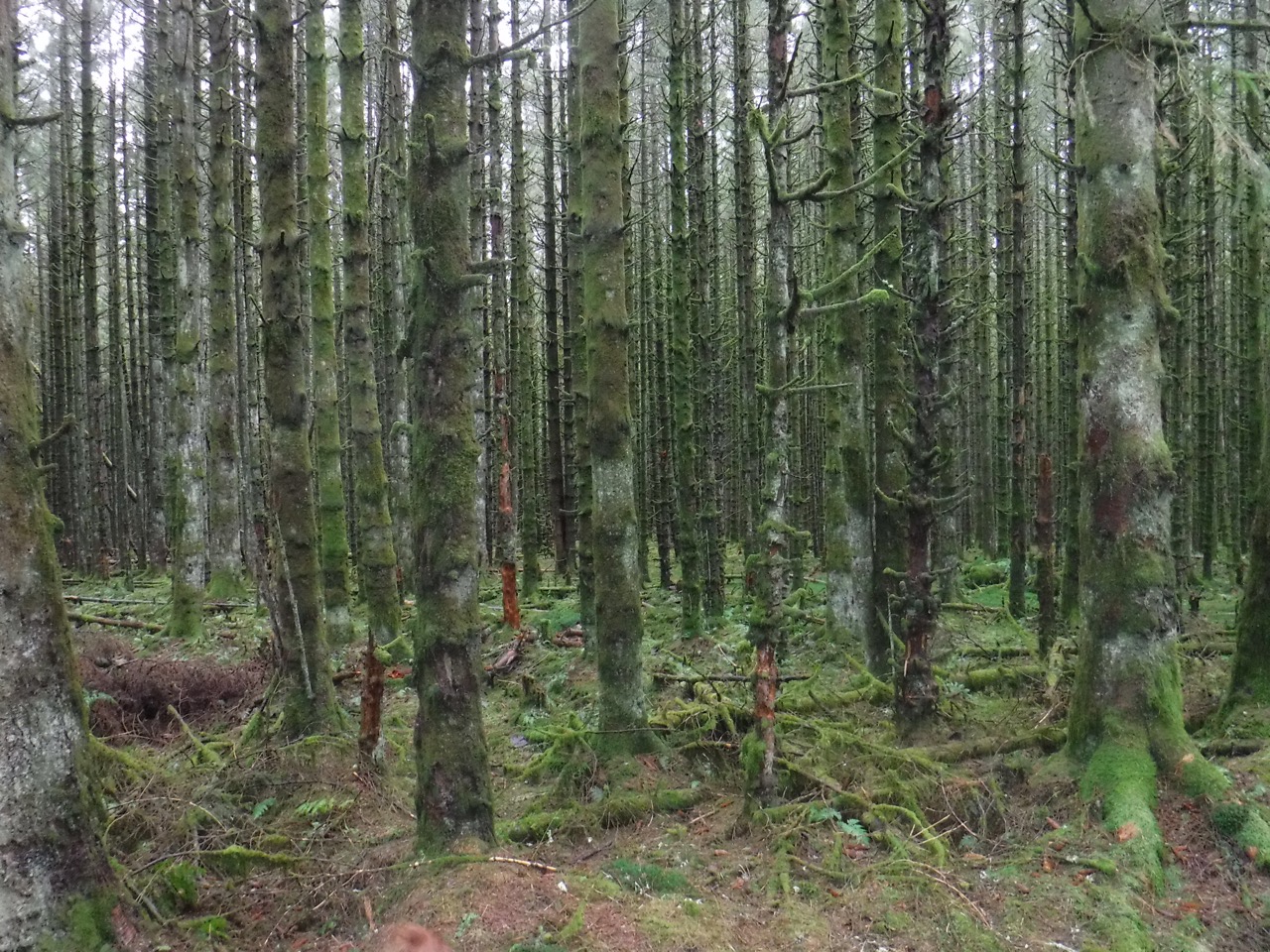
The views here could be written off as just forest, but in fact offered quite a variety. We had newly felled, old fell, young and mature trees. It was interesting to see the different shades of green: the bright light green of space saplings, the blue green of mature spruce, the green of pines (pine green?), and the contrasting orange tinged spring larch, and purple tipped spring growth on birches. There was fungus growing on felled trees and yellow coltsfoot by the track, and out of place here in the forest, several cotoneasters.

Shades of green

Shades of green

Aberlosk has a cottage that looks recently done up, a barn that looks serviceable but rusty and a sign covered in lichen. We were back on the mapped, and way marked R&R and crossed Aberlosk burn on a bridge of wooden planks. This track then heads up over Langshawburn Rig, but we turned right along the forestry track that contours round to the Archie Grain. Grain (from the old Norse grein) means a fork or branch and is usually applied to a small valley opening from another, but here seems to describe the burn itself.

Archie Grain

Archie Grain

The R&R crosses Archie Grain on a small bridge. A sign post beyond the bridge had faded completely but there didn’t seem any other way across the burn. Once across the water we were on a track with much less sign of use. It was overgrown with grass and heather. Creeping clubmosses stretched onto the track looking like fir trees that had been flattened by a steam roller. And as we walked on, first saplings were encroaching, and eventually we were pushing aside branches of more mature trees as we walked along the path.

Path on Lamblair Knowe

Path on Lamblair Knowe

The path climbed slowly and took us into the damp and mist of low cloud. At one place was what appeared to be a rounded dyke beside the path, perhaps the remains of an overgrown quarry that had a burn beside it?

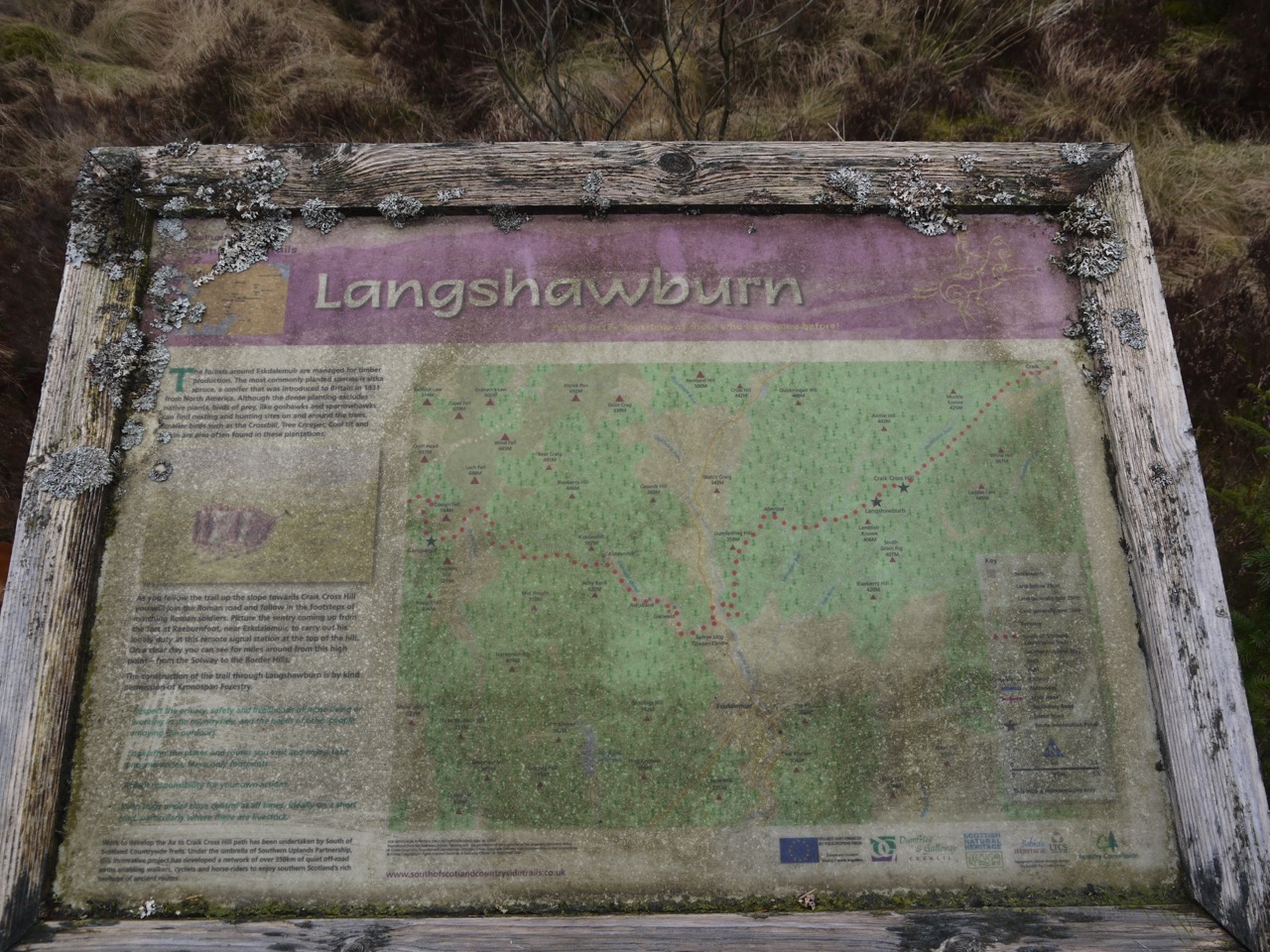
The main track, if one could call it that, ends at a quarry (reclaimed by the forest) and continues as a single file footpath at risk of being swallowed by the forest. An information board told us we were about to walk in the footsteps of marching Roman soldiers. It also showed the R&R route, as we had walked it, rather than as shown on the OS map.

P1060935

We walked on in the footsteps of those Roman soldiers, the gradient picking up a little until we reached the long forest break that marked the route of the old Roman Road. I had thought we might use it as our way down but the terrain looked to be heavy going.

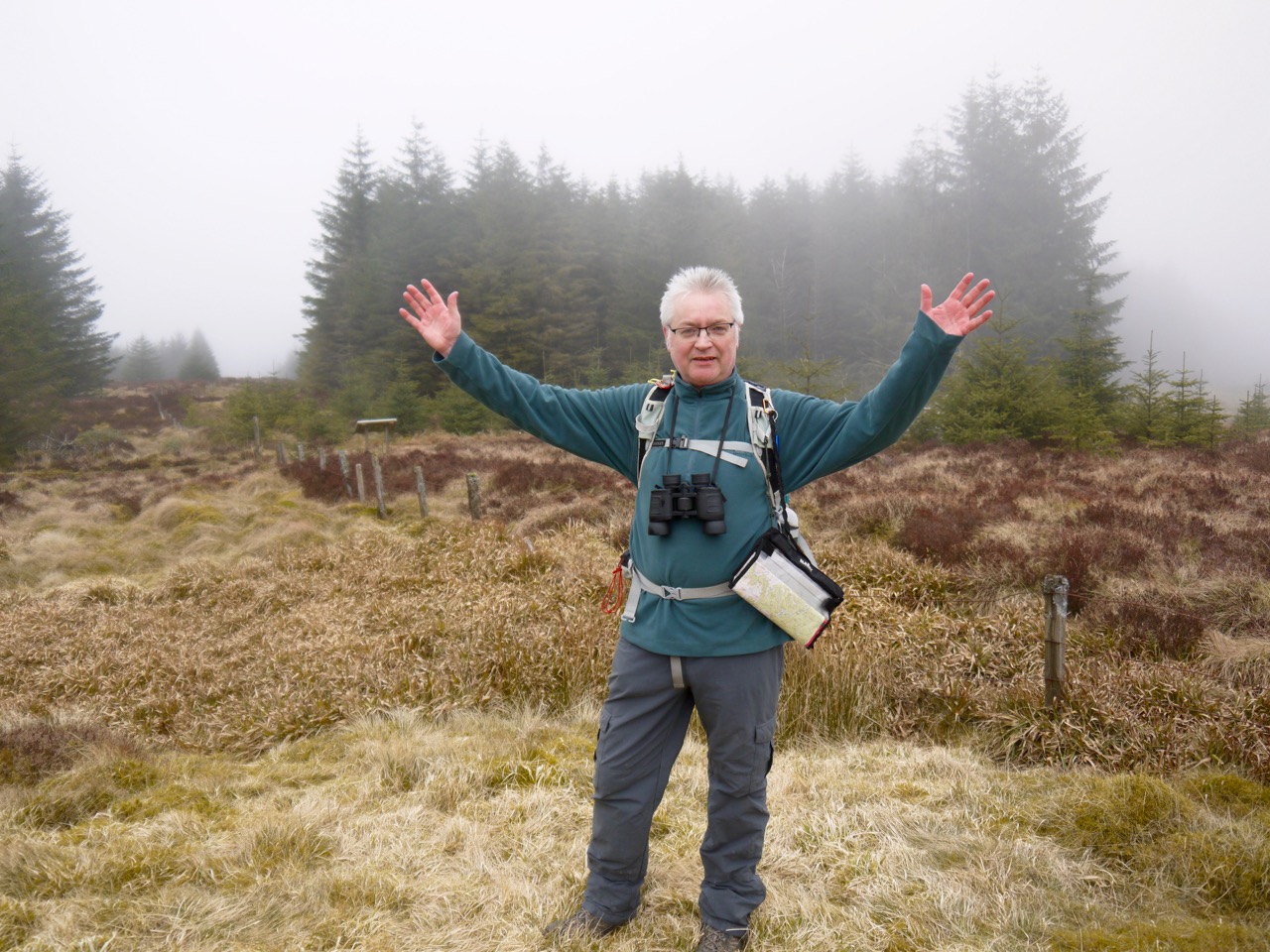
The summit of Craik Cross Hill has an information board explaining that a Roman Signal station once stood there. We stood at the summit in low cloud unable to see particularly far in any direction, sympathising with the Roman soldiers who might have marched all the way up here despite being unable to see or send any signals.

Craik Cross summit

Craik Cross summit

Rather dilapidated fence posts mark the both the county boundary and the watershed between waters flowing into the Solway and the North Sea.

As I mentioned, I had thought we might follow the Roman road down, but instead we retraced our steps as far as Aberlosk and then walked along the route as marked on the OS map along the western side of Dumfedling Hill. This gave us views across the valley of the White Esk. There didn’t seem any particular reason that the R&R couldn’t have come this way. I suspect the route has been changed to reduce the distance walked along the main road.

P1060932

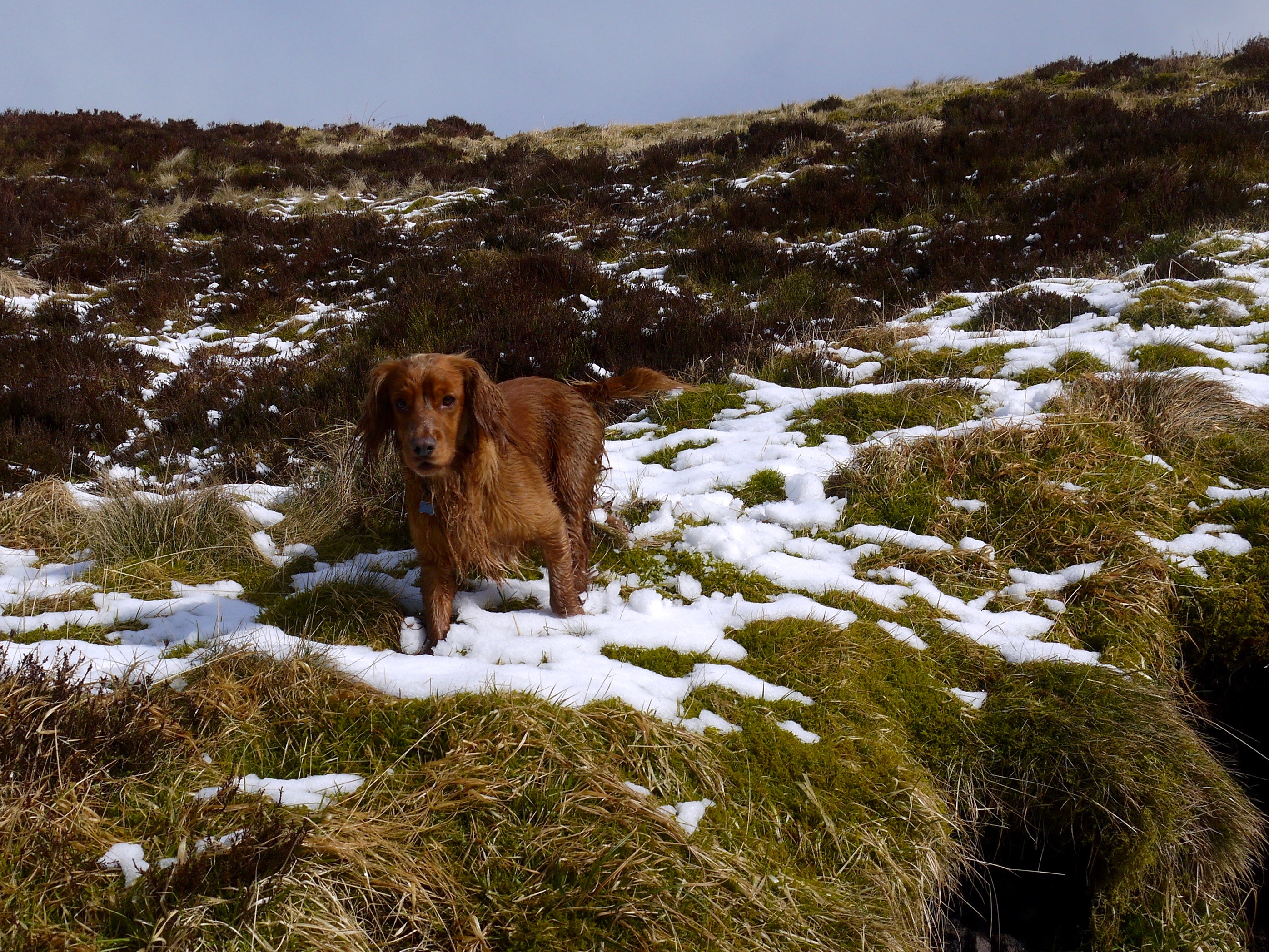
P.S. I  realise that I haven’t told the tale of the rucksack raider… The wind had been cold enough to prevent us stopping for lunch at the summit, but we found a sheltered spot near the R&R stone marker on the way down. Audrey ate half her sandwiches then put her sandwich bag back in her rucksack. The next time we saw it was in Eddie’s mouth, and he wasn’t for giving it up. As I tried to wrestle it from him, Sweep though it was a game and grabbed the bag as well. The result? I got the plastic bag and mushy bits of the sandwich contents, Eddie got the bread, Sweep had the joy of taking part and Audrey lost a sandwich.

[sgpx gpx=”http://www.screel.co.uk/walks/wp-content/uploads/2016/03/RK_gpx-_2016-03-15_0946.gpx”]

Posted in Borders, Dumfries & Galloway | Tagged | Comments Off on Romans and Reivers: 4 – across the White Esk

Romans and Reivers: 3 – through the cave of sorrows

13 miles 5h 33m 631m ascent

P1060802


Bellshaw Pool-Garwaldwaterfoot

This, our third Romans and Reivers walk, took us from Moffat Dale to Eskdale, passing through the valleys of Wamphray Water, Dryfe Water, and Garwald Water, and past the half way mark for the entire route. The first three miles or so are a gentle climb, the second three miles a gentle descent then steep climb, and then it is “all downhill”, as they say.

Having left a car at each end of our planned walk we set off from the A708 to walk down to the R&R route near Bellshaw Pool. The farm track then follows Moffat Water a short way before turning right up the hill. We paused to look along Moffat Dale, a snow-capped Bodesbeck Law raising the possibility that we might meet snow on higher ground. The track has a locked gate, but no adjoining fence so we could walk around it but this did involve getting mud on my boots, and the dogs. The nearby “Stop” sign now lay on the ground.

Moffat Water - Bellshaw Pool

Moffat Water – Bellshaw Pool

The last time we were here there were sheep, llamas and cows, but this time the fields were empty. But the dogs had to stay on leads because the track here has several cattle grids. I worry that the dogs will break a leg if they run across these. They don’t seem worried about being on a lead but having a dog on a lead does make photography a little trickier.

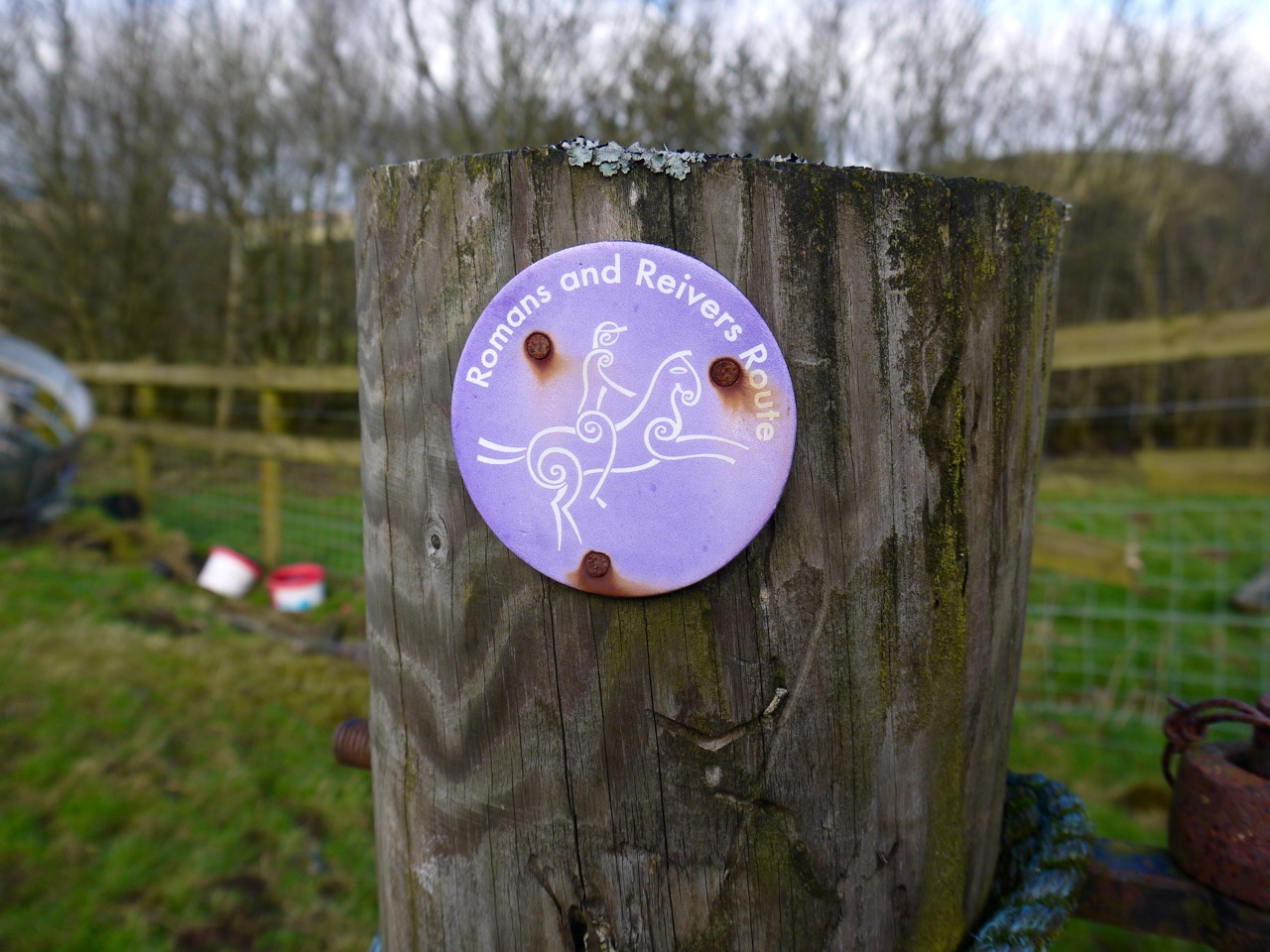
At the cow shed we were high enough to see across to Queensberry to the west and Saddle Yoke to the east, also capped with snow. Negotiating the gates here I spotted a purple Romans and Reivers plaque for the first time. I would have missed it if I had danced across the cattle grid.

Romans and Reivers signThe track crosses some moorland, reaches the trees then follows the Cornal Burn. There has been a great deal of forestry felling since we were last here, opening up the views. I remember walking along here able to hear but not see the burn, whereas now it was clearly visible. There was a brief stint in mature forest when the track turned south but having crossed the burn we were once more in open country. Dry Gutter climbed up to Craigbeck Rig on our left,  a memory from the SUW walk. Several new plantations of saplings were scattered across the valley, with the new growth of larch and birch adding orange and purple to the green of the forestry spruce.

The stone lions at Craigbeck Hope watched us, unblinking, as we approached but didn’t turn to watch us walk away. Within the grounds was a pond with an island and a bridge, the water an usual green colour like pea-and-ham soup.

Loch Fell in the distance

Loch Fell in the distance

Beyond Craigbeck Hope the track begins to descend then winds beneath the forest of Birch Hill, high above the valley floor of Birch Sike. A side is a stream in boggy ground, which is probably still the case, but the trees here are now conifer rather than birch. In the distance the we could see snow dusted forest below a snow covered Loch Fell. I can believe that Birch Sike once ran amongst birches in the boggy ground, but Loch Fell is a strange name for a hill that does not have any lochs within 8km of its summit.

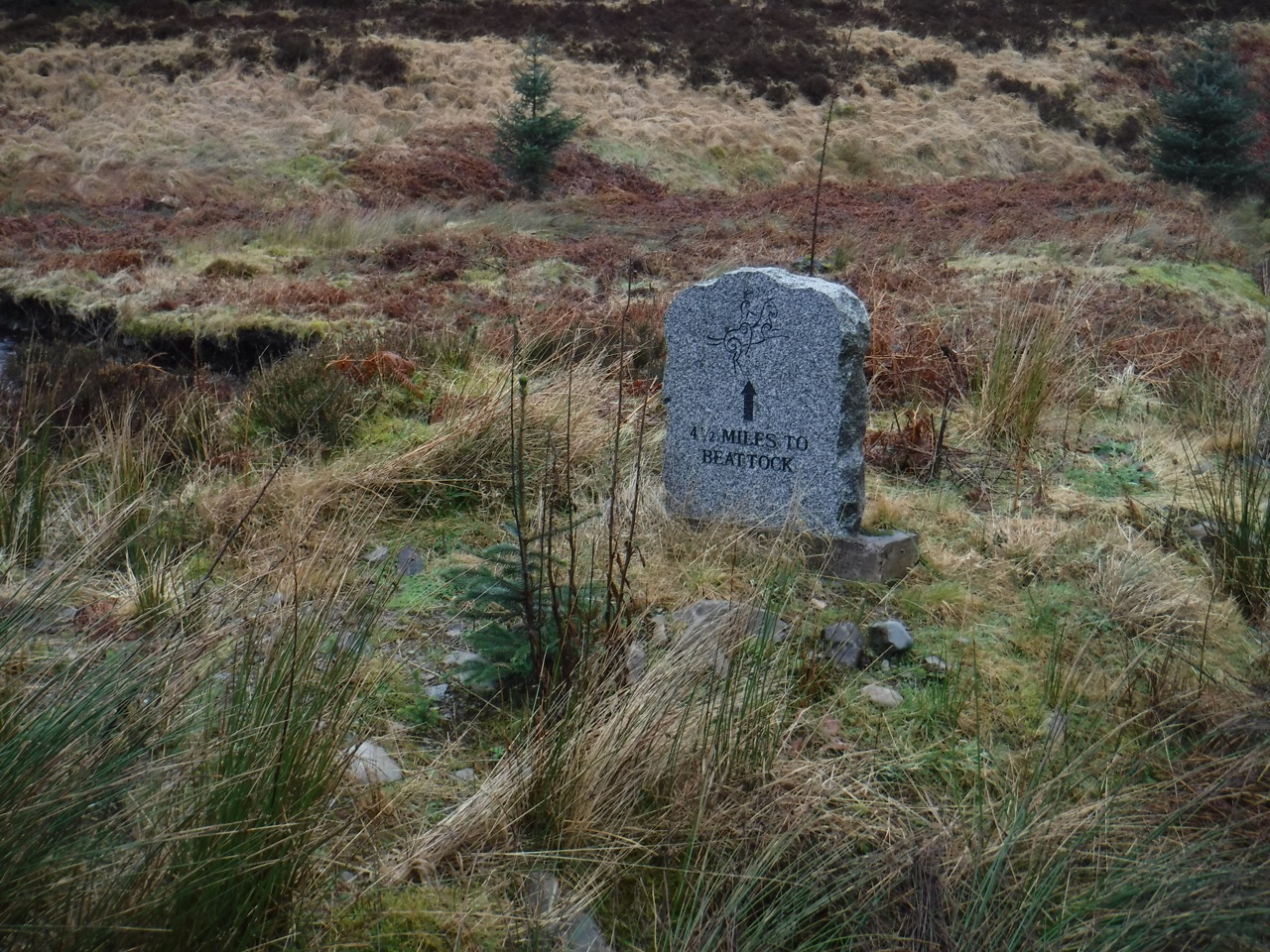
At an R&R stone, marking 7 miles to Beattock, and 8.5 miles to Eskdalemuir, the SUW and R&R part ways. The SUW follows Wamphray Water upstream in the narrow valley between Birch Hill and Knucklegill Shank, a cracking name if ever I heard one. We continued on the R&R which follows Wamphray Water downstream. This entailed quite a dogleg, walking upstream, crossing Wamphray Water and its tributary, Knuckle Gill, then heading downstream. A zip wire across the valley could have saved a deal of walking, and added some extra excitement.

Wamphray valley

Wamphray valley

The flat bottom of the valley here has several sheepfolds among the heather, but it looks to have been a long time since sheep sheltered there and there are now saplings growing in the sheilings. It is a peaceful place.

Wamphray was originally uiam phraimh, which means cave of slumber, or perhaps sorrow. I’m not know if there is an actual cave somewhere near Wamphray itself, but I could imagine this valley being seen as a place of solitude or serenity, perhaps even more so before the forestry tracks, sheep and conifer plantations.

I had thought that the track was continuous all the way down the valley, and spent my time, when not distracted by snowflakes, looking out for the path that would take us up Garrogill, so I was surprised when the forestry track we were on ended at a large turning circle. At first we couldn’t see the way to go, and this was the first time on the R&R that we did not have good waymarkers.

Garrogill path

Garrogill path

A few metres away, though, was an information board and looking towards it we noticed an overgrown footpath. This path led us to the ruins of the Garrowgill shepherd’s house, from where a more obvious footpaths climbs up the Garrogill. This was steep enough to catch the breath and did require a few pauses while we took in the views. As we climbed, the odd spot of unthawed snow covered the path more completely, making the going slippery, steep and uneven.

Dry Valley and Loch Fell

Dry Valley and Loch Fell

The col between Ewelairs Hill and Cowan Fell is a heather and blaeberry moorland, with a fence marking its highest point, where we left the Wamphray valley for the upper reaches of Dryfedale. Whereas Wamphray took its name from a place, Dryfedale (from the Old Norse Drifsdalr), is the valley named after a person called Drifr. Once over the col into Drifr’s valley we walked down to the firmer ground of the forestry track and turned to walk, ascending once again, towards Loch Fell. The view down the valley showed us the glinting water of the Solway, and the hills of northern Cumbria.

The track winds around the upper section of Dryfe Water and climbs across the col between Loch Fell and South Loch Fell, the high point marked by a fence and gate. The snow here was deep enough to make snowballs. Once over the col we had good forestry tracks, and were walking downhill for the remainder of the walk, mostly downhill anyway.

P1060821At Horse Knowes the R&R takes a right hand turn then follows a wide crescent which on the OS map is through forest. The trees between the track and Big Strushel Burn in the valley beneath it though have now been felled. We walked on looking for likely places to stop for lunch, failing to find anywhere that combined being sheltered from the wind and having somewhere dry to sit, until we found a small quarry near Strushel Knowes. This looked to have been cut after the new saplings had been planted since some were right on the edge and loosing their footings. Surely no one in their right mind would have planted saplings right at the edge.

Distant Wisp Hill

Distant Wisp Hill

Once round the next corner we could see Ettrick Pen to the north and eastwards across Eskdale all the way to the snowy tops of Wisp Hill and its neighbours. The track passed freshly cut wood stacks with a strong scent of pine, and the machinery that had done the work. There seemed to be quite a few bare trunks left standing, many more than one usually sees. The track gradually descended down to the road beside Garwald Water at Kiddamhill. By then we were flagging a bit, well except for Eddie, who has boundless energy, but Sweep walking along with us rather than running about like the pup.

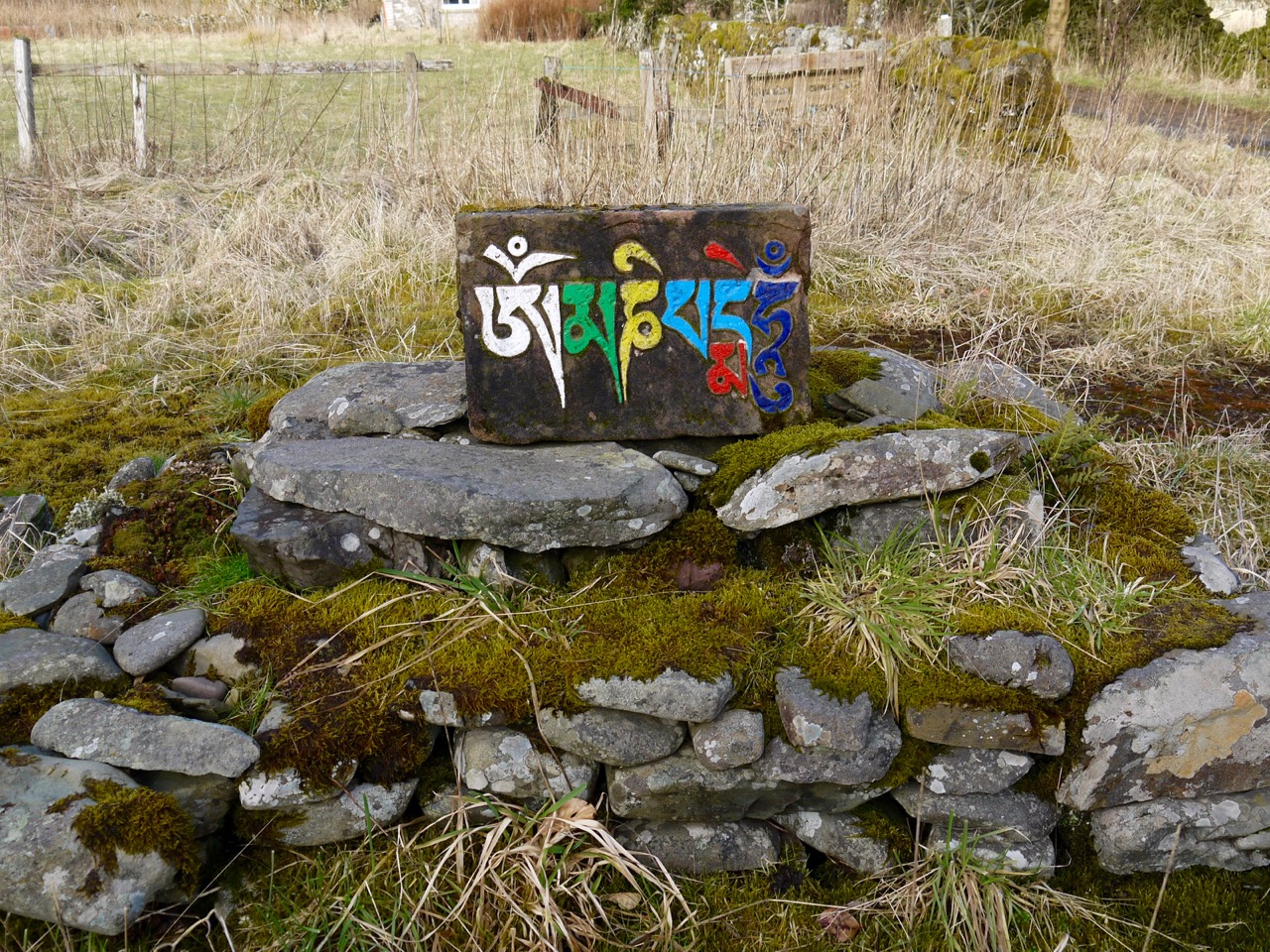
We passed the cottage at Ashybank, wondering if the trees on the bank, still free of leaves, might be ash trees. At Garwald the dogs had to go back on their leads while we negotiated cattle grids and the fields beyond had sheep so it seemed best to keep the leads on there too. We could tell we were nearing Eskdalemuir since there were prayer flags and a prayer painted on a stone at Garwald.

P1060842There were several ponds beside the farm road, one with a large stand of bullrushes. When we walked beside the river itself it was interesting to see the variety of rocks and boulders, some orange-pink, others grey and many shot through with streaks of different colours. Beyond the sheep fields the tree begin again and the river flows through a deep gorge, Garwald Linn. After this is was a short stroll back to the car which was parked in a lay-by on the main road.

P1060852
[sgpx gpx=”http://www.screel.co.uk/walks/wp-content/uploads/2016/03/RK_gpx-_2016-03-05_1029.gpx”]


Posted in Dumfries & Galloway | Tagged , | Comments Off on Romans and Reivers: 3 – through the cave of sorrows

Romans & Reivers: 2 – Vanishing leads and fortified houses

8.1 miles 3h 20m  ascent 155m (descent 276m)

P1060679The second leg of our Romans and Reivers walk. Earshaig to Bellshaw

We took up the walk again where we finished the last section, where the forestry track carrying cycleway 10 crosses the Earshaig-Kinnelhead road.  Looking west along the road gave us a view of Queensberry that had been denied to us the previous week by low cloud. This is the road described in “Routes from Carlisle”:

The tapering hill of Queensberry…commands a wide view…The route is by a side road from Beattock Bridge to Earshaig and Kinnelhead, where cross the stream, turn left, and pass in front of a cottage. The mountain shortly comes into full view, and further directions are unnecessary.

I don’t know when this was written but the document gives the price for room and board at the the Buccleuch Arms in Moffat as 8s 6d (that’s 42.5 pence for the young ones). The route description for climbing the hill strikes me as shorter than one might expect in modern writings.

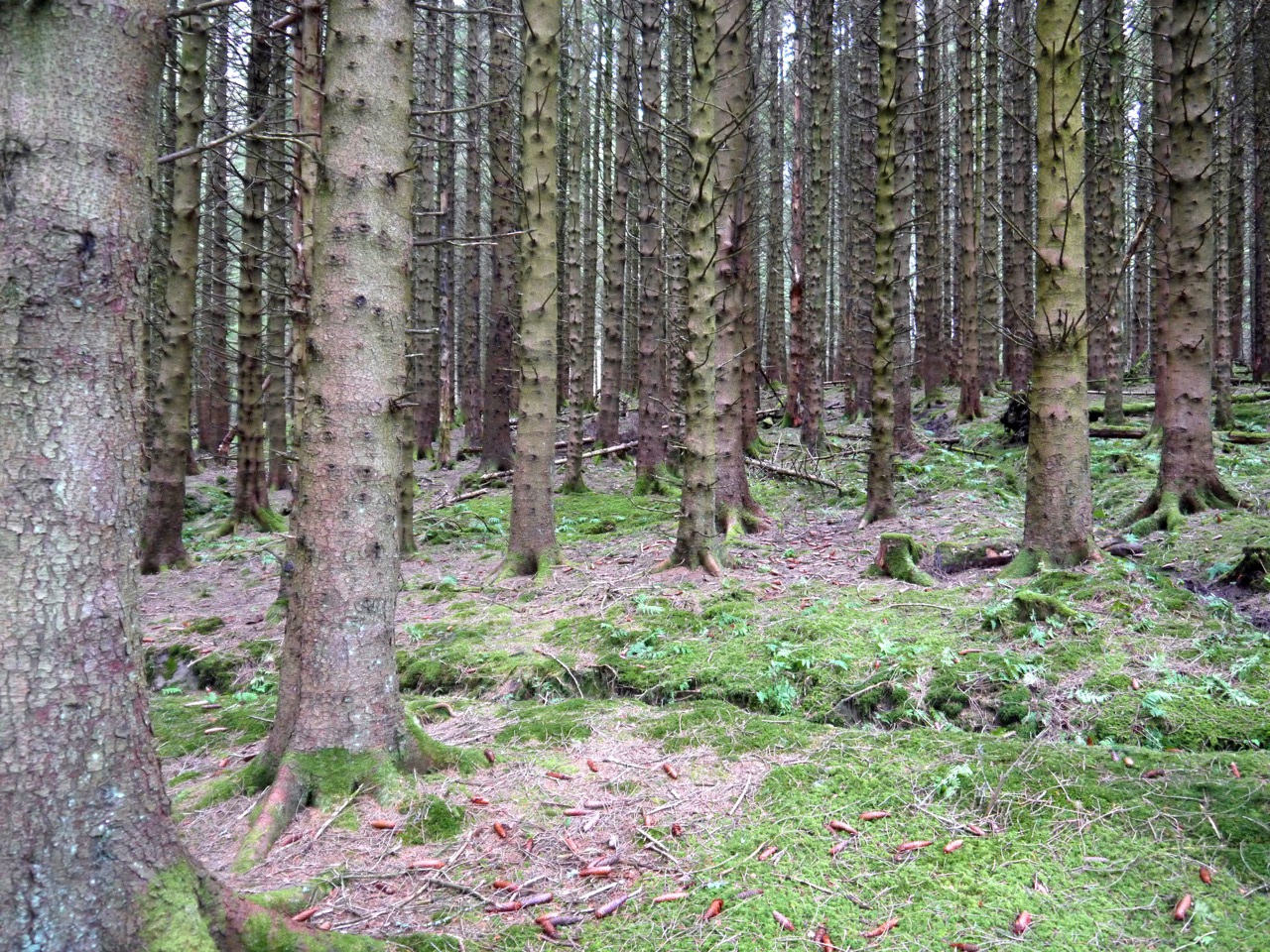
We started by turning our backs to the tapering hill and set off eastwards through the Forestry conifers, their greens made pale with frost contrasting with the golden leaves of small beeches. The picture above is the view looking east along the Crooked Road as we emerged from the trees, with Wester Earshaig and Easter Earshaig in the middle distance and the Moffat hills, with a snow capped Hart Fell, in the distance. It also shows the conditions, with blue sky and frost on the ground even where the sun was shining. It was cold but with hardly any wind so we didn’t need our coats.

You might notice a cross-like sign, just before the right hand dyke reaches the road. I hadn’t given it much attention as we walked past, presuming that whatever sign it once held had fallen off. I do wonder though if it might have been a Covenanter’s Trail marker. It certainly looks like one even if it no longer has a visible “CT” on it. These markers are found dotted about D&G, but I have not been able to find any lists of them, nor any record of any specific Covenanting event in Earshaig.
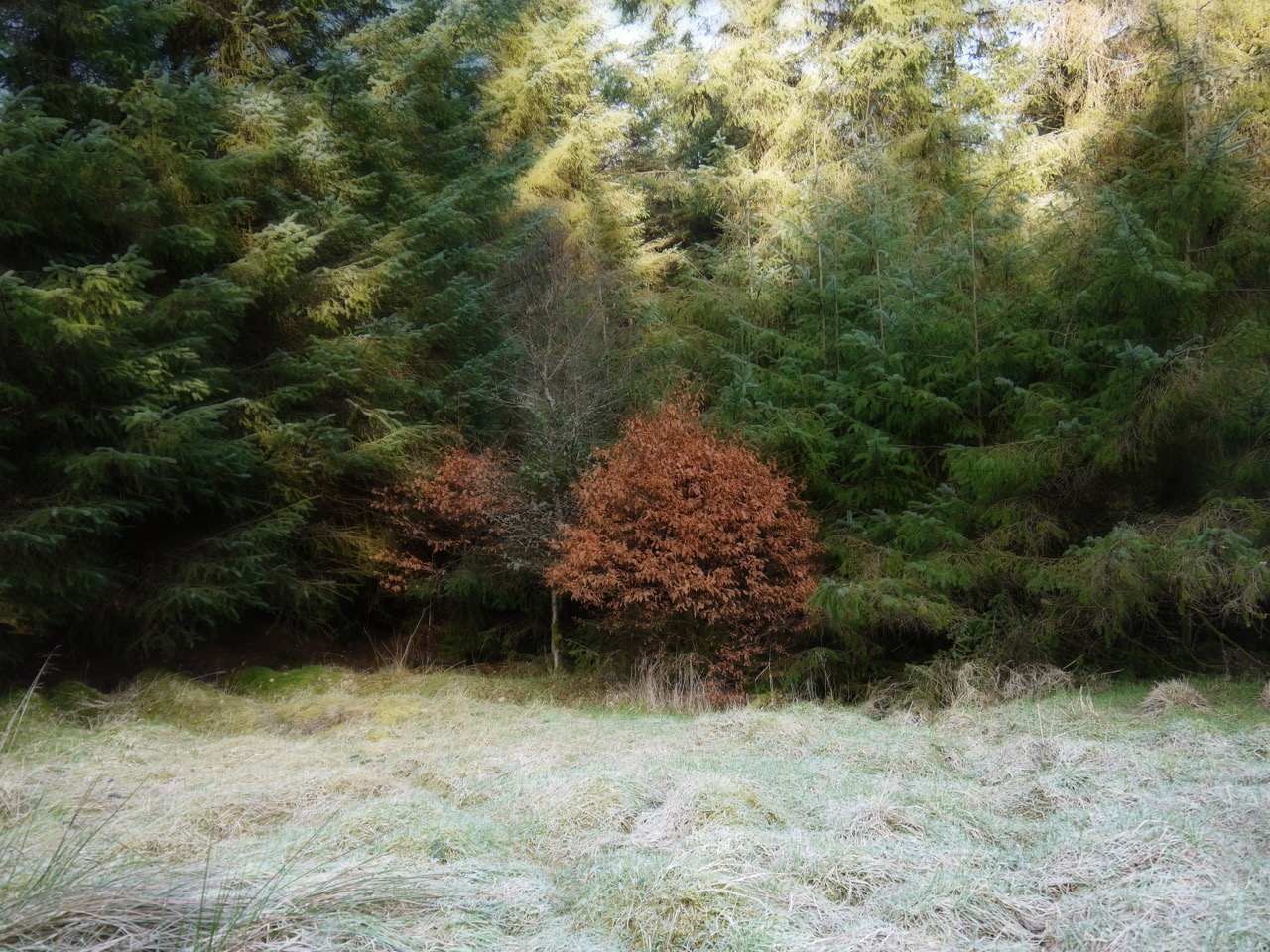
Winter Beech

Winter Beech

The open ground of Earshaig gave us views of Queensberry again, and the Harestanes wind turbines below it. We could see where we had walked from Harestanes Heights last year, with a very young Eddie. (No directions necessary).

This being a single track road, there are wider areas marked by “Passing Place” signs. Further along the Crooked Road, some of these signs have obviously been used for target practice which I can’t help but find a little unnerving. Seeing these signs set me thinking that future archeologists might interpret these as the places we visited to die. For similar musings you might want to read “Motel of the Mysteries” by David Macaulay, or this brief description of the work.
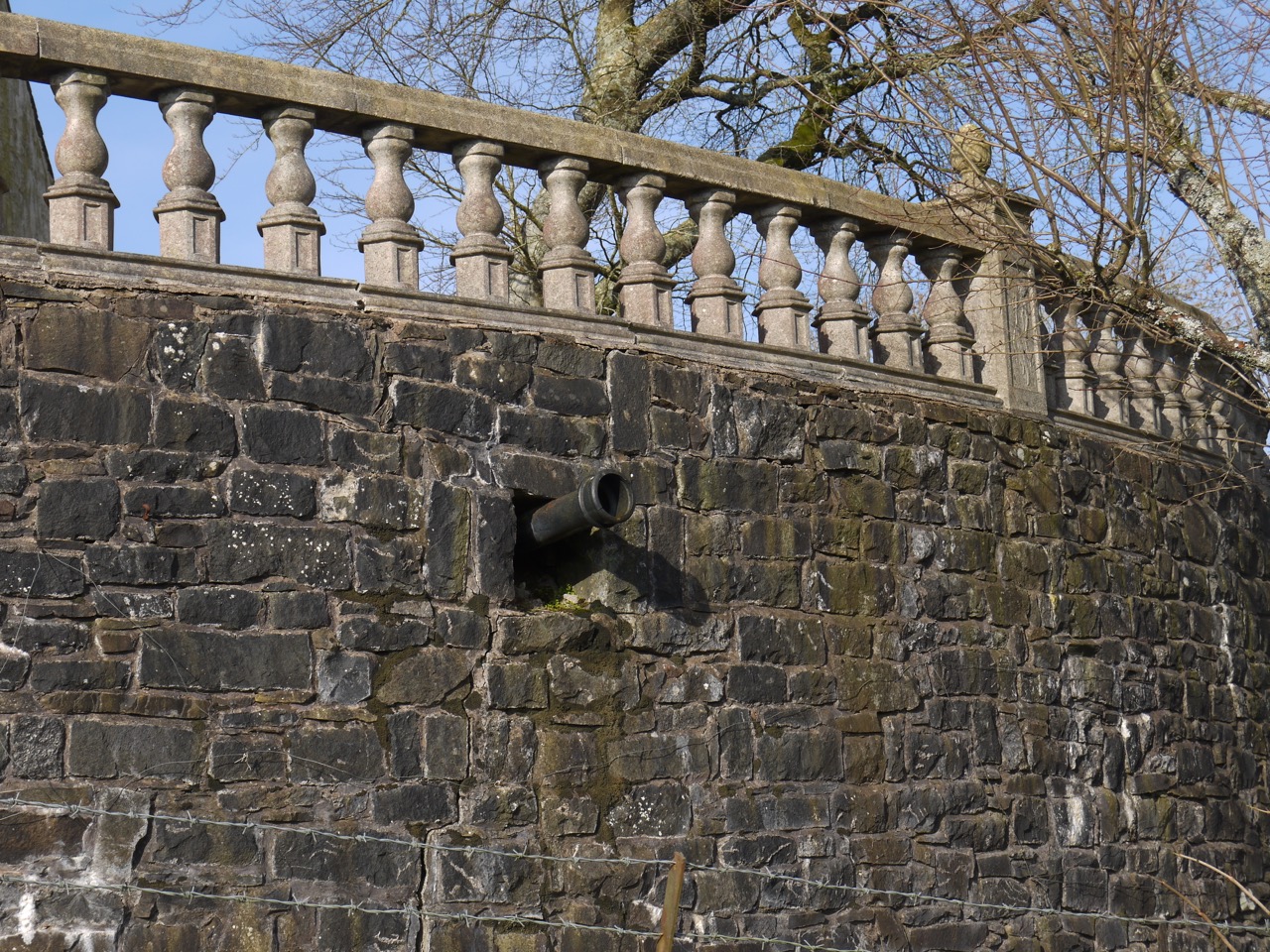
Cannons at Wester Earshaig

Cannons at Wester Earshaig

Just as I finished my ludicrous thoughts about passing places I looked to my left and saw cannons sticking out of a the wall there. Wester Earshaigs looks like a cottage from the west, but its eastern side seems to be masquerading as a small castle, its drainage pipes serving as cannons. Either that or they are real cannons and are the cause of the nearby steading’s poor state of health. You could almost believe that Wester and Easter Earshaig have fought over Middle Earshaig for long years and their activities have left it in this ruinous state.
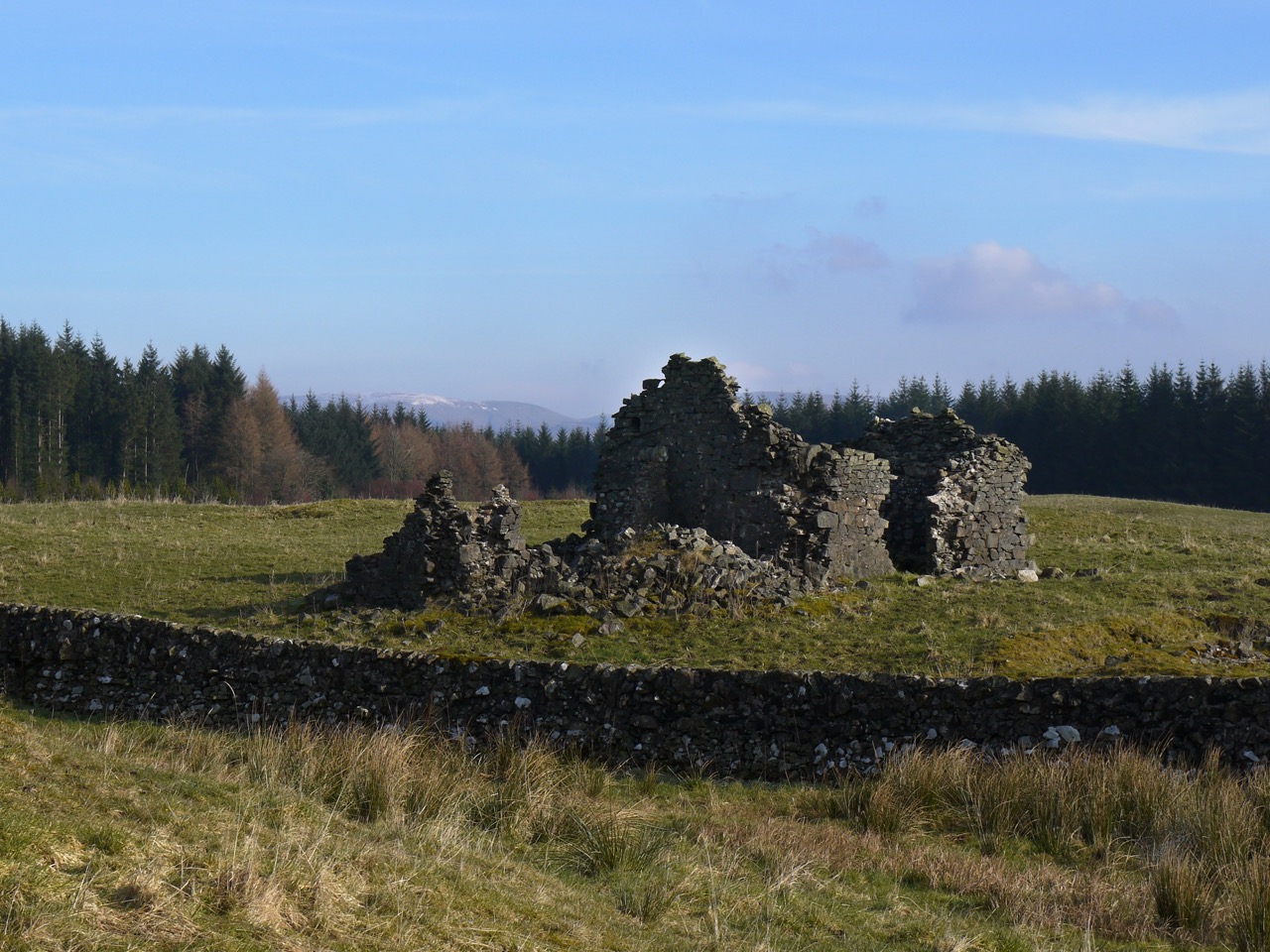
Earshaig Ruins

Ruins near Earshaig, Hart Fell in the distance

Since we had a relatively easy walk ahead of us we allowed ourselves a couple of diversions from the R&R and the first of these was  to the Earshaig Lochans, which we had last visited when walking the SUW a couple of years earlier. There was also the question of whether we had missed out 100m of “official SUW” by walking to the west of these lochans back then. Well, we have walked that 100m now.

These two lochans sit within a small nature reserve, with a waymarked walkway and several picnic benches. Another case of us only finding picnic benches on walks too soon or too late for lunch. Both of the lochans are man-made, or at least enlarged by damming, and today they were both frozen reflecting the temperature.

Frozen Earshaig Loch

Frozen Earshaig Lochan

At the last visit I had walked past the crocodile sized carving of a common newt without noticing it, so this time I was alert and spotted it without having it pointed out to me. It was carved, I believe, by Pete Bowsher, a local champion chainsaw carver, who is also responsible for the carved benches in Ae forest, and the Dragonfly by the other lochan.
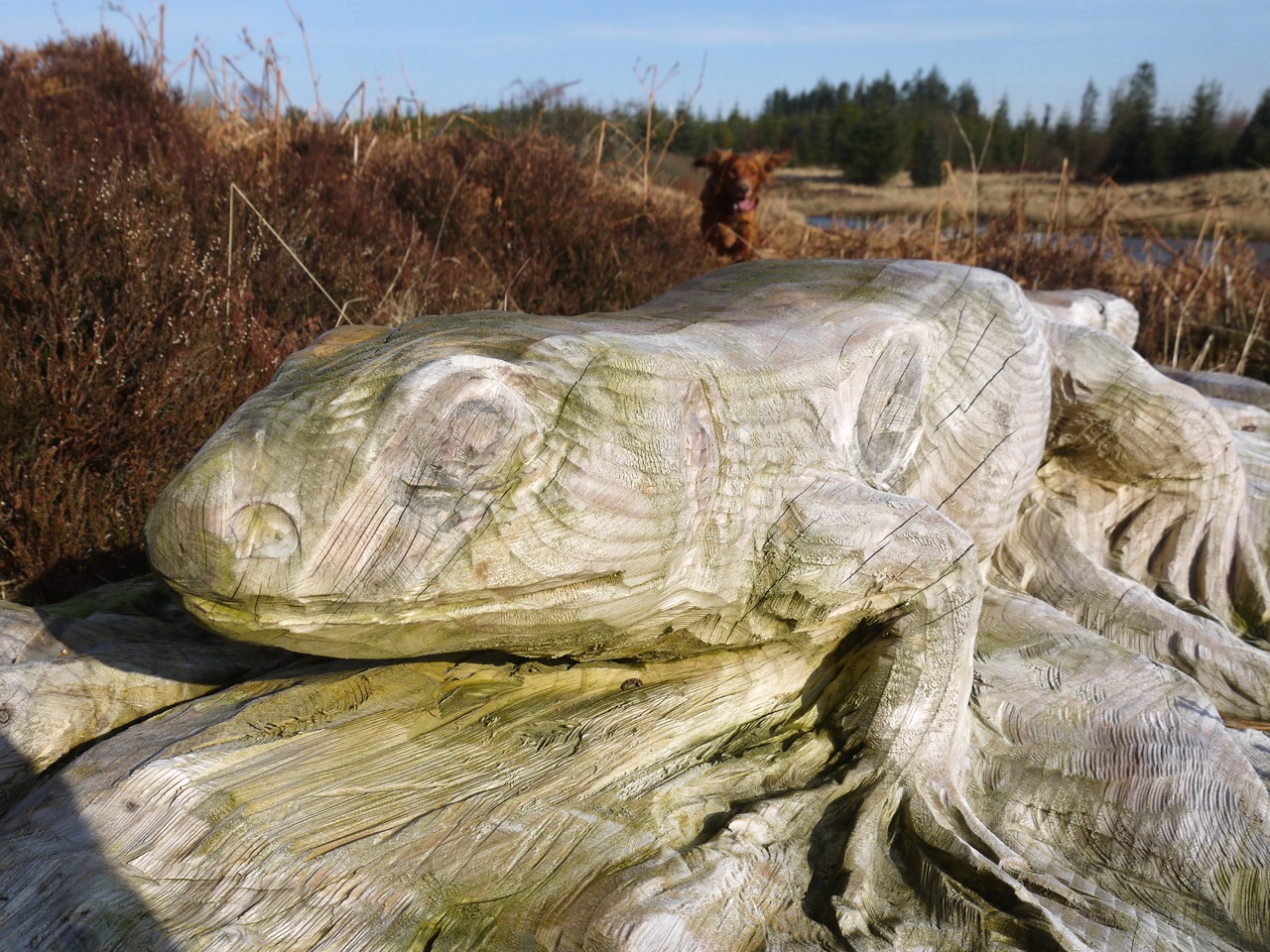
Common Newt

Common Newt

The carving was a light reddish brown colour in 2014 and had blended in much more with the surrounding winter heather and bracken . Weathering has left it paler and more easily spotted.
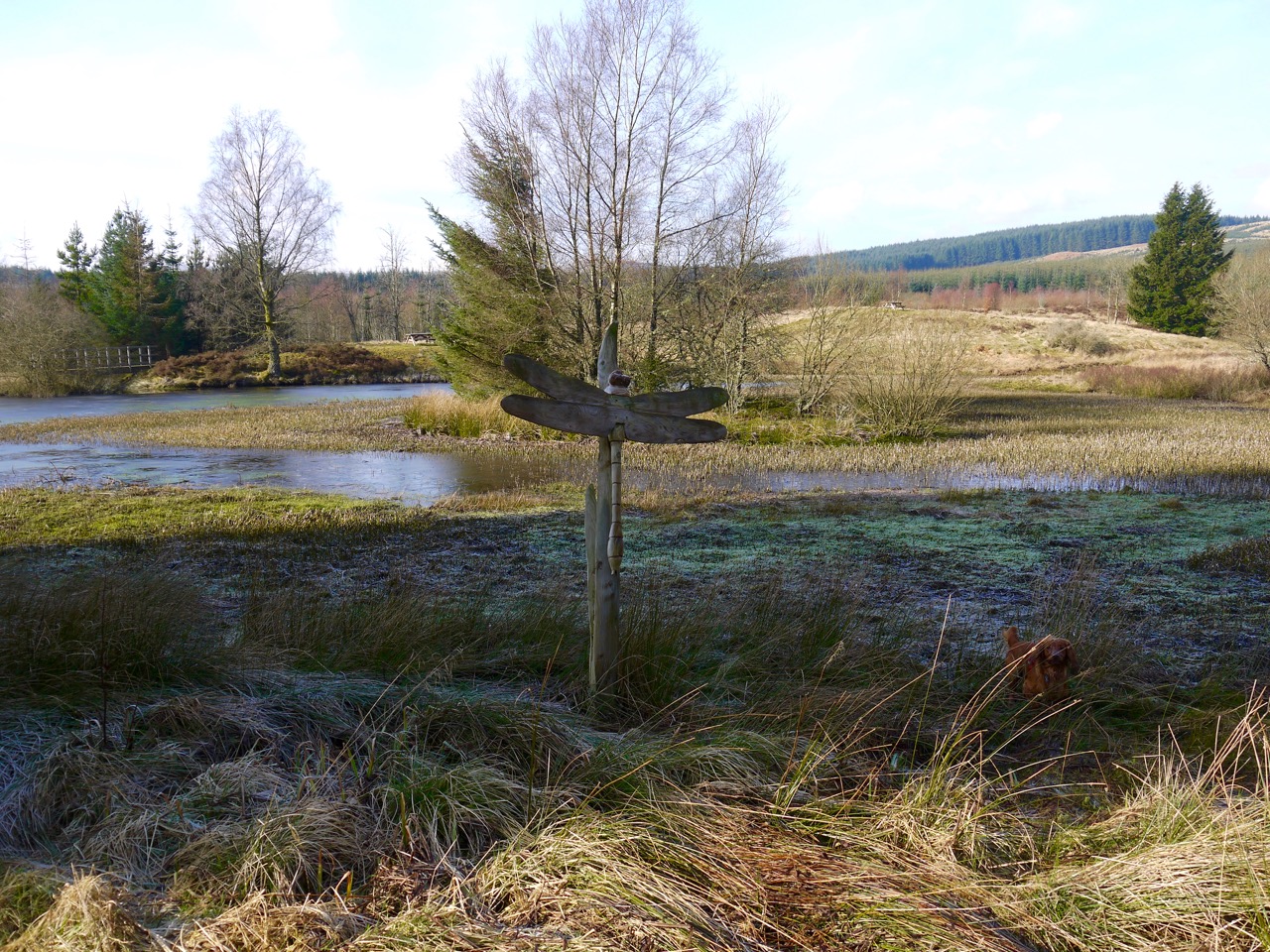
Dragonfly at Earshaig

Dragonfly at the other Earshaig lochan

Back on the road, we entered forest again, at a Romans and Reivers stele marked as 2.5 miles from Beattock and 12.5 miles from Ae. An overhead cable ran beside the the track and since there were several fallen trees in the forest and I thought it lucky that it had escaped being brought down. Not long after that thought, the cable dipped and we saw that trees had in fact brought it down.
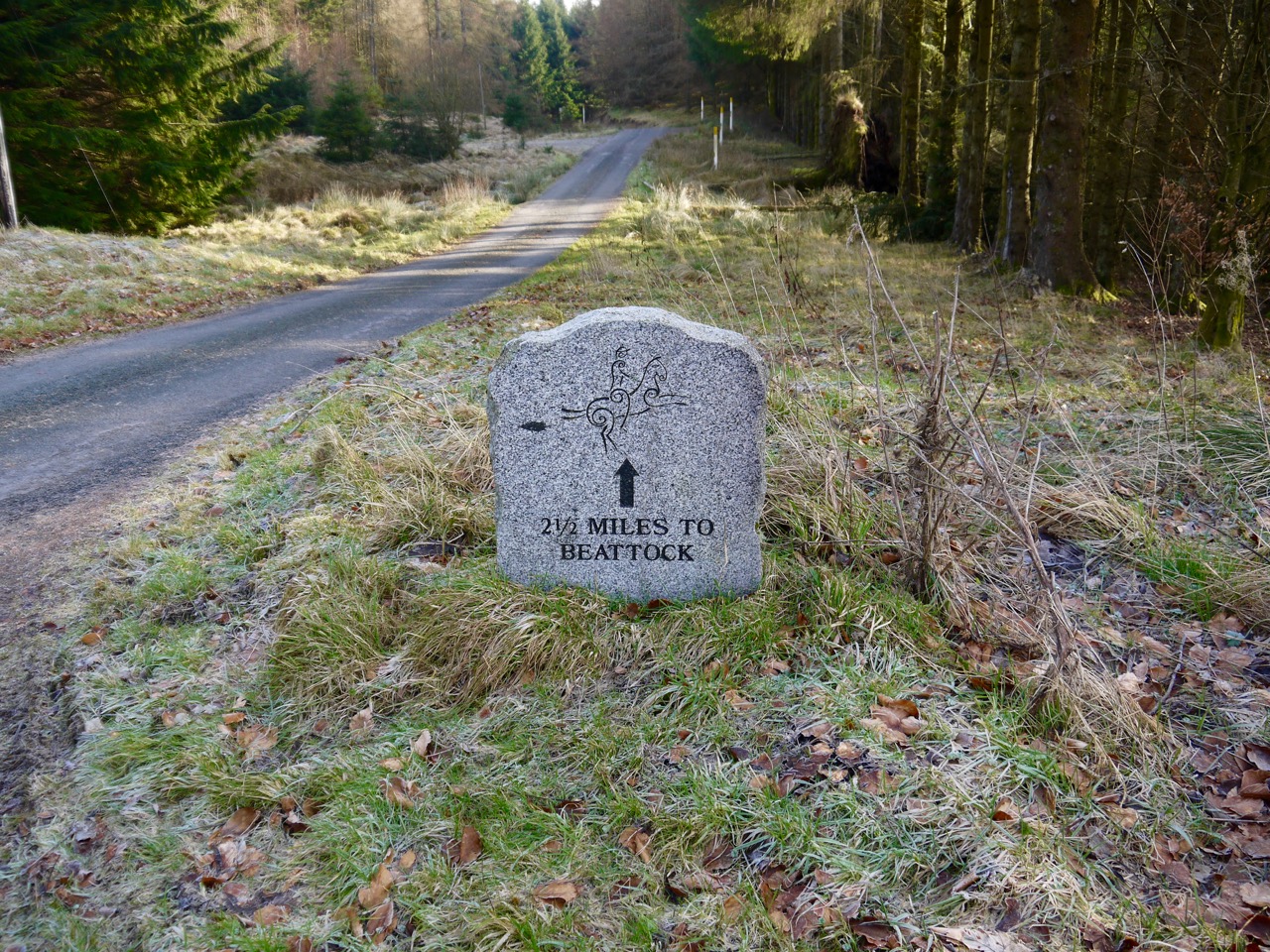
R&R Sign

R&R Stele

As we left the forest we passed the sandstone memorial to Ben Wilson of Holmshaw, who died on 11th August 1897 having been struck by lightning. The lettering is gradually fading, and it will be sad for it to erode completely. Perhaps though, the choice of sandstone suggests it was not meant to last forever.
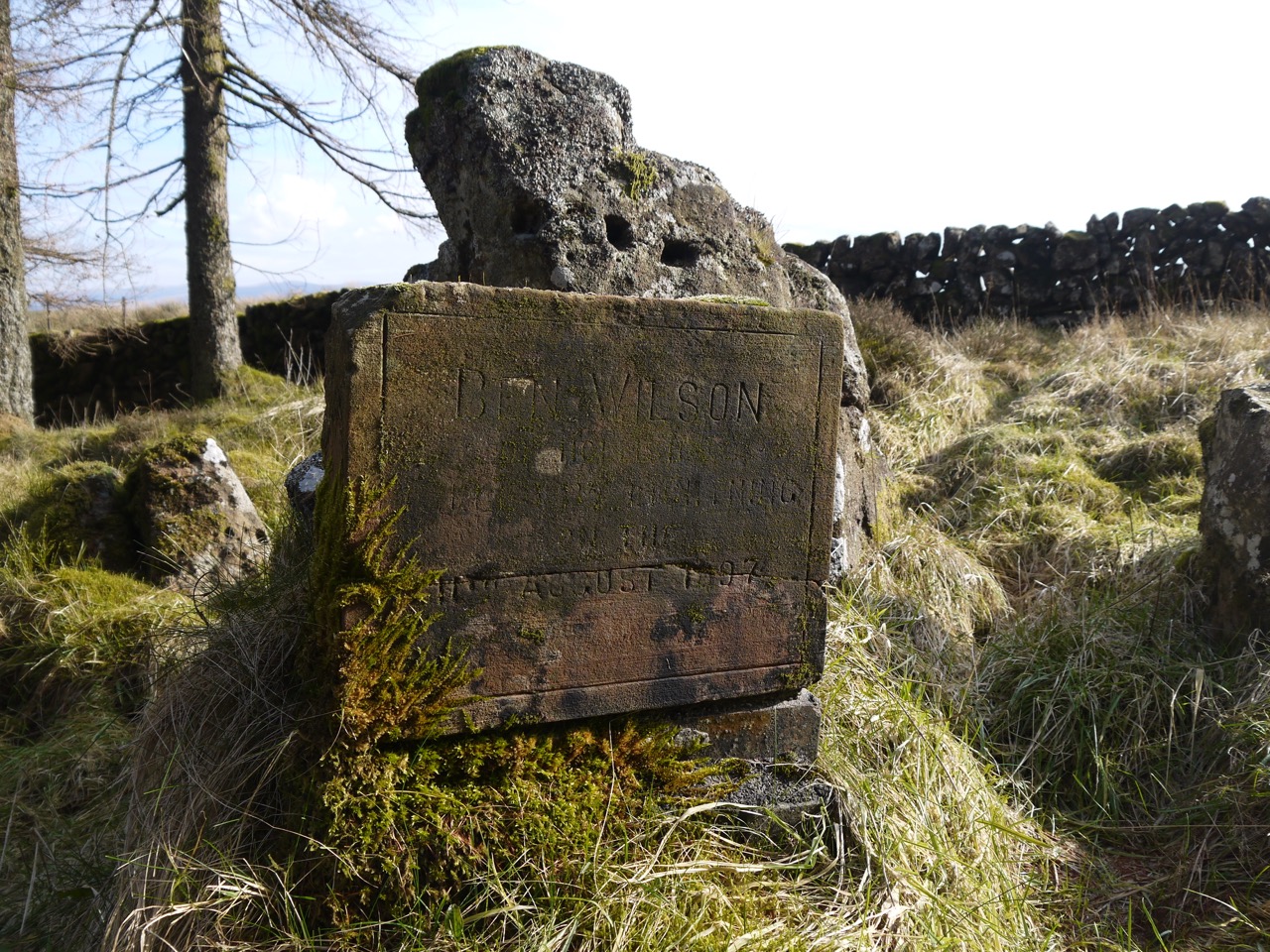
Ben Wilson memorial

Ben Wilson memorial

Here the dogs had to be put on their leads to negotiate the cattle grid. Passing this brought us into the open ground of Witch’s Wate where travellers would pause to find a rowan branch and tie two red threads to it for protection against witches before continuing on their way.

Nice lady

Nice lady

Unfortunately I had forgotten to bring any red threads so it seemed a waste of time looking around for a rowan branch. We kept our eyes peeled for pointy hats, broomsticks or black cats. Luckily there where no witches to worry us. In fact, we met a nice old lady with her pet crow. She offered me a lovely shiny apple, but I wasn’t really hungry so I let her keep it. She seemed a bit put out when I took this photo of her. Witches! who would believe in them?
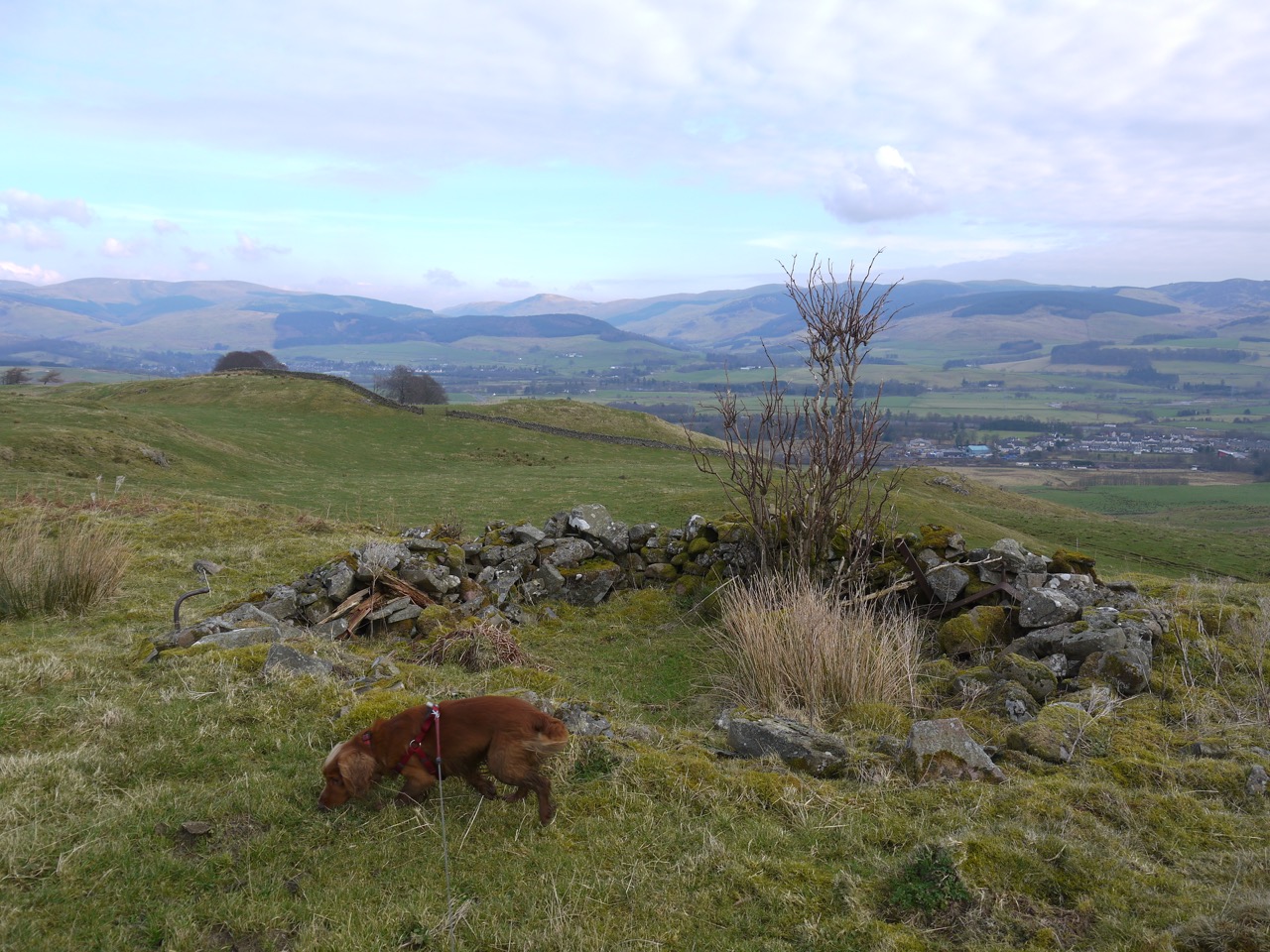
Beattock Fort

Beattock Fort

I intended to walk up to the remains of Beattock fort, so we left the Crooked road heading for a knoll with a pillar atop it. Unfortunately we met a fence topped with barbed-wire and had to retrace our steps to the road to find another way up which didn’t involve crossing barbed wire. Our second attempt met with the same barrier but it was third time lucky.

It is often difficult to make out the remains of these hilltop forts except on aerial photographs but the remains of ramparts here were still recognisable as tiers. There is a small round enclosure of stones at the top which would be ideal for a picnic in warmer weather. It certainly offers extensive views across Moffat, and both the Moffat and Ettrick hills. I had read that Burnswark Fort could be seen from there, but I couldn’t see it.
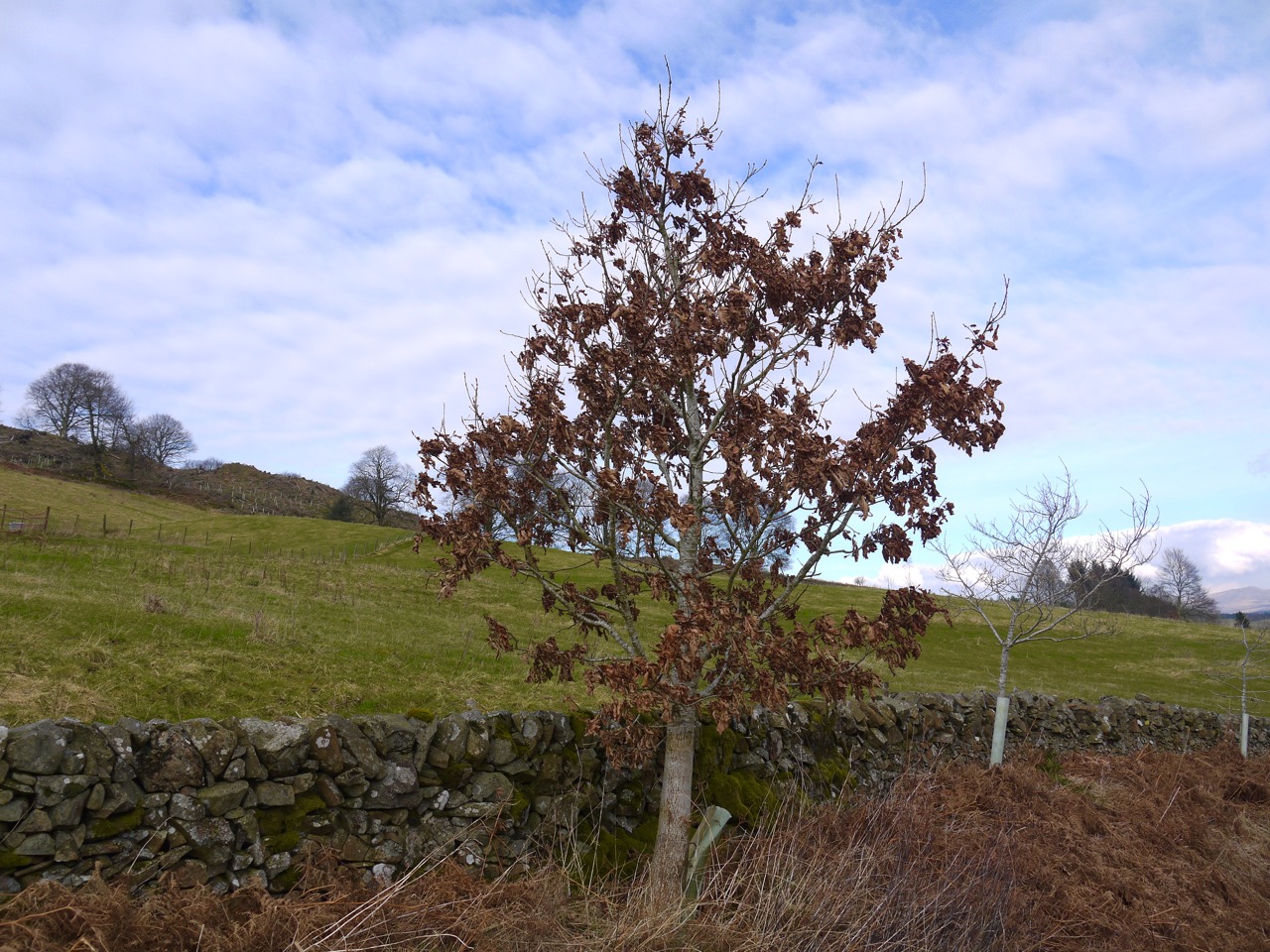
Beech on the Crooked Road

Beech on the Crooked Road

We had a couple more cattle grids to bypass and then headed down the steeper section of the Crooked Road down to the bridge at the railway. This single carriageway bridge is guarded by traffic lights, which turned green as we approached then reverted to red just as we got there. Happily, since we were pedestrians, and there was a pavement, we could ignore the red light.

I had a taste of some haws and hips from the trees by the road, but can’t say that either were particularly appetising. I should have accepted that apple.
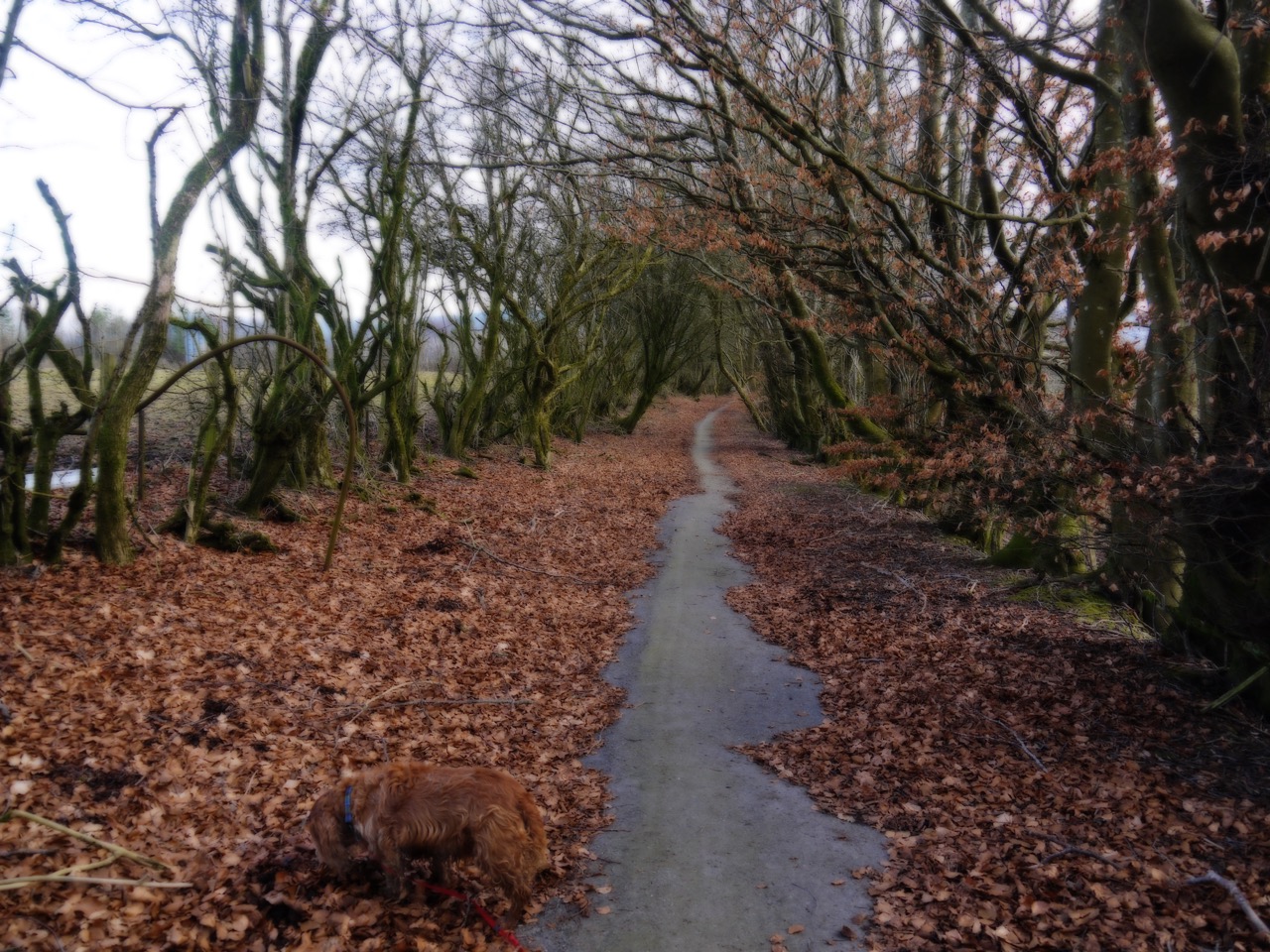
Beech Avenue at Beattock

Beech Avenue at Beattock

Having crossed Evan Water, by the bridge built to Telford’s design, we headed over the road and along a short avenue of Beech trees. The fields either side had horses, and a long haired pony stood by the fence watching us. At the end of this avenue the footpath turns briefly right before passing under the A701 and M74 beside Evan Water.

A sign here said the footpath was closed, but there was no posted alternate route. This would have meant a detour along the main road so we decided to continue along and see if we could use the path. We kept the dogs on their leads in case there was a problem but as far as we could see, there was no reason for it to be closed.
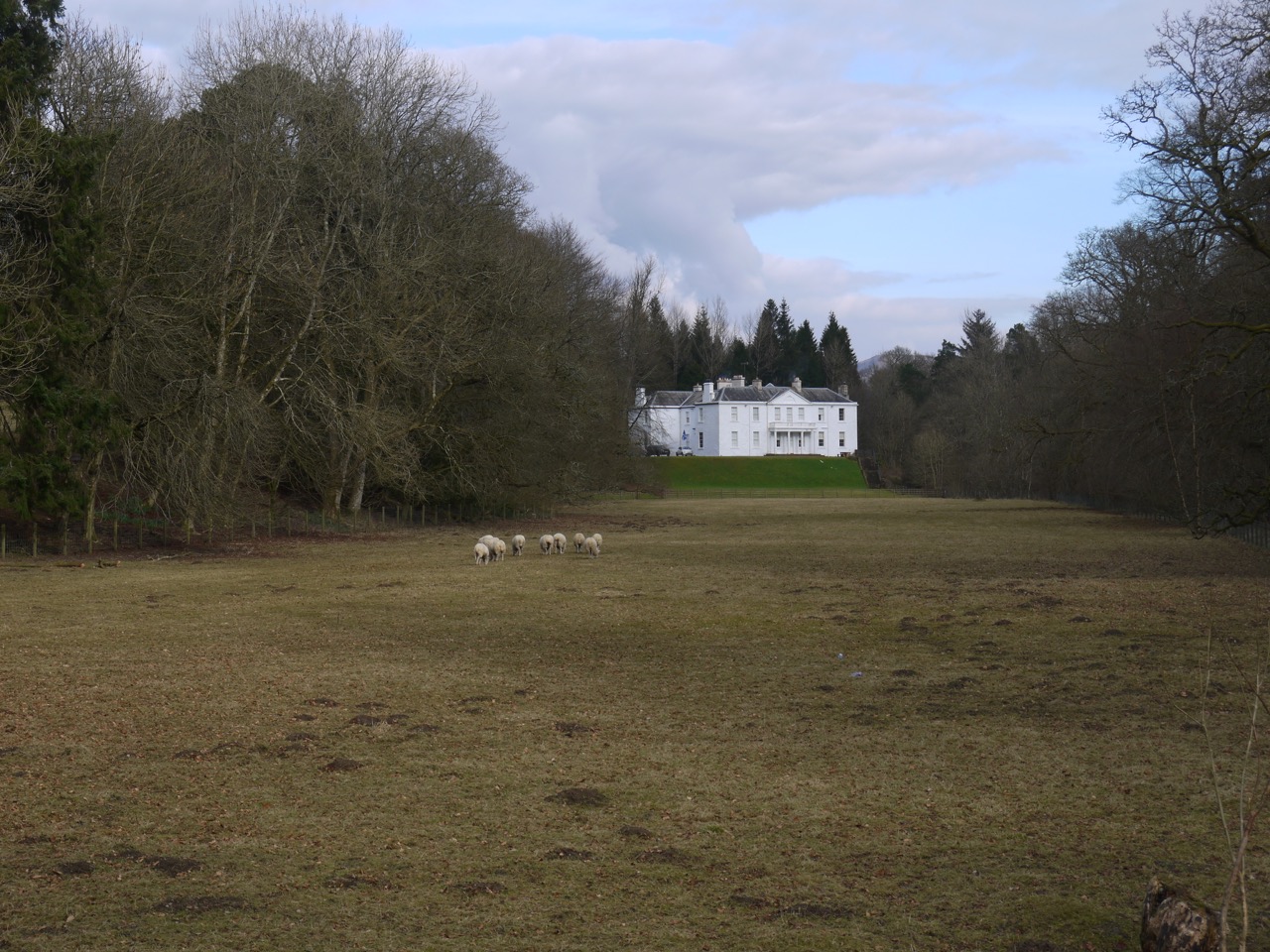
P1060726

Dumcrieff House

Most of the remaining walk was on minor roads. There were banks of snowdrops to see and many trees just beginning to bud, giving a tints to their bare branches, the larches yellow, and the birches brown-red.

Since the Crooked Road, the R&R, SUW and Annandale way had shared the route, but the latter left us before Barnhill where the Roman Road heads north to Moffat, not that one would easily recognise it as a road. We parted company with the SUW, albeit briefly, after crossing the River Annan, at Oakrigg. The R&R follows the road where the SUW climbs over the minor hill. We had walked over Oakrigg on a previous walk so it was not a great problem sticking with the minor road.
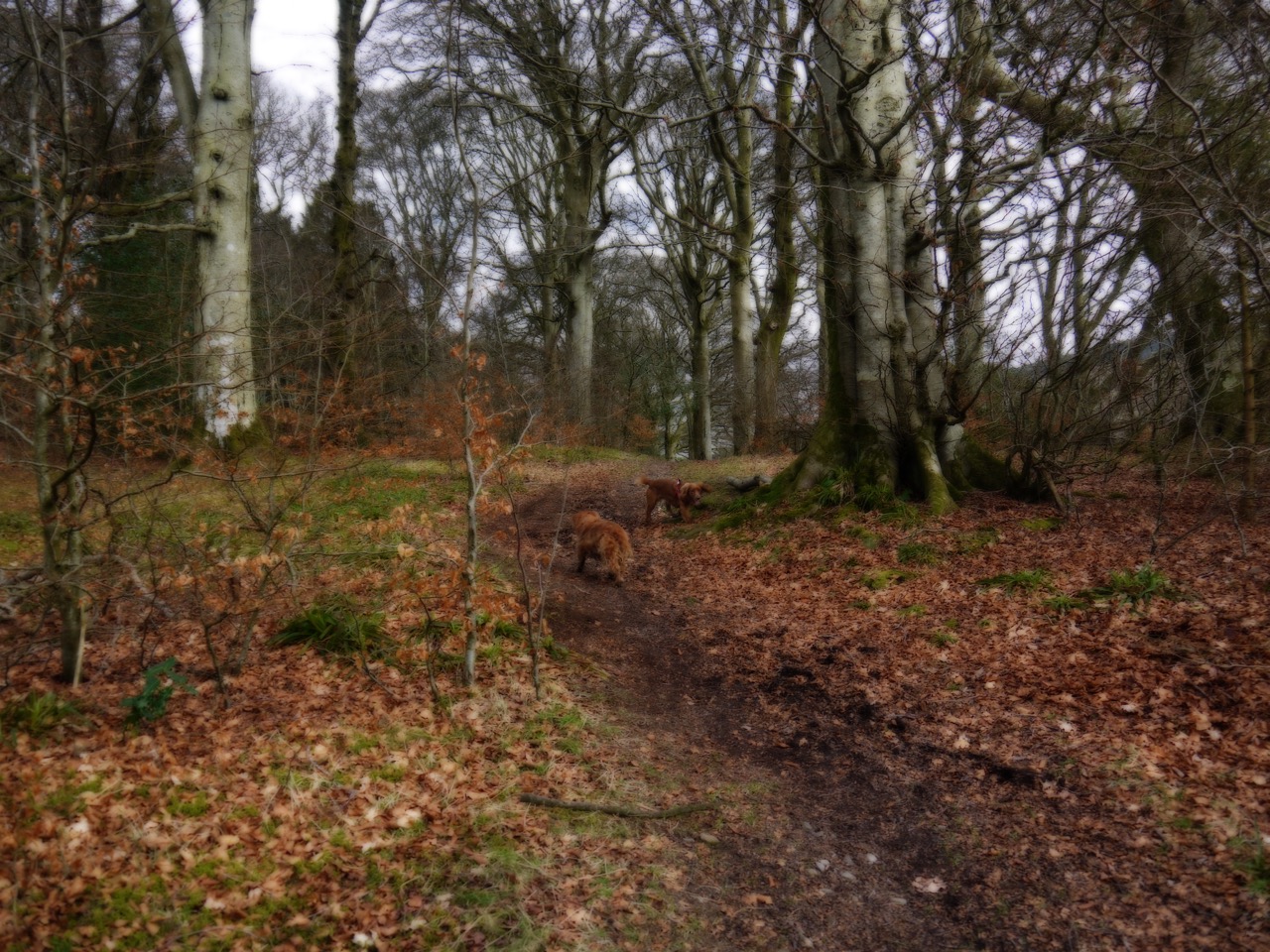
Drumcrieff Wood

Dumcrieff Wood

At Dumcrieff Wood the R&R stays with the road, but we didn’t want to miss a little woodland walking, and since the road was only 20m away, were happy to consider the R&R done, so to speak. As it was we were to walk the road anyway.

Eddie managed to run out of his harness while exploring the undergrowth and needed to be re-dressed. And then, Sweep, who can’t jump into the car and needed help getting up a one step stile to get into the wood, decided to jump over a wall and run away. By the time I’d climbed the wall, onto a minor road, he was nowhere to be seen either way. I was blowing a whistle so he would know which way to come back when I heard some other walkers telling Audrey that there was a dog up ahead. So he had climbed back over the wall, as did I.

On we went, the dogs now finding mud to jump in having remained relatively clean up until then. When we left the woods and started walking along by Moffat Water I was thinking ahead about putting the dogs back on leads for the final on-road section, when I realised that I didn’t have a lead in my hand.

I must have put it down while putting Eddie’s harness back on and forgotten to pick it up, perhaps distracted by Sweep’s jaunt. We needed it for the last half mile so back we went in search of the lead.
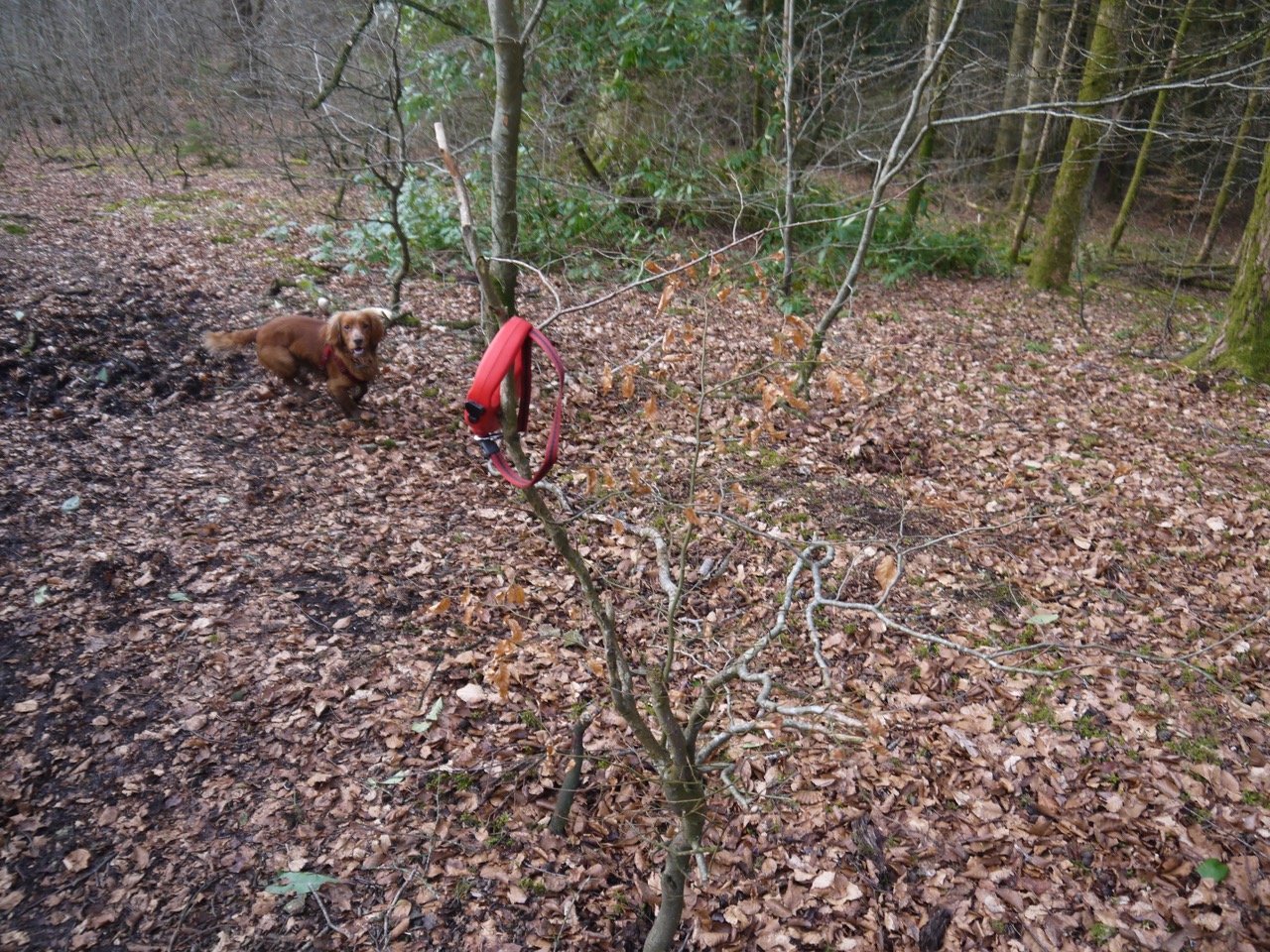
Lead tree

Lead tree

We found the lead hanging on a sapling, presumably put there by other walkers.

Having already walked the wood, there and back, we returned to the official R&R route of the minor road, then up to the A708 where we had left the car.

[sgpx gpx=”http://www.screel.co.uk/walks/wp-content/uploads/2016/02/RK_gpx-_2016-02-27_1014.gpx”]
Posted in Dumfries & Galloway | Tagged , , | Comments Off on Romans & Reivers: 2 – Vanishing leads and fortified houses

Romans and Reivers: 1 – Rainbows and Hares

13.7 miles 5h 1min ascent 431m

Ae forestAe to the Crooked Road

The Romans and Reivers trail is a 52 mile route following old Roman roads, forest tracks, drove roads and short sections of quiet lane through notorious Reivers country from Ae to Hawick. We have previously walked along sections of the R&R where it coincides with the SUW but this was his was our first proper R&R section. I would have worn a toga for the walk but it was too cold.

The plan was to drive a car in from the Kinnelhead Road at the north of Ae forest to the Blue Cairn, giving us an 8 mile walk, but that plan fell at the first hurdle when we found a gate barring our entrance to the forest. We were forced to leave the car there (NT041018) and have a longer walk (12.5 miles).

So we drove back to the Seven Stanes car park at Ae Forest, paid our £3, got togged up and headed off on what turned out to be the wrong track. When we got past Wood Farm and found ourselves walking away from the forest, rather than into it, we knew something was wrong and headed back. To be positive, this did allow us to warm up before the main walk, which is very important as any exercise expert will tell you. We also got to see a crashed car being lifted from the Water of Ae, which we would otherwise have missed.

DSCF0545After leaving the car park we should have headed left, not right, then turned right after perhaps 50m, where a sign points to “Beattock 15 miles”. Once back on the proper route, after our mile and a half warm up, we headed up a forest track and began our long walk through the forest.

I like to think of walks in stages so I know how we are getting on. For this walk I had in mind places about three miles apart: a track junction north of Brownmoor Hill; a quarry near Grey Mare; and the Blue cairn, which would have been close to the end. With the longer walk these thirds became quarters.

In the first quarter we climbed 200m, which could also be expressed as “was uphill”. We came across the first “South Scotland Countryside Trail” markers, and I’ll have to say that the route was well marked, with markers at every junction along the whole 12 miles. Quite unlike our experience of the SUW where markers seemed placed at random, often beside a trail where there was no option, but missing where one needed to chose between three ways. But perhaps that’s part of the SUW experience.

With the weather so dreich, long distance views were limited. We could see the small hills between Amisfield and Lochmaben, but little beyond that. The forestry track took us through forestry plantations in all stages from new plantings to new fell. There were stacks of logs marked “Fire Wood” and trees whose roots had lost the battle with the wind.

As ever, the edges of the conifer forests had smaller deciduous trees: holly, willow, hawthorn, and others I couldn’t identify with deep red berries. The weather, the knowledge that we had a long walk ahead of us, and the extra mile and a half we had tagged on the start put me off too much off-track exploring and examining of these trees.

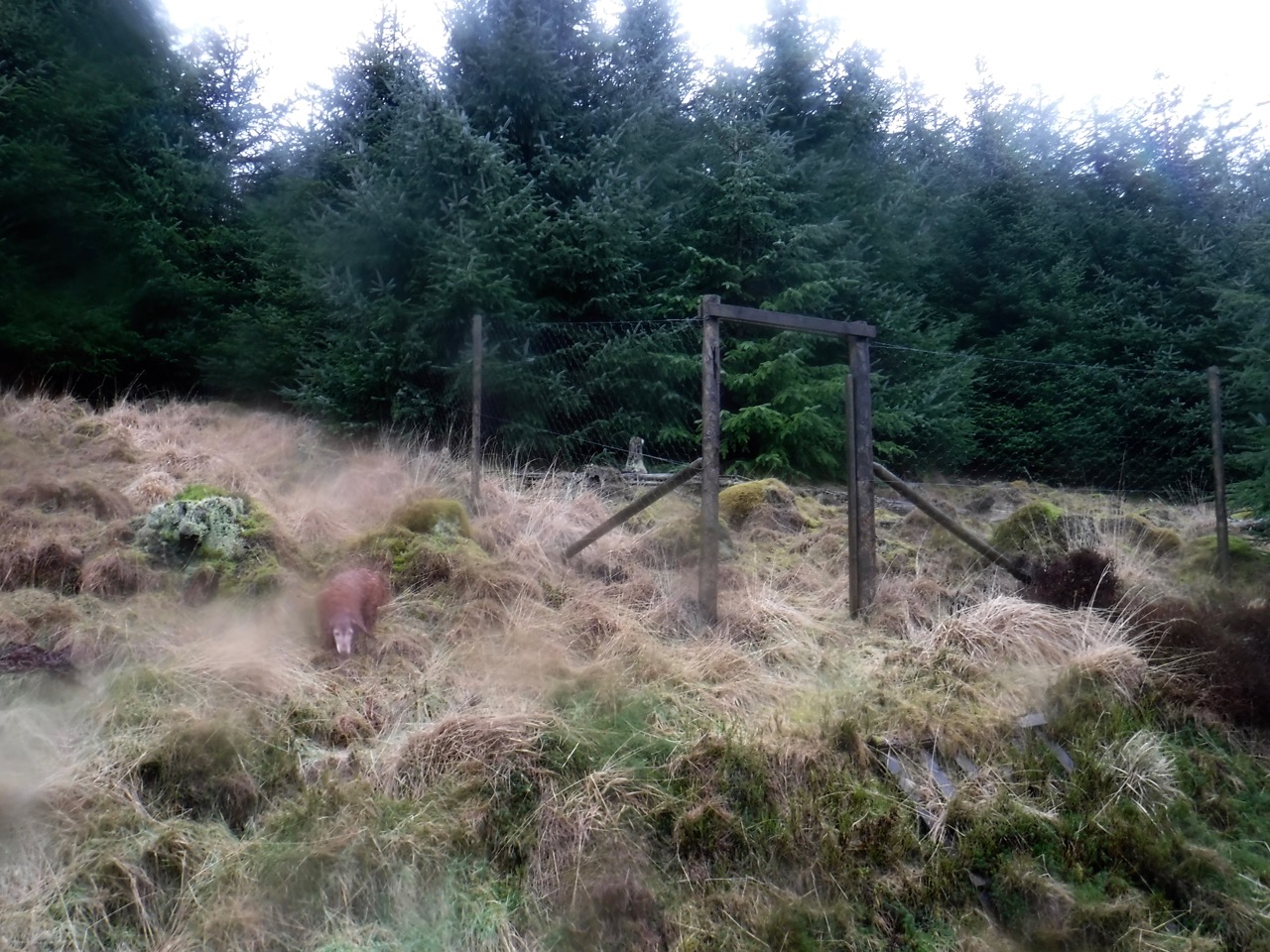
A useless fence

A useless fence

We passed the first of several unusual fencing constructions here: a deer fence judging by its height but with openings where the gates would be, somewhat undermining the purpose of the fence I would have thought. More on unusual fences later.

The track to Lamphitt had a sign but in general there was nothing to differentiate the track junctions. By following our progress on the map, however, I was able to recognise that we had passed the one quarter mark.

Harestanes turbine

Harestanes turbine

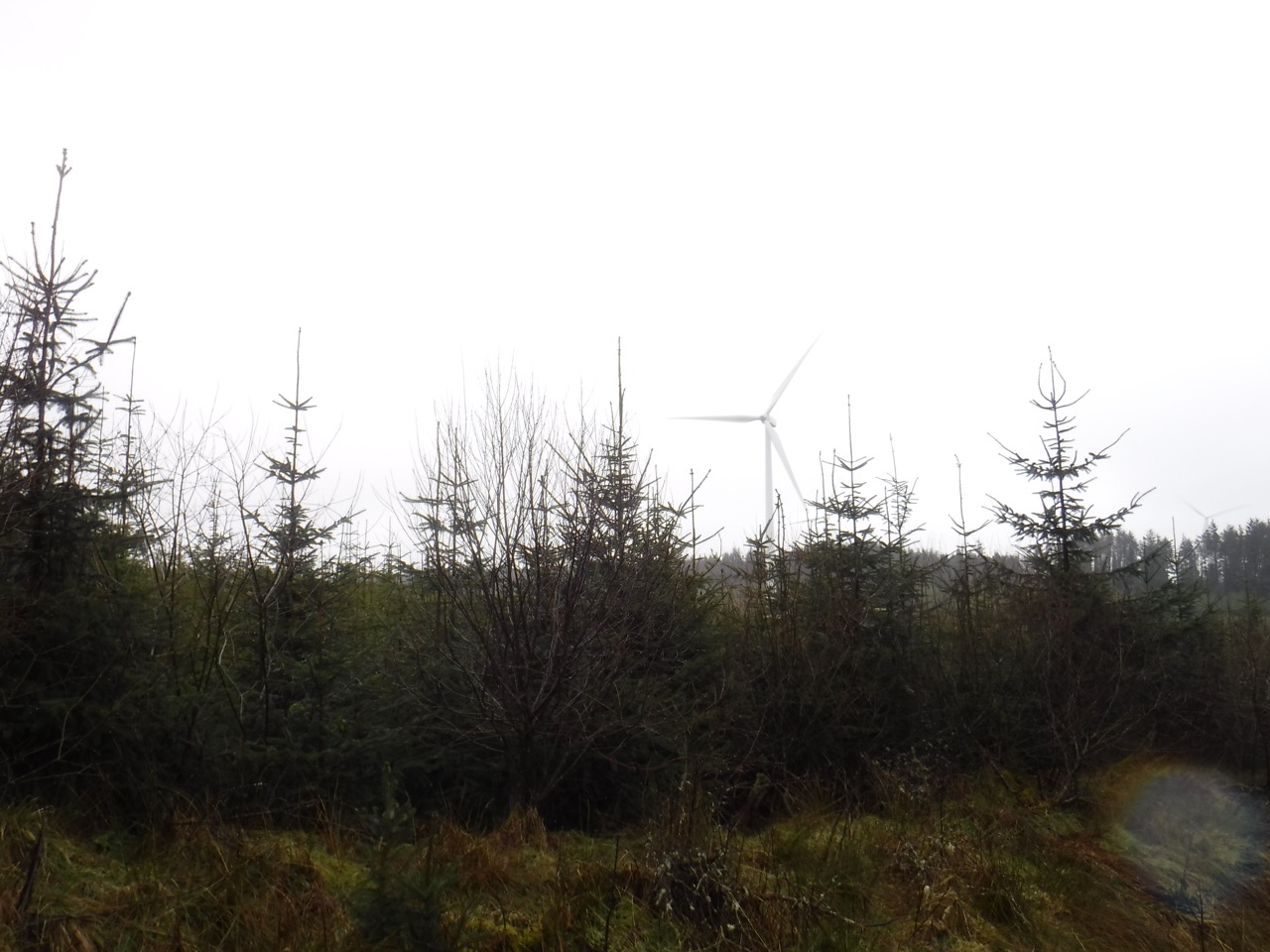
As we entered the second quarter of the walk we saw the first of the Harestanes wind turbines, and as we drew closer we could hear them, sounding like jets flying high above us. This wind farm is quite large. The Scottish Power website says there are 68 wind turbines with an output of 136 megawatts. (UK energy use in 2014 was 2449 TWh). It took us two and a quarter hours to walk through it.

Setting aside practicalities for aesthetics, these turbines are quite an eyesore, though no doubt we will  grow used to them. What is unusual here in Ae is that most of the turbines stand among trees which tones down the eyesore-ness to some extent. It was almost eerie that when the wind picked up I noticed a nearby turbine stop and within a couple of minutes all the others we could see had stopped.

Oil spill kit

Oil spill kit

We saw our first (of three) yellow wheelie bins, “Oil Spill Kits”. My curiosity eventually got the better of me and I went to see what was in the bin, but it was sealed. These seemed to be placed randomly, but presumably there is some reasoning behind it.

In the wind farm the tracks are more substantial, as they would need to be to get the turbines in. Besides signs for “Turbine 11” or “Met Tower” etc. were several markers along the tracks. In this section we saw the first snow markers, further on these were joined by small underground cable markers, and later by larger yellow topped poles, warning of 132kv cables. I did think that was unnecessarily accurate.

Ae lake

Ae quarry lake

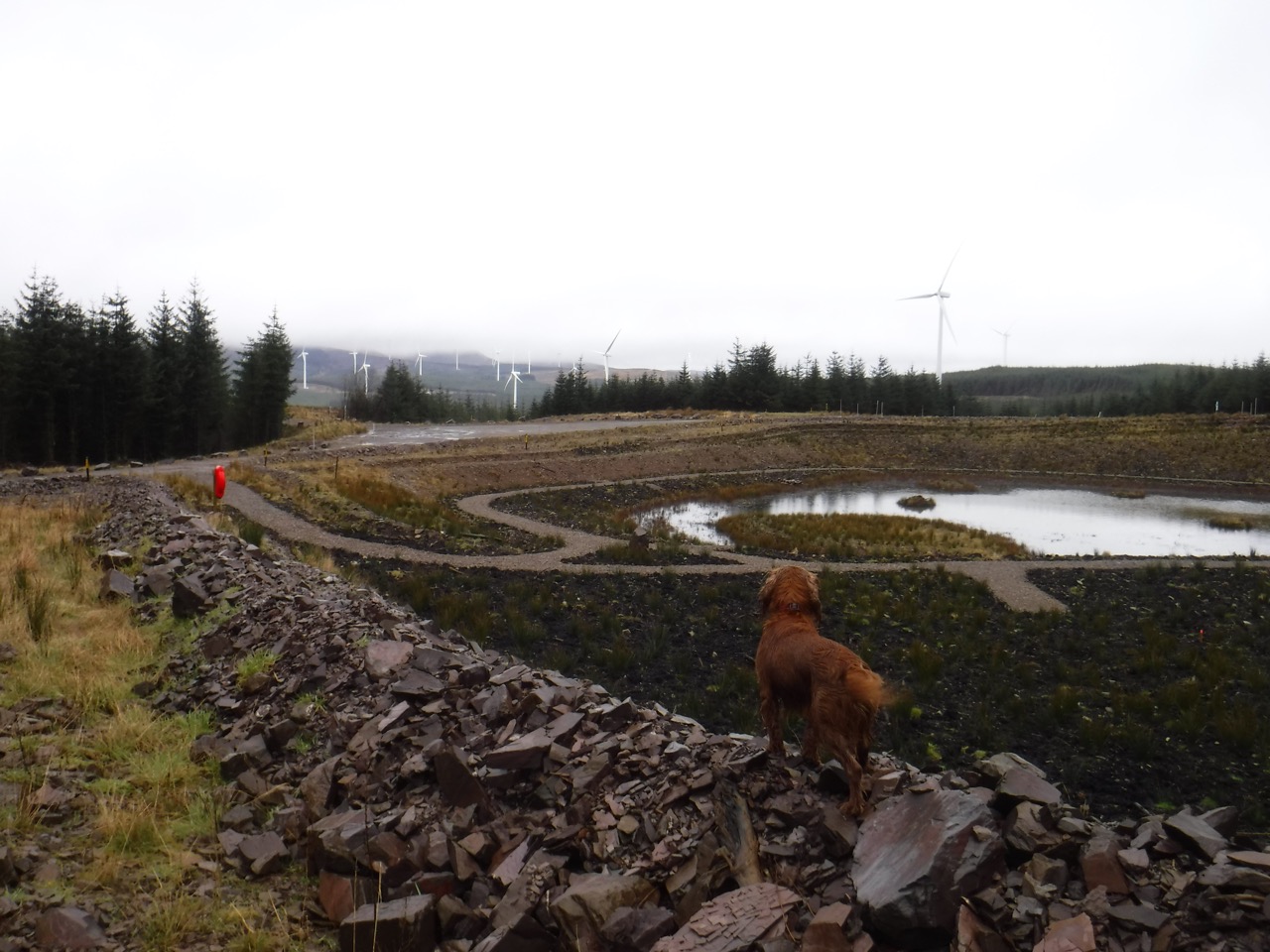
Where I expected a quarry near Grey Mare, marking the halfway point of the walk, we found a landscaped pond, with surrounding paths and artistically placed rocks. Presumably this was once the quarry marked on the map. Why it has landscaped into a ornamental pond in such an isolated spot, a two hour walk from the car park, I don’t know. It will be interesting to see how it matures in the next couple of years.

From the track above the pond it should be possible to see Queensberry, but its top was hidden in cloud. Only the lower Wee Queensberry could be seen, its unusual shape easily identified. i think I could make out the cairn on High Church later in the walk, when we were a bit closer.

The weather put paid to lounging about for lunch but did abate enough for us to sit on some trackside boulders while eating our sandwiches. I think we (except Eddie) needed a rest. Dark Chocolate with crunchy coffee beans ensured I didn’t flag.

DSCF0577

Our next landmark was the Blue Cairn on Hound Rig. Reading descriptions of this cairn, I gather that the “Blue Cairn” is the mound rather than the rocky “beacon” atop it. Older sources say “It is said that Wallace, who was encamped on Queensberry having seen the approach of a party of English and hastening to attack them, had met them on this spot; a bloody battle ensued in which the English were beaten” and older OS maps are marked “Site of Battle between Wallace and Greystock and where the latter fell.”

More modern archeology however, states that the cairn (meaning the mound) is undoubtedly from the Bronze Age, and the stone cairn atop it is described as a “beacon” 3m high, of more recent ancestry. We had stood looking at the cairn thinking it didn’t look particularly blue, but we were looking at the modern stone cairn whereas the real Blue Cairn itself is buried under a mound of earth. Perhaps it was blue?

Having reached the Blue Cairn we were close to the end of our walk as originally planned, but still had 3.7 miles to go to reach the car. I think we were all flagging a bit, except for Eddie, who never stopped exploring the woods either side of the track with the energy of a pup.

Quarry

Quarry

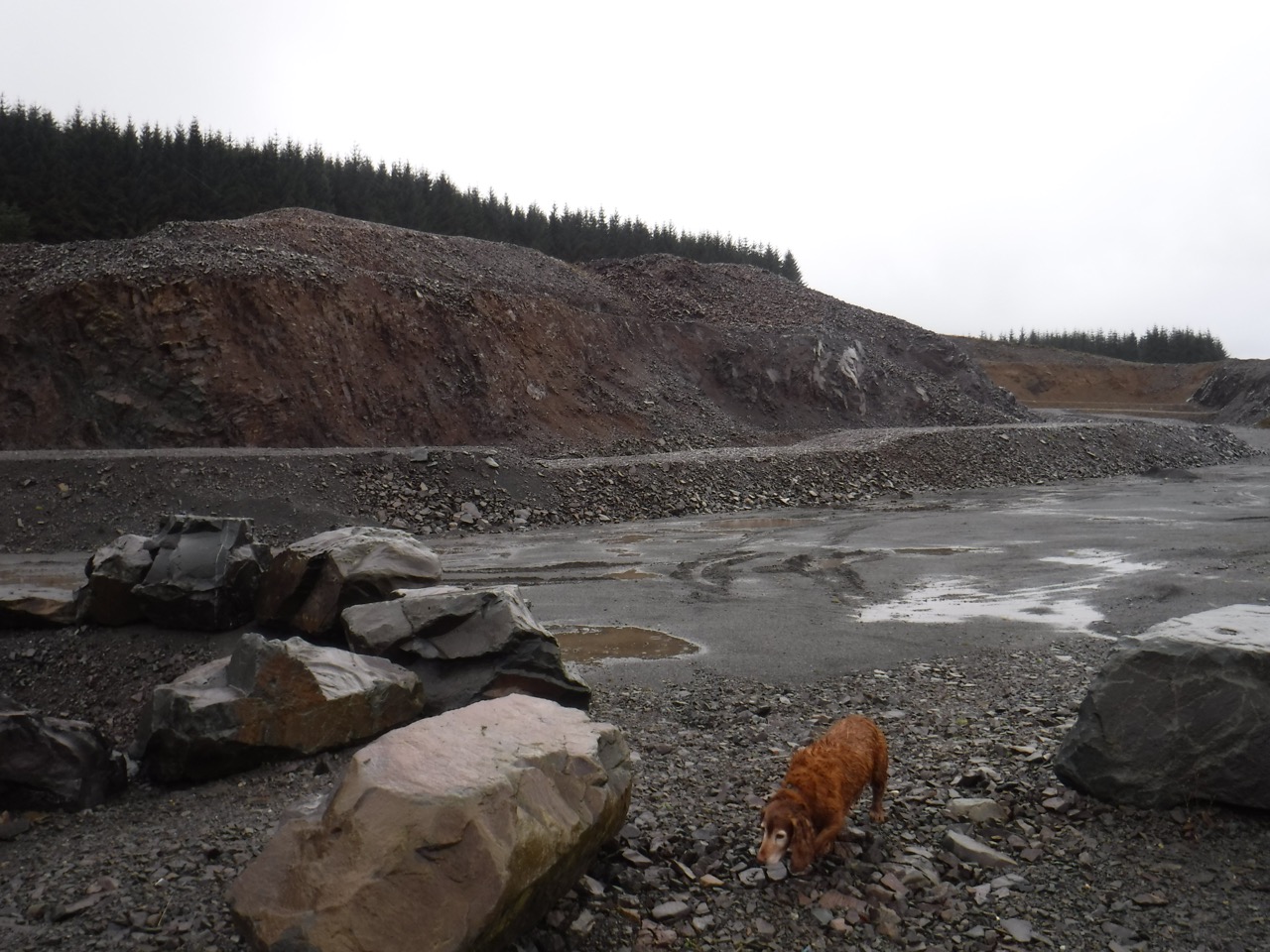
There is another massive quarry below Moannathairy at NY024992, which is where I had hoped to park originally. Unlike the other quarry, this still looks as it would have when in use. There are boulders blocking access to vehicles though, so I presume it isn’t being quarried actively at present. Perhaps it too will be landscaped?

DSCF0586

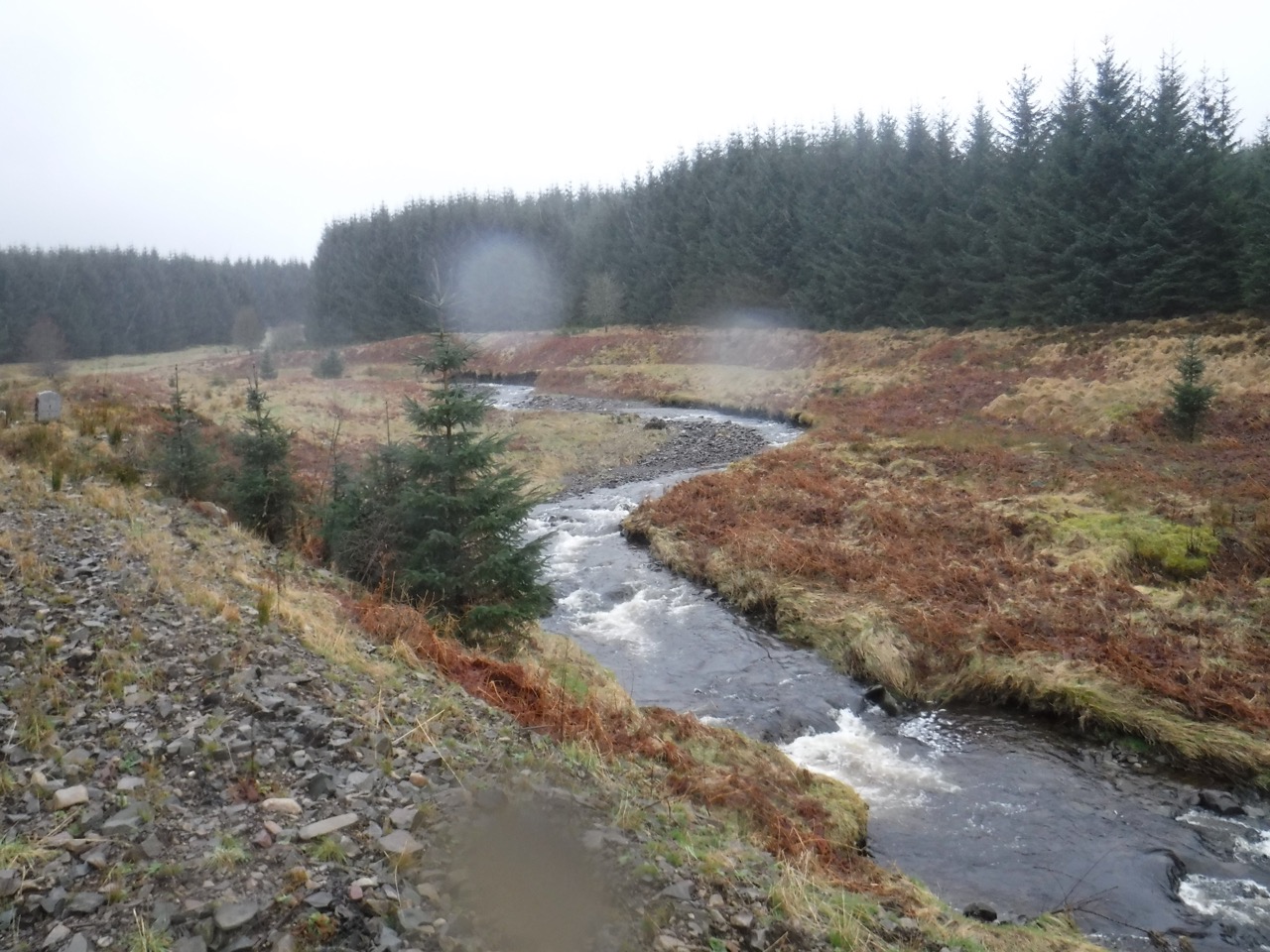
We crossed the Lochan Burn and the Kinnel Burn on their new bridges, with the older bridges lying nearby. On a previous walk, Audrey and I had had to wade across the Lochan Burn, with me carrying a wee Eddie who was too frightened to get in the water. I did suggest we could wade across rather than using the bridge for old times sake, but Audrey didn’t seem very keen. She probably didn’t want to damage her new boots.

Lohan Burn...anyone for wading it?

Lohan Burn…anyone for wading it?

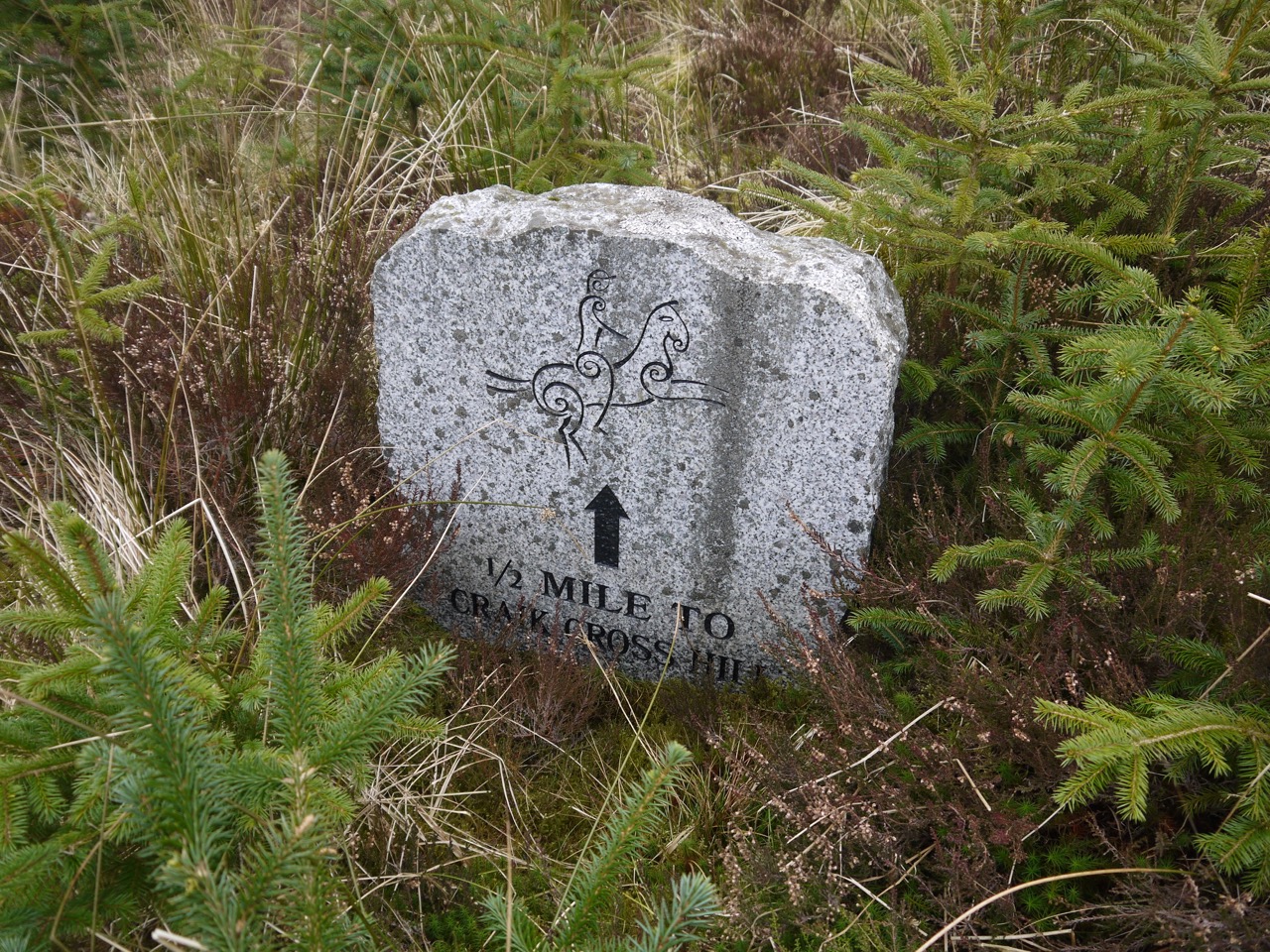
By the Lochan Burn, was a Romans and Reivers stone, looking like a gravestone. It told us we were 4.5 miles from Beattock. I remembered the stone at Earshaig (not too far from where we were parked) but I couldn’t remember if it said 1.5, 2.5 or 3.5 miles to Beattock. (It is actually marked 2.5 miles to Beattock).

Kinnel Burn

Kinnel Burn

After crossing Kinnel Burn the forest was giving way to moorland, or at least felled forest morphing into moorland. What looked like a cairn on a small knoll caught our eyes but I didn’t fancy the terrain separating it from us. I would have been unimpressed to spend half an hour trudging through difficult terrain to find it was a tree stump.

Moorland beyond Kinnel Burn

Moorland beyond Kinnel Burn

We passed several fenced areas by the road shaped a little like small lay-bys. I think these contained access ports for the underground cables. They were fenced off on the forest side but open on the road side which seemed rather strange.

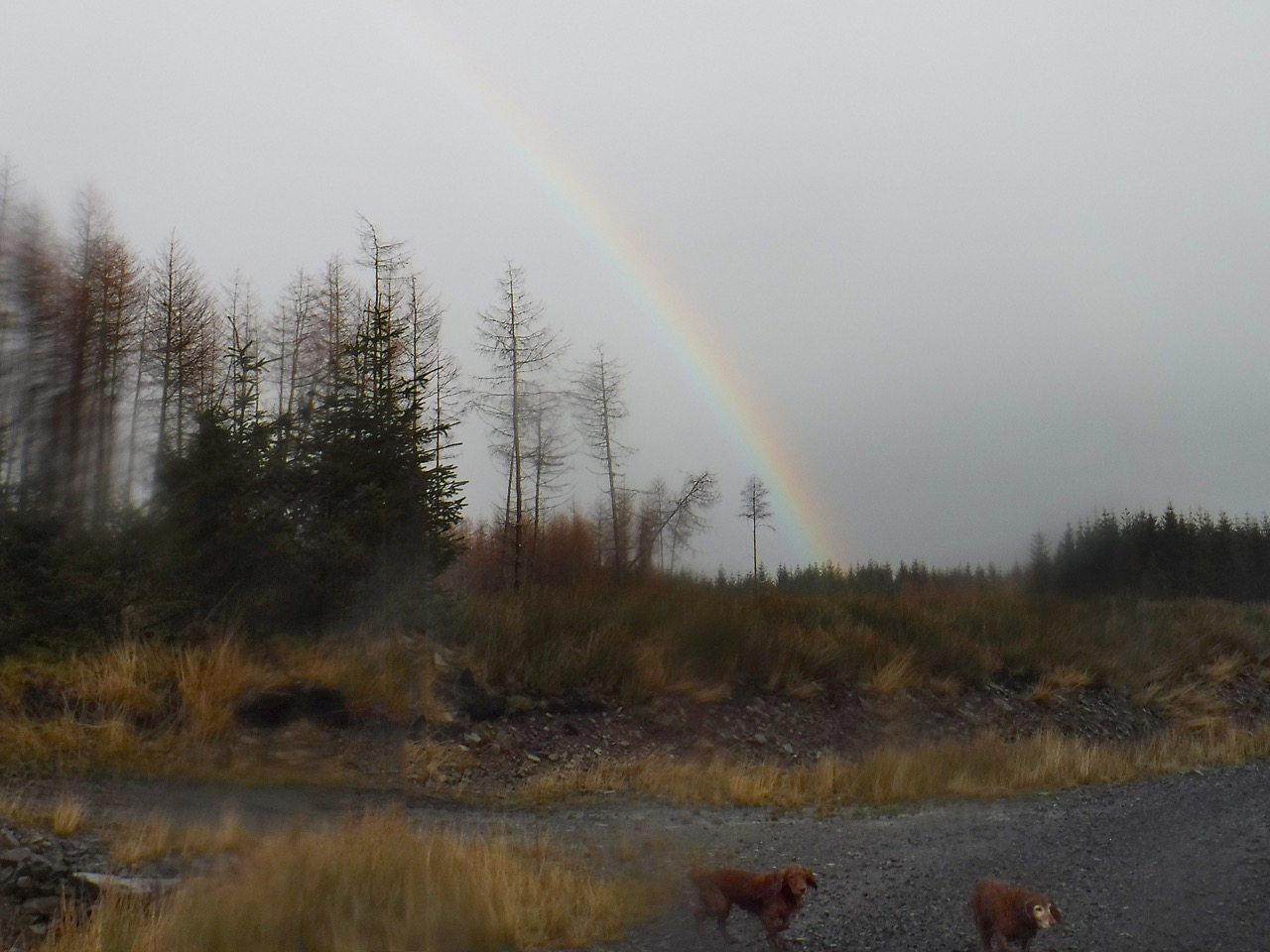
The rain stopped and I recall hoping that the wind would dry the dogs a bit. Almost immediately the rain started again but as we trudged along the sky did show us a twinkling of blue and the sun shone enough to provide a rainbow.

Rainbow in AeOur final sight was a large hare, still in winter livery, that came out of the forest and ran along the track. Eddie missed it because he was in the trees.

(PS Audrey’s GPS said we walked 14.9 miles, but I believe my own GPS estimate of 13.7 miles.)
[sgpx gpx=”http://www.screel.co.uk/walks/wp-content/uploads/2016/02/RK_gpx-_2016-02-20_1032.gpx”]

Posted in Dumfries & Galloway | Tagged , , | Comments Off on Romans and Reivers: 1 – Rainbows and Hares

Cairn Pat

1.3 miles 30 mins ascent 75m

Cairn PatCairn Pat (Marilyn)

I have often considered going up this hill when I’m across at Stranraer for work. So today was the day. No route-finding problems with this one, I parked on the verge of the A77 and walked up the track to the top, climbing a couple of gates on the way.

A lovely crisply cold day but with little wind. The steeper parts of the hill were covered with flowering gorse but I couldn’t really make out the remains of the hilltop fort that are obvious on aerial photos.

I was surprised by the views from such a lowly summit: Ailsa Craig, Arran, Ireland, Isle of Man, Galloway hills, and of course the Mull of Galloway.

Download file for GPS


Posted in Dumfries & Galloway | Tagged , | Comments Off on Cairn Pat

Ae short stroll and ae new word

4.6 miles 2h 5min  ascent 134m

P1060671aI had to delay our first Romans and Reivers walk since my cough might disturb the wildlife. This then started as a short recce of the start of that walk but we chose after a few hundred metres to give up the R&R recce and just follow the Brown Walk (with some Yellow walk at the end). We didn’t know where these routes went but presumed they would be circular, and if not we could always just turn back.
Carving on a bench at Ae

Carving on a bench at Ae

After crossing the Water of Ae at the footbridge near the carved seats we basically walked a loop on the eastern side of Green Hill. About half of this was on forestry tracks, with the remainder on forest footpaths. The route was well marked with wooden posts, and easily walked though a little steep and muddy on the downhill section. We could hear children playing when walking through the wood but we didn’t see them.
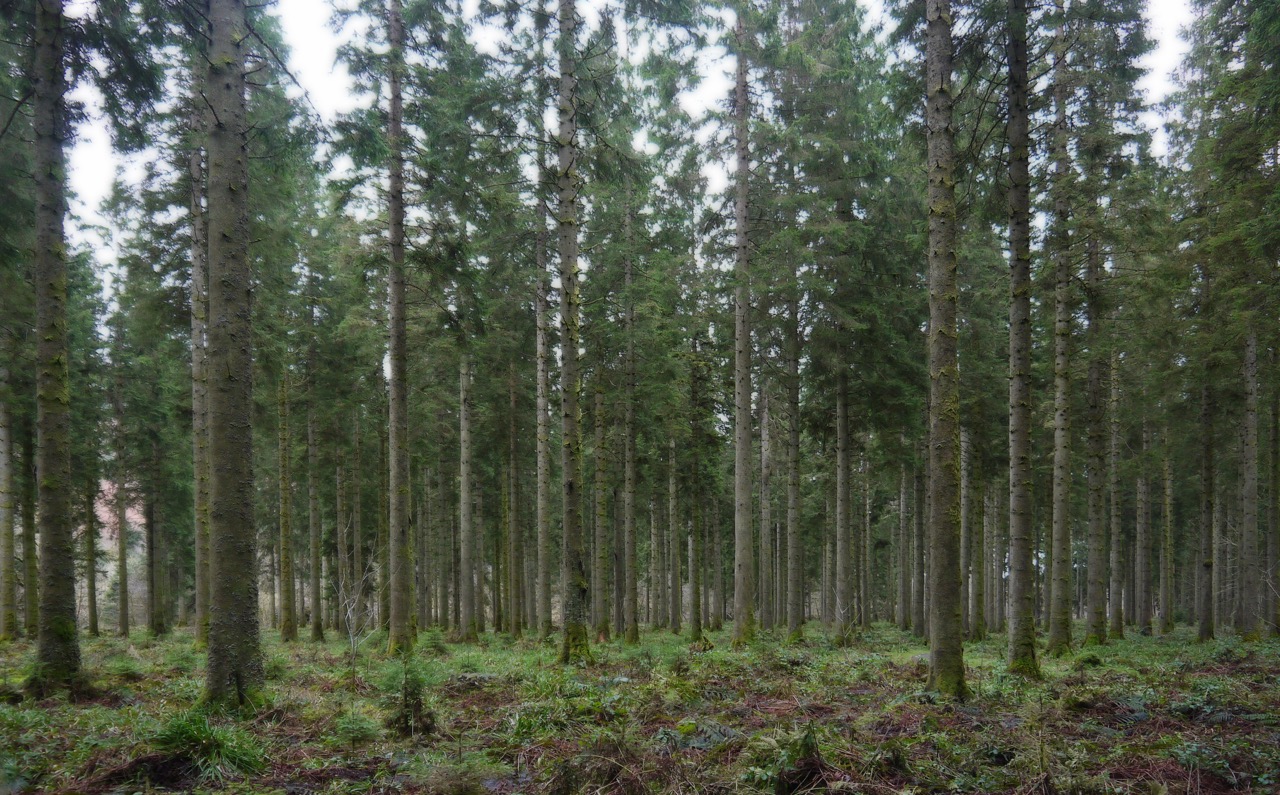
Though these forest plantations may seem a little monotonous, we weren’t bored. There was always something to keep us amused, and for once it wasn’t falling in ditches or getting soaked with rain.

Birds: were robins and blue tits mostly, with crows heard in the distance. One Robin sang for quite a while as we watched him and a a couple of wee birds defied identification.

Winter Oak

Winter Oak

Winter Beech

Winter Beech

Winter Larch

Winter Larch

Trees: no surprise that there were trees aplenty, this being a forest. We saw some new plantings and noticed how very close the saplings were, then during the walk we passed by some very densely growing trees where there would be no chance of squeezing between them. Presumably these will be thinned out by the forestry.

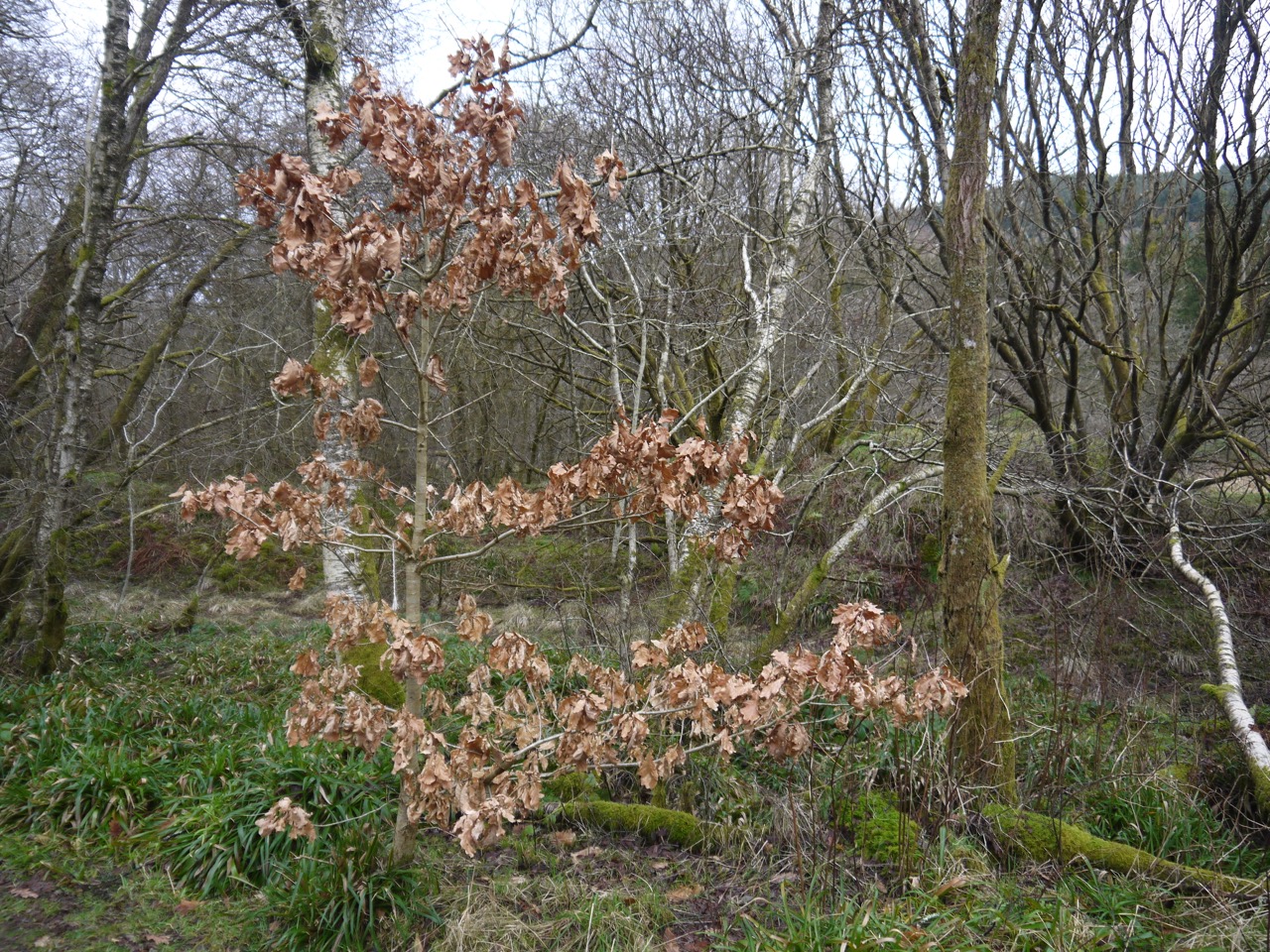
We also passed through by very tall specimens. I had read that these are normally felled at thirty years. I counted the branch segments and had only reached twenty by a third of their height so they must be way past their felling age. The small oaks and beeches hiding below the taller conifers had retained their leaves giving a splash of gold against the evergreens. I’ve learnt this is called marcescence, so I have added a new word to my vocabulary today.

Strange fruit

Strange fruit – Ilex verticillata

Where we left the forestry track, close to a viewpoint with a bench (Craig shields) were a couple of small trees, or perhaps large bushes, covered with red berries. These had little taste, and certainly weren’t bitter, the inner flesh being a pale yellow. I am not certain what these are and initially thought they might be Cotoneaster. Audrey has these in her garden though and is sure they are not. The closest in appearance I can find on-line is Winterberry (Ilex verticillata), but that isn’t a native plant, so these would have to be escapees. I am writing this now so they can’t be particularly poisonous.

Carved Squirrel at AeWe passed the plough collection again and I noticed a carved squirrel that had escaped my gaze the last time I was here. As you can see, one might easily miss it.

The next visit should be as part of the Romans and Reivers walk.


Download file for GPS


Posted in Dumfries & Galloway | Tagged | Comments Off on Ae short stroll and ae new word

Barefoot

One of my walking goals this year is to walk a league barefoot. I had to choose some distance and a league seemed just about right. I’ve walked on beaches and lawns but those are not the same thing. My first half mile of wild barefoot walking was this week at Kirkconnell Flow. Luckily I didn’t meet anyone else so there was no need to explain.

It was a tad chilly being January and I had the burning feet of reperfusion for a while afterwards.

The first sensation was the coldness and I wondered at first if numbness would impair the experience. If anything though the cold seemed to heighten discomfort when I stepped on things.

Walking through a woodland barefoot opened my “eyes” to the ground beneath my feet. The ground from-which I had observed became the thing observed. My attention, which would usually be directed to trees, undergrowth, birds, clouds, sounds, and smells, became focussed on the ground’s texture. I had a better “feel” for the walk and noticed the texture of the ground more than I otherwise would.

It was much easier walking among the birches than the pines. Damn those pine cones. The mud I usually avoid stepping in was a pleasant soft mush, which in warmer weather might have been a pleasure.

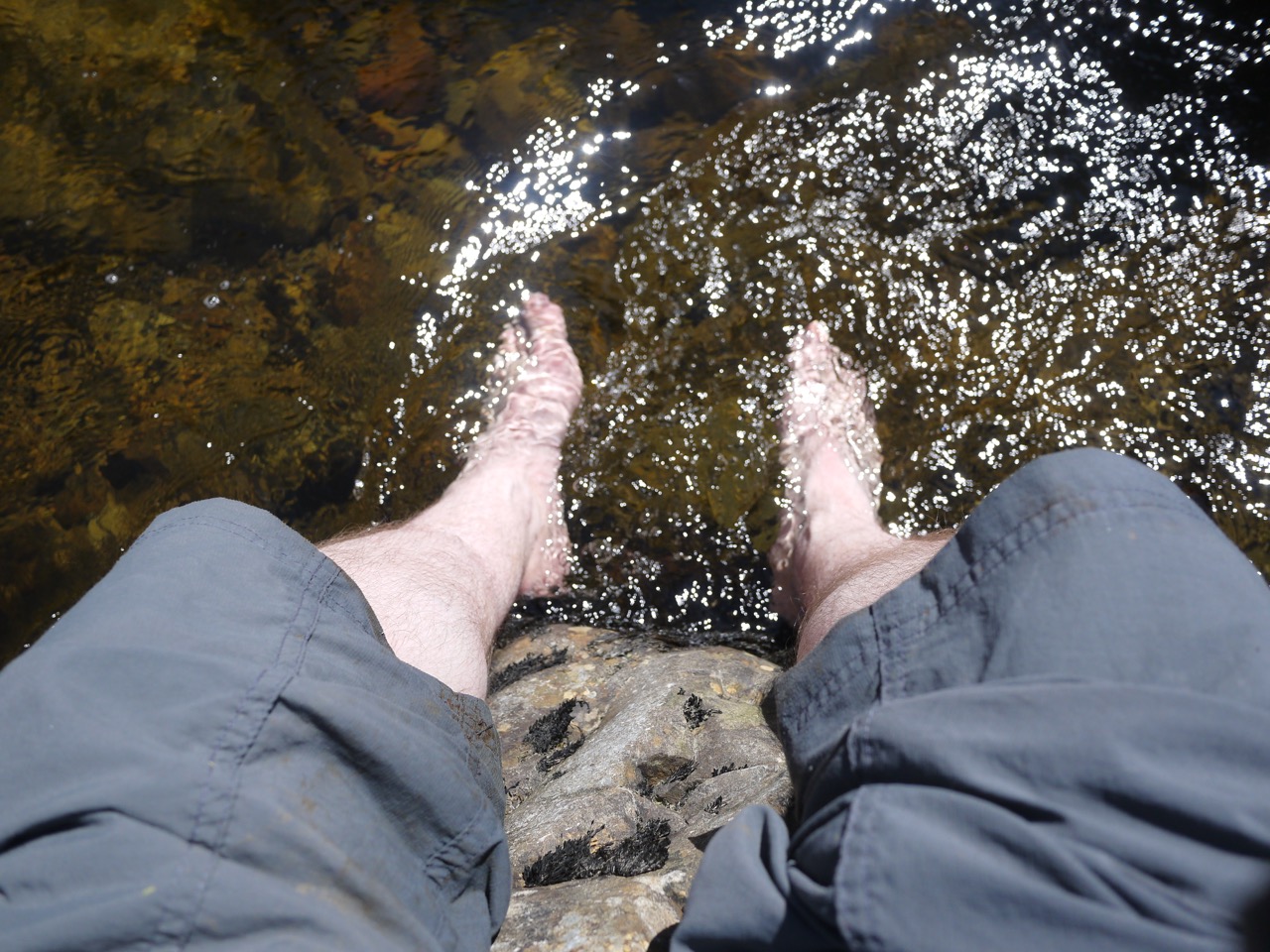
Bare feet (but on a summer day)

Bare feet (but on a summer day)

Posted in Dumfries & Galloway | Comments Off on Barefoot